
Most Influential Books of All Time
These books did not just sell copies — they changed civilizations. From The Republic to Sapiens, these works shaped how humanity thinks about itself.
 10 min read
Business Adventures
by John Brooks
Business Adventures by John Brooks is a masterful collection of twelve narrative essays about some of the most revealing episodes in twentieth-century American business. First published in The New Yorker and later collected in book form, these stories move from market panics and product failures to currency crises, shareholder battles, and the hidden systems that keep modern capitalism running. Although the events took place decades ago, the book remains strikingly current because Brooks was never really writing only about stocks, cars, taxes, or corporate meetings. He was writing about people under pressure: executives defending bad decisions, investors chasing confidence, bureaucracies wrestling with complexity, and institutions trying to preserve credibility when events turn against them. That is why the book still resonates with leaders, founders, investors, and curious readers today. Brooks had a rare gift: he combined the reporting discipline of a financial journalist with the narrative grace of a novelist. The result is a business book that does not lecture in abstractions, but reveals enduring truths through vivid stories. Business Adventures matters because it shows that markets change, technologies evolve, but human nature in business barely does.
Key Takeaways
- 1Markets Run on Emotion as Much — A stock market decline is never only about numbers; it is also about the speed with which confidence can evaporate. In “…
- 2Great Products Can Still Fail Spectacularly — The Edsel is remembered as a punchline, but Brooks treats it as something more useful: a case study in how large organiz…
- 3Complex Systems Hide Everyday Fragility — One of Brooks’s most surprising achievements is making administrative machinery feel dramatic. In “The Federal Income Ta…
 10 min read
Nudge
by Richard H. Thaler, Cass R. Sunstein
Why do smart people make choices they later regret? Why do employees fail to enroll in retirement plans that clearly benefit them, patients skip life-saving medications, and consumers get overwhelmed by too many options? In Nudge, Richard H. Thaler and Cass R. Sunstein argue that these mistakes are not random flaws but predictable patterns in human behavior. Drawing on behavioral economics, psychology, and public policy, they show that the way choices are presented strongly shapes the decisions people make. This insight leads to their central concept: choice architecture, or the design of the environments in which decisions happen. What makes the book powerful is its practical ambition. Thaler and Sunstein do not call for heavy-handed control or the elimination of personal freedom. Instead, they propose “libertarian paternalism”: guiding people toward better outcomes while preserving the right to choose otherwise. Their ideas have influenced retirement savings programs, health policy, school design, and government regulation around the world. Thaler, a pioneering behavioral economist and Nobel Prize winner, and Sunstein, a leading legal scholar and policy thinker, bring unusual authority to a book that is both intellectually influential and immediately useful.
Key Takeaways
- 1Humans Are Predictably Imperfect Decision-Makers — The most important starting point in Nudge is a humbling one: people do not consistently choose what is best for themsel…
- 2Choice Architecture Shapes What People Choose — Every choice takes place somewhere, and that “somewhere” is never neutral. One of Nudge’s most influential ideas is that…
- 3Libertarian Paternalism Protects Freedom While Guiding Choices — At first glance, the phrase “libertarian paternalism” sounds contradictory. Libertarianism emphasizes freedom of choice,…
 10 min read
The Gulag Archipelago
by Aleksandr Solzhenitsyn
The Gulag Archipelago is one of the most powerful works ever written about state violence, ideological fanaticism, and the destruction of human dignity. In this vast literary investigation, Aleksandr Solzhenitsyn maps the hidden world of the Soviet prison and labor camp system: the arrests in the middle of the night, the fabricated charges, the interrogations, the transport convoys, the slave labor, and the moral corrosion that spread far beyond the camps themselves. The “archipelago” of the title refers to a chain of prisons, transit points, and camps scattered across the Soviet Union, linked not by geography but by terror. What makes the book extraordinary is the authority behind it. Solzhenitsyn writes not as an outside commentator, but as a former prisoner who endured the system himself and gathered testimony from hundreds of other survivors. He combines memoir, history, moral reflection, and documentary evidence to show how an entire political order normalized lies and cruelty. First published in the West in 1973, The Gulag Archipelago changed how the world understood the Soviet regime. It remains essential not only as a record of suffering, but as a warning about what happens when power escapes moral limits.
Key Takeaways
- 1Arrest Begins the Descent — A totalitarian system often reveals itself in a single knock at the door. Solzhenitsyn begins with arrest because this i…
- 2Interrogation Turns Truth Into Theater — When a regime no longer seeks truth, confession becomes a political performance. Solzhenitsyn describes interrogation as…
- 3The Journey Dehumanizes Before Arrival — Long before prisoners reached the camps, the system had already begun reducing them to cargo. Solzhenitsyn’s description…
 10 min read
The Road to Wigan Pier
by George Orwell
What does poverty feel like when you stop treating it as a statistic and begin seeing it as a lived reality? In The Road to Wigan Pier, George Orwell answers that question with unusual honesty, combining first-hand reporting, social criticism, and political reflection into one of the most influential books about class in modern Britain. Originally published in 1937, the book begins as an investigation into working-class life in the industrial North of England, where Orwell documents overcrowded housing, unemployment, dangerous mine labor, and the daily humiliations of poverty. It then turns into a sharper, more controversial argument about socialism, class prejudice, and why many middle-class intellectuals fail to connect with the people they claim to defend. What makes the book endure is Orwell’s rare authority: he does not write from comfortable distance, but from direct observation and moral seriousness. He notices the texture of ordinary life—the smells, rooms, wages, routines, fears—and links them to larger political structures. The result is both a social document and a challenge: if injustice is visible, what excuses remain for ignoring it?
Key Takeaways
- 1Poverty Is Physical, Not Abstract — A society begins to reveal itself when you ask not what it claims to value, but how its poorest people actually live. On…
- 2The Mine Sustains Invisible Civilization — Modern comfort often rests on labor we rarely see. Orwell’s descent into the coal mines is one of the most memorable sec…
- 3Housing Shapes Dignity and Possibility — Few things expose inequality more quickly than a front door. Orwell understood that housing is not merely shelter; it is…
 10 min read
All About Love
by bell hooks
In All About Love, bell hooks takes a word that is used constantly and asks a disarming question: what do we actually mean by it? Her answer is both philosophical and practical. Love, she argues, is not a feeling we fall into, a reward we passively receive, or a private romance detached from the world. It is an ethical practice built from care, commitment, trust, responsibility, respect, and honest knowledge. From that starting point, hooks examines why so many people hunger for love yet struggle to give or receive it well. What makes this book so powerful is the way hooks connects personal pain to social structures. She shows how patriarchy, childhood emotional neglect, consumer culture, and fear of vulnerability distort our understanding of love. Drawing on memoir, social criticism, feminist thought, and spiritual reflection, she offers a language for healing relationships without ignoring power or injustice. hooks writes with unusual authority because she combines intellectual rigor with emotional clarity, making this book both a critique of modern culture and a guide to living differently. All About Love remains essential for anyone seeking healthier relationships, stronger communities, and a more humane vision of freedom.
Key Takeaways
- 1Childhood Teaches Our First Love Lessons — Most adults do not enter relationships as blank slates; they carry a childhood education in love that often goes unquest…
- 2Love Requires Honesty and Clear Communication — A relationship can survive disappointment more easily than deception, because love cannot grow where truth is consistent…
- 3Self-Acceptance Makes Love More Possible — Many people seek love as if another person can supply the worth they do not feel inside, but hooks argues that this ofte…
 10 min read
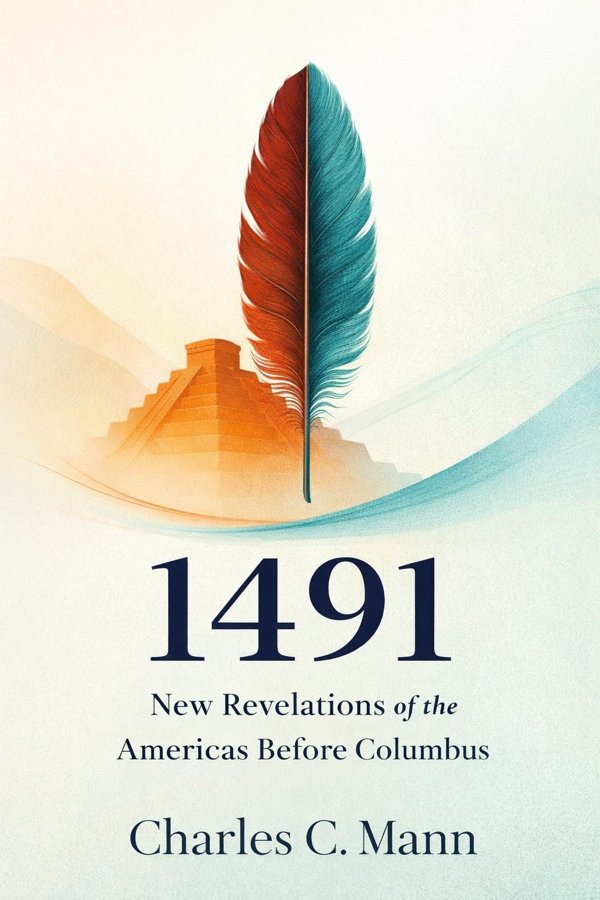
1491: New Revelations of the Americas Before Columbus
by Charles C. Mann
Charles C. Mann’s 1491 is a powerful rethinking of the pre-Columbian Americas. Drawing on archaeology, anthropology, ecology, genetics, and early colonial accounts, Mann challenges the old idea that the Western Hemisphere in 1492 was a sparsely populated, largely untouched wilderness inhabited by small, isolated groups. Instead, he presents a continent shaped by millions of people, complex societies, long-distance trade, political innovation, and deliberate environmental management. From the cities of Mesoamerica to the engineered landscapes of Amazonia and the agricultural achievements of North America, Mann reveals a world far richer and more dynamic than conventional history once allowed. What makes the book so important is not just its revision of the past, but its lesson about how history gets made. Much of what later Europeans described as “empty land” had been emptied by disease, warfare, and social collapse that followed contact. Mann, an accomplished journalist with a talent for translating scientific debate into vivid narrative, guides readers through competing theories with clarity and intellectual honesty. The result is a deeply engaging book that changes how we see indigenous history, colonialism, and the human relationship with the environment.
Key Takeaways
- 1A New World Was Never Empty — The most dangerous historical myths are often the ones that feel obvious. For centuries, many readers were taught to ima…
- 2Numbers from Nowhere Changed Everything — Population estimates are not dry statistics; they determine the scale of history. One of Mann’s most consequential argum…
- 3Very Old Bones, New Origin Stories — A single skeleton can overturn an entire worldview. In examining the first peopling of the Americas, Mann enters one of …
 10 min read
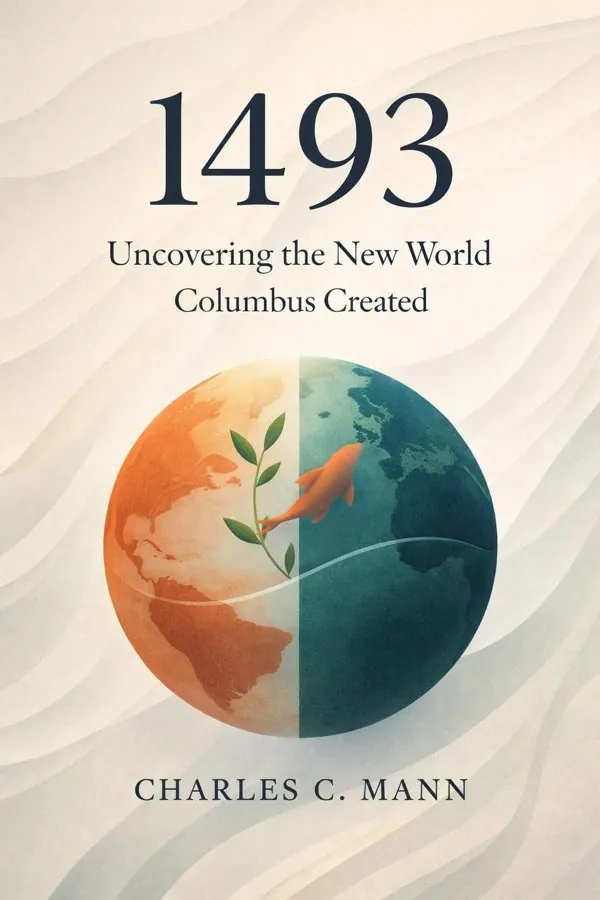
1493: Uncovering the New World Columbus Created
by Charles C. Mann
Charles C. Mann’s 1493 is not simply a book about Christopher Columbus or the age of exploration. It is a sweeping account of how the meeting of the Old World and the New World triggered one of the greatest transformations in human history. Mann argues that after 1492, plants, animals, microbes, people, commodities, and ideas began moving across oceans at a scale never seen before, creating the foundations of the modern globalized world. The result was not just conquest or trade, but a deep reshaping of ecosystems, economies, diets, labor systems, and empires on every continent. What makes this book so powerful is Mann’s ability to connect large historical forces with vivid, concrete stories: silver from the Americas flowing into China, African slavery powering plantation economies, tobacco and sugar changing land use, and invasive species remaking entire landscapes. A seasoned journalist and the acclaimed author of 1491, Mann brings together environmental history, economics, epidemiology, and political history with rare clarity. 1493 matters because it shows that globalization did not begin in the internet age. It began when previously isolated worlds collided, and we are still living with the consequences.
Key Takeaways
- 1The Atlantic Became History’s First Global Hub — A coastline can become a turning point in human history. Mann begins by showing that Columbus’s voyage did more than con…
- 2Ecological Exchange Remade Entire Continents — History is often told through kings, battles, and treaties, but Mann insists that seeds, pigs, weeds, and microbes can b…
- 3American Crops Fed the Rise of Empires — A humble tuber can change the fate of nations. Mann shows that crops from the Americas did not merely enrich global cuis…
 10 min read
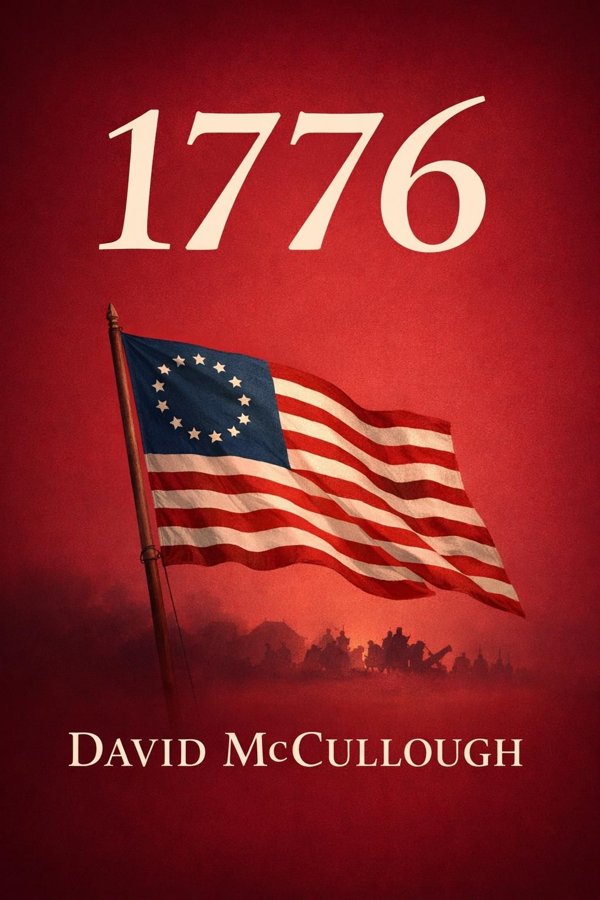
1776
by David McCullough
David McCullough��s 1776 is a vivid, fast-moving history of the year in which the American Revolution nearly failed before it found its footing. Rather than treating independence as an inevitable triumph, McCullough restores the uncertainty, fear, confusion, and sheer contingency of events. He follows George Washington, the Continental Army, the British high command, Congress, and ordinary soldiers through a year marked by desperation as much as hope. The result is not simply a military chronicle, but a human story about leadership under pressure, endurance in defeat, and the fragile beginnings of a nation. What makes the book so powerful is its insistence that history is made by flawed people operating with incomplete information. Washington appears not as a marble hero, but as a determined commander learning under fire. The soldiers are shown as exhausted, hungry, often frightened men whose perseverance mattered as much as grand political ideals. McCullough, one of America’s most respected historians and a two-time Pulitzer Prize winner, grounds the narrative in letters, diaries, and official records, giving the year extraordinary immediacy. 1776 matters because it reminds us that great turning points are rarely secure while they are happening.
Key Takeaways
- 1Boston Revealed War’s True Stakes — Revolutions often begin in rhetoric but are decided in grim reality. McCullough opens 1776 with Boston under siege, wher…
- 2Washington Had to Learn Fast — Great leaders are not always fully formed when history calls on them. One of McCullough’s central achievements is to por…
- 3Independence Required More Than Declaration — A declaration can announce a cause, but it cannot defend it. In 1776, the Continental Congress adopted the Declaration o…
 10 min read
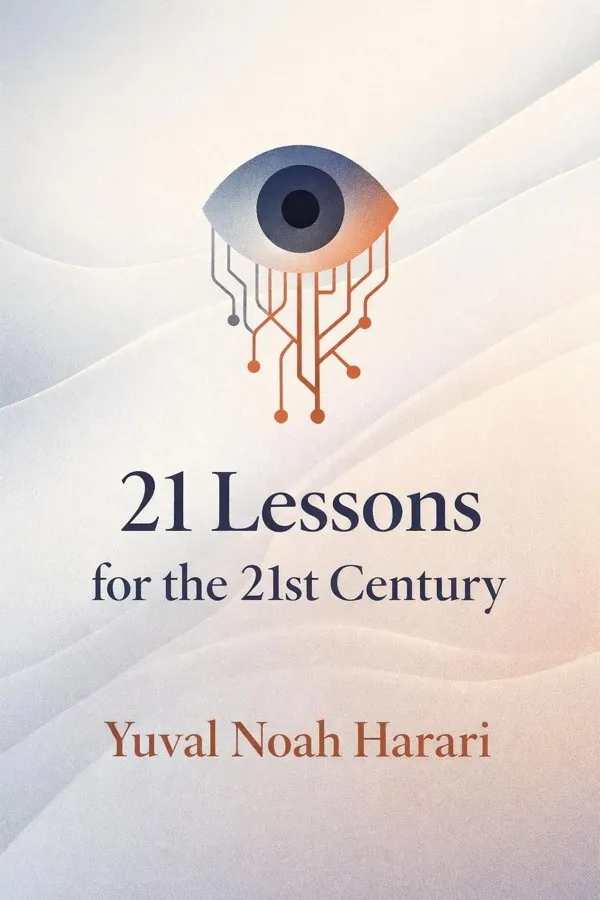
21 Lessons for the 21st Century
by Yuval Noah Harari
In this thought-provoking collection of essays, Yuval Noah Harari explores the most pressing issues facing humanity in the 21st century, including technology, politics, religion, and the future of work. Drawing on history, philosophy, and science, Harari examines how rapid technological change and global interconnectedness challenge our understanding of truth, freedom, and meaning.
Key Takeaways
- 1The Technological Challenge — When historians reflect on our era, they may describe it as the age when intelligence decoupled from consciousness. Arti…
- 2The Political Challenge — The political world we inherited was built for the industrial age, not for the digital one. The twentieth century taught…
- 3Despair and Hope
 10 min read
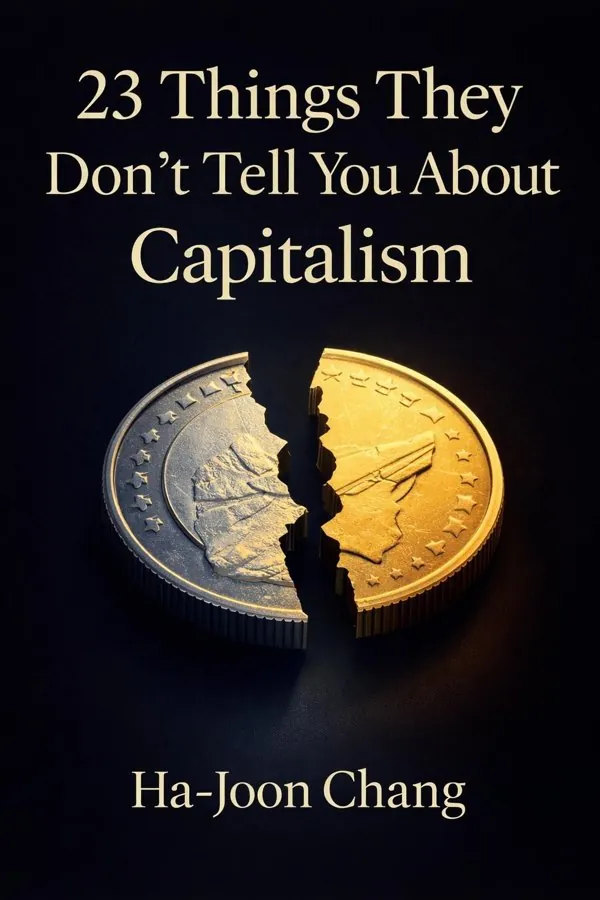
23 Things They Don’t Tell You About Capitalism
by Ha-Joon Chang
What if the economic “common sense” you hear every day is not neutral truth, but a set of stories designed to make one version of capitalism look inevitable? In 23 Things They Don’t Tell You About Capitalism, Ha-Joon Chang dismantles many of the most familiar claims about markets, globalization, corporations, wealth, and government. He argues that markets are never truly free, that business success depends on institutions and public support, and that rich nations often became rich through policies they now discourage poorer nations from using. Rather than rejecting capitalism outright, Chang asks readers to see it more honestly: as a political and social system shaped by law, power, history, and choices. The book matters because it gives non-specialists a way to think critically about economic debates that affect wages, jobs, inequality, development, and democracy. Chang writes with unusual clarity, using historical examples, everyday logic, and sharp comparisons instead of technical jargon. A Cambridge economist known for challenging neoliberal orthodoxy, he brings academic authority together with a public-minded style that makes complex ideas accessible. The result is a provocative guide to understanding how capitalism actually works—and how it could work better.
Key Takeaways
- 1Markets Are Made, Not Natural — A market is never simply “there”; it is designed, protected, and limited by rules. One of Chang’s most important insight…
- 2Shareholder Value Is a Dangerous Myth — When companies focus only on maximizing shareholder returns, they often weaken the very foundations of long-term prosper…
- 3High Pay Reflects Systems, Not Merit — People in rich countries often believe their incomes mainly reflect superior individual productivity, but Chang argues t…
 10 min read
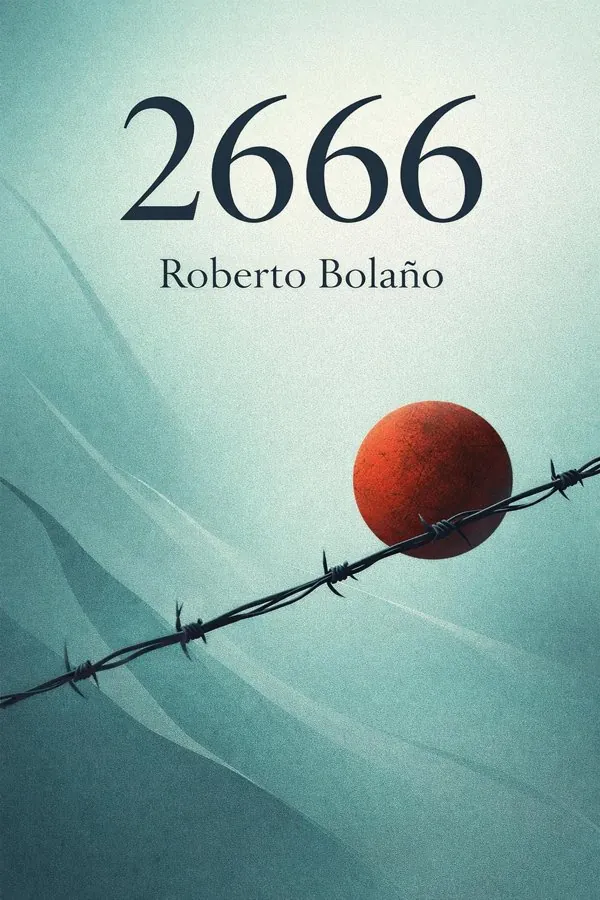
2666
by Roberto Bolaño
Roberto Bolaño’s 2666 is one of the most ambitious novels of the modern era: vast in scope, unsettling in mood, and unforgettable in its moral force. Published posthumously in 2004, the book unfolds in five interconnected parts that move from European literary circles to the haunted border city of Santa Teresa, a fictional stand-in for Ciudad Juárez. Along the way, Bolaño explores obsession, exile, intellectual vanity, historical violence, and the brutal murders of women that form the novel’s dark center. Rather than offering a neat plot, 2666 builds an entire landscape of fear, mystery, and human contradiction. Its power lies in how it links art and atrocity, private desire and public catastrophe, showing how culture can illuminate evil while also failing to stop it. Bolaño writes with the authority of a novelist who lived through political upheaval, migration, and marginal artistic life, and his work carries the urgency of lived experience. 2666 matters because it refuses simplification: it asks how we go on thinking, reading, and loving in a world where horror is both ordinary and unbearable.
Key Takeaways
- 1The Critics and the Seduction of Culture — A shared passion can unite people just as powerfully as love, ambition, or fear. The opening section of 2666 introduces …
- 2Amalfitano and the Borderline of Reason — Sometimes the most accurate response to a broken world is not clarity but disorientation. In the second part of 2666, Bo…
- 3Fate, Journalism, and Witnessing Violence — The outsider often sees what insiders have learned not to notice. In “The Part About Fate,” Bolaño follows Oscar Fate, a…
 10 min read
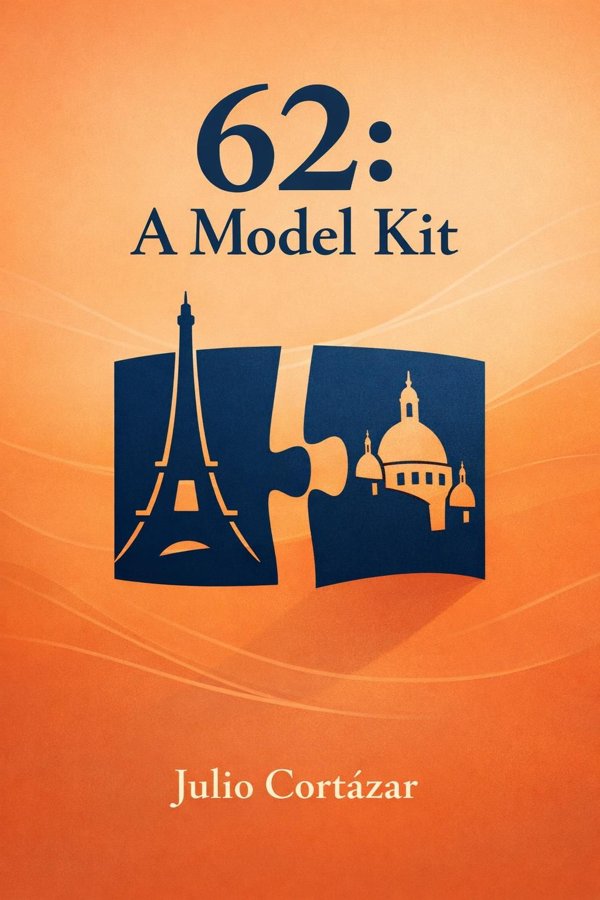
62: A Model Kit
by Julio Cortázar
Julio Cortázar’s 62: A Model Kit is not a conventional novel so much as an intricate literary device: a book designed to be assembled by the reader. First published in 1968 and developed from a concept briefly introduced in Hopscotch, it follows a loose constellation of characters moving through Paris, London, Vienna, and other European settings, yet it resists the familiar comforts of linear plot, psychological certainty, and stable meaning. Instead, Cortázar creates a world of echoes, symbols, repetitions, and invisible connections, where conversations, gestures, and objects seem charged with hidden patterns. What makes the novel matter is precisely this refusal to behave like ordinary fiction. It asks whether reality itself may be fragmented, whether identity is composed rather than given, and whether language reveals the world or distorts it. Cortázar, one of the defining innovators of the Latin American Boom, brings to the book his signature blend of playfulness, philosophical depth, and formal daring. The result is a challenging but rewarding classic that transforms reading into an active, unsettling, and deeply imaginative act.
Key Takeaways
- 1Fragmented Beginnings and Urban Dislocation — A story can begin by disorienting you, and in Cortázar’s hands that disorientation becomes the point. 62: A Model Kit op…
- 2Dream Logic Governs the Novel’s Reality — Some books describe dreams; this one makes reality behave like one. As 62: A Model Kit progresses, the boundary between …
- 3Language and Translation Shape Experience — We often imagine language as a transparent tool, but Cortázar treats it as a force that bends reality. In 62: A Model Ki…
 10 min read
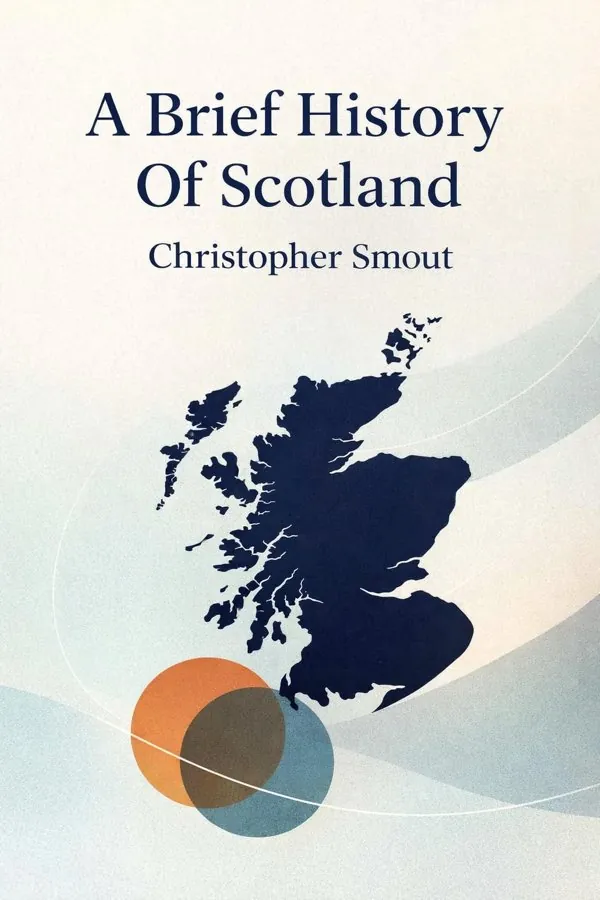
A Brief History Of Scotland
by Christopher Smout
A Brief History Of Scotland is a compact but richly illuminating account of how a small northern nation developed a remarkably durable identity across centuries of political upheaval, economic reinvention, religious conflict, and cultural change. In this accessible survey, Christopher Smout traces Scotland from its prehistoric settlements and early kingdoms to the medieval wars of independence, the Reformation, the Union with England, industrial expansion, imperial involvement, and the complex realities of modern devolution. What makes the book especially valuable is that it does not treat Scotland as a side note to British history. Instead, it shows Scotland as a historical actor in its own right, shaped by geography, local institutions, global trade, faith, war, and the choices of ordinary people as much as kings and ministers. Smout writes with the authority of one of Scotland’s most respected historians, widely known for his work on economic, social, and environmental history. The result is a concise narrative that helps readers understand not only what happened in Scotland, but why those developments still matter for questions of identity, statehood, class, memory, and nationhood today.
Key Takeaways
- 1Landscape Shaped the First Scots — A nation often begins as an environment before it becomes an idea. Smout starts with the physical world of Scotland: mou…
- 2Alba Emerged From Many Peoples — National origins are usually messier than patriotic myths suggest. Smout treats the formation of the Scottish kingdom no…
- 3Medieval Kingship Was Never Fully Secure — Power in medieval Scotland was less a possession than a continuous negotiation. As the kingdom matured, its rulers tried…
 10 min read
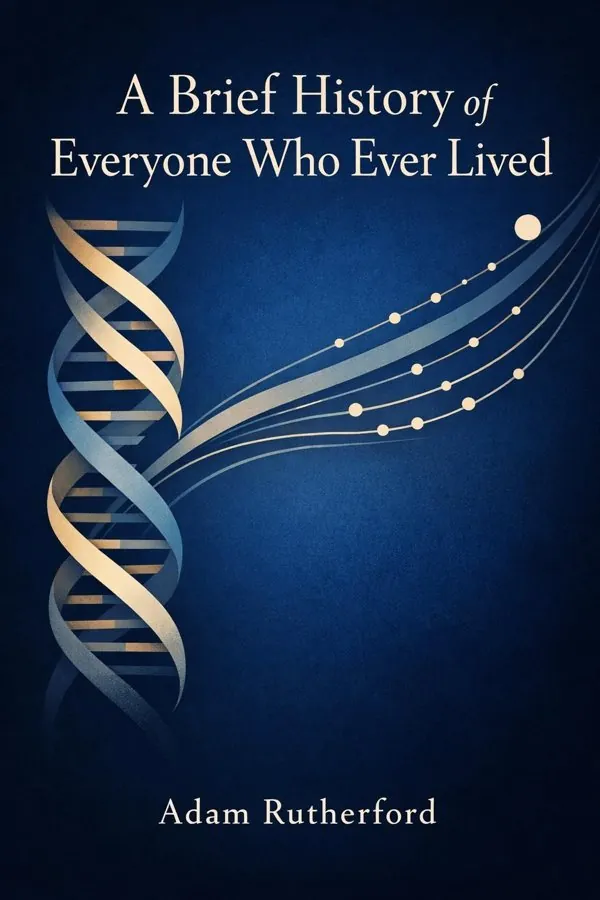
A Brief History of Everyone Who Ever Lived: The Human Story Retold Through Our Genes
by Adam Rutherford
A Brief History of Everyone Who Ever Lived is a popular science book that explores the story of humanity through the lens of genetics. Adam Rutherford explains how DNA reveals our shared ancestry, migration patterns, and the myths surrounding race and identity. The book combines scientific insight with historical narrative to show how genetic research reshapes our understanding of human evolution and diversity.
Key Takeaways
- 1The Genetic Revolution — When we speak of genetics today, we often forget how astonishingly recent it all is. Barely a century ago, Gregor Mendel…
- 2Origins of Humanity — At the heart of our genetic story lies Africa — the cradle of Homo sapiens. For decades, fossil evidence suggested that …
- 3Migration and Interbreeding
 10 min read
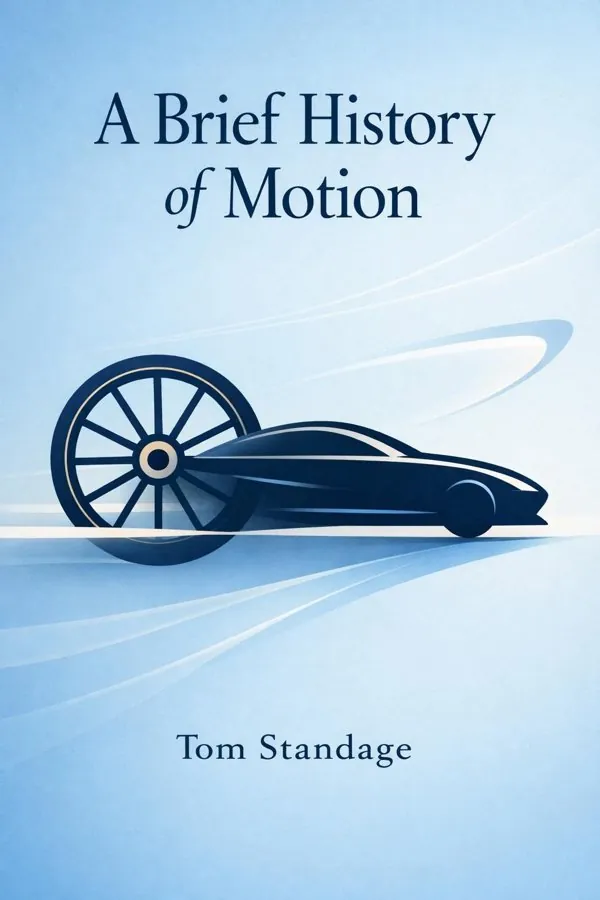
A Brief History of Motion: From the Wheel, to the Car, to What Comes Next
by Tom Standage
A Brief History of Motion explores 5,500 years of human transportation, from the invention of the wheel to the rise of the automobile and the uncertain future of mobility. Tom Standage examines how innovations in motion have shaped societies, economies, and the environment, offering a sweeping narrative that connects ancient technologies to modern challenges such as urban congestion and climate change.
Key Takeaways
- 1The Invention of the Wheel — The story begins in Mesopotamia around 3500 BCE, where the simple, circular disk became one of humankind’s greatest inve…
- 2Animal Power and Ancient Mobility — After wheels came another leap: the domestication of animals that multiplied human range and speed. Horses, camels, and …
- 3The Age of Roads and Carriages
 10 min read
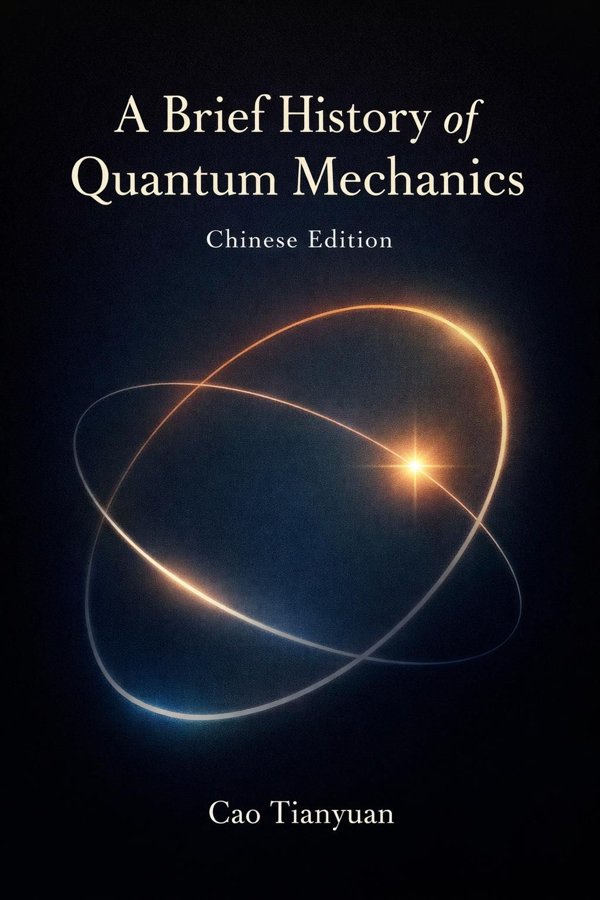
A Brief History of Quantum Mechanics (Chinese Edition)
by Cao Tianyuan
A popular science book that narrates the development of quantum mechanics from Planck’s quantum hypothesis to the ideas of Einstein, Bohr, Heisenberg, and Schrödinger. Written in a lively and accessible style, it transforms complex scientific concepts into engaging stories, allowing readers to appreciate the passion and philosophy behind scientific exploration.
Key Takeaways
- 1The Birth of the Quantum: From Planck’s Hypothesis to Einstein’s Light Quanta — The story begins at the turn of the 20th century. Classical physics was triumphant yet troubled. The laws of thermodynam…
- 2Bohr’s Atom and de Broglie’s Waves: The Quantum World Takes Shape — When Niels Bohr introduced his atomic model in 1913, he combined daring imagination with empirical pragmatism. He took R…
- 3From Heisenberg to Schrödinger: The Mathematics of Mystery
 10 min read
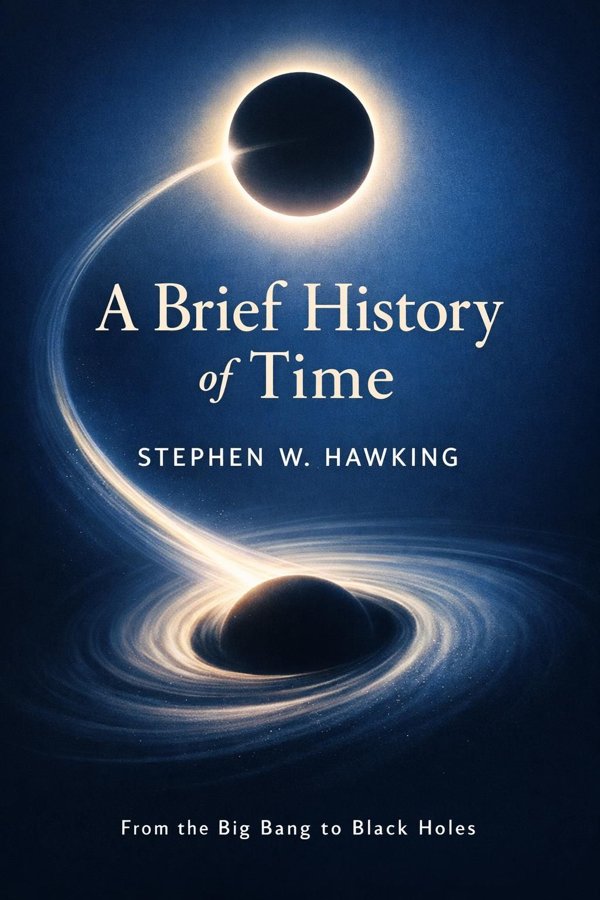
A Brief History of Time: From the Big Bang to Black Holes
by Stephen W. Hawking
Stephen W. Hawking’s A Brief History of Time is one of the rare science books that changed public culture. It takes some of the biggest questions human beings can ask—How did the universe begin? What is time? What happens inside a black hole? Can the laws of nature be unified?—and turns them into a guided tour through modern cosmology. Hawking does not assume the reader is a physicist. Instead, he translates ideas from relativity, quantum mechanics, and astronomy into vivid, approachable explanations that invite ordinary readers into extraordinary territory. What makes the book matter is not only the scale of its subject but also the clarity of its ambition. Hawking shows that science is not just a collection of facts; it is a method for asking better questions about reality itself. He also writes with unique authority. As one of the world’s leading theoretical physicists, Hawking made major contributions to our understanding of black holes, singularities, and the early universe. This book distills that expertise into a deeply human exploration of curiosity, uncertainty, and discovery. It is both a map of the cosmos and a reminder that understanding begins with wonder.
Key Takeaways
- 1How Our Picture of Reality Evolved — Every age believes it finally understands the universe, yet history shows that each worldview is only a stepping stone. …
- 2Space and Time Form One Fabric — What feels separate to us in daily life—space here, time now—is, at a deeper level, part of a single structure. One of H…
- 3The Universe Is Still Expanding — A static universe may feel intuitive, but the evidence points to a cosmos in motion. Hawking explains that one of the gr…
 10 min read
A Briefer History of Time
by Stephen Hawking
A Briefer History of Time is a concise and updated version of Stephen Hawking’s classic work, co-authored with Leonard Mlodinow. It presents complex concepts in cosmology—such as the Big Bang, black holes, quantum mechanics, and the nature of time—in a more accessible and illustrated format for general readers. The book aims to explain the fundamental laws governing the universe and humanity’s place within it, using clear language and engaging examples.
Key Takeaways
- 1From Ancient Cosmos to Modern Science — The story of cosmology begins long before telescopes or equations. For most of human history, we imagined ourselves at t…
- 2Space, Time, and the Relativity of Reality — Our intuition tells us that time ticks the same for all observers and that space exists independently of what moves thro…
- 3The Expanding Universe and the Big Bang
 10 min read
A Christmas Carol
by Charles Dickens
A Christmas Carol is a novella by Charles Dickens first published in 1843. It tells the story of Ebenezer Scrooge, a miserly old man who is visited by the ghosts of Christmas Past, Present, and Yet to Come. Through these supernatural encounters, Scrooge undergoes a profound transformation, learning compassion and the true spirit of Christmas.
Key Takeaways
- 1Marley’s Ghost: The Warning in Chains — When the story begins, Jacob Marley has been dead these seven years. Yet even in death, I would not allow him rest, for …
- 2The Ghost of Christmas Past: Shadows of Lost Warmth — Into the quiet of the night comes the first spirit, radiant like the tender light of dawn—neither child nor old man, a b…
- 3The Ghost of Christmas Present: The Human Feast of Fellowship
 10 min read
A City on Mars: Can We Settle Space, Should We Settle Space, and Have We Really Thought This Through?
by Kelly Weinersmith, Zach Weinersmith
A City on Mars explores the scientific, ethical, and practical challenges of human settlement beyond Earth. The authors, Kelly and Zach Weinersmith, combine humor and research to examine whether humanity is ready for life on Mars or other celestial bodies, addressing issues of biology, law, sustainability, and social organization in space colonization.
Key Takeaways
- 1Historical Context of Space Settlement — When we trace the story of space colonization, we meet a timeline woven from imagination, ideology, and aspiration. The …
- 2Physical and Biological Challenges — As a biologist, I couldn’t help starting with the human body, that fragile, gravity-trained system that evolved under on…
- 3Engineering and Resource Constraints
Want the full summary?
Get instant access to this book summary and 100K+ more with Fizz Moment.
Get Free SummaryAvailable on App Store • Free to download
About This List
These books did not just sell copies — they changed civilizations. From The Republic to Sapiens, these works shaped how humanity thinks about itself.
This list features 20 carefully selected books. With FizzRead, you can read AI-powered summaries of each book in just 15 minutes. Get the key takeaways and start applying the insights immediately.
Ready to start reading?
Get instant access to all 20 book summaries and 100K+ more with FizzRead.