
Best Books of All Time — The Definitive List
From Homer to Harari, these are the books that stand the test of time. Each one represents a pinnacle of human thought, creativity, and expression.
 10 min read
Imagine Heaven
by John Burke
What if our deepest hopes about life after death are not mere wishful thinking, but glimpses of a reality that has already been partially revealed? In Imagine Heaven, pastor John Burke investigates more than one hundred near-death experiences from people of different ages, cultures, and religious backgrounds, then compares their accounts with biblical descriptions of heaven, judgment, love, and eternity. Rather than treating these stories as sensational curiosities, Burke approaches them as meaningful testimonies that may illuminate what Scripture has long promised. The result is a book that blends spiritual reflection, pastoral care, and apologetics into a deeply encouraging vision of the afterlife. For readers who fear death, grieve loss, question whether heaven is real, or simply want to live with greater purpose, the book offers both comfort and challenge. Burke’s authority comes not only from his role as a longtime pastor and teacher, but also from his careful effort to test extraordinary experiences against the Bible instead of accepting them uncritically. Imagine Heaven matters because it turns eternity from an abstract doctrine into a transforming lens for everyday life.
Key Takeaways
- 1Near-Death Experiences Reveal Shared Patterns — One of the book’s most striking insights is that people who come close to death often report surprisingly similar experi…
- 2Scripture Becomes the Measure of Truth — Powerful experiences can inspire, but Burke insists that feelings alone are never enough. A central idea in Imagine Heav…
- 3God’s Presence Is Light and Love — Many near-death experiencers struggle to describe the being they encounter, yet they return using the same language agai…
 10 min read
Power vs Force
by David Hawkins
What makes one person quietly influential while another relies on pressure, manipulation, or fear? In Power vs Force, psychiatrist and spiritual teacher David R. Hawkins argues that the difference lies in consciousness itself. He proposes that human thoughts, emotions, motives, and behaviors can be understood on a scale ranging from destructive states like shame and fear to expansive states like love, joy, and peace. According to Hawkins, true power comes from alignment with truth, integrity, and higher awareness, while force depends on control and ultimately weakens both individuals and societies. The book matters because it tries to connect personal growth with ethics, leadership, psychology, and spirituality in a single framework. Rather than treating success as mere ambition or technique, Hawkins asks a deeper question: what kind of inner state produces lasting strength? Drawing on his experience as a clinical psychiatrist, addiction specialist, and spiritual researcher, he presents a model intended to explain why some ideas, people, and institutions elevate life while others drain it. Whether you read it as metaphysics, self-help, or a philosophy of character, Power vs Force invites you to evaluate the quality of your inner life—and the consequences it has in the world.
Key Takeaways
- 1The Map of Consciousness and Human Energy — Most people judge life by appearances, but Hawkins asks us to look beneath behavior to the level of consciousness drivin…
- 2Kinesiology as a Test of Truth — What if the body reacts differently to truth than it does to falsehood? One of Hawkins’s most controversial claims is th…
- 3From Shame and Fear to Courage — Transformation rarely begins at enlightenment; it usually begins at the moment we stop sinking. Hawkins emphasizes that …
 10 min read
The 5 AM Club
by Robin Sharma
The 5 AM Club is a self-help book about far more than waking up early. At its core, Robin Sharma’s message is that the quality of your mornings shapes the quality of your life. Through a blend of motivational storytelling, performance psychology, and practical routines, he argues that reclaiming the first hour of the day can dramatically improve focus, energy, emotional stability, creativity, and long-term achievement. The book follows an entrepreneur and an artist who are mentored by a mysterious billionaire, allowing Sharma to present his ideas through a fable-like narrative rather than a traditional instruction manual. Central to the book is the famous 20/20/20 formula, a structured approach to using the hour from 5:00 to 6:00 a.m. for exercise, reflection, and learning. Sharma writes with authority as one of the most widely known voices in leadership and personal mastery, drawing on decades of coaching high performers, executives, and ambitious individuals. For readers overwhelmed by distraction, inconsistency, or burnout, The 5 AM Club offers a disciplined but hopeful framework for taking control of one’s mind, habits, and destiny.
Key Takeaways
- 1The Dawn of Transformation Begins Early — Real change rarely begins in dramatic public moments; it starts in quiet private decisions. That is the emotional founda…
- 2The Victory Hour Creates Daily Momentum — How you start the day is often how you live the day. Sharma calls the period from 5:00 to 6:00 a.m. the Victory Hour bec…
- 3Use the 20/20/20 Formula Daily — A powerful routine is most useful when it is simple enough to repeat. Sharma’s most famous contribution in The 5 AM Club…
 10 min read
The Happiness Trap
by Russ Harris
The Happiness Trap by Russ Harris is a practical and deeply reassuring guide to a problem many people barely notice they have: the exhausting struggle to feel good all the time. Drawing on Acceptance and Commitment Therapy, or ACT, Harris argues that modern culture sells us a damaging myth—that happiness should be constant, that painful thoughts are signs of failure, and that a good life is one free from anxiety, sadness, fear, or self-doubt. In reality, the harder we fight our inner discomfort, the more tangled and restricted our lives can become. Instead of promising quick positivity, Harris offers a more durable path: learning how to make room for difficult emotions, step back from unhelpful thoughts, connect with the present moment, and act in line with personal values. The goal is not to eliminate pain but to build psychological flexibility—the ability to handle inner turmoil without losing sight of what matters most. Harris brings credibility as a physician, psychotherapist, and one of the most accessible teachers of ACT. The result is a book that feels both scientifically grounded and immediately useful for anyone tired of chasing happiness and ready to start living more fully.
Key Takeaways
- 1The Myth of Constant Happiness — One of the most damaging ideas in modern life is that happiness should be our normal state. From childhood, many people …
- 2Why the Mind Creates Suffering — Your mind is not broken because it worries, compares, criticizes, and anticipates disaster. Harris explains that the hum…
- 3Emotions Are Not the Enemy — Many people organize their lives around avoiding uncomfortable emotions, yet those emotions are often unavoidable side e…
 10 min read
How to Win Friends and Influence People
by Dale Carnegie
First published in 1936, How to Win Friends and Influence People remains one of the most influential self-help books ever written because it addresses a timeless truth: success depends not only on what you know, but on how you relate to people. Dale Carnegie argues that influence is rarely won through force, criticism, or cleverness alone. Instead, it grows from empathy, respect, sincere appreciation, and the ability to understand what motivates others. Drawing from years of teaching public speaking and human relations, Carnegie distilled practical lessons from business leaders, historical figures, and everyday interactions into a set of principles anyone can apply. The book shows how to handle people without creating resentment, make others feel important, persuade without argument, and lead in ways that inspire cooperation rather than resistance. Its enduring appeal lies in its simplicity: these ideas are easy to understand, yet difficult enough in practice to be transformative. Whether you want to improve your career, strengthen relationships, or communicate with more confidence and tact, Carnegie offers a powerful guide to becoming someone others genuinely want to listen to and work with.
Key Takeaways
- 1Master the Fundamentals of Human Relations — Most conflict begins not with major disagreements, but with small failures in emotional intelligence. Carnegie’s first l…
- 2Make People Feel Seen and Valued — People are drawn less to brilliance than to warmth. Carnegie’s famous principles for making people like you are built on…
- 3Influence Begins with Empathy, Not Pressure — The fastest way to create resistance is to make people feel pushed. Carnegie teaches that real influence does not begin …
 10 min read
Man and His Symbols
by Carl Jung
This book, conceived and edited by Carl G. Jung, introduces his theories of the unconscious and the role of symbols in human psychology. Written for a general audience, it explores how dreams and myths reveal the workings of the collective unconscious, with contributions from Jung and several of his close collaborators. It remains one of the most accessible introductions to Jungian thought.
Key Takeaways
- 1Approaching the Unconscious — As I begin to lead you toward the realm of the unconscious, I must first dispel a common misconception: the belief that …
- 2The Function of Dreams — Marie-Louise von Franz carries forward this exploration into the specific realm of dreams. She reminds us that dreams ar…
- 3The Ancient Myths and the Modern Man
 10 min read
Scattered Minds
by Gabor Maté
In Scattered Minds, physician Gabor Maté challenges one of the most common assumptions about Attention Deficit Disorder: that it is simply a hardwired, inherited brain disease. Drawing from clinical practice, scientific research, and his own lived experience with attention difficulties, Maté presents a far more nuanced and compassionate view. He argues that ADD is not a moral failing or a fixed defect, but a developmental response shaped by stress, emotional disconnection, and early relational experiences that influence the growing brain. What makes this book so powerful is its refusal to reduce people to diagnoses. Instead, Maté explores how attention, self-regulation, impulse control, and emotional resilience develop through attachment and environment. He shows that symptoms often make sense when seen in the context of a person’s history. The book matters because it reframes ADD from something to be merely managed into something to be deeply understood. For parents, adults with ADD, educators, and anyone interested in the psychology of human development, Scattered Minds offers both insight and hope. Maté’s authority comes not only from medicine, but from his humane ability to connect neuroscience, relationships, and healing into one coherent perspective.
Key Takeaways
- 1Living Inside Attention’s Inner Fracture — One of the most illuminating aspects of Scattered Minds is that it does not speak about ADD from a distance. Maté begins…
- 2The Medical Model Tells Only Part — A diagnosis can clarify, but it can also narrow our vision. Maté does not reject brain science; rather, he argues that t…
- 3Attention Grows in Emotional Soil — Attention is often treated as a purely mental skill, but Maté shows that it is rooted in emotional life. The capacity to…
 10 min read
The Big Leap
by Gay Hendricks
Why do people often fall apart just when life starts going well? In The Big Leap, psychologist and relationship expert Gay Hendricks argues that many of us unconsciously resist the very happiness, success, love, and creative freedom we say we want. He calls this pattern the “Upper Limit Problem”: a hidden internal threshold that triggers self-sabotage whenever we begin to exceed our familiar comfort zone. Instead of blaming bad luck or external obstacles, Hendricks invites readers to look inward and notice the subtle ways they cap their own potential. What makes this book so compelling is its mix of psychology, practical self-awareness, and deeply encouraging insight. Hendricks doesn’t just diagnose the problem; he offers a framework for moving beyond it, especially by identifying your “Zone of Genius,” the kind of work and way of being that expresses your unique gifts most fully. Drawing on decades of experience in personal development and relationship coaching, he presents a clear message: expanding your capacity for joy and abundance is not selfish or unrealistic—it is the next stage of growth. The Big Leap is a guide for anyone ready to stop shrinking and start living at their true level.
Key Takeaways
- 1The Upper Limit Problem Explained — One of the most unsettling truths about growth is that success does not always feel safe. Gay Hendricks argues that many…
- 2Why We Limit Joy and Love — Many people think their biggest blocks are failure or fear of rejection, but Hendricks suggests something even more surp…
- 3The Four Zones of Work — Being busy is not the same as being aligned. One of Hendricks’s most useful frameworks is the idea that people operate i…
 10 min read
How to Talk to Anyone
by Leil Lowndes
Some people seem to move through social situations with effortless charm. They know how to make a strong first impression, keep conversations flowing, and leave others feeling seen, valued, and intrigued. In How to Talk to Anyone, Leil Lowndes argues that this kind of social success is not a mysterious gift reserved for the naturally outgoing. It is a learnable set of behaviors, habits, and communication techniques that anyone can practice. Drawing on her work as a communication expert and speaker, Lowndes offers 92 practical strategies for improving the way we speak, listen, connect, and influence others in both personal and professional settings. The book matters because communication affects nearly every part of life: friendships, romance, networking, leadership, teamwork, and opportunity. Rather than focusing on abstract theory, Lowndes gives readers concrete tools they can use immediately, from body language cues and listening habits to conversation openers and confidence-building methods. The result is a highly actionable guide to becoming warmer, more memorable, and more effective with people in everyday life.
Key Takeaways
- 1First Impressions Shape Every Interaction — Before you speak, people are already deciding who you are. That is one of the central insights of How to Talk to Anyone:…
- 2Small Talk Opens the Door — Many people dismiss small talk as empty chatter, but Lowndes reframes it as the bridge to trust. Most meaningful relatio…
- 3Move From Casual to Meaningful — Good communicators know that conversation has levels. One of Lowndes’s most useful lessons is that connection deepens wh…
 10 min read
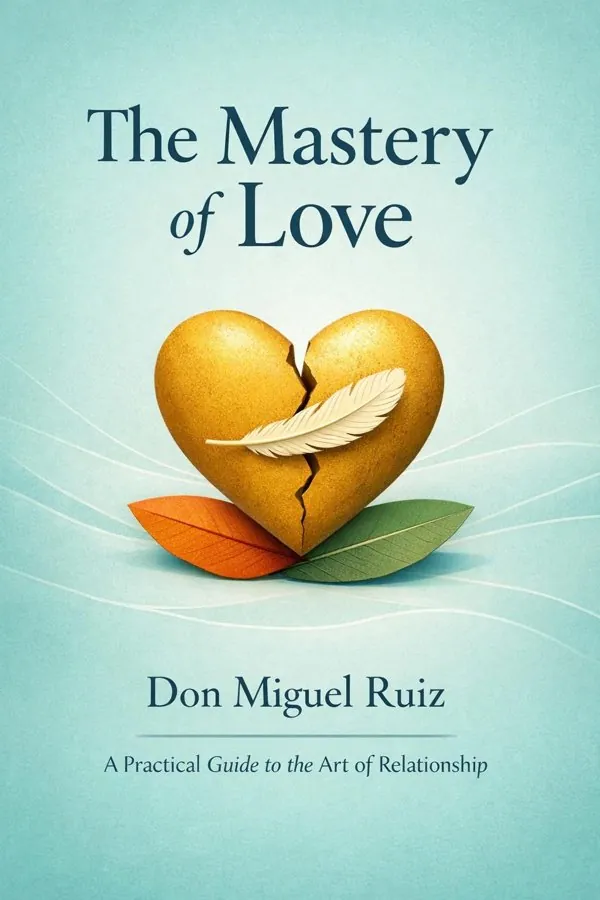
The Mastery of Love
by Don Miguel Ruiz
Why do so many people long for love yet repeatedly create pain in their closest relationships? In The Mastery of Love, Don Miguel Ruiz argues that the answer is not a lack of love, but a mind shaped by fear, emotional wounds, and false beliefs. Drawing on Toltec wisdom, Ruiz reframes love as a natural state that already exists within us. What blocks it are the stories we carry about rejection, control, worthiness, jealousy, and need. Rather than offering dating advice or communication tricks, Ruiz goes deeper. He explores how childhood conditioning creates what he calls the wounded mind, how fear becomes the hidden force behind conflict, and why many relationships are built on dependency instead of genuine affection. From there, he shows how self-love, awareness, forgiveness, and emotional responsibility can transform the way we relate to others. The book matters because it treats love not as luck, chemistry, or sacrifice, but as a practice of inner freedom. Ruiz, best known for The Four Agreements, brings spiritual clarity and practical insight to one of life’s most universal struggles: learning how to love without fear.
Key Takeaways
- 1The Wounded Mind Creates Fear — Most relationship pain begins long before the relationship itself. Ruiz suggests that from childhood, we inherit emotion…
- 2The Parasite Feeds on Suffering — Fear becomes powerful when it starts to feel like your own voice. Ruiz uses the metaphor of the parasite to describe the…
- 3Stop Seeking Love Outside Yourself — One of the great illusions in relationships is the belief that another person can give you the love you do not give your…
 10 min read
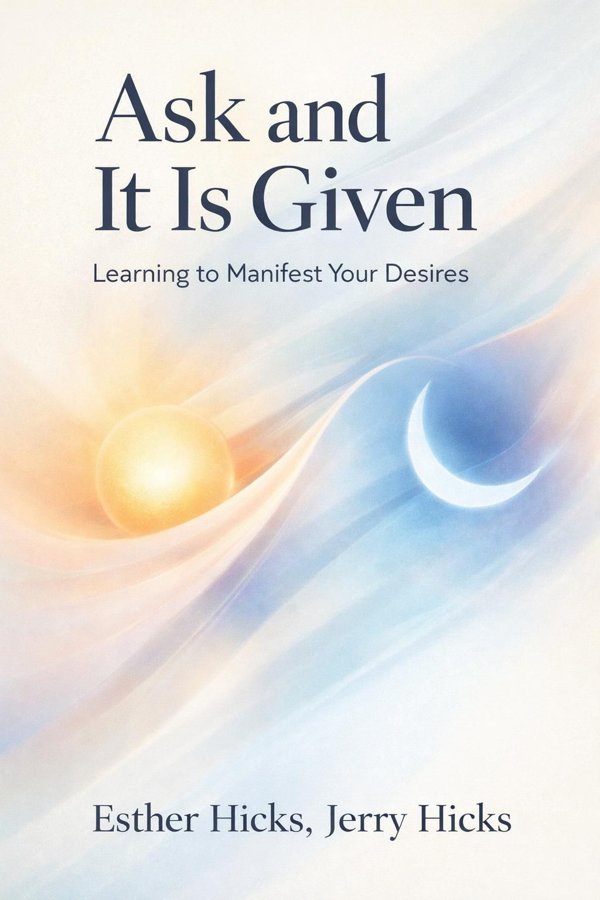
Ask and It Is Given
by Esther Hicks
Ask and It Is Given is a practical spiritual guide to understanding how thoughts, emotions, and attention shape the reality you experience. Presented through the teachings of Abraham, a nonphysical collective consciousness channeled by Esther Hicks, the book argues that every person is constantly creating through the Law of Attraction. According to this framework, your dominant vibration—formed by what you think, expect, and feel—determines what kinds of experiences, relationships, and opportunities flow into your life. Rather than asking readers to force results through struggle, the book teaches them to align internally with what they want so that life begins to feel more cooperative and abundant. What makes the book resonate with so many readers is its combination of big metaphysical ideas and practical emotional tools. It offers a system for understanding desire, resistance, emotional guidance, and deliberate creation, along with exercises designed to help readers shift their state in everyday situations. Esther Hicks, working with her late husband Jerry Hicks, became widely known for popularizing Abraham’s teachings through books, workshops, and seminars. Whether you see the material as spiritual truth, psychological reframing, or motivational philosophy, the book offers a compelling framework for living with greater clarity, hope, and intention.
Key Takeaways
- 1The Law of Attraction Shapes Experience — Most people assume life happens to them, but Ask and It Is Given begins with a more radical claim: life responds to them…
- 2Desire Launches Creation Into Motion — What if wanting more is not selfish, but natural? One of the book’s most liberating ideas is that desire is not a proble…
- 3Emotions Reveal Your Alignment Instantly — Your emotions are not random disturbances; they are guidance. One of the most useful ideas in Ask and It Is Given is the…
 10 min read
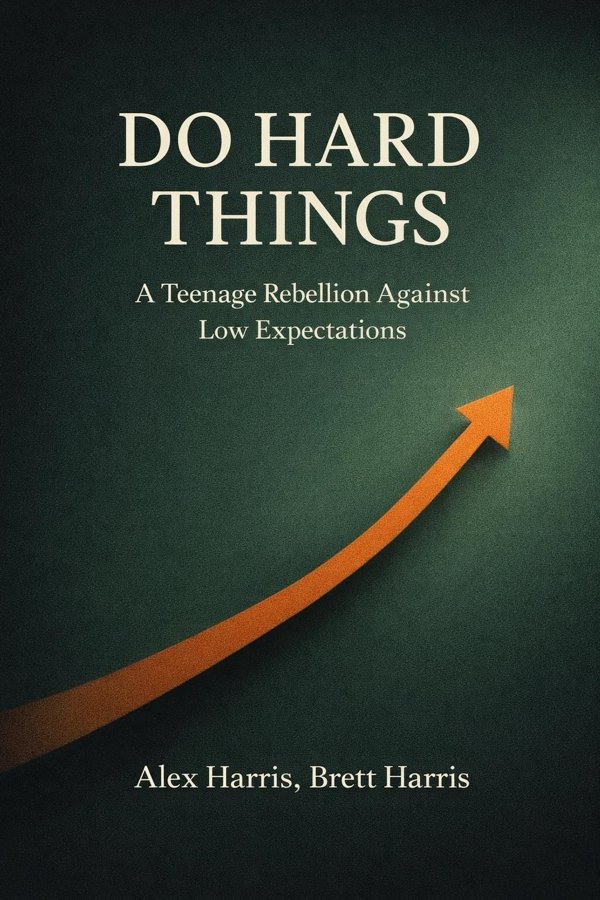
Do Hard Things
by Steve Magness
Do Hard Things is a bold challenge to the modern idea that the teenage years are mainly for comfort, entertainment, and low responsibility. Written by Alex and Brett Harris, the book argues that young people are capable of far more than society expects from them. Instead of accepting a culture that treats adolescence as a waiting room for real life, the authors call teens to pursue meaningful work, personal discipline, leadership, and service. Their central idea, which they call the “rebelution,” is simple but powerful: rebellion against low expectations can transform both individual lives and entire communities. What makes the book matter is its refusal to flatter its audience. Rather than telling teenagers they are special just as they are, it invites them to grow by doing difficult things that stretch character and deepen purpose. The Harris brothers build their case through personal stories, testimonies from other teens, and practical encouragement grounded in Christian faith. The result is an energizing self-help book for young readers, parents, mentors, and educators who believe that maturity begins when people stop waiting for permission to live with courage and responsibility.
Key Takeaways
- 1The Myth of Adolescence Limits Potential — One of the most dangerous lies in modern culture is not that teenagers are incapable, but that they should expect little…
- 2Redefine the Teen Years With Purpose — The teenage years become powerful when they are seen not as a pause before adulthood, but as training for a meaningful l…
- 3Five Kinds of Hard Things — Not all difficulty is the same, and the authors strengthen their argument by showing that “hard things” come in differen…
 10 min read
The Slight Edge
by Jeff Olson
Why do some people steadily build extraordinary lives while others, with similar talent and opportunity, slowly drift off course? In The Slight Edge, Jeff Olson offers a deceptively simple answer: success and failure are both the result of small, repeated actions that seem too insignificant to matter in the moment. A healthy meal, a skipped workout, ten pages read, one difficult phone call made, a little money saved—none of these choices feels life-changing today. But over months and years, they compound into dramatically different outcomes. That compounding effect is what Olson calls the “slight edge.” Rather than promising overnight transformation, the book argues that lasting success comes from embracing basic disciplines and practicing them long enough for their results to become visible. Olson’s message matters because it replaces fantasy with process. It shifts the focus from talent, luck, and big breaks to daily habits, personal philosophy, and long-term consistency. Drawing on his experience in business and personal development, Olson presents a practical framework for anyone who wants to improve health, finances, relationships, or career performance by mastering the small choices that shape a life.
Key Takeaways
- 1The Power of Daily Choices — Most lives are shaped not by dramatic turning points, but by choices so small they are easy to dismiss. That is the unse…
- 2Success and Failure Follow Invisible Curves — The most dangerous part of failure is that it rarely looks like failure at first. Olson explains this through the idea o…
- 3Simple Disciplines Create Extraordinary Results — The disciplines that change your life are usually painfully ordinary. Olson insists that success is not hidden in compli…
 10 min read
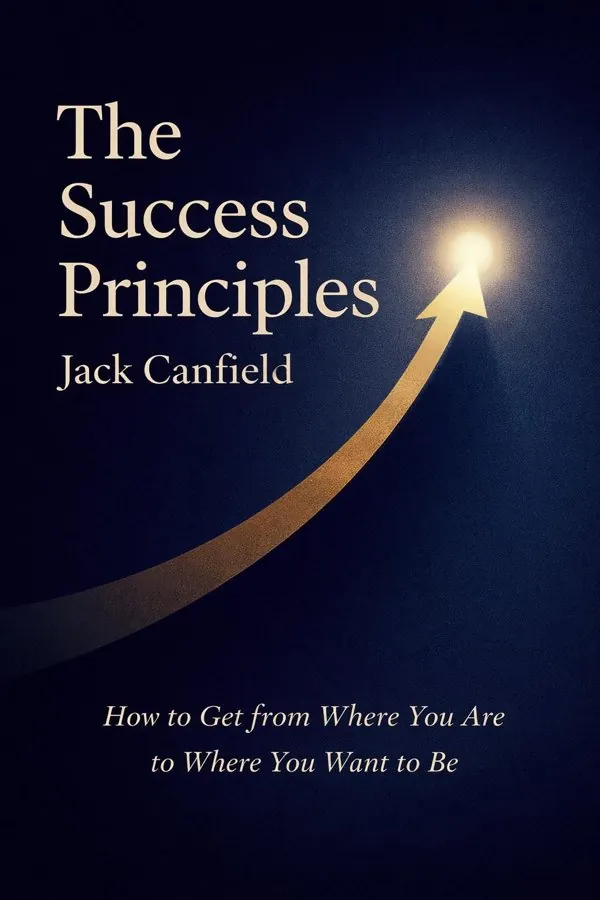
The Success Principles
by Jack Canfield
The Success Principles is Jack Canfield’s practical roadmap for turning vague hopes into measurable results. First published in 2005, the book brings together decades of lessons from personal development, achievement psychology, coaching, and business success into a clear system anyone can apply. Rather than treating success as a matter of talent, luck, or privilege, Canfield argues that it follows patterns: people who consistently get results think differently, act intentionally, and take full ownership of their lives. From setting goals and building confidence to managing time, handling rejection, and creating wealth, the book offers concrete principles backed by stories, exercises, and reflection prompts. What makes it especially useful is its blend of mindset and action. Canfield does not stop at motivation; he shows readers how to translate ambition into habits and habits into outcomes. As the co-creator of the Chicken Soup for the Soul series and a longtime motivational teacher, he writes with authority born from studying and teaching high performance for years. For anyone who wants a structured, encouraging, and actionable guide to personal and professional growth, this book remains a modern classic.
Key Takeaways
- 1Take 100% Responsibility for Results — The biggest shift in success often begins the moment you stop asking, “Why is this happening to me?” and start asking, “…
- 2Clarify Your Purpose and Vision — Most people do not fail because they aim too high; they fail because they never decide clearly what they want. Canfield …
- 3Turn Dreams Into Specific Goals — A dream inspires you, but a goal organizes you. One of Canfield’s most practical lessons is that goals must be specific,…
 10 min read
The Surrender Experiment
by Michael Singer
What if the life you are trying so hard to build is smaller than the life that would unfold if you stopped fighting reality? In The Surrender Experiment, Michael A. Singer tells the remarkable true story of what happened when he made one radical decision: instead of arranging life around his personal preferences, fears, and ambitions, he would say yes to what life placed in front of him. What follows is not a quiet spiritual memoir in the usual sense, but an astonishing journey from isolated meditation in the Florida woods to founding a spiritual community, building a major medical software company, and facing severe legal turmoil he never could have predicted. The book matters because it offers more than inspiration; it presents a lived test of surrender as a practical way of engaging with uncertainty, success, pain, and purpose. Singer writes with unusual authority because he did not arrive at these insights through theory alone. As a longtime meditation practitioner, founder of Temple of the Universe, and author of The Untethered Soul, he combines spiritual depth with firsthand experience in both inner work and worldly achievement.
Key Takeaways
- 1The Decision to Stop Arguing — Most people assume life is difficult because of what happens to them, but Singer’s deepest realization is that suffering…
- 2Silence Reveals the Structure of Mind — Retreating into stillness does not instantly create peace; often, it reveals how restless we already are. When Singer mo…
- 3Saying Yes Builds an Unexpected Path — A meaningful life does not always arrive through a master plan; sometimes it grows from repeatedly saying yes to what na…
 10 min read
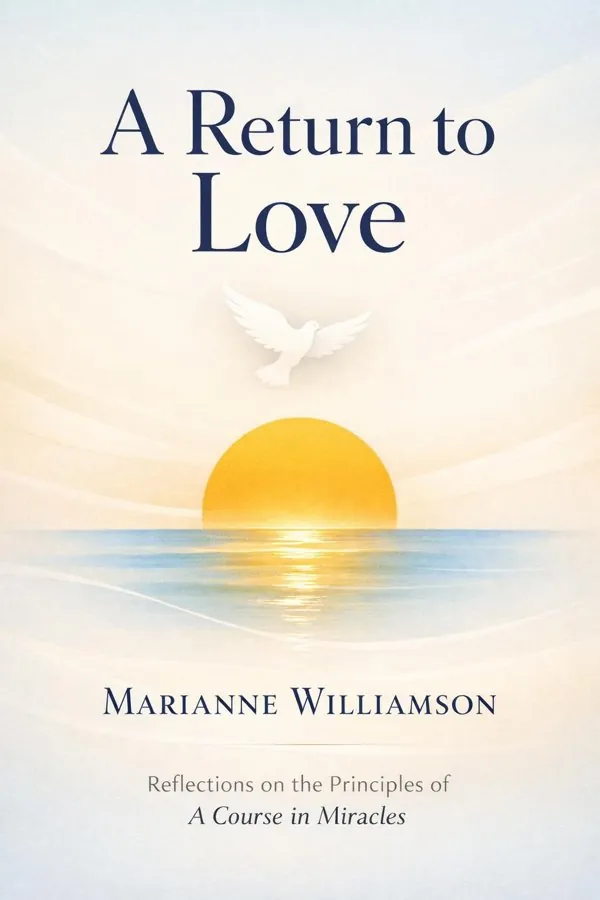
A Return to Love
by Marianne Williamson
A Return to Love is Marianne Williamson’s influential guide to spiritual healing, emotional transformation, and inner peace, built around the teachings of A Course in Miracles. First published in 1992, the book argues that most human suffering stems from fear, guilt, and the illusion of separation, while healing begins when we consciously choose love instead. Williamson translates the Course’s often abstract spiritual ideas into accessible reflections on relationships, work, health, money, and self-worth, showing how these principles can be lived in everyday life. What makes the book enduring is its combination of spiritual depth and practical relevance. Williamson does not present love as sentimentality or passivity, but as a disciplined inner orientation that dissolves resentment, softens the ego, and restores a sense of wholeness. Her message has resonated with millions because it speaks to ordinary struggles: conflict, insecurity, loneliness, ambition, heartbreak, and the desire for meaning. As one of the best-known interpreters of A Course in Miracles, Williamson brings credibility, warmth, and conviction to the subject. A Return to Love remains a modern classic for readers seeking a more peaceful, generous, and spiritually grounded way to live.
Key Takeaways
- 1Miracles Are Shifts in Perception — Most people think a miracle must be dramatic, supernatural, or impossible to explain. Williamson offers a more intimate …
- 2Everything Is Love or Fear — One of the book’s most powerful claims is that every action is either an expression of love or a call for love. This ref…
- 3The Ego Thrives on Separation — The ego, in Williamson’s framework, is not simply confidence or identity. It is the false self built on separation, comp…
 10 min read
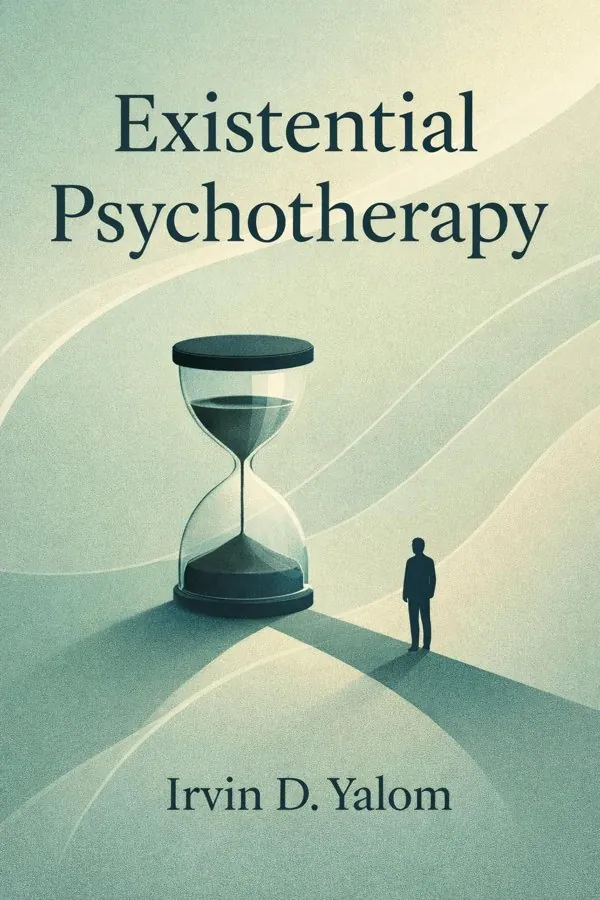
Existential Kink
by Carolyn Elliott
What if the patterns you say you hate are, at some hidden level, giving you pleasure? That provocative question sits at the heart of Existential Kink, Carolyn Elliott’s unconventional self-help book about desire, self-sabotage, and personal transformation. Rather than framing unwanted habits, toxic dynamics, or recurring disappointments as mere mistakes to eliminate, Elliott argues that the psyche often unconsciously enjoys exactly what the conscious mind claims to reject. Her core idea is radical: real change begins not with more self-discipline or positive thinking, but with the willingness to acknowledge and feel the secret payoff in our suffering. Blending depth psychology, shadow work, spirituality, and practical exercises, Elliott offers a framework for understanding why people recreate the same painful situations in love, money, work, and self-worth. Her approach is bold, irreverent, and often uncomfortable, but that is precisely why it resonates. By turning toward shame, envy, frustration, and fear instead of avoiding them, readers can reclaim energy trapped in denial. Existential Kink matters because it challenges the fantasy that growth is always clean, noble, or rational. Carolyn Elliott, a teacher, coach, and writer known for her work on unconscious transformation, invites readers into a more honest path: liberation through radical self-awareness.
Key Takeaways
- 1You Secretly Enjoy What You Resist — One of the book’s most unsettling insights is that people often derive an unconscious satisfaction from the very experie…
- 2Shadow Work Unlocks Real Transformation — Many people try to improve their lives by focusing only on positive intentions, but Elliott argues that lasting change r…
- 3Stop Fixing, Start Feeling the Payoff — A central reversal in the book is that healing often begins not when you try harder to fix a problem, but when you fully…
 10 min read
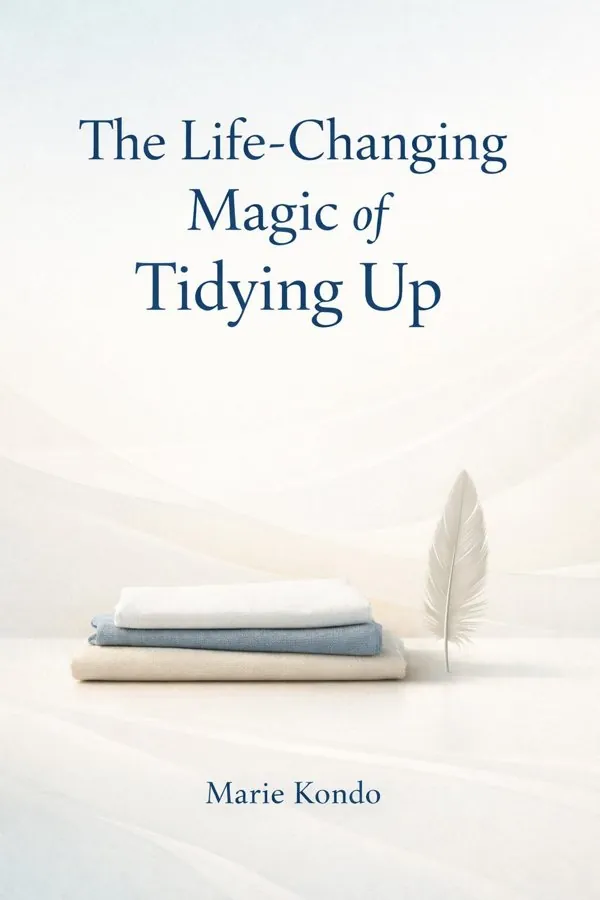
The Life-Changing Magic of Tidying Up
by Marie Kondo
What if tidying were not a dull household chore, but a turning point that could reshape your home, habits, and state of mind? In The Life-Changing Magic of Tidying Up, Marie Kondo argues that clutter is not simply a problem of limited storage or poor discipline. It is often a sign of unfinished decisions, emotional attachments, and a lack of clarity about how we want to live. Her now-famous KonMari Method offers a radically different approach: instead of organizing room by room and asking what to throw away, you tidy by category and keep only what “sparks joy.” First published in 2014, the book became an international phenomenon because it speaks to something deeper than neat closets. Kondo shows that our possessions shape our daily experience, and that choosing them intentionally can bring calm, gratitude, and freedom. Drawing on years of hands-on experience as a professional organizing consultant, she combines practical technique with a distinctive philosophy that treats tidying as a once-in-a-lifetime reset. The result is a self-help classic that turns order into a path toward a more conscious life.
Key Takeaways
- 1Why Tidying Usually Fails — Most people do not fail at tidying because they are lazy; they fail because they have been taught the wrong method. Mari…
- 2Tidy by Category, Not Room — Clutter survives when you only see part of it. One of the most distinctive principles of the KonMari Method is tidying b…
- 3Choose What Sparks Joy — A home becomes lighter when decisions come from desire rather than duty. Kondo’s most famous idea is the question she as…
 10 min read
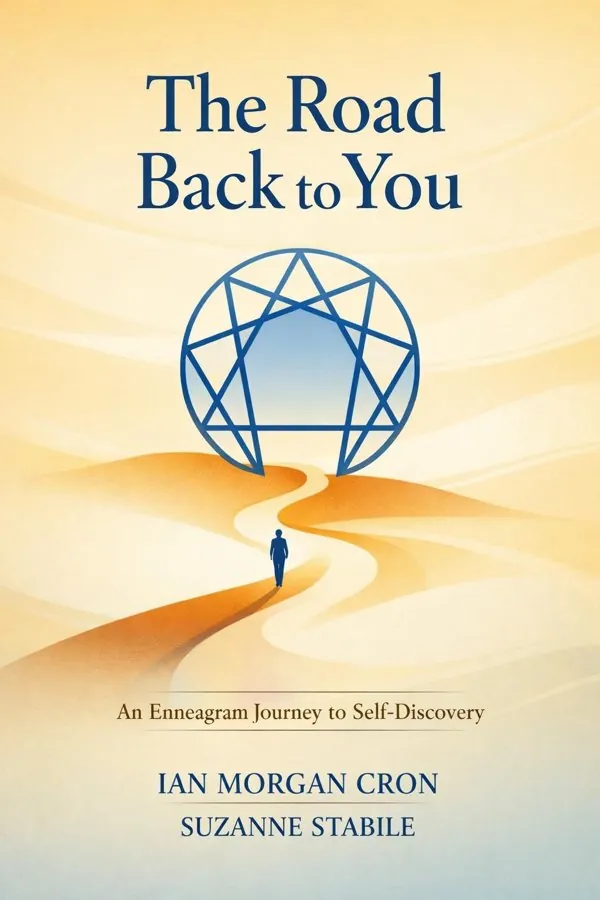
The Road Back to You
by Ian Morgan Cron
What if your biggest frustrations, repeated mistakes, and strongest gifts all sprang from the same hidden inner pattern? In The Road Back to You, Ian Morgan Cron and Suzanne Stabile introduce readers to the Enneagram, a nine-type personality framework that goes far beyond labels and surface traits. Rather than simply telling you what you do, the book explores why you do it: the motivations, fears, desires, and unconscious habits that shape your relationships, work, faith, and sense of self. What makes this book especially compelling is its tone. Cron and Stabile combine insight with warmth, humor, and practical wisdom, making a complex system feel accessible without stripping away its depth. Their approach is not merely psychological but deeply personal and spiritual. The Enneagram becomes a tool for honest self-examination, greater compassion, and meaningful growth. Cron writes as a psychotherapist, speaker, and storyteller with years of experience helping people understand themselves more clearly. Together, he and Stabile offer a guide that is both grounded and transformational. For anyone seeking self-awareness, healthier relationships, or a more honest path toward personal change, this book offers a clear and memorable starting point.
Key Takeaways
- 1The Enneagram Reveals Hidden Motives — Most people think personality is about behavior, but behavior is only the visible tip of a much deeper iceberg. The cent…
- 2Type One Seeks Integrity and Order — The desire to make things right can be noble, but it can also become exhausting when it turns into a lifelong battle aga…
- 3Types Two and Three Chase Worth — Some of the most admired people are secretly driven by a painful question: Am I lovable if I stop giving, and am I valua…
 10 min read
The Road to Character
by David Brooks
In The Road to Character, David Brooks argues that modern life has become overly focused on external success while neglecting the inner qualities that make a life truly admirable. We are taught to build impressive résumés, promote ourselves, and chase recognition, yet the traits people remember most at the end of a life are humility, courage, generosity, fidelity, and moral depth. Brooks explores this gap through a series of vivid portraits of men and women who struggled with weakness, ego, suffering, and self-discipline on their way toward character. Rather than offering quick self-improvement hacks, the book invites readers into a deeper conversation about moral formation. Brooks draws from history, psychology, religion, and biography to show that character is not something we inherit fully formed; it is built through inner conflict, honest self-examination, and commitment to something larger than ourselves. As a widely respected cultural commentator and keen observer of human behavior, Brooks brings both intellectual range and personal sincerity to the subject. The result is a thoughtful, challenging book for anyone who wants not just to succeed, but to become better.
Key Takeaways
- 1Adam I and Adam II — A meaningful life begins when you realize that success and goodness are not the same thing. Brooks frames the entire boo…
- 2Frances Perkins and Moral Awakening — Character often begins not in comfort, but in a moment that wounds your conscience awake. Brooks uses Frances Perkins, t…
- 3Eisenhower’s Discipline and Self-Mastery — One of the clearest signs of maturity is the ability to govern yourself before trying to govern anything else. In Brooks…
 10 min read
Good Vibes Good Life
by Vex King
Good Vibes, Good Life by Vex King is a practical guide to building a better inner world so you can create a better outer life. At its core, the book argues that the quality of your thoughts, beliefs, habits, and relationships shapes the quality of your reality. Drawing on themes such as self-love, mindfulness, gratitude, healing, and manifestation, King shows how emotional energy influences confidence, choices, and long-term wellbeing. Rather than offering empty positivity, he connects spiritual ideas with everyday practices: noticing self-talk, setting boundaries, calming the mind, and acting in alignment with your goals. What makes the book resonate with so many readers is King’s personal credibility. He writes not as someone who avoided hardship, but as someone who lived through adversity, loss, discrimination, and insecurity, then consciously rebuilt his mindset and sense of self. His message is simple but powerful: you do not need perfect circumstances to begin transforming your life. You need awareness, self-respect, and consistent inner work. For readers seeking a gentle but motivating introduction to personal growth, Good Vibes, Good Life offers an accessible path toward emotional resilience and purposeful living.
Key Takeaways
- 1Energy Shapes Your Daily Experience — Every room you enter already tells you something before a word is spoken, and Vex King builds on that intuitive truth: e…
- 2Self-Love Is the Starting Point — Many people spend years chasing success, love, and validation while quietly believing they are not enough. King argues t…
- 3Challenge Limiting Beliefs and Self-Talk — The mind often repeats old stories so convincingly that we mistake them for facts. One of King’s most important insights…
 10 min read
The Charisma Myth
by Olivia Fox Cabane
What if charisma were not a mysterious gift reserved for celebrities, political leaders, and natural-born extroverts, but a learnable skill available to almost anyone? That is the central promise of The Charisma Myth, in which Olivia Fox Cabane dismantles the idea that personal magnetism is innate and replaces it with a practical framework grounded in psychology, neuroscience, and behavioral coaching. She argues that charisma is not about being the loudest person in the room or dazzling others with constant charm. Instead, it comes from the ability to project presence, power, and warmth in ways that make people feel seen, safe, and influenced. The book matters because charisma affects nearly every area of life: leadership, career growth, public speaking, networking, dating, and everyday relationships. Cabane writes with authority as an executive coach and speaker who has taught at institutions like Harvard, MIT, and Yale and advised major organizations on leadership and communication. Her strength lies in translating abstract social dynamics into specific, trainable behaviors. The result is a highly actionable guide for anyone who wants to become more confident, persuasive, and authentic.
Key Takeaways
- 1Charisma Rests on Three Signals — Most people think charisma is a mysterious aura, but in practice it is often a pattern of signals others read almost ins…
- 2Presence Creates Immediate Human Impact — One of the most underestimated social skills is the ability to make another person feel that, for a moment, they have yo…
- 3Power Is Communicated Before Words — Authority is often judged long before anyone evaluates your ideas. According to Cabane, power is one of the essential in…
 10 min read
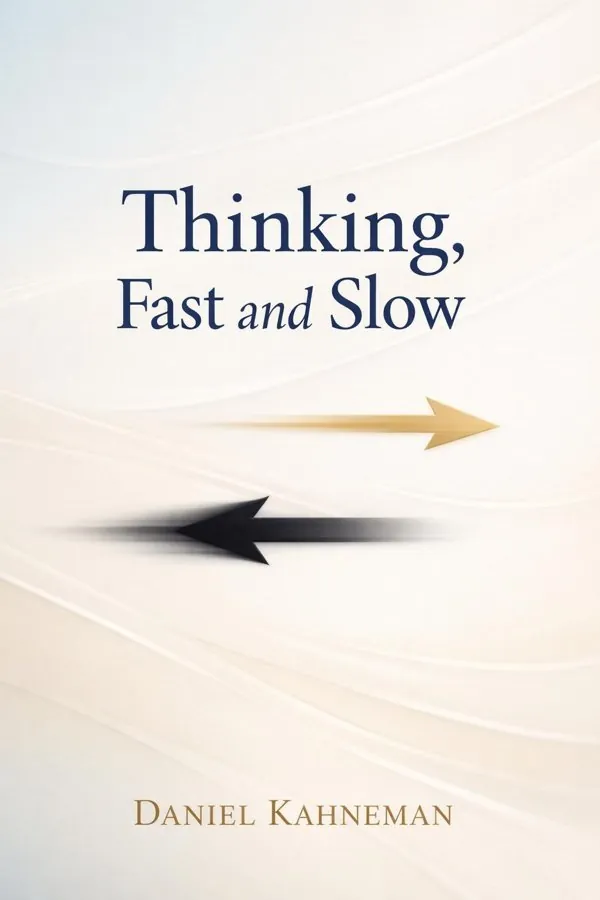
Thinking Fast and Slow
by Daniel Kahneman
Thinking Fast and Slow is one of the most influential books ever written about how the human mind works. In it, Daniel Kahneman distills decades of groundbreaking research in psychology and behavioral economics into a practical framework for understanding why people make smart decisions in some situations and surprisingly poor ones in others. His central insight is that our thinking is shaped by two systems: one that is fast, intuitive, and automatic, and another that is slow, effortful, and analytical. Most of the time, these systems cooperate efficiently. But just as often, the quick judgments of the mind lead us into predictable errors. What makes this book so powerful is that it changes how you see everyday life. From investing and hiring to relationships, planning, medicine, and public policy, Kahneman shows how biases quietly shape choices we assume are rational. He writes with the authority of a Nobel Prize-winning researcher whose work, much of it developed with Amos Tversky, transformed our understanding of judgment under uncertainty. This is not only a book about mistakes; it is a guide to better thinking, wiser decisions, and greater humility about the limits of human reason.
Key Takeaways
- 1The Two Systems That Shape Thought — Most of what you think feels deliberate, but much of it happens automatically. Kahneman’s most famous contribution is th…
- 2Heuristics Make Judgment Efficient and Flawed — The mind is built to simplify, not to calculate perfectly. To navigate uncertainty, we rely on heuristics, mental shortc…
- 3Confidence Often Exceeds What We Know — We are far better at creating explanations than at recognizing our ignorance. Kahneman shows that overconfidence is one …
 10 min read
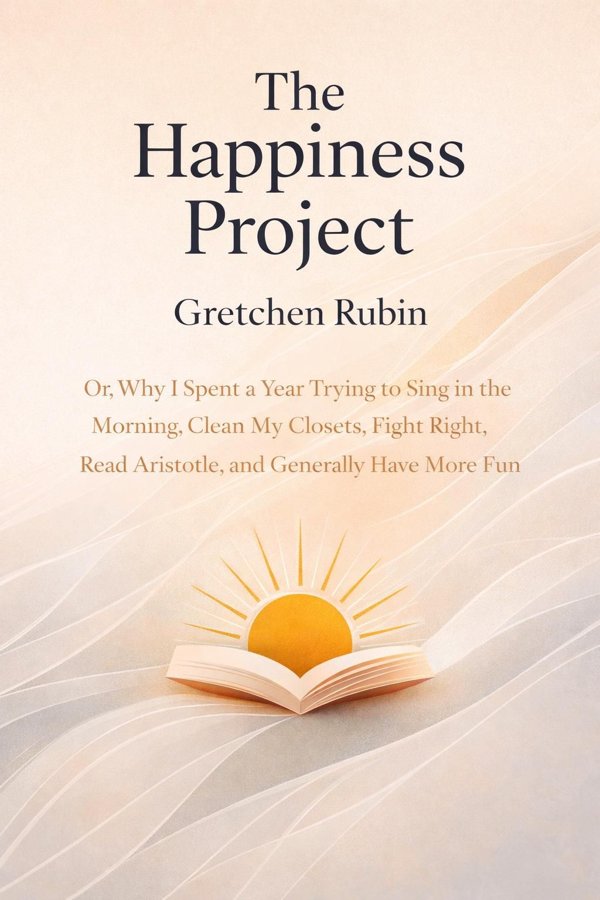
The Happiness Project
by Gretchen Rubin
What if happiness is not a vague feeling you wait for, but a practical project you can actively build? In The Happiness Project, Gretchen Rubin turns that question into a year-long experiment. Rather than chasing a dramatic life overhaul, she examines the ordinary texture of everyday life: sleep, clutter, marriage, friendship, work, parenting, play, money, spirituality, and gratitude. Month by month, she chooses a theme, studies what philosophers and researchers have said about it, and then tests specific habits in her own home and routines. The result is a rare blend of memoir, self-help, and behavioral observation. What makes the book matter is its realism. Rubin does not present happiness as constant cheerfulness or deny the frustrations of real life. Instead, she argues that small, repeatable actions can make life lighter, warmer, and more meaningful. Her authority comes not from abstract theory alone, but from disciplined personal experimentation, combined with wide reading in psychology, literature, and moral philosophy. The Happiness Project resonates because it offers something many readers need: a thoughtful, workable way to feel more awake, grateful, and connected without pretending they must become someone entirely new.
Key Takeaways
- 1Energy Is the Foundation of Happiness — Happiness often feels emotional, but Rubin begins with a sharper truth: your mood is deeply shaped by your physical stat…
- 2Marriage Improves Through Small Daily Gestures — Love rarely collapses because of one huge event; more often, it thins through repeated small irritations, neglect, and u…
- 3Satisfaction Grows When Work Feels Chosen — Many people think happiness at work comes only from finding the perfect job. Rubin offers a more subtle insight: joy in …
 10 min read
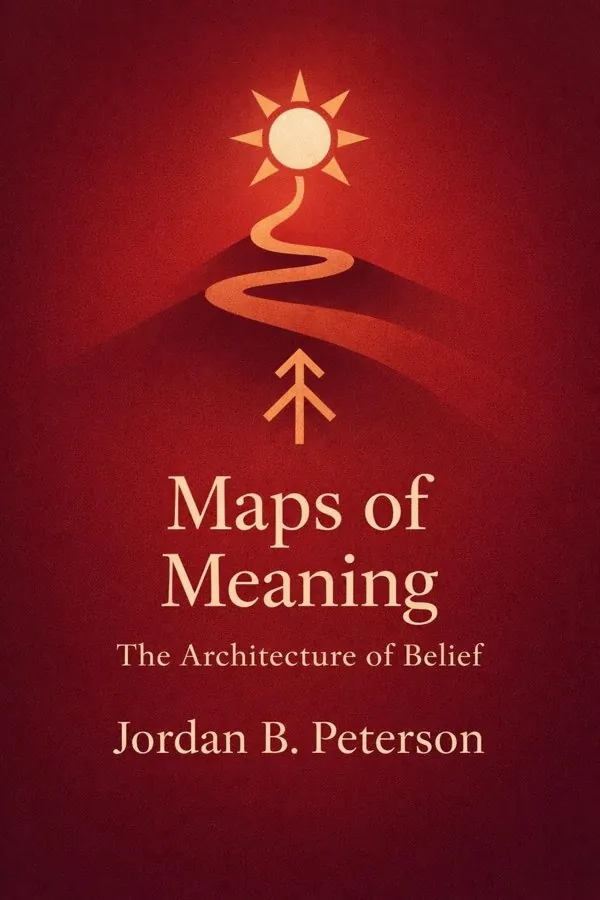
Maps of Meaning
by Jordan Peterson
Maps of Meaning: The Architecture of Belief is Jordan B. Peterson’s ambitious attempt to answer one of the oldest human questions: how do people create meaning strong enough to guide action, endure suffering, and prevent collapse into chaos? First published in 1999, the book brings together clinical psychology, evolutionary theory, neuroscience, mythology, religion, literature, and philosophy to argue that human beings do not merely live in an objective world of facts. We live in a world interpreted through values, stories, symbols, and goals. Peterson examines recurring mythic patterns across cultures and shows how they help individuals orient themselves between order and chaos, certainty and transformation. The book matters because it treats meaning not as a vague spiritual preference but as a psychological necessity. Drawing on his experience as a clinical psychologist and professor, Peterson argues that belief systems are living structures that organize perception, emotion, and morality. Whether or not one agrees with all of his conclusions, Maps of Meaning is a challenging and influential work for anyone trying to understand belief, identity, and the stories that shape human life.
Key Takeaways
- 1The World as a Forum for Action — A human being does not first encounter the world as a neutral collection of objects. We experience it as a field of sign…
- 2Order and Chaos Structure Experience — Meaning often emerges at the boundary between what you understand and what you do not. Peterson argues that across myths…
- 3The Great Father and Great Mother — Human beings often personify the structure of reality before they can explain it abstractly. Peterson argues that recurr…
Want the full summary?
Get instant access to this book summary and 100K+ more with Fizz Moment.
Get Free SummaryAvailable on App Store • Free to download
About This List
From Homer to Harari, these are the books that stand the test of time. Each one represents a pinnacle of human thought, creativity, and expression.
This list features 25 carefully selected books. With FizzRead, you can read AI-powered summaries of each book in just 15 minutes. Get the key takeaways and start applying the insights immediately.
Ready to start reading?
Get instant access to all 25 book summaries and 100K+ more with FizzRead.