
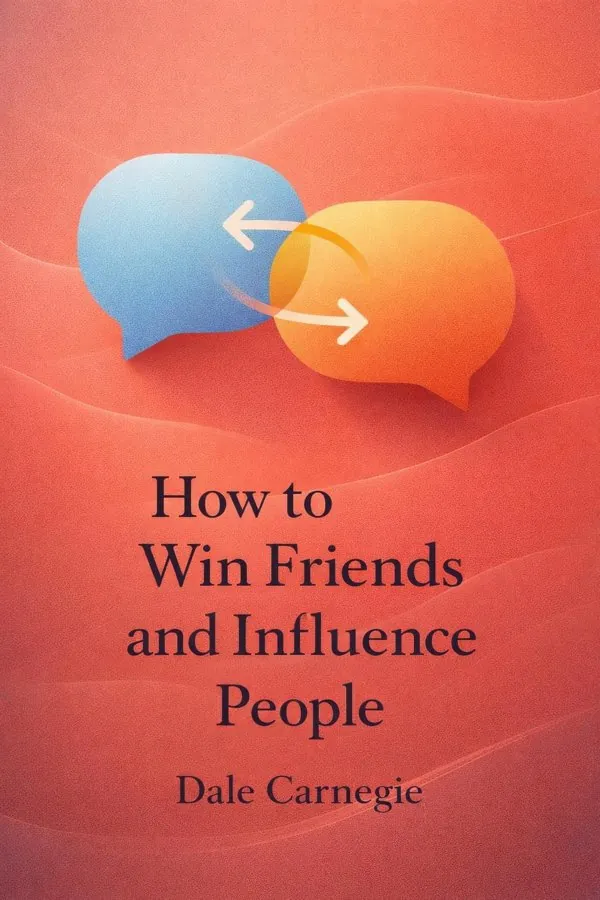
How to Win Friends and Influence People: Summary & Key Insights
 10 min9 chaptersAudio available
Key Takeaways from How to Win Friends and Influence People
Most conflict begins not with major disagreements, but with small failures in emotional intelligence.
People are drawn less to brilliance than to warmth.
The fastest way to create resistance is to make people feel pushed.
Arguments are seductive because they make us feel strong, but Carnegie insists they are usually a losing strategy.
People improve more when they are encouraged than when they are shamed.
What Is How to Win Friends and Influence People About?
How to Win Friends and Influence People by Dale Carnegie is a self-help book published in 1936 spanning 11 pages. First published in 1936, How to Win Friends and Influence People remains one of the most influential self-help books ever written because it addresses a timeless truth: success depends not only on what you know, but on how you relate to people. Dale Carnegie argues that influence is rarely won through force, criticism, or cleverness alone. Instead, it grows from empathy, respect, sincere appreciation, and the ability to understand what motivates others. Drawing from years of teaching public speaking and human relations, Carnegie distilled practical lessons from business leaders, historical figures, and everyday interactions into a set of principles anyone can apply. The book shows how to handle people without creating resentment, make others feel important, persuade without argument, and lead in ways that inspire cooperation rather than resistance. Its enduring appeal lies in its simplicity: these ideas are easy to understand, yet difficult enough in practice to be transformative. Whether you want to improve your career, strengthen relationships, or communicate with more confidence and tact, Carnegie offers a powerful guide to becoming someone others genuinely want to listen to and work with.
This FizzRead summary covers all 9 key chapters of How to Win Friends and Influence People in approximately 10 minutes, distilling the most important ideas, arguments, and takeaways from Dale Carnegie's work. Also available as an audio summary and Key Quotes Podcast.
How to Win Friends and Influence People
First published in 1936, How to Win Friends and Influence People remains one of the most influential self-help books ever written because it addresses a timeless truth: success depends not only on what you know, but on how you relate to people. Dale Carnegie argues that influence is rarely won through force, criticism, or cleverness alone. Instead, it grows from empathy, respect, sincere appreciation, and the ability to understand what motivates others. Drawing from years of teaching public speaking and human relations, Carnegie distilled practical lessons from business leaders, historical figures, and everyday interactions into a set of principles anyone can apply. The book shows how to handle people without creating resentment, make others feel important, persuade without argument, and lead in ways that inspire cooperation rather than resistance. Its enduring appeal lies in its simplicity: these ideas are easy to understand, yet difficult enough in practice to be transformative. Whether you want to improve your career, strengthen relationships, or communicate with more confidence and tact, Carnegie offers a powerful guide to becoming someone others genuinely want to listen to and work with.
Who Should Read How to Win Friends and Influence People?
This book is perfect for anyone interested in self-help and looking to gain actionable insights in a short read. Whether you're a student, professional, or lifelong learner, the key ideas from How to Win Friends and Influence People by Dale Carnegie will help you think differently.
- ✓Readers who enjoy self-help and want practical takeaways
- ✓Professionals looking to apply new ideas to their work and life
- ✓Anyone who wants the core insights of How to Win Friends and Influence People in just 10 minutes
Want the full summary?
Get instant access to this book summary and 100K+ more with Fizz Moment.
Get Free SummaryAvailable on App Store • Free to download
Key Chapters
Most conflict begins not with major disagreements, but with small failures in emotional intelligence. Carnegie’s first lesson is that if you want better relationships, you must stop doing the three things that reliably damage them: criticizing, condemning, and complaining. People rarely respond well to direct blame, even when they are clearly wrong. Instead of feeling enlightened, they feel attacked and become defensive. Carnegie argues that human beings hunger for understanding, not humiliation. If you want cooperation, begin by respecting the other person’s dignity.
He pairs this warning with two positive habits: give honest appreciation and arouse in others an eager want. Honest appreciation is not flattery. Flattery is manipulative and self-serving; genuine appreciation notices real effort, strengths, or intentions. A manager who thanks an employee for handling a difficult client well will build more loyalty than one who only points out mistakes. A parent who recognizes a child’s persistence will motivate more growth than one who constantly corrects.
Arousing an eager want means framing your request in terms of the other person’s interests rather than your own. Instead of saying, “I need this done by Friday,” say, “If we finish by Friday, your team can present a stronger result and avoid weekend work.” The difference is subtle but powerful.
The practical takeaway is simple: before correcting, persuading, or requesting anything, pause and ask three questions. Am I criticizing? Have I expressed genuine appreciation? Have I shown why this matters to the other person? Those three checks alone can transform difficult interactions.
People are drawn less to brilliance than to warmth. Carnegie’s famous principles for making people like you are built on one central truth: everyone wants to feel important, noticed, and respected. He advises readers to become genuinely interested in others, smile, remember names, listen carefully, talk in terms of the other person’s interests, and make them feel important sincerely. These are not shallow networking tricks. They are habits of attention.
Genuine interest is especially powerful because it is so rare. Many conversations are really performances in disguise, with each person waiting for their turn to speak. Carnegie turns that pattern upside down. Ask questions. Be curious. Notice details. If a colleague mentions a hobby, remember it and follow up later. If a client shares a concern, refer to it in your next conversation. Such moments show that the relationship matters beyond immediate utility.
Remembering someone’s name can also have an outsized effect. A name carries identity, pride, and recognition. Likewise, a real smile signals acceptance before a word is spoken. And active listening often does more to build trust than persuasive talking ever could.
In practice, these principles matter in sales, leadership, friendship, and family life. A teacher who learns students’ names quickly gains rapport. A leader who listens before instructing earns commitment. A friend who asks meaningful questions deepens connection.
The actionable takeaway: in your next three conversations, focus on the other person more than yourself. Use their name, ask follow-up questions, and identify one sincere thing you appreciate about them.
The fastest way to create resistance is to make people feel pushed. Carnegie teaches that real influence does not begin with argument or authority, but with empathy. To influence someone, you must first understand how the situation looks from their side. This requires stepping outside your own assumptions and entering their concerns, fears, ambitions, and constraints.
Carnegie repeatedly emphasizes that most people act from reasons that make sense to them. When someone resists your idea, it is often because they feel unheard, not because they are irrational. A supervisor trying to introduce a new process may fail if employees see only extra work and no benefit. But if the supervisor acknowledges their frustration, explains how the change reduces future errors, and invites input, opposition softens.
Empathy also helps in personal relationships. Instead of saying, “You never listen,” you might say, “I know you’ve had a stressful day, but I want to talk about something important to me.” The second approach preserves the other person’s dignity while communicating your need. This is not weakness. It is strategic understanding.
Influence grows when people feel you are working with them, not against them. That is why Carnegie’s methods often appear gentle but produce strong results. They lower emotional defenses and create the conditions for agreement.
The practical takeaway is to adopt a simple habit before any difficult conversation: state the other person’s likely point of view fairly and respectfully before presenting your own. When people feel understood, they become far more open to being influenced.
Arguments are seductive because they make us feel strong, but Carnegie insists they are usually a losing strategy. Even if you defeat someone logically, you rarely win them emotionally. They may leave the conversation with wounded pride and stronger resistance than before. His advice is strikingly modern: avoid arguments whenever possible, show respect for other opinions, and never begin with “You’re wrong.”
Instead, Carnegie recommends a softer route to persuasion. If you are mistaken, admit it quickly and emphatically. If you want to change someone’s mind, begin in a friendly way, start with questions to which they will say yes, and let them feel the idea is partly their own. This approach reduces defensiveness and encourages collaboration rather than contest.
For example, if a coworker proposes a flawed plan, directly dismissing it may produce conflict. But saying, “I like the goal here. Can we look at how this might affect the timeline?” keeps the conversation constructive. In a family setting, arguing with a teenager about responsibility may escalate tension; asking them how they think trust is earned may lead to more reflection.
Carnegie also notes that emotion often outweighs logic in human decisions. People need to feel safe and respected before they can think clearly. That is why persuasion works best when it is patient, tactful, and indirect.
The actionable takeaway: replace one argumentative habit with a collaborative one. Instead of correcting someone immediately, ask a question, acknowledge what makes sense in their view, and guide the conversation toward shared ground.
People improve more when they are encouraged than when they are shamed. Carnegie’s advice on changing people without giving offense is one of the book’s most valuable contributions to leadership. He suggests beginning with praise and honest appreciation, calling attention to mistakes indirectly, talking about your own mistakes before criticizing others, asking questions instead of giving direct orders, and letting the other person save face.
These ideas matter because correction is emotionally delicate. A leader who publicly embarrasses an employee may get immediate compliance but damage trust, confidence, and motivation. By contrast, a leader who says, “You’ve done strong work on this project. One thing we might tighten is the data presentation,” preserves dignity while still addressing the issue. The same principle works in parenting, teaching, coaching, and marriage.
Carnegie also emphasizes the importance of giving people a reputation to live up to. If you describe someone as dependable, capable, or improving, they often strive to become that version of themselves. Positive expectation can be a form of leadership. Similarly, making faults seem easy to correct encourages effort rather than defeat.
This approach is not about avoiding standards. It is about delivering guidance in a way that keeps people motivated and respected. People do not resist growth as much as they resist humiliation.
The practical takeaway: the next time you need to correct someone, begin with genuine praise, address the issue with tact, and end with confidence in their ability to improve. Your message will be heard more clearly because the person will not be busy defending themselves.
Relationships are rarely strengthened by grand gestures alone; they are built through repeated, ordinary moments of communication. Carnegie shows that influence in business and social life depends on how you speak, listen, respond, and make others feel in routine interactions. Small courtesies, attention to tone, and respect for another person’s perspective create the foundation for long-term trust.
In professional settings, this means being thoughtful rather than transactional. A salesperson who talks only about product features may struggle, while one who first understands the customer’s actual problem becomes far more persuasive. A manager who communicates expectations clearly, listens to concerns, and recognizes effort creates a more committed team. In social contexts, the same rule applies: people remember how they felt around you more than the exact words you used.
Carnegie’s insights are especially useful because they apply across settings. Whether writing an email, leading a meeting, or talking with a friend, the principle is similar: communicate in ways that lower friction and increase goodwill. Even when disagreement is unavoidable, your tone can signal partnership rather than hostility.
A useful example is feedback. Saying, “You missed the mark again,” closes the door. Saying, “Let’s review what happened and strengthen the next version,” keeps the relationship intact while still addressing the problem. The words differ, but the deeper difference is respect.
The actionable takeaway: review your daily communication habits. Choose one recurring setting, such as meetings or family conversations, and practice clearer listening, warmer tone, and more thoughtful appreciation for one week.
Conflict rarely explodes without warning; it usually builds through pride, misunderstanding, and unaddressed frustration. Carnegie’s methods for overcoming resistance are based on preventing escalation before it hardens into open opposition. He advises readers to begin with friendliness, search for areas of agreement, show sympathy for the other person’s ideas and desires, and appeal to nobler motives whenever possible.
This is effective because resistance often comes from emotional tension rather than substantive disagreement. When people feel cornered, they defend themselves. When they feel respected, they often become more flexible. Imagine a customer upset about poor service. Responding with procedure and excuses will likely intensify the complaint. But acknowledging their frustration, agreeing that the experience was disappointing, and offering a solution can quickly restore cooperation.
In personal life, this might mean recognizing emotion before trying to solve the problem. If a partner is upset, logic alone may sound cold. A statement like, “I understand why that bothered you,” can calm the exchange enough for a productive discussion. Carnegie’s emphasis is not on surrendering your position, but on reducing unnecessary friction so the real issue can be addressed.
Another useful tactic is to invite collaboration: “How do you think we can solve this?” People support solutions they help shape. Resistance drops when autonomy rises.
The practical takeaway: when tension appears, do not rush to defend yourself. First acknowledge the other person’s perspective, identify one point of agreement, and then move together toward a solution. Early empathy often prevents lasting conflict.
Your attitude enters the room before your words do. Carnegie believed that enthusiasm, goodwill, and emotional steadiness are not just personal virtues; they are practical tools of influence. People are more willing to listen to, trust, and cooperate with someone who projects optimism and respect than with someone who radiates irritation, superiority, or negativity.
A positive personal attitude does not mean pretending everything is fine or suppressing honest concerns. It means choosing a constructive orientation. Instead of dwelling on faults, you look for possibilities. Instead of spreading discouragement, you communicate hope and direction. This matters because moods are contagious. A resentful leader creates tension. A calm and encouraging leader creates confidence.
Carnegie’s principles support this mindset in concrete ways: smiling, expressing appreciation, avoiding unnecessary criticism, and focusing on what others value. These habits gradually shape character as well as relationships. The more you practice generosity in interaction, the less trapped you become by ego-driven reactions.
Consider a workplace under pressure. One employee complains constantly and blames others; another acknowledges the challenge, supports teammates, and helps solve problems. The second person often gains informal influence even without formal authority because people trust their presence.
The actionable takeaway is to conduct a brief daily attitude audit. Before key interactions, ask yourself: am I entering this conversation to prove myself, or to improve the situation? Choosing the second mindset will make your influence stronger, calmer, and more effective over time.
Reading principles is easy; living them consistently is the real challenge. Carnegie ends with an implicit lesson that makes the whole book work: lasting improvement in human relations comes through deliberate practice. These ideas are simple enough to understand in an afternoon, but mastering them requires repetition, reflection, and humility.
Many readers make the mistake of treating the book as a set of social tricks. Carnegie’s deeper point is that effective influence grows from disciplined habits of character. You must repeatedly choose not to criticize impulsively. You must remember to appreciate sincerely, listen patiently, and frame requests in terms of others’ interests. Over time, these choices become less forced and more natural.
Sustaining personal growth also means learning from your failures. You will still interrupt people, argue unnecessarily, forget names, or handle a difficult conversation poorly. Carnegie’s approach encourages self-correction without self-condemnation. Notice what went wrong, revisit the principle, and try again. This makes the book unusually practical: it invites progress, not perfection.
In modern life, where communication is constant and often rushed, this discipline matters even more. Emails, meetings, texts, and social interactions all offer chances either to strengthen relationships or weaken them. Incremental improvement compounds.
The practical takeaway: choose two principles from the book and practice them intentionally for the next 30 days. Track your results in a notebook. Human relations improve most when insight becomes routine behavior.
All Chapters in How to Win Friends and Influence People
About the Author
Dale Carnegie (1888–1955) was an American writer, lecturer, and pioneer in personal development, communication, and human relations. Born in Missouri, he began his career in sales before becoming a teacher of public speaking, where he discovered that many people’s greatest struggles were not technical but interpersonal. He developed training programs focused on confidence, persuasion, leadership, and relationship-building, eventually reaching millions through his courses and books. Carnegie became best known for How to Win Friends and Influence People, first published in 1936, which went on to become one of the most influential self-help books of all time. His work emphasized practical psychology, empathy, and effective communication, and it continues to shape leadership training, business culture, and self-improvement programs around the world.
Get This Summary in Your Preferred Format
Read or listen to the How to Win Friends and Influence People summary by Dale Carnegie anytime, anywhere. FizzRead offers multiple formats so you can learn on your terms — all free.
Available formats: App · Audio · PDF · EPUB — All included free with FizzRead
Download How to Win Friends and Influence People PDF and EPUB Summary
Key Quotes from How to Win Friends and Influence People
“Most conflict begins not with major disagreements, but with small failures in emotional intelligence.”
“People are drawn less to brilliance than to warmth.”
“The fastest way to create resistance is to make people feel pushed.”
“Arguments are seductive because they make us feel strong, but Carnegie insists they are usually a losing strategy.”
“People improve more when they are encouraged than when they are shamed.”
Frequently Asked Questions about How to Win Friends and Influence People
How to Win Friends and Influence People by Dale Carnegie is a self-help book that explores key ideas across 9 chapters. First published in 1936, How to Win Friends and Influence People remains one of the most influential self-help books ever written because it addresses a timeless truth: success depends not only on what you know, but on how you relate to people. Dale Carnegie argues that influence is rarely won through force, criticism, or cleverness alone. Instead, it grows from empathy, respect, sincere appreciation, and the ability to understand what motivates others. Drawing from years of teaching public speaking and human relations, Carnegie distilled practical lessons from business leaders, historical figures, and everyday interactions into a set of principles anyone can apply. The book shows how to handle people without creating resentment, make others feel important, persuade without argument, and lead in ways that inspire cooperation rather than resistance. Its enduring appeal lies in its simplicity: these ideas are easy to understand, yet difficult enough in practice to be transformative. Whether you want to improve your career, strengthen relationships, or communicate with more confidence and tact, Carnegie offers a powerful guide to becoming someone others genuinely want to listen to and work with.
Compare How to Win Friends and Influence People

More by Dale Carnegie
The Art of Public Speaking
Dale Carnegie
10 min
How to Enjoy Your Life and Your Job
Dale Carnegie
10 min
The Leader In You: How to Win Friends, Influence People, and Succeed in a Changing World
Dale Carnegie
10 min
How to Stop Worrying and Start Living
Dale Carnegie
10 minYou Might Also Like




Featured In
Alex Hormozi's Book Picks
Alex Hormozi's Must-Read Books
Tony Robbins's Book Picks
Tony Robbins' Life-Changing Books
Curated's Book Picks
Books About Habits — Build Better Routines
Curated's Book Picks
Books Everyone Should Read — Universal Essentials
Curated's Book Picks
Best Books of All Time — The Definitive List
Browse by Category
Ready to read How to Win Friends and Influence People?
Get the full summary and 100K+ more books with Fizz Moment.