
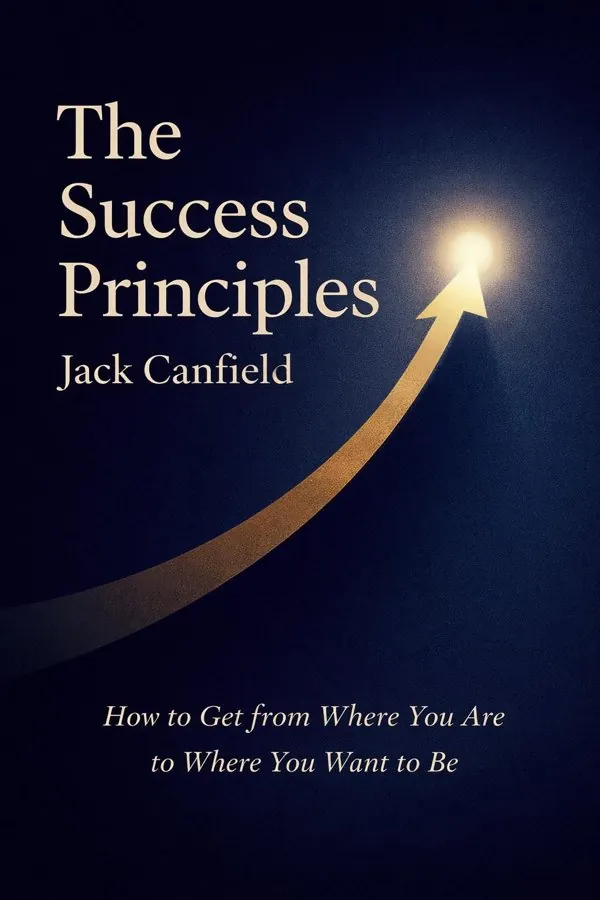
The Success Principles: Summary & Key Insights
 10 min9 chaptersAudio available
Key Takeaways from The Success Principles
The biggest shift in success often begins the moment you stop asking, “Why is this happening to me?
Most people do not fail because they aim too high; they fail because they never decide clearly what they want.
A dream inspires you, but a goal organizes you.
Confidence rarely appears before action; more often, it is built because of action.
The gap between knowing and doing is where most ambitions disappear.
What Is The Success Principles About?
The Success Principles by Jack Canfield is a self-help book published in 2005 spanning 12 pages. The Success Principles is Jack Canfield’s practical roadmap for turning vague hopes into measurable results. First published in 2005, the book brings together decades of lessons from personal development, achievement psychology, coaching, and business success into a clear system anyone can apply. Rather than treating success as a matter of talent, luck, or privilege, Canfield argues that it follows patterns: people who consistently get results think differently, act intentionally, and take full ownership of their lives. From setting goals and building confidence to managing time, handling rejection, and creating wealth, the book offers concrete principles backed by stories, exercises, and reflection prompts. What makes it especially useful is its blend of mindset and action. Canfield does not stop at motivation; he shows readers how to translate ambition into habits and habits into outcomes. As the co-creator of the Chicken Soup for the Soul series and a longtime motivational teacher, he writes with authority born from studying and teaching high performance for years. For anyone who wants a structured, encouraging, and actionable guide to personal and professional growth, this book remains a modern classic.
This FizzRead summary covers all 9 key chapters of The Success Principles in approximately 10 minutes, distilling the most important ideas, arguments, and takeaways from Jack Canfield's work. Also available as an audio summary and Key Quotes Podcast.
The Success Principles
The Success Principles is Jack Canfield’s practical roadmap for turning vague hopes into measurable results. First published in 2005, the book brings together decades of lessons from personal development, achievement psychology, coaching, and business success into a clear system anyone can apply. Rather than treating success as a matter of talent, luck, or privilege, Canfield argues that it follows patterns: people who consistently get results think differently, act intentionally, and take full ownership of their lives. From setting goals and building confidence to managing time, handling rejection, and creating wealth, the book offers concrete principles backed by stories, exercises, and reflection prompts. What makes it especially useful is its blend of mindset and action. Canfield does not stop at motivation; he shows readers how to translate ambition into habits and habits into outcomes. As the co-creator of the Chicken Soup for the Soul series and a longtime motivational teacher, he writes with authority born from studying and teaching high performance for years. For anyone who wants a structured, encouraging, and actionable guide to personal and professional growth, this book remains a modern classic.
Who Should Read The Success Principles?
This book is perfect for anyone interested in self-help and looking to gain actionable insights in a short read. Whether you're a student, professional, or lifelong learner, the key ideas from The Success Principles by Jack Canfield will help you think differently.
- ✓Readers who enjoy self-help and want practical takeaways
- ✓Professionals looking to apply new ideas to their work and life
- ✓Anyone who wants the core insights of The Success Principles in just 10 minutes
Want the full summary?
Get instant access to this book summary and 100K+ more with Fizz Moment.
Get Free SummaryAvailable on App Store • Free to download
Key Chapters
The biggest shift in success often begins the moment you stop asking, “Why is this happening to me?” and start asking, “What can I do about it?” Canfield’s first and most central principle is that successful people take full responsibility for their lives. That does not mean blaming yourself for every event or denying that unfair things happen. It means recognizing that your responses, decisions, habits, and standards shape your future more than your excuses ever will. As long as you attribute your problems to your boss, your upbringing, the economy, or bad timing, you hand over your power. Responsibility is the doorway to change because it forces you to focus on what is within your control.
Canfield often frames this as a simple equation: events happen, but your response to those events determines your outcomes. Two people can face the same setback and produce completely different futures depending on how they interpret it. One sees rejection and gives up; the other sees feedback and improves. In work, this might mean asking how your communication, preparation, or follow-through contributed to a disappointing result. In relationships, it could mean noticing patterns you keep repeating rather than only listing the faults of others. In health, it may involve accepting that small daily choices matter more than bursts of motivation.
This principle is empowering because it shifts your identity from victim to creator. You may not control everything, but you can always influence what comes next through your mindset and behavior. Actionable takeaway: for one week, whenever you feel frustrated, replace blame with one question: “What is my part in this, and what is the next constructive step I can take?”
Most people do not fail because they aim too high; they fail because they never decide clearly what they want. Canfield emphasizes that success requires direction. If your goals are fuzzy, your actions will be scattered, your motivation will fade, and opportunities will pass unnoticed. A clear vision acts like an internal compass. It helps you filter distractions, make better decisions, and persist when the process becomes difficult.
The book urges readers to move beyond general desires such as “I want to be happy” or “I want more money.” Those wishes may be sincere, but they are too vague to guide behavior. Real clarity means identifying what kind of life you want, what matters most to you, and what success actually looks like in concrete terms. This includes career, relationships, health, finances, contribution, and personal fulfillment. Canfield also ties vision to purpose: when your goals connect to values and meaning, you are more likely to stay committed. Chasing goals because they impress others rarely creates lasting satisfaction.
A practical way to apply this idea is to imagine your ideal life three to five years from now. Where are you living? What work are you doing? How do you spend your mornings? Who surrounds you? What impact are you making? Write it in present tense so it becomes vivid and emotionally compelling. Then identify the themes underneath it: freedom, creativity, service, mastery, stability, or adventure. These themes help you understand not just what you want, but why you want it.
When your vision is clear, action becomes easier because decisions are no longer random. Actionable takeaway: write a one-page description of your ideal life and highlight the three values that appear most often. Use them to guide your next major decision.
A dream inspires you, but a goal organizes you. One of Canfield’s most practical lessons is that goals must be specific, measurable, and written down if you want them to shape reality. Many people carry around private hopes for years without ever converting them into concrete commitments. The result is a cycle of wishing, delaying, and wondering why life feels stagnant. Success begins to accelerate when a desire becomes a target.
Canfield argues that writing down your goals is not a trivial exercise. It signals seriousness, creates focus, and helps your mind start looking for pathways and resources. Specificity matters because the brain responds better to precision than to abstraction. “Earn more” is weak; “increase my income by 20% in the next 12 months by winning three new clients and completing a certification” is actionable. Good goals also have timelines, intermediate milestones, and emotional reasons behind them. If a goal matters only intellectually, it will be easy to abandon when obstacles arise.
This principle applies across life areas. In health, instead of saying “get fit,” you might set a goal to walk 8,000 steps a day, cook four healthy dinners per week, and lose ten pounds in four months. In career, you might aim to lead a team project, improve public speaking, or move into management by a set date. In relationships, you might schedule a weekly date night, rebuild trust through honest conversations, or expand your network by reaching out to two people each week.
Goals are not rigid prisons; they are decision tools. They help you evaluate progress and adjust intelligently. Actionable takeaway: choose one major goal, write it in precise terms with a deadline, break it into monthly milestones, and review it every morning for the next 30 days.
Confidence rarely appears before action; more often, it is built because of action. Canfield stresses that belief in yourself is not optional if you want exceptional results. The challenge is that many people wait for evidence before they trust themselves. They want guarantees, approval, or perfect readiness. But nearly every meaningful achievement requires moving before certainty exists. Self-belief is the decision to back your own growth while you are still becoming the person capable of the goal.
Canfield connects belief to self-talk, visualization, and the stories you repeat about your past. If you constantly tell yourself that you are unlucky, not charismatic enough, too old, too inexperienced, or not naturally gifted, you create internal resistance that weakens effort. Successful people guard their mental environment. They replace limiting assumptions with possibility-oriented thinking, not through fantasy but through deliberate conditioning. This may involve affirmations, visualizing desired outcomes, reading biographies of people who overcame similar obstacles, and keeping a record of wins to strengthen self-trust.
A common application is in public speaking or leadership. Someone may believe they are “not the type” to lead meetings or present ideas. But by rehearsing, visualizing a strong performance, and collecting small experiences of success, they begin to revise that identity. The same is true in entrepreneurship, dating, fitness, or creative work. Belief does not eliminate fear, but it prevents fear from becoming a verdict.
Canfield’s deeper point is that the world often responds to the standards you set internally. When you expect little from yourself, you behave timidly. When you expect growth, you search for ways to rise. Actionable takeaway: identify one limiting belief that repeatedly holds you back and rewrite it into a stronger statement you can practice daily, supported by three pieces of evidence from your past.
The gap between knowing and doing is where most ambitions disappear. Canfield makes it clear that success is never created by intention alone. You can read every self-help book, attend every seminar, and create every vision board imaginable, but without action, nothing changes. More importantly, action must be paired with persistence. Initial attempts are often clumsy, inconvenient, and imperfect. People who succeed are not the ones who avoid mistakes; they are the ones who treat mistakes as information.
This principle challenges perfectionism. Many people delay action because they want the ideal plan, the ideal timing, or the confidence to guarantee a positive result. Canfield argues that progress comes faster when you start before you feel fully ready. Taking action creates feedback, and feedback helps you improve. If you launch a service and few customers respond, that is not final failure; it is data about your offer, your message, or your market. If you apply for jobs and receive no interviews, you adjust your resume, sharpen your networking, and refine your positioning. If a conversation goes poorly, you learn how to communicate better next time.
Persistence matters because meaningful goals are usually achieved after repeated effort. Rejection, delay, confusion, and temporary disappointment are normal parts of the process. Canfield encourages readers to normalize these experiences instead of interpreting them as signs to quit. The question is not whether you will meet resistance, but how quickly you will learn from it.
Action plus feedback creates momentum. Each attempt makes the next one smarter. Actionable takeaway: choose one goal you have been postponing and take one imperfect step within 24 hours, then define how you will collect and use feedback rather than emotionally reacting to it.
No one succeeds alone, and the quality of your life is deeply shaped by the quality of your relationships. Canfield argues that supportive connections are not a luxury; they are a strategic asset. Encouraging, growth-oriented people can expand your thinking, open doors, challenge your blind spots, and help you stay accountable. By contrast, chronic negativity, cynicism, and low expectations can quietly reduce your ambition and energy over time.
This principle begins with becoming intentional about who influences you. That includes friends, colleagues, mentors, partners, clients, and even the media you consume. Canfield encourages readers to seek out people who embody the qualities they want to develop. If you want to be a better leader, spend time with thoughtful leaders. If you want to improve your finances, learn from disciplined, responsible people. If you want to be more courageous, notice who consistently acts despite discomfort. Modeling is one of the fastest forms of learning.
The principle also involves communication. Success is not just about being around the right people; it is about asking for what you need, listening carefully, and building trust. Many people expect support without clearly requesting it. Others avoid networking because they associate it with self-promotion. Canfield reframes networking as relationship building based on mutual value and genuine interest. Offer help, express appreciation, and maintain contact before you need something.
In practical terms, this might mean joining a mastermind group, finding a coach, reconnecting with former colleagues, or setting better boundaries with people who repeatedly drain your focus. Relationships should not be judged only by history, but by whether they support the life you are trying to create. Actionable takeaway: make a list of five people who elevate you and five influences that diminish you, then take one step this week to strengthen the first group and reduce the second.
What you do repeatedly matters far more than what you intend occasionally. Canfield treats success as a systems issue as much as a motivational one. People often believe they need more time, when what they really need is more clarity about priorities and more discipline around habits. Time management is ultimately self-management. Every day reveals what you value through where your attention goes.
Canfield encourages readers to stop treating their goals as side projects squeezed in after distraction, fatigue, and low-value commitments. The most important activities should be scheduled first, not left to whatever energy remains. This means distinguishing between the urgent and the meaningful. Answering emails, attending unnecessary meetings, and reacting to other people’s demands may feel productive, but often they crowd out the work that actually changes your life: strategic planning, learning, exercise, relationship building, sales outreach, or creative production.
Habits make this easier because they reduce the need for constant willpower. A person who writes every morning at 7 a.m., reviews goals before work, meal-preps on Sundays, and tracks expenses weekly will outperform someone with the same talent but no consistent routines. Canfield’s message is not that life must become rigid, but that structure creates freedom. Once good behaviors become automatic, progress feels less dramatic and more dependable.
A useful application is habit stacking: attaching a desired behavior to an existing routine. After making coffee, review goals. After lunch, take a ten-minute walk. Before bed, list the top three tasks for tomorrow. These small systems compound. Actionable takeaway: identify the one recurring habit that would most improve your life if practiced daily, then attach it to a fixed time or existing routine for the next 14 days.
Fear is not always a stop sign; often it is evidence that growth is nearby. Canfield teaches that setbacks, discomfort, and uncertainty are unavoidable parts of any meaningful journey. The problem is not adversity itself, but the way people interpret it. Many assume that fear means they are not ready, not capable, or on the wrong path. In reality, fear frequently appears when you are stretching beyond your current identity.
Canfield encourages readers to stop expecting a smooth path and instead develop resilience. Obstacles can refine skills, deepen commitment, and reveal character. A failed product launch may teach market awareness. A difficult breakup may clarify standards and communication patterns. A job loss may force a more honest reassessment of purpose and strengths. Painful experiences are not automatically valuable, but they can become valuable when processed intentionally.
One of the most practical ways to work with fear is to break it down. What exactly are you afraid of: embarrassment, financial loss, rejection, uncertainty, or loss of control? Once named, fear becomes easier to manage. You can then create smaller steps, contingency plans, and supportive structures. For example, someone afraid to start a business might begin with a side project, a savings target, and mentor conversations rather than an immediate leap. Someone afraid of criticism might publish short posts before writing a full book.
Resilience also grows through recovery practices such as reflection, gratitude, community, and maintaining perspective. Adversity feels final when you forget how many challenges you have already survived. Actionable takeaway: write down one fear you have been avoiding, identify the worst realistic outcome, the best possible outcome, and the most likely outcome, then take the smallest step that moves you forward despite the discomfort.
Wealth is rarely built by chasing money alone; it is usually created by solving problems that matter to other people. Canfield’s approach to abundance combines mindset with contribution. He challenges scarcity thinking, the belief that there is never enough opportunity, recognition, or financial reward to go around. Scarcity breeds hesitation, envy, and short-term decision-making. Abundance thinking, by contrast, encourages creativity, generosity, and a focus on value creation.
Canfield does not argue that positive thinking alone produces prosperity. He links abundance to practical financial responsibility and service. To earn more, you generally need to improve your skills, increase your usefulness, communicate your value clearly, and become willing to ask for what you deserve. This may mean negotiating a raise, expanding a business, creating a new income stream, or developing expertise that the market rewards. Money becomes a result of contribution multiplied by consistency.
At the same time, the book stresses that success is incomplete if it remains purely self-centered. True fulfillment includes giving back, helping others grow, and using your gifts in ways that extend beyond personal gain. Contribution creates meaning, deepens relationships, and often opens new opportunities. A business owner who genuinely serves clients builds trust and referrals. A professional who mentors others strengthens leadership. A financially disciplined person who gives intentionally experiences money as a tool rather than a source of fear.
This principle integrates achievement and character. You can pursue success boldly while remaining generous and purpose-driven. Actionable takeaway: ask yourself two questions this week: “How can I create more value in my work?” and “How can I use some of my time, skills, or money to improve someone else’s life?” Then act on one answer to each.
All Chapters in The Success Principles
About the Author
Jack Canfield is an American author, motivational speaker, corporate trainer, and entrepreneur widely known for his work in personal development. He rose to international prominence as the co-creator of the Chicken Soup for the Soul series, one of the best-selling inspirational franchises in publishing history. Over several decades, Canfield has taught seminars, coached leaders, and developed training programs focused on achievement, confidence, leadership, and life purpose. His approach blends motivational storytelling with practical success strategies designed for everyday use. Through books, workshops, and speaking engagements, he has influenced millions of readers and students around the world. The Success Principles is one of his most recognized works, distilling many of the ideas he has spent his career teaching about personal and professional growth.
Get This Summary in Your Preferred Format
Read or listen to the The Success Principles summary by Jack Canfield anytime, anywhere. FizzRead offers multiple formats so you can learn on your terms — all free.
Available formats: App · Audio · PDF · EPUB — All included free with FizzRead
Download The Success Principles PDF and EPUB Summary
Key Quotes from The Success Principles
“The biggest shift in success often begins the moment you stop asking, “Why is this happening to me?”
“Most people do not fail because they aim too high; they fail because they never decide clearly what they want.”
“A dream inspires you, but a goal organizes you.”
“Confidence rarely appears before action; more often, it is built because of action.”
“The gap between knowing and doing is where most ambitions disappear.”
Frequently Asked Questions about The Success Principles
The Success Principles by Jack Canfield is a self-help book that explores key ideas across 9 chapters. The Success Principles is Jack Canfield’s practical roadmap for turning vague hopes into measurable results. First published in 2005, the book brings together decades of lessons from personal development, achievement psychology, coaching, and business success into a clear system anyone can apply. Rather than treating success as a matter of talent, luck, or privilege, Canfield argues that it follows patterns: people who consistently get results think differently, act intentionally, and take full ownership of their lives. From setting goals and building confidence to managing time, handling rejection, and creating wealth, the book offers concrete principles backed by stories, exercises, and reflection prompts. What makes it especially useful is its blend of mindset and action. Canfield does not stop at motivation; he shows readers how to translate ambition into habits and habits into outcomes. As the co-creator of the Chicken Soup for the Soul series and a longtime motivational teacher, he writes with authority born from studying and teaching high performance for years. For anyone who wants a structured, encouraging, and actionable guide to personal and professional growth, this book remains a modern classic.
More by Jack Canfield

You Might Also Like




Featured In
Browse by Category
Ready to read The Success Principles?
Get the full summary and 100K+ more books with Fizz Moment.