
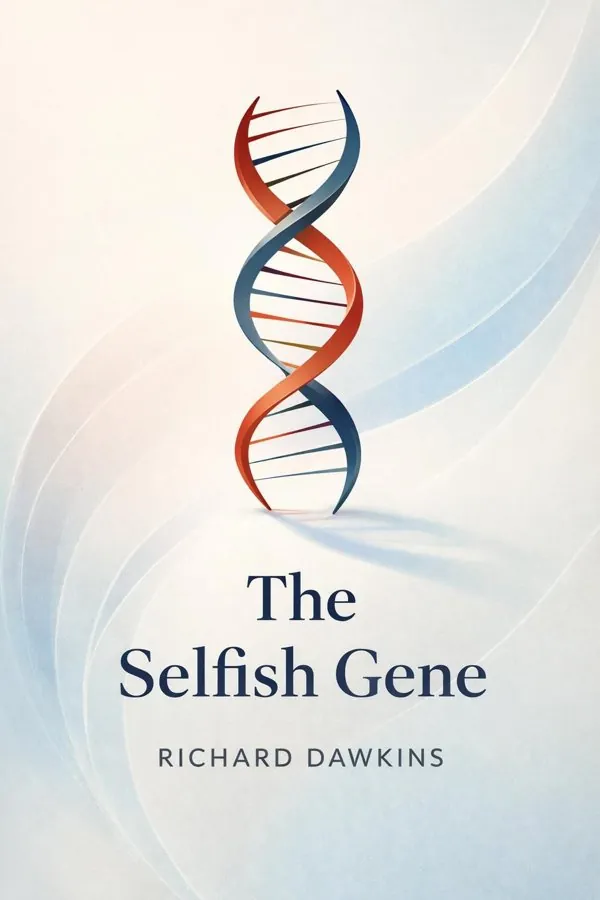
The Selfish Gene: Summary & Key Insights
 10 min10 chaptersAudio available
Key Takeaways from The Selfish Gene
The most unsettling idea in the book is also the most clarifying: evolution does not primarily reward species, groups, or even individual organisms—it rewards whatever gets copied.
Life becomes easier to understand once we separate two roles that are often confused: replicators and vehicles.
At first glance, altruism seems to contradict evolution.
Not all helpful behavior is directed toward relatives.
Family life may look harmonious, but evolution predicts hidden tension inside it.
What Is The Selfish Gene About?
The Selfish Gene by Richard Dawkins is a life_science book published in 1976 spanning 11 pages. Richard Dawkins’s The Selfish Gene is one of the most influential science books of the twentieth century because it changes the angle from which evolution is viewed. Instead of treating organisms, species, or groups as the main units of natural selection, Dawkins argues that genes are the more enduring players. Organisms, in this framework, are temporary survival machines built by genes to help them persist and replicate. This perspective does not mean genes possess intentions or moral character; “selfish” is a metaphor for the logic of differential survival. What makes the book so powerful is that it explains seemingly puzzling phenomena—altruism, cooperation, parental conflict, sexual competition, and even culture—through a single unifying lens. Dawkins combines rigorous evolutionary thinking with vivid examples and memorable language, making difficult ideas accessible without stripping them of depth. He also introduced the concept of the “meme,” extending evolutionary logic into the realm of culture. As an evolutionary biologist and gifted science communicator, Dawkins brought gene-centered thinking into mainstream discussion. The Selfish Gene remains essential reading for anyone who wants to understand evolution, human behavior, and the deeper logic of life.
This FizzRead summary covers all 10 key chapters of The Selfish Gene in approximately 10 minutes, distilling the most important ideas, arguments, and takeaways from Richard Dawkins's work. Also available as an audio summary and Key Quotes Podcast.
The Selfish Gene
Richard Dawkins’s The Selfish Gene is one of the most influential science books of the twentieth century because it changes the angle from which evolution is viewed. Instead of treating organisms, species, or groups as the main units of natural selection, Dawkins argues that genes are the more enduring players. Organisms, in this framework, are temporary survival machines built by genes to help them persist and replicate. This perspective does not mean genes possess intentions or moral character; “selfish” is a metaphor for the logic of differential survival.
What makes the book so powerful is that it explains seemingly puzzling phenomena—altruism, cooperation, parental conflict, sexual competition, and even culture—through a single unifying lens. Dawkins combines rigorous evolutionary thinking with vivid examples and memorable language, making difficult ideas accessible without stripping them of depth. He also introduced the concept of the “meme,” extending evolutionary logic into the realm of culture.
As an evolutionary biologist and gifted science communicator, Dawkins brought gene-centered thinking into mainstream discussion. The Selfish Gene remains essential reading for anyone who wants to understand evolution, human behavior, and the deeper logic of life.
Who Should Read The Selfish Gene?
This book is perfect for anyone interested in life_science and looking to gain actionable insights in a short read. Whether you're a student, professional, or lifelong learner, the key ideas from The Selfish Gene by Richard Dawkins will help you think differently.
- ✓Readers who enjoy life_science and want practical takeaways
- ✓Professionals looking to apply new ideas to their work and life
- ✓Anyone who wants the core insights of The Selfish Gene in just 10 minutes
Want the full summary?
Get instant access to this book summary and 100K+ more with Fizz Moment.
Get Free SummaryAvailable on App Store • Free to download
Key Chapters
The most unsettling idea in the book is also the most clarifying: evolution does not primarily reward species, groups, or even individual organisms—it rewards whatever gets copied. Dawkins argues that genes are the most important units of selection because they persist across generations while bodies come and go. A successful gene is one that, by influencing the development and behavior of organisms, increases its own chances of being passed on.
This perspective reframes the living world. A rabbit, oak tree, or human being is not the final beneficiary of evolution but a temporary vehicle assembled by genes. Organisms matter deeply, of course, because they are the means through which genes survive. But in evolutionary time, genes are the more enduring entities. Thinking this way helps explain why traits spread even when they seem costly to individuals in the short term. If a trait helps copies of the relevant genes survive and reproduce more effectively overall, natural selection can favor it.
A practical example appears in inherited behaviors. A bird that instinctively protects its chicks may risk its own life, yet the genes promoting such behavior can still spread because they are being preserved in offspring. The same logic applies in medicine, conservation, and psychology: many patterns make more sense when viewed as strategies shaped by gene-level selection.
Actionable takeaway: When evaluating any biological trait or behavior, ask not only, “How does this help the organism?” but also, “How might this help the genes behind it get replicated?”
Life becomes easier to understand once we separate two roles that are often confused: replicators and vehicles. Dawkins defines replicators as entities that make copies of themselves with enough fidelity, longevity, and fecundity to participate in natural selection. Genes are the central biological example. Vehicles, by contrast, are the temporary bodies and systems that replicators build to navigate the world.
This distinction matters because it explains why organisms appear so exquisitely designed. Bodies are not the ultimate point of evolution; they are tools constructed over time because they help replicators survive. Eyes, wings, immune systems, mating displays, and nervous systems are all part of the machinery through which genes influence outcomes. A fox’s speed is useful to the fox, but in evolutionary logic it is also useful because it helps the genes contributing to that speed remain in circulation.
The vehicle concept also helps explain mortality. Bodies wear out and die, but genes can continue if they are successfully transmitted. The temporary nature of vehicles is not a flaw in evolution’s system; it is part of how long-term adaptation happens. New bodies are continually tested against changing environments, while genes that perform well become more common.
In everyday terms, this framework encourages us to see biology less as a story of fixed essences and more as a process of information using matter to persist. That insight has influenced fields from behavioral ecology to artificial life.
Actionable takeaway: Use the replicator-vehicle distinction as a mental model whenever a biological phenomenon seems confusing; it often reveals why short-lived organisms can serve long-lasting genetic interests.
At first glance, altruism seems to contradict evolution. Why would natural selection favor behavior that helps others at a cost to oneself? Dawkins’s answer is one of the book’s most powerful contributions: genes can promote altruism when helping another organism indirectly helps copies of the same genes. This is the logic of kin selection and inclusive fitness.
Close relatives share many genes. A gene that leads an animal to protect siblings, offspring, or other kin may reduce the actor’s immediate survival chances, yet still spread because the beneficiaries are likely to carry the same gene. This helps explain warning calls in social animals, parental sacrifice, and cooperative breeding. The individual may appear selfless, but the underlying evolutionary logic remains gene-centered.
Hamilton’s rule sits behind this reasoning: altruism can evolve when the genetic relatedness multiplied by the benefit to the recipient exceeds the cost to the actor. Dawkins presents this not as a cynical reduction of care to calculation, but as an elegant explanation of how compassion-like behaviors emerge naturally.
The idea has practical value beyond animal behavior. It helps explain family bonds, inheritance conflicts, and why organisms often invest heavily in close kin. It also reminds us that not all kindness in nature is universal; much of it is structured by degrees of relatedness.
Actionable takeaway: When you observe sacrifice or care in nature, ask who benefits genetically. Looking at patterns of relatedness often reveals why apparently selfless behavior can evolve and persist.
Not all helpful behavior is directed toward relatives. One of the book’s most important insights is that cooperation can also emerge among non-kin when individuals interact repeatedly and can benefit from mutual exchange. This is the logic of reciprocal altruism: I help you now, and you help me later.
Dawkins explores how such systems can evolve if organisms can recognize partners, remember past interactions, and punish cheaters. In a world of one-off encounters, pure selfishness may dominate. But in repeated relationships, cooperation can become a winning strategy. The famous game theory model of the prisoner’s dilemma illustrates this well. Strategies like “tit for tat”—start cooperatively, then mirror the other side’s previous move—show how stable cooperation can arise without requiring trust in the moral sense.
Examples appear in grooming among primates, food sharing in some species, and social arrangements where long-term benefit outweighs immediate gain. Human societies are full of similar dynamics: friendships, business partnerships, neighborhood trust, and professional reputation all depend on repeated interaction and consequences for betrayal.
This idea is profoundly practical. It suggests that cooperation is not fragile idealism but often a robust outcome when systems reward reciprocity and discourage exploitation. Institutions, social norms, and transparent accountability can therefore strengthen cooperative behavior by making future interactions matter.
Actionable takeaway: Build environments—at work, in communities, and in personal relationships—where repeated interaction, memory, and fair consequences make cooperation more advantageous than short-term cheating.
Family life may look harmonious, but evolution predicts hidden tension inside it. Dawkins highlights a striking point: parents and offspring are genetically aligned, but not perfectly. A parent is equally related to all current and future children, while each individual offspring is most invested in itself. This difference creates parent-offspring conflict.
A chick begging for more food than its siblings, a mammal infant resisting weaning, or a child demanding disproportionate parental attention can all be understood through this lens. From the offspring’s perspective, obtaining extra investment improves its own chances. From the parent’s perspective, resources must be distributed across multiple offspring and future reproductive opportunities. Natural selection therefore shapes not just care, but bargaining, manipulation, and resistance within families.
Dawkins extends this reasoning to sibling rivalry and reproductive strategy. Offspring may compete because each shares only part of its genes with siblings, not all of them. Parents may evolve signals or behaviors that moderate this conflict, while offspring evolve ways to press for more. What looks like emotion-laden family drama can often be mapped onto evolutionary incentives.
This idea does not cheapen love or attachment. Instead, it shows that affection and conflict can coexist because they arise in relationships where interests overlap strongly but never completely. Understanding this helps make sense of developmental behavior across species, including humans.
Actionable takeaway: In studying family behavior, expect both cooperation and conflict. The key question is not whether relatives care for one another, but where their genetic interests align and where they diverge.
Survival alone does not explain the shape of life; reproduction adds another layer of strategy. Dawkins shows that sexual selection can produce extravagant traits and complex behaviors because mating success is itself a target of evolution. Traits that improve reproductive opportunities may spread even if they are costly in other ways.
This framework helps explain peacock tails, courtship rituals, mate guarding, competition between males, and choosiness among females. It also connects to parental investment theory: the sex that invests more in offspring often becomes more selective, while the less-investing sex competes more intensely for access. These tendencies are not rigid laws, but broad evolutionary patterns.
Dawkins emphasizes that mating behavior should be understood strategically. Individuals are shaped by selection to maximize reproductive success under specific ecological constraints. In some species, that means monogamy; in others, promiscuity, deception, competition, or elaborate signaling. The key is not moral judgment but adaptive logic.
In humans, this lens has influenced discussions of attraction, jealousy, commitment, and mating preferences. Used carefully, it can illuminate broad patterns without turning them into simplistic stereotypes. Evolution explains tendencies, not destinies.
The practical application is conceptual discipline: avoid assuming that a trait exists because it helps survival in general. Many visible behaviors and features exist because they succeeded in competition for mates.
Actionable takeaway: When evaluating courtship, attraction, or reproductive behavior, ask how mating competition and parental investment might shape the incentives involved.
A gene’s effects do not stop at skin, fur, bark, or bone. Dawkins pushes the reader toward a wider view with the idea that genes can shape the environment outside the organism’s body. A beaver dam, a bird’s nest, a spider’s web, or a parasite-induced manipulation of a host can all be seen as extensions of genetic influence. This insight points toward what Dawkins later developed more fully as the extended phenotype.
The importance of this idea is that it broadens what counts as a biological effect. If a gene leads an organism to build a structure that improves survival or reproduction, then that structure is part of the gene’s functional expression. The same applies when a parasite alters host behavior in ways that benefit the parasite’s transmission. Genes can exert consequences through bodies, but also through the traces bodies leave in the world.
This perspective helps scientists think more clearly about animal architecture, ecological engineering, symbiosis, and host-parasite dynamics. It also underscores how misleading it can be to treat the organism as a sealed unit. The adaptive reach of genes may extend into social systems, habitats, and interspecies interactions.
For readers, the concept is intellectually liberating. It invites you to look at nature not just as a collection of organisms, but as a landscape of inherited effects. What appears to be “environment” may partly be the visible outcome of long-term selection.
Actionable takeaway: When examining any species, include its built structures, altered surroundings, and effects on other organisms as part of the phenotype shaped by evolutionary pressures.
Perhaps the book’s most famous leap beyond biology is the introduction of the meme. Dawkins proposes that if genes are replicators in biological evolution, then ideas, tunes, habits, slogans, and cultural practices can function as analogous replicators in cultural evolution. A meme spreads by being copied from mind to mind, not through DNA but through imitation, communication, and memory.
The meme concept is powerful because it explains why some ideas spread even when they do not benefit the people carrying them. Just as successful genes are those that replicate effectively, successful memes are those that are catchy, memorable, emotionally resonant, easy to transmit, or socially rewarded. Religious doctrines, fashion trends, internet jokes, political slogans, and scientific concepts can all be analyzed through this lens.
Dawkins does not claim that cultural transmission is identical to genetic inheritance. The mechanisms differ, and culture changes far more rapidly. But the analogy opens a compelling framework for understanding competition among ideas. In the digital age, the meme concept seems almost prophetic. Viral content, outrage cycles, imitation trends, and algorithmic amplification all reveal how cultural units can spread because they are good at replication, not necessarily because they are true or beneficial.
This has practical consequences for media literacy. We are not just consumers of information; we are hosts and transmitters of cultural replicators. Some memes improve lives, while others exploit attention and fear.
Actionable takeaway: Before sharing any idea, ask not only whether it is engaging, but whether it is accurate, beneficial, and worth helping replicate.
The book’s most misunderstood idea is that describing selfish genes is not the same as endorsing selfish behavior. Dawkins repeatedly warns against the naturalistic fallacy: we must not turn facts about evolution into moral commands. Human beings are products of natural selection, but we are also capable of reflection, planning, education, and ethical choice.
This final message gives the book much of its enduring philosophical force. Nature is full of competition, manipulation, and indifference, yet humans are not condemned to imitate it. If our genes built brains capable of foresight and culture, then those capacities allow us to resist purely biological impulses when we decide to do so. We can build institutions that protect the vulnerable, reward fairness, and extend concern beyond kin.
Dawkins’s argument is therefore not moral pessimism but moral realism. To create humane societies, we should understand the tendencies shaped by evolution rather than pretend they do not exist. Knowing that favoritism, rivalry, and tribal attachment may have deep roots helps us design better norms and systems. Education, law, and moral philosophy become tools for transcending instinct where instinct is harmful.
This is one reason the book matters far beyond biology. It shows that a scientific account of human origins does not erase responsibility; it sharpens it. We inherit tendencies, but we still choose what kind of world to make.
Actionable takeaway: Use evolutionary insight as a source of self-awareness, not excuse-making. Understanding our biological inheritance is most valuable when it helps us act more consciously and more ethically.
All Chapters in The Selfish Gene
About the Author
Richard Dawkins is a British evolutionary biologist, ethologist, and influential science communicator. Born in 1941, he studied at Oxford under Nobel laureate Nikolaas Tinbergen and later became a fellow of New College, Oxford. Dawkins gained international recognition with The Selfish Gene, which popularized the gene-centered view of evolution and introduced the term “meme.” His later works, including The Extended Phenotype, The Blind Watchmaker, and Climbing Mount Improbable, further established him as one of the leading interpreters of evolutionary theory for general readers. Beyond biology, he became a prominent public intellectual known for advocating scientific literacy, skepticism, and secularism. His writing is noted for combining conceptual precision, vivid metaphor, and a talent for making complex scientific ideas accessible to a wide audience.
Get This Summary in Your Preferred Format
Read or listen to the The Selfish Gene summary by Richard Dawkins anytime, anywhere. FizzRead offers multiple formats so you can learn on your terms — all free.
Available formats: App · Audio · PDF · EPUB — All included free with FizzRead
Download The Selfish Gene PDF and EPUB Summary
Key Quotes from The Selfish Gene
“The most unsettling idea in the book is also the most clarifying: evolution does not primarily reward species, groups, or even individual organisms—it rewards whatever gets copied.”
“Life becomes easier to understand once we separate two roles that are often confused: replicators and vehicles.”
“At first glance, altruism seems to contradict evolution.”
“Not all helpful behavior is directed toward relatives.”
“Family life may look harmonious, but evolution predicts hidden tension inside it.”
Frequently Asked Questions about The Selfish Gene
The Selfish Gene by Richard Dawkins is a life_science book that explores key ideas across 10 chapters. Richard Dawkins’s The Selfish Gene is one of the most influential science books of the twentieth century because it changes the angle from which evolution is viewed. Instead of treating organisms, species, or groups as the main units of natural selection, Dawkins argues that genes are the more enduring players. Organisms, in this framework, are temporary survival machines built by genes to help them persist and replicate. This perspective does not mean genes possess intentions or moral character; “selfish” is a metaphor for the logic of differential survival. What makes the book so powerful is that it explains seemingly puzzling phenomena—altruism, cooperation, parental conflict, sexual competition, and even culture—through a single unifying lens. Dawkins combines rigorous evolutionary thinking with vivid examples and memorable language, making difficult ideas accessible without stripping them of depth. He also introduced the concept of the “meme,” extending evolutionary logic into the realm of culture. As an evolutionary biologist and gifted science communicator, Dawkins brought gene-centered thinking into mainstream discussion. The Selfish Gene remains essential reading for anyone who wants to understand evolution, human behavior, and the deeper logic of life.
Compare The Selfish Gene
More by Richard Dawkins
River Out Of Eden: A Darwinian View Of Life
Richard Dawkins
10 min
The Greatest Show on Earth: The Evidence for Evolution
Richard Dawkins
10 min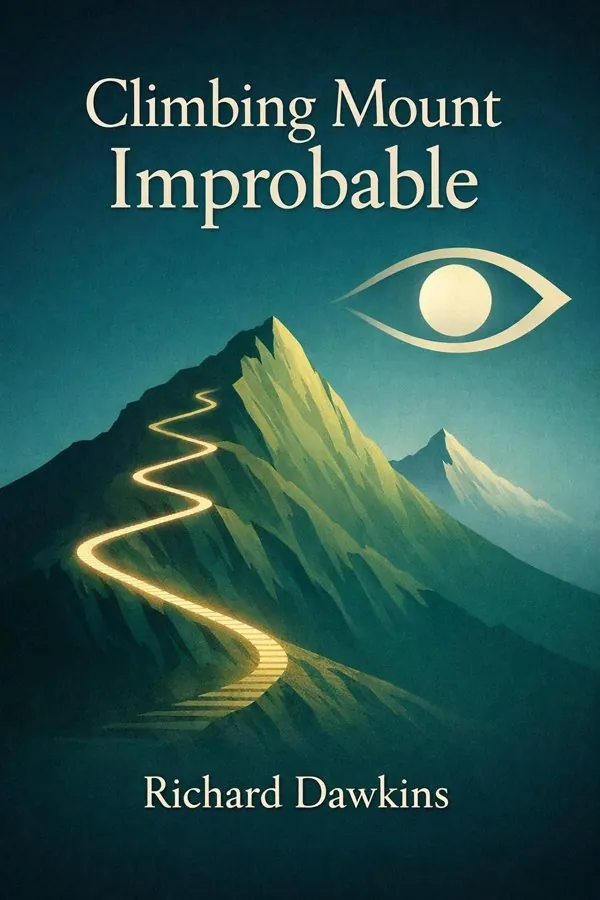
Climbing Mount Improbable
Richard Dawkins
10 min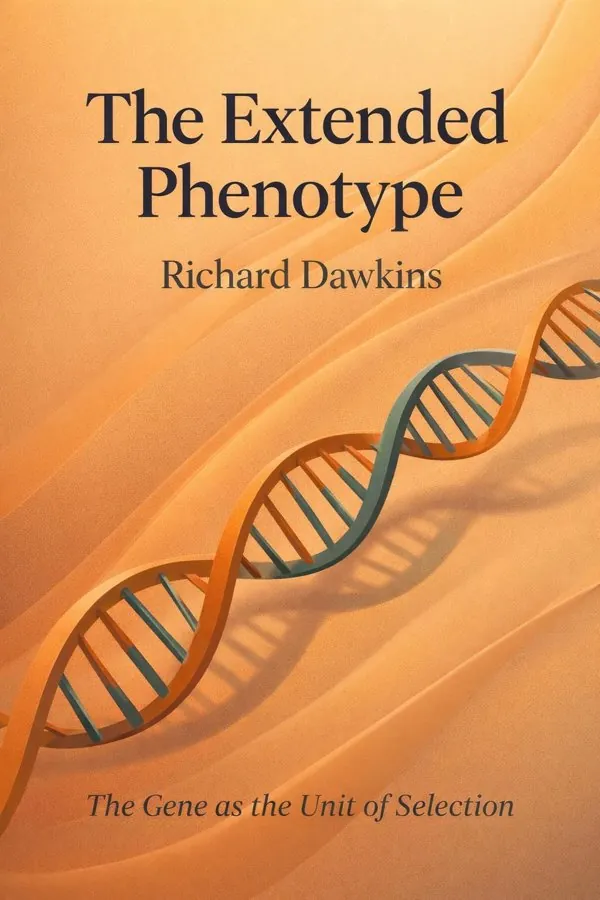
The Extended Phenotype: The Gene as the Unit of Selection
Richard Dawkins
10 minYou Might Also Like

Awakenings
Oliver Sacks
10 min
Parasite Rex: Inside the Bizarre World of Nature's Most Dangerous Creatures
Carl Zimmer
10 min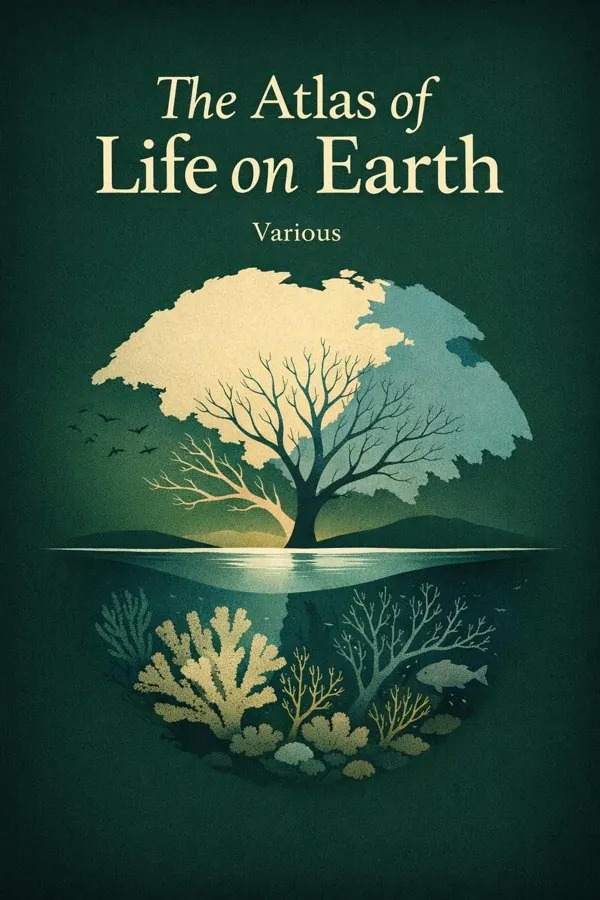
The Atlas of Life on Earth
Various
10 min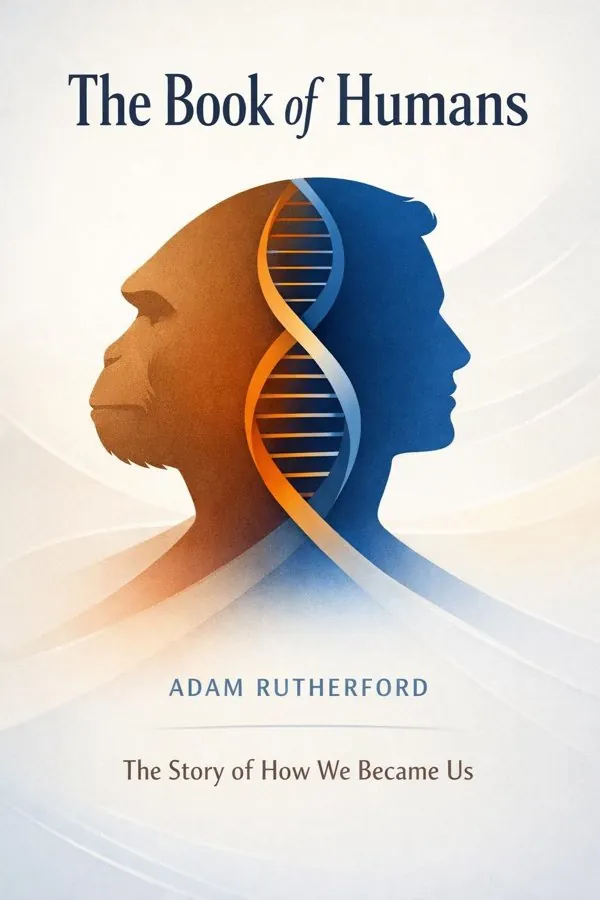
The Book of Humans: The Story of How We Became Us
Adam Rutherford
10 min
The Horse
Wendy Williams
10 min
What Makes Us Human?
Charles Pasternak
10 minFeatured In
Browse by Category
Ready to read The Selfish Gene?
Get the full summary and 100K+ more books with Fizz Moment.