
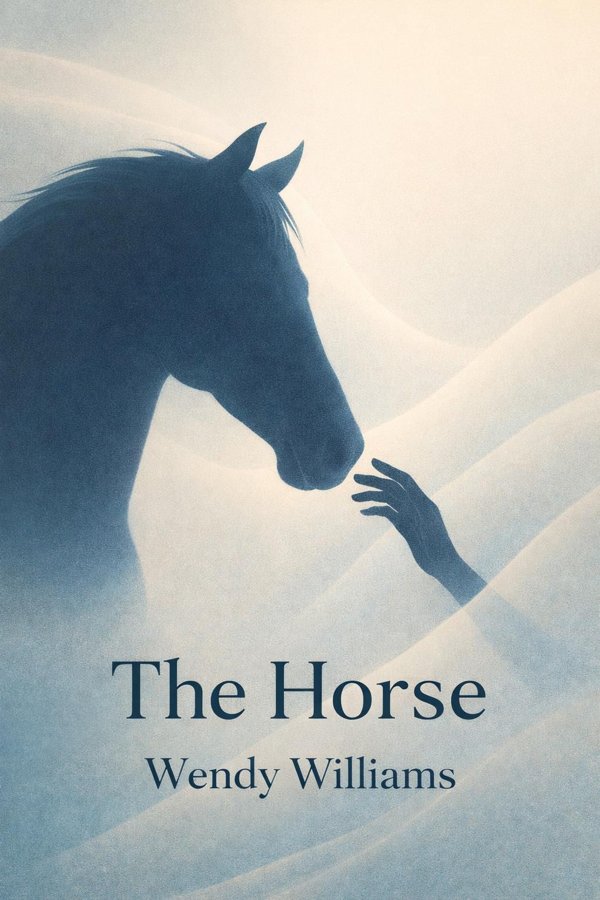
The Horse: Summary & Key Insights
 10 min9 chaptersAudio available
Key Takeaways from The Horse
A single species can redirect the fate of civilizations, and horses are one of the clearest examples.
The modern horse looks timeless, but its body is the result of a long, dramatic evolutionary journey.
Domestication is often described as a human triumph, but The Horse suggests it was something more subtle: a negotiated partnership between species.
To understand horses only as tools is to miss the most important thing about them: they are thinking, feeling beings with their own perceptual world.
Every horse breed tells a story not just about animals, but about human desires.
What Is The Horse About?
The Horse by Wendy Williams is a life_science book. What if one animal helped build the modern human world more than almost any machine, empire, or invention? In The Horse, science journalist Wendy Williams tells the astonishing story of how horses evolved, spread across continents, and became inseparable from human history. This is not just a natural history of a beloved animal. It is a rich, interdisciplinary exploration of biology, archaeology, culture, warfare, labor, sport, and emotion, showing how horses shaped migration, agriculture, transportation, trade, and even ideas of freedom and status. Williams also examines the horse as a living creature with its own sensory world, intelligence, and social life, reminding readers that our partnership with horses has always been more complex than simple domination. Her authority comes from years of acclaimed science writing and a talent for translating research into vivid, accessible storytelling. Drawing on evolutionary science, historical evidence, and modern behavioral studies, she creates a sweeping portrait of an animal that transformed humanity while being transformed by us. The Horse matters because understanding horses helps us understand ourselves: our ambitions, our dependencies, and our responsibilities toward the animals that carry civilization forward.
This FizzRead summary covers all 9 key chapters of The Horse in approximately 10 minutes, distilling the most important ideas, arguments, and takeaways from Wendy Williams's work. Also available as an audio summary and Key Quotes Podcast.
The Horse
What if one animal helped build the modern human world more than almost any machine, empire, or invention? In The Horse, science journalist Wendy Williams tells the astonishing story of how horses evolved, spread across continents, and became inseparable from human history. This is not just a natural history of a beloved animal. It is a rich, interdisciplinary exploration of biology, archaeology, culture, warfare, labor, sport, and emotion, showing how horses shaped migration, agriculture, transportation, trade, and even ideas of freedom and status. Williams also examines the horse as a living creature with its own sensory world, intelligence, and social life, reminding readers that our partnership with horses has always been more complex than simple domination. Her authority comes from years of acclaimed science writing and a talent for translating research into vivid, accessible storytelling. Drawing on evolutionary science, historical evidence, and modern behavioral studies, she creates a sweeping portrait of an animal that transformed humanity while being transformed by us. The Horse matters because understanding horses helps us understand ourselves: our ambitions, our dependencies, and our responsibilities toward the animals that carry civilization forward.
Who Should Read The Horse?
This book is perfect for anyone interested in life_science and looking to gain actionable insights in a short read. Whether you're a student, professional, or lifelong learner, the key ideas from The Horse by Wendy Williams will help you think differently.
- ✓Readers who enjoy life_science and want practical takeaways
- ✓Professionals looking to apply new ideas to their work and life
- ✓Anyone who wants the core insights of The Horse in just 10 minutes
Want the full summary?
Get instant access to this book summary and 100K+ more with Fizz Moment.
Get Free SummaryAvailable on App Store • Free to download
Key Chapters
A single species can redirect the fate of civilizations, and horses are one of the clearest examples. One of Wendy Williams's central insights is that horses did not merely assist human societies; they amplified what humans could do at nearly every level. Before engines, horses extended the range of movement, communication, agriculture, warfare, trade, and governance. They made distance smaller and speed more valuable. A mounted messenger could carry information faster than a person on foot. A plow team could work land at a scale impossible with human muscle alone. Armies with cavalry gained tactical advantages that changed political borders and historical outcomes.
Williams shows that this influence was not limited to one era or region. Across Eurasia and beyond, horses helped connect societies, expand empires, and support economies. They became woven into ordinary life as much as into grand historical narratives. Farmers depended on them, merchants invested in them, rulers displayed them, and families built emotional bonds with them. Even after industrialization, horses remained culturally powerful, symbolizing elegance, speed, freedom, and prestige.
This matters because it changes how we think about history. Too often, we treat animals as background to human action. Williams urges readers to see horses as active participants in the making of the world. If we study transportation systems, military history, urban development, or rural labor without considering horses, we miss a major causal force.
A practical application is to revisit familiar historical events and ask what role horses played behind the scenes. Whether you are reading about empires, migration, or commerce, looking for the horse factor reveals hidden infrastructure. Actionable takeaway: when studying history, include animal power as a serious driver of human progress, not a footnote.
The modern horse looks timeless, but its body is the result of a long, dramatic evolutionary journey. Williams traces how early ancestors of horses were small, forest-dwelling creatures unlike the large, fast grazers we know today. Over millions of years, changing climates and landscapes favored animals that could travel farther, run faster, and digest grasses efficiently. The horse's anatomy became a masterclass in adaptation: long limbs for speed, hooves for efficient running on open ground, powerful muscles, and teeth designed to grind tough vegetation.
This evolutionary perspective is one of the book's great strengths because it helps explain not only what horses are, but why they are the way they are. Their bodies carry the memory of ecological pressures. Their flight response, herd behavior, and need for movement make sense when viewed through the lens of survival on open plains. What people often describe as stubbornness or nervousness may actually be adaptive intelligence shaped by millions of years of avoiding predators and staying aligned with a social group.
For modern readers, this idea has practical implications. Anyone involved in horse care, training, or welfare benefits from understanding that horses are not blank slates molded to human convenience. Their digestive systems are built for frequent grazing, their psychology is tuned to environmental awareness, and their physical health depends on movement. Ignoring those realities leads to stress, illness, and poor treatment.
Williams encourages a more informed respect: to know the horse well, we must know the environment that made it. Actionable takeaway: whenever you think about horse behavior or care, ask what evolutionary purpose that trait once served and let that guide more humane expectations.
Domestication is often described as a human triumph, but The Horse suggests it was something more subtle: a negotiated partnership between species. Williams explores how humans gradually learned to capture, breed, train, and depend upon horses, but she avoids the simplistic idea that people merely imposed control on a passive animal. Horses brought their own capacities to the relationship: speed, endurance, social intelligence, trainability, and responsiveness. Without those traits, domestication on such a transformative scale would never have worked.
The process also changed both sides. Humans developed new technologies, social systems, and economic practices around horse use. Saddles, bridles, wheels, breeding traditions, veterinary care, and equestrian cultures emerged because horses became central to life. Horses, meanwhile, were reshaped by selective breeding and by their new role in human environments. Different breeds developed for racing, hauling, herding, war, and ceremony.
Williams's framing matters because it pushes readers away from a one-sided story of mastery. Domestication involves dependence. People relied on horses for work, status, survival, and expansion. That dependence carried costs and obligations. When societies built systems on horse power, they also had to feed, manage, protect, and understand these animals.
This insight applies beyond horses. It offers a broader way to think about human relationships with domesticated species today, from dogs to livestock. If partnership rather than domination is the right frame, then ethics becomes central, not optional. Actionable takeaway: view domesticated animals as co-creators of human systems, and let that perspective deepen your sense of responsibility toward their care and treatment.
To understand horses only as tools is to miss the most important thing about them: they are thinking, feeling beings with their own perceptual world. Williams draws on research and observation to show that horses are socially aware, emotionally responsive, and highly attuned to cues from both other horses and humans. They read body language, remember experiences, react to tone and tension, and form strong bonds. Their intelligence may differ from human intelligence, but it is no less real.
This is a powerful corrective to centuries of viewing horses mainly through utility. A horse is not just transportation, labor, or sport equipment. It is an animal shaped by herd life, vigilance, and sensitivity. Because horses evolved as prey animals, they are experts in noticing subtle changes in environment and behavior. What seems like overreaction may actually be finely calibrated awareness. Good horse handlers understand that force is often less effective than timing, consistency, and trust.
The practical implications are wide-ranging. Training methods that rely on fear or confusion may produce obedience in the short term but create anxiety, resistance, or shutdown over time. By contrast, approaches grounded in clear signals and respect for equine cognition can improve welfare and performance alike. Even for non-riders, this idea offers a lesson in cross-species empathy: intelligence should not be measured only by human standards.
Williams invites readers to ask what the world feels like from a horse's point of view. That shift in perspective changes how we interpret behavior and what we consider humane. Actionable takeaway: when interacting with horses, replace the question "How do I make it comply?" with "What is this animal perceiving, and how can I communicate clearly within its world?"
Every horse breed tells a story not just about animals, but about human desires. Williams examines how selective breeding turned the horse into many different kinds of horses, each shaped to meet specific cultural and practical goals. Some were bred for strength and steady labor, others for speed, beauty, endurance, agility, or military usefulness. Breeding became both a science and an expression of status, economics, and ideology.
This is where The Horse becomes especially revealing. Breeding is never neutral. When humans decide which traits to prize, they also decide what kinds of bodies and temperaments will flourish. Sometimes those choices improve suitability for real tasks. At other times, they become distorted by fashion or prestige. A horse bred excessively for appearance may suffer physical problems. A bloodline prized for victory may be pushed beyond healthy limits. Williams helps readers see that the horse's body has often become a canvas for human ambition.
The broader lesson is that human preferences can have biological consequences. Selective breeding works because inheritance is powerful, but that power cuts both ways. It can preserve resilience and skill, or it can intensify fragility and suffering. This is true in horse breeding, but also in discussions of pets, livestock, and conservation.
For readers interested in ethics, breeding raises practical questions: What traits should be encouraged? What trade-offs are acceptable? How do we balance performance with welfare? Actionable takeaway: whether evaluating horse breeding or any animal breeding practice, look beyond beauty or performance and ask whether the desired traits support long-term health, soundness, and quality of life.
Before fossil fuels, horse power was one of the great engines of civilization. Williams makes clear that horses were not just companions or battlefield assets; they were foundational economic infrastructure. Cities relied on horses to move goods, pull carriages, deliver mail, power agriculture, and support industry. Rural life depended on them for plowing, transport, logging, and hauling. Governments needed them for communication, policing, and military logistics. Empires expanded not only through political will but through the mobility horses made possible.
This perspective is especially valuable because modern readers often underestimate what life was like before mechanization. We remember kings and inventions, but we forget the daily energy systems that made ordinary life work. Horses converted grass into motion, and that made them indispensable. Their labor linked farms to markets and households to institutions. Entire professions, from blacksmiths to stable workers, existed because horse-centered economies required constant maintenance.
Williams also shows that reliance on horses imposed major demands. Feeding and caring for large horse populations required land, labor, money, and planning. In that sense, horse-dependent societies were ecologies of interdependence. The horse enabled growth, but it also shaped the limits and costs of that growth.
This idea helps readers rethink how technology changes history. New energy systems do not simply replace old ones; they reorganize society. Looking at horse power as infrastructure sharpens our understanding of present transitions in transportation and labor. Actionable takeaway: when analyzing any economy, ask what hidden energy source supports it, and remember that for much of history, that source had hooves, appetites, and needs.
It is tempting to think horses became obsolete once cars, tractors, and trains took over, but Williams argues that their significance did not disappear. It changed. As mechanization reduced horses' central role in labor and transport, horses moved more visibly into sport, recreation, therapy, ceremony, and companionship. The relationship became less economically necessary in many places, yet often more emotionally and symbolically charged.
This transition matters because it reveals how humans assign meaning to animals. When horses were indispensable workers, affection existed alongside utility. In modern settings, many people encounter horses as icons of freedom, grace, or personal transformation. Equestrian sport, ranch culture, racing, and leisure riding preserve older traditions while creating new industries and identities. Horses also play roles in therapeutic programs, where their size, sensitivity, and presence can support confidence, emotional regulation, and connection.
At the same time, Williams does not let nostalgia hide hard questions. If horses are no longer needed in the same practical way, why and how should they remain in human life? What uses are justifiable? Which traditions serve the horse, and which mainly serve human vanity or entertainment? The modern era demands more explicit ethical reasoning because necessity can no longer excuse everything.
Readers can apply this idea by examining their own attraction to horses. Is it rooted in sport, beauty, history, healing, or fantasy? Understanding that attraction can lead to more responsible choices about support, ownership, and advocacy. Actionable takeaway: appreciate the horse's enduring cultural power, but pair admiration with careful attention to whether modern uses genuinely respect equine welfare.
One of the book's most valuable lessons is that love of animals is not enough; understanding requires evidence. Williams brings together paleontology, genetics, archaeology, ecology, and behavioral science to show how much we can learn when we ask disciplined questions about horses. How did they evolve? Where were they domesticated? What do their senses tell us about their experience? What does their biology imply about proper care? Science does not reduce the horse's wonder. It deepens it.
This is especially important because horses are surrounded by myth, romance, and tradition. Those narratives can be beautiful, but they can also mislead. People may project human emotions onto horses, cling to outdated training ideas, or repeat assumptions unsupported by research. Williams models a better approach: curiosity paired with humility. The horse is familiar enough to inspire attachment, yet complex enough to challenge what we think we know.
Scientific humility has practical benefits. It encourages owners and professionals to revise feeding, housing, training, and veterinary practices when evidence suggests better methods. It also helps general readers separate sentiment from stewardship. A person can admire horses deeply while still accepting that some cherished customs may not serve them well.
Beyond horsemanship, this is a lesson in how to think. Good science writing expands empathy by replacing certainty with informed attention. When we understand more accurately, we care more responsibly. Actionable takeaway: whenever tradition and evidence conflict in animal care, pause and investigate the science before assuming the older practice is the better one.
The deeper our dependence on an animal, the greater our moral responsibility toward it. That principle runs quietly but powerfully through The Horse. Williams shows that horses have served humanity in war, work, travel, sport, and emotional life, often at great cost to themselves. Their contribution to human success creates an ethical debt. We cannot celebrate what horses made possible without asking how they have been treated and how they should be treated now.
This ethical lens does not require rejecting all human use of horses. Rather, it asks for honesty, proportion, and care. Are living conditions aligned with equine needs? Do training and competition respect the horse's physical and psychological limits? Are breeding choices responsible? Are older, injured, or unwanted horses protected rather than discarded? These are not fringe questions. They are central to any mature relationship between species.
Williams's broader contribution is to connect awe with accountability. The horse inspires admiration because it is beautiful, powerful, and historically consequential. But admiration alone can become sentimental if it ignores suffering. Ethical reflection asks readers to move from appreciation to stewardship.
This has practical application whether or not you ever ride. You can support welfare-minded organizations, seek out evidence-based horsemanship, question exploitative entertainment, and approach horse culture with informed respect rather than fantasy. The same mindset can also reshape how you think about other animals in human systems.
Actionable takeaway: let your admiration for horses lead to concrete ethical choices, from what practices you support to how you evaluate any activity that asks animals to serve human goals.
All Chapters in The Horse
About the Author
Wendy Williams is an American science journalist and author known for writing vivid, accessible books about animals, biology, and the natural world. Her work often brings together scientific research, historical context, and humane observation, helping general readers engage with complex topics without losing nuance. Over the course of her career, she has written for major publications and built a reputation for clear, elegant storytelling grounded in evidence. Williams is especially skilled at exploring the intersection of animal lives and human culture, showing how closely those worlds are connected. In The Horse, she draws on that strength to tell a sweeping story about evolution, domestication, history, and ethics. Her writing appeals to readers who want science with narrative energy and compassion.
Get This Summary in Your Preferred Format
Read or listen to the The Horse summary by Wendy Williams anytime, anywhere. FizzRead offers multiple formats so you can learn on your terms — all free.
Available formats: App · Audio · PDF · EPUB — All included free with FizzRead
Download The Horse PDF and EPUB Summary
Key Quotes from The Horse
“A single species can redirect the fate of civilizations, and horses are one of the clearest examples.”
“The modern horse looks timeless, but its body is the result of a long, dramatic evolutionary journey.”
“Domestication is often described as a human triumph, but The Horse suggests it was something more subtle: a negotiated partnership between species.”
“To understand horses only as tools is to miss the most important thing about them: they are thinking, feeling beings with their own perceptual world.”
“Every horse breed tells a story not just about animals, but about human desires.”
Frequently Asked Questions about The Horse
The Horse by Wendy Williams is a life_science book that explores key ideas across 9 chapters. What if one animal helped build the modern human world more than almost any machine, empire, or invention? In The Horse, science journalist Wendy Williams tells the astonishing story of how horses evolved, spread across continents, and became inseparable from human history. This is not just a natural history of a beloved animal. It is a rich, interdisciplinary exploration of biology, archaeology, culture, warfare, labor, sport, and emotion, showing how horses shaped migration, agriculture, transportation, trade, and even ideas of freedom and status. Williams also examines the horse as a living creature with its own sensory world, intelligence, and social life, reminding readers that our partnership with horses has always been more complex than simple domination. Her authority comes from years of acclaimed science writing and a talent for translating research into vivid, accessible storytelling. Drawing on evolutionary science, historical evidence, and modern behavioral studies, she creates a sweeping portrait of an animal that transformed humanity while being transformed by us. The Horse matters because understanding horses helps us understand ourselves: our ambitions, our dependencies, and our responsibilities toward the animals that carry civilization forward.
You Might Also Like
The Selfish Gene
Richard Dawkins
10 min
Awakenings
Oliver Sacks
10 min
Parasite Rex: Inside the Bizarre World of Nature's Most Dangerous Creatures
Carl Zimmer
10 min
The Atlas of Life on Earth
Various
10 min
The Book of Humans: The Story of How We Became Us
Adam Rutherford
10 min
What Makes Us Human?
Charles Pasternak
10 minBrowse by Category
Ready to read The Horse?
Get the full summary and 100K+ more books with Fizz Moment.