
Best Science Books for Curious Minds
The best science writers turn complex research into page-turning stories. Physics, biology, evolution — no PhD required, just curiosity.

 10 min read
Structures: Or Why Things Don"t Fall Down
by J.E. Gordon
Why does a bridge remain standing under thousands of passing cars, while a small flaw can bring down a whole machine? In Structures: Or Why Things Don"t Fall Down, J.E. Gordon answers these questions with unusual clarity, wit, and humanity. Rather than treating engineering as a dry technical subject, he reveals it as a way of seeing the world: a practical science of forces, materials, shape, and failure. From cathedrals and ships to bones, trees, and aircraft, Gordon shows that all structures live under stress and survive only by managing it well. What makes this book enduring is its ability to turn intimidating ideas—stress, strain, compression, bending, fracture, safety factors, scaling—into vivid, memorable insights. Gordon was not only a distinguished materials scientist and engineer, but also one of the rare experts who could explain difficult principles to general readers without oversimplifying them. His examples are concrete, his humor is dry and charming, and his lessons remain relevant in an age of megastructures, lightweight materials, and ambitious design. This is a classic popular science book because it teaches more than engineering: it teaches how the physical world really works.
Key Takeaways
- 1Forces, Stresses, and Strains Everywhere — A structure does not fail because it exists; it fails because forces are asking more of it than it can give. That simple…
- 2Tension and Compression Shape Destiny — Materials do not suffer all forces equally, and the difference between being pulled and being squeezed can determine whe…
- 3Shear, Bending, and Torsion Matter Too — Structures rarely enjoy the simplicity of pure pulling or pure crushing; most real failures happen in the messy middle. …
 10 min read
The Road to Wigan Pier
by George Orwell
What does poverty feel like when you stop treating it as a statistic and begin seeing it as a lived reality? In The Road to Wigan Pier, George Orwell answers that question with unusual honesty, combining first-hand reporting, social criticism, and political reflection into one of the most influential books about class in modern Britain. Originally published in 1937, the book begins as an investigation into working-class life in the industrial North of England, where Orwell documents overcrowded housing, unemployment, dangerous mine labor, and the daily humiliations of poverty. It then turns into a sharper, more controversial argument about socialism, class prejudice, and why many middle-class intellectuals fail to connect with the people they claim to defend. What makes the book endure is Orwell’s rare authority: he does not write from comfortable distance, but from direct observation and moral seriousness. He notices the texture of ordinary life—the smells, rooms, wages, routines, fears—and links them to larger political structures. The result is both a social document and a challenge: if injustice is visible, what excuses remain for ignoring it?
Key Takeaways
- 1Poverty Is Physical, Not Abstract — A society begins to reveal itself when you ask not what it claims to value, but how its poorest people actually live. On…
- 2The Mine Sustains Invisible Civilization — Modern comfort often rests on labor we rarely see. Orwell’s descent into the coal mines is one of the most memorable sec…
- 3Housing Shapes Dignity and Possibility — Few things expose inequality more quickly than a front door. Orwell understood that housing is not merely shelter; it is…
 10 min read
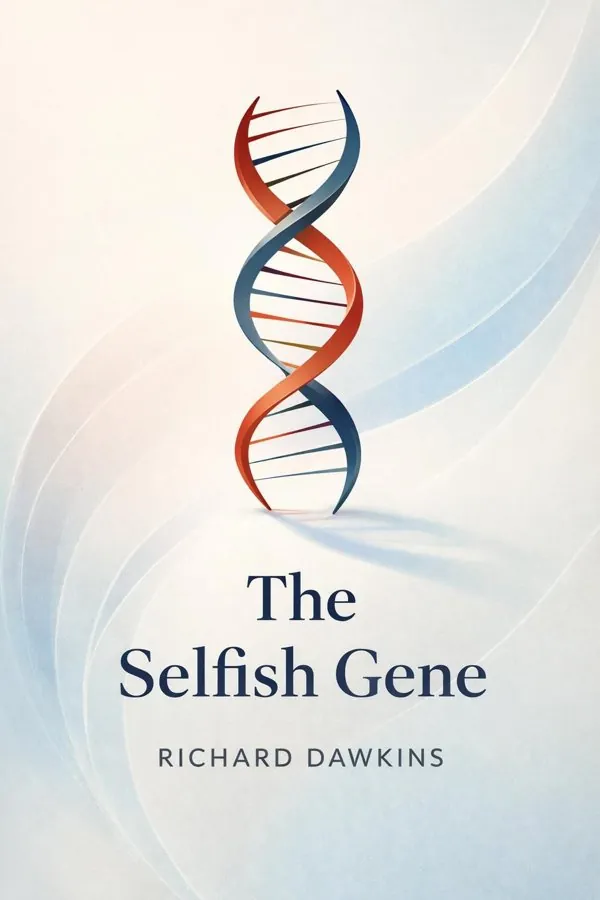
The Selfish Gene
by Richard Dawkins
Richard Dawkins’s The Selfish Gene is one of the most influential science books of the twentieth century because it changes the angle from which evolution is viewed. Instead of treating organisms, species, or groups as the main units of natural selection, Dawkins argues that genes are the more enduring players. Organisms, in this framework, are temporary survival machines built by genes to help them persist and replicate. This perspective does not mean genes possess intentions or moral character; “selfish” is a metaphor for the logic of differential survival. What makes the book so powerful is that it explains seemingly puzzling phenomena—altruism, cooperation, parental conflict, sexual competition, and even culture—through a single unifying lens. Dawkins combines rigorous evolutionary thinking with vivid examples and memorable language, making difficult ideas accessible without stripping them of depth. He also introduced the concept of the “meme,” extending evolutionary logic into the realm of culture. As an evolutionary biologist and gifted science communicator, Dawkins brought gene-centered thinking into mainstream discussion. The Selfish Gene remains essential reading for anyone who wants to understand evolution, human behavior, and the deeper logic of life.
Key Takeaways
- 1Genes Are Evolution’s Real Units — The most unsettling idea in the book is also the most clarifying: evolution does not primarily reward species, groups, o…
- 2Replicators Build Bodies as Vehicles — Life becomes easier to understand once we separate two roles that are often confused: replicators and vehicles. Dawkins …
- 3Altruism Can Serve Selfish Genes — At first glance, altruism seems to contradict evolution. Why would natural selection favor behavior that helps others at…
 10 min read
100 Million Years of Food: What Our Ancestors Ate and Why It Matters Today
by Stephen Le
In this engaging exploration of human evolution and diet, biological anthropologist Stephen Le traces how our eating habits have evolved over millions of years and how modern food choices affect our health. Drawing on fieldwork across Asia, Africa, and the Americas, Le examines the interplay between genetics, culture, and environment in shaping what we eat and why. The book argues that understanding ancestral diets can help us make better nutritional decisions in the modern world.
Key Takeaways
- 1Early Human Diets — When I look into the fossil record, I see the story of our appetites written in bone and tooth. Early hominins began pri…
- 2The Agricultural Revolution — Ten thousand years ago, the world changed once more. In multiple regions—Mesopotamia, China, Mesoamerica—humans began to…
- 3Cultural and Genetic Adaptations
 10 min read
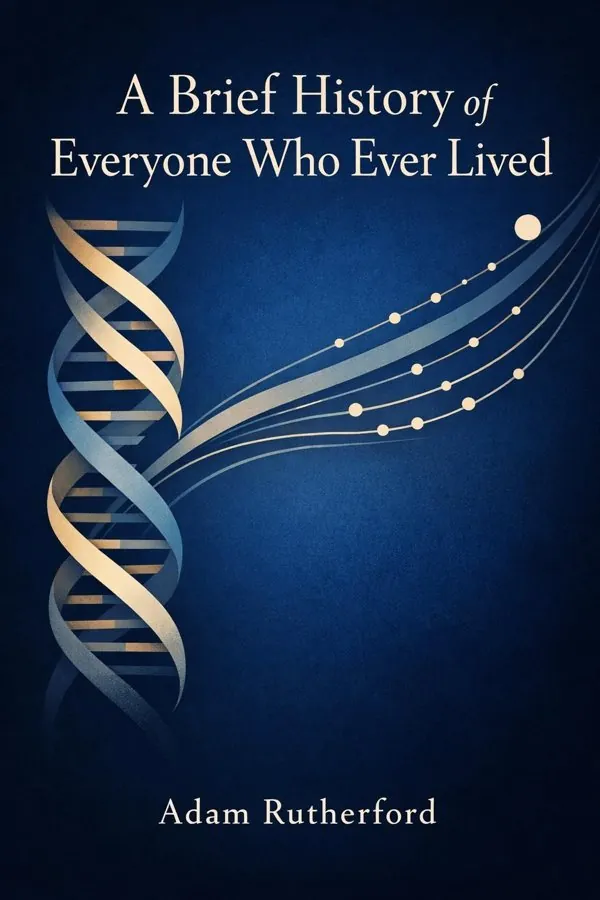
A Brief History of Everyone Who Ever Lived: The Human Story Retold Through Our Genes
by Adam Rutherford
A Brief History of Everyone Who Ever Lived is a popular science book that explores the story of humanity through the lens of genetics. Adam Rutherford explains how DNA reveals our shared ancestry, migration patterns, and the myths surrounding race and identity. The book combines scientific insight with historical narrative to show how genetic research reshapes our understanding of human evolution and diversity.
Key Takeaways
- 1The Genetic Revolution — When we speak of genetics today, we often forget how astonishingly recent it all is. Barely a century ago, Gregor Mendel…
- 2Origins of Humanity — At the heart of our genetic story lies Africa — the cradle of Homo sapiens. For decades, fossil evidence suggested that …
- 3Migration and Interbreeding
 10 min read
A Brief History of Quantum Mechanics (Chinese Edition)
by Cao Tianyuan
A popular science book that narrates the development of quantum mechanics from Planck’s quantum hypothesis to the ideas of Einstein, Bohr, Heisenberg, and Schrödinger. Written in a lively and accessible style, it transforms complex scientific concepts into engaging stories, allowing readers to appreciate the passion and philosophy behind scientific exploration.
Key Takeaways
- 1The Birth of the Quantum: From Planck’s Hypothesis to Einstein’s Light Quanta — The story begins at the turn of the 20th century. Classical physics was triumphant yet troubled. The laws of thermodynam…
- 2Bohr’s Atom and de Broglie’s Waves: The Quantum World Takes Shape — When Niels Bohr introduced his atomic model in 1913, he combined daring imagination with empirical pragmatism. He took R…
- 3From Heisenberg to Schrödinger: The Mathematics of Mystery
 10 min read
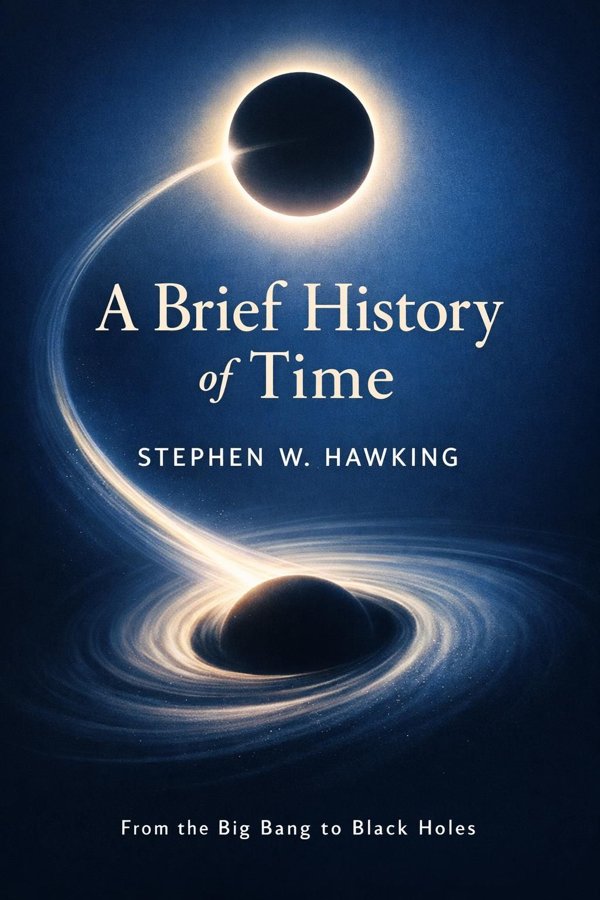
A Brief History of Time: From the Big Bang to Black Holes
by Stephen W. Hawking
Stephen W. Hawking’s A Brief History of Time is one of the rare science books that changed public culture. It takes some of the biggest questions human beings can ask—How did the universe begin? What is time? What happens inside a black hole? Can the laws of nature be unified?—and turns them into a guided tour through modern cosmology. Hawking does not assume the reader is a physicist. Instead, he translates ideas from relativity, quantum mechanics, and astronomy into vivid, approachable explanations that invite ordinary readers into extraordinary territory. What makes the book matter is not only the scale of its subject but also the clarity of its ambition. Hawking shows that science is not just a collection of facts; it is a method for asking better questions about reality itself. He also writes with unique authority. As one of the world’s leading theoretical physicists, Hawking made major contributions to our understanding of black holes, singularities, and the early universe. This book distills that expertise into a deeply human exploration of curiosity, uncertainty, and discovery. It is both a map of the cosmos and a reminder that understanding begins with wonder.
Key Takeaways
- 1How Our Picture of Reality Evolved — Every age believes it finally understands the universe, yet history shows that each worldview is only a stepping stone. …
- 2Space and Time Form One Fabric — What feels separate to us in daily life—space here, time now—is, at a deeper level, part of a single structure. One of H…
- 3The Universe Is Still Expanding — A static universe may feel intuitive, but the evidence points to a cosmos in motion. Hawking explains that one of the gr…
 10 min read
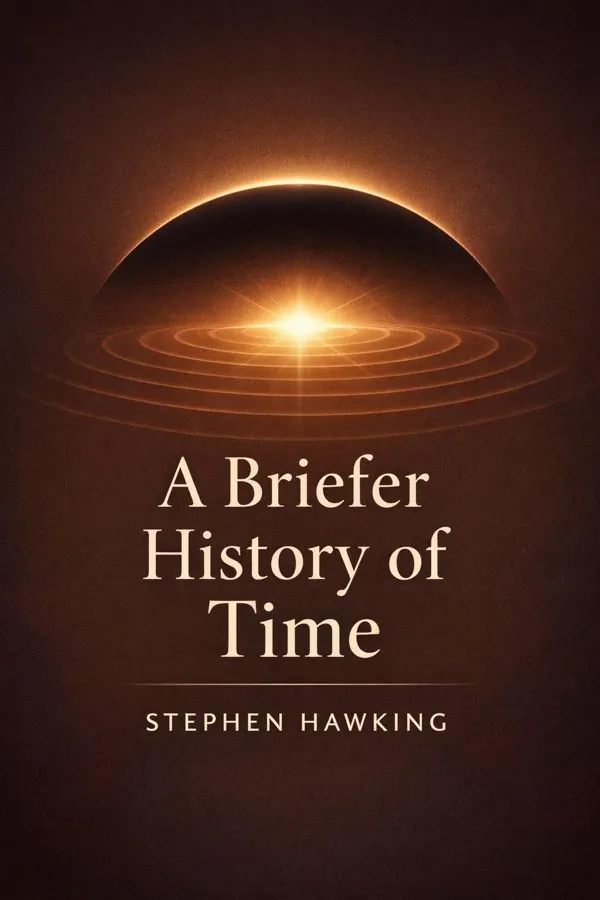
A Briefer History of Time
by Stephen Hawking
A Briefer History of Time is a concise and updated version of Stephen Hawking’s classic work, co-authored with Leonard Mlodinow. It presents complex concepts in cosmology—such as the Big Bang, black holes, quantum mechanics, and the nature of time—in a more accessible and illustrated format for general readers. The book aims to explain the fundamental laws governing the universe and humanity’s place within it, using clear language and engaging examples.
Key Takeaways
- 1From Ancient Cosmos to Modern Science — The story of cosmology begins long before telescopes or equations. For most of human history, we imagined ourselves at t…
- 2Space, Time, and the Relativity of Reality — Our intuition tells us that time ticks the same for all observers and that space exists independently of what moves thro…
- 3The Expanding Universe and the Big Bang
 10 min read
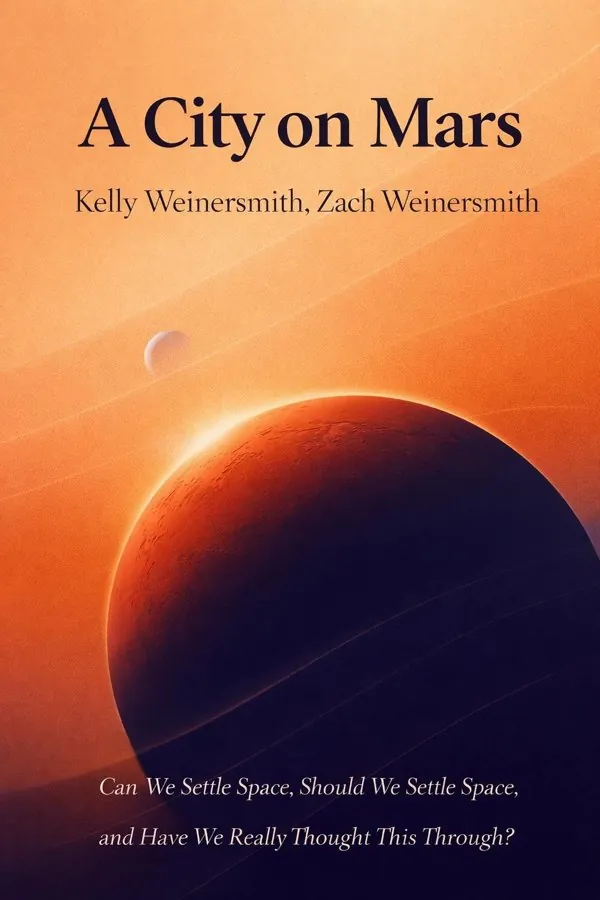
A City on Mars: Can We Settle Space, Should We Settle Space, and Have We Really Thought This Through?
by Kelly Weinersmith, Zach Weinersmith
A City on Mars explores the scientific, ethical, and practical challenges of human settlement beyond Earth. The authors, Kelly and Zach Weinersmith, combine humor and research to examine whether humanity is ready for life on Mars or other celestial bodies, addressing issues of biology, law, sustainability, and social organization in space colonization.
Key Takeaways
- 1Historical Context of Space Settlement — When we trace the story of space colonization, we meet a timeline woven from imagination, ideology, and aspiration. The …
- 2Physical and Biological Challenges — As a biologist, I couldn’t help starting with the human body, that fragile, gravity-trained system that evolved under on…
- 3Engineering and Resource Constraints
 10 min read
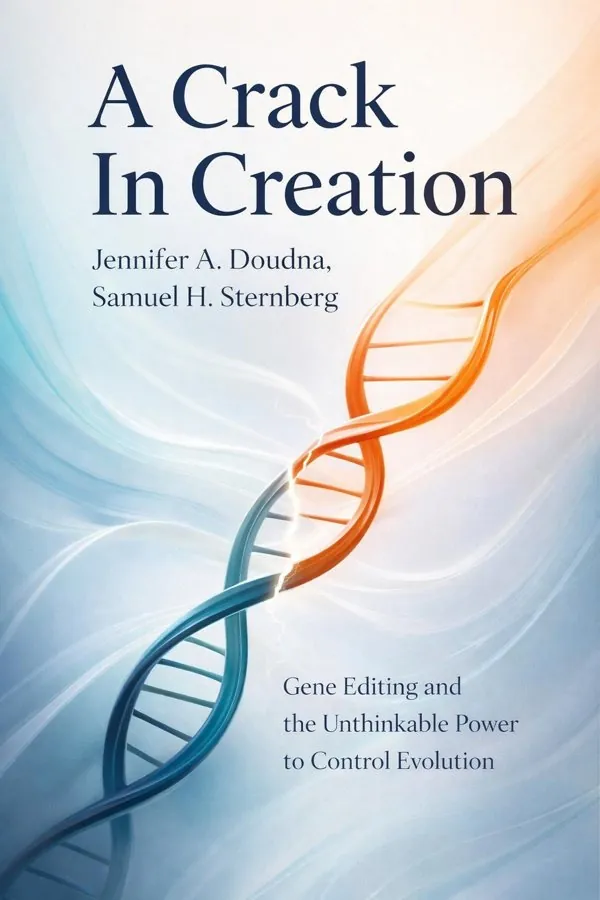
A Crack In Creation: Gene Editing and the Unthinkable Power to Control Evolution
by Jennifer A. Doudna, Samuel H. Sternberg
A Crack in Creation explores the revolutionary discovery of CRISPR-Cas9, a gene-editing technology that allows scientists to rewrite the genetic code with unprecedented precision. Written by Jennifer Doudna, one of the inventors of CRISPR, and Samuel Sternberg, the book delves into the science behind gene editing, its potential to cure diseases, and the profound ethical questions it raises about controlling evolution itself.
Key Takeaways
- 1Early Research: The Enigma and Enlightenment of RNA — My scientific path began with RNA. At the time, we didn’t fully understand all the roles this molecule played in living …
- 2The Discovery of CRISPR: From Sequence to System — While studying bacterial genomes, we noticed curious repeating sequences—regular patterns interspersed with unique space…
- 3The Cas9 Mechanism: The Precision of a Molecular Scalpel
 10 min read
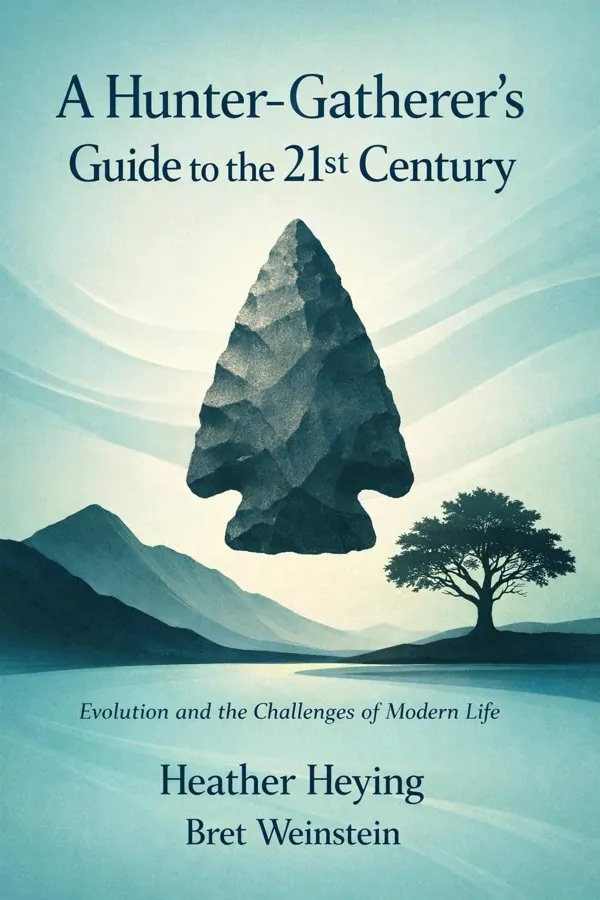
A Hunter-Gatherer's Guide to the 21st Century: Evolution and the Challenges of Modern Life
by Heather Heying, Bret Weinstein
A provocative exploration of the tension between our evolutionary history and the modern world, this book examines how ancient human instincts and biology interact with contemporary challenges such as diet, medicine, education, and social structures. The authors, evolutionary biologists Heather Heying and Bret Weinstein, propose that understanding our evolutionary past can help us navigate the complexities of modern life more effectively.
Key Takeaways
- 1Evolutionary Foundations — At the heart of everything lies evolution—the engine that shaped every human trait we carry today. To understand modern …
- 2Human Nature and Social Structures — Human relationships are the soil from which our species arose. In the ancestral world, survival depended on tribe—a smal…
- 3Sex Differences and Reproductive Strategies
 10 min read
A Life on Our Planet: My Witness Statement and a Vision for the Future
by David Attenborough
A Life on Our Planet is David Attenborough’s urgent witness statement about the state of Earth. Part memoir, part environmental diagnosis, and part practical roadmap, the book draws on a lifetime spent filming the natural world across every continent and ocean. Attenborough does not simply describe environmental decline in abstract terms. He shows how, over the course of his own life, wilderness has shrunk, biodiversity has collapsed, and humanity’s demand for land, energy, and resources has pushed the planet toward instability. That personal perspective gives the book unusual force: this is not theory from a distance, but testimony from someone who has seen the change unfold firsthand. What makes the book so powerful is its balance of warning and hope. Attenborough argues that human beings are not separate from nature but dependent on it, and that our future prosperity depends on restoring the living systems we have damaged. He also offers a clear vision for renewal, from rewilding land and protecting oceans to stabilizing population growth and shifting food systems. For readers seeking a concise but profound understanding of the environmental crisis, this book is both a reckoning and a call to action from one of the world’s most trusted natural historians.
Key Takeaways
- 1A lifetime reveals planetary decline — The most unsettling truth in this book is that environmental collapse is not a distant possibility; it is a change that …
- 2Human prosperity depends on biodiversity — A central insight of the book is that biodiversity is not a luxury for nature lovers; it is the operating system of life…
- 3The illusion of endless growth — One of the book’s sharpest warnings is that humanity has behaved as if the planet were limitless. Attenborough shows how…
 10 min read
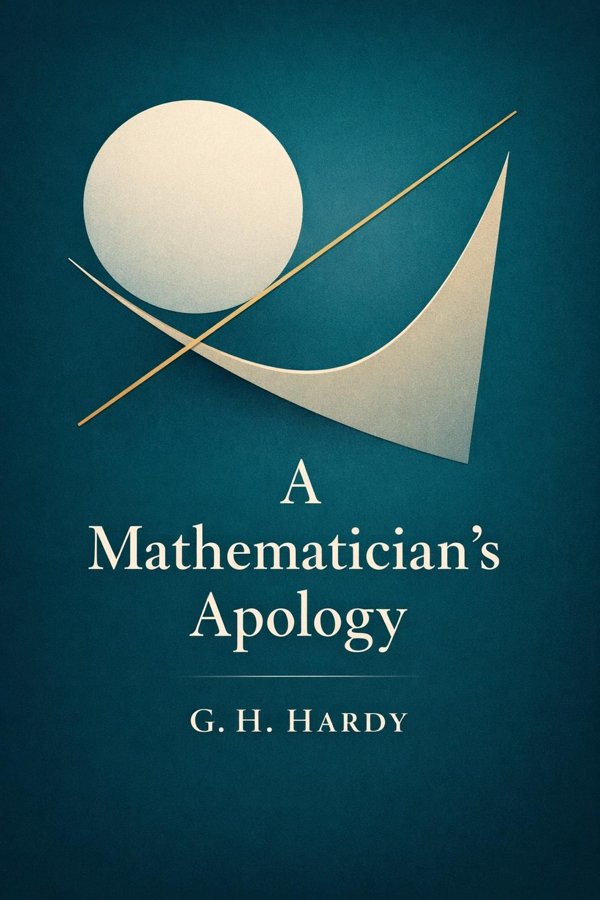
A Mathematician’s Apology
by G. H. Hardy
A Mathematician’s Apology is a classic essay by the British mathematician G. H. Hardy, first published in 1940. It offers a personal reflection on the aesthetics and purpose of mathematics, defending pure mathematics as a creative art form rather than a utilitarian pursuit. Hardy discusses the beauty of mathematical thought, the motivations of mathematicians, and his own career, providing one of the most eloquent defenses of intellectual creativity in the sciences.
Key Takeaways
- 1Pure vs. Applied Mathematics: The Defense of the Abstract — From the beginning of my career, I was confronted with a question that has plagued many mathematicians: of what use is y…
- 2The Aesthetic of Mathematics: Beauty, Truth, and Creation — When I claim that mathematics is a creative art, I do not speak metaphorically. A mathematician, like a poet, must choos…
- 3The Motives and Morality of the Mathematician
 10 min read
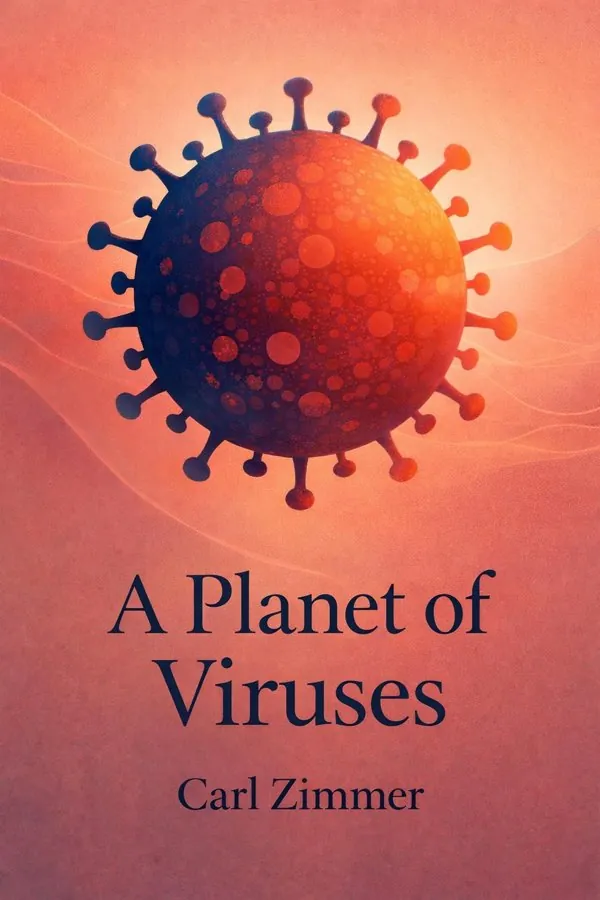
A Planet of Viruses
by Carl Zimmer
Viruses are usually introduced to us as enemies: the cause of colds, flus, epidemics, and fear. In A Planet of Viruses, Carl Zimmer asks us to look again. He shows that viruses are not just agents of disease but one of the most powerful and pervasive forces shaping life on Earth. They influence evolution, regulate ecosystems, alter genomes, and challenge the boundary between the living and the nonliving. What seems at first like a book about microscopic threats becomes a much bigger story about biology itself. Zimmer’s gift is to make complex science vivid and approachable. Drawing on his deep experience as a science journalist and author, he combines historical episodes, cutting-edge virology, and memorable examples—from the common cold and influenza to HIV, marine viruses, and giant viruses—to reveal a hidden world operating all around us. The book matters because it expands our understanding of health, ecology, and human identity. It reminds us that to understand pandemics, evolution, or even our own DNA, we must understand viruses. This is a concise but eye-opening exploration of one of nature’s most influential creations.
Key Takeaways
- 1Viruses Reach Back to Life’s Origins — A virus may be too small to see, but its story may be as old as life itself. One of Zimmer’s most striking ideas is that…
- 2The Common Cold Reveals Viral Mastery — The most familiar viruses are often the easiest to underestimate. Zimmer uses the common cold—especially rhinoviruses—to…
- 3Influenza Shows Evolution in Real Time — If the common cold teaches persistence, influenza teaches speed. Zimmer presents the flu as one of the clearest examples…
 10 min read
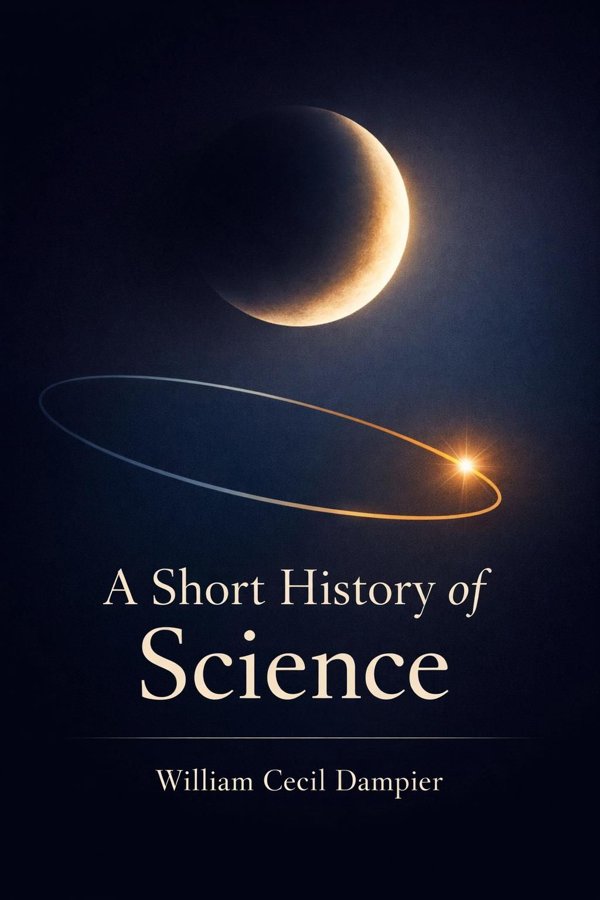
A Short History of Science
by William Cecil Dampier
This book provides a concise overview of the development of scientific thought and discovery from ancient times to the early twentieth century. Dampier traces the evolution of key ideas in physics, chemistry, biology, and astronomy, showing how they shaped modern science. Written in accessible language, it serves as both an introduction and a historical reflection on the progress of human understanding.
Key Takeaways
- 1Ancient Origins: The Dawn of Scientific Thought — The story of science begins long before the Greeks, in the lands where written history itself was born—Mesopotamia and E…
- 2Greek Science and Philosophy: Aristotle, Archimedes, and the Methods of Reason — No account of early science can omit Aristotle, whose system of classification and logical reasoning dominated thought f…
- 3Science in the Middle Ages: Preservation and Transmission
Want the full summary?
Get instant access to this book summary and 100K+ more with Fizz Moment.
Get Free SummaryAvailable on App Store • Free to download
About This List
The best science writers turn complex research into page-turning stories. Physics, biology, evolution — no PhD required, just curiosity.
This list features 15 carefully selected books. With FizzRead, you can read AI-powered summaries of each book in just 15 minutes. Get the key takeaways and start applying the insights immediately.
Ready to start reading?
Get instant access to all 15 book summaries and 100K+ more with FizzRead.