
James Clear's Reading List: Books That Build Better Habits
James Clear, author of Atomic Habits, is a voracious reader who shares book recommendations focused on behavior change, decision-making, and continuous improvement.
 10 min read
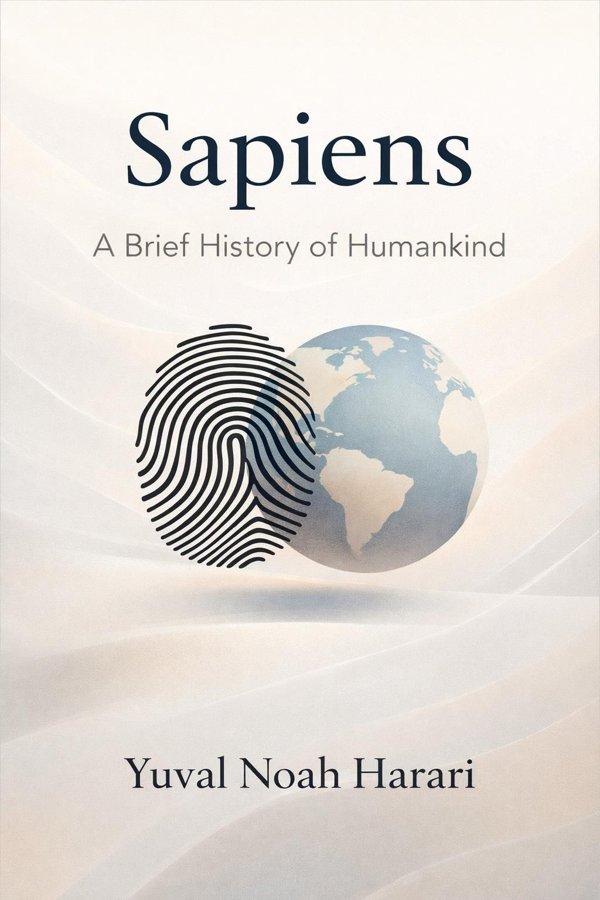
Sapiens
by Yuval Noah Harari
Sapiens: A Brief History of Humankind is an ambitious, big-picture history of our species, tracing how Homo sapiens rose from an unremarkable African ape to the dominant force on Earth. Yuval Noah Harari combines history, biology, anthropology, economics, and philosophy to explain the turning points that transformed human life: the Cognitive Revolution, the Agricultural Revolution, and the Scientific Revolution. Rather than offering a narrow chronological account, he asks a deeper question: what made humans uniquely capable of building empires, religions, markets, and nations? Harari’s answer is both provocative and memorable: our greatest power lies in our ability to create and believe shared stories. These collective fictions—such as money, laws, gods, and states—allow strangers to cooperate on a massive scale. The book matters because it challenges comforting assumptions about progress, happiness, and civilization. It invites readers to see modern society not as inevitable, but as the result of historical choices, accidents, and myths. As a historian and public intellectual, Harari brings scholarly range and narrative clarity to one of the most compelling questions in human history: how did we become who we are?
Key Takeaways
- 1The Cognitive Revolution and Shared Imagination — Human dominance did not begin with stronger bodies, sharper teeth, or faster legs; it began with a new kind of mind. Aro…
- 2The Agricultural Revolution: Progress or Trap? — What if one of history’s greatest achievements was also one of its greatest mistakes? Harari provocatively argues that t…
- 3Myths Make Large Societies Possible — Civilization runs not only on roads, crops, and armies, but on ideas that exist because people collectively agree they d…
 10 min read
Siddhartha
by Hermann Hesse
Siddhartha is Hermann Hesse’s luminous 1922 novel about a young man’s search for enlightenment in ancient India, during the era of the Buddha. What begins as the story of a gifted Brahmin’s son quickly becomes a universal exploration of dissatisfaction, desire, suffering, love, loss, and inner awakening. Siddhartha is not content to inherit wisdom secondhand. He wants truth that is lived, not merely taught, and that longing drives him through extreme asceticism, sensual pleasure, wealth, despair, and finally a quiet, profound reconciliation with life itself. The novel matters because it speaks to a question that remains urgent today: how do we find meaning in a world full of advice, ideologies, and distractions? Hesse’s answer is subtle and enduring. Real understanding cannot be borrowed from doctrines alone; it must be discovered through experience, reflection, and attention. Drawing on Indian spiritual traditions while writing for a modern Western audience, Hesse created a work that bridges cultures without losing psychological depth. A Nobel Prize-winning author celebrated for his insight into self-realization, Hesse makes Siddhartha both a spiritual parable and a deeply human coming-of-age story.
Key Takeaways
- 1The Dissatisfied Brahmin — A privileged life can still feel empty when the soul remains unanswered. At the beginning of Siddhartha, we meet a brill…
- 2Learning Through Self-Denial’s Limits — Escaping the world is not the same as understanding it. After leaving home, Siddhartha joins the Samanas, wandering asce…
- 3The Buddha Cannot Be Imitated — Even perfect teaching cannot spare us from having to live our own path. One of the most memorable moments in Siddhartha …
 10 min read
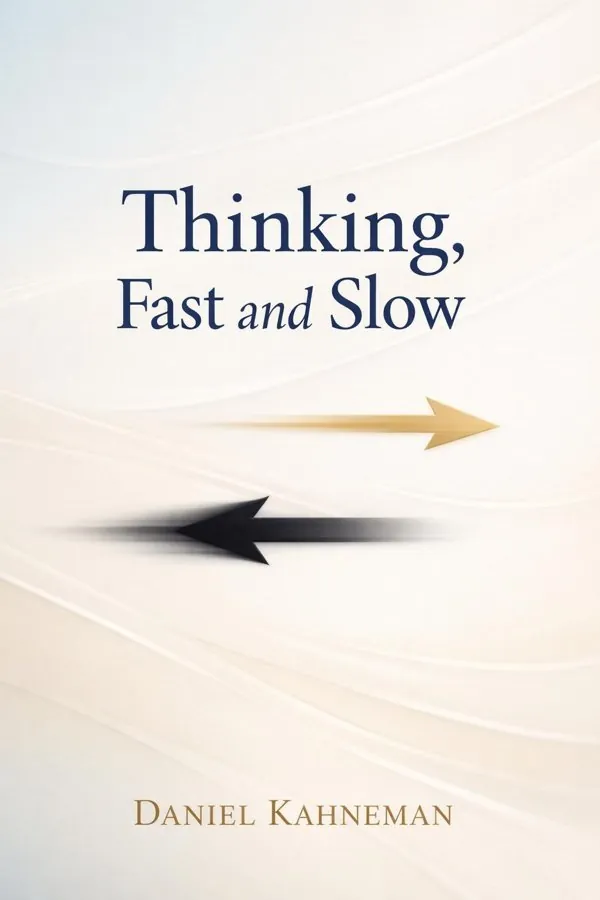
Thinking Fast and Slow
by Daniel Kahneman
Thinking Fast and Slow is one of the most influential books ever written about how the human mind works. In it, Daniel Kahneman distills decades of groundbreaking research in psychology and behavioral economics into a practical framework for understanding why people make smart decisions in some situations and surprisingly poor ones in others. His central insight is that our thinking is shaped by two systems: one that is fast, intuitive, and automatic, and another that is slow, effortful, and analytical. Most of the time, these systems cooperate efficiently. But just as often, the quick judgments of the mind lead us into predictable errors. What makes this book so powerful is that it changes how you see everyday life. From investing and hiring to relationships, planning, medicine, and public policy, Kahneman shows how biases quietly shape choices we assume are rational. He writes with the authority of a Nobel Prize-winning researcher whose work, much of it developed with Amos Tversky, transformed our understanding of judgment under uncertainty. This is not only a book about mistakes; it is a guide to better thinking, wiser decisions, and greater humility about the limits of human reason.
Key Takeaways
- 1The Two Systems That Shape Thought — Most of what you think feels deliberate, but much of it happens automatically. Kahneman’s most famous contribution is th…
- 2Heuristics Make Judgment Efficient and Flawed — The mind is built to simplify, not to calculate perfectly. To navigate uncertainty, we rely on heuristics, mental shortc…
- 3Confidence Often Exceeds What We Know — We are far better at creating explanations than at recognizing our ignorance. Kahneman shows that overconfidence is one …
 10 min read
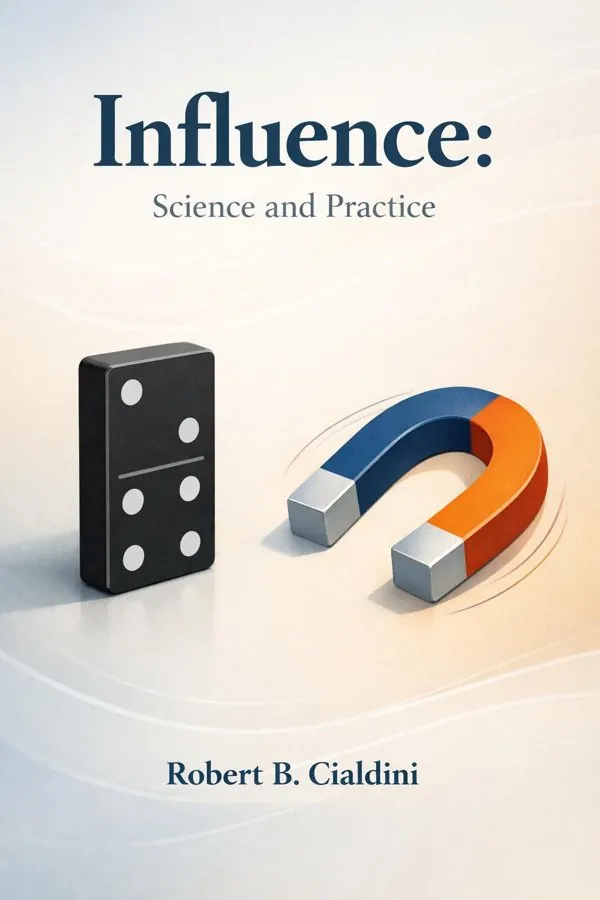
Influence
by Robert Cialdini
Why do people say yes when they would prefer to say no? Why do intelligent, careful individuals still fall for pressure, urgency, and persuasive framing? In Influence, Robert B. Cialdini answers these questions by uncovering the hidden psychological patterns that shape everyday decisions. Drawing on decades of research in social psychology, as well as undercover fieldwork in sales, fundraising, advertising, and compliance professions, Cialdini explains how persuasion often works not through logic alone, but through reliable mental shortcuts. He identifies six core principles of influence—reciprocity, commitment and consistency, social proof, liking, authority, and scarcity—and shows how they operate in business, relationships, politics, and consumer behavior. What makes the book so enduring is its balance of scientific rigor and practical usefulness. It helps readers become both more persuasive and more resistant to manipulation. Whether you work in marketing, negotiation, leadership, or simply want to make better decisions in a world full of influence attempts, this book offers a framework that remains remarkably relevant. Influence is not just about persuasion; it is about understanding human behavior under pressure.
Key Takeaways
- 1Weapons of Influence and Automaticity — Much of persuasion succeeds not because people are foolish, but because people are busy. Cialdini begins with a crucial …
- 2Reciprocity Creates Powerful Obligation — A small favor can create a surprisingly large sense of debt. That is the essence of reciprocity, one of the oldest and m…
- 3Commitment Shapes Future Behavior — People do not just want to make decisions; they want to appear consistent with them. Cialdini explains that once individ…
 10 min read
The Selfish Gene
by Richard Dawkins
Richard Dawkins’s The Selfish Gene is one of the most influential science books of the twentieth century because it changes the angle from which evolution is viewed. Instead of treating organisms, species, or groups as the main units of natural selection, Dawkins argues that genes are the more enduring players. Organisms, in this framework, are temporary survival machines built by genes to help them persist and replicate. This perspective does not mean genes possess intentions or moral character; “selfish” is a metaphor for the logic of differential survival. What makes the book so powerful is that it explains seemingly puzzling phenomena—altruism, cooperation, parental conflict, sexual competition, and even culture—through a single unifying lens. Dawkins combines rigorous evolutionary thinking with vivid examples and memorable language, making difficult ideas accessible without stripping them of depth. He also introduced the concept of the “meme,” extending evolutionary logic into the realm of culture. As an evolutionary biologist and gifted science communicator, Dawkins brought gene-centered thinking into mainstream discussion. The Selfish Gene remains essential reading for anyone who wants to understand evolution, human behavior, and the deeper logic of life.
Key Takeaways
- 1Genes Are Evolution’s Real Units — The most unsettling idea in the book is also the most clarifying: evolution does not primarily reward species, groups, o…
- 2Replicators Build Bodies as Vehicles — Life becomes easier to understand once we separate two roles that are often confused: replicators and vehicles. Dawkins …
- 3Altruism Can Serve Selfish Genes — At first glance, altruism seems to contradict evolution. Why would natural selection favor behavior that helps others at…
 10 min read
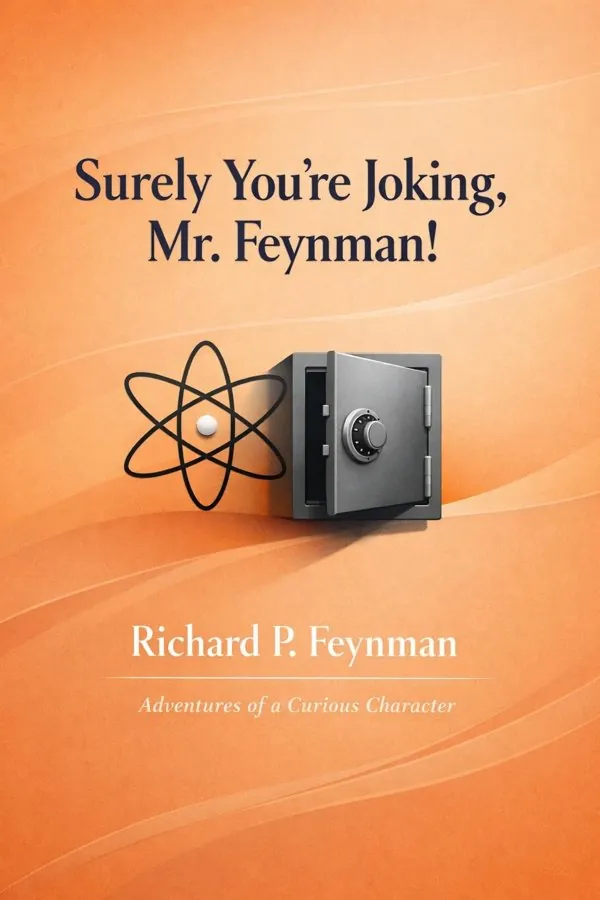
Surely You're Joking, Mr. Feynman!
by Richard P. Feynman
Surely You're Joking, Mr. Feynman! is not a conventional memoir, and that is exactly why it remains so memorable. Drawn from conversations between Nobel Prize–winning physicist Richard P. Feynman and Ralph Leighton, the book gathers a series of lively autobiographical stories that show Feynman at work, at play, and in constant pursuit of understanding. We meet him as a curious boy in Far Rockaway, a gifted student at MIT and Princeton, a young scientist at Los Alamos, and later a world-famous professor who still approached life with the enthusiasm of an amateur. What makes the book matter is that it is not really about fame or even physics. It is about a way of seeing: questioning assumptions, testing ideas firsthand, resisting pretension, and staying open to surprise. Feynman’s adventures with safecracking, teaching, drumming, drawing, and traveling reveal the same mindset that fueled his scientific breakthroughs. His authority comes not only from winning the 1965 Nobel Prize in Physics for work in quantum electrodynamics, but from his rare ability to connect rigorous thinking with playful curiosity. The result is a biography of a mind fully awake to the world.
Key Takeaways
- 1Curiosity Begins Before Formal Education — A great mind is often shaped less by answers than by the habit of asking better questions. In the opening episodes of Fe…
- 2Real Learning Comes From Play — The fastest route to mastery is often disguised as enjoyment. Feynman’s years at MIT and Princeton show that his brillia…
- 3Skepticism Protects Independent Thinking — Intelligence becomes far more useful when it is paired with the courage to doubt appearances. Throughout the book, Feynm…
 10 min read
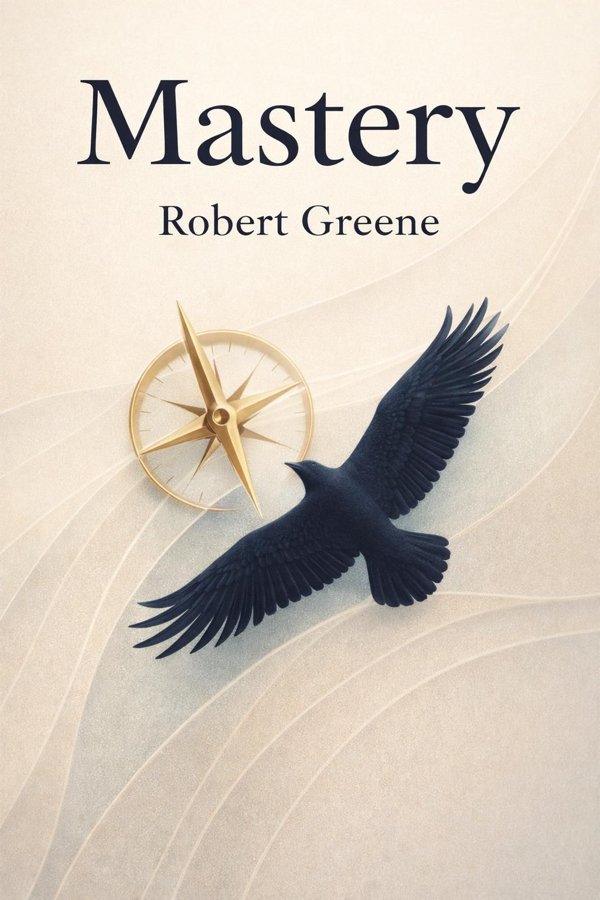
Mastery
by Robert Greene
In Mastery, Robert Greene argues that extraordinary achievement is not the result of luck, genius, or rare talent alone, but of a repeatable process available to far more people than we imagine. Drawing on the lives of masters such as Leonardo da Vinci, Charles Darwin, Benjamin Franklin, and contemporary innovators, Greene shows how deep skill develops through apprenticeship, rigorous observation, creative experimentation, and years of disciplined practice. The book is both a study of excellence and a strategic guide for anyone who wants to do meaningful work at a very high level. What makes Mastery especially compelling is Greene’s ability to combine history, psychology, and practical strategy. He does not romanticize success. Instead, he reveals the hidden labor behind mastery: the awkward beginnings, the long period of learning, the emotional setbacks, and the gradual transformation from student to creator. This matters because many people abandon their ambitions too early, mistaking difficulty for incapacity. Greene’s central insight is that mastery is a developmental path, not an inborn gift. For readers seeking long-term growth, creative independence, and professional excellence, Mastery offers a powerful roadmap.
Key Takeaways
- 1Discover Your Life’s Task — The deepest form of motivation does not come from external rewards; it comes from the feeling that you are doing the wor…
- 2Submit to the Apprenticeship Phase — In a culture obsessed with speed, the apprenticeship feels inconvenient, but Greene treats it as the irreplaceable found…
- 3Absorb the Master’s Power — Before you can become original, you usually need proximity to excellence. Greene highlights the importance of mentors, m…
 10 min read
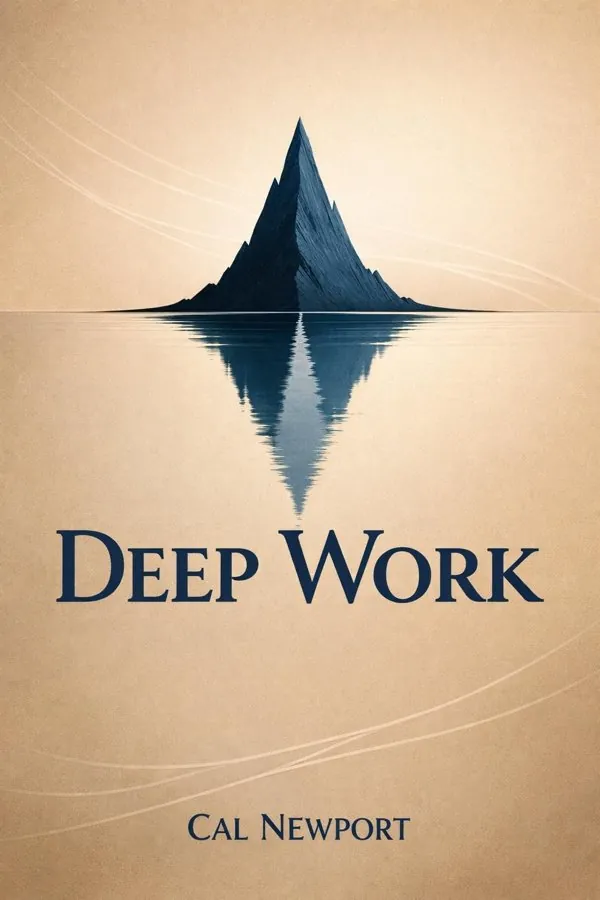
Deep Work
by Cal Newport
In a world ruled by notifications, open-plan offices, endless email threads, and the pressure to always appear available, the ability to focus has become both rare and incredibly valuable. Deep Work by Cal Newport argues that the people who thrive in today’s economy are not necessarily the busiest or the most connected, but the ones who can concentrate intensely on meaningful tasks without distraction. This book is about cultivating that increasingly uncommon skill and using it to produce better results in less time. Newport makes the case that deep, undistracted concentration is a superpower for the knowledge age. He contrasts it with “shallow work,” the reactive, fragmented activity that fills many calendars but creates little lasting value. Drawing from neuroscience, business, academic research, and real-world examples, he shows why focus matters, why it is so hard to maintain, and how anyone can train it. Cal Newport is particularly credible on this subject because he has built a career as a computer science professor, writer, and researcher while famously avoiding much of the digital noise that consumes modern workers. Deep Work is not just a theory of productivity. It is a practical philosophy for doing your best thinking in a distracted age.
Key Takeaways
- 1Focus Is the New Competitive Advantage — The modern economy rewards people who can learn hard things quickly and produce at an elite level, yet both abilities de…
- 2Shallow Work Feels Productive but Isn’t — One of the most dangerous illusions in modern work is that being active is the same as being effective. Newport warns th…
- 3Attention Must Be Trained Like a Muscle — Deep focus is not something you either naturally have or permanently lack. Newport argues that concentration is trainabl…
 10 min read
Man's Search for Meaning
by Viktor Frankl
What keeps a person going when everything familiar has been taken away—comfort, identity, loved ones, freedom, and even the expectation of tomorrow? That is the unbearable and essential question at the heart of *Man's Search for Meaning*. Viktor E. Frankl’s landmark book is far more than a Holocaust memoir. It is a profound study of human endurance, an examination of suffering, and a practical philosophy for anyone trying to live with purpose in hard times. Drawing on his experiences in Nazi concentration camps, Frankl explores how people respond when life is reduced to its barest terms and why some still manage to preserve dignity, hope, and inner freedom. What makes this book endure is that Frankl does not offer empty inspiration. He writes as an Austrian neurologist, psychiatrist, and Holocaust survivor who later developed logotherapy, a school of psychotherapy centered on meaning as the primary human motivation. His insight is simple but life-changing: even when we cannot change our circumstances, we can still choose our response. That idea has made this book one of the most influential works in psychology and self-help, especially for readers facing grief, burnout, uncertainty, or the quiet fear that life has lost direction.
Key Takeaways
- 1The Shock of Arrival and the Dehumanization of Camp Life — When Frankl first arrived at Auschwitz, the destruction of the self began immediately. The process was systematic: priso…
- 2Emotional Detachment and the Apathy that Defines Survival — After the first shock came a second psychological stage: apathy. Frankl shows that this numbness was not indifference in…
- 3Moral Choice and Inner Freedom in the Midst of Suffering — One of the book’s most powerful claims is that even under extreme oppression, a human being retains a final freedom: the…
Want the full summary?
Get instant access to this book summary and 100K+ more with Fizz Moment.
Get Free SummaryAvailable on App Store • Free to download
About This List
James Clear, author of Atomic Habits, is a voracious reader who shares book recommendations focused on behavior change, decision-making, and continuous improvement.
This list features 9 carefully selected books. With FizzRead, you can read AI-powered summaries of each book in just 15 minutes. Get the key takeaways and start applying the insights immediately.
Ready to start reading?
Get instant access to all 9 book summaries and 100K+ more with FizzRead.