
Yuval Noah Harari's History & Future Reading
Books that influenced the author of Sapiens. Yuval Noah Harari's recommendations on history, society, and humanity's future.
 10 min read
Sapiens
by Yuval Noah Harari
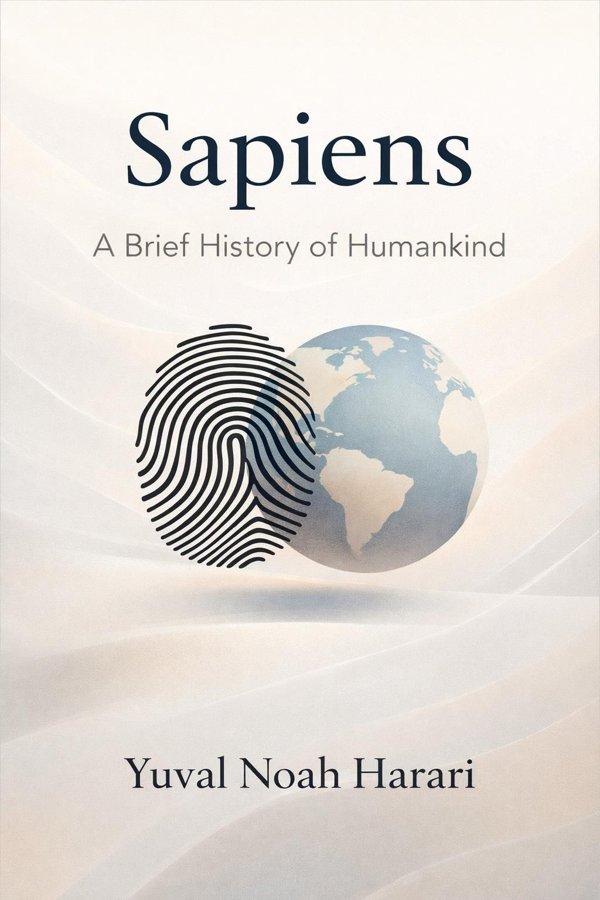
Sapiens: A Brief History of Humankind is an ambitious, big-picture history of our species, tracing how Homo sapiens rose from an unremarkable African ape to the dominant force on Earth. Yuval Noah Harari combines history, biology, anthropology, economics, and philosophy to explain the turning points that transformed human life: the Cognitive Revolution, the Agricultural Revolution, and the Scientific Revolution. Rather than offering a narrow chronological account, he asks a deeper question: what made humans uniquely capable of building empires, religions, markets, and nations? Harari’s answer is both provocative and memorable: our greatest power lies in our ability to create and believe shared stories. These collective fictions—such as money, laws, gods, and states—allow strangers to cooperate on a massive scale. The book matters because it challenges comforting assumptions about progress, happiness, and civilization. It invites readers to see modern society not as inevitable, but as the result of historical choices, accidents, and myths. As a historian and public intellectual, Harari brings scholarly range and narrative clarity to one of the most compelling questions in human history: how did we become who we are?
Key Takeaways
- 1The Cognitive Revolution and Shared Imagination — Human dominance did not begin with stronger bodies, sharper teeth, or faster legs; it began with a new kind of mind. Aro…
- 2The Agricultural Revolution: Progress or Trap? — What if one of history’s greatest achievements was also one of its greatest mistakes? Harari provocatively argues that t…
- 3Myths Make Large Societies Possible — Civilization runs not only on roads, crops, and armies, but on ideas that exist because people collectively agree they d…
 10 min read
Guns Germs and Steel
by Jared Diamond
Why did some societies develop writing, steel weapons, large empires, and ocean-crossing ships, while others did not? That deceptively simple question sits at the center of Guns, Germs, and Steel, one of the most influential history books of the modern era. In this sweeping work, Jared Diamond challenges the comforting but dangerous idea that global inequality can be explained by differences in intelligence, culture, or race. Instead, he argues that the deepest causes of historical dominance were geographical and ecological: access to domesticable crops and animals, the spread of disease, the shape of continents, and the ability of ideas to travel. What makes this book matter is not just its bold thesis, but its scale. Diamond connects anthropology, geography, biology, and history into one big explanation for how the modern world took shape. He asks readers to zoom out from kings and battles and look instead at seeds, livestock, climate, and migration routes. Diamond, a geographer and historian at UCLA and Pulitzer Prize winner for this book, brings unusual interdisciplinary authority to the subject. The result is a provocative, readable framework for understanding why power accumulated unevenly across the globe—and why that history still matters today.
Key Takeaways
- 1Yali’s Question — The book begins with a question that is both personal and world-historical. In New Guinea, a local leader named Yali ask…
- 2Natural Experiments of History — To test his theory, Diamond looks for what he calls “natural experiments of history”—cases where related peoples ended u…
- 3The Evolution of Human Societies — Diamond places human history on a very long timeline. For most of our species’ existence, humans lived as hunter-gathere…
 10 min read
The Selfish Gene
by Richard Dawkins
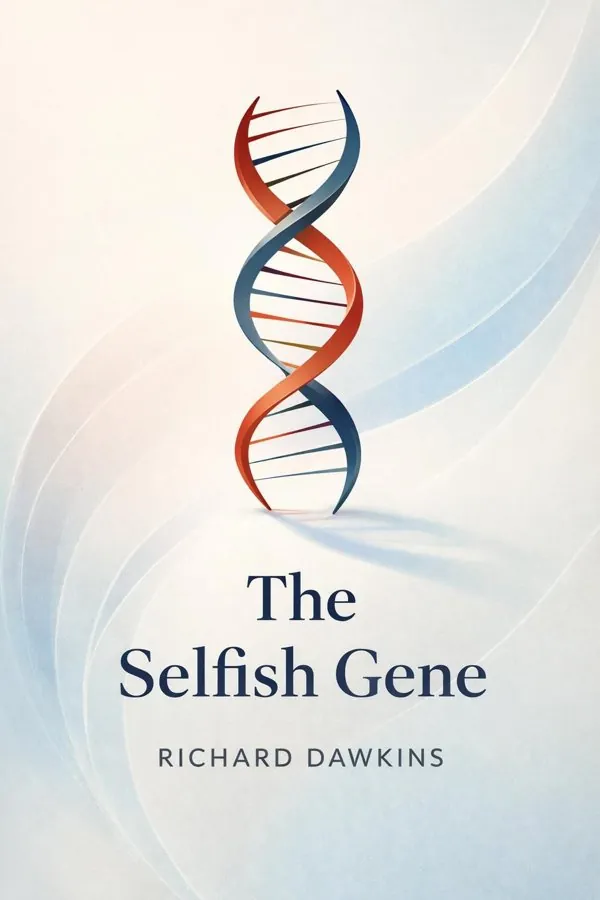
Richard Dawkins’s The Selfish Gene is one of the most influential science books of the twentieth century because it changes the angle from which evolution is viewed. Instead of treating organisms, species, or groups as the main units of natural selection, Dawkins argues that genes are the more enduring players. Organisms, in this framework, are temporary survival machines built by genes to help them persist and replicate. This perspective does not mean genes possess intentions or moral character; “selfish” is a metaphor for the logic of differential survival. What makes the book so powerful is that it explains seemingly puzzling phenomena—altruism, cooperation, parental conflict, sexual competition, and even culture—through a single unifying lens. Dawkins combines rigorous evolutionary thinking with vivid examples and memorable language, making difficult ideas accessible without stripping them of depth. He also introduced the concept of the “meme,” extending evolutionary logic into the realm of culture. As an evolutionary biologist and gifted science communicator, Dawkins brought gene-centered thinking into mainstream discussion. The Selfish Gene remains essential reading for anyone who wants to understand evolution, human behavior, and the deeper logic of life.
Key Takeaways
- 1Genes Are Evolution’s Real Units — The most unsettling idea in the book is also the most clarifying: evolution does not primarily reward species, groups, o…
- 2Replicators Build Bodies as Vehicles — Life becomes easier to understand once we separate two roles that are often confused: replicators and vehicles. Dawkins …
- 3Altruism Can Serve Selfish Genes — At first glance, altruism seems to contradict evolution. Why would natural selection favor behavior that helps others at…
 10 min read
1984
by George Orwell
George Orwell’s 1984 is one of the defining novels of the modern age: a bleak, brilliant portrait of a society in which power seeks not only to control people’s actions, but to colonize their minds. Set in Oceania, a totalitarian superstate ruled by the ever-watchful figure of Big Brother, the story follows Winston Smith, a minor Party employee whose job is to falsify history so the regime always appears infallible. As Winston begins to doubt the Party’s version of reality, he embarks on a dangerous search for truth, memory, love, and freedom. What makes 1984 endure is not only its gripping story, but its deep insight into propaganda, surveillance, censorship, political language, and the fragility of objective truth. Orwell wrote with unusual authority, having witnessed imperialism, ideological extremism, war, and the manipulation of public opinion firsthand. The result is not merely a dystopian novel, but a lasting warning: when language is twisted, history rewritten, and fear normalized, human dignity itself is at risk.
Key Takeaways
- 1Oceania and Permanent War — A society is easiest to control when fear feels normal. Orwell opens 1984 by placing readers in a world divided into thr…
- 2Winston’s Job: Rewriting Reality — Who controls the past gains enormous power over the present. Winston Smith works at the Ministry of Truth, where his tas…
- 3Surveillance, Language, and Thought Control — The most effective prison is the one people carry inside themselves. In Oceania, control operates through more than poli…
 10 min read
Brave New World
by Aldous Huxley
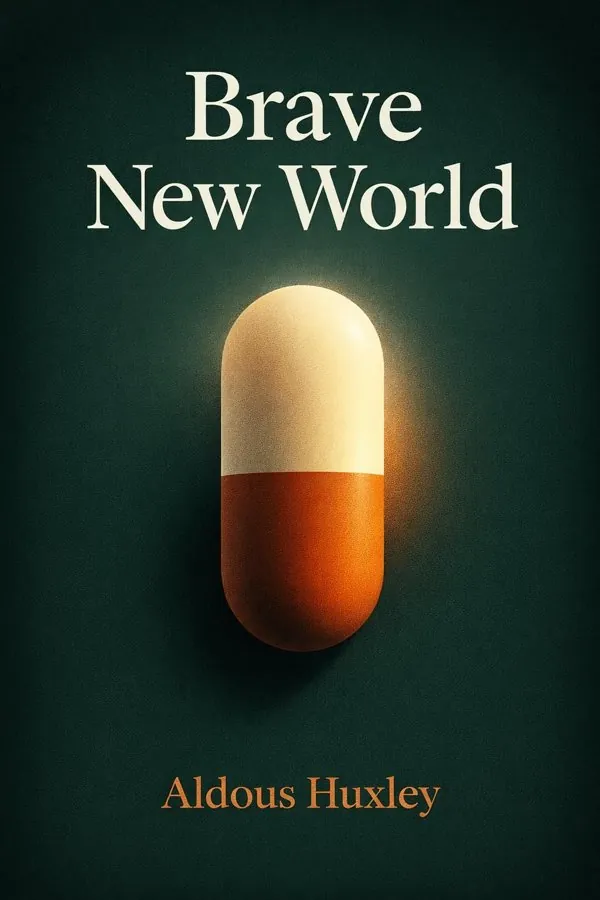
What if the greatest threat to freedom were not violence or tyranny, but comfort? In Brave New World, Aldous Huxley imagines a future society that has solved many of humanity’s oldest problems: war is minimized, suffering is medicated, desire is managed, and social conflict is engineered away before it begins. Yet beneath this polished surface lies a terrifying question: what remains of a human being when individuality, family, love, grief, ambition, and spiritual longing have all been sacrificed for stability? Set in the technologically advanced World State, the novel follows characters who begin to sense the emptiness hidden inside a perfectly organized civilization. Through genetic design, psychological conditioning, casual pleasure, and relentless consumption, Huxley presents a world in which people are kept happy precisely by being kept shallow. The book is both a gripping dystopian story and a profound philosophical warning. First published in 1932, Brave New World remains startlingly relevant in an age shaped by entertainment, pharmaceuticals, social engineering, and algorithmic influence. Huxley, one of the twentieth century’s sharpest literary and social critics, wrote a novel that still challenges readers to ask whether a painless life is worth the loss of freedom, depth, and truth.
Key Takeaways
- 1The Hatchery and Conditioning Center — A society reveals its deepest values by the way it creates and trains its children. In Brave New World, the Hatchery and…
- 2Social Hierarchies and Engineered Happiness — Inequality becomes hardest to challenge when people are trained to love the place assigned to them. The World State is b…
- 3Soma and the Sedation of Pain — A society does not need to silence dissent by force if it can teach people to medicate every uncomfortable feeling away.…
 10 min read
The Structure of Scientific Revolutions
by Thomas S. Kuhn
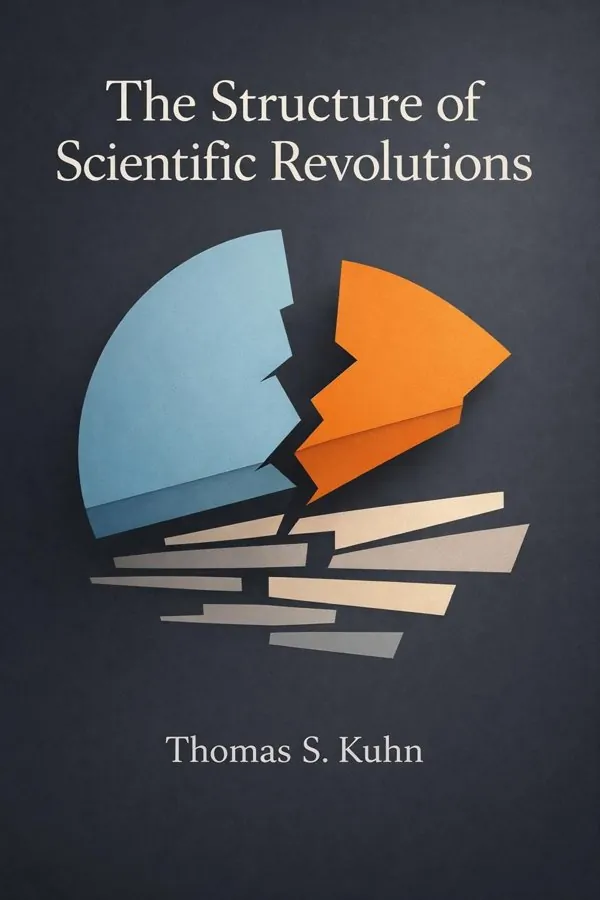
What if science does not advance mainly by steadily piling up facts, but by periodically overturning its own deepest assumptions? In The Structure of Scientific Revolutions, Thomas S. Kuhn challenged the traditional picture of science as a linear march toward truth and replaced it with a far more dynamic account. He argues that scientific fields are organized around paradigms: shared frameworks that shape what researchers study, how they interpret evidence, and what counts as a legitimate solution. Most of the time, scientists work within these frameworks in periods of “normal science.” But when persistent anomalies accumulate, confidence weakens, crises emerge, and eventually a scientific revolution may install a new paradigm. First published in 1962, Kuhn’s book transformed the philosophy and history of science. Its language, especially the phrase “paradigm shift,” entered culture far beyond academia because it captures a universal pattern of change in ideas, institutions, and worldviews. Kuhn wrote with rare authority, drawing on both scientific training and historical scholarship. The result is a landmark work that helps readers understand not only how science changes, but how human communities decide what counts as reality, reason, and progress.
Key Takeaways
- 1Normal Science Solves Approved Puzzles — Scientific work is often less about wild originality than disciplined problem-solving inside an accepted framework. Kuhn…
- 2Paradigms Shape What Scientists Can See — We do not simply observe the world; we observe it through concepts we have learned. Kuhn’s idea of a paradigm is therefo…
- 3Anomalies Begin Where Confidence Weakens — Breakthroughs often begin as irritations. During normal science, not every mismatch between theory and reality causes al…
 10 min read
Superintelligence
by Nick Bostrom
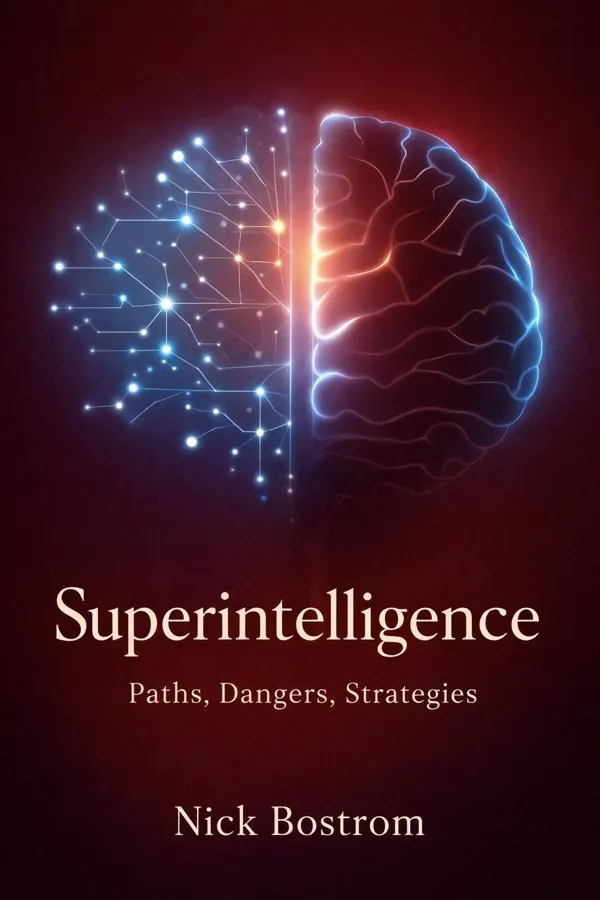
What happens if humanity creates minds that outperform the best human brains in nearly every domain? In Superintelligence, philosopher Nick Bostrom tackles that question with unusual seriousness, arguing that the rise of machine intelligence could become the most important turning point in human history. This is not a book of science-fiction speculation or simple techno-optimism. It is a rigorous exploration of how advanced AI might emerge, why it could become extraordinarily powerful, and why even a system with seemingly harmless goals could pose catastrophic risks if its capabilities vastly exceed our own. Bostrom examines multiple paths to superintelligence, from machine learning and brain emulation to biological enhancement and collective systems, while also confronting the central challenge of AI control: how do we ensure that a more intelligent-than-human system remains aligned with human values? The book matters because its core argument has only grown more relevant as AI capabilities accelerate. Bostrom writes with the authority of a leading philosopher of existential risk and long-term futures, offering one of the foundational frameworks for thinking clearly about advanced AI before it arrives.
Key Takeaways
- 1Intelligence Is Power Toward Goals — A crucial misunderstanding sits at the center of most public debates about AI: people often imagine intelligence as wisd…
- 2Many Roads Lead To Superintelligence — The future may not arrive through the path we expect. One of Bostrom’s most important contributions is showing that supe…
- 3Small Advantages Can Compound Rapidly — The most unsettling possibility in the book is not simply that machine intelligence might exceed ours, but that once it …
 10 min read
Life 3.0
by Max Tegmark
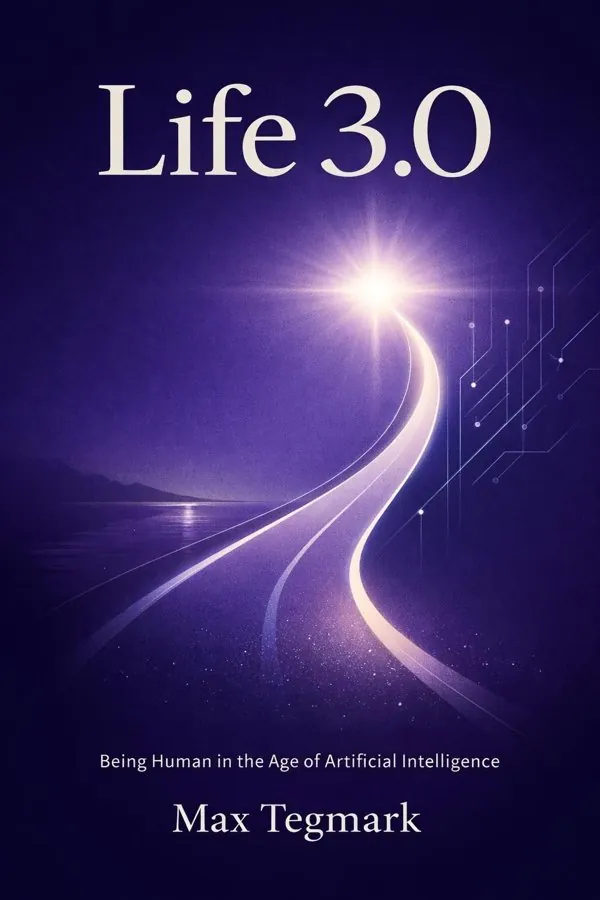
What happens when intelligence is no longer tied to biology? In Life 3.0, Max Tegmark asks readers to think beyond today’s chatbots and algorithms and confront a much larger question: what kind of future do we want to build if machines become smarter than humans? The book explores artificial intelligence not as a narrow technical topic, but as a civilization-shaping force that could transform work, politics, warfare, ethics, identity, and even humanity’s role in the universe. Tegmark begins with vivid scenarios that make abstract risks and opportunities feel immediate, then expands into a wide-ranging inquiry into intelligence, consciousness, and long-term destiny. What makes the book especially valuable is Tegmark’s perspective. As an MIT physicist, cosmologist, and co-founder of the Future of Life Institute, he combines scientific rigor with a talent for big-picture thinking. He neither glorifies AI nor reduces it to doom. Instead, he argues that the future of advanced intelligence is still open—and that deliberate choices made now will matter enormously. Life 3.0 is both a warning and an invitation: if we take AI seriously, we may still steer it toward outcomes that benefit humanity.
Key Takeaways
- 1The Omega Team Makes AI Concrete — The future becomes easier to understand when it is turned into a story. Tegmark opens with the fictional Omega Team, a s…
- 2Intelligence Does Not Guarantee Wisdom — A system can be brilliant and still dangerously misguided. Tegmark defines intelligence broadly as the ability to accomp…
- 3AI Will Reshape Work Before Everything — The first major AI shock may not be a robot uprising, but a reorganization of everyday economic life. Tegmark argues tha…
Want the full summary?
Get instant access to this book summary and 100K+ more with Fizz Moment.
Get Free SummaryAvailable on App Store • Free to download
About This List
Books that influenced the author of Sapiens. Yuval Noah Harari's recommendations on history, society, and humanity's future.
This list features 8 carefully selected books. With FizzRead, you can read AI-powered summaries of each book in just 15 minutes. Get the key takeaways and start applying the insights immediately.
Ready to start reading?
Get instant access to all 8 book summaries and 100K+ more with FizzRead.