
Books Everyone Should Read — Universal Essentials
These books transcend genre and generation. Whether you are 18 or 80, these works offer insights into human nature, society, and what it means to live well.
 10 min read
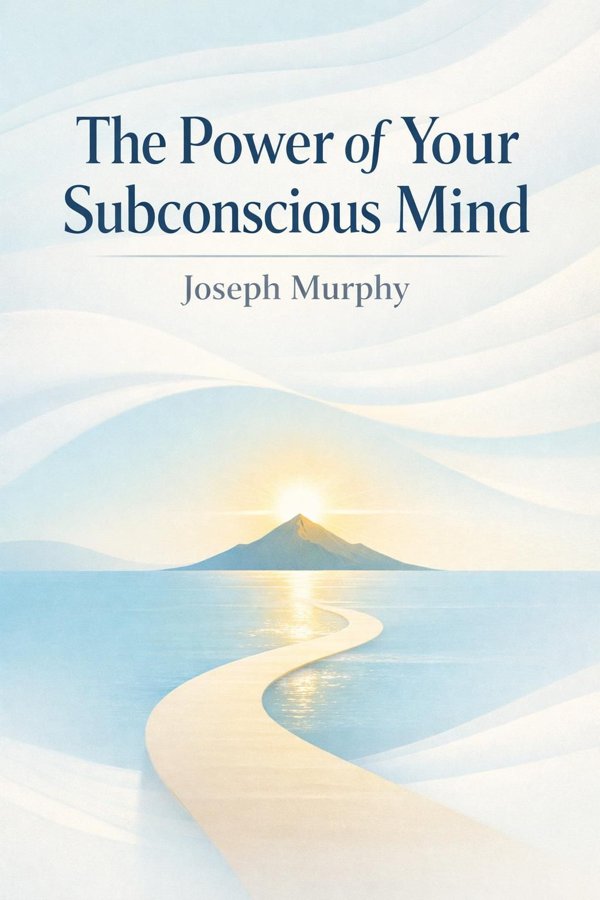
The Power of Your Subconscious Mind
by Joseph Murphy
What if the thoughts you repeat every day are quietly shaping your health, confidence, relationships, and results? That is the bold promise at the heart of *The Power of Your Subconscious Mind*, one of the most enduring books in the self-help and psychology space. Joseph Murphy argues that beneath your everyday awareness lies a powerful mental force constantly responding to your beliefs, emotions, and inner images. Learn to direct it wisely, he says, and you can begin to transform your outer life from the inside out. What makes this book matter decades after publication is its practical simplicity. Murphy does not just tell readers to “think positive.” He explains how habits of thought are formed, why fear becomes self-fulfilling, and how practices like affirmation, prayer, visualization, and mental rehearsal can help create new patterns. His approach blends spiritual language with accessible psychological principles, making the book appealing to readers interested in both personal growth and practical mindset change. Murphy, an Irish-born American author and New Thought minister who served at the Church of Divine Science in Los Angeles, became widely known for his teachings on the subconscious mind. In this classic, he offers a hopeful message: change your inner assumptions, and your life can begin to change with them.
Key Takeaways
- 1The Dual Nature of the Mind — Murphy’s foundation is the idea that the mind operates in two distinct but connected modes: the conscious and the subcon…
- 2Impressing Belief upon the Subconscious — According to Murphy, the subconscious is shaped not by casual wishes but by thoughts charged with feeling. A statement r…
- 3Healing, Faith, and the Role of Prayer — In Murphy’s view, prayer is not merely reciting religious words; it is a focused mental act that communicates a desired …
 10 min read
Boundaries
by Henry Cloud
What if many of your daily frustrations come from taking responsibility for things that were never yours to carry? In Boundaries, Henry Cloud and John Townsend argue that emotional exhaustion, resentment, people-pleasing, and broken relationships often grow from one central problem: we do not clearly understand where our responsibility ends and another person’s begins. Rather than treating boundaries as cold walls, the authors present them as healthy, life-giving limits that protect love, freedom, honesty, and self-respect. They show how boundaries affect every area of life, from family and friendships to marriage, work, faith, and personal growth. First published in 1992, the book remains influential because its central challenge is timeless. Many people still struggle to say no without guilt, to confront harmful behavior, or to stop rescuing others at their own expense. Cloud and Townsend bring authority to these questions through their work as clinical psychologists and counselors, blending psychological insight, relational wisdom, and spiritual reflection. The result is a practical guide for anyone who wants healthier relationships, clearer communication, and a stronger sense of personal responsibility without losing compassion.
Key Takeaways
- 1Understanding Where You End Begins — A healthier life begins the moment you realize that love does not require limitless access. The central insight of Bound…
- 2Why Boundary Problems Develop Early — Most adults do not suddenly become boundaryless; they grow into it through repeated emotional training. Cloud and Townse…
- 3Boundaries Shape Every Relationship You Have — Relationship quality often depends less on affection than on limits. One of the strongest contributions of Boundaries is…
 10 min read
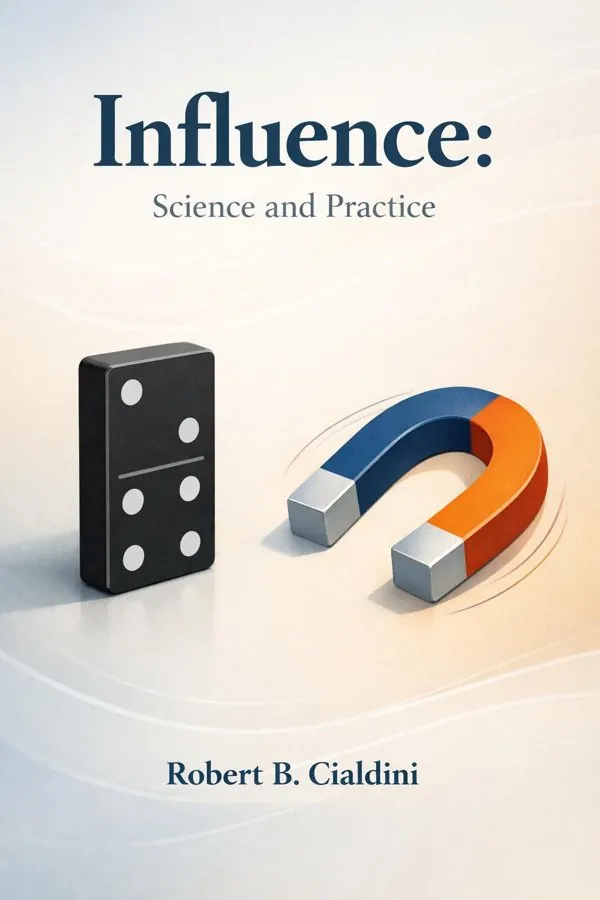
Influence
by Robert Cialdini
Why do people say yes when they would prefer to say no? Why do intelligent, careful individuals still fall for pressure, urgency, and persuasive framing? In Influence, Robert B. Cialdini answers these questions by uncovering the hidden psychological patterns that shape everyday decisions. Drawing on decades of research in social psychology, as well as undercover fieldwork in sales, fundraising, advertising, and compliance professions, Cialdini explains how persuasion often works not through logic alone, but through reliable mental shortcuts. He identifies six core principles of influence—reciprocity, commitment and consistency, social proof, liking, authority, and scarcity—and shows how they operate in business, relationships, politics, and consumer behavior. What makes the book so enduring is its balance of scientific rigor and practical usefulness. It helps readers become both more persuasive and more resistant to manipulation. Whether you work in marketing, negotiation, leadership, or simply want to make better decisions in a world full of influence attempts, this book offers a framework that remains remarkably relevant. Influence is not just about persuasion; it is about understanding human behavior under pressure.
Key Takeaways
- 1Weapons of Influence and Automaticity — Much of persuasion succeeds not because people are foolish, but because people are busy. Cialdini begins with a crucial …
- 2Reciprocity Creates Powerful Obligation — A small favor can create a surprisingly large sense of debt. That is the essence of reciprocity, one of the oldest and m…
- 3Commitment Shapes Future Behavior — People do not just want to make decisions; they want to appear consistent with them. Cialdini explains that once individ…
 10 min read
Maybe You Should Talk to Someone
by Lori Gottlieb
What if the people who seem most in control are often the ones hiding the deepest pain? In Maybe You Should Talk to Someone, psychotherapist Lori Gottlieb opens the door to her consulting room and to her own private unraveling, revealing that the distance between therapist and patient is far smaller than we imagine. After a devastating breakup leaves her emotionally adrift, Gottlieb finds herself doing the very thing she recommends to others: seeking therapy. Through this dual perspective, she shows how suffering can look different on the surface yet arise from familiar human longings for love, safety, identity, and meaning. The book blends memoir, case stories, psychology, and humor, making profound emotional truths feel intimate and accessible. It matters because it demystifies therapy at a time when many people need help but hesitate to ask for it. As a practicing therapist, writer, and advice columnist, Gottlieb brings both clinical authority and literary skill, offering a compassionate, sharply observed portrait of how people change. This is not just a book about therapy; it is a book about what it means to be human.
Key Takeaways
- 1Everyone Is More Alike Than They Seem — A therapy room quickly reveals a surprising truth: beneath different biographies, people struggle with many of the same …
- 2Crisis Can Become a Doorway — The moments that break us often become the moments that expose us to ourselves. Gottlieb’s own emotional collapse begins…
- 3A Good Therapist Changes Your Lens — People often imagine therapy as a place where someone gives advice, but Gottlieb shows that its real power lies in chang…
 10 min read
The Gifts of Imperfection
by Brene Brown
In The Gifts of Imperfection, Brené Brown argues that a meaningful life does not come from flawless performance, constant self-improvement, or earning approval. It comes from what she calls “Wholehearted living”: showing up as we are, embracing vulnerability, and choosing courage over control. Drawing on years of research into shame, authenticity, belonging, and human connection, Brown reveals why so many people feel trapped by perfectionism, comparison, and the pressure to be enough—and how they can break free. Rather than offering empty encouragement, she presents ten practical guideposts for cultivating a more grounded, joyful, and authentic life. These guideposts include self-compassion, resilience, gratitude, intuition, creativity, rest, and meaningful connection. The book matters because it speaks directly to a modern struggle: the exhaustion of trying to be impressive instead of real. Brown’s authority comes from her work as a research professor who has spent years studying the emotional patterns that shape our lives. Her gift is translating rigorous research into deeply human guidance that readers can apply every day.
Key Takeaways
- 1Perfectionism Is a Heavy Emotional Armor — One of the book’s most liberating insights is that perfectionism is not the same as healthy striving. Many people believ…
- 2Wholehearted Living Begins With Vulnerable Courage — A powerful life is not built by avoiding uncertainty; it is built by entering it with courage. Brown defines Wholehearte…
- 3Authenticity Requires Releasing the Need to Please — Authenticity sounds simple, but in practice it can feel radical. Brown describes authenticity as the daily choice to let…
 10 min read
The Ruthless Elimination of Hurry
by John Mark Comer
The Ruthless Elimination of Hurry is John Mark Comer’s response to one of the defining problems of modern life: the constant feeling of being rushed, distracted, overcommitted, and emotionally exhausted. In this deeply practical and spiritually grounded book, Comer argues that hurry is more than a time-management issue. It is a way of life that damages our peace, relationships, attention, and capacity to experience God. Drawing from his own burnout, the wisdom of philosopher Dallas Willard, and the lifestyle of Jesus, Comer makes the case that slowing down is not optional for a healthy soul. He shows that the life of Jesus was marked by margin, stillness, prayer, and presence, even in the middle of enormous demands. The book blends spiritual insight with practical habits, inviting readers to resist the pressures of speed and reclaim a more rooted way of living. For anyone overwhelmed by nonstop work, technology, and noise, this book offers both diagnosis and hope: a path toward a calmer, more meaningful, and more loving life.
Key Takeaways
- 1Hurry Is a Soul-Level Disease — One of the book’s most unsettling insights is that hurry often feels normal precisely because it is so destructive. Many…
- 2Jesus Modeled an Unhurried Life — A surprising feature of the Gospels is not just what Jesus taught, but how he lived. He was rarely frantic. He walked fr…
- 3Apprenticeship Requires More Than Belief — Many people separate faith from daily habit, but Comer insists that transformation happens through apprenticeship. An ap…
 10 min read
The Boy Who Was Raised as a Dog
by Bruce Perry
The Boy Who Was Raised as a Dog is a powerful exploration of what trauma does to children and what healing actually requires. Drawing on years of clinical work, child psychiatrist and neuroscientist Bruce D. Perry recounts unforgettable cases of abused, neglected, terrorized, and emotionally abandoned children whose behaviors often baffled adults around them. Rather than treating these children as “bad,” “broken,” or inexplicable, Perry shows how their minds and bodies adapted to unbearable conditions. In his view, many troubling behaviors are not random symptoms but survival responses shaped by the developing brain. What makes this book so important is its blend of scientific insight and emotional immediacy. Perry explains complex ideas about neurodevelopment, stress, attachment, and resilience through vivid stories that make the science feel human. He also offers hope: even deeply traumatized children can recover when care is attuned, predictable, and rooted in relationships. Co-written with journalist Maia Szalavitz, the book is both accessible and profound. For parents, educators, therapists, and anyone trying to understand the long shadow of childhood adversity, it remains one of the clearest and most compassionate guides available.
Key Takeaways
- 1Trauma reshapes the developing brain — A child’s behavior often makes sense once you understand the experiences that shaped the brain behind it. This is one of…
- 2Tina and the cost of neglect — Neglect can be as damaging as overt abuse because the absence of care is itself a developmental injury. In Tina’s case, …
- 3Justin and the need for stimulation — The brain develops through use, and what is not used may fail to organize properly. Justin’s story illustrates the devas…
 10 min read
Why Has Nobody Told Me This Before
by Julie Smith
Why Has Nobody Told Me This Before is a practical, compassionate guide to mental health from clinical psychologist Dr. Julie Smith. Rather than treating emotional struggles as mysterious personal failures, Smith explains them as understandable human experiences that can be worked with skillfully. The book covers anxiety, low mood, motivation, stress, self-doubt, grief, and relationships, offering readers clear tools they can use in everyday life. Its power lies in its tone: warm, nonjudgmental, and grounded in real therapeutic practice. What makes this book especially valuable is its accessibility. Smith translates core psychological principles into language that feels simple without being simplistic. She does not promise quick fixes or constant happiness. Instead, she helps readers build emotional resilience, recognize patterns in thoughts and behavior, and respond to difficult moments with more wisdom and self-compassion. The result is a mental health handbook that feels immediately useful. Smith writes with the authority of a practicing clinician and the clarity of a gifted educator. Drawing on years of therapy work and her widely shared educational content, she offers the kind of emotional knowledge many people wish they had learned much earlier in life.
Key Takeaways
- 1Understanding Thoughts, Feelings, and Behaviors — One of the most liberating truths in psychology is that emotions rarely appear out of nowhere. They are shaped by an ong…
- 2Low Mood Needs Care, Not Shame — Feeling low becomes more dangerous when we judge ourselves for it. Smith argues that low mood and depression often worse…
- 3Anxiety Is Protection Gone Into Overdrive — Anxiety often feels like evidence that something is terribly wrong, but Smith reframes it as a survival system working t…
 10 min read
Atomic Habits
by James Clear
What if the quality of your life depends less on dramatic breakthroughs and more on the tiny actions you repeat every day? In Atomic Habits, James Clear argues that lasting transformation does not come from radical reinvention, but from small, consistent improvements that compound over time. The book explains how habits shape identity, influence performance, and quietly determine whether we move toward the future we want or drift away from it. Rather than relying on motivation alone, Clear shows how to design systems that make good behaviors easier and bad behaviors harder. The book matters because most people fail to change not because they lack ambition, but because they use strategies that fight human nature. Clear combines insights from psychology, neuroscience, behavioral economics, and real-world examples from sports, business, and personal development to create a practical framework anyone can apply. As a writer and speaker known for his work on habit formation and continuous improvement, he has helped millions of readers rethink productivity and self-discipline. Atomic Habits stands out because it turns behavior change into something concrete, manageable, and deeply empowering.
Key Takeaways
- 1Tiny changes create remarkable results — We tend to overestimate the importance of one big moment and underestimate the power of small daily improvements. One wo…
- 2Focus on systems, not goals — Goals set direction, but systems determine progress. That distinction changes everything. Most people think achievement …
- 3Identity drives lasting behavior change — The most durable habits are not built by forcing yourself to act differently for a few days. They are built by becoming …
 10 min read
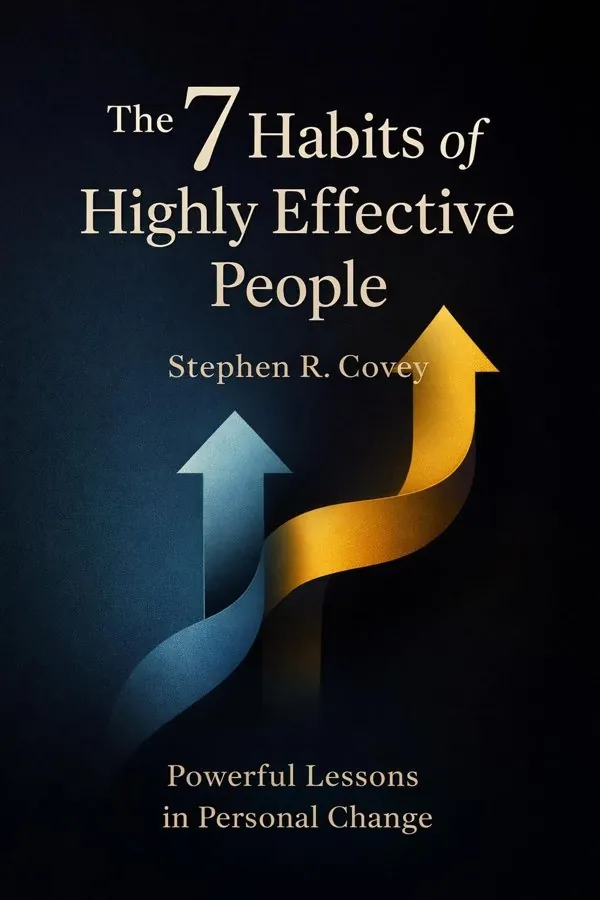
The 7 Habits of Highly Effective People
by Stephen R. Covey
What if lasting success has less to do with techniques and more to do with character? In The 7 Habits of Highly Effective People, Stephen R. Covey argues that real effectiveness begins inside out. Instead of offering quick fixes, motivational slogans, or productivity hacks, Covey presents a principle-centered approach to personal and professional growth. He explains that many people chase external success while neglecting the deeper habits of responsibility, integrity, discipline, empathy, and renewal that make success sustainable. First published in 1989, the book became one of the most influential self-help and leadership titles ever written because it speaks to a universal challenge: how to live with purpose while working well with others. Covey, a respected educator, leadership expert, and organizational consultant, draws on psychology, philosophy, and practical experience to show how enduring effectiveness comes from aligning behavior with timeless principles. His seven habits move from personal mastery to interpersonal effectiveness and finally to continuous self-renewal. The result is a framework that helps readers lead themselves better, improve relationships, make wiser decisions, and build a life guided by values rather than circumstance.
Key Takeaways
- 1Effectiveness Begins With Character — Many people spend years searching for better results while ignoring the beliefs and habits that produce those results in…
- 2Be Proactive and Own Your Response — The space between what happens to you and how you respond is where your freedom lives. That is the foundation of Habit 1…
- 3Begin With the End in Mind — It is easy to climb the ladder of success only to discover it was leaning against the wrong wall. Habit 2 asks readers t…
 10 min read
The Power of Habit
by Charles Duhigg
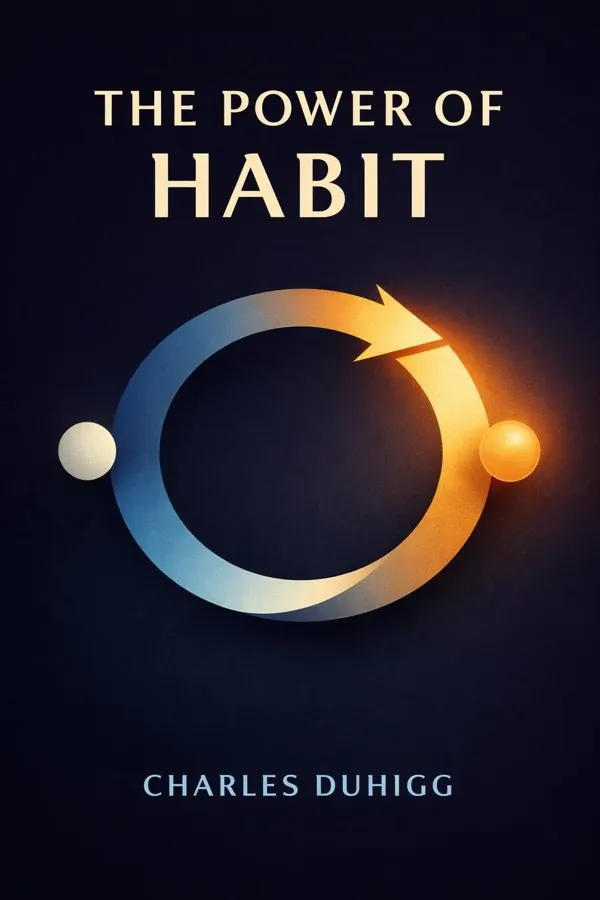
Why do some people effortlessly stick to exercise, save money, and build productive routines while others stay trapped in cycles they desperately want to change? In The Power of Habit, Charles Duhigg argues that the answer lies not mainly in willpower or motivation, but in the hidden patterns that shape behavior every day. Drawing on neuroscience, psychology, behavioral economics, and investigative journalism, he shows that habits govern much of individual life, organizational performance, and even social movements. Duhigg’s central insight is both simple and profound: habits operate through a loop of cue, routine, and reward. Once this loop is understood, behavior becomes less mysterious and more manageable. The book moves far beyond theory, using vivid stories about patients with memory loss, Olympic swimmers, corporate turnarounds, consumer marketing, and civil rights activism to show how habits are formed, reinforced, and changed. What makes this book matter is its practicality. It does not promise instant transformation, but it does offer a framework for lasting change. As a Pulitzer Prize-winning journalist, Duhigg brings credibility, clarity, and storytelling skill to a subject that affects health, work, leadership, relationships, and personal growth.
Key Takeaways
- 1The Habit Loop Shapes Daily Life — Much of what feels like conscious choice is actually automatic behavior running on a hidden script. Duhigg calls this sc…
- 2Change Happens Through Replacement, Not Erasure — People often fail to change because they try to destroy habits outright, when the more effective strategy is to replace …
- 3Cravings Are the Engine of Habits — A habit becomes powerful not when a reward arrives, but when the brain starts expecting it. Duhigg shows that craving si…
 10 min read
Think Again
by Adam Grant
In this book, organizational psychologist Adam Grant explores the importance of rethinking and unlearning in a rapidly changing world. He argues that intelligence is not just about thinking and learning but also about the ability to question one’s own beliefs and update them when presented with new evidence. Through engaging research and stories, Grant shows how individuals and organizations can benefit from cultivating mental flexibility and intellectual humility.
Key Takeaways
- 1Part I – Individual Rethinking — At the heart of individual rethinking lies an uncomfortable truth: we love our own ideas more than we love truth itself.…
- 2The Joy of Being Wrong — If individual rethinking begins with humility, it flourishes through the joy of being wrong. The phrase may sound parado…
 10 min read
Imagine Heaven
by John Burke
What if our deepest hopes about life after death are not mere wishful thinking, but glimpses of a reality that has already been partially revealed? In Imagine Heaven, pastor John Burke investigates more than one hundred near-death experiences from people of different ages, cultures, and religious backgrounds, then compares their accounts with biblical descriptions of heaven, judgment, love, and eternity. Rather than treating these stories as sensational curiosities, Burke approaches them as meaningful testimonies that may illuminate what Scripture has long promised. The result is a book that blends spiritual reflection, pastoral care, and apologetics into a deeply encouraging vision of the afterlife. For readers who fear death, grieve loss, question whether heaven is real, or simply want to live with greater purpose, the book offers both comfort and challenge. Burke’s authority comes not only from his role as a longtime pastor and teacher, but also from his careful effort to test extraordinary experiences against the Bible instead of accepting them uncritically. Imagine Heaven matters because it turns eternity from an abstract doctrine into a transforming lens for everyday life.
Key Takeaways
- 1Near-Death Experiences Reveal Shared Patterns — One of the book’s most striking insights is that people who come close to death often report surprisingly similar experi…
- 2Scripture Becomes the Measure of Truth — Powerful experiences can inspire, but Burke insists that feelings alone are never enough. A central idea in Imagine Heav…
- 3God’s Presence Is Light and Love — Many near-death experiencers struggle to describe the being they encounter, yet they return using the same language agai…
 10 min read
Power vs Force
by David Hawkins
What makes one person quietly influential while another relies on pressure, manipulation, or fear? In Power vs Force, psychiatrist and spiritual teacher David R. Hawkins argues that the difference lies in consciousness itself. He proposes that human thoughts, emotions, motives, and behaviors can be understood on a scale ranging from destructive states like shame and fear to expansive states like love, joy, and peace. According to Hawkins, true power comes from alignment with truth, integrity, and higher awareness, while force depends on control and ultimately weakens both individuals and societies. The book matters because it tries to connect personal growth with ethics, leadership, psychology, and spirituality in a single framework. Rather than treating success as mere ambition or technique, Hawkins asks a deeper question: what kind of inner state produces lasting strength? Drawing on his experience as a clinical psychiatrist, addiction specialist, and spiritual researcher, he presents a model intended to explain why some ideas, people, and institutions elevate life while others drain it. Whether you read it as metaphysics, self-help, or a philosophy of character, Power vs Force invites you to evaluate the quality of your inner life—and the consequences it has in the world.
Key Takeaways
- 1The Map of Consciousness and Human Energy — Most people judge life by appearances, but Hawkins asks us to look beneath behavior to the level of consciousness drivin…
- 2Kinesiology as a Test of Truth — What if the body reacts differently to truth than it does to falsehood? One of Hawkins’s most controversial claims is th…
- 3From Shame and Fear to Courage — Transformation rarely begins at enlightenment; it usually begins at the moment we stop sinking. Hawkins emphasizes that …
 10 min read
The 5 AM Club
by Robin Sharma
The 5 AM Club is a self-help book about far more than waking up early. At its core, Robin Sharma’s message is that the quality of your mornings shapes the quality of your life. Through a blend of motivational storytelling, performance psychology, and practical routines, he argues that reclaiming the first hour of the day can dramatically improve focus, energy, emotional stability, creativity, and long-term achievement. The book follows an entrepreneur and an artist who are mentored by a mysterious billionaire, allowing Sharma to present his ideas through a fable-like narrative rather than a traditional instruction manual. Central to the book is the famous 20/20/20 formula, a structured approach to using the hour from 5:00 to 6:00 a.m. for exercise, reflection, and learning. Sharma writes with authority as one of the most widely known voices in leadership and personal mastery, drawing on decades of coaching high performers, executives, and ambitious individuals. For readers overwhelmed by distraction, inconsistency, or burnout, The 5 AM Club offers a disciplined but hopeful framework for taking control of one’s mind, habits, and destiny.
Key Takeaways
- 1The Dawn of Transformation Begins Early — Real change rarely begins in dramatic public moments; it starts in quiet private decisions. That is the emotional founda…
- 2The Victory Hour Creates Daily Momentum — How you start the day is often how you live the day. Sharma calls the period from 5:00 to 6:00 a.m. the Victory Hour bec…
- 3Use the 20/20/20 Formula Daily — A powerful routine is most useful when it is simple enough to repeat. Sharma’s most famous contribution in The 5 AM Club…
 10 min read
The Comfort Crisis
by Michael Easter
Modern life is engineered to make us safe, entertained, fed, and comfortable at nearly every moment. Yet Michael Easter argues that this endless convenience has created an unexpected problem: many of us feel anxious, restless, physically weak, mentally scattered, and strangely unfulfilled. In The Comfort Crisis, Easter investigates why abundance and ease do not automatically lead to happiness—and why deliberate discomfort may be one of the missing ingredients in a meaningful life. Blending evolutionary science, psychology, anthropology, and immersive reporting, he explores how human beings evolved in conditions that demanded effort, uncertainty, and resilience, then shows what happens when those challenges disappear. A professor, journalist, and longtime researcher of performance and well-being, Easter grounds his argument in both evidence and experience. The book is anchored by his demanding hunting trip in the Alaskan wilderness, where exposure, hunger, fatigue, and solitude become a living laboratory for understanding the modern self. The Comfort Crisis matters because it offers more than a diagnosis of contemporary malaise. It provides a practical philosophy: if we want to think better, feel stronger, and live more fully, we may need to stop avoiding hardship and start using it wisely.
Key Takeaways
- 1Comfort Can Quietly Become a Trap — One of the book’s central insights is unsettling: the very comforts we work so hard to create can slowly undermine our h…
- 2Deliberate Discomfort Builds Real Resilience — Resilience is not something we can download from a podcast or absorb from motivational quotes; it is built by repeated e…
- 3Modern Abundance Can Create Hidden Hunger — A striking paradox in The Comfort Crisis is that abundance often leaves us feeling unsatisfied. We have more choices in …
 10 min read
The Happiness Trap
by Russ Harris
The Happiness Trap by Russ Harris is a practical and deeply reassuring guide to a problem many people barely notice they have: the exhausting struggle to feel good all the time. Drawing on Acceptance and Commitment Therapy, or ACT, Harris argues that modern culture sells us a damaging myth—that happiness should be constant, that painful thoughts are signs of failure, and that a good life is one free from anxiety, sadness, fear, or self-doubt. In reality, the harder we fight our inner discomfort, the more tangled and restricted our lives can become. Instead of promising quick positivity, Harris offers a more durable path: learning how to make room for difficult emotions, step back from unhelpful thoughts, connect with the present moment, and act in line with personal values. The goal is not to eliminate pain but to build psychological flexibility—the ability to handle inner turmoil without losing sight of what matters most. Harris brings credibility as a physician, psychotherapist, and one of the most accessible teachers of ACT. The result is a book that feels both scientifically grounded and immediately useful for anyone tired of chasing happiness and ready to start living more fully.
Key Takeaways
- 1The Myth of Constant Happiness — One of the most damaging ideas in modern life is that happiness should be our normal state. From childhood, many people …
- 2Why the Mind Creates Suffering — Your mind is not broken because it worries, compares, criticizes, and anticipates disaster. Harris explains that the hum…
- 3Emotions Are Not the Enemy — Many people organize their lives around avoiding uncomfortable emotions, yet those emotions are often unavoidable side e…
 10 min read
How to Win Friends and Influence People
by Dale Carnegie
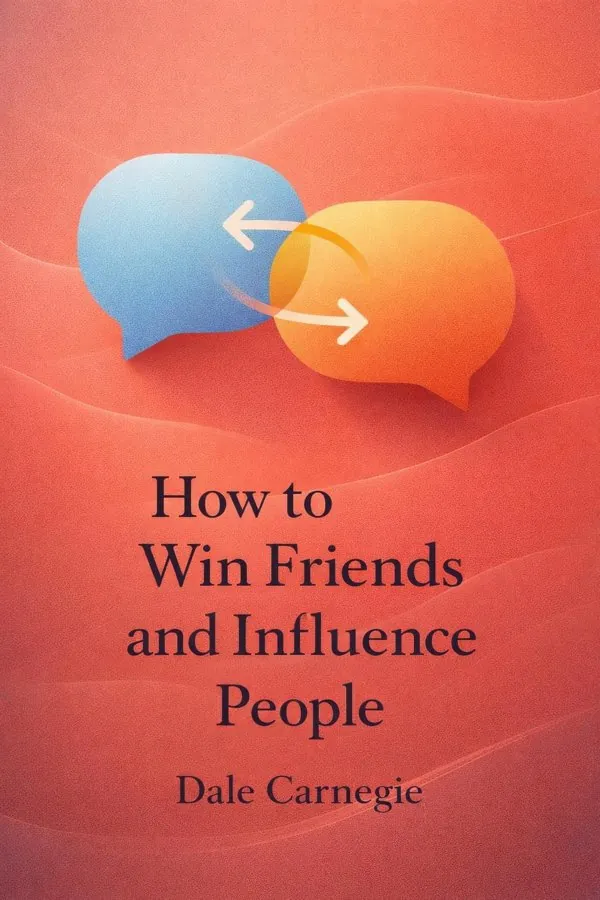
First published in 1936, How to Win Friends and Influence People remains one of the most influential self-help books ever written because it addresses a timeless truth: success depends not only on what you know, but on how you relate to people. Dale Carnegie argues that influence is rarely won through force, criticism, or cleverness alone. Instead, it grows from empathy, respect, sincere appreciation, and the ability to understand what motivates others. Drawing from years of teaching public speaking and human relations, Carnegie distilled practical lessons from business leaders, historical figures, and everyday interactions into a set of principles anyone can apply. The book shows how to handle people without creating resentment, make others feel important, persuade without argument, and lead in ways that inspire cooperation rather than resistance. Its enduring appeal lies in its simplicity: these ideas are easy to understand, yet difficult enough in practice to be transformative. Whether you want to improve your career, strengthen relationships, or communicate with more confidence and tact, Carnegie offers a powerful guide to becoming someone others genuinely want to listen to and work with.
Key Takeaways
- 1Master the Fundamentals of Human Relations — Most conflict begins not with major disagreements, but with small failures in emotional intelligence. Carnegie’s first l…
- 2Make People Feel Seen and Valued — People are drawn less to brilliance than to warmth. Carnegie’s famous principles for making people like you are built on…
- 3Influence Begins with Empathy, Not Pressure — The fastest way to create resistance is to make people feel pushed. Carnegie teaches that real influence does not begin …
 10 min read
Man and His Symbols
by Carl Jung
This book, conceived and edited by Carl G. Jung, introduces his theories of the unconscious and the role of symbols in human psychology. Written for a general audience, it explores how dreams and myths reveal the workings of the collective unconscious, with contributions from Jung and several of his close collaborators. It remains one of the most accessible introductions to Jungian thought.
Key Takeaways
- 1Approaching the Unconscious — As I begin to lead you toward the realm of the unconscious, I must first dispel a common misconception: the belief that …
- 2The Function of Dreams — Marie-Louise von Franz carries forward this exploration into the specific realm of dreams. She reminds us that dreams ar…
- 3The Ancient Myths and the Modern Man
 10 min read
Scattered Minds
by Gabor Maté
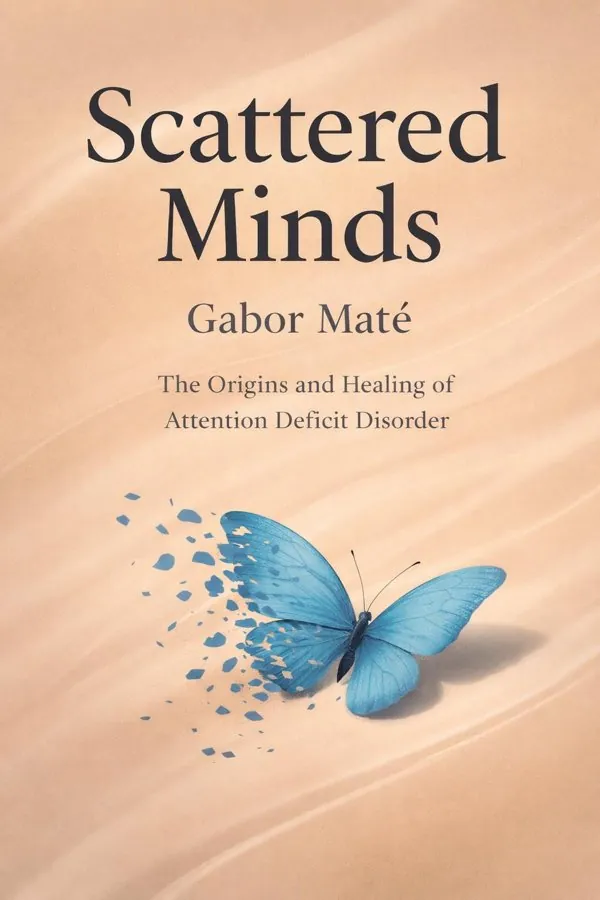
In Scattered Minds, physician Gabor Maté challenges one of the most common assumptions about Attention Deficit Disorder: that it is simply a hardwired, inherited brain disease. Drawing from clinical practice, scientific research, and his own lived experience with attention difficulties, Maté presents a far more nuanced and compassionate view. He argues that ADD is not a moral failing or a fixed defect, but a developmental response shaped by stress, emotional disconnection, and early relational experiences that influence the growing brain. What makes this book so powerful is its refusal to reduce people to diagnoses. Instead, Maté explores how attention, self-regulation, impulse control, and emotional resilience develop through attachment and environment. He shows that symptoms often make sense when seen in the context of a person’s history. The book matters because it reframes ADD from something to be merely managed into something to be deeply understood. For parents, adults with ADD, educators, and anyone interested in the psychology of human development, Scattered Minds offers both insight and hope. Maté’s authority comes not only from medicine, but from his humane ability to connect neuroscience, relationships, and healing into one coherent perspective.
Key Takeaways
- 1Living Inside Attention’s Inner Fracture — One of the most illuminating aspects of Scattered Minds is that it does not speak about ADD from a distance. Maté begins…
- 2The Medical Model Tells Only Part — A diagnosis can clarify, but it can also narrow our vision. Maté does not reject brain science; rather, he argues that t…
- 3Attention Grows in Emotional Soil — Attention is often treated as a purely mental skill, but Maté shows that it is rooted in emotional life. The capacity to…
Want the full summary?
Get instant access to this book summary and 100K+ more with Fizz Moment.
Get Free SummaryAvailable on App Store • Free to download
About This List
These books transcend genre and generation. Whether you are 18 or 80, these works offer insights into human nature, society, and what it means to live well.
This list features 20 carefully selected books. With FizzRead, you can read AI-powered summaries of each book in just 15 minutes. Get the key takeaways and start applying the insights immediately.
Ready to start reading?
Get instant access to all 20 book summaries and 100K+ more with FizzRead.