

Boundaries: Summary & Key Insights
by Henry Cloud
 10 min9 chaptersAudio available
Key Takeaways from Boundaries
A healthier life begins the moment you realize that love does not require limitless access.
Most adults do not suddenly become boundaryless; they grow into it through repeated emotional training.
Relationship quality often depends less on affection than on limits.
Few words create more anxiety for people-pleasers than no, yet the book argues that no is one of the most loving words available.
The moment you begin setting boundaries, resistance often appears.
What Is Boundaries About?
Boundaries by Henry Cloud is a self-help book published in 1992 spanning 7 pages. What if many of your daily frustrations come from taking responsibility for things that were never yours to carry? In Boundaries, Henry Cloud and John Townsend argue that emotional exhaustion, resentment, people-pleasing, and broken relationships often grow from one central problem: we do not clearly understand where our responsibility ends and another person’s begins. Rather than treating boundaries as cold walls, the authors present them as healthy, life-giving limits that protect love, freedom, honesty, and self-respect. They show how boundaries affect every area of life, from family and friendships to marriage, work, faith, and personal growth. First published in 1992, the book remains influential because its central challenge is timeless. Many people still struggle to say no without guilt, to confront harmful behavior, or to stop rescuing others at their own expense. Cloud and Townsend bring authority to these questions through their work as clinical psychologists and counselors, blending psychological insight, relational wisdom, and spiritual reflection. The result is a practical guide for anyone who wants healthier relationships, clearer communication, and a stronger sense of personal responsibility without losing compassion.
This FizzRead summary covers all 9 key chapters of Boundaries in approximately 10 minutes, distilling the most important ideas, arguments, and takeaways from Henry Cloud's work. Also available as an audio summary and Key Quotes Podcast.
Boundaries
What if many of your daily frustrations come from taking responsibility for things that were never yours to carry? In Boundaries, Henry Cloud and John Townsend argue that emotional exhaustion, resentment, people-pleasing, and broken relationships often grow from one central problem: we do not clearly understand where our responsibility ends and another person’s begins. Rather than treating boundaries as cold walls, the authors present them as healthy, life-giving limits that protect love, freedom, honesty, and self-respect. They show how boundaries affect every area of life, from family and friendships to marriage, work, faith, and personal growth.
First published in 1992, the book remains influential because its central challenge is timeless. Many people still struggle to say no without guilt, to confront harmful behavior, or to stop rescuing others at their own expense. Cloud and Townsend bring authority to these questions through their work as clinical psychologists and counselors, blending psychological insight, relational wisdom, and spiritual reflection. The result is a practical guide for anyone who wants healthier relationships, clearer communication, and a stronger sense of personal responsibility without losing compassion.
Who Should Read Boundaries?
This book is perfect for anyone interested in self-help and looking to gain actionable insights in a short read. Whether you're a student, professional, or lifelong learner, the key ideas from Boundaries by Henry Cloud will help you think differently.
- ✓Readers who enjoy self-help and want practical takeaways
- ✓Professionals looking to apply new ideas to their work and life
- ✓Anyone who wants the core insights of Boundaries in just 10 minutes
Want the full summary?
Get instant access to this book summary and 100K+ more with Fizz Moment.
Get Free SummaryAvailable on App Store • Free to download
Key Chapters
A healthier life begins the moment you realize that love does not require limitless access. The central insight of Boundaries is that every person has an invisible line of ownership around important parts of life: feelings, thoughts, attitudes, behaviors, choices, values, limits, and time. Boundaries define what is yours to manage and what belongs to someone else. Without them, you absorb responsibilities that are not yours, allow others to control your emotions or schedule, and lose clarity about your own needs and convictions.
Cloud and Townsend explain that boundaries are not selfish barriers meant to keep people out. They are structures that make genuine intimacy possible. When people know where they stand, they can give freely rather than from pressure or fear. A person with healthy boundaries can say, “I care about you, but I cannot solve this for you,” or “I want to help, but not at the expense of my health and commitments.” That distinction preserves both truth and kindness.
In practice, this can look simple but powerful. A coworker asks you to finish their task again because they procrastinated. A boundary might mean refusing to rescue them while still being respectful. A friend repeatedly unloads emotional drama late at night. A boundary may involve saying you are available to talk tomorrow, not now. A family member criticizes your decisions. A boundary means hearing their opinion without surrendering your agency.
The book’s framework is liberating because it restores ownership. You are responsible for your choices, reactions, and commitments. Others are responsible for theirs. Actionable takeaway: identify one area of your life where resentment is growing, then ask, “What am I taking responsibility for that actually belongs to someone else?”
Most adults do not suddenly become boundaryless; they grow into it through repeated emotional training. Cloud and Townsend describe several common boundary problems, including compliance, avoidance, control, and a lack of limits. These patterns often begin in childhood, where love, approval, safety, or belonging may have depended on pleasing others, suppressing feelings, or adapting to unstable environments.
Compliance is the tendency to say yes when you mean no. People who comply often fear rejection, conflict, or disapproval, so they overcommit and underexpress. Avoidance appears when people detach from responsibilities, difficult emotions, or needed conversations. Control shows up when someone resists being vulnerable and instead dominates others or manipulates situations. A lack of limits appears when a person does not recognize that actions have consequences, either in themselves or others.
These patterns can coexist. For example, someone may comply with an overbearing parent, avoid hard conversations with a spouse, and then become controlling with their children. The result is a cycle of imbalance rather than mature responsibility. The authors emphasize that boundary problems are not character flaws to be condemned; they are learned ways of coping that can be understood and changed.
Consider a person who was praised only when helpful. As an adult, they may feel guilty resting, declining invitations, or prioritizing their own family. Or someone raised in chaos may become emotionally unavailable because closeness feels unsafe. Recognizing the roots of these habits creates compassion, but the book insists that insight alone is not enough. Healing requires new behavior.
Actionable takeaway: notice your default boundary style this week. Do you usually comply, avoid, control, or ignore limits? Write down one recurring situation where that pattern appears and choose a healthier response before it happens again.
Relationship quality often depends less on affection than on limits. One of the strongest contributions of Boundaries is its insistence that healthy boundaries are necessary in every major sphere of life: family, friendship, romance, work, and community. Different settings require different expressions of limits, but the principle remains the same: clarity protects connection.
In families, boundaries help adult children separate from unhealthy dependence, guilt, or control. Loving your parents does not mean surrendering your marriage, finances, beliefs, or time whenever they demand it. In friendships, boundaries reveal whether mutual care exists or whether one person constantly gives while the other takes. In romantic relationships, boundaries protect trust by requiring honesty, responsibility, and respect. At work, they prevent burnout by defining workloads, availability, and ownership of tasks.
For example, an employee who answers nonurgent emails at midnight may slowly train everyone to expect constant access. A boundary might mean responding during working hours unless there is a genuine emergency. In marriage, if one partner repeatedly overspends, the other may need to stop covering consequences and instead insist on financial transparency. In friendship, if every conversation revolves around one person’s crises, a boundary could be saying, “I care, but this pattern is draining. We need a healthier way to connect.”
The authors also stress that boundaries reveal relationship health. People who benefit from your lack of limits may resist your changes. That resistance does not necessarily mean your boundary is wrong; often it proves why it is needed. Mature relationships can handle truth, disappointment, and negotiation.
Actionable takeaway: choose one relationship category, such as work or family, and define one specific boundary in advance: what you will do, what you will not do, and how you will communicate it calmly.
Few words create more anxiety for people-pleasers than no, yet the book argues that no is one of the most loving words available. A clear no protects your ability to say a meaningful yes. Without the freedom to decline, agreement becomes resentment in disguise. Cloud and Townsend present refusal not as aggression, but as a mature expression of ownership and truth.
Saying no is difficult because many people equate it with selfishness, cruelty, or abandonment. But the authors show that overextension weakens rather than strengthens relationships. If you keep saying yes to avoid conflict, you eventually give from depletion, anger, or hidden obligation. By contrast, a thoughtful no honors reality. It says, “I am finite. I have limits. I cannot do everything, and I do not have to.”
The book also emphasizes receiving no. Respecting another person’s boundary is part of maturity. If you become resentful, manipulative, or offended whenever someone declines your request, you may be expecting control instead of relationship. Healthy people can hear no and remain connected.
Practical examples are everywhere. If a sibling asks for another loan but has not repaid earlier ones, no may be the most responsible answer. If a colleague asks you to take over a project because they are overwhelmed from poor planning, no may help them face needed consequences. If your calendar is full and you are running on exhaustion, no may be the honest answer even to a good opportunity.
A useful script is simple: appreciation, truth, clarity. “Thanks for asking. I can’t commit to that right now.” No long defense is required. Actionable takeaway: practice one low-stakes no this week, using a short and respectful sentence without apologizing for having limits.
The moment you begin setting boundaries, resistance often appears. That resistance may come from others, but it also comes from inside you. Boundaries identifies guilt, fear, and manipulation as major forces that keep people trapped in unhealthy patterns. These forces do not prove that a boundary is wrong; they often signal that an old relational system is being disrupted.
Guilt is especially powerful for people who have been trained to equate self-sacrifice with goodness. You may feel guilty for declining a request, confronting disrespect, or allowing someone to face consequences. But the authors distinguish false guilt from true responsibility. Feeling bad does not mean you are doing harm. Sometimes guilt is simply the emotional hangover of growth.
Fear also undermines boundaries. You may fear anger, rejection, loneliness, retaliation, or being seen as unkind. As a result, you tolerate patterns that steadily erode trust and peace. Manipulation adds another layer. Some people use pressure tactics such as silent treatment, self-pity, blame, flattery, or crisis-making to get what they want. If you are highly responsive to those tactics, your decisions become driven by emotional coercion rather than conviction.
Suppose a parent says, “After all I’ve done for you, you can’t even visit this weekend?” That statement may trigger guilt, but the real issue is whether the request fits your responsibilities and limits. Or imagine a friend who repeatedly creates emergencies that require your rescue. Boundaries help you separate compassion from enablement.
The authors encourage steady, calm firmness. You do not need to match manipulation with hostility. You can repeat your limit, refuse unnecessary debate, and allow others to have their feelings. Actionable takeaway: when a request makes you tense, pause and ask, “Am I responding from love and wisdom, or from guilt, fear, or pressure?”
One of the book’s most challenging claims is that rescuing people from the consequences of their choices often harms them. Many boundaryless relationships are built on interruption of consequences: covering debts, cleaning up emotional messes, excusing repeated irresponsibility, or absorbing another person’s duties. This may feel caring in the short term, but it frequently blocks growth.
Cloud and Townsend argue that consequences are one of life’s primary teachers. When someone experiences the results of their behavior, they are given a chance to reflect, change, and mature. When you repeatedly protect them from those results, you may keep them comfortable while making yourself exhausted and resentful. In this sense, enabling is not the same as loving.
This idea applies in families, work, and marriage. If a teenager forgets an assignment, a parent who repeatedly invents excuses may prevent the child from developing responsibility. If an employee constantly misses deadlines and the team leader quietly fixes everything, the employee never confronts the need to change. If one spouse repeatedly spends beyond the budget and the other keeps covering the shortfall, the real issue remains untouched.
Healthy consequences are not punishment driven by revenge. They are truthful responses to reality. You can be compassionate while allowing discomfort. You might say, “I’m sorry this is hard, but I’m not going to solve it for you.” That statement respects both care and accountability.
For many readers, this is where boundaries become deeply practical. They are not just about self-protection; they are also about helping others encounter reality. Actionable takeaway: identify one person you are currently rescuing from a predictable consequence, and decide what support you can offer without removing their responsibility.
Boundaries are not installed in a single brave conversation; they are built through repeated practice. Many people expect immediate relief once they state a limit, but Cloud and Townsend show that boundary growth is often slow, emotional, and uneven. Because old habits are deeply wired, progress usually requires support, reflection, and persistence.
The rebuilding process starts with awareness. You notice where resentment, fatigue, confusion, or fear appear. Those signals often indicate that a boundary is missing or unclear. Next comes naming the problem honestly, which may involve admitting anger, disappointment, or hurt that you have minimized. Then comes the hard step: taking ownership of your choices instead of blaming others for every overcommitment. If you constantly say yes, part of the problem is not just others asking, but your repeated agreement.
The authors encourage seeking safe people while learning this skill. Supportive friends, therapists, mentors, or groups can help you test new behavior and survive the discomfort of change. They can remind you that a disappointed reaction from others does not mean you are failing. Boundaries also require consistency. A limit stated once but not enforced teaches people to wait you out.
For example, if you tell coworkers you are unavailable during dinner but continue answering messages every evening, the old pattern remains. If you tell a friend you will not discuss the same destructive relationship endlessly, then repeatedly allow the same loop, your words lose weight. Boundaries become credible when backed by action.
The book frames this process as growth in adulthood. Mature people increasingly align words, values, and behavior. Actionable takeaway: choose one boundary you have already voiced but not maintained, and define the next concrete action that will make it real.
A common misunderstanding is that boundaries create distance, when in fact they create the conditions for real love. Boundaries teaches that freedom and responsibility are not opposites. Healthy relationships require both. You are free to choose, speak, and act; you are also responsible for the outcomes of your choices. When one of these elements disappears, love becomes distorted.
Without freedom, people live under control, guilt, and obligation. They may appear outwardly cooperative but feel inwardly trapped. Without responsibility, people become entitled, careless, or dependent, expecting others to carry what belongs to them. Boundaries restore balance by allowing each person to own their life while remaining connected in care.
This principle explains why the book does not celebrate rigid isolation. Healthy boundaries do not mean refusing help, avoiding vulnerability, or becoming emotionally unreachable. They mean giving and receiving in ways that are honest and voluntary. You can support a struggling friend without taking over their recovery. You can forgive someone without trusting them prematurely. You can love a difficult relative without giving them unrestricted influence.
In leadership, this balance matters greatly. Good leaders set clear expectations, invite ownership, and avoid both micromanagement and passivity. In parenting, it means warmth plus structure. In adult life, it means making choices from conviction rather than compulsion.
When people learn this balance, relationships become more resilient. There is less hidden resentment, less silent scorekeeping, and more truthful care. Love becomes cleaner because it is not confused with control or rescue. Actionable takeaway: ask yourself where you are overemphasizing either freedom without responsibility or responsibility without freedom, and make one adjustment toward balance.
One reason Boundaries has remained influential is that it speaks not only to psychology but also to the moral and spiritual life. Cloud and Townsend argue that boundaries are consistent with human dignity, moral agency, and the structure of mature love. They reject the idea that spirituality means endless compliance or the erasure of self. Instead, they present healthy limits as part of responsible, truthful living.
In their view, every person is accountable for their own soul work: choices, repentance, growth, honesty, and obedience. You can support, encourage, and challenge others, but you cannot live their life for them. This spiritual framing is important because many readers have been taught that sacrifice means always saying yes. The authors counter that wise love sometimes refuses participation in destructive patterns.
They also emphasize that truth and grace belong together. A spiritual life without grace becomes harsh and judgmental. A spiritual life without truth becomes enabling and confused. Boundaries help hold both. You can be compassionate toward someone’s pain while still confronting harmful behavior. You can forgive and still require change before rebuilding trust.
This perspective can be deeply healing for readers who feel trapped by religious guilt. For example, a person may continue tolerating abuse, manipulation, or chronic disrespect because they believe endurance equals virtue. The book challenges that belief and calls for honesty, protection, and responsibility.
Even readers who are not approaching the book from a religious lens can benefit from this deeper point: healthy limits honor the reality that each person has agency and worth. Actionable takeaway: reflect on one belief that has made boundaries feel morally wrong, and replace it with a truer belief that joins compassion with responsibility.
All Chapters in Boundaries
About the Author
Henry Cloud is an American clinical psychologist, leadership consultant, speaker, and bestselling author known for translating psychological insight into practical guidance for everyday life. He is best known for co-authoring Boundaries with John Townsend, a book that helped popularize the idea of healthy personal limits in relationships, work, and emotional well-being. Over the course of his career, Cloud has written extensively on personal growth, leadership, trust, character, and performance. His work has reached a wide audience because it combines clinical understanding with accessible, action-oriented advice. In addition to writing, he has advised leaders, organizations, and individuals on topics related to behavior, decision-making, and relational health. His influence extends across self-help, business, and counseling contexts.
Get This Summary in Your Preferred Format
Read or listen to the Boundaries summary by Henry Cloud anytime, anywhere. FizzRead offers multiple formats so you can learn on your terms — all free.
Available formats: App · Audio · PDF · EPUB — All included free with FizzRead
Download Boundaries PDF and EPUB Summary
Key Quotes from Boundaries
“A healthier life begins the moment you realize that love does not require limitless access.”
“Most adults do not suddenly become boundaryless; they grow into it through repeated emotional training.”
“Relationship quality often depends less on affection than on limits.”
“Few words create more anxiety for people-pleasers than no, yet the book argues that no is one of the most loving words available.”
“The moment you begin setting boundaries, resistance often appears.”
Frequently Asked Questions about Boundaries
Boundaries by Henry Cloud is a self-help book that explores key ideas across 9 chapters. What if many of your daily frustrations come from taking responsibility for things that were never yours to carry? In Boundaries, Henry Cloud and John Townsend argue that emotional exhaustion, resentment, people-pleasing, and broken relationships often grow from one central problem: we do not clearly understand where our responsibility ends and another person’s begins. Rather than treating boundaries as cold walls, the authors present them as healthy, life-giving limits that protect love, freedom, honesty, and self-respect. They show how boundaries affect every area of life, from family and friendships to marriage, work, faith, and personal growth. First published in 1992, the book remains influential because its central challenge is timeless. Many people still struggle to say no without guilt, to confront harmful behavior, or to stop rescuing others at their own expense. Cloud and Townsend bring authority to these questions through their work as clinical psychologists and counselors, blending psychological insight, relational wisdom, and spiritual reflection. The result is a practical guide for anyone who wants healthier relationships, clearer communication, and a stronger sense of personal responsibility without losing compassion.
Compare Boundaries
More by Henry Cloud

Boundaries in Marriage
Henry Cloud, John Townsend
10 min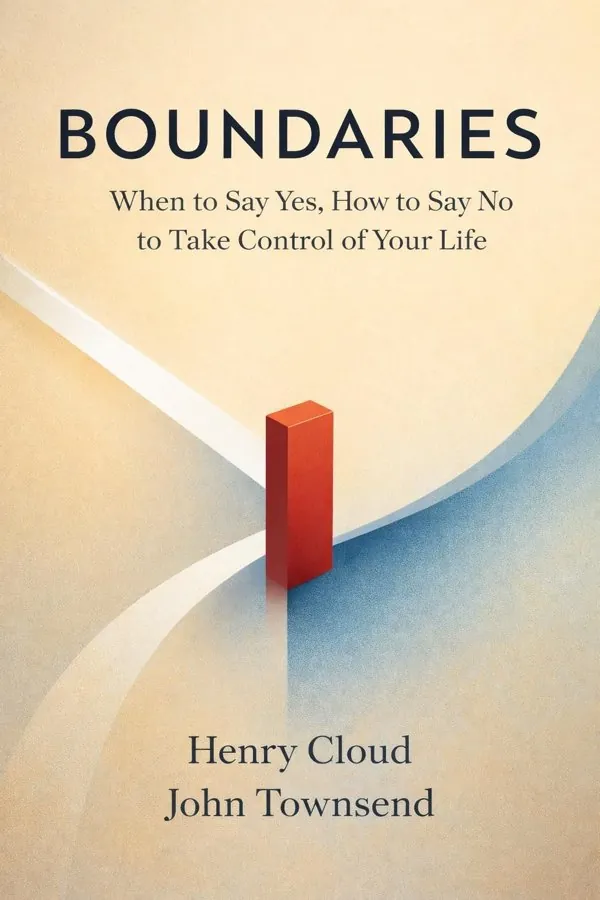
Boundaries: When to Say Yes, How to Say No to Take Control of Your Life
Henry Cloud, John Townsend
10 min
Boundaries: When to Say Yes, When to Say No, to Take Control of Your Life
Henry Cloud, John Townsend
10 min
The Power of the Other: The Startling Effect Other People Have on You, from the Boardroom to the Bedroom and Beyond—and What to Do About It
Henry Cloud
10 minYou Might Also Like


Featured In
Browse by Category
Ready to read Boundaries?
Get the full summary and 100K+ more books with Fizz Moment.