
Books About Habits — Build Better Routines
Your habits shape your destiny. These books reveal the science of habit formation and give you practical systems for making lasting changes.
 10 min read
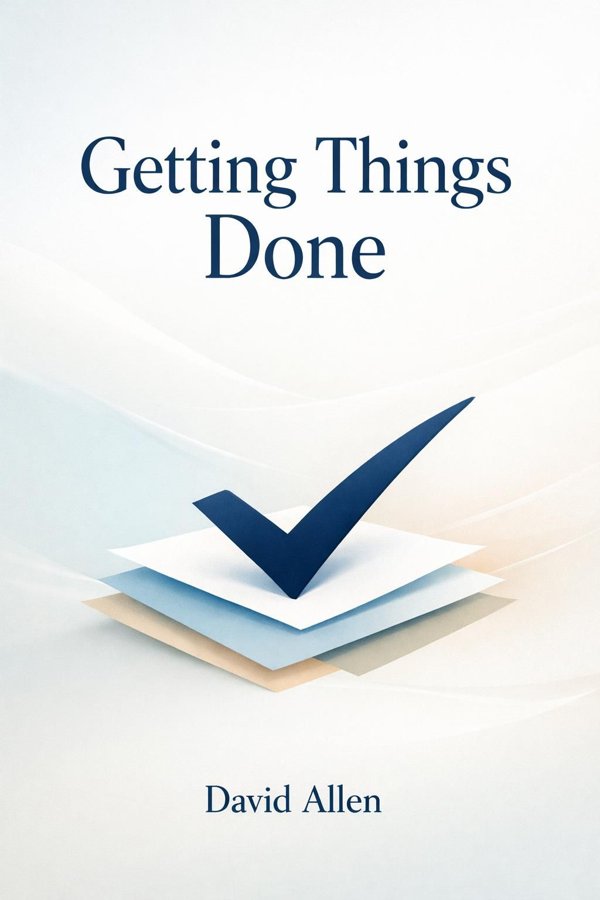
Getting Things Done
by David Allen
What if productivity had less to do with working harder and more to do with thinking more clearly? That’s the promise at the heart of Getting Things Done, David Allen’s landmark guide to managing the endless stream of tasks, ideas, obligations, and interruptions that define modern life. Rather than offering motivational slogans or a stricter to-do list, Allen presents a practical system for getting everything out of your head and into a trusted process. The result is not just higher output, but lower stress, better focus, and a greater sense of control. This book matters because most people don’t struggle from laziness—they struggle from overload. Emails pile up, projects multiply, and even small commitments create mental drag when they remain undefined. Allen’s GTD method solves that problem by teaching readers how to capture, clarify, organize, reflect, and engage with their work in a way that restores mental space. As an American productivity consultant, author, and founder of the David Allen Company, Allen has spent decades helping individuals and organizations build better workflow habits. Getting Things Done became a global productivity classic because it addresses a timeless challenge: how to stay clear, calm, and effective in a world that never stops demanding your attention.
Key Takeaways
- 1The Mind Like Water Principle — The phrase “mind like water” captures the ultimate goal of the GTD method: responding to life appropriately, not reactiv…
- 2The Five Stages of Workflow — At the center of Getting Things Done is a workflow model built on five stages: capture, clarify, organize, reflect, and …
- 3Capturing Everything That Has Your Attention — Capture is the foundation of GTD because you cannot organize what you have not first collected. Allen argues that every …
 10 min read
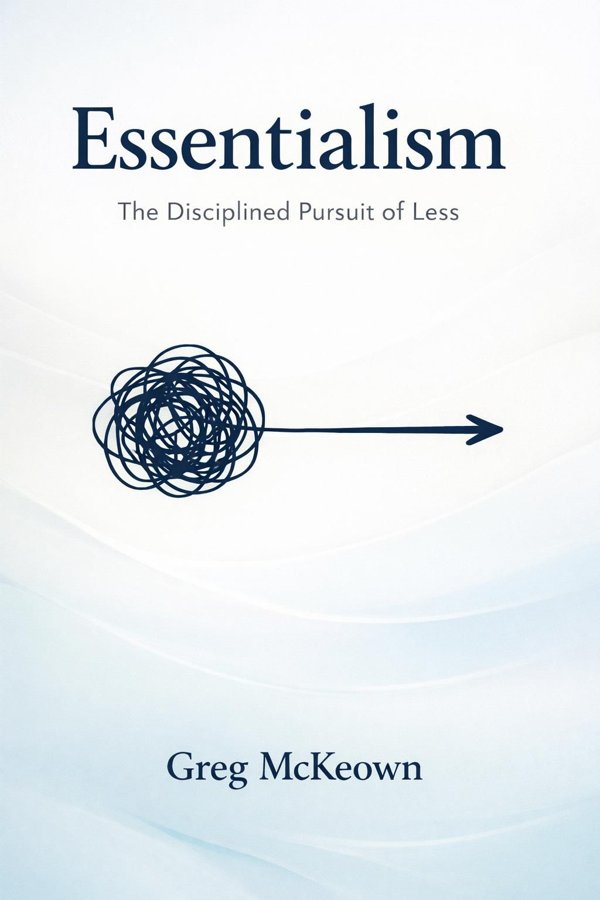
Essentialism
by Greg McKeown
Essentialism by Greg McKeown is a practical philosophy for anyone who feels trapped by constant demands, endless notifications, and the pressure to do everything at once. At its core, the book argues that success does not come from cramming more into our days; it comes from identifying the few things that matter most and giving them our fullest attention. McKeown calls this disciplined pursuit of less but better “Essentialism.” Rather than offering vague inspiration, he provides a clear framework for deciding what is truly important, eliminating what is not, and creating systems that make focused living possible. The book matters because modern life rewards responsiveness, busyness, and visible activity, even when those habits drain our energy and dilute our best work. McKeown, a leadership consultant and researcher who has advised major organizations and studied strategy and decision-making, writes with both credibility and clarity. Essentialism is especially valuable for professionals, leaders, creatives, and anyone who wants to stop living by default and start living by design.
Key Takeaways
- 1Choice Is Your Hidden Power — One of the most dangerous beliefs in modern life is the idea that we have no choice. We tell ourselves we have to attend…
- 2Discern the Vital Few Ruthlessly — If you try to make everything important, nothing truly is. A central principle of Essentialism is that only a few things…
- 3Trade-Offs Are the Price of Focus — Many people exhaust themselves trying to avoid trade-offs. They want career advancement without sacrifice, deep work wit…
 10 min read
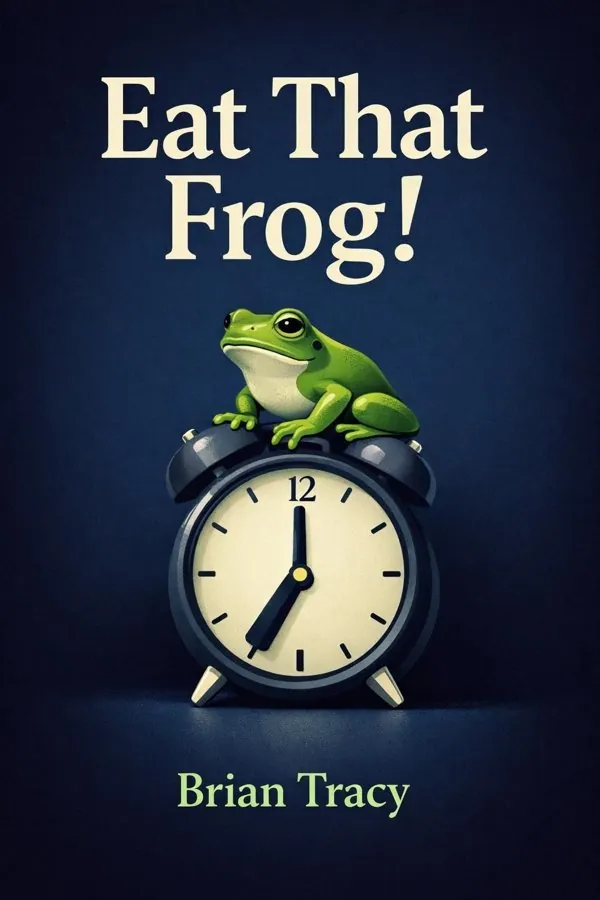
Eat That Frog
by Brian Tracy
Why do so many capable people stay busy all day yet make too little progress on the things that matter most? In Eat That Frog, Brian Tracy argues that the real problem is not a lack of time, but a lack of clarity, prioritization, and disciplined action. The book’s memorable metaphor comes from the idea that if your first task each morning is to eat a live frog, you can go through the rest of the day knowing the worst is behind you. In practical terms, the “frog” is your most important, highest-impact task—the one you are most tempted to delay. Tracy turns this simple idea into a complete system for beating procrastination. Drawing on decades of work as a speaker, business trainer, and self-development author, he offers direct, actionable methods for setting goals, planning days, choosing priorities, and staying focused in a world full of distractions. The book matters because procrastination is rarely just a time-management issue; it is often a hidden barrier to success, confidence, and peace of mind. For anyone overwhelmed by competing demands or stuck in cycles of avoidance, Eat That Frog provides a practical toolkit for getting meaningful work done consistently.
Key Takeaways
- 1Clarify Your Goals Before Taking Action — Productivity begins long before you start working; it begins the moment you decide what truly matters. One of Brian Trac…
- 2Plan Your Day Before It Begins — A day without a plan rarely becomes a productive day. Tracy emphasizes that every minute spent planning can save many mo…
- 3Set Priorities With The ABCDE Method — Not all tasks deserve equal treatment, yet many people organize their days as if they do. Tracy’s ABCDE Method is a stra…
 10 min read
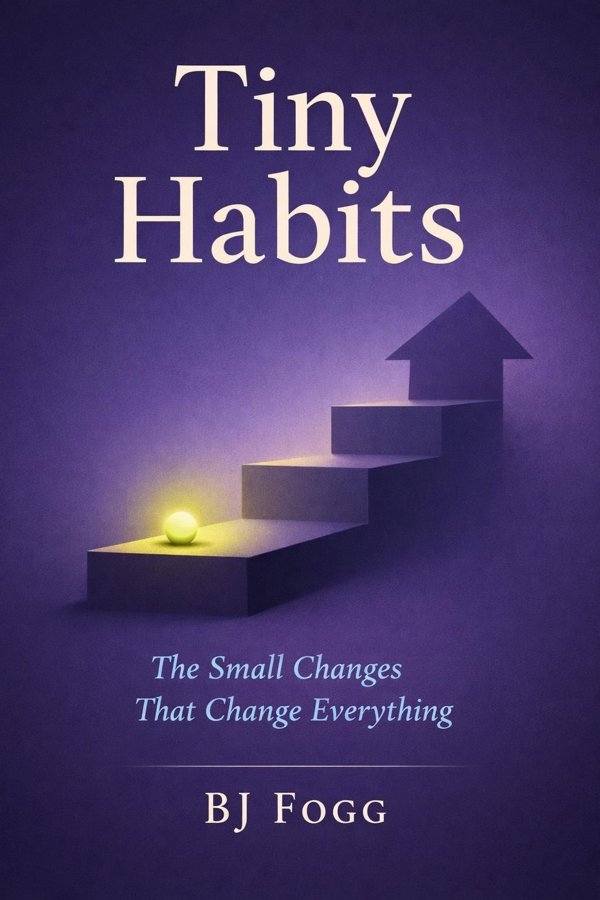
Tiny Habits
by BJ Fogg
Tiny Habits argues that lasting personal change does not begin with willpower, guilt, or grand ambition. It begins with behaviors so small that they feel almost effortless. In this practical and research-based book, behavior scientist BJ Fogg explains why people often fail when they try to transform their lives through intensity alone, and why success becomes far more likely when new actions are simple, well-timed, and emotionally rewarding. Rather than asking readers to become more disciplined, Fogg shows them how to design habits that fit naturally into daily routines. Drawing on decades of work at Stanford University and his experience leading the Behavior Design Lab, Fogg offers a clear framework for understanding behavior and shaping it deliberately. His method centers on tiny actions, reliable prompts, and immediate celebration, creating a system that feels humane instead of punishing. The result is a book that replaces self-criticism with curiosity and practical design. For anyone who wants to exercise more, stress less, improve productivity, or break unhelpful routines, Tiny Habits provides a simple but powerful blueprint for change that can actually last.
Key Takeaways
- 1Behavior Happens When Three Things Align — Most people think behavior is driven mainly by motivation, but BJ Fogg’s central insight is that behavior happens only w…
- 2Start So Small You Cannot Fail — The fastest way to make change sustainable is often to make it almost laughably small. Fogg defines a tiny habit as a be…
- 3Emotions Create Habits Faster Than Repetition — A surprising lesson from Tiny Habits is that habits do not form simply because we repeat a behavior many times. They for…
 10 min read
Deep Work
by Cal Newport
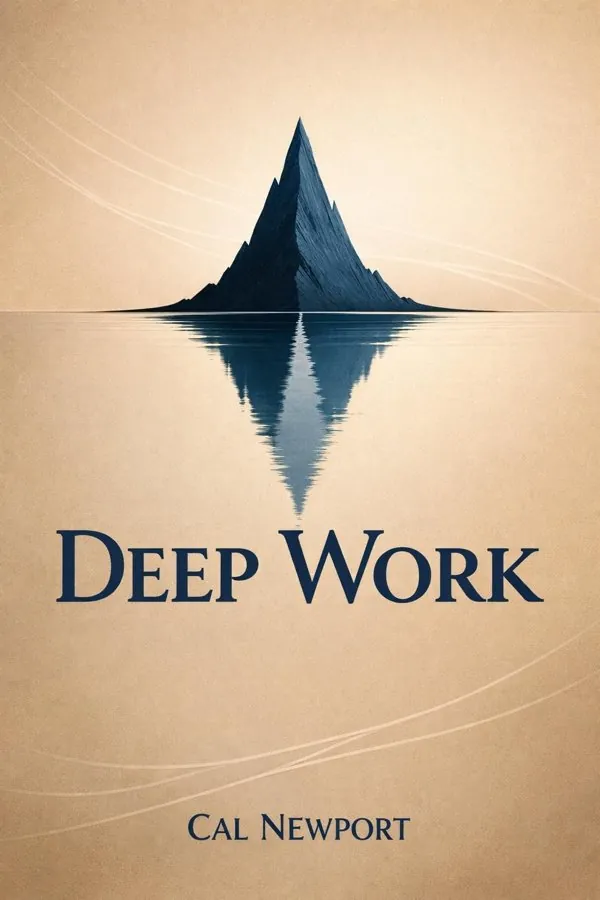
In a world ruled by notifications, open-plan offices, endless email threads, and the pressure to always appear available, the ability to focus has become both rare and incredibly valuable. Deep Work by Cal Newport argues that the people who thrive in today’s economy are not necessarily the busiest or the most connected, but the ones who can concentrate intensely on meaningful tasks without distraction. This book is about cultivating that increasingly uncommon skill and using it to produce better results in less time. Newport makes the case that deep, undistracted concentration is a superpower for the knowledge age. He contrasts it with “shallow work,” the reactive, fragmented activity that fills many calendars but creates little lasting value. Drawing from neuroscience, business, academic research, and real-world examples, he shows why focus matters, why it is so hard to maintain, and how anyone can train it. Cal Newport is particularly credible on this subject because he has built a career as a computer science professor, writer, and researcher while famously avoiding much of the digital noise that consumes modern workers. Deep Work is not just a theory of productivity. It is a practical philosophy for doing your best thinking in a distracted age.
Key Takeaways
- 1Focus Is the New Competitive Advantage — The modern economy rewards people who can learn hard things quickly and produce at an elite level, yet both abilities de…
- 2Shallow Work Feels Productive but Isn’t — One of the most dangerous illusions in modern work is that being active is the same as being effective. Newport warns th…
- 3Attention Must Be Trained Like a Muscle — Deep focus is not something you either naturally have or permanently lack. Newport argues that concentration is trainabl…
 10 min read
Make Time
by Jake Knapp
Modern life is designed to fragment attention. Email, meetings, social feeds, breaking news, and endless to-do lists keep us reactive, busy, and exhausted—yet strangely unsure whether we spent the day on what truly matters. In Make Time, Jake Knapp and John Zeratsky offer a practical alternative: instead of trying to do everything faster, choose what matters most today and deliberately create space for it. The book is not about becoming a productivity machine. It is about reclaiming your time, energy, and focus from systems that profit from distraction. Built around dozens of small, flexible tactics rather than one rigid method, Make Time helps readers design days with more intention. The authors draw on their experience at Google, YouTube, and Google Ventures, where they observed how technology shapes behavior and how even highly successful people can lose control of their attention. Their approach combines behavioral psychology, workplace insight, and real-world experimentation. The result is an accessible, highly usable guide for anyone who feels busy but unfulfilled and wants a more meaningful, sustainable way to work and live.
Key Takeaways
- 1Choose a Daily Highlight — Most people let their day get defined by urgency instead of importance. That is the central problem Make Time asks you t…
- 2Focus Requires Designed Attention — Attention does not remain intact by accident; it must be protected by design. One of Make Time’s most useful insights is…
- 3Defaults Quietly Control Your Day — A surprising amount of life runs on default settings. You check email when you wake up because that is what you always d…
 10 min read
The 5 AM Club
by Robin Sharma
The 5 AM Club is a self-help book about far more than waking up early. At its core, Robin Sharma’s message is that the quality of your mornings shapes the quality of your life. Through a blend of motivational storytelling, performance psychology, and practical routines, he argues that reclaiming the first hour of the day can dramatically improve focus, energy, emotional stability, creativity, and long-term achievement. The book follows an entrepreneur and an artist who are mentored by a mysterious billionaire, allowing Sharma to present his ideas through a fable-like narrative rather than a traditional instruction manual. Central to the book is the famous 20/20/20 formula, a structured approach to using the hour from 5:00 to 6:00 a.m. for exercise, reflection, and learning. Sharma writes with authority as one of the most widely known voices in leadership and personal mastery, drawing on decades of coaching high performers, executives, and ambitious individuals. For readers overwhelmed by distraction, inconsistency, or burnout, The 5 AM Club offers a disciplined but hopeful framework for taking control of one’s mind, habits, and destiny.
Key Takeaways
- 1The Dawn of Transformation Begins Early — Real change rarely begins in dramatic public moments; it starts in quiet private decisions. That is the emotional founda…
- 2The Victory Hour Creates Daily Momentum — How you start the day is often how you live the day. Sharma calls the period from 5:00 to 6:00 a.m. the Victory Hour bec…
- 3Use the 20/20/20 Formula Daily — A powerful routine is most useful when it is simple enough to repeat. Sharma’s most famous contribution in The 5 AM Club…
 10 min read
The Comfort Crisis
by Michael Easter
Modern life is engineered to make us safe, entertained, fed, and comfortable at nearly every moment. Yet Michael Easter argues that this endless convenience has created an unexpected problem: many of us feel anxious, restless, physically weak, mentally scattered, and strangely unfulfilled. In The Comfort Crisis, Easter investigates why abundance and ease do not automatically lead to happiness—and why deliberate discomfort may be one of the missing ingredients in a meaningful life. Blending evolutionary science, psychology, anthropology, and immersive reporting, he explores how human beings evolved in conditions that demanded effort, uncertainty, and resilience, then shows what happens when those challenges disappear. A professor, journalist, and longtime researcher of performance and well-being, Easter grounds his argument in both evidence and experience. The book is anchored by his demanding hunting trip in the Alaskan wilderness, where exposure, hunger, fatigue, and solitude become a living laboratory for understanding the modern self. The Comfort Crisis matters because it offers more than a diagnosis of contemporary malaise. It provides a practical philosophy: if we want to think better, feel stronger, and live more fully, we may need to stop avoiding hardship and start using it wisely.
Key Takeaways
- 1Comfort Can Quietly Become a Trap — One of the book’s central insights is unsettling: the very comforts we work so hard to create can slowly undermine our h…
- 2Deliberate Discomfort Builds Real Resilience — Resilience is not something we can download from a podcast or absorb from motivational quotes; it is built by repeated e…
- 3Modern Abundance Can Create Hidden Hunger — A striking paradox in The Comfort Crisis is that abundance often leaves us feeling unsatisfied. We have more choices in …
 10 min read
How to Win Friends and Influence People
by Dale Carnegie
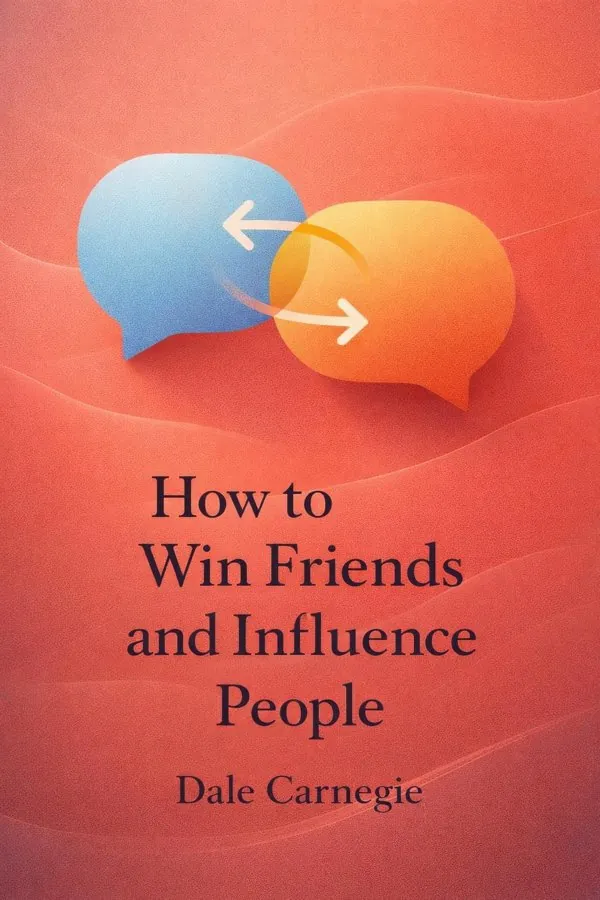
First published in 1936, How to Win Friends and Influence People remains one of the most influential self-help books ever written because it addresses a timeless truth: success depends not only on what you know, but on how you relate to people. Dale Carnegie argues that influence is rarely won through force, criticism, or cleverness alone. Instead, it grows from empathy, respect, sincere appreciation, and the ability to understand what motivates others. Drawing from years of teaching public speaking and human relations, Carnegie distilled practical lessons from business leaders, historical figures, and everyday interactions into a set of principles anyone can apply. The book shows how to handle people without creating resentment, make others feel important, persuade without argument, and lead in ways that inspire cooperation rather than resistance. Its enduring appeal lies in its simplicity: these ideas are easy to understand, yet difficult enough in practice to be transformative. Whether you want to improve your career, strengthen relationships, or communicate with more confidence and tact, Carnegie offers a powerful guide to becoming someone others genuinely want to listen to and work with.
Key Takeaways
- 1Master the Fundamentals of Human Relations — Most conflict begins not with major disagreements, but with small failures in emotional intelligence. Carnegie’s first l…
- 2Make People Feel Seen and Valued — People are drawn less to brilliance than to warmth. Carnegie’s famous principles for making people like you are built on…
- 3Influence Begins with Empathy, Not Pressure — The fastest way to create resistance is to make people feel pushed. Carnegie teaches that real influence does not begin …
 10 min read
The Big Leap
by Gay Hendricks
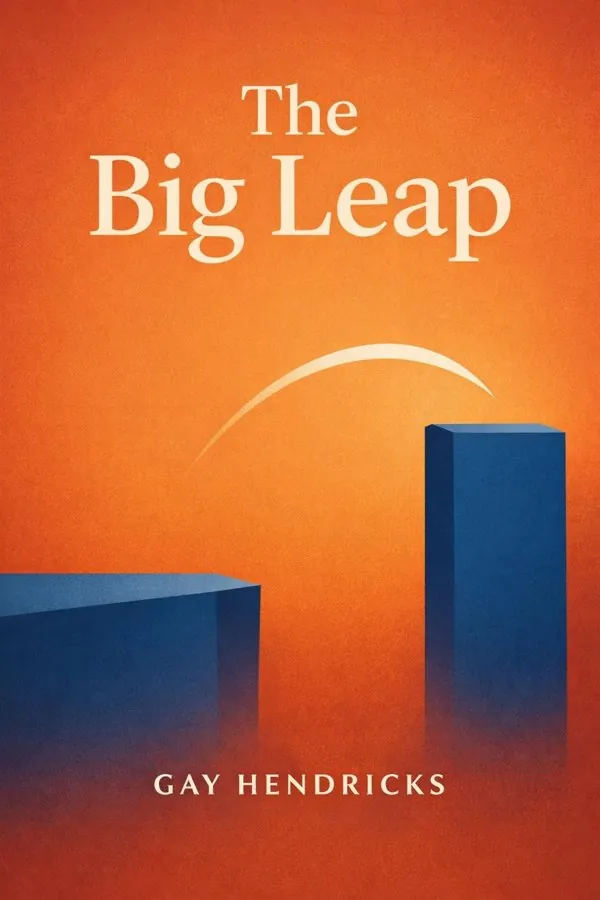
Why do people often fall apart just when life starts going well? In The Big Leap, psychologist and relationship expert Gay Hendricks argues that many of us unconsciously resist the very happiness, success, love, and creative freedom we say we want. He calls this pattern the “Upper Limit Problem”: a hidden internal threshold that triggers self-sabotage whenever we begin to exceed our familiar comfort zone. Instead of blaming bad luck or external obstacles, Hendricks invites readers to look inward and notice the subtle ways they cap their own potential. What makes this book so compelling is its mix of psychology, practical self-awareness, and deeply encouraging insight. Hendricks doesn’t just diagnose the problem; he offers a framework for moving beyond it, especially by identifying your “Zone of Genius,” the kind of work and way of being that expresses your unique gifts most fully. Drawing on decades of experience in personal development and relationship coaching, he presents a clear message: expanding your capacity for joy and abundance is not selfish or unrealistic—it is the next stage of growth. The Big Leap is a guide for anyone ready to stop shrinking and start living at their true level.
Key Takeaways
- 1The Upper Limit Problem Explained — One of the most unsettling truths about growth is that success does not always feel safe. Gay Hendricks argues that many…
- 2Why We Limit Joy and Love — Many people think their biggest blocks are failure or fear of rejection, but Hendricks suggests something even more surp…
- 3The Four Zones of Work — Being busy is not the same as being aligned. One of Hendricks’s most useful frameworks is the idea that people operate i…
 10 min read
How to Talk to Anyone
by Leil Lowndes
Some people seem to move through social situations with effortless charm. They know how to make a strong first impression, keep conversations flowing, and leave others feeling seen, valued, and intrigued. In How to Talk to Anyone, Leil Lowndes argues that this kind of social success is not a mysterious gift reserved for the naturally outgoing. It is a learnable set of behaviors, habits, and communication techniques that anyone can practice. Drawing on her work as a communication expert and speaker, Lowndes offers 92 practical strategies for improving the way we speak, listen, connect, and influence others in both personal and professional settings. The book matters because communication affects nearly every part of life: friendships, romance, networking, leadership, teamwork, and opportunity. Rather than focusing on abstract theory, Lowndes gives readers concrete tools they can use immediately, from body language cues and listening habits to conversation openers and confidence-building methods. The result is a highly actionable guide to becoming warmer, more memorable, and more effective with people in everyday life.
Key Takeaways
- 1First Impressions Shape Every Interaction — Before you speak, people are already deciding who you are. That is one of the central insights of How to Talk to Anyone:…
- 2Small Talk Opens the Door — Many people dismiss small talk as empty chatter, but Lowndes reframes it as the bridge to trust. Most meaningful relatio…
- 3Move From Casual to Meaningful — Good communicators know that conversation has levels. One of Lowndes’s most useful lessons is that connection deepens wh…
 10 min read
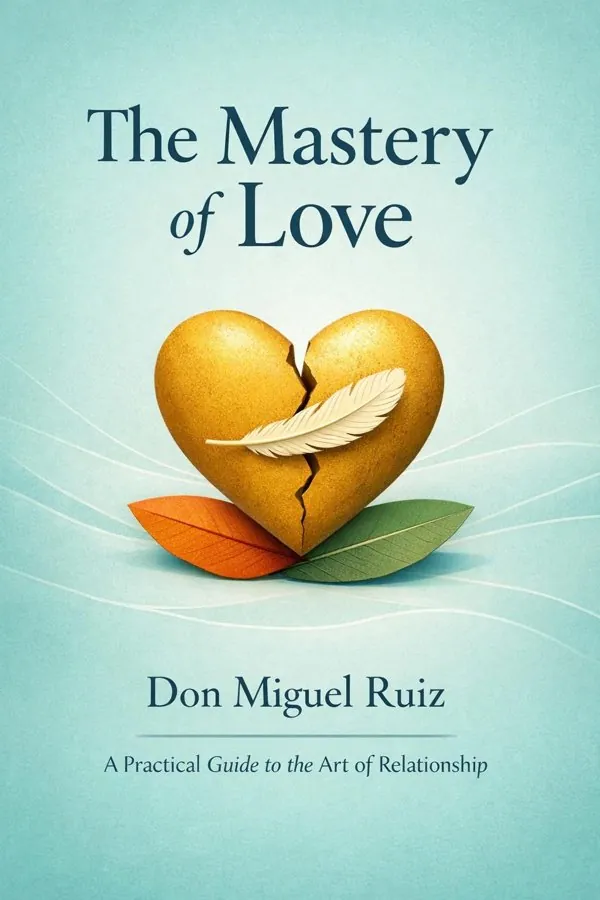
The Mastery of Love
by Don Miguel Ruiz
Why do so many people long for love yet repeatedly create pain in their closest relationships? In The Mastery of Love, Don Miguel Ruiz argues that the answer is not a lack of love, but a mind shaped by fear, emotional wounds, and false beliefs. Drawing on Toltec wisdom, Ruiz reframes love as a natural state that already exists within us. What blocks it are the stories we carry about rejection, control, worthiness, jealousy, and need. Rather than offering dating advice or communication tricks, Ruiz goes deeper. He explores how childhood conditioning creates what he calls the wounded mind, how fear becomes the hidden force behind conflict, and why many relationships are built on dependency instead of genuine affection. From there, he shows how self-love, awareness, forgiveness, and emotional responsibility can transform the way we relate to others. The book matters because it treats love not as luck, chemistry, or sacrifice, but as a practice of inner freedom. Ruiz, best known for The Four Agreements, brings spiritual clarity and practical insight to one of life’s most universal struggles: learning how to love without fear.
Key Takeaways
- 1The Wounded Mind Creates Fear — Most relationship pain begins long before the relationship itself. Ruiz suggests that from childhood, we inherit emotion…
- 2The Parasite Feeds on Suffering — Fear becomes powerful when it starts to feel like your own voice. Ruiz uses the metaphor of the parasite to describe the…
- 3Stop Seeking Love Outside Yourself — One of the great illusions in relationships is the belief that another person can give you the love you do not give your…
 10 min read
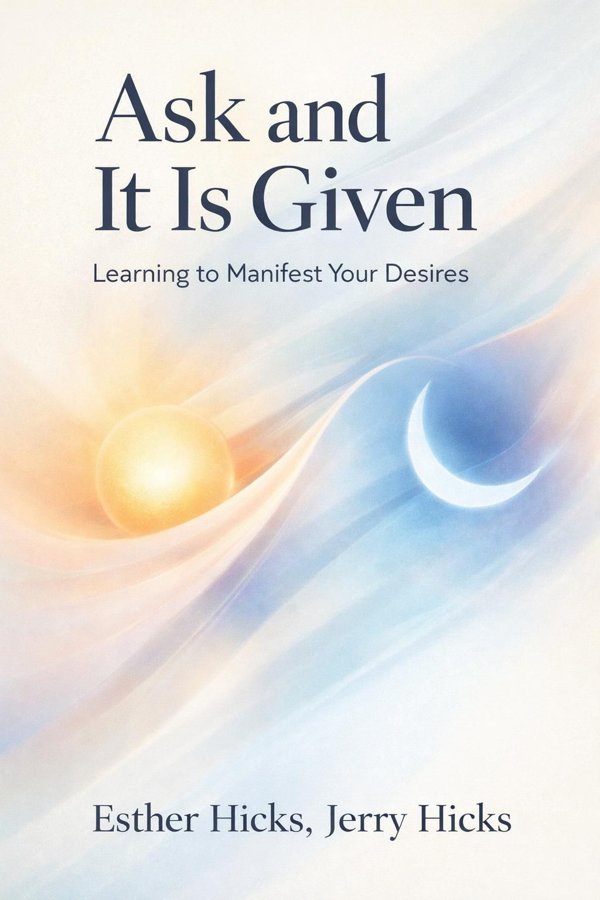
Ask and It Is Given
by Esther Hicks
Ask and It Is Given is a practical spiritual guide to understanding how thoughts, emotions, and attention shape the reality you experience. Presented through the teachings of Abraham, a nonphysical collective consciousness channeled by Esther Hicks, the book argues that every person is constantly creating through the Law of Attraction. According to this framework, your dominant vibration—formed by what you think, expect, and feel—determines what kinds of experiences, relationships, and opportunities flow into your life. Rather than asking readers to force results through struggle, the book teaches them to align internally with what they want so that life begins to feel more cooperative and abundant. What makes the book resonate with so many readers is its combination of big metaphysical ideas and practical emotional tools. It offers a system for understanding desire, resistance, emotional guidance, and deliberate creation, along with exercises designed to help readers shift their state in everyday situations. Esther Hicks, working with her late husband Jerry Hicks, became widely known for popularizing Abraham’s teachings through books, workshops, and seminars. Whether you see the material as spiritual truth, psychological reframing, or motivational philosophy, the book offers a compelling framework for living with greater clarity, hope, and intention.
Key Takeaways
- 1The Law of Attraction Shapes Experience — Most people assume life happens to them, but Ask and It Is Given begins with a more radical claim: life responds to them…
- 2Desire Launches Creation Into Motion — What if wanting more is not selfish, but natural? One of the book’s most liberating ideas is that desire is not a proble…
- 3Emotions Reveal Your Alignment Instantly — Your emotions are not random disturbances; they are guidance. One of the most useful ideas in Ask and It Is Given is the…
 10 min read
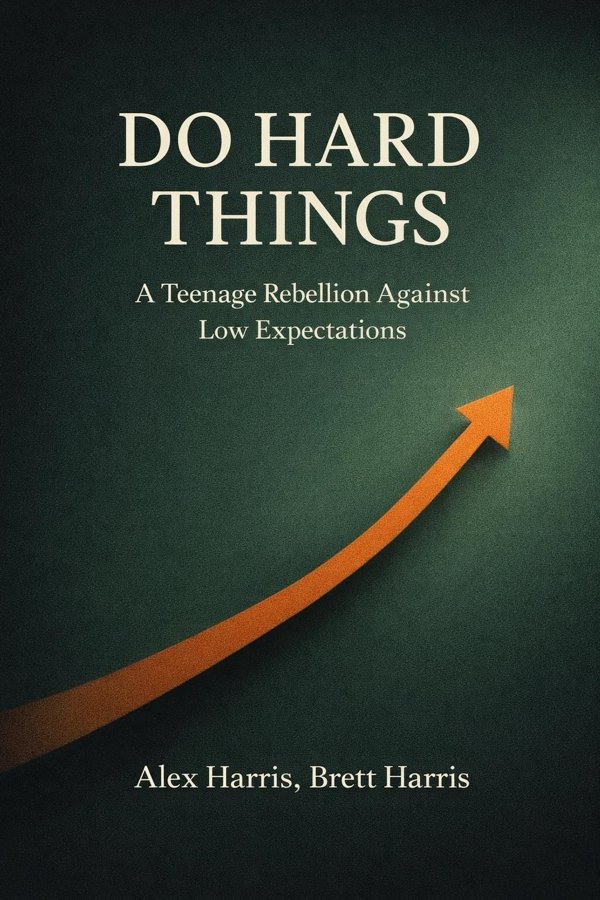
Do Hard Things
by Steve Magness
Do Hard Things is a bold challenge to the modern idea that the teenage years are mainly for comfort, entertainment, and low responsibility. Written by Alex and Brett Harris, the book argues that young people are capable of far more than society expects from them. Instead of accepting a culture that treats adolescence as a waiting room for real life, the authors call teens to pursue meaningful work, personal discipline, leadership, and service. Their central idea, which they call the “rebelution,” is simple but powerful: rebellion against low expectations can transform both individual lives and entire communities. What makes the book matter is its refusal to flatter its audience. Rather than telling teenagers they are special just as they are, it invites them to grow by doing difficult things that stretch character and deepen purpose. The Harris brothers build their case through personal stories, testimonies from other teens, and practical encouragement grounded in Christian faith. The result is an energizing self-help book for young readers, parents, mentors, and educators who believe that maturity begins when people stop waiting for permission to live with courage and responsibility.
Key Takeaways
- 1The Myth of Adolescence Limits Potential — One of the most dangerous lies in modern culture is not that teenagers are incapable, but that they should expect little…
- 2Redefine the Teen Years With Purpose — The teenage years become powerful when they are seen not as a pause before adulthood, but as training for a meaningful l…
- 3Five Kinds of Hard Things — Not all difficulty is the same, and the authors strengthen their argument by showing that “hard things” come in differen…
 10 min read
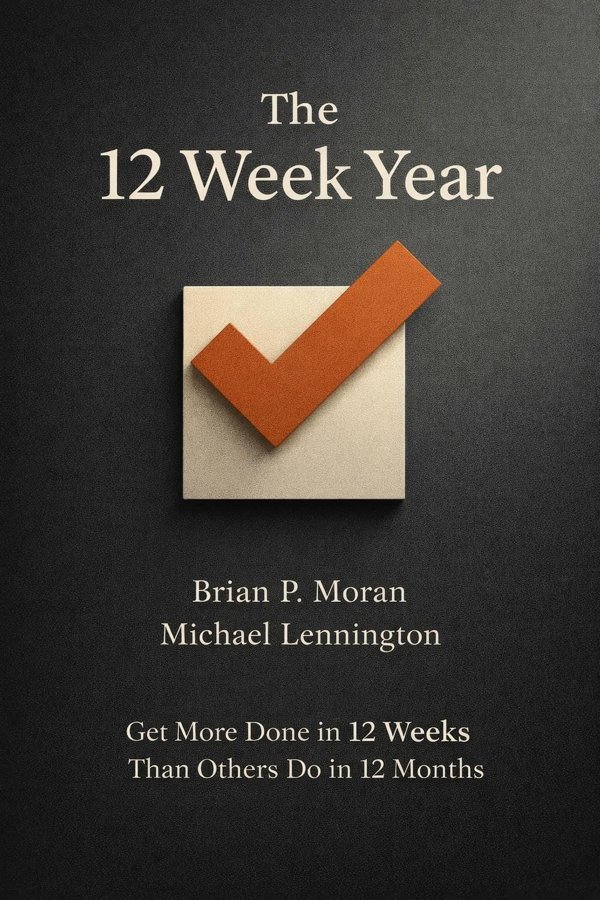
The 12 Week Year
by Brian Moran
The 12 Week Year is a practical productivity classic that argues most people do not fail because they lack talent or ambition—they fail because they operate inside a time system that encourages delay. Brian Moran and Michael Lennington challenge the familiar rhythm of annual planning and replace it with a far tighter execution cycle: 12 weeks. Their central idea is simple but powerful. When a year feels long, people postpone important work, overestimate what they can do later, and lose focus. But when the horizon shrinks to 12 weeks, priorities sharpen, urgency rises, and execution improves. What makes this book matter is that it does not stop at motivation. It offers a full operating system for turning vision into results through clear goals, weekly planning, scorekeeping, and accountability. Moran writes from deep experience as a performance consultant helping leaders and organizations improve execution, and that practical background gives the book its credibility. This is not theory for its own sake. It is a repeatable method for anyone who wants to accomplish more in less time, whether in business, health, sales, leadership, or personal growth.
Key Takeaways
- 1Escaping the Trap of Annual Goal-Setting — A year is long enough to make almost any goal feel comfortably distant. That distance is the hidden reason so many well-…
- 2Vision Gives Discipline a Strong Why — People rarely sustain difficult habits for goals they do not deeply care about. That is why Moran insists that execution…
- 3Great Execution Starts With Fewer Priorities — Most productivity problems are not caused by laziness; they are caused by dilution. People spread their energy across to…
Want the full summary?
Get instant access to this book summary and 100K+ more with Fizz Moment.
Get Free SummaryAvailable on App Store • Free to download
About This List
Your habits shape your destiny. These books reveal the science of habit formation and give you practical systems for making lasting changes.
This list features 15 carefully selected books. With FizzRead, you can read AI-powered summaries of each book in just 15 minutes. Get the key takeaways and start applying the insights immediately.
Ready to start reading?
Get instant access to all 15 book summaries and 100K+ more with FizzRead.