
Best Economics Books — Understand How the World Works
Economics shapes everything from your paycheck to global politics. These books make economic thinking accessible, practical, and surprisingly entertaining.
 10 min read
Business Adventures
by John Brooks
Business Adventures by John Brooks is a masterful collection of twelve narrative essays about some of the most revealing episodes in twentieth-century American business. First published in The New Yorker and later collected in book form, these stories move from market panics and product failures to currency crises, shareholder battles, and the hidden systems that keep modern capitalism running. Although the events took place decades ago, the book remains strikingly current because Brooks was never really writing only about stocks, cars, taxes, or corporate meetings. He was writing about people under pressure: executives defending bad decisions, investors chasing confidence, bureaucracies wrestling with complexity, and institutions trying to preserve credibility when events turn against them. That is why the book still resonates with leaders, founders, investors, and curious readers today. Brooks had a rare gift: he combined the reporting discipline of a financial journalist with the narrative grace of a novelist. The result is a business book that does not lecture in abstractions, but reveals enduring truths through vivid stories. Business Adventures matters because it shows that markets change, technologies evolve, but human nature in business barely does.
Key Takeaways
- 1Markets Run on Emotion as Much — A stock market decline is never only about numbers; it is also about the speed with which confidence can evaporate. In “…
- 2Great Products Can Still Fail Spectacularly — The Edsel is remembered as a punchline, but Brooks treats it as something more useful: a case study in how large organiz…
- 3Complex Systems Hide Everyday Fragility — One of Brooks’s most surprising achievements is making administrative machinery feel dramatic. In “The Federal Income Ta…
 10 min read
Nudge
by Richard H. Thaler, Cass R. Sunstein
Why do smart people make choices they later regret? Why do employees fail to enroll in retirement plans that clearly benefit them, patients skip life-saving medications, and consumers get overwhelmed by too many options? In Nudge, Richard H. Thaler and Cass R. Sunstein argue that these mistakes are not random flaws but predictable patterns in human behavior. Drawing on behavioral economics, psychology, and public policy, they show that the way choices are presented strongly shapes the decisions people make. This insight leads to their central concept: choice architecture, or the design of the environments in which decisions happen. What makes the book powerful is its practical ambition. Thaler and Sunstein do not call for heavy-handed control or the elimination of personal freedom. Instead, they propose “libertarian paternalism”: guiding people toward better outcomes while preserving the right to choose otherwise. Their ideas have influenced retirement savings programs, health policy, school design, and government regulation around the world. Thaler, a pioneering behavioral economist and Nobel Prize winner, and Sunstein, a leading legal scholar and policy thinker, bring unusual authority to a book that is both intellectually influential and immediately useful.
Key Takeaways
- 1Humans Are Predictably Imperfect Decision-Makers — The most important starting point in Nudge is a humbling one: people do not consistently choose what is best for themsel…
- 2Choice Architecture Shapes What People Choose — Every choice takes place somewhere, and that “somewhere” is never neutral. One of Nudge’s most influential ideas is that…
- 3Libertarian Paternalism Protects Freedom While Guiding Choices — At first glance, the phrase “libertarian paternalism” sounds contradictory. Libertarianism emphasizes freedom of choice,…
 10 min read
23 Things They Don’t Tell You About Capitalism
by Ha-Joon Chang
What if the economic “common sense” you hear every day is not neutral truth, but a set of stories designed to make one version of capitalism look inevitable? In 23 Things They Don’t Tell You About Capitalism, Ha-Joon Chang dismantles many of the most familiar claims about markets, globalization, corporations, wealth, and government. He argues that markets are never truly free, that business success depends on institutions and public support, and that rich nations often became rich through policies they now discourage poorer nations from using. Rather than rejecting capitalism outright, Chang asks readers to see it more honestly: as a political and social system shaped by law, power, history, and choices. The book matters because it gives non-specialists a way to think critically about economic debates that affect wages, jobs, inequality, development, and democracy. Chang writes with unusual clarity, using historical examples, everyday logic, and sharp comparisons instead of technical jargon. A Cambridge economist known for challenging neoliberal orthodoxy, he brings academic authority together with a public-minded style that makes complex ideas accessible. The result is a provocative guide to understanding how capitalism actually works—and how it could work better.
Key Takeaways
- 1Markets Are Made, Not Natural — A market is never simply “there”; it is designed, protected, and limited by rules. One of Chang’s most important insight…
- 2Shareholder Value Is a Dangerous Myth — When companies focus only on maximizing shareholder returns, they often weaken the very foundations of long-term prosper…
- 3High Pay Reflects Systems, Not Merit — People in rich countries often believe their incomes mainly reflect superior individual productivity, but Chang argues t…
 10 min read
A Companion to Marx’s Capital
by David Harvey
This book is a detailed guide to Karl Marx’s *Capital, Volume I*, written by the renowned Marxist scholar David Harvey. It provides a chapter-by-chapter commentary that helps readers understand Marx’s critique of political economy, the logic of capital accumulation, and the dynamics of capitalist production. Harvey contextualizes Marx’s ideas within both historical and contemporary frameworks, making the text accessible to students, activists, and scholars interested in critical theory and political economy.
Key Takeaways
- 1Historical Context — When Marx wrote *Capital*, Europe was convulsed by the industrial revolution. Factories multiplied, cities grew, and wor…
- 2Commodity and Value — Marx begins *Capital* not with the factory or the worker but with the commodity — the seemingly simple unit of capitalis…
- 3Money and Circulation
 10 min read
A Farewell to Alms: A Brief Economic History of the World
by Gregory Clark
Why did humanity remain desperately poor for thousands of years, only to experience a dramatic explosion in wealth over the last two centuries? In A Farewell to Alms, economic historian Gregory Clark tackles one of the biggest questions in social science: why some societies escaped stagnation while others did not. Rather than treating the Industrial Revolution as a mysterious miracle or a simple triumph of institutions, Clark argues that modern growth emerged from much deeper historical forces shaped over centuries. Drawing on wage records, birth and death data, estate accounts, and other long-run evidence, Clark reconstructs the logic of preindustrial life with unusual precision. He shows how most societies were trapped in a Malthusian world where any productivity gain eventually translated into larger populations, not permanently better living standards. He then explores why England broke out first and how that escape transformed the global economy. The book matters because it challenges comforting explanations about progress, culture, and development. Whether you agree with Clark or not, his argument is bold, data-driven, and impossible to ignore. For readers interested in economics, inequality, history, and the origins of modern prosperity, this is a provocative and deeply influential work.
Key Takeaways
- 1The World Was Once Malthusian — The most unsettling idea in the book is that for most of human history, economic progress did not make ordinary people m…
- 2Historical Records Reveal Persistent Stagnation — Big arguments about world history become persuasive only when they rest on stubborn facts, and Clark builds his case thr…
- 3Preindustrial Production Had Hard Limits — A society can be full of effort and still remain poor if its production system cannot generate self-reinforcing growth. …
 10 min read
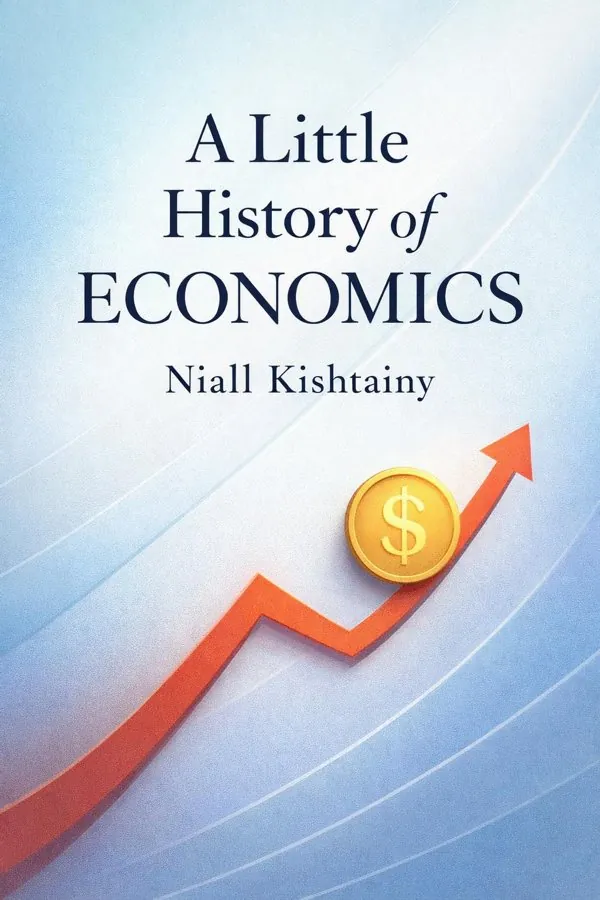
A Little History of Economics
by Niall Kishtainy
Economics shapes far more than stock markets and government budgets; it influences the food we buy, the jobs we pursue, the taxes we pay, and the opportunities available in society. In A Little History of Economics, Niall Kishtainy turns a subject that often seems technical or intimidating into a vivid story about ideas, power, wealth, poverty, and human behavior. Rather than presenting economics as a set of dry formulas, he traces its evolution through the thinkers, debates, crises, and social changes that gave rise to the modern world. The book matters because it helps readers understand not only what economists have said, but why those ideas emerged and how they continue to affect public policy and everyday life. Kishtainy shows how economic thought developed in response to real problems: trade, inequality, industrialization, unemployment, financial collapse, and globalization. His authority comes from both scholarly expertise and a gift for clear explanation. With a background in the history of economic thought and a talent for making complex ideas accessible, he offers readers an engaging guide to one of the most important conversations in human history.
Key Takeaways
- 1Economics Begins With Human Survival — A powerful way to understand economics is to see that it began long before modern graphs, equations, or central banks. A…
- 2Markets Can Coordinate, But Not Perfectly — One of the most influential insights in economic history is that decentralized markets can create order without anyone c…
- 3Industrial Growth Changed Everything — Economic growth may sound abstract, but the Industrial Revolution turned it into one of the defining forces of modern li…
 10 min read
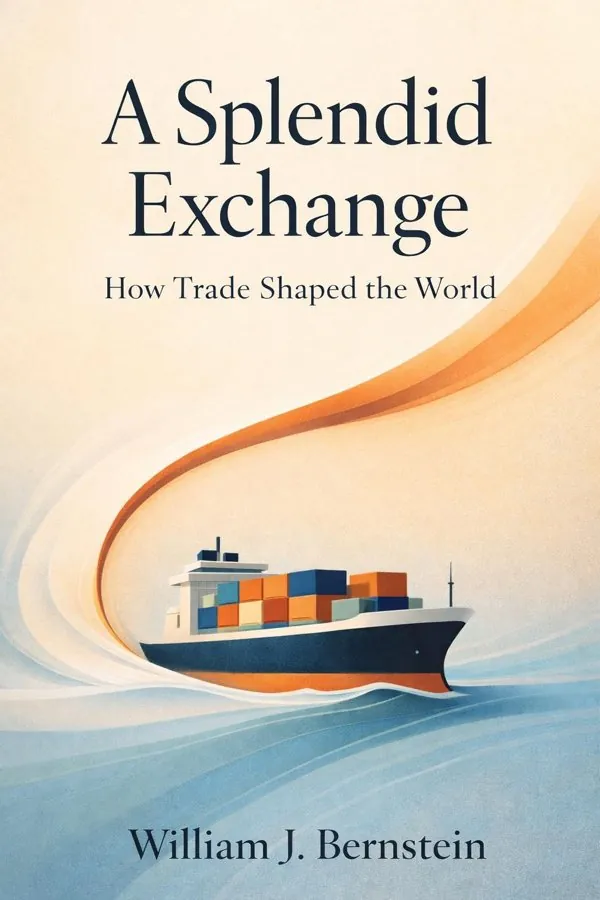
A Splendid Exchange: How Trade Shaped the World
by William J. Bernstein
A Splendid Exchange explores the history of trade from ancient Mesopotamia to the modern global economy. William J. Bernstein traces how commerce has shaped civilizations, driven exploration, and influenced political and cultural development. The book combines economic history with storytelling to show how trade has been both a source of prosperity and conflict throughout human history.
Key Takeaways
- 1Early Trade Networks — Trade was born not in bustling ports but in river valleys where the first cities emerged. In ancient Mesopotamia, around…
- 2The Silk Road — The Silk Road was less a single path than a living organism—a constellation of routes stretching across deserts and moun…
- 3Maritime Trade and the Indian Ocean
 10 min read
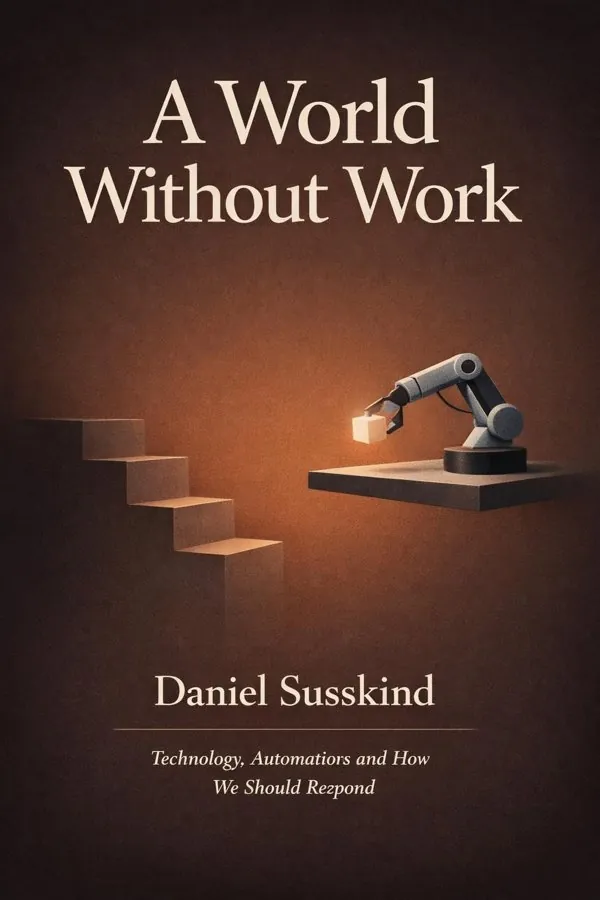
A World Without Work: Technology, Automation, and How We Should Respond
by Daniel Susskind
In this book, Daniel Susskind explores how automation and artificial intelligence are transforming the nature of work and employment. He examines the economic and social consequences of a future where machines increasingly perform tasks once done by humans, and proposes ways societies can adapt to ensure prosperity and purpose in a world with less traditional work.
Key Takeaways
- 1Historical Context — To understand the extraordinary transformation taking place today, we must first step back into history. The fear that m…
- 2The Nature of Technological Progress — The key distinction between earlier technologies and today’s automation lies in what computers can actually do. For cent…
- 3The Economic Impact of Automation
 10 min read
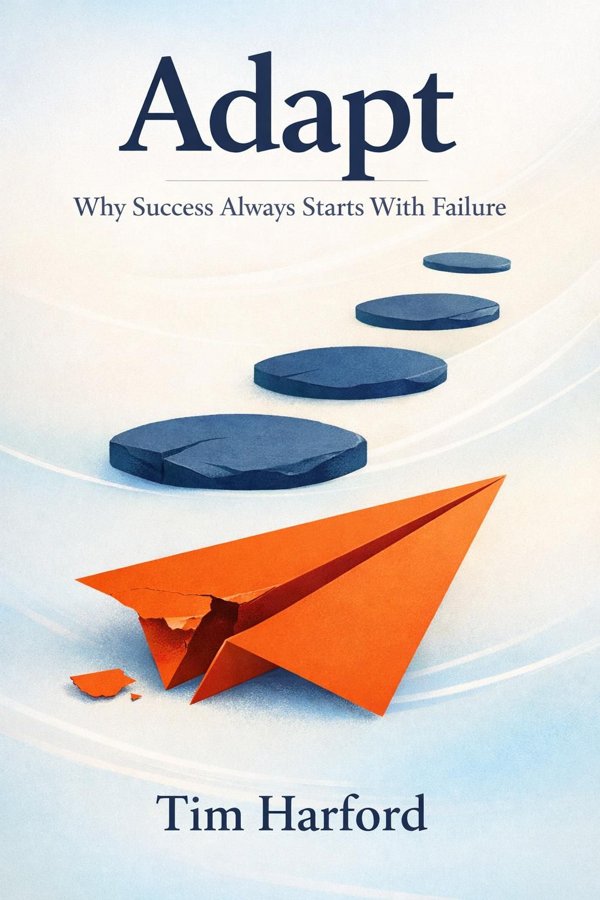
Adapt: Why Success Always Starts With Failure
by Tim Harford
What if the biggest obstacle to success is not failure, but the illusion that complex problems can be solved through perfect plans? In Adapt, economist and journalist Tim Harford argues that in a fast-changing, unpredictable world, the most reliable path to progress is not top-down certainty but trial, error, and continuous learning. Drawing on stories from war zones, business failures, urban policy, medicine, and social change, Harford shows that systems often become dangerous when leaders are too confident, too centralized, or too committed to a single grand design. Instead, resilient success comes from experimentation, feedback, and the willingness to revise ideas when reality disagrees. The book matters because many of today’s biggest challenges—economic crises, organizational dysfunction, public policy failures, and innovation bottlenecks—are too complex for tidy solutions. Harford is uniquely qualified to make this case: he is a respected economist, Financial Times columnist, and bestselling author known for translating difficult ideas into vivid, practical insights. Adapt is both a critique of rigid thinking and a hopeful guide to solving real-world problems more intelligently.
Key Takeaways
- 1Failure Is the Engine of Progress — The uncomfortable truth is that success rarely arrives fully formed; it is usually built out of mistakes, revisions, and…
- 2Complex Problems Resist Grand Plans — The more complicated the problem, the less likely it is to yield to a single elegant blueprint. Harford distinguishes be…
- 3Decentralization Creates Better Solutions — One of the book’s most powerful insights is that intelligence is often distributed, not concentrated. Harford shows that…
 10 min read
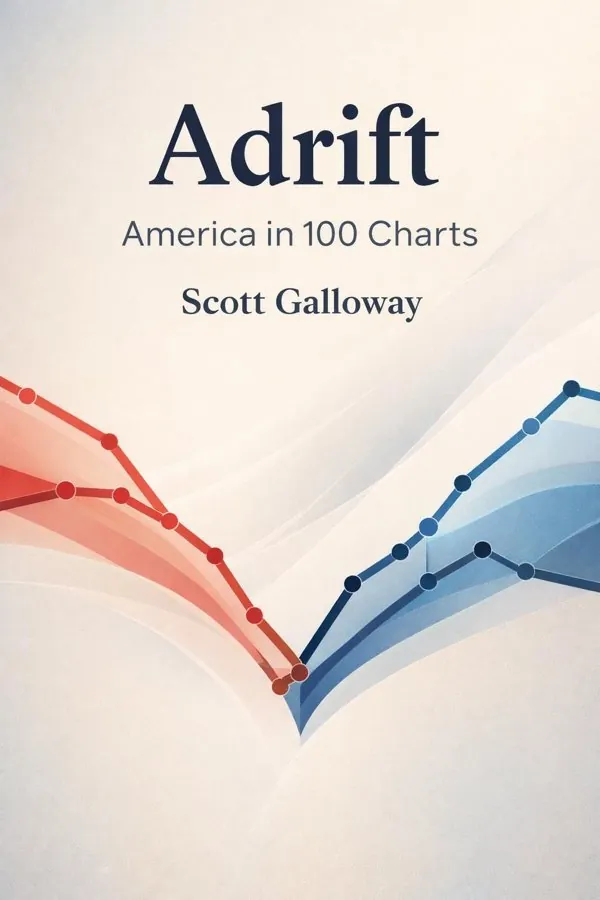
Adrift: America in 100 Charts
by Scott Galloway
In 'Adrift: America in 100 Charts', Scott Galloway uses data-driven insights and visual storytelling to explore the economic, social, and cultural shifts that have shaped the United States over the past several decades. Through one hundred carefully selected charts, he examines topics such as inequality, technology, education, and the future of work, offering a compelling narrative about where America stands and where it may be headed.
Key Takeaways
- 1Historical Context: From Postwar Prosperity to Structural Drift — To understand where we’ve gone adrift, we must trace the arc of how we got here. The America that emerged from the ashes…
- 2Wealth and Inequality: The Arithmetic of Unfairness — Perhaps no chart in this collection strikes a more visceral chord than the one showing the gap between the top one perce…
- 3Technology and Corporate Power: The Age of the Monopolist
 10 min read
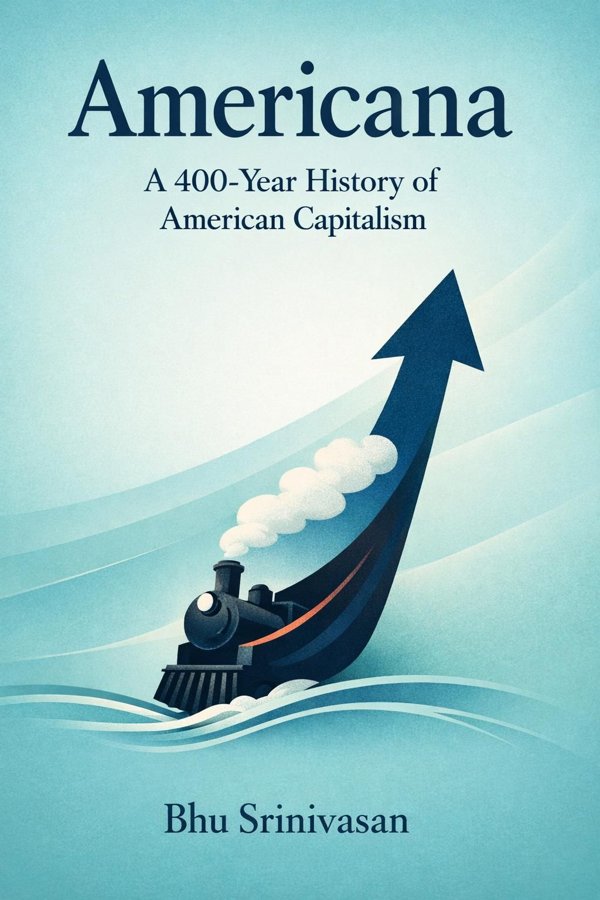
Americana: A 400-Year History of American Capitalism
by Bhu Srinivasan
Americana: A 400-Year History of American Capitalism is a sweeping narrative that traces the evolution of American capitalism from the early colonial period to the modern digital age. Bhu Srinivasan explores how innovation, entrepreneurship, and risk-taking have shaped the United States, weaving together stories of industries from cotton and railroads to Silicon Valley. The book highlights the interplay between technological progress, cultural change, and economic ambition that defines the American experience.
Key Takeaways
- 1Colonial Foundations — When we look back to the earliest settlements, what we find at the heart of colonial America is not ideology, but trade.…
- 2Revolution and Independence — The American Revolution is often remembered as a revolt against tyranny, but just beneath the politics was economics. Ta…
- 3Industrial Beginnings
 10 min read
An Economist Walks Into a Brothel: And Other Unexpected Places to Understand Risk
by Allison Schrager
In this engaging and accessible book, economist Allison Schrager explores how people make decisions about risk in unexpected places—from brothels to professional poker tables and Hollywood studios. Drawing on real-world examples and economic theory, she reveals how understanding risk can help individuals make smarter choices in business, finance, and life.
Key Takeaways
- 1The Brothel Case Study — The book opens, somewhat provocatively, in a Nevada brothel because it is one of the few places where risk is brought to…
- 2Risk and Reward in Professional Sports — When I turned to athletes, I found another form of risk mastery—the kind measured not in dollars but in bodily courage. …
- 3Hollywood and the Economics of Uncertainty
 10 min read
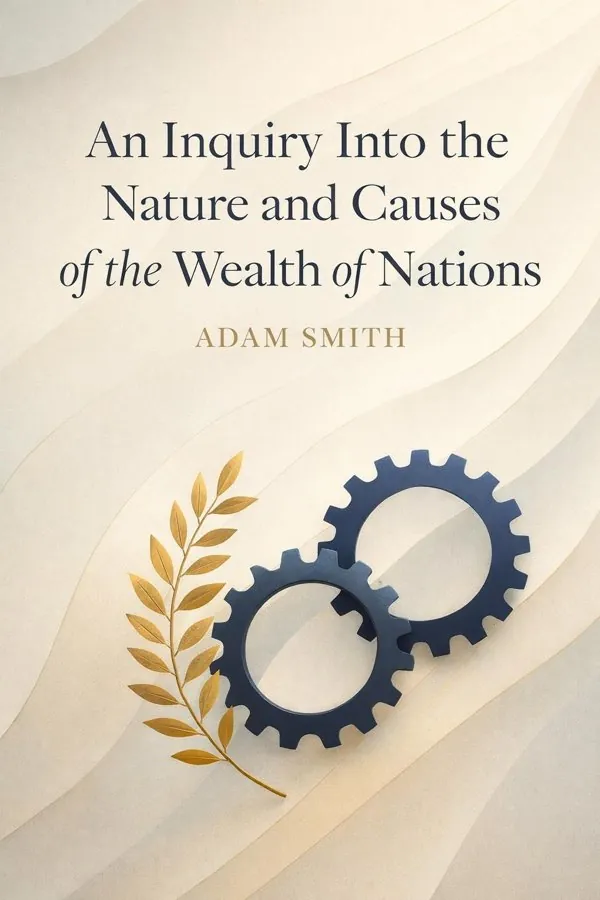
An Inquiry Into the Nature and Causes of the Wealth of Nations
by Adam Smith
Originally published in 1776, Adam Smith’s 'An Inquiry Into the Nature and Causes of the Wealth of Nations' is a foundational work in classical economics. It explores the division of labor, free markets, and the role of government in economic systems. Smith argues that national prosperity arises from economic freedom and competition, laying the groundwork for modern economic thought.
Key Takeaways
- 1Division of Labor — When I observe the simplest manufacture—a pin factory, for instance—I find a lesson that reveals the great secret of pro…
- 2Origin and Use of Money — In the ages before coin and commerce, people exchanged goods directly—a bushel of grain for a pair of shoes, a pot for a…
- 3Of the Natural and Market Price of Commodities
 10 min read
Angrynomics
by Eric Lonergan, Mark Blyth
Angrynomics explores the rise of public anger in modern economies and politics, analyzing how economic inequality, financial crises, and political polarization have fueled widespread frustration. The authors propose innovative policy solutions to rebuild trust and address systemic imbalances in capitalism.
Key Takeaways
- 1Defining Anger — The first thing we must do, before prescribing cures, is to diagnose the emotion itself. Not all anger is the same, and …
- 2Economic Roots of Anger — Once we recognize that anger signals systemic injustice, we have to ask: where does that sense of injustice originate? T…
- 3The 2008 Financial Crisis
 10 min read
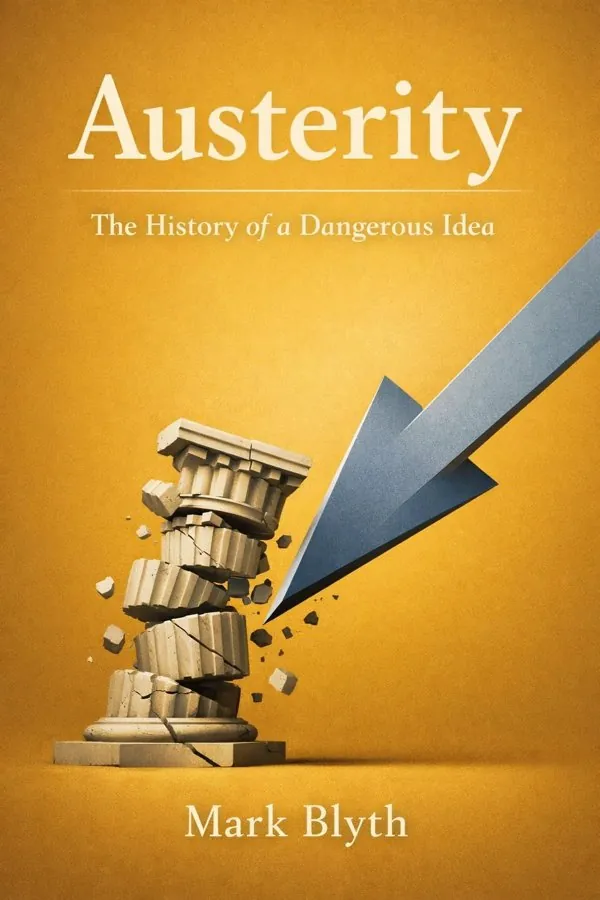
Austerity: The History of a Dangerous Idea
by Mark Blyth
Austerity: The History of a Dangerous Idea es un análisis exhaustivo de cómo las políticas de austeridad —recortes del gasto público y reducción del déficit— se han convertido en una respuesta dominante a las crisis económicas, a pesar de su ineficacia histórica. Mark Blyth examina los orígenes intelectuales de la austeridad, su aplicación en Europa y Estados Unidos, y las consecuencias sociales y políticas que ha generado. El libro combina historia económica, teoría política y análisis contemporáneo para demostrar que la austeridad, lejos de ser una solución, agrava las crisis que pretende resolver.
Key Takeaways
- 1The Intellectual Origins — To grasp why austerity persists, we must first understand where it came from. The idea traces back to classical economic…
- 2The Gold Standard Era — Under the gold standard, from the late nineteenth century up to the interwar period, austerity’s ideals became instituti…
- 3The Great Depression
Want the full summary?
Get instant access to this book summary and 100K+ more with Fizz Moment.
Get Free SummaryAvailable on App Store • Free to download
About This List
Economics shapes everything from your paycheck to global politics. These books make economic thinking accessible, practical, and surprisingly entertaining.
This list features 15 carefully selected books. With FizzRead, you can read AI-powered summaries of each book in just 15 minutes. Get the key takeaways and start applying the insights immediately.
Ready to start reading?
Get instant access to all 15 book summaries and 100K+ more with FizzRead.