
Tony Robbins' Life-Changing Books
The books Tony Robbins credits for his transformation and success. Essential reading for personal development.

 10 min read
Think and Grow Rich
by Napoleon Hill
What does it really take to build wealth, confidence, and lasting success when the odds have not always been in your favor? That is the central question behind this powerful adaptation of Think and Grow Rich. In this version, the familiar success principles popularized by Napoleon Hill are explored through the lived experiences, struggles, and achievements of African Americans who turned vision into accomplishment. The result is more than a motivational book. It is a practical guide to self-mastery, disciplined thinking, and purposeful action. What makes this book matter is its insistence that success is not reserved for the privileged or the fortunate. It begins in the mind, is strengthened by faith, and is made real through persistence, learning, and community. By grounding timeless success ideas in Black history and achievement, the book gives readers examples that feel concrete, relevant, and deeply inspiring. Dennis Kimbro, an American author, educator, and motivational speaker known for his work on leadership and achievement in the African American community, brings credibility and clarity to these ideas. His message is simple but transformative: greatness is not an exception in Black life. It is a legacy to be claimed and extended.
Key Takeaways
- 1Historical Context — Before ambition can feel believable, it has to be placed inside a truthful story. This chapter shows that for African Am…
- 2The Power of Thought — One of the book’s core beliefs is that success begins in the mind. Thoughts shape identity, expectations, and behavior l…
- 3Defining Desire and Purpose — Desire is more than wishing for a better life. In this book, it is presented as a focused, emotionally charged commitmen…
 10 min read
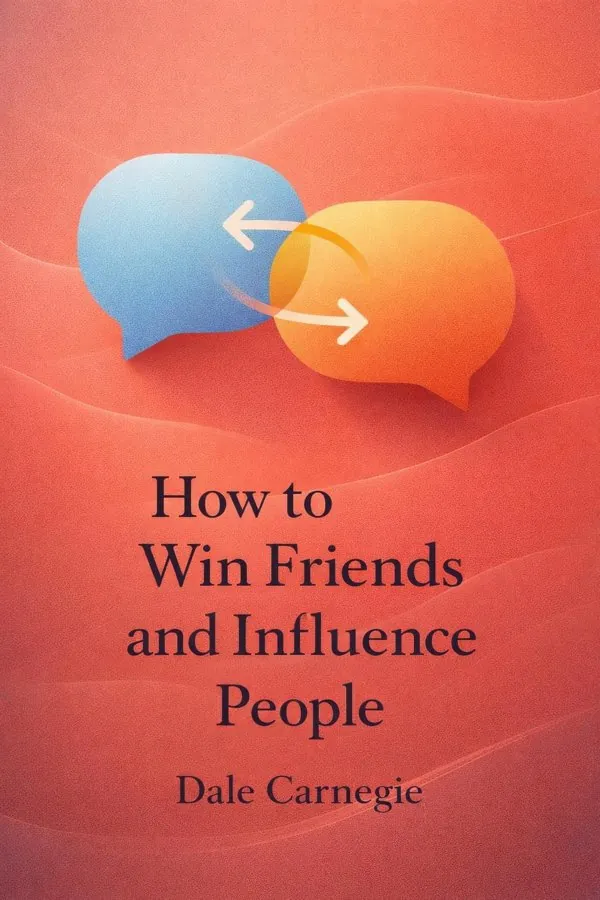
How to Win Friends and Influence People
by Dale Carnegie
First published in 1936, How to Win Friends and Influence People remains one of the most influential self-help books ever written because it addresses a timeless truth: success depends not only on what you know, but on how you relate to people. Dale Carnegie argues that influence is rarely won through force, criticism, or cleverness alone. Instead, it grows from empathy, respect, sincere appreciation, and the ability to understand what motivates others. Drawing from years of teaching public speaking and human relations, Carnegie distilled practical lessons from business leaders, historical figures, and everyday interactions into a set of principles anyone can apply. The book shows how to handle people without creating resentment, make others feel important, persuade without argument, and lead in ways that inspire cooperation rather than resistance. Its enduring appeal lies in its simplicity: these ideas are easy to understand, yet difficult enough in practice to be transformative. Whether you want to improve your career, strengthen relationships, or communicate with more confidence and tact, Carnegie offers a powerful guide to becoming someone others genuinely want to listen to and work with.
Key Takeaways
- 1Master the Fundamentals of Human Relations — Most conflict begins not with major disagreements, but with small failures in emotional intelligence. Carnegie’s first l…
- 2Make People Feel Seen and Valued — People are drawn less to brilliance than to warmth. Carnegie’s famous principles for making people like you are built on…
- 3Influence Begins with Empathy, Not Pressure — The fastest way to create resistance is to make people feel pushed. Carnegie teaches that real influence does not begin …
 10 min read
The Power of Your Subconscious Mind
by Joseph Murphy
What if the thoughts you repeat every day are quietly shaping your health, confidence, relationships, and results? That is the bold promise at the heart of *The Power of Your Subconscious Mind*, one of the most enduring books in the self-help and psychology space. Joseph Murphy argues that beneath your everyday awareness lies a powerful mental force constantly responding to your beliefs, emotions, and inner images. Learn to direct it wisely, he says, and you can begin to transform your outer life from the inside out. What makes this book matter decades after publication is its practical simplicity. Murphy does not just tell readers to “think positive.” He explains how habits of thought are formed, why fear becomes self-fulfilling, and how practices like affirmation, prayer, visualization, and mental rehearsal can help create new patterns. His approach blends spiritual language with accessible psychological principles, making the book appealing to readers interested in both personal growth and practical mindset change. Murphy, an Irish-born American author and New Thought minister who served at the Church of Divine Science in Los Angeles, became widely known for his teachings on the subconscious mind. In this classic, he offers a hopeful message: change your inner assumptions, and your life can begin to change with them.
Key Takeaways
- 1The Dual Nature of the Mind — Murphy’s foundation is the idea that the mind operates in two distinct but connected modes: the conscious and the subcon…
- 2Impressing Belief upon the Subconscious — According to Murphy, the subconscious is shaped not by casual wishes but by thoughts charged with feeling. A statement r…
- 3Healing, Faith, and the Role of Prayer — In Murphy’s view, prayer is not merely reciting religious words; it is a focused mental act that communicates a desired …
 10 min read
Man's Search for Meaning
by Viktor Frankl
What keeps a person going when everything familiar has been taken away—comfort, identity, loved ones, freedom, and even the expectation of tomorrow? That is the unbearable and essential question at the heart of *Man's Search for Meaning*. Viktor E. Frankl’s landmark book is far more than a Holocaust memoir. It is a profound study of human endurance, an examination of suffering, and a practical philosophy for anyone trying to live with purpose in hard times. Drawing on his experiences in Nazi concentration camps, Frankl explores how people respond when life is reduced to its barest terms and why some still manage to preserve dignity, hope, and inner freedom. What makes this book endure is that Frankl does not offer empty inspiration. He writes as an Austrian neurologist, psychiatrist, and Holocaust survivor who later developed logotherapy, a school of psychotherapy centered on meaning as the primary human motivation. His insight is simple but life-changing: even when we cannot change our circumstances, we can still choose our response. That idea has made this book one of the most influential works in psychology and self-help, especially for readers facing grief, burnout, uncertainty, or the quiet fear that life has lost direction.
Key Takeaways
- 1The Shock of Arrival and the Dehumanization of Camp Life — When Frankl first arrived at Auschwitz, the destruction of the self began immediately. The process was systematic: priso…
- 2Emotional Detachment and the Apathy that Defines Survival — After the first shock came a second psychological stage: apathy. Frankl shows that this numbness was not indifference in…
- 3Moral Choice and Inner Freedom in the Midst of Suffering — One of the book’s most powerful claims is that even under extreme oppression, a human being retains a final freedom: the…
 10 min read
Psycho-Cybernetics
by Maxwell Maltz
When I first began my career as a plastic surgeon, my focus was purely physical. I believed that altering a person’s appearance would naturally free them from insecurity and unhappiness. Yet, what I saw in my patients told a far deeper story. Some individuals, after even the most successful surgeries, continued to see themselves as disfigured, unworthy, or inadequate. Others, with only minor changes, seemed to come alive—gaining confidence, clarity, and true self-belief. This observation led me to a life-long pursuit: what truly determines the way we experience life is not our physical form, but the mental image we hold of ourselves. The promise of *Psycho-Cybernetics* is simple yet profound—transform your self-image, and you transform your entire world. Think of your mind as a servo-mechanism, an automatic guidance system programmed to achieve whatever goals you set. Your success or failure is largely determined by the pictures, beliefs, and emotional patterns you install into this system. Just as a pilot relies on accurate instruments to navigate toward a destination, you rely on your inner sense of self to guide your actions, decisions, and responses. When that internal picture is distorted—when you see yourself as incapable, limited, or unloved—you continually steer yourself into situations that reinforce those beliefs. But when you deliberately build a new, positive self-image through imagination, rational thought, and forgiveness, your mind automatically begins to seek out success and satisfaction. You don’t need to become a different person to live a happier and more fulfilled life; you simply need to adjust the blueprint of yourself that lives within your subconscious. The pages that follow are a journey through the science and art of this process. I’ll show you how your brain’s built-in success mechanism works, how imagination can reprogram your internal compass, and how habits of thought—such as relaxation, rational evaluation, and forgiveness—liberate you from negative conditioning. This book is not about moral perfection or endless positive thinking. It’s about creating a realistic, dynamic, and healthy self-image—a psychological foundation on which every genuine success and happiness rests. Whether you’re seeking professional achievement, inner peace, stronger relationships, or freedom from self-doubt, the principle remains the same: you are guided by the picture you hold of yourself. Change that picture, and your entire life will reorganize itself accordingly. The transformation begins not with effort or struggle, but with understanding and mental rehearsal—a new way of seeing yourself, your possibilities, and your purpose. That is what *Psycho-Cybernetics* offers you: the science of self-direction and the art of inner freedom.
Key Takeaways
- 1The Self-Image — Every human action springs from the mental picture we hold of ourselves. If you see yourself as inferior, awkward, or un…
- 2The Cybernetic Mechanism — Your brain and nervous system are goal-oriented servo-mechanisms. Just like the automatic controls on a missile or guide…
- 3Imagination and Visualization
 10 min read
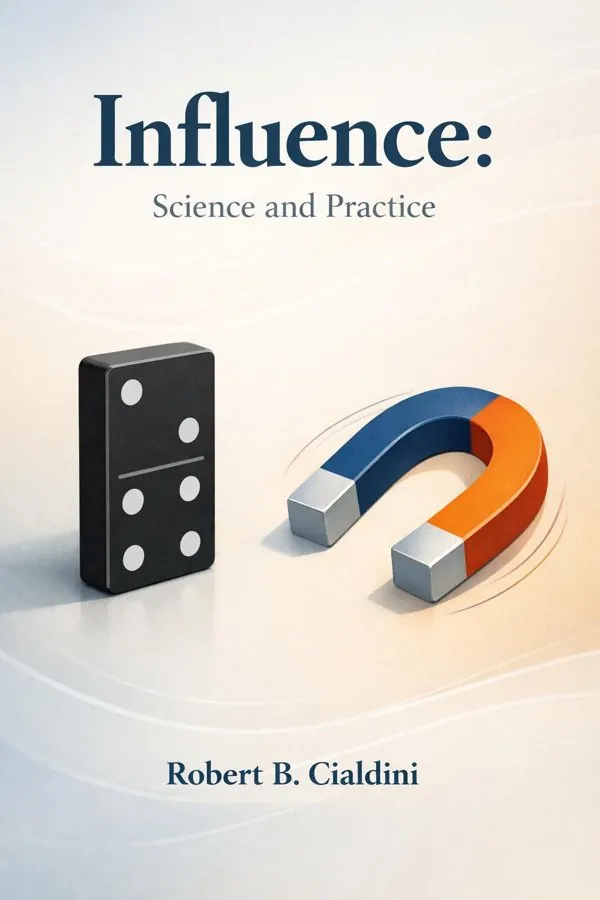
Influence
by Robert Cialdini
Why do people say yes when they would prefer to say no? Why do intelligent, careful individuals still fall for pressure, urgency, and persuasive framing? In Influence, Robert B. Cialdini answers these questions by uncovering the hidden psychological patterns that shape everyday decisions. Drawing on decades of research in social psychology, as well as undercover fieldwork in sales, fundraising, advertising, and compliance professions, Cialdini explains how persuasion often works not through logic alone, but through reliable mental shortcuts. He identifies six core principles of influence—reciprocity, commitment and consistency, social proof, liking, authority, and scarcity—and shows how they operate in business, relationships, politics, and consumer behavior. What makes the book so enduring is its balance of scientific rigor and practical usefulness. It helps readers become both more persuasive and more resistant to manipulation. Whether you work in marketing, negotiation, leadership, or simply want to make better decisions in a world full of influence attempts, this book offers a framework that remains remarkably relevant. Influence is not just about persuasion; it is about understanding human behavior under pressure.
Key Takeaways
- 1Weapons of Influence and Automaticity — Much of persuasion succeeds not because people are foolish, but because people are busy. Cialdini begins with a crucial …
- 2Reciprocity Creates Powerful Obligation — A small favor can create a surprisingly large sense of debt. That is the essence of reciprocity, one of the oldest and m…
- 3Commitment Shapes Future Behavior — People do not just want to make decisions; they want to appear consistent with them. Cialdini explains that once individ…
 10 min read
The Slight Edge
by Jeff Olson
Why do some people steadily build extraordinary lives while others, with similar talent and opportunity, slowly drift off course? In The Slight Edge, Jeff Olson offers a deceptively simple answer: success and failure are both the result of small, repeated actions that seem too insignificant to matter in the moment. A healthy meal, a skipped workout, ten pages read, one difficult phone call made, a little money saved—none of these choices feels life-changing today. But over months and years, they compound into dramatically different outcomes. That compounding effect is what Olson calls the “slight edge.” Rather than promising overnight transformation, the book argues that lasting success comes from embracing basic disciplines and practicing them long enough for their results to become visible. Olson’s message matters because it replaces fantasy with process. It shifts the focus from talent, luck, and big breaks to daily habits, personal philosophy, and long-term consistency. Drawing on his experience in business and personal development, Olson presents a practical framework for anyone who wants to improve health, finances, relationships, or career performance by mastering the small choices that shape a life.
Key Takeaways
- 1The Power of Daily Choices — Most lives are shaped not by dramatic turning points, but by choices so small they are easy to dismiss. That is the unse…
- 2Success and Failure Follow Invisible Curves — The most dangerous part of failure is that it rarely looks like failure at first. Olson explains this through the idea o…
- 3Simple Disciplines Create Extraordinary Results — The disciplines that change your life are usually painfully ordinary. Olson insists that success is not hidden in compli…
 10 min read
The Big Leap
by Gay Hendricks
Why do people often fall apart just when life starts going well? In The Big Leap, psychologist and relationship expert Gay Hendricks argues that many of us unconsciously resist the very happiness, success, love, and creative freedom we say we want. He calls this pattern the “Upper Limit Problem”: a hidden internal threshold that triggers self-sabotage whenever we begin to exceed our familiar comfort zone. Instead of blaming bad luck or external obstacles, Hendricks invites readers to look inward and notice the subtle ways they cap their own potential. What makes this book so compelling is its mix of psychology, practical self-awareness, and deeply encouraging insight. Hendricks doesn’t just diagnose the problem; he offers a framework for moving beyond it, especially by identifying your “Zone of Genius,” the kind of work and way of being that expresses your unique gifts most fully. Drawing on decades of experience in personal development and relationship coaching, he presents a clear message: expanding your capacity for joy and abundance is not selfish or unrealistic—it is the next stage of growth. The Big Leap is a guide for anyone ready to stop shrinking and start living at their true level.
Key Takeaways
- 1The Upper Limit Problem Explained — One of the most unsettling truths about growth is that success does not always feel safe. Gay Hendricks argues that many…
- 2Why We Limit Joy and Love — Many people think their biggest blocks are failure or fear of rejection, but Hendricks suggests something even more surp…
- 3The Four Zones of Work — Being busy is not the same as being aligned. One of Hendricks’s most useful frameworks is the idea that people operate i…
 10 min read
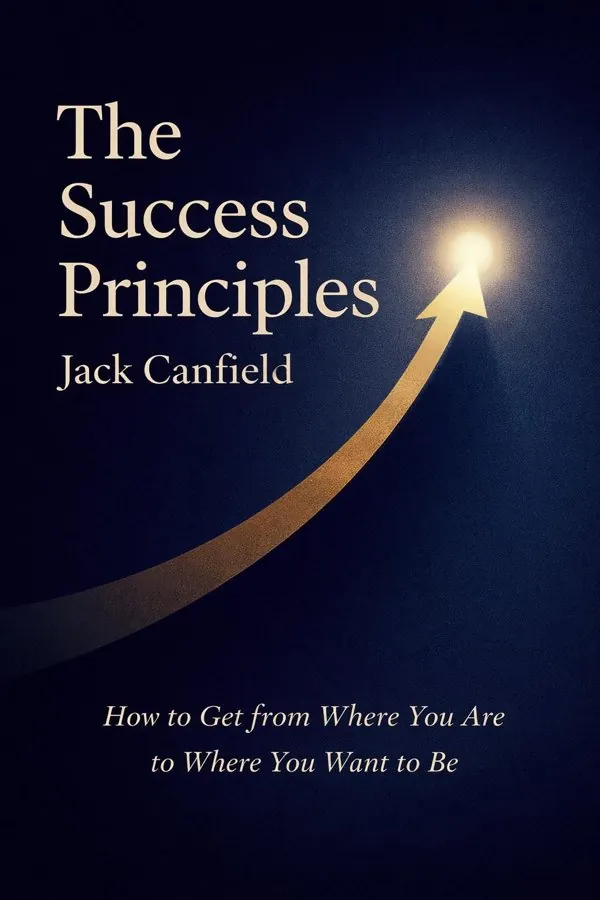
The Success Principles
by Jack Canfield
The Success Principles is Jack Canfield’s practical roadmap for turning vague hopes into measurable results. First published in 2005, the book brings together decades of lessons from personal development, achievement psychology, coaching, and business success into a clear system anyone can apply. Rather than treating success as a matter of talent, luck, or privilege, Canfield argues that it follows patterns: people who consistently get results think differently, act intentionally, and take full ownership of their lives. From setting goals and building confidence to managing time, handling rejection, and creating wealth, the book offers concrete principles backed by stories, exercises, and reflection prompts. What makes it especially useful is its blend of mindset and action. Canfield does not stop at motivation; he shows readers how to translate ambition into habits and habits into outcomes. As the co-creator of the Chicken Soup for the Soul series and a longtime motivational teacher, he writes with authority born from studying and teaching high performance for years. For anyone who wants a structured, encouraging, and actionable guide to personal and professional growth, this book remains a modern classic.
Key Takeaways
- 1Take 100% Responsibility for Results — The biggest shift in success often begins the moment you stop asking, “Why is this happening to me?” and start asking, “…
- 2Clarify Your Purpose and Vision — Most people do not fail because they aim too high; they fail because they never decide clearly what they want. Canfield …
- 3Turn Dreams Into Specific Goals — A dream inspires you, but a goal organizes you. One of Canfield’s most practical lessons is that goals must be specific,…
Want the full summary?
Get instant access to this book summary and 100K+ more with Fizz Moment.
Get Free SummaryAvailable on App Store • Free to download
About This List
The books Tony Robbins credits for his transformation and success. Essential reading for personal development.
This list features 9 carefully selected books. With FizzRead, you can read AI-powered summaries of each book in just 15 minutes. Get the key takeaways and start applying the insights immediately.
Ready to start reading?
Get instant access to all 9 book summaries and 100K+ more with FizzRead.