
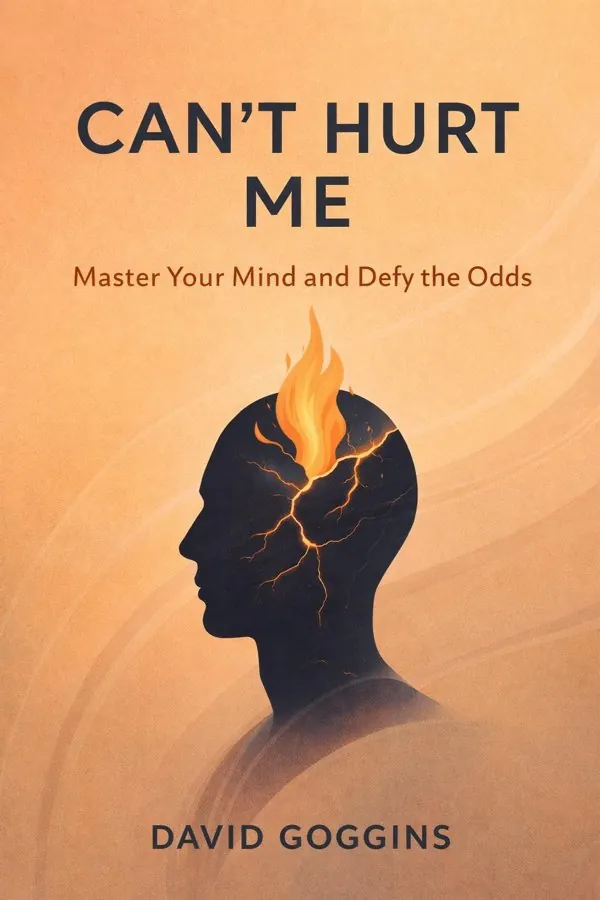
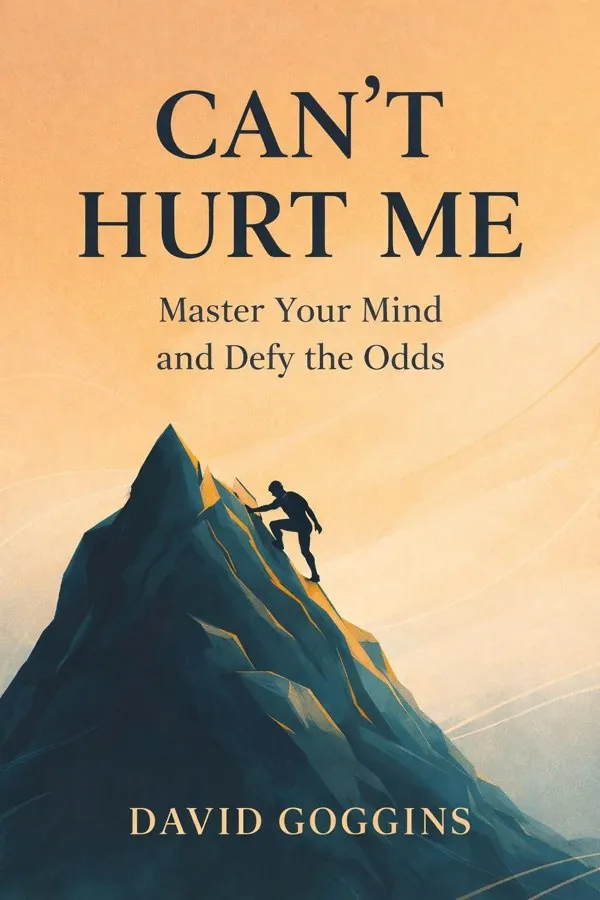
Can't Hurt Me: Summary & Key Insights
 10 min7 chaptersAudio available
Key Takeaways from Can't Hurt Me
Goggins’s early life is the emotional bedrock of Can't Hurt Me.
After escaping his father’s house, Goggins did not immediately step into freedom or confidence.
That decision sounds simple, but the book shows how radical it truly is.
Once Goggins commits to change, he enters a phase where pain becomes his classroom.
After military success, Goggins does not settle into comfort or coast on past achievement.
What Is Can't Hurt Me About?
Can't Hurt Me by David Goggins is a self-help book published in 2018 spanning 7 pages. What if the life you’ve been given—your trauma, your failures, your fear, your self-doubt—could become the raw material for an extraordinary transformation? That’s the question at the heart of Can't Hurt Me, David Goggins’s intensely personal memoir and mindset manual. More than a story about military achievement or athletic endurance, this book is a challenge to anyone who has ever felt stuck, broken, or limited by their past. Goggins takes readers through a life marked by abuse, racism, poverty, obesity, and hopelessness, then shows how he rebuilt himself through radical accountability, discipline, and a willingness to embrace discomfort. What makes this book matter is its refusal to offer easy inspiration. Goggins doesn’t sell positive thinking or quick fixes. Instead, he argues that growth begins when we stop negotiating with ourselves and start confronting the truths we’d rather avoid. As a retired U.S. Navy SEAL, ultramarathon runner, triathlete, and motivational speaker, he writes from lived experience, not theory. Can't Hurt Me resonates because it turns resilience into a practice. It’s a wake-up call for readers who want more than motivation—they want proof that the mind, when trained, can push far beyond what most people believe is possible.
This FizzRead summary covers all 7 key chapters of Can't Hurt Me in approximately 10 minutes, distilling the most important ideas, arguments, and takeaways from David Goggins's work. Also available as an audio summary and Key Quotes Podcast.
Can't Hurt Me: Master Your Mind and Defy the Odds
What if the life you’ve been given—your trauma, your failures, your fear, your self-doubt—could become the raw material for an extraordinary transformation? That’s the question at the heart of Can't Hurt Me, David Goggins’s intensely personal memoir and mindset manual. More than a story about military achievement or athletic endurance, this book is a challenge to anyone who has ever felt stuck, broken, or limited by their past. Goggins takes readers through a life marked by abuse, racism, poverty, obesity, and hopelessness, then shows how he rebuilt himself through radical accountability, discipline, and a willingness to embrace discomfort.
What makes this book matter is its refusal to offer easy inspiration. Goggins doesn’t sell positive thinking or quick fixes. Instead, he argues that growth begins when we stop negotiating with ourselves and start confronting the truths we’d rather avoid. As a retired U.S. Navy SEAL, ultramarathon runner, triathlete, and motivational speaker, he writes from lived experience, not theory. Can't Hurt Me resonates because it turns resilience into a practice. It’s a wake-up call for readers who want more than motivation—they want proof that the mind, when trained, can push far beyond what most people believe is possible.
Who Should Read Can't Hurt Me?
This book is perfect for anyone interested in self-help and looking to gain actionable insights in a short read. Whether you're a student, professional, or lifelong learner, the key ideas from Can't Hurt Me by David Goggins will help you think differently.
- ✓Readers who enjoy self-help and want practical takeaways
- ✓Professionals looking to apply new ideas to their work and life
- ✓Anyone who wants the core insights of Can't Hurt Me in just 10 minutes
Want the full summary?
Get instant access to this book summary and 100K+ more with Fizz Moment.
Get Free SummaryAvailable on App Store • Free to download
Key Chapters
Goggins’s early life is the emotional bedrock of Can't Hurt Me. He grew up in an abusive home where violence, fear, and instability were routine. Outside the home, racism and poverty added another layer of psychological pressure. These experiences did not simply create painful memories—they shaped his identity. He came to believe he was weak, inferior, and destined to fail. That belief system mattered because, as the book shows again and again, the stories we tell ourselves become the limits we live inside.
What makes this chapter powerful is that Goggins does not romanticize suffering. He shows how adversity can scar a person, but he also reveals how it can build unusual endurance. Constant fear taught him hyper-awareness. Repeated hardship taught him how to survive discomfort. Years of isolation forced him inward, where he began developing the observational toughness that would later define him. In hindsight, the pain that seemed only destructive also became training.
For readers, the key lesson is not that trauma is good, but that your past does not have to remain a life sentence. A practical takeaway is to identify one painful experience you still use as evidence of weakness and reframe it as proof of survival. Ask: What did this teach me about endurance, awareness, or grit? Goggins’s message is clear: your scars may explain you, but they do not have to own you.
After escaping his father’s house, Goggins did not immediately step into freedom or confidence. Instead, he entered a different kind of trap: comfort, avoidance, and hopelessness. Working a low-paying job and numbing himself with junk food and television, he gained massive weight and drifted further from the person he wanted to become. His physical condition became a visible symbol of his internal state. He wasn’t just out of shape—he was disconnected from purpose.
This section matters because it captures a problem many readers know intimately: the slow death of potential through daily habits. Goggins shows that self-destruction often looks ordinary. It can be overeating, procrastinating, scrolling, or staying loyal to a version of yourself you’ve already outgrown. His nearly 300-pound body was not the root problem; it was the consequence of years spent surrendering to comfort.
The turning point comes when he watches a documentary about Navy SEAL training, especially Hell Week. Seeing others endure extreme hardship forces him to confront an uncomfortable truth: suffering isn’t always something to avoid—it can be a path to transformation. That insight becomes his wake-up call.
The practical lesson here is to audit your comfort addictions. What do you reach for when life feels hard? Food, distraction, sleep, excuses? Goggins’s example reminds us that change starts with ruthless honesty. Before you can build discipline, you have to stop lying to yourself about the cost of staying the same.
The real turning point in Can't Hurt Me is not a medal, a race, or military success—it is the moment Goggins decides he is no longer willing to live as a victim of his circumstances. That decision sounds simple, but the book shows how radical it truly is. He doesn’t wait for confidence, support, or ideal conditions. He starts while overweight, underqualified, and carrying years of emotional damage. In other words, he begins before he feels ready.
This chapter highlights one of the book’s core principles: transformation starts with accountability. Goggins stops blaming his childhood, his environment, and his bad luck for the life he is living. Instead, he asks a harder question: What am I going to do now? That shift—from explanation to responsibility—is what opens the door to change. He begins losing weight at an extreme pace, studies to improve himself, and commits to the standards required to pursue the military path he once thought was impossible.
A useful takeaway for readers is to create what Goggins calls a brutal self-assessment. Write down the gap between who you are and who you say you want to be. Be specific. Where are you making excuses? Where have you lowered the standard? Then choose one non-negotiable action to start closing that gap today. Goggins’s life shows that a new identity begins not with inspiration, but with a hard decision followed by repeated action.
Once Goggins commits to change, he enters a phase where pain becomes his classroom. The training required to become a Navy SEAL pushes him into conditions that expose every weakness—physical exhaustion, sleep deprivation, injury, fear, and relentless pressure. Instead of seeing these hardships as proof that he should quit, he treats them as opportunities to strengthen his mind. This is where his philosophy of mental toughness begins to take full shape.
One of the most memorable ideas associated with this stage is the “40% rule,” the belief that when most people think they are finished, they have only scratched the surface of their actual capacity. Whether or not the percentage is literal, the principle is practical: our minds often surrender long before our bodies truly must. Goggins trains himself to keep going after the first wave of resistance, and then after the second and third.
For readers, this chapter offers a powerful reframing of discomfort. Instead of asking, “How do I avoid pain?” ask, “What kind of pain will make me stronger?” That might mean difficult workouts, hard conversations, disciplined study, or waking up early to keep a promise to yourself. Mental toughness is not built in rare heroic moments alone; it is built by repeatedly doing what is uncomfortable on purpose. Goggins shows that suffering, approached correctly, can become a tool for self-respect.
After military success, Goggins does not settle into comfort or coast on past achievement. Instead, he finds a new arena: endurance sports. Ultramarathons, long-distance races, and extreme physical challenges become more than athletic events—they become laboratories for self-mastery. He uses them to test the limits of his mind, confront weakness in real time, and continue expanding what he believes is possible.
What’s striking in this phase is that Goggins is not chasing trophies in the conventional sense. He is chasing truth. Endurance sports strip away pretense. When your body is breaking down and your mind is begging you to stop, you meet yourself honestly. That’s why these events matter in the book: they reveal that growth is not a one-time transformation. It is a lifelong process of choosing challenge over stagnation.
This section also highlights the “accountability mirror” mindset that Goggins has spoken about—facing yourself honestly rather than hiding behind image or past success. For everyday readers, endurance sports may not be the goal, but the principle still applies. Choose a challenge that forces you beyond your default settings: train for a race, complete a demanding project, learn a difficult skill, or commit to a disciplined routine for 90 days. Self-mastery comes from repeatedly putting yourself in situations where excuses are exposed and effort becomes the only answer.
One of the most important truths in Can't Hurt Me is that toughness is not the same as invincibility. Goggins endures injuries, physical breakdowns, and periods where his body can no longer perform at the level his mind demands. These moments are crucial because they test whether resilience is real or only useful when things are going well. The answer, for Goggins, is that an unyielding mind adapts rather than collapses.
Injury forces a different kind of discipline. It means working within limits without surrendering identity. It means finding ways to recover, rebuild, and stay engaged when your usual strengths are unavailable. This is a lesson many high performers need: when progress slows, your mindset is exposed. Do you become bitter, or do you stay committed? Do you let obstacles redefine you, or do you adjust the mission?
For readers, the broader takeaway extends beyond physical injury. Setbacks come in many forms—burnout, rejection, illness, financial pressure, or emotional exhaustion. Goggins’s approach suggests three practical steps: accept reality without self-pity, focus on what is still under your control, and maintain standards even in reduced form. If you can’t sprint, walk. If you can’t do your ideal routine, do the version available today. The unyielding mind is not rigid; it is relentless. It refuses to let temporary limitation become permanent defeat.
The final major idea in Can't Hurt Me is that there is no finish line for personal growth. Goggins does not present transformation as a one-time escape from weakness; he presents it as an ongoing commitment to purpose, discipline, and self-confrontation. Once he proves he can change his life, the challenge becomes sustaining that growth without slipping back into comfort, ego, or complacency.
Purpose in this book is deeply connected to service and example. Goggins wants his life to demonstrate what is possible when someone refuses to be defined by a brutal beginning. His message is not “look at me,” but “stop underestimating yourself.” That’s why the book lands so strongly with readers: it connects extreme achievement to a universal struggle. Almost everyone has a place in life where they are settling, hiding, or negotiating with their potential.
The practical lesson here is to treat growth as a daily practice, not a dramatic event. Revisit your standards regularly. Set new challenges before comfort dulls your edge. Keep evidence of your progress—journal entries, training logs, completed goals—so you can build confidence through proof, not fantasy. Goggins’s philosophy is demanding, but it is also empowering. You do not need perfect circumstances to live with purpose. You need honesty, effort, and the willingness to keep evolving long after others would have stopped.
All Chapters in Can't Hurt Me
About the Author
David Goggins is a retired U.S. Navy SEAL, ultramarathon runner, triathlete, and motivational speaker. He is best known for his extraordinary endurance feats and his no-excuses philosophy on mental toughness, discipline, and personal accountability. Through his writing and speaking, Goggins has become a major voice in modern self-development, encouraging people to push past comfort and confront their perceived limits. His reputation is built on lived experience: extreme training, relentless self-testing, and a public commitment to resilience. In Can't Hurt Me, he channels those experiences into a message about mastering the mind and building strength through adversity.
Get This Summary in Your Preferred Format
Read or listen to the Can't Hurt Me summary by David Goggins anytime, anywhere. FizzRead offers multiple formats so you can learn on your terms — all free.
Available formats: App · Audio · PDF · EPUB — All included free with FizzRead
Download Can't Hurt Me PDF and EPUB Summary
Key Quotes from Can't Hurt Me
“Goggins’s early life is the emotional bedrock of Can't Hurt Me.”
“After escaping his father’s house, Goggins did not immediately step into freedom or confidence.”
“The real turning point in Can't Hurt Me is not a medal, a race, or military success—it is the moment Goggins decides he is no longer willing to live as a victim of his circumstances.”
“Once Goggins commits to change, he enters a phase where pain becomes his classroom.”
“After military success, Goggins does not settle into comfort or coast on past achievement.”
Frequently Asked Questions about Can't Hurt Me
Can't Hurt Me by David Goggins is a self-help book that explores key ideas across 7 chapters. What if the life you’ve been given—your trauma, your failures, your fear, your self-doubt—could become the raw material for an extraordinary transformation? That’s the question at the heart of Can't Hurt Me, David Goggins’s intensely personal memoir and mindset manual. More than a story about military achievement or athletic endurance, this book is a challenge to anyone who has ever felt stuck, broken, or limited by their past. Goggins takes readers through a life marked by abuse, racism, poverty, obesity, and hopelessness, then shows how he rebuilt himself through radical accountability, discipline, and a willingness to embrace discomfort. What makes this book matter is its refusal to offer easy inspiration. Goggins doesn’t sell positive thinking or quick fixes. Instead, he argues that growth begins when we stop negotiating with ourselves and start confronting the truths we’d rather avoid. As a retired U.S. Navy SEAL, ultramarathon runner, triathlete, and motivational speaker, he writes from lived experience, not theory. Can't Hurt Me resonates because it turns resilience into a practice. It’s a wake-up call for readers who want more than motivation—they want proof that the mind, when trained, can push far beyond what most people believe is possible.
Compare Can't Hurt Me

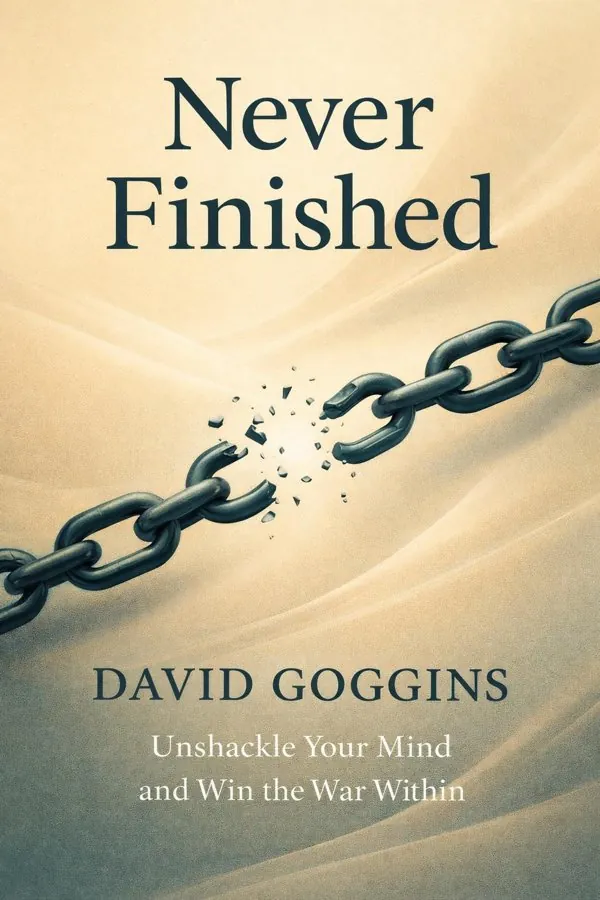
More by David Goggins
You Might Also Like
Featured In
Joe Rogan's Book Picks
Joe Rogan's Go-To Books: What He Can't Stop Recommending
David Goggins's Book Picks
David Goggins' Mental Toughness Library
Curated's Book Picks
Best Self-Help Books of All Time — Transform Your Life
Curated's Book Picks
Books That Will Change Your Life — Must-Read List
Curated's Book Picks
Best Books for Women — Empowering Reads
Curated List's Book Picks
Best Motivational Books of All Time - 15 Must-Read Books | FizzRead
Browse by Category
Ready to read Can't Hurt Me?
Get the full summary and 100K+ more books with Fizz Moment.