
How to Win Friends and Influence People vs The Four Agreements: Which Should You Read?
A detailed comparison of How to Win Friends and Influence People by Dale Carnegie and The Four Agreements by Don Miguel Ruiz. Discover the key differences, strengths, and which book is right for you.
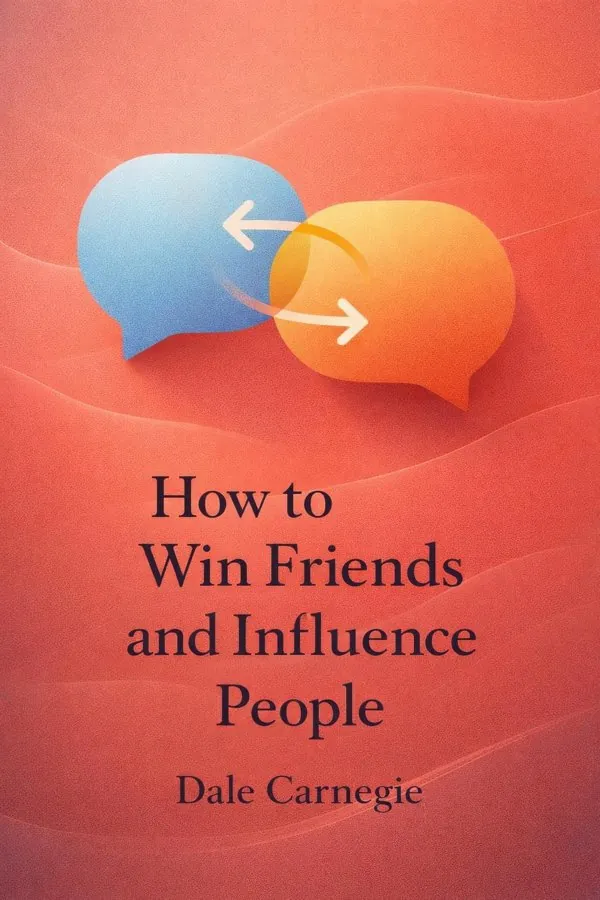

How to Win Friends and Influence People
The Four Agreements
In-Depth Analysis
Dale Carnegie’s "How to Win Friends and Influence People" and Don Miguel Ruiz’s "The Four Agreements" have become cornerstones of the self-help genre, yet they diverge significantly in origins, aims, methodology, and practical utility.
Carnegie’s book, first published in 1936, is a pragmatic manual for navigating social dynamics, rooted in the author’s extensive observation of human behavior in professional and personal settings. The book’s structure is methodical and memorable: it outlines principles such as “Give honest and sincere appreciation,” “Become genuinely interested in other people,” and “Let the other person feel that the idea is theirs.” These maxims are illustrated with vignettes about business leaders, salespeople, and historical figures, giving the reader concrete examples of successful persuasion and rapport-building. The advice is intentionally actionable and tailored for immediate use—Carnegie’s rules for remembering names, becoming a good listener, and resolving conflict without arousing resentment can be tried out in any meeting or conversation. The book’s tone is warm and encouraging, offering readers a sense of agency over their social worlds.
Ruiz’s "The Four Agreements," by contrast, emerges from a tradition of spiritual teaching rather than social science or business. Drawing on Toltec wisdom, Ruiz identifies the "domestication" of humans—the internalization of societal rules and judgments—as the root of much suffering. His four agreements—be impeccable with your word, don’t take anything personally, don’t make assumptions, and always do your best—are presented as a path toward personal freedom and emotional well-being. Ruiz’s methodology is less about external behaviors and more about inner transformation: he urges readers to scrutinize their beliefs, language, and self-talk, and to replace inherited patterns with conscious, liberating choices. The book’s tone is gentle yet insistent, aiming to catalyze a shift in consciousness rather than simply offering a set of techniques.
Methodologically, Carnegie’s book is outwardly focused, emphasizing the effect of one's actions on others. The advice is tactical, and the goal is influence—winning friends, gaining allies, and leading effectively. For example, in the section “How to Change People Without Giving Offense or Arousing Resentment,” Carnegie provides a step-by-step process for giving feedback that preserves the recipient’s dignity, such as calling attention to mistakes indirectly and praising any improvement. The underlying assumption is that social success is a matter of skillful interaction.
Ruiz, on the other hand, is inwardly focused. The four agreements are less about managing others and more about managing oneself. The first agreement, “Be impeccable with your word,” is not simply about honesty but about using language to create beauty, truth, and love rather than harm or self-judgment. The second agreement, “Don’t take anything personally,” asks readers to cultivate emotional independence, recognizing that other people’s actions are projections of their own reality. The third and fourth agreements complete the system, urging clarity, inquiry, and self-compassion. Ruiz’s examples are often allegorical, drawing on myth and metaphor rather than business cases.
Philosophically, the two books operate on different planes. Carnegie is grounded in the social and practical: his approach is utilitarian, seeking outcomes like improved teamwork, sales, and leadership. Ruiz is existential and spiritual, concerned with the nature of suffering, happiness, and the possibility of freedom from self-imposed limitations. The implications are significant: Carnegie’s book will appeal to those who want to master the external world, especially in business or community leadership, while Ruiz’s is better suited to readers seeking peace, healing, or a deeper sense of meaning.
Both books have enduring value because they address universal human concerns—the desire to be understood, the struggle with self-doubt, the quest for connection. However, their methods for achieving these ends are distinct. Carnegie offers a toolkit for visible, measurable change in relationships; Ruiz provides a compass for the inner journey. In practice, readers may benefit from both: mastering Carnegie’s techniques can make one more effective in the world, while internalizing Ruiz’s agreements can foster resilience and authenticity.
Ultimately, “How to Win Friends and Influence People” is a blueprint for social success and influence, while “The Four Agreements” is a guide to personal liberation and emotional clarity. Their contrast enriches the self-help canon, demonstrating the spectrum from practical skill-building to philosophical transformation.
Side-by-Side Comparison
| Aspect | How to Win Friends and Influence People | The Four Agreements |
|---|---|---|
| Core Philosophy | Dale Carnegie's philosophy centers on the belief that interpersonal effectiveness can be cultivated through empathy, active listening, and understanding others’ perspectives, prioritizing influence and harmonious relationships. | Don Miguel Ruiz builds his philosophy on Toltec wisdom, advocating self-liberation from limiting beliefs through four foundational agreements that emphasize personal integrity and inner freedom. |
| Writing Style | Carnegie uses anecdotal evidence, real-life stories, and a straightforward, conversational tone that makes the advice accessible and relatable. | Ruiz writes in a parable-like, meditative style, blending narrative, allegory, and philosophical exposition to evoke reflection and spiritual contemplation. |
| Practical Application | The book provides concrete, actionable steps and social techniques applicable in workplaces, networking, and daily interactions, such as remembering people’s names and showing genuine appreciation. | Ruiz’s agreements are simple but require ongoing self-awareness and introspection; they are universal in scope but less prescriptive about specific social situations. |
| Target Audience | Aimed at professionals, leaders, and anyone seeking to improve social skills or succeed in business and personal relationships. | Geared toward individuals on a journey of self-discovery, those interested in spiritual growth, and readers seeking inner peace and personal transformation. |
| Scientific Rigor | While practical, Carnegie's advice is mostly anecdotal, not rooted in modern psychology or empirical research, yet it resonates through observable social dynamics. | Ruiz’s work is spiritual and philosophical, drawing from myth and ancient wisdom rather than scientific studies or data. |
| Emotional Impact | Carnegie’s approach aims to boost confidence and motivation by empowering readers to feel more competent in social environments. | Ruiz’s teachings encourage emotional healing, self-acceptance, and a deep sense of inner peace by transforming one’s relationship with oneself. |
| Actionability | Highly actionable, with explicit instructions and memorable maxims designed for immediate implementation. | Actionable at a philosophical level, requiring ongoing mindfulness and self-reflection to internalize the agreements. |
| Depth of Analysis | Offers practical analysis focused on specific behaviors and their outcomes, but does not deeply interrogate the psychological or ethical roots. | Presents a deeper, more abstract exploration of belief systems and consciousness, but with less focus on day-to-day behavioral nuance. |
| Long-term Value | Continues to influence generations for its foundational social skills and leadership advice, remaining relevant in professional settings. | Enduring for its universal life lessons, often revisited for spiritual guidance and personal growth across life stages. |
| Readability | Accessible and engaging, with clear organization and memorable examples. | Easy to read but invites slow, contemplative engagement; the abstract concepts may require rereading for full absorption. |
Key Differences
Orientation
Carnegie’s book is outwardly focused on improving relationships with others through social skills, while Ruiz’s is inwardly oriented, centering on personal belief systems and self-liberation.
Methodology
Carnegie uses real-world anecdotes and prescriptive advice tailored to everyday situations, whereas Ruiz employs allegory and abstract principles drawn from ancient Toltec teachings.
Actionability
The advice in Carnegie’s book is immediately actionable and practical, such as greeting people warmly and giving sincere praise, while Ruiz’s agreements require ongoing introspection and a shift in mindset.
Philosophical Foundation
Carnegie is pragmatic and secular, rooted in observation of social dynamics; Ruiz is spiritual and philosophical, grounded in ancient wisdom and personal transformation.
Target Outcomes
Carnegie aims for social influence, professional success, and harmonious relationships; Ruiz aims for internal peace, self-acceptance, and emotional freedom.
Style and Tone
Carnegie writes in a conversational, anecdote-rich style designed to instruct and motivate; Ruiz uses meditative, allegorical language to provoke reflection and insight.
Scope of Advice
Carnegie’s guidance is specific to social interactions and leadership, while Ruiz’s agreements are universal life principles applicable to any context.
Who Should Read Which?
The Busy Professional
→ How to Win Friends and Influence People
This reader needs actionable, proven strategies to build rapport, lead teams, and advance their career. Carnegie’s practical advice and real-world examples are directly applicable to everyday business situations.
The Seeker of Inner Peace
→ The Four Agreements
For those navigating personal transformation or seeking relief from emotional suffering, Ruiz’s book offers a spiritual framework to foster self-acceptance, resilience, and a more peaceful relationship with oneself.
The Lifelong Learner
→ Both
Curious readers interested in holistic development—balancing external influence with internal harmony—will benefit from reading both books in sequence, integrating Carnegie’s social mastery with Ruiz’s wisdom for personal liberation.
Which Should You Read First?
For most readers, starting with 'How to Win Friends and Influence People' is recommended, especially if you are looking to improve external relationships and interpersonal effectiveness. Its practical, situation-based advice allows readers to see immediate improvements in communication and confidence. Mastering these skills can also provide a solid foundation for applying the more abstract, inward-focused teachings of 'The Four Agreements.' However, if you are currently facing personal challenges related to self-esteem, emotional pain, or existential questions, beginning with Ruiz’s book may help you develop the inner resilience and clarity needed to benefit fully from Carnegie’s techniques. For readers with a spiritual or philosophical inclination, 'The Four Agreements' could serve as a powerful first step. Ultimately, reading both enriches one’s toolkit for both inner and outer success, but the order should reflect your present life goals and challenges.
Want the full summary?
Get instant access to this book summary and 100K+ more with Fizz Moment.
Get Free SummaryAvailable on App Store • Free to download
Frequently Asked Questions
Is 'How to Win Friends and Influence People' better than 'The Four Agreements' for beginners in self-help?
For beginners, 'How to Win Friends and Influence People' is often the more accessible starting point. Its advice is highly practical and immediately applicable, relying on concrete examples and step-by-step methods. Carnegie's focus on real-world interactions—like remembering names or handling criticism—provides clear entry points for those new to personal development. In contrast, 'The Four Agreements' explores more abstract, philosophical territory. While both books are readable, beginners in self-help might find Carnegie’s structure and actionable tips more approachable than Ruiz’s spiritual framework.
Which book is more useful for improving workplace relationships: 'How to Win Friends and Influence People' or 'The Four Agreements'?
'How to Win Friends and Influence People' is generally more directly applicable to workplace relationships. Carnegie’s strategies—such as giving honest appreciation, listening actively, and handling criticism tactfully—are tailored to professional environments and can help foster team cohesion and leadership. While 'The Four Agreements' can enhance workplace harmony by encouraging emotional resilience and integrity, its principles are broader and less specific to typical work scenarios. For targeted professional improvement, Carnegie’s book is the stronger choice.
Does 'The Four Agreements' offer more spiritual guidance than 'How to Win Friends and Influence People'?
Yes, 'The Four Agreements' is explicitly rooted in spiritual and philosophical traditions. Ruiz draws on Toltec wisdom to address the human condition at a deeper level, guiding readers toward inner peace, self-acceptance, and freedom from negative beliefs. The book’s tone and content are designed to spark spiritual transformation, not just behavioral change. In contrast, Carnegie’s work is secular and practical, focusing primarily on external relationships and social skills rather than internal, spiritual matters.
Are the lessons in 'How to Win Friends and Influence People' still relevant in the digital age compared to 'The Four Agreements'?
Carnegie’s principles—such as showing genuine interest, being a good listener, and offering sincere appreciation—remain highly relevant, even in digital contexts like email, social media, and virtual meetings. The underlying human needs for recognition and connection have not changed. 'The Four Agreements' is equally timeless, as its focus on self-talk and personal boundaries applies across all communication mediums. Both books translate well to the modern world, but Carnegie’s techniques may offer more tangible strategies for navigating today’s interconnected, often impersonal environments.
Is 'The Four Agreements' better for overcoming negative self-talk than 'How to Win Friends and Influence People'?
'The Four Agreements' directly addresses negative self-talk, particularly through the agreements to be impeccable with your word and not take things personally. Ruiz encourages readers to replace self-judgment with compassion and mindful language, making it highly effective for those seeking to transform internal dialogue. While Carnegie touches on confidence-building through social validation, his focus is less on the inner critic and more on external relationships. For overcoming negative self-talk, Ruiz’s book is the stronger resource.
Which book offers more actionable advice for daily life: 'How to Win Friends and Influence People' or 'The Four Agreements'?
'How to Win Friends and Influence People' provides more detailed, situation-specific advice that can be implemented immediately in daily interactions. Readers can practice Carnegie’s techniques in conversations, meetings, and networking events with observable results. 'The Four Agreements' offers broad, guiding principles that require ongoing reflection and self-monitoring. While both are actionable, Carnegie’s book is more prescriptive and hands-on, making it easier to apply in everyday situations.
The Verdict
Both 'How to Win Friends and Influence People' and 'The Four Agreements' have earned their status as self-help classics, but they serve distinct purposes. Carnegie’s book is essential reading for anyone who wants to improve their social skills, excel in professional environments, or develop effective leadership qualities. Its practical, step-by-step guidance makes it accessible to readers of all backgrounds and remains especially relevant for those seeking tangible results in communication and influence. ' The Four Agreements' is best suited to readers on a journey of personal or spiritual growth. Ruiz’s principles are transformative for those struggling with negative self-talk, emotional turmoil, or a sense of limitation imposed by societal expectations. The book’s concise, reflective wisdom can inspire deep change in one’s mindset and inner life. Readers seeking to master external relationships and achieve professional success should begin with Carnegie. Those in search of inner peace, emotional healing, or a new code for living would benefit most from Ruiz. Both offer enduring value, but your choice should align with your current needs: practical influence or personal liberation.
Related Comparisons

Want to read both books?
Get AI-powered summaries of both How to Win Friends and Influence People and The Four Agreements in just 20 minutes total.