
Women Who Run with the Wolves: Summary & Key Insights
 10 min13 chaptersAudio available
What Is Women Who Run with the Wolves About?
Women Who Run with the Wolves by Clarissa Pinkola Estés is a psychology book published in 1992 spanning 13 pages. When I speak of the Wild Woman, I am invoking an ancient, instinctual force that lies beneath the surface of every woman’s life. She is not a metaphor of rebellion nor a myth for escapism, but a living archetype—the pulse that connects you with the deep feminine knowing, the wolfish intuition that once guided all women before civilization taught them to forget their own scent. *Women Who Run With the Wolves* is my invitation to remember. Imagine standing at the edge of a forest at night, hearing a distant howl. You might feel both fear and longing, because that sound belongs to a part of you that has waited too long to return home. The Wild Woman archetype represents that home—the psychic territory of instinct, creativity, and knowing. Every folk tale and myth I explore in this book offers a map leading back to her. Yet her presence has been heavily suppressed. Modern culture teaches women to be nice, efficient, and productive but not wild, instinctual, or deeply creative. This suppression is not accidental—it serves the smooth functioning of society and commercial life, which depends on women disconnecting from their untamed source of wisdom. The Wild Woman is unpredictable; she loves fiercely, hungers deeply, creates for the sake of creation. When disconnected from her, a woman begins to live a half-life, one that feels domesticated, obedient, and hollow. Through myths, legends, and fairy tales from many cultures, I explore how women can reawaken this force within themselves. Each story—whether it is *La Loba*, who sings bones back to life, or *Vasalisa*, who learns to trust her intuition—serves as a psychological compass. These tales were never mere entertainment; they were lessons encoded in the language of symbols. They carry instructions on how to survive psychic starvation, how to heal the creative soul, how to honor grief and death so that new life may begin. This is not a book of quick answers but of deep remembering. You will feel the dust of forgotten paths and the scent of rain on wild earth. You will meet women in stories who lost their hands, their shoes, their voices—and through them, you will learn how to reclaim your own lost parts. What’s in it for you? The remembrance that your own instincts are sacred, that within you lives a bone collector, a truth teller, a creator who does not ask permission to be whole. As you read, consider yourself a participant in an ancient gathering where wisdom is transmitted through story. Every chapter is an act of homecoming, and by the end, you will no longer simply read about the Wild Woman—you will hear her breathing within you.
This FizzRead summary covers all 13 key chapters of Women Who Run with the Wolves in approximately 10 minutes, distilling the most important ideas, arguments, and takeaways from Clarissa Pinkola Estés's work. Also available as an audio summary and Key Quotes Podcast.
Women Who Run with the Wolves: Myths and Stories of the Wild Woman Archetype
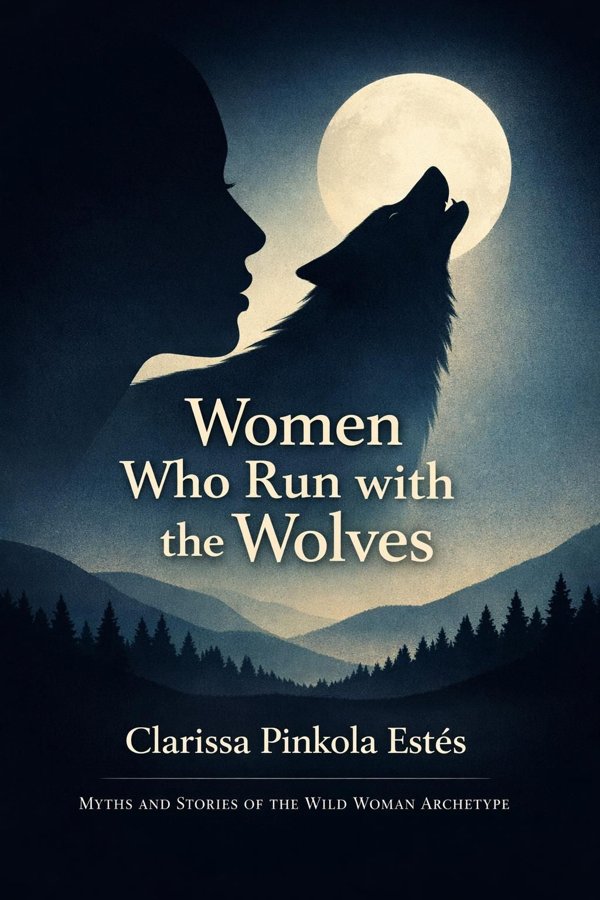
When I speak of the Wild Woman, I am invoking an ancient, instinctual force that lies beneath the surface of every woman’s life. She is not a metaphor of rebellion nor a myth for escapism, but a living archetype—the pulse that connects you with the deep feminine knowing, the wolfish intuition that once guided all women before civilization taught them to forget their own scent. *Women Who Run With the Wolves* is my invitation to remember.
Imagine standing at the edge of a forest at night, hearing a distant howl. You might feel both fear and longing, because that sound belongs to a part of you that has waited too long to return home. The Wild Woman archetype represents that home—the psychic territory of instinct, creativity, and knowing. Every folk tale and myth I explore in this book offers a map leading back to her.
Yet her presence has been heavily suppressed. Modern culture teaches women to be nice, efficient, and productive but not wild, instinctual, or deeply creative. This suppression is not accidental—it serves the smooth functioning of society and commercial life, which depends on women disconnecting from their untamed source of wisdom. The Wild Woman is unpredictable; she loves fiercely, hungers deeply, creates for the sake of creation. When disconnected from her, a woman begins to live a half-life, one that feels domesticated, obedient, and hollow.
Through myths, legends, and fairy tales from many cultures, I explore how women can reawaken this force within themselves. Each story—whether it is *La Loba*, who sings bones back to life, or *Vasalisa*, who learns to trust her intuition—serves as a psychological compass. These tales were never mere entertainment; they were lessons encoded in the language of symbols. They carry instructions on how to survive psychic starvation, how to heal the creative soul, how to honor grief and death so that new life may begin.
This is not a book of quick answers but of deep remembering. You will feel the dust of forgotten paths and the scent of rain on wild earth. You will meet women in stories who lost their hands, their shoes, their voices—and through them, you will learn how to reclaim your own lost parts. What’s in it for you? The remembrance that your own instincts are sacred, that within you lives a bone collector, a truth teller, a creator who does not ask permission to be whole.
As you read, consider yourself a participant in an ancient gathering where wisdom is transmitted through story. Every chapter is an act of homecoming, and by the end, you will no longer simply read about the Wild Woman—you will hear her breathing within you.
Who Should Read Women Who Run with the Wolves?
This book is perfect for anyone interested in psychology and looking to gain actionable insights in a short read. Whether you're a student, professional, or lifelong learner, the key ideas from Women Who Run with the Wolves by Clarissa Pinkola Estés will help you think differently.
- ✓Readers who enjoy psychology and want practical takeaways
- ✓Professionals looking to apply new ideas to their work and life
- ✓Anyone who wants the core insights of Women Who Run with the Wolves in just 10 minutes
Want the full summary?
Get instant access to this book summary and 100K+ more with Fizz Moment.
Get Free SummaryAvailable on App Store • Free to download
Key Chapters
La Loba, or The Wolf Woman, is the mythic guardian of women’s wild souls. She wanders the desert, collecting bones—the remnants of what has been forgotten or dismembered—and when she has gathered enough, she sings over them. With her song, the skeleton begins to flesh out, to rise, and at the end of the incantation, the creature becomes a living wolf again, running free into the wilderness.
This story is the central metaphor for the entire book. Every woman must at some point become La Loba. The bones represent the essence of female instinct that has been buried under the demands of conformity or trauma. Singing over the bones is the act of remembering—remembering through dream, through poetry, through love, through art. When a woman sings, she invokes creation from death; she begins to breathe life into what she thought was lost.
This reclamation does not occur only in moments of inspiration. Sometimes it happens through grief, through facing the silence within one’s life. The desert in which La Loba works is a psychological space—barren yet full of possibilities. There, stripped from all distractions, one must do the work that cannot be done elsewhere: gathering memory, facing pain, and finding the voice that knows how to sing. To live the La Loba myth is to stop waiting for permission and begin the sacred work of resurrection.
In our world, where the feminine has been commodified and sanitized, to sing bones back to life is a radical act. It restores instinct, passion, and ethical clarity. Once the Wild Woman is revived, she cannot be tamed again; she will insist that we honor cycles of life and death, creativity and rest, union and solitude. That is the rhythm of authentic living, and it begins with the courage to pick up the bones and sing.
Every woman carries within her psyche a hidden predator—a destructive force that seeks to silence intuition and curiosity. The Bluebeard tale recounts this archetypal danger: a wealthy man with a forbidden room that hides the bodies of his murdered wives. His new bride, despite his warnings, opens the door and discovers the truth, her life saved only through her quick use of instinct.
Bluebeard is not simply an external villain; he represents the inner pathology that kills the knowing self. That voice which says, 'Don’t look, don’t question,' is Bluebeard speaking. When a woman is uninitiated—when she has not yet learned to trust her inner knowing—she becomes naive, susceptible to seduction by forces that promise safety while demanding silence.
The forbidden room symbolizes the unconscious. Opening it is essential, though it often brings terror. This act of seeing what is hidden marks the difference between a woman who remains in the fairy tale of obedience and one who enters the mythic journey of truth. The key she uses is symbolic of female knowing—a psychic instinct that cannot be destroyed. Even though it bleeds, it continues to reveal.
In everyday life, Bluebeard shows up as self-doubt, as abusive relationships, as cultural norms that keep women from their creative authority. To survive Bluebeard, a woman must not only open the room but also call her inner allies—the voices of wild sisterhood, wisdom, and courage—to confront him. Only through confrontation does transformation occur, freeing her to live with awareness instead of illusion.
Thus, the Bluebeard story is not about fear—it is about vision. The Wild Woman within teaches that danger recognized is danger diminished. Each time a woman listens to her intuition, refuses repression, and sees with unflinching clarity, she becomes further initiated into her own power to know.
+ 11 more chapters — available in the FizzRead app
All Chapters in Women Who Run with the Wolves
About the Author
Clarissa Pinkola Estés is the author of Women Who Run with the Wolves.
Get This Summary in Your Preferred Format
Read or listen to the Women Who Run with the Wolves summary by Clarissa Pinkola Estés anytime, anywhere. FizzRead offers multiple formats so you can learn on your terms — all free.
Available formats: App · Audio · PDF · EPUB — All included free with FizzRead
Download Women Who Run with the Wolves PDF and EPUB Summary
Key Quotes from Women Who Run with the Wolves
“La Loba, or The Wolf Woman, is the mythic guardian of women’s wild souls.”
“Every woman carries within her psyche a hidden predator—a destructive force that seeks to silence intuition and curiosity.”
Frequently Asked Questions about Women Who Run with the Wolves
Women Who Run with the Wolves by Clarissa Pinkola Estés is a psychology book that explores key ideas across 13 chapters. When I speak of the Wild Woman, I am invoking an ancient, instinctual force that lies beneath the surface of every woman’s life. She is not a metaphor of rebellion nor a myth for escapism, but a living archetype—the pulse that connects you with the deep feminine knowing, the wolfish intuition that once guided all women before civilization taught them to forget their own scent. *Women Who Run With the Wolves* is my invitation to remember. Imagine standing at the edge of a forest at night, hearing a distant howl. You might feel both fear and longing, because that sound belongs to a part of you that has waited too long to return home. The Wild Woman archetype represents that home—the psychic territory of instinct, creativity, and knowing. Every folk tale and myth I explore in this book offers a map leading back to her. Yet her presence has been heavily suppressed. Modern culture teaches women to be nice, efficient, and productive but not wild, instinctual, or deeply creative. This suppression is not accidental—it serves the smooth functioning of society and commercial life, which depends on women disconnecting from their untamed source of wisdom. The Wild Woman is unpredictable; she loves fiercely, hungers deeply, creates for the sake of creation. When disconnected from her, a woman begins to live a half-life, one that feels domesticated, obedient, and hollow. Through myths, legends, and fairy tales from many cultures, I explore how women can reawaken this force within themselves. Each story—whether it is *La Loba*, who sings bones back to life, or *Vasalisa*, who learns to trust her intuition—serves as a psychological compass. These tales were never mere entertainment; they were lessons encoded in the language of symbols. They carry instructions on how to survive psychic starvation, how to heal the creative soul, how to honor grief and death so that new life may begin. This is not a book of quick answers but of deep remembering. You will feel the dust of forgotten paths and the scent of rain on wild earth. You will meet women in stories who lost their hands, their shoes, their voices—and through them, you will learn how to reclaim your own lost parts. What’s in it for you? The remembrance that your own instincts are sacred, that within you lives a bone collector, a truth teller, a creator who does not ask permission to be whole. As you read, consider yourself a participant in an ancient gathering where wisdom is transmitted through story. Every chapter is an act of homecoming, and by the end, you will no longer simply read about the Wild Woman—you will hear her breathing within you.
Compare Women Who Run with the Wolves


You Might Also Like

Featured In
Browse by Category
Ready to read Women Who Run with the Wolves?
Get the full summary and 100K+ more books with Fizz Moment.