
Best Productivity Books — Work Smarter, Not Harder
Stop working harder and start working smarter. These productivity books teach you how to focus, eliminate distractions, and get more done in less time.
 10 min read
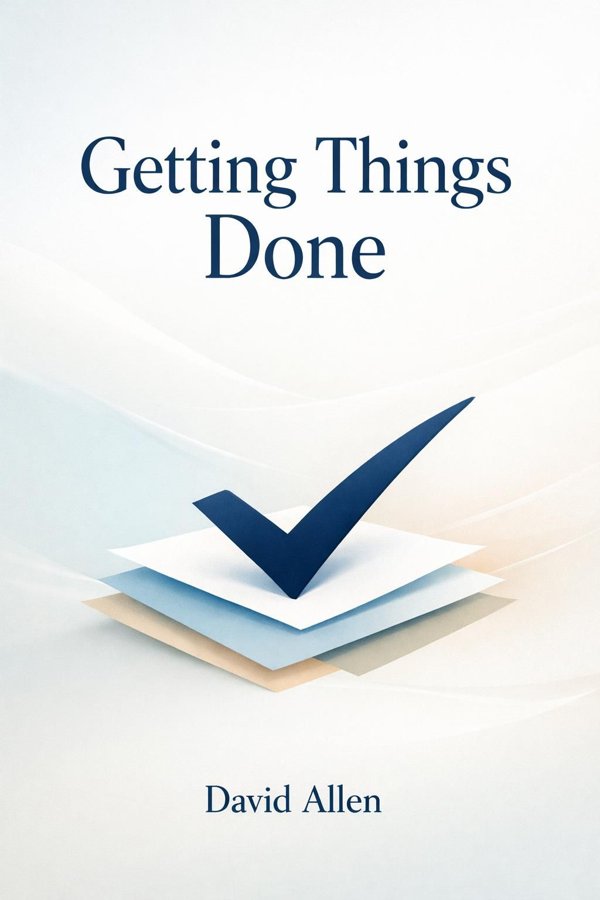
Getting Things Done
by David Allen
What if productivity had less to do with working harder and more to do with thinking more clearly? That’s the promise at the heart of Getting Things Done, David Allen’s landmark guide to managing the endless stream of tasks, ideas, obligations, and interruptions that define modern life. Rather than offering motivational slogans or a stricter to-do list, Allen presents a practical system for getting everything out of your head and into a trusted process. The result is not just higher output, but lower stress, better focus, and a greater sense of control. This book matters because most people don’t struggle from laziness—they struggle from overload. Emails pile up, projects multiply, and even small commitments create mental drag when they remain undefined. Allen’s GTD method solves that problem by teaching readers how to capture, clarify, organize, reflect, and engage with their work in a way that restores mental space. As an American productivity consultant, author, and founder of the David Allen Company, Allen has spent decades helping individuals and organizations build better workflow habits. Getting Things Done became a global productivity classic because it addresses a timeless challenge: how to stay clear, calm, and effective in a world that never stops demanding your attention.
Key Takeaways
- 1The Mind Like Water Principle — The phrase “mind like water” captures the ultimate goal of the GTD method: responding to life appropriately, not reactiv…
- 2The Five Stages of Workflow — At the center of Getting Things Done is a workflow model built on five stages: capture, clarify, organize, reflect, and …
- 3Capturing Everything That Has Your Attention — Capture is the foundation of GTD because you cannot organize what you have not first collected. Allen argues that every …
 10 min read
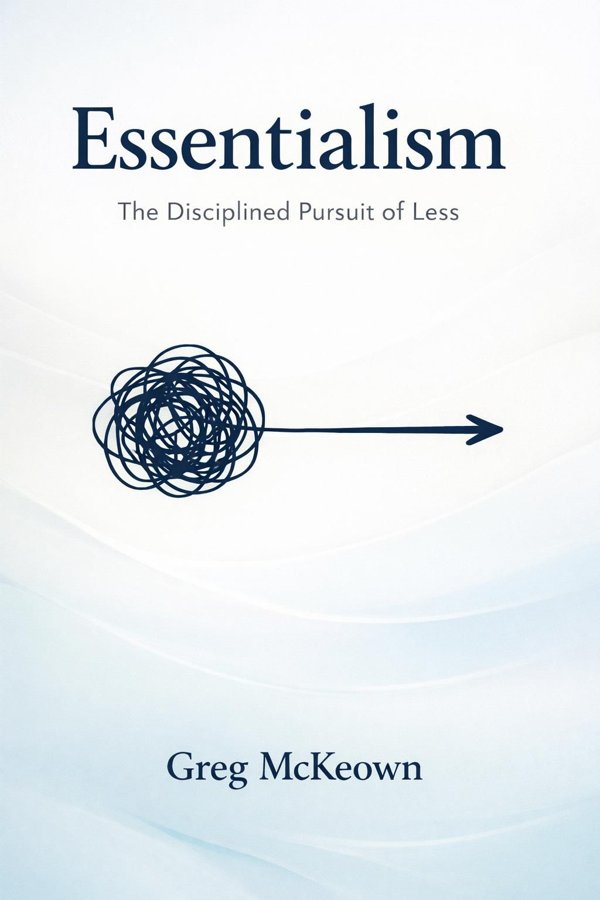
Essentialism
by Greg McKeown
Essentialism by Greg McKeown is a practical philosophy for anyone who feels trapped by constant demands, endless notifications, and the pressure to do everything at once. At its core, the book argues that success does not come from cramming more into our days; it comes from identifying the few things that matter most and giving them our fullest attention. McKeown calls this disciplined pursuit of less but better “Essentialism.” Rather than offering vague inspiration, he provides a clear framework for deciding what is truly important, eliminating what is not, and creating systems that make focused living possible. The book matters because modern life rewards responsiveness, busyness, and visible activity, even when those habits drain our energy and dilute our best work. McKeown, a leadership consultant and researcher who has advised major organizations and studied strategy and decision-making, writes with both credibility and clarity. Essentialism is especially valuable for professionals, leaders, creatives, and anyone who wants to stop living by default and start living by design.
Key Takeaways
- 1Choice Is Your Hidden Power — One of the most dangerous beliefs in modern life is the idea that we have no choice. We tell ourselves we have to attend…
- 2Discern the Vital Few Ruthlessly — If you try to make everything important, nothing truly is. A central principle of Essentialism is that only a few things…
- 3Trade-Offs Are the Price of Focus — Many people exhaust themselves trying to avoid trade-offs. They want career advancement without sacrifice, deep work wit…
 10 min read
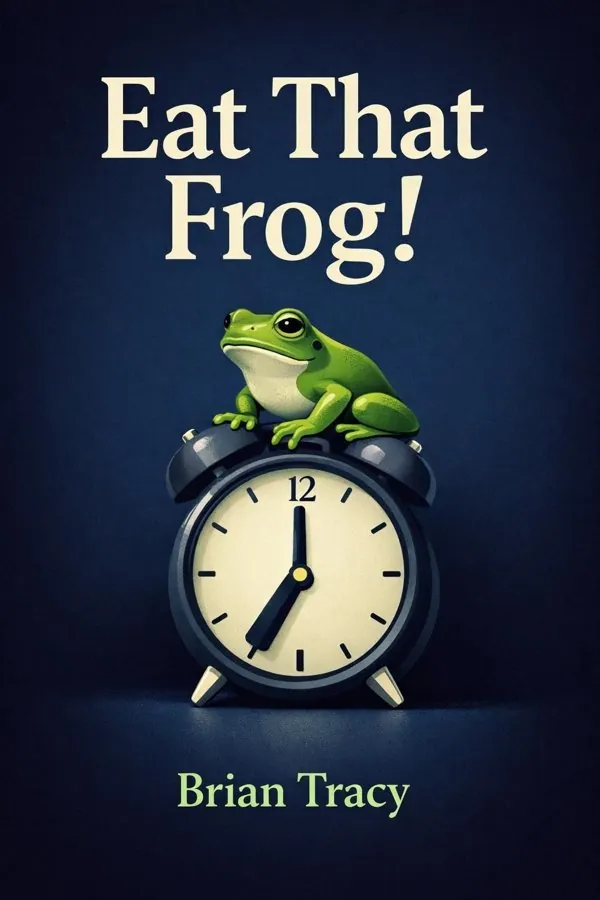
Eat That Frog
by Brian Tracy
Why do so many capable people stay busy all day yet make too little progress on the things that matter most? In Eat That Frog, Brian Tracy argues that the real problem is not a lack of time, but a lack of clarity, prioritization, and disciplined action. The book’s memorable metaphor comes from the idea that if your first task each morning is to eat a live frog, you can go through the rest of the day knowing the worst is behind you. In practical terms, the “frog” is your most important, highest-impact task—the one you are most tempted to delay. Tracy turns this simple idea into a complete system for beating procrastination. Drawing on decades of work as a speaker, business trainer, and self-development author, he offers direct, actionable methods for setting goals, planning days, choosing priorities, and staying focused in a world full of distractions. The book matters because procrastination is rarely just a time-management issue; it is often a hidden barrier to success, confidence, and peace of mind. For anyone overwhelmed by competing demands or stuck in cycles of avoidance, Eat That Frog provides a practical toolkit for getting meaningful work done consistently.
Key Takeaways
- 1Clarify Your Goals Before Taking Action — Productivity begins long before you start working; it begins the moment you decide what truly matters. One of Brian Trac…
- 2Plan Your Day Before It Begins — A day without a plan rarely becomes a productive day. Tracy emphasizes that every minute spent planning can save many mo…
- 3Set Priorities With The ABCDE Method — Not all tasks deserve equal treatment, yet many people organize their days as if they do. Tracy’s ABCDE Method is a stra…
 10 min read
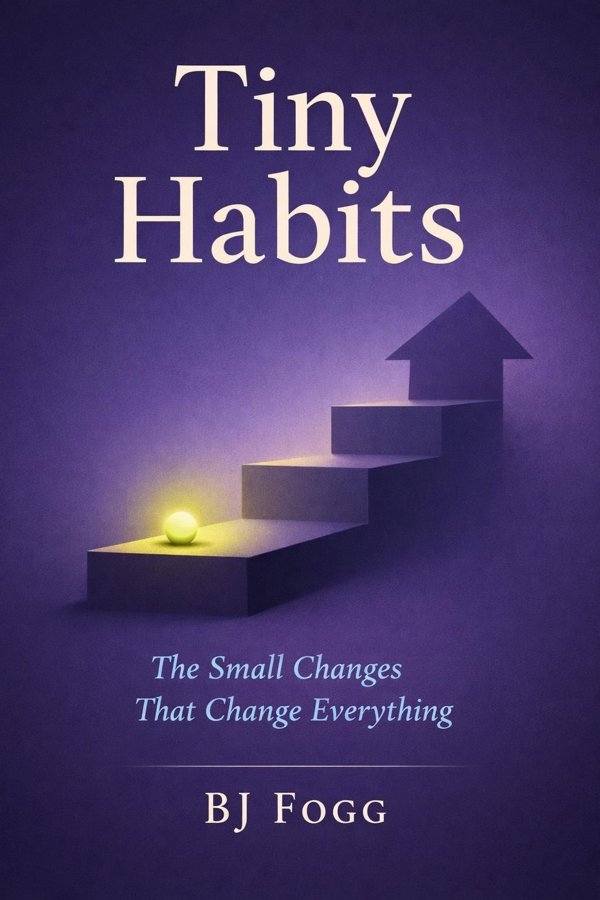
Tiny Habits
by BJ Fogg
Tiny Habits argues that lasting personal change does not begin with willpower, guilt, or grand ambition. It begins with behaviors so small that they feel almost effortless. In this practical and research-based book, behavior scientist BJ Fogg explains why people often fail when they try to transform their lives through intensity alone, and why success becomes far more likely when new actions are simple, well-timed, and emotionally rewarding. Rather than asking readers to become more disciplined, Fogg shows them how to design habits that fit naturally into daily routines. Drawing on decades of work at Stanford University and his experience leading the Behavior Design Lab, Fogg offers a clear framework for understanding behavior and shaping it deliberately. His method centers on tiny actions, reliable prompts, and immediate celebration, creating a system that feels humane instead of punishing. The result is a book that replaces self-criticism with curiosity and practical design. For anyone who wants to exercise more, stress less, improve productivity, or break unhelpful routines, Tiny Habits provides a simple but powerful blueprint for change that can actually last.
Key Takeaways
- 1Behavior Happens When Three Things Align — Most people think behavior is driven mainly by motivation, but BJ Fogg’s central insight is that behavior happens only w…
- 2Start So Small You Cannot Fail — The fastest way to make change sustainable is often to make it almost laughably small. Fogg defines a tiny habit as a be…
- 3Emotions Create Habits Faster Than Repetition — A surprising lesson from Tiny Habits is that habits do not form simply because we repeat a behavior many times. They for…
 10 min read
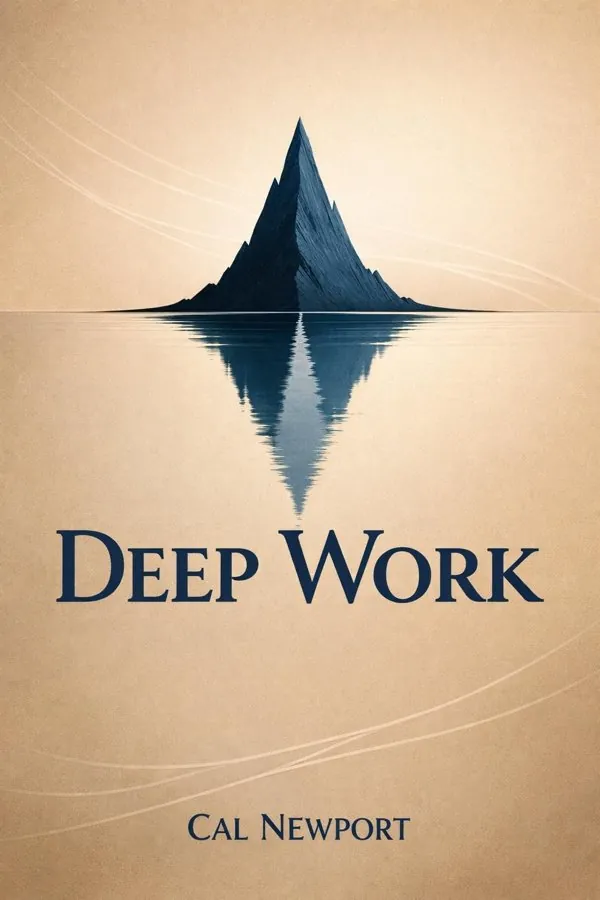
Deep Work
by Cal Newport
In a world ruled by notifications, open-plan offices, endless email threads, and the pressure to always appear available, the ability to focus has become both rare and incredibly valuable. Deep Work by Cal Newport argues that the people who thrive in today’s economy are not necessarily the busiest or the most connected, but the ones who can concentrate intensely on meaningful tasks without distraction. This book is about cultivating that increasingly uncommon skill and using it to produce better results in less time. Newport makes the case that deep, undistracted concentration is a superpower for the knowledge age. He contrasts it with “shallow work,” the reactive, fragmented activity that fills many calendars but creates little lasting value. Drawing from neuroscience, business, academic research, and real-world examples, he shows why focus matters, why it is so hard to maintain, and how anyone can train it. Cal Newport is particularly credible on this subject because he has built a career as a computer science professor, writer, and researcher while famously avoiding much of the digital noise that consumes modern workers. Deep Work is not just a theory of productivity. It is a practical philosophy for doing your best thinking in a distracted age.
Key Takeaways
- 1Focus Is the New Competitive Advantage — The modern economy rewards people who can learn hard things quickly and produce at an elite level, yet both abilities de…
- 2Shallow Work Feels Productive but Isn’t — One of the most dangerous illusions in modern work is that being active is the same as being effective. Newport warns th…
- 3Attention Must Be Trained Like a Muscle — Deep focus is not something you either naturally have or permanently lack. Newport argues that concentration is trainabl…
 10 min read
Make Time
by Jake Knapp
Modern life is designed to fragment attention. Email, meetings, social feeds, breaking news, and endless to-do lists keep us reactive, busy, and exhausted—yet strangely unsure whether we spent the day on what truly matters. In Make Time, Jake Knapp and John Zeratsky offer a practical alternative: instead of trying to do everything faster, choose what matters most today and deliberately create space for it. The book is not about becoming a productivity machine. It is about reclaiming your time, energy, and focus from systems that profit from distraction. Built around dozens of small, flexible tactics rather than one rigid method, Make Time helps readers design days with more intention. The authors draw on their experience at Google, YouTube, and Google Ventures, where they observed how technology shapes behavior and how even highly successful people can lose control of their attention. Their approach combines behavioral psychology, workplace insight, and real-world experimentation. The result is an accessible, highly usable guide for anyone who feels busy but unfulfilled and wants a more meaningful, sustainable way to work and live.
Key Takeaways
- 1Choose a Daily Highlight — Most people let their day get defined by urgency instead of importance. That is the central problem Make Time asks you t…
- 2Focus Requires Designed Attention — Attention does not remain intact by accident; it must be protected by design. One of Make Time’s most useful insights is…
- 3Defaults Quietly Control Your Day — A surprising amount of life runs on default settings. You check email when you wake up because that is what you always d…
 10 min read
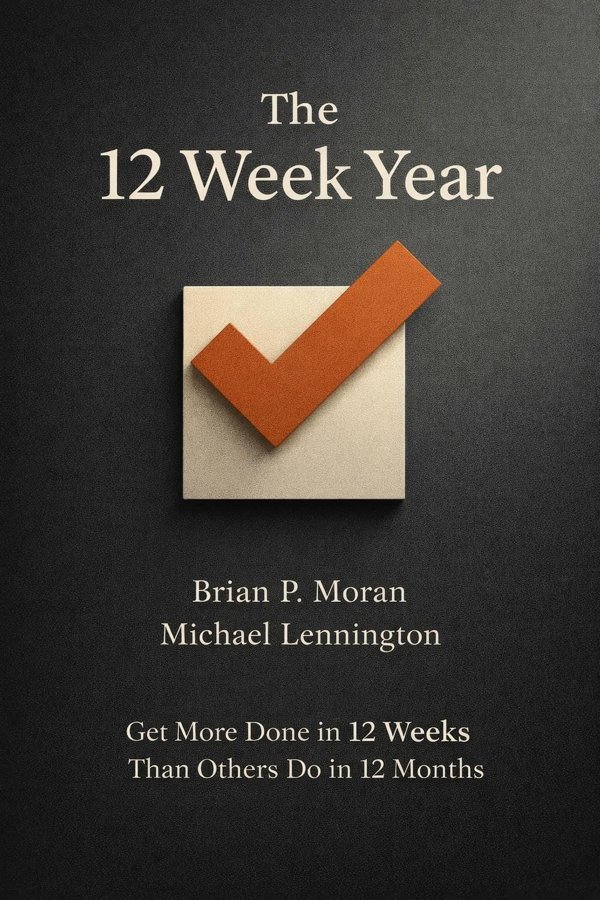
The 12 Week Year
by Brian Moran
The 12 Week Year is a practical productivity classic that argues most people do not fail because they lack talent or ambition—they fail because they operate inside a time system that encourages delay. Brian Moran and Michael Lennington challenge the familiar rhythm of annual planning and replace it with a far tighter execution cycle: 12 weeks. Their central idea is simple but powerful. When a year feels long, people postpone important work, overestimate what they can do later, and lose focus. But when the horizon shrinks to 12 weeks, priorities sharpen, urgency rises, and execution improves. What makes this book matter is that it does not stop at motivation. It offers a full operating system for turning vision into results through clear goals, weekly planning, scorekeeping, and accountability. Moran writes from deep experience as a performance consultant helping leaders and organizations improve execution, and that practical background gives the book its credibility. This is not theory for its own sake. It is a repeatable method for anyone who wants to accomplish more in less time, whether in business, health, sales, leadership, or personal growth.
Key Takeaways
- 1Escaping the Trap of Annual Goal-Setting — A year is long enough to make almost any goal feel comfortably distant. That distance is the hidden reason so many well-…
- 2Vision Gives Discipline a Strong Why — People rarely sustain difficult habits for goals they do not deeply care about. That is why Moran insists that execution…
- 3Great Execution Starts With Fewer Priorities — Most productivity problems are not caused by laziness; they are caused by dilution. People spread their energy across to…
 10 min read
Lean In
by Sheryl Sandberg
Lean In is Sheryl Sandberg’s influential call for women to pursue leadership with greater confidence, ambition, and self-belief while also challenging the systems that hold them back. Part memoir, part workplace analysis, and part practical guide, the book explores why women remain underrepresented at the top of organizations despite decades of progress. Sandberg argues that external barriers such as bias, unequal expectations at home, and rigid workplace structures matter deeply—but so do the internal habits that cause many women to underestimate their abilities, hold back from opportunities, or leave before they need to. What makes the book enduring is its mix of research, personal stories, and actionable advice on negotiation, mentorship, career choices, and partnership at home. Sandberg writes from unusual authority: she served as Chief Operating Officer of Meta (formerly Facebook), previously worked at Google, and held roles at the U.S. Treasury. Her experience at the highest levels of business gives her perspective, but the book’s real power lies in how it invites readers to examine everyday decisions. Lean In matters because it reframes leadership not as a personality trait, but as a practice of showing up fully.
Key Takeaways
- 1Ambition Often Shrinks Before Opportunity — One of the book’s most striking insights is that many talented women do not wait to be pushed back by the workplace—they…
- 2The Leadership Gap Starts With Belief — A difficult truth runs through Lean In: the gap between women and men in leadership is not explained by ability alone, b…
- 3Sit at the Table, Not the Edges — A powerful metaphor in Lean In is Sandberg’s advice for women to literally and figuratively sit at the table. Her observ…
 10 min read
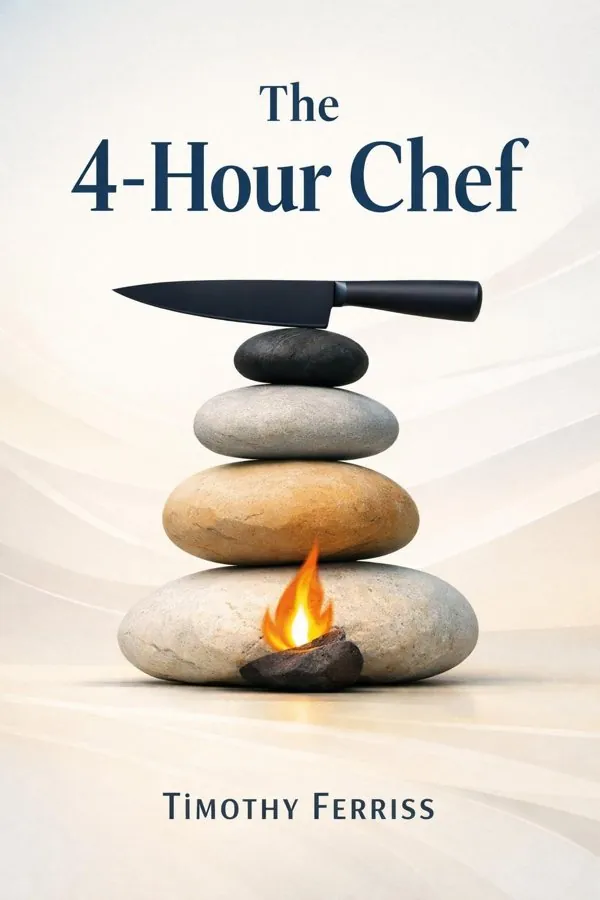
The 4-Hour Workweek
by Tim Ferriss
What if the real goal of work were not to fill your calendar, but to fund your freedom? In The 4-Hour Workweek, Tim Ferriss challenges one of modern life’s most persistent assumptions: that success must come from long hours, delayed gratification, and a steady climb toward retirement. Instead, he argues for “lifestyle design,” a way of structuring income, time, and mobility so you can enjoy life now rather than someday. The book blends productivity strategy, entrepreneurship advice, negotiation tactics, and unconventional career thinking into a blueprint for escaping the 9-to-5 treadmill. Ferriss explores how to eliminate low-value tasks, automate income through lean businesses, outsource routine work, and create the freedom to travel or pursue meaningful projects. Whether or not readers literally work four hours a week, the book matters because it reframes the purpose of work itself. Ferriss writes with the authority of someone who tested these ideas in his own business, transforming burnout into a highly mobile, efficient lifestyle. The result is a provocative guide for anyone who wants more results, more control, and far more life outside work.
Key Takeaways
- 1Redefine Success Through Lifestyle Design — Most people never question the script they have inherited: work hard for decades, save aggressively, retire late, and on…
- 2Fear-Setting Beats Goal-Setting — People are often less trapped by reality than by vague anxiety. Ferriss introduces one of the book’s most memorable tool…
- 3Eliminate Before You Try to Optimize — Being busy is often a form of avoidance disguised as virtue. Ferriss argues that most productivity advice starts too lat…
 10 min read
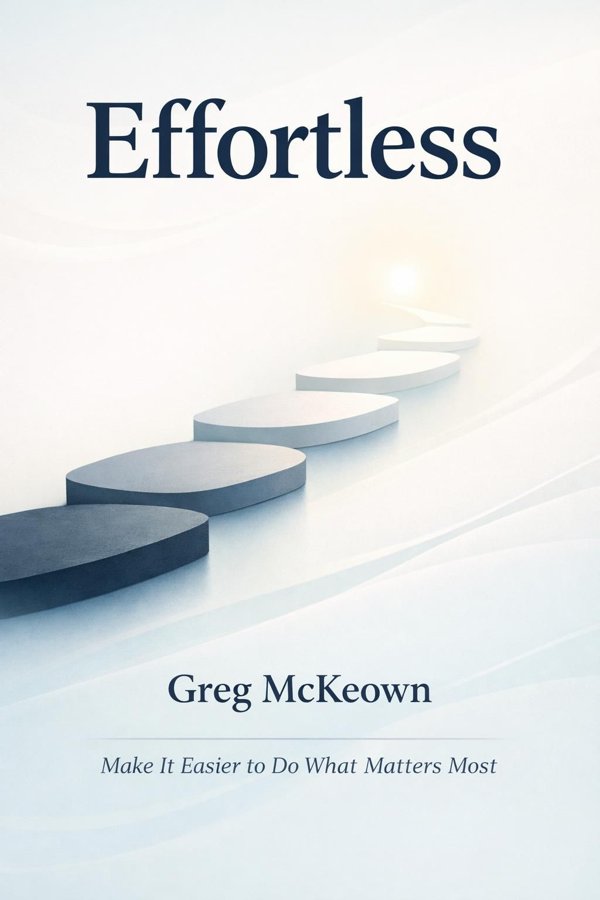
Effortless
by Greg McKeown
What if the path to meaningful achievement did not require constant strain? In Effortless, Greg McKeown challenges one of modern productivity’s most deeply held assumptions: that important work must be difficult, draining, and relentless. Instead, he argues that once we have identified what truly matters, the next step is to make it easier to do. The goal is not laziness or lower standards, but a smarter, more sustainable way of operating—one that reduces friction, simplifies decisions, and creates systems that allow progress to happen with less stress. McKeown is uniquely qualified to make this argument. Best known for Essentialism, his influential book on focusing on the vital few instead of the trivial many, he has spent years helping leaders, teams, and individuals work with greater clarity. In Effortless, he goes one step further: choosing the right things is not enough if those things are still approached in the hardest possible way. This book matters because burnout has become normalized. McKeown offers a practical alternative—one that helps readers produce high-quality results, preserve energy, and make consistency easier in work, relationships, and everyday life.
Key Takeaways
- 1Effortless State Begins With Inner Ease — The hardest part of important work is often not the work itself, but the burdened state from which we try to do it. Greg…
- 2Simplify Before You Intensify Your Effort — When something matters, our instinct is usually to try harder. McKeown invites us to ask a better question: can this be …
- 3Effortless Action Means Progress Without Struggle — Many people have been taught to treat struggle as proof of seriousness. If the process feels hard, we assume we must be …
 10 min read
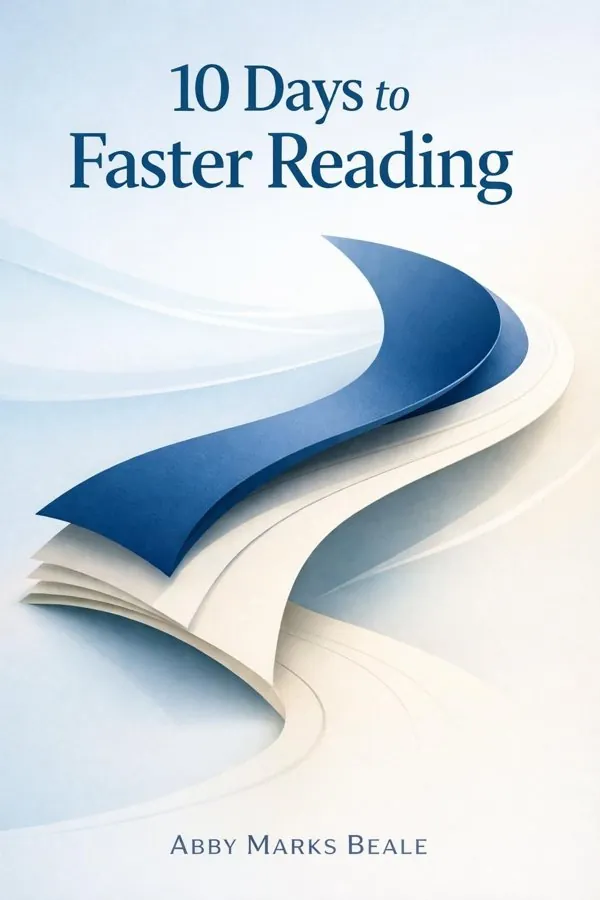
10 Days to Faster Reading
by Abby Marks Beale
Most people assume that reading speed is fixed, as if it were a natural limit rather than a trainable skill. Abby Marks Beale challenges that belief in 10 Days to Faster Reading, a practical guide designed to help readers improve both speed and comprehension through focused daily practice. Rather than promoting gimmicks or unrealistic shortcuts, the book explains why many adults read inefficiently and how small adjustments in eye movement, attention, and reading strategy can produce dramatic gains. What makes this book especially valuable is its emphasis on purpose. Beale shows that faster reading is not about racing through every page at the same pace. It is about choosing the right approach for the material in front of you, whether you are reviewing email, studying a report, scanning research, or reading for learning. Her methods are grounded in years of teaching professionals, students, and lifelong learners how to manage information overload more effectively. In a world where reading demands are constant and time is limited, this book matters because it turns reading from a passive habit into an intentional productivity skill. It offers a realistic system for anyone who wants to read smarter, not just faster.
Key Takeaways
- 1Assess Habits Before Trying to Read Faster — The biggest barrier to faster reading is often not a lack of ability but a pile of invisible habits that quietly slow yo…
- 2Train Your Eyes to Capture More — Reading feels continuous, but your eyes do not move smoothly across a line of text. They stop, jump, stop again, and eac…
- 3Reduce Subvocalization with Visual Thinking — A major hidden drag on reading speed is subvocalization, the habit of silently saying words in your head as you read the…
 10 min read
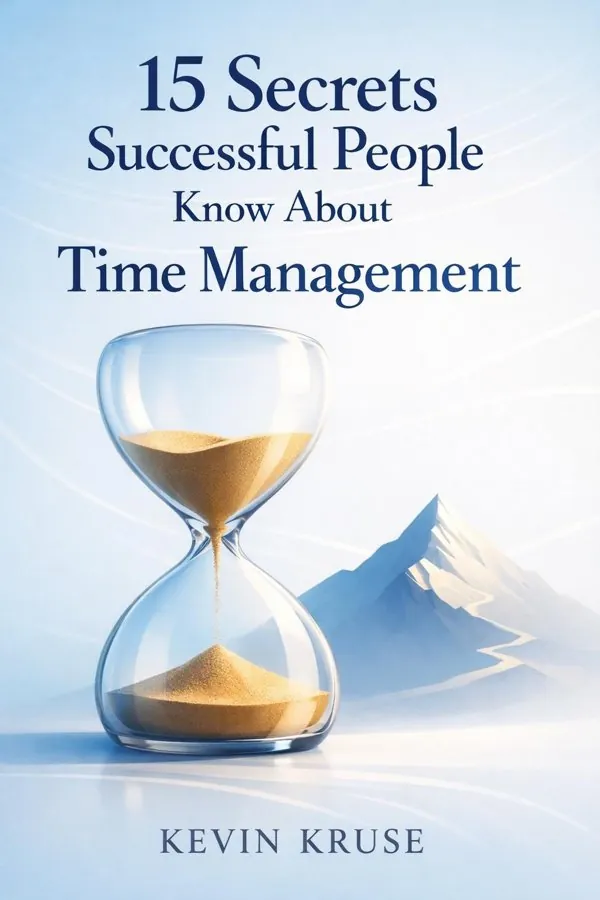
15 Secrets Successful People Know About Time Management: The Key to Achieving Extraordinary Results
by Kevin Kruse
Based on interviews with hundreds of self-made millionaires, entrepreneurs, and Olympic athletes, this book reveals 15 practical strategies for mastering time management. Kevin Kruse distills insights from high achievers into actionable habits that help readers focus on priorities, eliminate distractions, and achieve more in less time.
Key Takeaways
- 1Secret 1 – Time is Your Most Valuable and Scarce Resource — Every successful person I interviewed began with the same premise: time—not money—is the ultimate currency. Money lost c…
- 2Secret 2 – Identify Your Most Important Task (MIT) — Every day presents you with countless things to do, but only one task will create disproportionate impact. I call it you…
- 3Secret 3 – Work from Your Calendar, Not a To-Do List
 10 min read
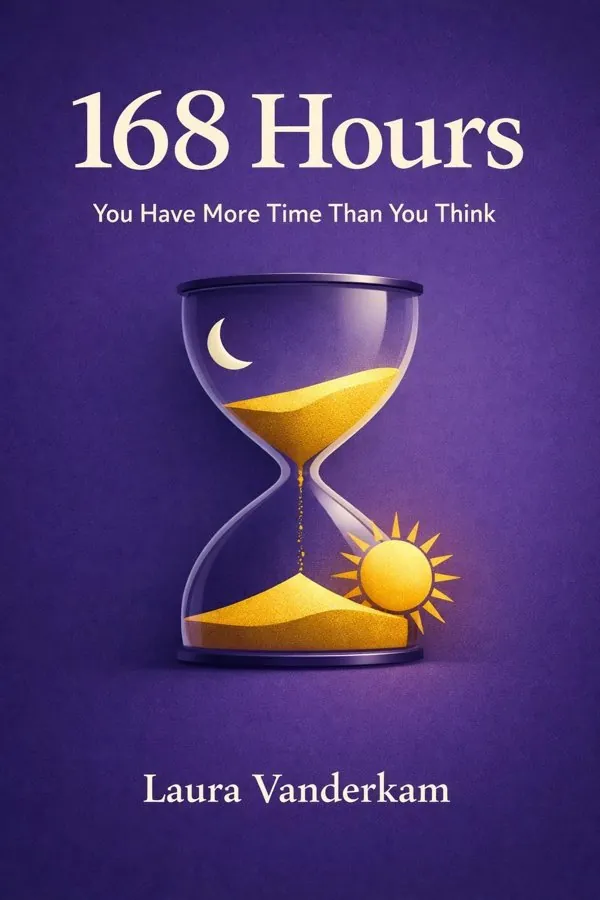
168 Hours: You Have More Time Than You Think
by Laura Vanderkam
In this practical and inspiring guide, Laura Vanderkam shows readers how to make the most of their 168 hours each week. Through real-life examples and research, she demonstrates that by prioritizing what truly matters, anyone can find time for work, family, and personal fulfillment. The book challenges common assumptions about busyness and offers strategies for time management and productivity.
Key Takeaways
- 1Reframing Time — It all begins with changing the way we think about time. We often talk about 'spending' time, as though it were a scarce…
- 2Identifying Priorities — When people tell me they feel too busy, what they often mean is that their schedules are filled with activities that don…
- 3The Myth of Busyness
 10 min read
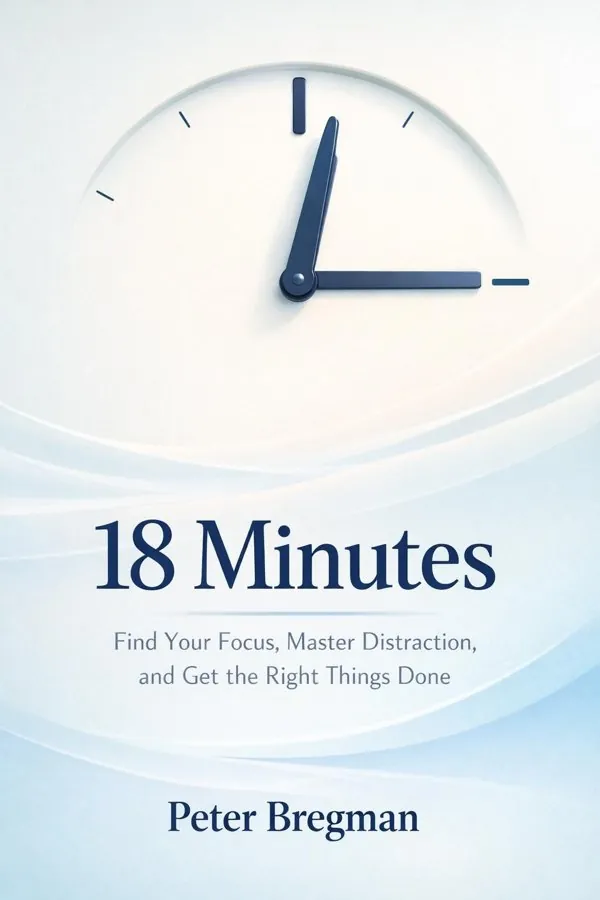
18 Minutes: Find Your Focus, Master Distraction, and Get the Right Things Done
by Peter Bregman
In 18 Minutes, Peter Bregman presents a practical guide to managing time and attention in a world full of distractions. Drawing on his experience as a leadership consultant and his popular Harvard Business Review columns, Bregman outlines a system for focusing on what truly matters each day, season, and year. The book combines humor, insight, and actionable strategies to help readers achieve meaningful productivity and success.
Key Takeaways
- 1The Myth of Getting Everything Done — One of the first truths I realized when working with executives and high-achievers was this: you will never get everythi…
- 2The Four Elements of Focus — Before designing your day, you must understand who you are and what you want. Focus begins with self-awareness. I frame …
- 3Creating an Annual Focus
 10 min read
A Minute to Think: Reclaim Creativity, Conquer Busyness, and Do Your Best Work
by Juliet Funt
In 'A Minute to Think', Juliet Funt explores how modern professionals can reclaim time and mental space in an age of constant busyness. Drawing on research and corporate experience, she introduces the concept of 'white space'—intentional pauses that allow for reflection, creativity, and better decision-making. The book provides practical strategies for reducing overload, improving focus, and fostering innovation in both personal and professional life.
Key Takeaways
- 1Understanding the Concept of White Space — When I first began talking about white space with executives and organizations, the idea struck them as almost revolutio…
- 2The Costs of Constant Activity and Digital Overload — Every beep, ping, and meeting demands a slice of our mind. Over time, this fragmentation erodes depth. We multitask to a…
- 3Recognizing and Reducing the Thieves of Time
Want the full summary?
Get instant access to this book summary and 100K+ more with Fizz Moment.
Get Free SummaryAvailable on App Store • Free to download
About This List
Stop working harder and start working smarter. These productivity books teach you how to focus, eliminate distractions, and get more done in less time.
This list features 15 carefully selected books. With FizzRead, you can read AI-powered summaries of each book in just 15 minutes. Get the key takeaways and start applying the insights immediately.
Ready to start reading?
Get instant access to all 15 book summaries and 100K+ more with FizzRead.