
Inside Your Mind: Psychology Books That Change Everything
Explore the fascinating world of human behavior and decision-making with these essential psychology books. Understanding how our minds work is the first step to personal growth and better relationships.
 10 min read
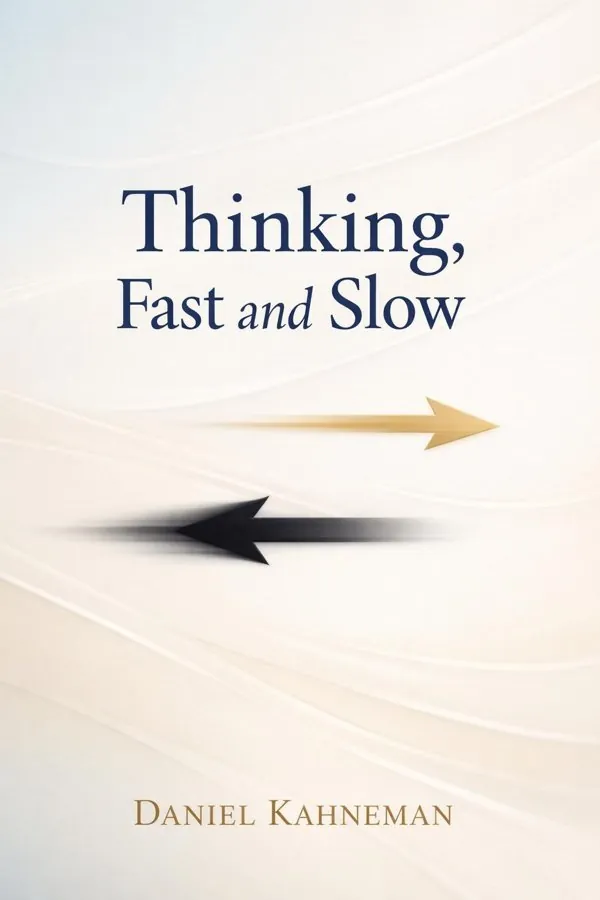
Thinking Fast and Slow
by Daniel Kahneman
Thinking Fast and Slow is one of the most influential books ever written about how the human mind works. In it, Daniel Kahneman distills decades of groundbreaking research in psychology and behavioral economics into a practical framework for understanding why people make smart decisions in some situations and surprisingly poor ones in others. His central insight is that our thinking is shaped by two systems: one that is fast, intuitive, and automatic, and another that is slow, effortful, and analytical. Most of the time, these systems cooperate efficiently. But just as often, the quick judgments of the mind lead us into predictable errors. What makes this book so powerful is that it changes how you see everyday life. From investing and hiring to relationships, planning, medicine, and public policy, Kahneman shows how biases quietly shape choices we assume are rational. He writes with the authority of a Nobel Prize-winning researcher whose work, much of it developed with Amos Tversky, transformed our understanding of judgment under uncertainty. This is not only a book about mistakes; it is a guide to better thinking, wiser decisions, and greater humility about the limits of human reason.
Key Takeaways
- 1The Two Systems That Shape Thought — Most of what you think feels deliberate, but much of it happens automatically. Kahneman’s most famous contribution is th…
- 2Heuristics Make Judgment Efficient and Flawed — The mind is built to simplify, not to calculate perfectly. To navigate uncertainty, we rely on heuristics, mental shortc…
- 3Confidence Often Exceeds What We Know — We are far better at creating explanations than at recognizing our ignorance. Kahneman shows that overconfidence is one …
 10 min read
Think Again
by Adam Grant
In this book, organizational psychologist Adam Grant explores the importance of rethinking and unlearning in a rapidly changing world. He argues that intelligence is not just about thinking and learning but also about the ability to question one’s own beliefs and update them when presented with new evidence. Through engaging research and stories, Grant shows how individuals and organizations can benefit from cultivating mental flexibility and intellectual humility.
Key Takeaways
- 1Part I – Individual Rethinking — At the heart of individual rethinking lies an uncomfortable truth: we love our own ideas more than we love truth itself.…
- 2The Joy of Being Wrong — If individual rethinking begins with humility, it flourishes through the joy of being wrong. The phrase may sound parado…
 10 min read
The Psychology of Money
by Morgan Housel
Money is often treated as a math problem, but Morgan Housel argues that it is really a behavior problem. In The Psychology of Money, he explores how wealth, spending, saving, risk, and happiness are shaped less by spreadsheets and more by emotion, ego, fear, luck, and personal history. The book explains why smart people can make poor financial decisions, why average people can build remarkable wealth, and why doing well with money has more to do with temperament than raw intelligence. Rather than offering complicated formulas or market predictions, Housel focuses on the habits and mindsets that drive long-term financial success. His lessons are practical, memorable, and rooted in stories from investors, business leaders, and everyday people. As a respected financial writer and former columnist for The Wall Street Journal and The Motley Fool, Housel brings both credibility and clarity to the subject. This book matters because it helps readers build a healthier relationship with money, make better decisions under uncertainty, and define success on their own terms.
Key Takeaways
- 1Money Decisions Are Driven by Behavior — One of the most important truths about money is that people do not make financial decisions on spreadsheets alone. They …
- 2Compounding Rewards Patience More Than Brilliance — The most extraordinary results in finance often come from ordinary actions repeated for a very long time. Housel emphasi…
- 3Saving Gives Power and Peace — Many people think of saving as delayed consumption, but Housel reframes it as a source of control, flexibility, and emot…
 10 min read
Sapiens
by Yuval Noah Harari
Sapiens: A Brief History of Humankind is an ambitious, big-picture history of our species, tracing how Homo sapiens rose from an unremarkable African ape to the dominant force on Earth. Yuval Noah Harari combines history, biology, anthropology, economics, and philosophy to explain the turning points that transformed human life: the Cognitive Revolution, the Agricultural Revolution, and the Scientific Revolution. Rather than offering a narrow chronological account, he asks a deeper question: what made humans uniquely capable of building empires, religions, markets, and nations? Harari’s answer is both provocative and memorable: our greatest power lies in our ability to create and believe shared stories. These collective fictions—such as money, laws, gods, and states—allow strangers to cooperate on a massive scale. The book matters because it challenges comforting assumptions about progress, happiness, and civilization. It invites readers to see modern society not as inevitable, but as the result of historical choices, accidents, and myths. As a historian and public intellectual, Harari brings scholarly range and narrative clarity to one of the most compelling questions in human history: how did we become who we are?
Key Takeaways
- 1The Cognitive Revolution and Shared Imagination — Human dominance did not begin with stronger bodies, sharper teeth, or faster legs; it began with a new kind of mind. Aro…
- 2The Agricultural Revolution: Progress or Trap? — What if one of history’s greatest achievements was also one of its greatest mistakes? Harari provocatively argues that t…
- 3Myths Make Large Societies Possible — Civilization runs not only on roads, crops, and armies, but on ideas that exist because people collectively agree they d…
 10 min read
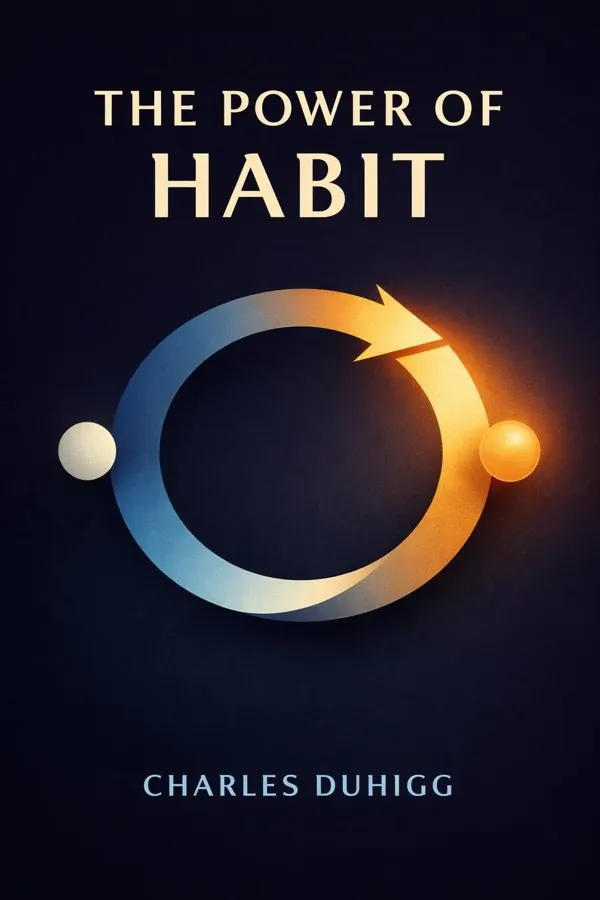
The Power of Habit
by Charles Duhigg
Why do some people effortlessly stick to exercise, save money, and build productive routines while others stay trapped in cycles they desperately want to change? In The Power of Habit, Charles Duhigg argues that the answer lies not mainly in willpower or motivation, but in the hidden patterns that shape behavior every day. Drawing on neuroscience, psychology, behavioral economics, and investigative journalism, he shows that habits govern much of individual life, organizational performance, and even social movements. Duhigg’s central insight is both simple and profound: habits operate through a loop of cue, routine, and reward. Once this loop is understood, behavior becomes less mysterious and more manageable. The book moves far beyond theory, using vivid stories about patients with memory loss, Olympic swimmers, corporate turnarounds, consumer marketing, and civil rights activism to show how habits are formed, reinforced, and changed. What makes this book matter is its practicality. It does not promise instant transformation, but it does offer a framework for lasting change. As a Pulitzer Prize-winning journalist, Duhigg brings credibility, clarity, and storytelling skill to a subject that affects health, work, leadership, relationships, and personal growth.
Key Takeaways
- 1The Habit Loop Shapes Daily Life — Much of what feels like conscious choice is actually automatic behavior running on a hidden script. Duhigg calls this sc…
- 2Change Happens Through Replacement, Not Erasure — People often fail to change because they try to destroy habits outright, when the more effective strategy is to replace …
- 3Cravings Are the Engine of Habits — A habit becomes powerful not when a reward arrives, but when the brain starts expecting it. Duhigg shows that craving si…
 10 min read
Atomic Habits
by James Clear
What if the quality of your life depends less on dramatic breakthroughs and more on the tiny actions you repeat every day? In Atomic Habits, James Clear argues that lasting transformation does not come from radical reinvention, but from small, consistent improvements that compound over time. The book explains how habits shape identity, influence performance, and quietly determine whether we move toward the future we want or drift away from it. Rather than relying on motivation alone, Clear shows how to design systems that make good behaviors easier and bad behaviors harder. The book matters because most people fail to change not because they lack ambition, but because they use strategies that fight human nature. Clear combines insights from psychology, neuroscience, behavioral economics, and real-world examples from sports, business, and personal development to create a practical framework anyone can apply. As a writer and speaker known for his work on habit formation and continuous improvement, he has helped millions of readers rethink productivity and self-discipline. Atomic Habits stands out because it turns behavior change into something concrete, manageable, and deeply empowering.
Key Takeaways
- 1Tiny changes create remarkable results — We tend to overestimate the importance of one big moment and underestimate the power of small daily improvements. One wo…
- 2Focus on systems, not goals — Goals set direction, but systems determine progress. That distinction changes everything. Most people think achievement …
- 3Identity drives lasting behavior change — The most durable habits are not built by forcing yourself to act differently for a few days. They are built by becoming …
 10 min read
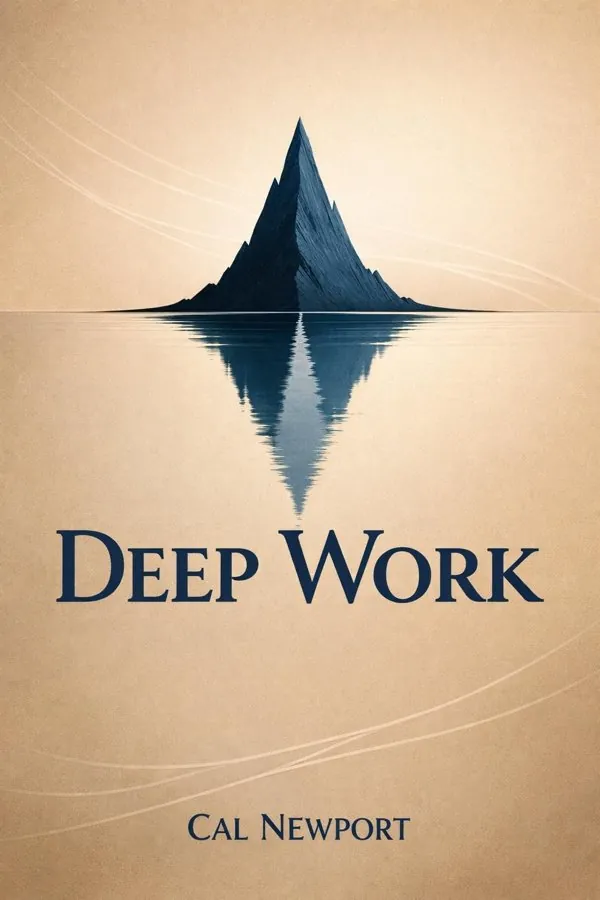
Deep Work
by Cal Newport
In a world ruled by notifications, open-plan offices, endless email threads, and the pressure to always appear available, the ability to focus has become both rare and incredibly valuable. Deep Work by Cal Newport argues that the people who thrive in today’s economy are not necessarily the busiest or the most connected, but the ones who can concentrate intensely on meaningful tasks without distraction. This book is about cultivating that increasingly uncommon skill and using it to produce better results in less time. Newport makes the case that deep, undistracted concentration is a superpower for the knowledge age. He contrasts it with “shallow work,” the reactive, fragmented activity that fills many calendars but creates little lasting value. Drawing from neuroscience, business, academic research, and real-world examples, he shows why focus matters, why it is so hard to maintain, and how anyone can train it. Cal Newport is particularly credible on this subject because he has built a career as a computer science professor, writer, and researcher while famously avoiding much of the digital noise that consumes modern workers. Deep Work is not just a theory of productivity. It is a practical philosophy for doing your best thinking in a distracted age.
Key Takeaways
- 1Focus Is the New Competitive Advantage — The modern economy rewards people who can learn hard things quickly and produce at an elite level, yet both abilities de…
- 2Shallow Work Feels Productive but Isn’t — One of the most dangerous illusions in modern work is that being active is the same as being effective. Newport warns th…
- 3Attention Must Be Trained Like a Muscle — Deep focus is not something you either naturally have or permanently lack. Newport argues that concentration is trainabl…
 10 min read
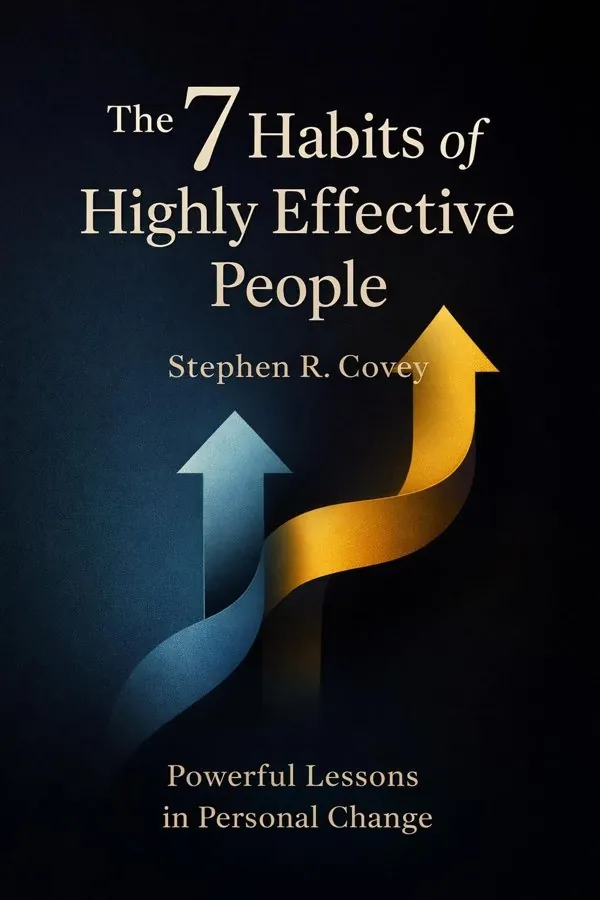
The 7 Habits of Highly Effective People
by Stephen R. Covey
What if lasting success has less to do with techniques and more to do with character? In The 7 Habits of Highly Effective People, Stephen R. Covey argues that real effectiveness begins inside out. Instead of offering quick fixes, motivational slogans, or productivity hacks, Covey presents a principle-centered approach to personal and professional growth. He explains that many people chase external success while neglecting the deeper habits of responsibility, integrity, discipline, empathy, and renewal that make success sustainable. First published in 1989, the book became one of the most influential self-help and leadership titles ever written because it speaks to a universal challenge: how to live with purpose while working well with others. Covey, a respected educator, leadership expert, and organizational consultant, draws on psychology, philosophy, and practical experience to show how enduring effectiveness comes from aligning behavior with timeless principles. His seven habits move from personal mastery to interpersonal effectiveness and finally to continuous self-renewal. The result is a framework that helps readers lead themselves better, improve relationships, make wiser decisions, and build a life guided by values rather than circumstance.
Key Takeaways
- 1Effectiveness Begins With Character — Many people spend years searching for better results while ignoring the beliefs and habits that produce those results in…
- 2Be Proactive and Own Your Response — The space between what happens to you and how you respond is where your freedom lives. That is the foundation of Habit 1…
- 3Begin With the End in Mind — It is easy to climb the ladder of success only to discover it was leaning against the wrong wall. Habit 2 asks readers t…
 10 min read
The Lean Startup
by Eric Ries
Most new ventures do not fail because their founders lack ambition, intelligence, or effort. They fail because they spend too long building products, features, and business plans based on assumptions instead of evidence. In The Lean Startup, Eric Ries offers a different path: treat entrepreneurship as a disciplined process of experimentation, learning, and adaptation. Rather than betting everything on a grand launch, Ries argues that successful innovators test ideas early, gather real customer feedback, and improve continuously. The book introduces a practical framework built around validated learning, minimum viable products, and the build-measure-learn loop, helping teams reduce waste and discover what customers actually value. Its relevance extends far beyond Silicon Valley. Whether you are launching a startup, leading innovation inside a large company, or developing a new service in a nonprofit, the principles apply wherever uncertainty is high. Ries writes with unusual authority because his ideas grew from hard experience as a founder and advisor. He combines startup scars, management thinking, and systems discipline into a methodology that has reshaped how modern businesses approach innovation.
Key Takeaways
- 1Entrepreneurs Exist Everywhere — The most dangerous myth about entrepreneurship is that it belongs only to hoodie-wearing founders in garages. Eric Ries …
- 2Lean Thinking Reduces Startup Waste — Waste in a startup is rarely obvious at first because it often looks like progress. Teams spend months refining business…
- 3Build, Measure, Learn Faster — Speed alone does not create successful startups; learning speed does. The core engine of The Lean Startup is the build-m…
 10 min read
Start With Why
by Simon Sinek
Why do some leaders attract fierce loyalty while others struggle to gain genuine commitment, even when they offer better products or more resources? In Start With Why, Simon Sinek argues that the answer lies not in what organizations do, but in the deeper purpose that drives them. The book introduces a simple but powerful framework for understanding influence: the most inspiring leaders and companies think, act, and communicate from the inside out. They begin with why—the belief, cause, or mission that gives meaning to everything else. Sinek shows that when people connect to a clear purpose, they are more likely to trust, follow, and stay loyal over time. This matters in business, leadership, marketing, and even personal decision-making, because lasting success rarely comes from manipulation alone. It comes from inspiration. Drawing on examples from companies like Apple and leaders like Martin Luther King Jr., Sinek blends psychology, strategy, and storytelling into a memorable argument about how great leadership works. His authority comes from years of studying leadership patterns and helping organizations build cultures rooted in purpose rather than mere performance.
Key Takeaways
- 1The Golden Circle: Why, How, What — Most organizations know what they do, and many can explain how they do it, but very few can clearly articulate why they …
- 2Manipulation Creates Sales, Not Loyalty — It is surprisingly easy to get people to act once; it is much harder to make them believe. That is the difference betwee…
- 3People Buy Why You Do It — Human decisions are less rational than we like to believe. We often explain our choices with logic after the fact, but t…
Want the full summary?
Get instant access to this book summary and 100K+ more with Fizz Moment.
Get Free SummaryAvailable on App Store • Free to download
About This List
Explore the fascinating world of human behavior and decision-making with these essential psychology books. Understanding how our minds work is the first step to personal growth and better relationships.
This list features 10 carefully selected books. With FizzRead, you can read AI-powered summaries of each book in just 15 minutes. Get the key takeaways and start applying the insights immediately.
Ready to start reading?
Get instant access to all 10 book summaries and 100K+ more with FizzRead.