
Good Energy: Summary & Key Insights
by Casey Means
 10 min10 chaptersAudio available
Key Takeaways from Good Energy
The book begins by clearing up a basic but crucial confusion: energy, power, and efficiency are not interchangeable terms.
One of the book’s strongest lessons is that energy transitions are never just about inventing a better fuel.
A central argument in the book is that the popular vision of a swift, frictionless energy revolution is more myth than plan.
The book does not dismiss renewable energy, but it insists on looking at it honestly.
Few ideas in the book are more uncomfortable—and more important—than the persistence of fossil fuels.
What Is Good Energy About?
Good Energy by Casey Means is a health book published in 2010 spanning 10 pages. What if many of the confident claims you hear about the future of energy are far less certain than they sound? *Good Energy* tackles that uncomfortable question head-on. Rather than offering a simplistic story of instant clean-energy transformation or a nostalgic defense of the status quo, this book asks readers to look at energy the way engineers, historians, and systems thinkers do: in terms of scale, density, infrastructure, time, and trade-offs. That shift matters because energy is not a side issue. It sits underneath modern life—our food supply, transportation, housing, healthcare, manufacturing, and digital economy all depend on reliable flows of usable power. When public debate ignores that reality, bad policy and unrealistic expectations quickly follow. Drawing on the analytical approach associated with Vaclav Smil, a Czech-Canadian scientist and policy analyst known for his interdisciplinary work on energy, environment, food production, and technological change, the book replaces slogans with evidence. It shows why energy transitions are historically slow, why fossil fuels remain stubbornly embedded in modern systems, and why optimism must be balanced by physical reality. For readers who want a clearer, smarter view of sustainability, this is an essential corrective.
This FizzRead summary covers all 10 key chapters of Good Energy in approximately 10 minutes, distilling the most important ideas, arguments, and takeaways from Casey Means's work. Also available as an audio summary and Key Quotes Podcast.
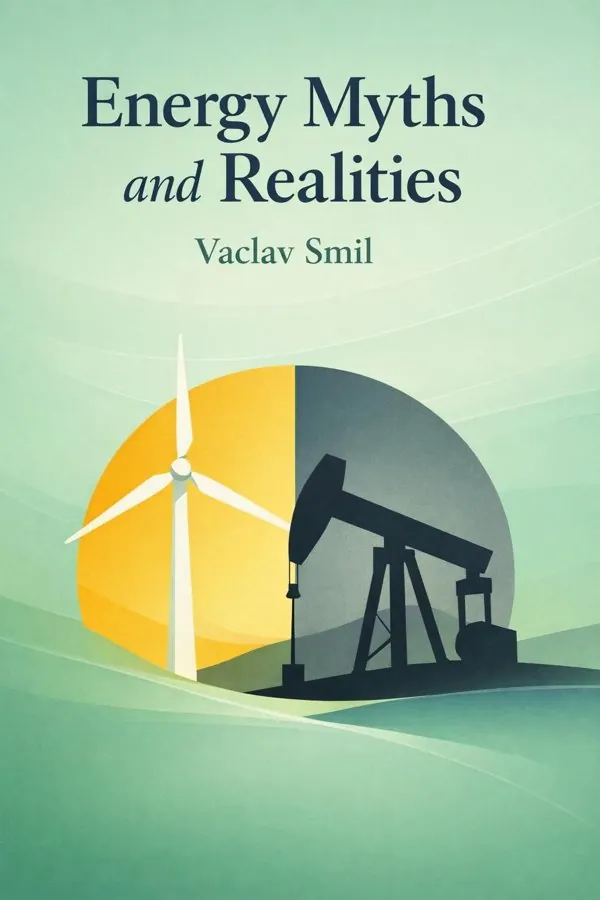
Energy Myths and Realities: Bringing Science to the Energy Policy Debate
What if many of the confident claims you hear about the future of energy are far less certain than they sound? *Good Energy* tackles that uncomfortable question head-on. Rather than offering a simplistic story of instant clean-energy transformation or a nostalgic defense of the status quo, this book asks readers to look at energy the way engineers, historians, and systems thinkers do: in terms of scale, density, infrastructure, time, and trade-offs. That shift matters because energy is not a side issue. It sits underneath modern life—our food supply, transportation, housing, healthcare, manufacturing, and digital economy all depend on reliable flows of usable power. When public debate ignores that reality, bad policy and unrealistic expectations quickly follow.
Drawing on the analytical approach associated with Vaclav Smil, a Czech-Canadian scientist and policy analyst known for his interdisciplinary work on energy, environment, food production, and technological change, the book replaces slogans with evidence. It shows why energy transitions are historically slow, why fossil fuels remain stubbornly embedded in modern systems, and why optimism must be balanced by physical reality. For readers who want a clearer, smarter view of sustainability, this is an essential corrective.
Who Should Read Good Energy?
This book is perfect for anyone interested in health and looking to gain actionable insights in a short read. Whether you're a student, professional, or lifelong learner, the key ideas from Good Energy by Casey Means will help you think differently.
- ✓Readers who enjoy health and want practical takeaways
- ✓Professionals looking to apply new ideas to their work and life
- ✓Anyone who wants the core insights of Good Energy in just 10 minutes
Want the full summary?
Get instant access to this book summary and 100K+ more with Fizz Moment.
Get Free SummaryAvailable on App Store • Free to download
Key Chapters
The book begins by clearing up a basic but crucial confusion: energy, power, and efficiency are not interchangeable terms. Energy is the capacity to do work. Power is the rate at which energy is used. Efficiency describes how much useful output we get from an input. These distinctions may sound technical, but they shape every serious conversation about climate, electricity, transportation, and economic growth. For example, a nation may generate more electricity from renewables, but electricity is only one part of total energy use; heavy industry, aviation, shipping, fertilizers, heating, and manufacturing often rely on very different energy forms. If we confuse electricity with all energy, we end up underestimating the scale of the challenge.
The book also emphasizes that modern civilization is an energy system before it is anything else. Food arrives at supermarkets because tractors, fertilizers, refrigeration, warehouses, roads, and freight networks all depend on massive energy flows. Hospitals, cloud computing, and clean water systems do too. A practical takeaway is to ask quantitative questions whenever bold claims appear: How much energy is being discussed? In what form? Over what time frame? With what infrastructure? That habit alone can make readers far more skeptical of empty promises and more capable of judging realistic solutions.
One of the book’s strongest lessons is that energy transitions are never just about inventing a better fuel. They are about replacing entire systems that societies have built over decades or centuries. Human communities first relied on biomass such as wood, crop residues, and animal labor. Coal transformed that world because it was more energy-dense and better suited to industrial production. Oil later remade transport and manufacturing, while natural gas spread through heating, power generation, and industrial uses. But none of these shifts happened quickly. Even when a superior option was available, existing machines, supply chains, worker skills, investment patterns, and public habits slowed adoption.
This historical perspective is a powerful antidote to the idea that today’s transition can be completed simply by political will or consumer enthusiasm. Britain did not become coal-powered in a decade, and the world did not become oil-based in one generation. The actionable lesson here is patience paired with realism. Ambitious goals matter, but plans must reflect the speed at which mines, grids, pipelines, ports, vehicle fleets, and industrial facilities actually turn over. Readers are encouraged to judge energy forecasts against history: if previous transitions took many decades, claims of near-instant global replacement deserve close scrutiny.
A central argument in the book is that the popular vision of a swift, frictionless energy revolution is more myth than plan. Public discussion often assumes that because renewable technologies are improving, the whole energy system can pivot almost overnight. But energy systems are not smartphone markets. They involve enormous capital stock with long operating lives: power plants, steel mills, cement kilns, refineries, pipelines, ports, vehicle fleets, and transmission networks. Replacing these assets early is expensive, politically difficult, and logistically complex. Even if cleaner alternatives exist, they must be manufactured at scale, installed, maintained, and integrated into existing systems.
The book pushes readers to distinguish between growth rates and total replacement. Solar or wind capacity can grow rapidly in percentage terms while still supplying a modest share of total energy demand, especially when demand itself keeps rising. A useful practical insight is to watch absolute numbers, not just headlines. If global energy consumption increases while fossil use remains high, then progress may be real but slower than advocates claim. This chapter encourages policymakers, business leaders, and citizens to replace rhetoric with system-level thinking. Real transformation is possible, but only when goals align with physical build rates, materials availability, financing constraints, and political durability.
The book does not dismiss renewable energy, but it insists on looking at it honestly. Wind and solar have clear advantages: they can reduce emissions, diversify supply, and in many places produce electricity at increasingly competitive costs. Yet they also come with constraints that are often minimized in public debate. Their output is variable, tied to weather and daylight, which means they require backup generation, storage, expanded transmission, or flexible demand systems to maintain reliability. Land use, mineral inputs, permitting delays, and grid integration all matter as much as the generating technology itself.
A helpful example is the difference between producing cheap electricity at certain hours and supplying dependable energy whenever society needs it. A hospital, subway system, or industrial facility cannot simply pause because the wind drops. That does not make renewables unworkable; it means they must be embedded in a broader system design. The practical takeaway is to think in portfolios rather than silver bullets. Renewables can play a major role, especially in power generation, but their success depends on complementary infrastructure such as storage, stronger grids, demand management, and dispatchable backup. This chapter rewards readers who want a more mature conversation—one that supports renewables without pretending they erase every technical and economic constraint.
Few ideas in the book are more uncomfortable—and more important—than the persistence of fossil fuels. Coal, oil, and natural gas are not dominant simply because of political inertia or corporate influence, though those matter. They remain central because they are energy-dense, transportable, storable, and deeply woven into global industry. Oil powers much of transport, natural gas supports heating and industrial processes, and coal still plays a major role in electricity and steelmaking in many regions. Beyond energy, fossil fuels are feedstocks for chemicals, plastics, and fertilizers that support modern agriculture and manufacturing.
The book argues that serious climate strategy must begin by understanding why fossil fuels have endured so long. Denouncing them is easier than replacing the functions they perform. For readers, the actionable insight is to ask not only “What should we stop using?” but also “What practical substitute can match the reliability, scale, and cost of what exists now?” That question changes the tone of the discussion from moral signaling to problem-solving. If societies want to reduce fossil dependence, they must invest in alternatives that work in heavy transport, industry, heating, and agriculture—not just celebrate gains in one narrow part of the energy system.
The book treats nuclear energy as a serious option that deserves analysis rather than reflexive approval or rejection. Nuclear power’s main advantage is clear: it can produce large amounts of low-carbon electricity with high reliability and a small land footprint compared with many other sources. That makes it especially relevant in discussions about decarbonizing grids while maintaining stable supply. In countries that need round-the-clock power for dense urban populations or energy-intensive industries, this reliability is not a minor feature—it is a core strategic benefit.
At the same time, the book does not ignore nuclear’s real challenges: high capital costs, long construction timelines, regulatory complexity, public fear, and unresolved political questions around waste and safety. The point is not that nuclear is easy, but that excluding it for ideological reasons may make decarbonization harder. A practical takeaway for readers and policymakers is to compare energy sources by measurable outcomes—emissions, reliability, cost over time, land use, and scalability—rather than by image alone. This chapter encourages a less tribal energy conversation. Nuclear may not be the answer everywhere, but in a realistic portfolio of low-carbon solutions, it may be more valuable than many public narratives allow.
Efficiency is often described as the fastest and cheapest energy solution, and the book agrees—up to a point. Using less energy to achieve the same result is obviously valuable. Better insulation lowers heating demand. More efficient engines reduce fuel use. Improved industrial processes can cut waste dramatically. However, the book also warns against treating efficiency as a magical substitute for supply. Gains in efficiency do not always translate into proportional reductions in total consumption, especially when lower costs encourage more use, a pattern often called the rebound effect.
This nuance matters because efficiency works best when paired with conscious conservation and smart system design. For example, a larger home filled with efficient appliances may still consume more energy than a modest home with ordinary appliances. Likewise, more efficient vehicles can be offset by people driving farther. The actionable lesson is twofold: pursue technical efficiency wherever possible, but also examine behavior, infrastructure, and expectations. Cities designed around shorter commutes, buildings designed for passive heating and cooling, and industrial systems optimized for material reuse can produce deeper savings than gadgets alone. This chapter reminds readers that genuine energy progress comes not only from better machines, but from rethinking how much energy-intensive activity we assume is necessary.
Innovation is essential, but the book strongly resists the comforting belief that future technology will solve today’s energy challenges automatically. This kind of optimism often appears in claims that batteries, hydrogen, fusion, carbon capture, or some yet-to-mature breakthrough will remove the need for difficult trade-offs. The problem is not that such technologies lack promise. It is that promise is often confused with deployment at global scale. Moving from prototype to affordable, reliable, mass adoption is a long and uncertain process, especially when the technology must compete with entrenched systems that already work.
The chapter argues for disciplined optimism: support research, pilot projects, and entrepreneurship, but do not build national or global strategy on assumptions that unproven technologies will arrive exactly on schedule. Readers can apply this by separating three questions whenever a “game-changing” innovation is announced: Does it work technically? Can it scale economically? Can it integrate into real infrastructure and regulation? That framework helps avoid being swept up by hype while still appreciating genuine progress. The broader message is that technology matters enormously, but it cannot repeal thermodynamics, compress construction timelines, or eliminate the political and social friction that shapes every major energy transition.
Energy debates often become polarized because one side emphasizes environmental urgency while the other stresses economic realism. The book argues that this is a false choice. Environmental outcomes and economic systems are deeply intertwined. Cheap, abundant energy has historically supported rising living standards, public health, industrial output, and food production. At the same time, the environmental costs of high fossil-fuel dependence—especially emissions and pollution—can no longer be treated as secondary. The challenge is not picking one side of the ledger; it is understanding how both sides interact.
For example, aggressive energy policy that raises costs too abruptly may trigger political backlash, undermine industrial competitiveness, or hurt low-income households. But delaying transition carries its own risks, including environmental damage and future adaptation costs. The practical insight is that good policy must account for distribution, timing, and system resilience. A decarbonization plan that works on paper but destabilizes livelihoods may fail in practice. This chapter encourages readers to think beyond slogans like “jobs versus climate” and instead ask better questions: Who bears the costs? Who gets the benefits? What trade-offs are immediate, and which are long-term? Mature energy policy requires environmental seriousness and economic literacy at the same time.
The book’s policy message is blunt: energy policy should be grounded in physics, history, and measurable trade-offs, not wishful thinking. Governments often announce ambitious targets without matching them with permitting reform, grid upgrades, industrial strategy, financing tools, and long-term public buy-in. As a result, policy can become performative—strong on rhetoric, weak on implementation. Effective energy policy starts with clear priorities: reliability, affordability, environmental improvement, and realistic transition timelines. It also recognizes that different countries face different constraints depending on geography, wealth, resource base, and industrial structure.
This chapter suggests that policymakers should favor diversified strategies over one-track solutions. That may include supporting renewables, preserving or expanding nuclear where appropriate, improving efficiency, modernizing grids, funding research, and reducing regulatory bottlenecks. A useful takeaway for readers is to judge policies by operational questions: Will this increase dependable supply? How much will it cost? What infrastructure must be built first? What happens during periods of low renewable output? By focusing on implementation rather than aspiration, the book promotes a more credible path forward. Good energy policy is not anti-innovation or anti-environment; it is simply honest about scale, sequence, and the complexity of changing the foundations of modern life.
All Chapters in Good Energy
About the Author
Vaclav Smil is a Czech-Canadian scientist and policy analyst known for his interdisciplinary research on energy, the environment, food production, and technological innovation. He is Distinguished Professor Emeritus at the University of Manitoba and has written numerous influential books exploring how large systems shape modern civilization. Smil is especially respected for combining scientific rigor with historical perspective, helping readers understand complex topics such as energy transitions, resource use, and sustainability in practical terms. His work is widely read by policymakers, business leaders, and serious students of global development because of its clarity, skepticism toward hype, and grounding in physical reality.
Get This Summary in Your Preferred Format
Read or listen to the Good Energy summary by Casey Means anytime, anywhere. FizzRead offers multiple formats so you can learn on your terms — all free.
Available formats: App · Audio · PDF · EPUB — All included free with FizzRead
Download Good Energy PDF and EPUB Summary
Key Quotes from Good Energy
“The book begins by clearing up a basic but crucial confusion: energy, power, and efficiency are not interchangeable terms.”
“One of the book’s strongest lessons is that energy transitions are never just about inventing a better fuel.”
“A central argument in the book is that the popular vision of a swift, frictionless energy revolution is more myth than plan.”
“The book does not dismiss renewable energy, but it insists on looking at it honestly.”
“Few ideas in the book are more uncomfortable—and more important—than the persistence of fossil fuels.”
Frequently Asked Questions about Good Energy
Good Energy by Casey Means is a health book that explores key ideas across 10 chapters. What if many of the confident claims you hear about the future of energy are far less certain than they sound? *Good Energy* tackles that uncomfortable question head-on. Rather than offering a simplistic story of instant clean-energy transformation or a nostalgic defense of the status quo, this book asks readers to look at energy the way engineers, historians, and systems thinkers do: in terms of scale, density, infrastructure, time, and trade-offs. That shift matters because energy is not a side issue. It sits underneath modern life—our food supply, transportation, housing, healthcare, manufacturing, and digital economy all depend on reliable flows of usable power. When public debate ignores that reality, bad policy and unrealistic expectations quickly follow. Drawing on the analytical approach associated with Vaclav Smil, a Czech-Canadian scientist and policy analyst known for his interdisciplinary work on energy, environment, food production, and technological change, the book replaces slogans with evidence. It shows why energy transitions are historically slow, why fossil fuels remain stubbornly embedded in modern systems, and why optimism must be balanced by physical reality. For readers who want a clearer, smarter view of sustainability, this is an essential corrective.
Compare Good Energy



You Might Also Like

Featured In
Browse by Category
Ready to read Good Energy?
Get the full summary and 100K+ more books with Fizz Moment.