
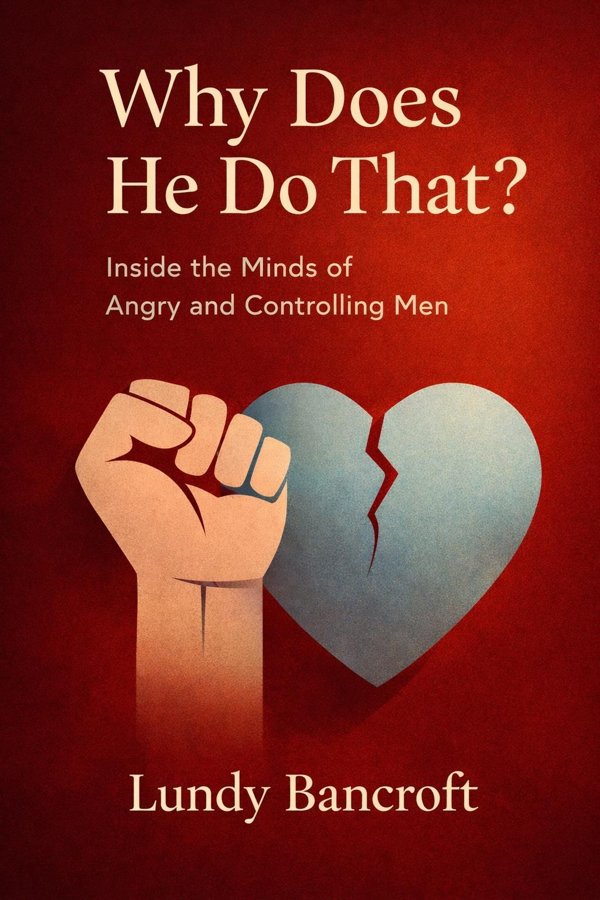
Why Does He Do That: Summary & Key Insights
 10 min11 chaptersAudio available
Key Takeaways from Why Does He Do That
At the center of Bancroft’s argument is a hard but liberating truth: abuse is not mainly driven by uncontrollable anger.
One reason abuse is so widely misunderstood is that popular culture offers comforting myths instead of accurate explanations.
Bancroft emphasizes that abusive men are not all the same.
Abuse rarely begins at full intensity.
One of the book’s most validating contributions is its explanation of what abuse does to the victim’s mind, body, and sense of self.
What Is Why Does He Do That About?
Why Does He Do That by Lundy Bancroft is a psychology book published in 2002 spanning 11 pages. Why do some partners seem loving, attentive, and even remorseful one day, then cruel, controlling, or frightening the next? That painful question sits at the heart of Why Does He Do That by Lundy Bancroft, a counselor known for his long-term work with abusive men and survivors of domestic abuse. Rather than treating abuse as a mystery caused by stress, anger, or a “difficult relationship,” Bancroft argues that abusive behavior follows a pattern. It is rooted in beliefs about entitlement, power, and control. What makes this book so important is its clarity. Many people trapped in abusive relationships spend years doubting themselves, minimizing what happened, or hoping the right conversation will finally make things better. Bancroft cuts through that confusion. He explains how abuse can be verbal, emotional, psychological, financial, sexual, or physical—and why it so often leaves victims feeling disoriented and responsible for problems they did not create. This is not just a book about identifying abusive men. It is a practical guide to understanding manipulation, spotting warning signs, evaluating whether change is real, and reclaiming trust in your own judgment. For readers seeking answers, safety, or language for what they have endured, this book remains deeply relevant.
This FizzRead summary covers all 11 key chapters of Why Does He Do That in approximately 10 minutes, distilling the most important ideas, arguments, and takeaways from Lundy Bancroft's work. Also available as an audio summary and Key Quotes Podcast.
Why Does He Do That?: Inside the Minds of Angry and Controlling Men
Why do some partners seem loving, attentive, and even remorseful one day, then cruel, controlling, or frightening the next? That painful question sits at the heart of Why Does He Do That by Lundy Bancroft, a counselor known for his long-term work with abusive men and survivors of domestic abuse. Rather than treating abuse as a mystery caused by stress, anger, or a “difficult relationship,” Bancroft argues that abusive behavior follows a pattern. It is rooted in beliefs about entitlement, power, and control.
What makes this book so important is its clarity. Many people trapped in abusive relationships spend years doubting themselves, minimizing what happened, or hoping the right conversation will finally make things better. Bancroft cuts through that confusion. He explains how abuse can be verbal, emotional, psychological, financial, sexual, or physical—and why it so often leaves victims feeling disoriented and responsible for problems they did not create.
This is not just a book about identifying abusive men. It is a practical guide to understanding manipulation, spotting warning signs, evaluating whether change is real, and reclaiming trust in your own judgment. For readers seeking answers, safety, or language for what they have endured, this book remains deeply relevant.
Who Should Read Why Does He Do That?
This book is perfect for anyone interested in psychology and looking to gain actionable insights in a short read. Whether you're a student, professional, or lifelong learner, the key ideas from Why Does He Do That by Lundy Bancroft will help you think differently.
- ✓Readers who enjoy psychology and want practical takeaways
- ✓Professionals looking to apply new ideas to their work and life
- ✓Anyone who wants the core insights of Why Does He Do That in just 10 minutes
Want the full summary?
Get instant access to this book summary and 100K+ more with Fizz Moment.
Get Free SummaryAvailable on App Store • Free to download
Key Chapters
At the center of Bancroft’s argument is a hard but liberating truth: abuse is not mainly driven by uncontrollable anger. It is driven by a mindset. An abusive man often believes, consciously or not, that his needs matter more, that his partner owes him compliance, and that disagreement is a form of disrespect. This is why so many abusive incidents begin with something ordinary—a boundary, a different opinion, a request for accountability—and escalate into blame, intimidation, or punishment.
Bancroft shows that the abusive man’s thinking is built on entitlement. He may believe he deserves to know where his partner is at all times, deserves sexual access, deserves emotional caretaking, or deserves to be shielded from criticism. When those expectations are not met, he frames himself as the injured party. A simple example might be a partner asking for time alone, only to be accused of being selfish, cold, or disloyal. The issue is not the request itself; it is his belief that she should not have equal autonomy.
This idea helps explain a confusing pattern many victims notice: he can be controlled at work, polite with neighbors, and respectful with authority figures, yet harsh and humiliating at home. That contrast matters. It suggests his behavior is selective and functional. As Bancroft makes clear, when abuse consistently appears where power is easiest to enforce, it is not a loss of control—it is a use of control.
The practical lesson is to look beyond apologies and focus on values. Does he genuinely respect your boundaries, your perspective, and your humanity? Or does he become “kind” mainly when he fears consequences or wants something? Seeing the mindset behind the behavior helps victims stop chasing impossible explanations and start recognizing the real issue: a belief system that treats partnership as ownership.
One reason abuse is so widely misunderstood is that popular culture offers comforting myths instead of accurate explanations. Bancroft carefully dismantles these myths because they keep victims stuck and redirect accountability away from the abuser. One of the most common myths is that abusive men simply have anger problems. But if anger were the true cause, the abuse would be random and spill equally into every setting. Instead, many abusive men know exactly when to restrain themselves. They may yell at home, then speak calmly to police, therapists, employers, or friends. That selectivity reveals intention.
Another myth is that alcohol, stress, jealousy, or a painful childhood “made him do it.” Bancroft does not deny that these factors can influence behavior, but he argues they do not explain abuse. Plenty of stressed, traumatized, or jealous people do not control, terrorize, or degrade their partners. Those explanations can become excuses that invite the victim to tolerate more: be more patient, avoid upsetting him, help him heal. In reality, none of those strategies address the underlying entitlement.
A particularly damaging myth is that love can rescue an abusive partner. This belief encourages survivors to become therapists, peacekeepers, and emotional shock absorbers. They may think, “If I communicate better, support him more, or stop provoking him, he’ll change.” Bancroft argues that this hope often prolongs danger, because abuse does not end through devotion alone. It requires the abuser to reject his beliefs about domination and take sustained responsibility.
Actionably, this chapter teaches readers to test claims against behavior. If he says, “I only act this way when I’m stressed,” ask: does stress make him abusive toward everyone, or mainly toward the person he has power over? If he says, “You know how to push my buttons,” ask: why is your behavior framed as the cause of his choices? Dispelling myths helps survivors reclaim clarity and place responsibility where it belongs.
Bancroft emphasizes that abusive men are not all the same. While the underlying drive for control may be similar, the style of abuse can vary dramatically. This matters because many victims dismiss what they are experiencing simply because it does not fit the stereotype of constant physical violence. Some abusers are openly explosive—yelling, threatening, smashing objects, and creating fear through intimidation. Others are far more polished. They may act reasonable in public, use sarcasm instead of shouting, or deploy guilt, pity, and confusion rather than obvious aggression.
Recognizing different types helps explain why abuse can be so hard to name. One man may dominate through chronic criticism, making his partner feel incompetent about parenting, money, or social choices. Another may act like the “victim,” turning every confrontation into proof that he is misunderstood and unfairly treated. Another may be highly possessive, disguising surveillance and jealousy as love: “I just worry about you because I care.” In each case, the method differs, but the effect is similar: shrinking the partner’s freedom and confidence.
This framework is useful because it shifts attention from personality labels to patterns of impact. A man does not have to be physically violent to be dangerous. If his behavior makes his partner afraid to speak honestly, exhausted from managing his moods, isolated from support, or constantly second-guessing reality, abuse may be present.
A practical takeaway is to track repeated behaviors rather than isolated incidents. Ask: Does he punish disagreement? Does he rewrite events to make me the problem? Does he present one face to outsiders and another at home? Naming the type of abuse can help survivors stop minimizing it and better assess the level of risk they are facing.
Abuse rarely begins at full intensity. Bancroft shows that it often develops gradually, which is one reason smart, capable people can become trapped in it. Early in the relationship, the abusive partner may seem intensely attentive, protective, or unusually invested. What looks like devotion can later become possessiveness. Constant texting becomes monitoring. Strong opinions become rules. Sensitivity becomes blame. By the time the pattern is obvious, emotional dependence, financial entanglement, children, or fear may already make leaving much harder.
The progression often follows a cycle. Tension builds through criticism, moodiness, jealousy, or small acts of disrespect. Then comes an abusive incident—an explosion, a threat, a degrading comment, a shove, or another tactic meant to reestablish dominance. Afterward, there may be denial, minimization, excuses, or a “honeymoon” phase of apologies, gifts, affection, or promises to change. That temporary relief can be powerfully confusing. It gives the victim hope and makes the abuse feel like an exception rather than a system.
Over time, however, the pattern usually deepens unless there is meaningful intervention. The episodes may become more frequent, more frightening, or more psychologically sophisticated. A survivor may notice that she is changing her own behavior to prevent conflict—avoiding certain topics, lying to keep the peace, withdrawing from friends, or constantly scanning for warning signs. That adaptation is itself evidence of the abuse’s growth.
The actionable insight here is to pay attention to trajectory, not just incidents. Is the relationship becoming safer, more respectful, and more equal over time—or more fearful, confusing, and restrictive? Bancroft’s message is that early patterns matter. If control is increasing and accountability is absent, waiting usually does not make the problem smaller.
One of the book’s most validating contributions is its explanation of what abuse does to the victim’s mind, body, and sense of self. Abuse is not harmful only when it leaves visible bruises. Chronic intimidation, criticism, gaslighting, and control can create deep psychological injury. Victims often become hypervigilant, anxious, depressed, exhausted, and unsure of their own perceptions. They may replay conversations for hours, wondering whether they were unfair, too sensitive, or somehow responsible for the blowup.
Bancroft helps readers understand that this confusion is not weakness—it is a predictable outcome of manipulation. If someone regularly denies what happened, insists your memory is wrong, mocks your feelings, and alternates cruelty with affection, your internal compass can start to wobble. Many victims describe “walking on eggshells,” managing the household around one person’s moods, or feeling they have disappeared inside the relationship. Their world gets smaller as confidence erodes.
The impact also extends outward. Friendships may fade because the abuser creates conflict around social contact. Work may suffer because sleep, concentration, and emotional energy are depleted. Parenting becomes harder under constant criticism or fear. Financial stability may be damaged if the abuser sabotages employment or controls money. In other words, abuse is not a series of isolated moments; it is an environment.
An important practical lesson is to treat your symptoms as information. If you feel chronically afraid, mentally foggy, ashamed, or unlike yourself around one person, that matters. Support from trusted friends, advocates, therapists, or domestic abuse services can help rebuild reality-testing. Naming the impact is often the first step in reclaiming a life that has been narrowed by control.
Abuse is sustained not only by direct aggression but by manipulation tactics that keep the victim uncertain, guilty, and easier to control. Bancroft describes how abusers use a shifting mix of charm, intimidation, denial, blame, and emotional reversal. One moment he may insult or threaten; the next, he may act wounded and insist he is the one being mistreated. This constant switching destabilizes the victim and makes it harder to hold a clear picture of what is happening.
A common tactic is minimization: “You’re making a big deal out of nothing.” Another is blame-shifting: “I wouldn’t have yelled if you hadn’t pushed me.” Gaslighting goes further by attacking the victim’s reality: “That never happened,” or “You’re crazy; everyone can see it.” There is also image management. Many abusive men work hard to appear kind, competent, and misunderstood to outsiders, making disclosure riskier for the victim. If she speaks up, she may fear no one will believe her.
Isolation is another powerful tactic. It may not always look dramatic. Instead of forbidding friendships outright, he may criticize certain friends, create conflict before family visits, demand constant check-ins, or make social life so exhausting that withdrawal feels easier. Financial control, sexual coercion, parenting threats, and silent treatment can also serve the same goal: forcing the victim to organize her life around his approval.
A practical defense is documentation and pattern recognition. Writing down incidents, saving messages where safe, and discussing events with trusted support can counter the fog created by manipulation. The key insight is simple but powerful: if interactions consistently leave you confused, guilty, intimidated, or isolated while he avoids accountability, manipulation is likely not accidental—it is part of the control system.
Bancroft places abusive behavior in a broader social context, arguing that abuse does not occur in a vacuum. Cultural messages about masculinity, authority, entitlement, and gender roles can quietly support abusive attitudes. When boys and men are taught that dominance is strength, that women are responsible for emotional caretaking, or that jealousy proves love, abusive beliefs become easier to normalize. Society may condemn extreme violence while still excusing everyday control, ridicule, and coercion.
This cultural backdrop affects how abuse is interpreted. Friends might say, “He’s just protective,” when a partner is actually monitoring and restricting. Family members may urge a victim to keep the peace, preserve the relationship, or think of the children, even when the home is shaped by fear. Institutions can reinforce the problem too. Victims are sometimes asked what they did to trigger an incident, why they stayed, or whether they are exaggerating. Those questions subtly shift scrutiny away from the abuser’s choices.
Bancroft’s point is not that culture causes every abusive act in a simple way, but that it can provide cover. If controlling behavior is framed as normal male behavior, the victim’s alarm is easier to dismiss. If women are expected to forgive endlessly, resistance is cast as cold or selfish.
The practical takeaway is to question the narratives around you. Does advice encourage equality, safety, and accountability—or patience with domination? Supportive communities challenge excuses, believe patterns over performances, and center the survivor’s reality. Changing abuse requires more than private insight; it also requires a culture that stops romanticizing control and starts naming it clearly.
A central question for many readers is whether an abusive man can truly change. Bancroft’s answer is careful and unsentimental: change is possible, but it is rare without deep accountability and sustained effort. Promises, tears, therapy talk, and brief periods of good behavior are not enough. Real change requires the abuser to abandon his justifications, stop blaming the victim, accept the harm he has caused, and commit to long-term behavioral and attitudinal transformation.
This distinction matters because many survivors have experienced the pattern of explosion, apology, reform promise, and repeat. After a frightening incident, he may say he finally understands, blame stress or alcohol, agree to counseling, or become temporarily attentive. But Bancroft urges readers to look for evidence, not emotion. Does he fully acknowledge what he did without qualifying it? Does he stop pressuring his partner to forgive him quickly? Does he respect boundaries even when they inconvenience him? Does he seek specialized help and remain accountable over time?
Meaningful change also includes giving up privileges gained through abuse. That may mean no longer controlling money, no longer demanding access to his partner’s communications, no longer using children as leverage, and accepting consequences such as separation or legal intervention. A man who wants the relationship back but not equality back has not changed.
The practical lesson is to evaluate change through consistent patterns over a long period. Hope should be tied to observable accountability, not to charisma or remorse alone. Bancroft encourages readers to protect themselves from being persuaded by emotional performances that leave the underlying beliefs untouched.
One of the book’s most valuable strengths is its direct guidance for victims and survivors. Bancroft does not simply explain abuse; he offers a framework for regaining clarity and making safer decisions. The first step is trusting your perceptions. If you feel controlled, frightened, degraded, or chronically responsible for another adult’s behavior, those experiences matter. Abuse often teaches victims to dismiss their own reality, so reconnecting with that inner evidence is foundational.
From there, Bancroft emphasizes practical thinking over fantasy-based hope. Instead of asking, “How do I make him understand?” a more useful question may be, “What do his repeated actions show me?” This shift can be life-changing. It moves attention away from decoding his moods and toward protecting your own well-being. For some readers, that means strengthening support networks, contacting a domestic violence advocate, building financial independence, or creating a safety plan before confronting or leaving.
He also implicitly warns against strategies that increase danger, such as announcing major decisions without preparation when the abuser has a history of retaliation. Safety planning may include keeping copies of important documents, identifying a trusted person, storing emergency cash where possible, or rehearsing where to go in a crisis. Even if someone is not ready to leave, gathering information and support can reduce isolation.
The deeper message is empowering: you do not need absolute proof, universal agreement, or his admission to take your own experience seriously. The goal is not to win an argument about whether the abuse is “bad enough.” The goal is safety, clarity, and freedom from a system that keeps you shrinking to survive.
Recovery from abuse is not just about leaving a harmful relationship; it is about rebuilding a life in which your perceptions, boundaries, and dignity are fully your own again. Bancroft’s work points toward recovery as a process of untangling the lies abuse plants: that you are too sensitive, too difficult, impossible to love, or responsible for someone else’s cruelty. Healing begins when those beliefs are recognized as products of control rather than truths about your character.
For many survivors, empowerment starts small. It may look like sleeping better after a period of constant vigilance, reconnecting with a friend the abuser disliked, making a financial decision independently, or noticing that you no longer dread someone’s footsteps or text messages. These moments matter because they restore agency. Confidence usually returns through action, support, and validation—not through waiting to feel ready first.
Recovery also involves grief. Survivors may mourn the relationship they hoped for, the time lost to confusion, or the parts of themselves that were pushed underground. Bancroft’s framework helps make sense of that grief by showing that the loving version of the abuser was often intertwined with manipulation and control. Accepting that complexity can be painful, but it also opens the door to freedom.
An actionable takeaway is to rebuild on multiple levels: emotional support, practical stability, and self-trust. Therapy, peer support, legal resources, journaling, and education about abuse can all help. Empowerment is not pretending the harm was small; it is recognizing that the harm was real and that your life does not have to remain organized around it.
Bancroft makes clear that abuse is not only a private problem to be solved within a couple. Effective responses require informed professionals and communities that understand how abuse actually works. Too often, helpers focus on communication problems, anger management, or “relationship conflict” when the real issue is coercive control. This can be dangerous, because it treats both parties as equal contributors to a dynamic that is in fact structured by intimidation and fear.
Professionals—therapists, social workers, police, medical staff, clergy, and court personnel—need to ask better questions. Instead of “What do you two fight about?” they should ask: Who is afraid of whom? Who controls money, movement, parenting decisions, or social contact? Who faces consequences after conflict? These questions reveal power imbalances that generic couples advice can miss. Bancroft’s perspective also suggests caution with interventions that give an abuser more language to manipulate without requiring accountability.
Community response matters too. Friends and family can either strengthen a victim’s reality or deepen her isolation. Helpful support sounds like: “I believe you,” “This isn’t your fault,” and “How can I help you stay safe?” Unhelpful support pressures reconciliation, demands perfect proof, or insists on neutrality in the face of abuse.
The practical lesson is that good intervention centers safety and responsibility. Abusers need consequences and specialized accountability, not sympathy detached from harm. Victims need validation, options, and protection. When professionals and communities understand that abuse is about power rather than mutual conflict, their responses become far more effective.
All Chapters in Why Does He Do That
About the Author
Lundy Bancroft is an American author, counselor, and expert on domestic abuse and abusive men. He has spent over two decades working in abuse intervention, including co-founding programs for abusive men. His work is widely known for helping victims and survivors understand how control, manipulation, and violence operate inside intimate relationships. Rather than treating abuse as simple anger or conflict, Bancroft focuses on the beliefs and patterns that sustain it. Through his counseling and writing, he has become a recognized voice for clearer public understanding of abuse, survivor safety, and meaningful accountability for perpetrators.
Get This Summary in Your Preferred Format
Read or listen to the Why Does He Do That summary by Lundy Bancroft anytime, anywhere. FizzRead offers multiple formats so you can learn on your terms — all free.
Available formats: App · Audio · PDF · EPUB — All included free with FizzRead
Download Why Does He Do That PDF and EPUB Summary
Key Quotes from Why Does He Do That
“At the center of Bancroft’s argument is a hard but liberating truth: abuse is not mainly driven by uncontrollable anger.”
“One reason abuse is so widely misunderstood is that popular culture offers comforting myths instead of accurate explanations.”
“Bancroft emphasizes that abusive men are not all the same.”
“Bancroft shows that it often develops gradually, which is one reason smart, capable people can become trapped in it.”
“One of the book’s most validating contributions is its explanation of what abuse does to the victim’s mind, body, and sense of self.”
Frequently Asked Questions about Why Does He Do That
Why Does He Do That by Lundy Bancroft is a psychology book that explores key ideas across 11 chapters. Why do some partners seem loving, attentive, and even remorseful one day, then cruel, controlling, or frightening the next? That painful question sits at the heart of Why Does He Do That by Lundy Bancroft, a counselor known for his long-term work with abusive men and survivors of domestic abuse. Rather than treating abuse as a mystery caused by stress, anger, or a “difficult relationship,” Bancroft argues that abusive behavior follows a pattern. It is rooted in beliefs about entitlement, power, and control. What makes this book so important is its clarity. Many people trapped in abusive relationships spend years doubting themselves, minimizing what happened, or hoping the right conversation will finally make things better. Bancroft cuts through that confusion. He explains how abuse can be verbal, emotional, psychological, financial, sexual, or physical—and why it so often leaves victims feeling disoriented and responsible for problems they did not create. This is not just a book about identifying abusive men. It is a practical guide to understanding manipulation, spotting warning signs, evaluating whether change is real, and reclaiming trust in your own judgment. For readers seeking answers, safety, or language for what they have endured, this book remains deeply relevant.
Compare Why Does He Do That
You Might Also Like

The Body Keeps the Score
Bessel van der Kolk
10 min
Surrounded by Idiots
Thomas Erikson
10 min
Emotional Intelligence
Daniel Goleman
10 min
Attached
Amir Levine
10 min
Women Who Run with the Wolves
Clarissa Pinkola Estés
10 min
Codependent No More
Melody Beattie
10 minFeatured In
Browse by Category
Ready to read Why Does He Do That?
Get the full summary and 100K+ more books with Fizz Moment.