
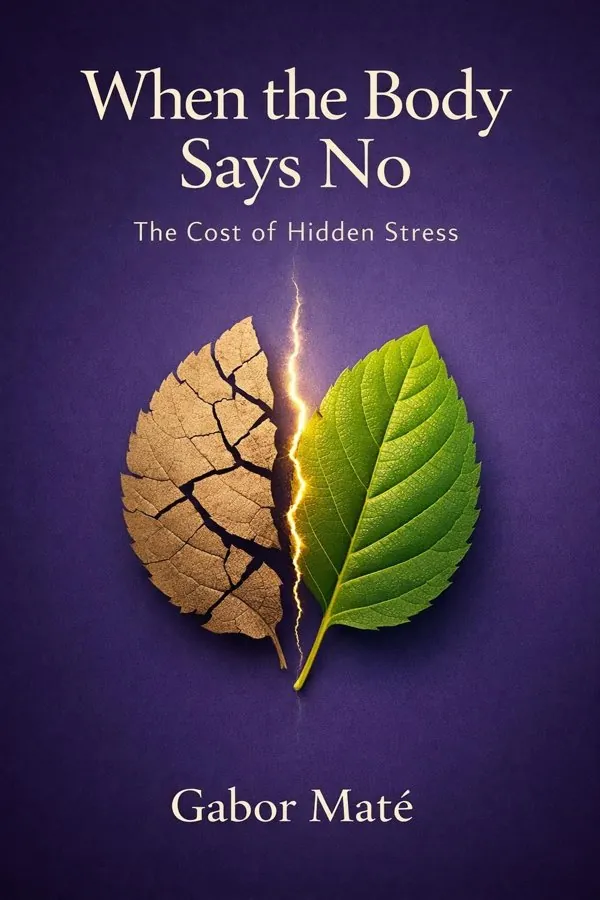
When the Body Says No: Summary & Key Insights
by Gabor Maté
 10 min8 chaptersAudio available
What Is When the Body Says No About?
When the Body Says No by Gabor Maté is a health book published in 2003 spanning 8 pages. In this groundbreaking work, physician Gabor Maté explores the connection between emotional stress and physical illness. Drawing on scientific research and clinical experience, he argues that the body often manifests what the mind represses, linking chronic diseases such as cancer, autoimmune disorders, and heart conditions to emotional suppression and unresolved trauma. The book encourages readers to recognize the importance of emotional awareness and self-compassion in maintaining health.
This FizzRead summary covers all 8 key chapters of When the Body Says No in approximately 10 minutes, distilling the most important ideas, arguments, and takeaways from Gabor Maté's work. Also available as an audio summary and Key Quotes Podcast.
When the Body Says No: The Cost of Hidden Stress
In this groundbreaking work, physician Gabor Maté explores the connection between emotional stress and physical illness. Drawing on scientific research and clinical experience, he argues that the body often manifests what the mind represses, linking chronic diseases such as cancer, autoimmune disorders, and heart conditions to emotional suppression and unresolved trauma. The book encourages readers to recognize the importance of emotional awareness and self-compassion in maintaining health.
Who Should Read When the Body Says No?
This book is perfect for anyone interested in health and looking to gain actionable insights in a short read. Whether you're a student, professional, or lifelong learner, the key ideas from When the Body Says No by Gabor Maté will help you think differently.
- ✓Readers who enjoy health and want practical takeaways
- ✓Professionals looking to apply new ideas to their work and life
- ✓Anyone who wants the core insights of When the Body Says No in just 10 minutes
Want the full summary?
Get instant access to this book summary and 100K+ more with Fizz Moment.
Get Free SummaryAvailable on App Store • Free to download
Key Chapters
Stress, as I have come to understand through years of observation and research, is not simply an emotional event; it is a biological command. When faced with challenge or threat, the brain orchestrates an intricate symphony involving hormones, neural impulses, and cellular signals. The adrenal glands release cortisol, the pituitary stimulates responses that affect every tissue, and the immune system adjusts its defenses. In short bursts, this system is protective—it helps us survive. But when stress becomes chronic, when the body is constantly alerted by emotional tension that never subsides, those same mechanisms begin to corrode health.
The physiology of stress intertwines with emotion. Every thought of fear, every unresolved anger or grief, translates into molecular consequences. Cortisol suppresses immunity; adrenaline accelerates heart rate and blood pressure; inflammatory pathways ignite silently within arteries and joints. Over time, this chronic activation becomes destructive. Diseases such as hypertension, diabetes, even cancer—these are not random occurrences but biological expressions of unrelenting internal conflict.
What is crucial to understand is that stress is not merely an external pressure; it is our subjective response to it. Two people may encounter similar adversity—yet one thrives, the other falls ill. The difference lies in emotional flexibility, in the capacity to feel, express, and release what arises. Those who habitually suppress their feelings are particularly vulnerable, for the unspoken emotions do not vanish—they are absorbed and stored within the body’s chemistry.
Medicine has often separated the mind from the body, as if the psyche could exist independently of neurology and biochemistry. But once we perceive stress as both a physiological event and an emotional communication, the integration becomes clear. Healing begins not when stress is eliminated from life—since life itself will always challenge us—but when we can experience and express our authentic emotions as they come, allowing the body to recover its natural balance. Chronic stress, then, is not inevitable; it is sustained only when the truths we fear remain unspoken.
Emotions are not obstacles to rational living; they are essential guides to survival and authenticity. Yet our culture has often taught us to distrust them—to equate emotional expression with weakness, immaturity, or instability. This collective mistrust creates an environment where people learn to minimize or hide what they truly feel. Unfortunately, such suppression is not benign. The body depends on emotions to regulate itself. When we cut off the expression of anger, sadness, or love, we disengage vital circuits of self-regulation coded into our biology.
I have noticed through countless patient encounters that those who present themselves as calm, composed, and endlessly accommodating often carry heavy emotional debts. In their effort to maintain harmony, they sacrifice expression. The absence of anger, for instance, is often idealized—but anger is a boundary signal. It alerts us when our integrity is violated, when we are feeding depletion rather than vitality. To deny it repeatedly is to teach the immune system that our own needs are secondary, giving rise to patterns of exhaustion and illness.
The body’s emotional circuits are ancient and precise. They serve to mobilize action, restore equilibrium, and signal the state of relationships. Emotional honesty—acknowledging uncomfortable feelings without denying them—is a form of internal communication. It allows hormonal systems to function properly, ensures immune defenses operate without confusion, and helps the heart maintain rhythmic balance. When feelings are disowned, the body processes that loss as chronic stress.
In this sense, emotional awareness is preventive medicine. It doesn’t prevent pain or adversity, but it safeguards the self against the corrosive effects of untruth. By cultivating the ability to recognize and express feelings authentically, we create a physiological environment that supports health rather than undermines it. Illness often becomes, in this framework, the body’s final effort to communicate what the mind refuses to hear.
+ 6 more chapters — available in the FizzRead app
All Chapters in When the Body Says No
About the Author
Gabor Maté is a Hungarian-Canadian physician and author known for his expertise in addiction, stress, and childhood development. He has written several influential books on the mind-body connection and the psychological roots of illness, including 'In the Realm of Hungry Ghosts' and 'Scattered Minds'.
Get This Summary in Your Preferred Format
Read or listen to the When the Body Says No summary by Gabor Maté anytime, anywhere. FizzRead offers multiple formats so you can learn on your terms — all free.
Available formats: App · Audio · PDF · EPUB — All included free with FizzRead
Download When the Body Says No PDF and EPUB Summary
Key Quotes from When the Body Says No
“Stress, as I have come to understand through years of observation and research, is not simply an emotional event; it is a biological command.”
“Emotions are not obstacles to rational living; they are essential guides to survival and authenticity.”
Frequently Asked Questions about When the Body Says No
When the Body Says No by Gabor Maté is a health book that explores key ideas across 8 chapters. In this groundbreaking work, physician Gabor Maté explores the connection between emotional stress and physical illness. Drawing on scientific research and clinical experience, he argues that the body often manifests what the mind represses, linking chronic diseases such as cancer, autoimmune disorders, and heart conditions to emotional suppression and unresolved trauma. The book encourages readers to recognize the importance of emotional awareness and self-compassion in maintaining health.
More by Gabor Maté
Scattered Minds
Gabor Maté
10 min
The Myth of Normal: Trauma, Illness, and Healing in a Toxic Culture
Gabor Maté
10 min
In The Realm Of Hungry Ghosts: Close Encounters With Addiction
Gabor Maté
10 min
Hold On to Your Kids: Why Parents Need to Matter More Than Peers
Gordon Neufeld, Gabor Maté
10 minYou Might Also Like

Featured In
Browse by Category
Ready to read When the Body Says No?
Get the full summary and 100K+ more books with Fizz Moment.