
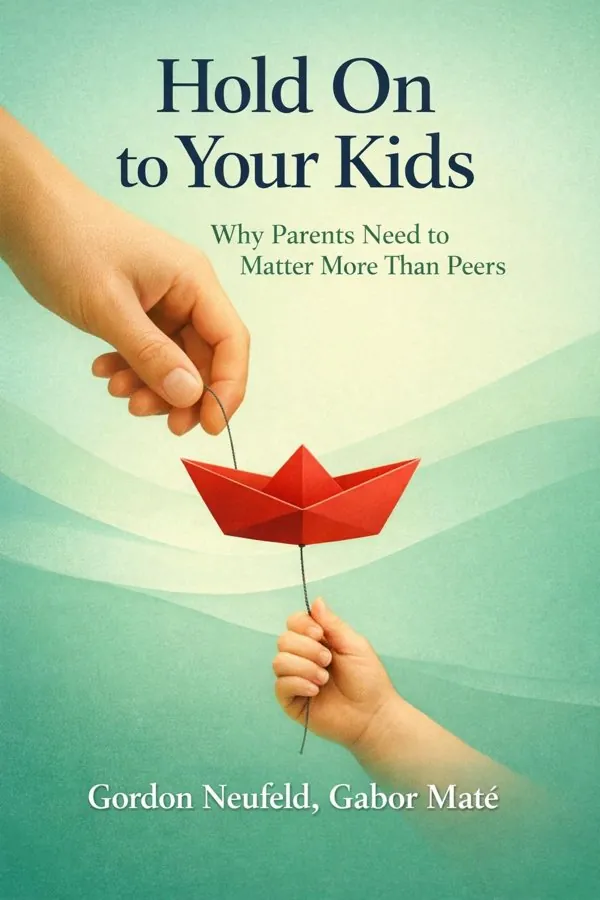
Hold On to Your Kids: Why Parents Need to Matter More Than Peers: Summary & Key Insights
 10 min13 chaptersAudio available
What Is Hold On to Your Kids: Why Parents Need to Matter More Than Peers About?
Hold On to Your Kids: Why Parents Need to Matter More Than Peers by Gordon Neufeld, Gabor Maté is a parenting book spanning 13 pages. Hold On to Your Kids explores how the growing influence of peers in modern society undermines the natural bond between parents and children. Developmental psychologist Gordon Neufeld and physician Gabor Maté argue that children’s attachment to their parents is essential for healthy emotional and social development. The book provides insights and strategies for parents to reclaim their role as the primary source of guidance, love, and values in their children’s lives.
This FizzRead summary covers all 13 key chapters of Hold On to Your Kids: Why Parents Need to Matter More Than Peers in approximately 10 minutes, distilling the most important ideas, arguments, and takeaways from Gordon Neufeld, Gabor Maté's work. Also available as an audio summary and Key Quotes Podcast.
Hold On to Your Kids: Why Parents Need to Matter More Than Peers
Hold On to Your Kids explores how the growing influence of peers in modern society undermines the natural bond between parents and children. Developmental psychologist Gordon Neufeld and physician Gabor Maté argue that children’s attachment to their parents is essential for healthy emotional and social development. The book provides insights and strategies for parents to reclaim their role as the primary source of guidance, love, and values in their children’s lives.
Who Should Read Hold On to Your Kids: Why Parents Need to Matter More Than Peers?
This book is perfect for anyone interested in parenting and looking to gain actionable insights in a short read. Whether you're a student, professional, or lifelong learner, the key ideas from Hold On to Your Kids: Why Parents Need to Matter More Than Peers by Gordon Neufeld, Gabor Maté will help you think differently.
- ✓Readers who enjoy parenting and want practical takeaways
- ✓Professionals looking to apply new ideas to their work and life
- ✓Anyone who wants the core insights of Hold On to Your Kids: Why Parents Need to Matter More Than Peers in just 10 minutes
Want the full summary?
Get instant access to this book summary and 100K+ more with Fizz Moment.
Get Free SummaryAvailable on App Store • Free to download
Key Chapters
Over the past century, society has gradually engineered environments that foster peer orientation. In earlier generations, children grew up surrounded by extended family and tight-knit communities, where adult presence was constant and normalized. Modern life, however, has fragmented this structure. Working parents, smaller families, mobile lifestyles, and institutional schooling have left children spending most of their waking hours among other children. Without continuous adult attachment figures, children begin to look sideways instead of upwards.
Peer orientation is not natural—it is compensatory. When a child’s emotional need for connection is not adequately met by parents, peers become the substitute. They offer belonging, but not guidance. They provide imitation, not identification. The tragedy lies in how well this dynamic mimics genuine attachment, while failing to provide its depth and stability. Peers cannot give unconditional love; their acceptance depends on conformity and performance.
Our society mistakenly celebrates this shift as social competence or independence, when in truth it fragments emotional development. Schools emphasize fitting in, media glorifies peer approval, and parents are subtly encouraged to see adolescent withdrawal as normal. Yet beneath these cultural narratives, the child’s need remains unchanged: to be seen, valued, and guided by those who have already matured.
When we explore how peer orientation develops, it becomes clear that the problem is structural, not personal. It arises from a lack of adult availability and presence. Reclaiming parenting means not merely spending time with children but creating emotional closeness—a sense that their hearts can rest in ours even when we are not physically nearby.
+ 11 more chapters — available in the FizzRead app
All Chapters in Hold On to Your Kids: Why Parents Need to Matter More Than Peers
About the Authors
Gordon Neufeld is a Canadian developmental psychologist known for his work on attachment and child development. Gabor Maté is a Hungarian-Canadian physician and author recognized for his expertise on addiction, stress, and childhood development.
Get This Summary in Your Preferred Format
Read or listen to the Hold On to Your Kids: Why Parents Need to Matter More Than Peers summary by Gordon Neufeld, Gabor Maté anytime, anywhere. FizzRead offers multiple formats so you can learn on your terms — all free.
Available formats: App · Audio · PDF · EPUB — All included free with FizzRead
Download Hold On to Your Kids: Why Parents Need to Matter More Than Peers PDF and EPUB Summary
Key Quotes from Hold On to Your Kids: Why Parents Need to Matter More Than Peers
“Over the past century, society has gradually engineered environments that foster peer orientation.”
“Once children become peer-oriented, the entire architecture of emotion and behavior changes.”
Frequently Asked Questions about Hold On to Your Kids: Why Parents Need to Matter More Than Peers
Hold On to Your Kids: Why Parents Need to Matter More Than Peers by Gordon Neufeld, Gabor Maté is a parenting book that explores key ideas across 13 chapters. Hold On to Your Kids explores how the growing influence of peers in modern society undermines the natural bond between parents and children. Developmental psychologist Gordon Neufeld and physician Gabor Maté argue that children’s attachment to their parents is essential for healthy emotional and social development. The book provides insights and strategies for parents to reclaim their role as the primary source of guidance, love, and values in their children’s lives.
You Might Also Like
Never Enough
Jennifer Breheny Wallace
10 min
Bluey: Sleepytime
Joe Brumm
10 min
In My Heart: A Book of Feelings
Jo Witek
10 min
Love From The Crayons
Drew Daywalt, Oliver Jeffers
10 min
Pete The Cat: Big Easter Adventure
James Dean, Kimberly Dean
10 min
Smart Money Smart Kids: Raising the Next Generation to Win with Money
Dave Ramsey, Rachel Cruze
10 minBrowse by Category
Ready to read Hold On to Your Kids: Why Parents Need to Matter More Than Peers?
Get the full summary and 100K+ more books with Fizz Moment.