
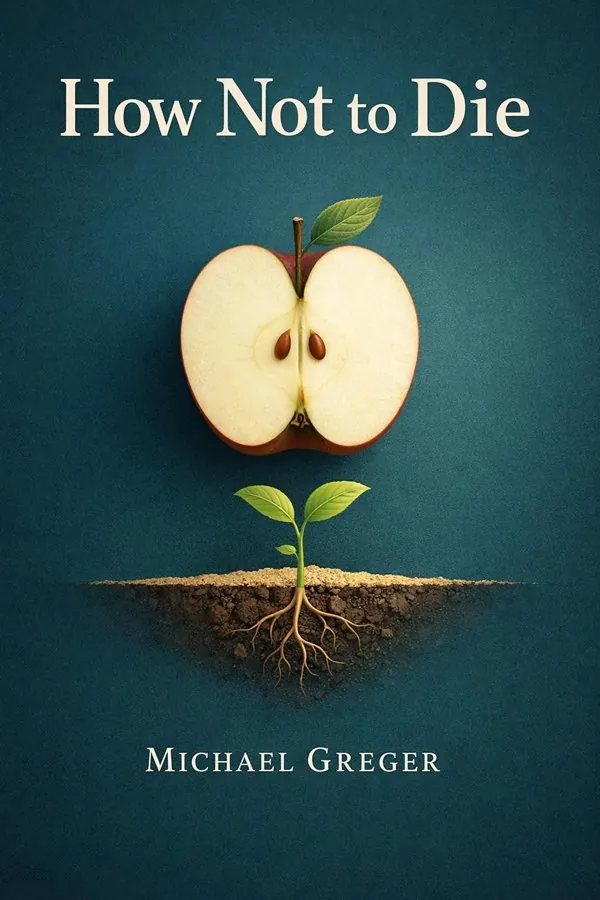
How Not to Die: Summary & Key Insights
 10 min7 chaptersAudio available
Key Takeaways from How Not to Die
One of the book’s core arguments is that nutrition should not be treated as a side note in healthcare.
Greger presents heart disease as the clearest example of food’s life-or-death power.
Greger’s discussion of lung health broadens the conversation beyond smoking and pollution to include the role of diet in protecting respiratory function.
Brain health, Greger argues, is deeply connected to the same lifestyle patterns that influence heart health.
In addressing digestive cancers, Greger emphasizes that the digestive tract is in direct contact with what we consume, making diet a major factor in long-term risk.
What Is How Not to Die About?
How Not to Die by Michael Greger is a health book published in 2015 spanning 7 pages. What if the biggest threats to your life weren’t random bad luck or inevitable aging, but conditions heavily shaped by what shows up on your plate each day? In *How Not to Die*, Dr. Michael Greger tackles that question head-on by exploring the leading causes of premature death and showing how nutrition can play a powerful role in prevention. Rather than offering trendy wellness advice or quick-fix diet rules, Greger builds his case around research, translating complex findings into practical guidance readers can actually use. The book matters because chronic diseases like heart disease, diabetes, stroke, and certain cancers dominate modern life, yet many people still underestimate how much daily habits influence long-term outcomes. Greger argues that food is not just calories or comfort—it is information for the body, shaping inflammation, blood pressure, cholesterol, gut health, and more. His message is both urgent and hopeful: the same choices that contribute to disease can often be changed. As a physician, author, and founder of NutritionFacts.org, Greger is known for making nutrition science accessible to the public. In this book, he combines medical insight with actionable strategies, giving readers a roadmap for eating in a way that supports both longevity and quality of life.
This FizzRead summary covers all 7 key chapters of How Not to Die in approximately 10 minutes, distilling the most important ideas, arguments, and takeaways from Michael Greger's work. Also available as an audio summary and Key Quotes Podcast.
How Not to Die: Discover the Foods Scientifically Proven to Prevent and Reverse Disease
What if the biggest threats to your life weren’t random bad luck or inevitable aging, but conditions heavily shaped by what shows up on your plate each day? In *How Not to Die*, Dr. Michael Greger tackles that question head-on by exploring the leading causes of premature death and showing how nutrition can play a powerful role in prevention. Rather than offering trendy wellness advice or quick-fix diet rules, Greger builds his case around research, translating complex findings into practical guidance readers can actually use.
The book matters because chronic diseases like heart disease, diabetes, stroke, and certain cancers dominate modern life, yet many people still underestimate how much daily habits influence long-term outcomes. Greger argues that food is not just calories or comfort—it is information for the body, shaping inflammation, blood pressure, cholesterol, gut health, and more. His message is both urgent and hopeful: the same choices that contribute to disease can often be changed.
As a physician, author, and founder of NutritionFacts.org, Greger is known for making nutrition science accessible to the public. In this book, he combines medical insight with actionable strategies, giving readers a roadmap for eating in a way that supports both longevity and quality of life.
Who Should Read How Not to Die?
This book is perfect for anyone interested in health and looking to gain actionable insights in a short read. Whether you're a student, professional, or lifelong learner, the key ideas from How Not to Die by Michael Greger will help you think differently.
- ✓Readers who enjoy health and want practical takeaways
- ✓Professionals looking to apply new ideas to their work and life
- ✓Anyone who wants the core insights of How Not to Die in just 10 minutes
Want the full summary?
Get instant access to this book summary and 100K+ more with Fizz Moment.
Get Free SummaryAvailable on App Store • Free to download
Key Chapters
One of the book’s core arguments is that nutrition should not be treated as a side note in healthcare. It is central. Greger makes the case that the foods people eat every day can either push the body toward dysfunction or support its ability to repair and protect itself. Diets built around whole plant foods—such as beans, leafy greens, berries, whole grains, cruciferous vegetables, nuts, and seeds—supply fiber, antioxidants, vitamins, minerals, and phytonutrients that work together to reduce disease risk. By contrast, heavily processed foods and many animal-based products are associated with inflammation, poorer cardiovascular markers, and higher chronic disease burden.
A useful way to think about this is through accumulation. A single salad will not “cure” poor health, and one greasy meal will not ruin it. What matters is the overall pattern. For example, replacing a processed breakfast with oatmeal and fruit, swapping deli meat for lentil soup at lunch, and adding beans and vegetables to dinner can steadily improve cholesterol, blood sugar, and satiety. Greger’s broader point is empowering: prevention is not just about avoiding illness decades from now. It is about creating daily conditions in which the body can function better right now—more stable energy, healthier digestion, better vascular function, and lower long-term risk.
Greger presents heart disease as the clearest example of food’s life-or-death power. Rather than treating clogged arteries as an unavoidable consequence of aging, he argues that diet is one of the main drivers of cardiovascular decline. The book highlights research showing that dietary patterns rich in saturated fat and cholesterol can impair endothelial function—the ability of blood vessels to expand properly—while whole plant foods help restore it. In practical terms, that means food choices can influence blood flow after a single meal, not just over a lifetime.
What makes this chapter especially compelling is its emphasis on reversibility. Greger discusses evidence suggesting that people with serious cardiovascular disease may improve markers such as cholesterol, blood pressure, and arterial health when they adopt a whole-food, plant-based approach. This does not mean food should replace emergency care or prescribed treatment, but it does mean that nutrition can be a powerful tool, not just a preventive one. Actionable changes include eating oats instead of sugary breakfast foods, using beans or hummus in place of processed meats, choosing berries for dessert, and adding dark leafy greens daily. The key insight is simple: every meal can either strain the cardiovascular system or support its recovery. Consistent choices matter more than perfection.
Greger’s discussion of lung health broadens the conversation beyond smoking and pollution to include the role of diet in protecting respiratory function. While avoiding tobacco remains essential, the book argues that food choices can also influence inflammation, oxidative stress, and immune resilience—factors that affect the lungs over time. Diets high in colorful fruits and vegetables provide antioxidants that may help the body defend itself against cellular damage, while fiber-rich foods support gut health, which is increasingly linked to immune regulation throughout the body, including the respiratory system.
This chapter’s practical lesson is that lung protection is not only about eliminating obvious risks; it is also about building defenses. A person who adds berries to breakfast, includes cruciferous vegetables like broccoli or cabbage at dinner, and snacks on apples or citrus is giving the body compounds associated with reduced oxidative stress. Beans, whole grains, and greens also contribute nutrients that support overall metabolic and immune health. Greger’s approach encourages readers to stop thinking of lung disease as a problem disconnected from daily eating habits. Even if no diet can erase every risk, nourishing the body well can strengthen its capacity to resist damage, recover more effectively, and maintain better function with age.
Brain health, Greger argues, is deeply connected to the same lifestyle patterns that influence heart health. The brain depends on healthy blood flow, low inflammation, and steady metabolic function, so the foods that protect arteries also help protect cognition. This is a vital insight because many people think of memory loss or neurodegeneration as something largely predetermined. Greger pushes back on that idea by showing how diet may influence risk factors tied to stroke, cognitive decline, and other brain-related diseases.
A practical takeaway is to eat for the brain long before symptoms appear. Leafy greens, berries, nuts, seeds, and whole grains feature prominently because they deliver compounds associated with vascular and anti-inflammatory benefits. For example, swapping processed snacks for walnuts and fruit, adding spinach to soups or smoothies, and using herbs and spices in place of excess salt can help build a more protective dietary pattern. Another important point is consistency: the brain benefits from years of support, not occasional “healthy” meals after periods of neglect. Greger’s message is encouraging rather than fatalistic. While no food can guarantee immunity from neurological disease, the cumulative effect of better eating may improve the odds of maintaining sharper thinking, stronger circulation, and greater resilience as the years go on.
In addressing digestive cancers, Greger emphasizes that the digestive tract is in direct contact with what we consume, making diet a major factor in long-term risk. Foods do not just pass through the body neutrally; they interact with the gut lining, influence inflammation, feed certain microbes, and affect how waste products move through the system. Diets low in fiber and high in processed foods can create conditions that are less protective, while whole plant foods help support regularity, beneficial gut bacteria, and healthier metabolic byproducts.
One of the most actionable lessons here is to prioritize fiber-rich foods every day. Beans, lentils, oats, brown rice, berries, apples, flaxseeds, and vegetables all help move waste through the digestive tract more efficiently and nourish a healthier microbiome. A simple example would be replacing a low-fiber breakfast pastry with oatmeal and fruit, choosing a bean chili over processed meat at lunch, or filling half the dinner plate with vegetables. Greger’s perspective is not about fear; it is about leverage. Because digestive organs are so closely linked to what we eat, dietary improvements can meaningfully change the environment inside the body. Over time, that shift may reduce exposure to harmful compounds and create conditions that are more supportive of long-term digestive health.
One of the most memorable parts of *How Not to Die* is the “Daily Dozen,” Greger’s practical checklist for turning nutrition science into daily action. Instead of asking readers to count calories or obsess over macros, he offers a simple framework focused on categories of beneficial foods and habits. The idea is straightforward: if you consistently include servings of beans, berries, other fruits, cruciferous vegetables, greens, other vegetables, flaxseeds, nuts, spices, whole grains, beverages, and exercise, you dramatically improve your nutritional baseline.
What makes the Daily Dozen effective is that it shifts attention from restriction to addition. Rather than asking, “What should I cut out?” readers start asking, “How can I fit more protective foods into my day?” For example, breakfast might include oatmeal with berries and flaxseeds, lunch could be a lentil salad with greens, and dinner might feature brown rice, roasted broccoli, and beans. Even snacks can become strategic with fruit or nuts. This approach reduces decision fatigue and makes healthy eating feel concrete rather than abstract. The checklist also helps people build momentum: if you miss one category, you can still make progress in others. Greger turns evidence into a daily rhythm, giving readers a structure that is flexible, realistic, and easy to revisit.
Greger recognizes that information alone does not transform health; habits do. Knowing that plants are protective is one thing, but changing routines, shopping patterns, family meals, and cravings is another. That is why one of the book’s most important messages is to make lifestyle change practical, gradual, and repeatable. The goal is not overnight perfection. It is to create an environment where healthier choices become easier than unhealthy ones.
A useful strategy is substitution rather than sheer willpower. Instead of trying to “stop eating badly,” replace familiar staples with better versions: black beans for part of the meat in tacos, fruit for sugary desserts several nights a week, air-popped popcorn instead of chips, or whole grains in place of refined ones. Meal prep also matters. Keeping canned beans, frozen vegetables, oats, nuts, and fruit on hand makes healthy decisions faster on busy days. Greger’s broader lesson is that motivation is unreliable, but systems are powerful. If your kitchen is stocked well and your meals have a default structure, better eating becomes less of a struggle. Sustainable change comes from small repeated actions, not heroic bursts of discipline. Over time, those actions reshape taste, energy, and health outcomes.
All Chapters in How Not to Die
About the Author
Dr. Michael Greger is a physician, author, and internationally recognized speaker on public health issues. He is best known for translating nutrition research into practical advice for everyday readers. Greger is the founder of NutritionFacts.org, a nonprofit website that provides free updates on the latest findings in nutrition science. His work centers on evidence-based approaches to disease prevention, with a particular emphasis on the role of diet and lifestyle in long-term health. Through his writing and public education efforts, he has helped popularize the idea that informed food choices can be a powerful tool for improving wellness and reducing chronic disease risk.
Get This Summary in Your Preferred Format
Read or listen to the How Not to Die summary by Michael Greger anytime, anywhere. FizzRead offers multiple formats so you can learn on your terms — all free.
Available formats: App · Audio · PDF · EPUB — All included free with FizzRead
Download How Not to Die PDF and EPUB Summary
Key Quotes from How Not to Die
“One of the book’s core arguments is that nutrition should not be treated as a side note in healthcare.”
“Greger presents heart disease as the clearest example of food’s life-or-death power.”
“Greger’s discussion of lung health broadens the conversation beyond smoking and pollution to include the role of diet in protecting respiratory function.”
“Brain health, Greger argues, is deeply connected to the same lifestyle patterns that influence heart health.”
“In addressing digestive cancers, Greger emphasizes that the digestive tract is in direct contact with what we consume, making diet a major factor in long-term risk.”
Frequently Asked Questions about How Not to Die
How Not to Die by Michael Greger is a health book that explores key ideas across 7 chapters. What if the biggest threats to your life weren’t random bad luck or inevitable aging, but conditions heavily shaped by what shows up on your plate each day? In *How Not to Die*, Dr. Michael Greger tackles that question head-on by exploring the leading causes of premature death and showing how nutrition can play a powerful role in prevention. Rather than offering trendy wellness advice or quick-fix diet rules, Greger builds his case around research, translating complex findings into practical guidance readers can actually use. The book matters because chronic diseases like heart disease, diabetes, stroke, and certain cancers dominate modern life, yet many people still underestimate how much daily habits influence long-term outcomes. Greger argues that food is not just calories or comfort—it is information for the body, shaping inflammation, blood pressure, cholesterol, gut health, and more. His message is both urgent and hopeful: the same choices that contribute to disease can often be changed. As a physician, author, and founder of NutritionFacts.org, Greger is known for making nutrition science accessible to the public. In this book, he combines medical insight with actionable strategies, giving readers a roadmap for eating in a way that supports both longevity and quality of life.
Compare How Not to Die



More by Michael Greger
You Might Also Like

Featured In
Browse by Category
Ready to read How Not to Die?
Get the full summary and 100K+ more books with Fizz Moment.