
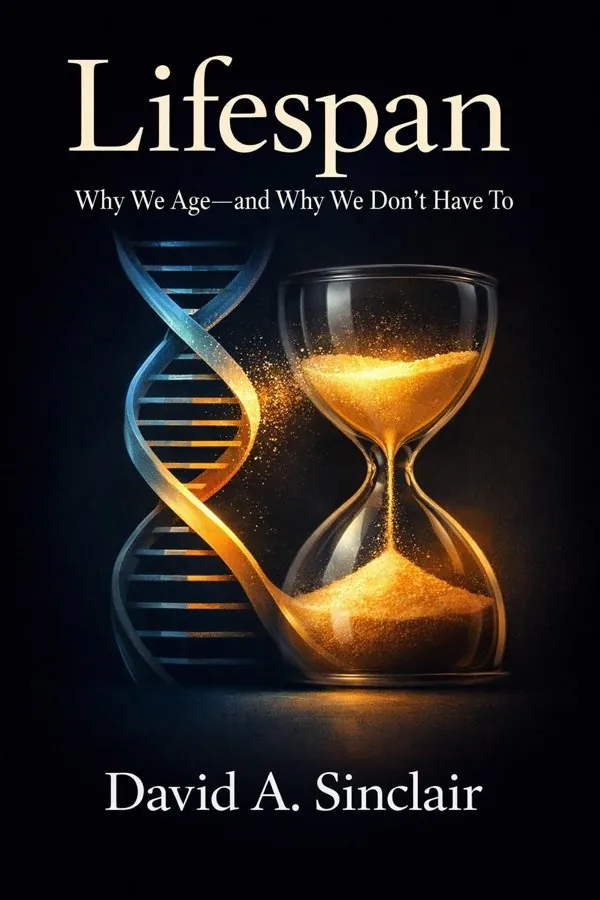
Lifespan: Summary & Key Insights
 10 min10 chaptersAudio available
Key Takeaways from Lifespan
The most disruptive idea in Lifespan is also its simplest: aging should be viewed not as destiny, but as a condition that can be targeted.
Sinclair’s central scientific idea is that aging happens because cells lose information about how to function correctly.
One of Sinclair’s earliest and most influential research interests is a family of genes and proteins called sirtuins.
Aging is not just about time passing; it is also about energy management.
Perhaps the most futuristic idea in Lifespan is that aging may one day be reversed by resetting cells to a more youthful state.
What Is Lifespan About?
Lifespan by David Sinclair is a health book published in 2019 spanning 9 pages. In Lifespan, Harvard geneticist David A. Sinclair makes a bold argument: aging is not simply an unavoidable part of life but a biological process that can be understood, slowed, and potentially reversed. Rather than treating heart disease, cancer, dementia, and diabetes as separate problems, Sinclair asks a more fundamental question: what if aging itself is the root cause behind many of them? Drawing on decades of laboratory research, personal experience, and the history of longevity science, he explains how our cells lose vital information over time and why that decline may be more malleable than we once believed. What makes the book so compelling is its mix of frontier science and practical relevance. Sinclair introduces readers to sirtuins, NAD+, epigenetics, fasting, exercise, and emerging technologies that may reshape medicine in the coming decades. He also explores the social and ethical consequences of longer lives, from healthcare to inequality. As a professor of genetics at Harvard Medical School and one of the world’s best-known aging researchers, Sinclair writes with authority, urgency, and optimism. Lifespan is both a scientific manifesto and a provocative invitation to rethink what it means to grow old.
This FizzRead summary covers all 10 key chapters of Lifespan in approximately 10 minutes, distilling the most important ideas, arguments, and takeaways from David Sinclair's work. Also available as an audio summary and Key Quotes Podcast.
Lifespan
In Lifespan, Harvard geneticist David A. Sinclair makes a bold argument: aging is not simply an unavoidable part of life but a biological process that can be understood, slowed, and potentially reversed. Rather than treating heart disease, cancer, dementia, and diabetes as separate problems, Sinclair asks a more fundamental question: what if aging itself is the root cause behind many of them? Drawing on decades of laboratory research, personal experience, and the history of longevity science, he explains how our cells lose vital information over time and why that decline may be more malleable than we once believed.
What makes the book so compelling is its mix of frontier science and practical relevance. Sinclair introduces readers to sirtuins, NAD+, epigenetics, fasting, exercise, and emerging technologies that may reshape medicine in the coming decades. He also explores the social and ethical consequences of longer lives, from healthcare to inequality. As a professor of genetics at Harvard Medical School and one of the world’s best-known aging researchers, Sinclair writes with authority, urgency, and optimism. Lifespan is both a scientific manifesto and a provocative invitation to rethink what it means to grow old.
Who Should Read Lifespan?
This book is perfect for anyone interested in health and looking to gain actionable insights in a short read. Whether you're a student, professional, or lifelong learner, the key ideas from Lifespan by David Sinclair will help you think differently.
- ✓Readers who enjoy health and want practical takeaways
- ✓Professionals looking to apply new ideas to their work and life
- ✓Anyone who wants the core insights of Lifespan in just 10 minutes
Want the full summary?
Get instant access to this book summary and 100K+ more with Fizz Moment.
Get Free SummaryAvailable on App Store • Free to download
Key Chapters
The most disruptive idea in Lifespan is also its simplest: aging should be viewed not as destiny, but as a condition that can be targeted. Sinclair argues that what we call aging is the underlying driver behind many of the diseases that kill us. Instead of seeing cancer, Alzheimer’s, cardiovascular disease, and type 2 diabetes as isolated events, he invites us to see them as downstream effects of biological decline. If that decline can be slowed, many diseases may be delayed at once.
This reframing matters because medicine has traditionally focused on treating individual illnesses after they appear. Sinclair believes that model is too reactive. In his view, the real opportunity lies in extending healthspan, the number of years we remain vigorous, independent, and mentally sharp. Living longer is only worthwhile if those added years are healthy ones.
He supports this perspective with research from yeast, worms, mice, and increasingly humans, showing that lifespan can be influenced by genes, energy metabolism, stress responses, and behavior. The goal is not immortality, but a new kind of preventive medicine built around preserving cellular function.
In practical terms, this changes how we think about daily choices. Exercise, fasting, sleep, temperature exposure, and metabolic health are no longer just wellness habits; they become ways of influencing the biology of aging itself. It also changes how we think about healthcare policy, drug development, and personal priorities.
Actionable takeaway: Start thinking in terms of healthspan, not just lifespan. Make choices that preserve function over decades, rather than only reacting when symptoms appear.
Sinclair’s central scientific idea is that aging happens because cells lose information about how to function correctly. He compares the body to an orchestra: when young, every musician plays in coordination, but over time the conductor’s instructions become scrambled. The DNA itself may remain largely intact, yet the system that tells genes when and how to operate begins to fail.
This is what Sinclair calls the Information Theory of Aging. He distinguishes between genetic information, the DNA sequence, and epigenetic information, the layer of instructions that tells cells which genes to activate. As cells face stress, damage, toxins, inflammation, and time, these epigenetic instructions become disrupted. The result is cellular confusion: skin cells lose their identity, tissues function less efficiently, and repair systems weaken.
This theory is powerful because it suggests that aging may be reversible to some degree. If cells retain the original genetic blueprint, then restoring the lost instructions might help them recover youthful function. That possibility underlies much of the book’s excitement about reprogramming and epigenetic repair.
For everyday readers, the theory offers a useful lens. Aging is not just “wear and tear.” It is also a breakdown in communication and regulation. That means systems that improve cellular signaling and stress resilience may matter more than quick fixes or cosmetic anti-aging claims.
Actionable takeaway: Protect your biological “information system” by reducing chronic stressors you can control, such as poor sleep, constant overeating, inactivity, smoking, and unmanaged inflammation.
One of Sinclair’s earliest and most influential research interests is a family of genes and proteins called sirtuins. He presents them as ancient survival tools, preserved across species because they help organisms endure adversity. When food is scarce or cells are under stress, sirtuins help regulate repair, energy use, inflammation, and genomic stability.
In Sinclair’s telling, sirtuins are part of the reason mild stress can be beneficial. They do not switch on most strongly when life is comfortable. They respond when the body detects challenge: fasting, exercise, cold, heat, or other forms of manageable stress. This idea aligns with hormesis, the principle that small doses of stress can trigger stronger long-term resilience.
Sirtuins rely on NAD+, a molecule discussed later in the book, which means their activity is tightly linked to cellular energy status. As NAD+ declines with age, sirtuin function may weaken, allowing cellular disorder to increase. That is one reason Sinclair sees them as a key bridge between lifestyle and longevity biology.
Readers do not need to memorize molecular pathways to grasp the practical point. A life of constant comfort may reduce the very signals that keep repair systems active. In contrast, strategic challenges can teach the body to adapt. Examples include regular physical training, time-restricted eating, and avoiding constant snacking.
Actionable takeaway: Build mild, repeatable stress into your week. Exercise consistently, avoid living in a state of perpetual caloric abundance, and let your body practice adaptation instead of constant comfort.
Aging is not just about time passing; it is also about energy management. Sinclair emphasizes the importance of NAD+, a molecule essential for metabolism, DNA repair, and the activity of proteins like sirtuins. When we are young, NAD+ levels are relatively abundant. As we age, they decline, and many cellular systems begin to run less efficiently.
This decline may contribute to fatigue, weaker repair capacity, mitochondrial dysfunction, and slower recovery from stress. Sinclair discusses how boosting NAD+ has become a major area of longevity research, with compounds such as NMN and NR explored as possible precursors that help the body replenish it. He presents this as one of the most promising paths in anti-aging science, while also acknowledging that human evidence is still evolving.
The broader lesson is that longevity is deeply tied to metabolic flexibility. Cells need enough energy to maintain themselves, repair DNA, and respond to changing conditions. Poor diet, sedentary behavior, and chronic overconsumption can impair this balance. On the other hand, exercise and periods of low nutrient availability may help restore healthier signaling.
For readers, NAD+ symbolizes something larger than supplementation. It represents the idea that vitality depends on cellular housekeeping, not just calorie intake. Better energy regulation often begins with ordinary habits: movement, weight control, sleep, and reduced metabolic overload.
Actionable takeaway: Before chasing supplements, improve the foundations that support healthy energy metabolism: regular exercise, stable blood sugar, adequate sleep, and fewer habits that constantly exhaust your cells.
Perhaps the most futuristic idea in Lifespan is that aging may one day be reversed by resetting cells to a more youthful state. Sinclair discusses work on epigenetic reprogramming, a process that uses specific factors to restore cells’ lost instructions without changing their DNA sequence. If aging is partly caused by corrupted epigenetic information, then reprogramming may help recover function.
This line of research grew from discoveries showing that adult cells can be turned back into stem-like cells. Sinclair is especially interested in whether partial reprogramming can rejuvenate tissues without erasing their identity. In animal studies, this has shown promise in restoring some function in damaged or aged tissues. While the field is still young and far from routine human use, its implications are extraordinary.
The significance is hard to overstate. Most medicine tries to manage decline. Reprogramming points toward the possibility of actually restoring biological youthfulness at the cellular level. That would represent a profound shift in how we treat age-related disease.
At the same time, Sinclair does not present this as something readers can do at home. It remains a scientific frontier, not a consumer intervention. The practical value for readers is philosophical: aging may be more plastic than we assume, and the body may contain dormant capacities for renewal.
Actionable takeaway: Stay scientifically curious but skeptical. Follow advances in regenerative medicine with optimism, while grounding your personal health strategy in interventions already supported by real-world evidence.
One of Sinclair’s most useful contributions is showing that longevity science is not only about future drugs. Many of the same pathways studied in the lab respond to how we live now. He argues that the modern environment often works against our biology: constant food, little movement, comfortable temperatures, poor sleep, and chronic overstimulation create conditions that weaken resilience.
By contrast, strategic discomfort can activate ancient repair mechanisms. Sinclair highlights practices such as exercise, intermittent fasting or time-restricted eating, exposure to heat and cold, and avoiding excessive eating. The point is not self-punishment. It is to recreate the kinds of challenges human biology evolved to handle. When cells sense manageable adversity, they often respond by becoming stronger, more efficient, and better able to repair damage.
This helps explain why moderate exercise improves not only fitness but also insulin sensitivity, inflammation, mitochondrial function, and mood. It also explains why constant snacking may be less ideal than allowing the body to cycle between feeding and repair. Even temperature variation, such as saunas or cold exposure, may trigger adaptive pathways, though the evidence varies by intervention.
Sinclair’s framework is especially valuable because it turns anti-aging from a luxury concept into a behavioral one. You do not need a futuristic clinic to begin supporting healthier aging. You need to stop making life biologically too easy.
Actionable takeaway: Introduce controlled challenge into your routine: move daily, leave time between meals, and avoid the always-fed, always-comfortable lifestyle that dulls the body’s repair systems.
Aging research has moved beyond abstract theory into a field increasingly driven by technology. Sinclair describes how advances in genomics, biomarkers, artificial intelligence, and biotechnology are making it possible to measure biological age more precisely and test interventions more quickly. Instead of relying only on chronological age, scientists can now assess signs of molecular wear, epigenetic drift, inflammation, and metabolic function.
This matters because what gets measured can be improved. If researchers can detect early biological decline before disease appears, medicine can become more preventive and personalized. A person who is 55 chronologically may have the biological profile of someone much younger or older, depending on genetics, environment, and behavior. That opens the door to tailored recommendations rather than one-size-fits-all aging advice.
Sinclair also points to a future in which therapies target specific aging mechanisms, including senescent cells, mitochondrial decline, DNA damage, and epigenetic disruption. Some of these approaches are already in trials, while others remain speculative. The key message is that aging is becoming an engineering problem as much as a philosophical one.
For readers, this trend suggests both opportunity and caution. New tools may transform medicine, but hype moves faster than evidence. Not every test or treatment sold under the longevity label is meaningful.
Actionable takeaway: Use data wisely. Track core health markers like blood glucose, fitness, sleep, and body composition, but be wary of expensive longevity claims that outrun the science.
Sinclair introduces an ambitious concept known as longevity escape velocity: the point at which medical advances extend healthy life faster than time takes it away. In theory, if science can add more than one year of healthy life for each year that passes, people could continue benefiting from the next wave of improvements, creating a compounding effect.
This idea sounds like science fiction, but Sinclair uses it to illustrate how rapidly longevity research may accelerate. A person alive today might not need all the answers immediately. They may simply need to remain healthy long enough to benefit from therapies arriving in the next decade, and then the decade after that. In this framework, every gain in healthspan increases access to future breakthroughs.
The concept also changes the psychology of aging. Instead of seeing later life as a fixed downhill slope, Sinclair encourages readers to view it as a moving frontier. The challenge is to keep the body functional enough to cross each scientific bridge as it appears.
That does not mean betting blindly on miracle cures. It means appreciating the compounding value of prevention. A person who improves cardiovascular health, muscle mass, insulin sensitivity, and cognitive reserve today may be far better positioned to benefit from tomorrow’s regenerative therapies than someone who waits passively.
Actionable takeaway: Treat your current health as a bridge to future medicine. The best way to benefit from longevity breakthroughs later is to preserve your metabolic, physical, and cognitive resilience now.
Lifespan is not only about molecules and metabolism. Sinclair also asks what happens if many people begin living significantly longer and healthier lives. The consequences would ripple through retirement, careers, education, healthcare, family structure, and public policy. If 80 becomes the new 60, institutions built around old assumptions may stop making sense.
Sinclair rejects the idea that longer lives would automatically create overcrowding or social collapse. He argues that healthier older populations could remain productive, creative, and economically active for longer. Instead of decades of decline, many people might enjoy additional decades of contribution. That could reduce healthcare burdens associated with frailty and chronic disease, even as it challenges current pension systems and expectations around work.
Still, he acknowledges ethical concerns. Who gets access to life-extending therapies? Will longevity become a privilege of the wealthy? Could social inequality deepen if only some groups can afford advanced treatments? These questions are central, not secondary. A world with longer lives must also be a world with fairer access.
For readers, this section broadens the book’s importance. Longevity is not just a personal goal; it is a societal transformation. Thinking seriously about aging means thinking about justice, economics, and intergenerational responsibility.
Actionable takeaway: Support a vision of longevity that is equitable. Advocate for public health, prevention, and broad access so that gains in healthspan do not become benefits reserved for a small minority.
For all its futuristic science, Lifespan returns repeatedly to a grounded message: your everyday behaviors shape how well you age. Sinclair shares practical recommendations that reflect his own approach, including exercising regularly, avoiding excessive eating, allowing periods of hunger, prioritizing plant-rich nutrition, maintaining a healthy weight, and supporting metabolic health. He also emphasizes the importance of not waiting for sickness before taking aging seriously.
This is one of the book’s strengths. It does not leave readers with only grand theories and distant technologies. Instead, it shows how current knowledge can already be applied. For example, strength training helps preserve muscle and insulin sensitivity. Aerobic exercise supports cardiovascular and mitochondrial health. Avoiding constant snacking may improve metabolic flexibility. Good sleep improves hormonal balance and cellular repair. Social connection and purpose also matter, even if they receive less biochemical attention.
Sinclair’s practical recommendations are not presented as perfect rules for everyone. They are principles: challenge the body, avoid chronic excess, preserve function, and think long term. The exact form may vary by age, health status, and personal preference.
What ties everything together is consistency. Longevity is not won by one supplement, one detox, or one breakthrough headline. It is built through repeated signals that tell the body to repair, adapt, and stay capable.
Actionable takeaway: Choose two or three longevity-friendly habits you can sustain for years, not weeks, such as strength training, time-restricted eating, better sleep, or reducing ultra-processed foods.
All Chapters in Lifespan
About the Author
David A. Sinclair is an Australian biologist, professor of genetics at Harvard Medical School, and one of the most prominent researchers in the field of aging and longevity. He is widely known for his work on sirtuins, NAD+ metabolism, and the molecular mechanisms that drive cellular decline over time. Sinclair serves as co-director of the Paul F. Glenn Center for Biology of Aging Research and has played a major role in bringing longevity science from the lab into public conversation. Beyond his academic research, he is recognized for advocating a shift in medicine toward extending healthspan rather than simply treating disease after it appears. Through his writing, speaking, and scientific leadership, Sinclair has become a leading voice in the idea that aging is a treatable biological process.
Get This Summary in Your Preferred Format
Read or listen to the Lifespan summary by David Sinclair anytime, anywhere. FizzRead offers multiple formats so you can learn on your terms — all free.
Available formats: App · Audio · PDF · EPUB — All included free with FizzRead
Download Lifespan PDF and EPUB Summary
Key Quotes from Lifespan
“The most disruptive idea in Lifespan is also its simplest: aging should be viewed not as destiny, but as a condition that can be targeted.”
“Sinclair’s central scientific idea is that aging happens because cells lose information about how to function correctly.”
“One of Sinclair’s earliest and most influential research interests is a family of genes and proteins called sirtuins.”
“Aging is not just about time passing; it is also about energy management.”
“Perhaps the most futuristic idea in Lifespan is that aging may one day be reversed by resetting cells to a more youthful state.”
Frequently Asked Questions about Lifespan
Lifespan by David Sinclair is a health book that explores key ideas across 10 chapters. In Lifespan, Harvard geneticist David A. Sinclair makes a bold argument: aging is not simply an unavoidable part of life but a biological process that can be understood, slowed, and potentially reversed. Rather than treating heart disease, cancer, dementia, and diabetes as separate problems, Sinclair asks a more fundamental question: what if aging itself is the root cause behind many of them? Drawing on decades of laboratory research, personal experience, and the history of longevity science, he explains how our cells lose vital information over time and why that decline may be more malleable than we once believed. What makes the book so compelling is its mix of frontier science and practical relevance. Sinclair introduces readers to sirtuins, NAD+, epigenetics, fasting, exercise, and emerging technologies that may reshape medicine in the coming decades. He also explores the social and ethical consequences of longer lives, from healthcare to inequality. As a professor of genetics at Harvard Medical School and one of the world’s best-known aging researchers, Sinclair writes with authority, urgency, and optimism. Lifespan is both a scientific manifesto and a provocative invitation to rethink what it means to grow old.
You Might Also Like


Featured In
Browse by Category
Ready to read Lifespan?
Get the full summary and 100K+ more books with Fizz Moment.