
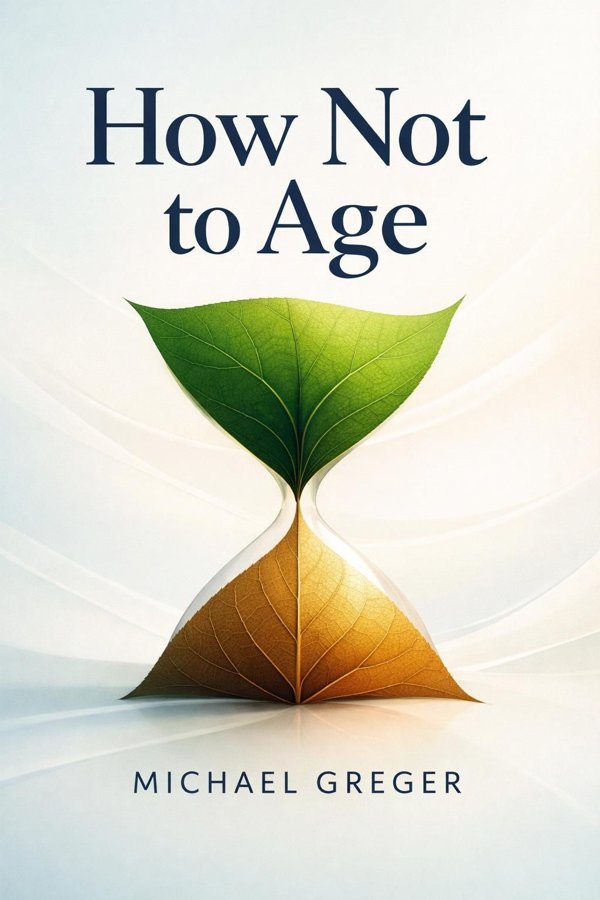
How Not to Age: The Scientific Approach to Getting Healthier as You Get Older: Summary & Key Insights
 10 min7 chaptersAudio available
What Is How Not to Age: The Scientific Approach to Getting Healthier as You Get Older About?
How Not to Age: The Scientific Approach to Getting Healthier as You Get Older by Michael Greger is a health_med book spanning 7 pages. In 'How Not to Age', Dr. Michael Greger explores the latest scientific research on aging and longevity, offering evidence-based strategies to slow the aging process and extend healthspan. Drawing on thousands of peer-reviewed studies, he provides practical guidance on nutrition, lifestyle, and disease prevention to help readers live longer, healthier lives.
This FizzRead summary covers all 7 key chapters of How Not to Age: The Scientific Approach to Getting Healthier as You Get Older in approximately 10 minutes, distilling the most important ideas, arguments, and takeaways from Michael Greger's work. Also available as an audio summary and Key Quotes Podcast.
How Not to Age: The Scientific Approach to Getting Healthier as You Get Older
In 'How Not to Age', Dr. Michael Greger explores the latest scientific research on aging and longevity, offering evidence-based strategies to slow the aging process and extend healthspan. Drawing on thousands of peer-reviewed studies, he provides practical guidance on nutrition, lifestyle, and disease prevention to help readers live longer, healthier lives.
Who Should Read How Not to Age: The Scientific Approach to Getting Healthier as You Get Older?
This book is perfect for anyone interested in health_med and looking to gain actionable insights in a short read. Whether you're a student, professional, or lifelong learner, the key ideas from How Not to Age: The Scientific Approach to Getting Healthier as You Get Older by Michael Greger will help you think differently.
- ✓Readers who enjoy health_med and want practical takeaways
- ✓Professionals looking to apply new ideas to their work and life
- ✓Anyone who wants the core insights of How Not to Age: The Scientific Approach to Getting Healthier as You Get Older in just 10 minutes
Want the full summary?
Get instant access to this book summary and 100K+ more with Fizz Moment.
Get Free SummaryAvailable on App Store • Free to download
Key Chapters
Every process that defines youth or age begins at the cellular level. Our bodies are composed of trillions of cells—each is like a tiny engine running day and night. Aging occurs when those engines falter. In medical research, we can trace this decline to several interconnected mechanisms: oxidative stress, telomere shortening, inflammation, and mitochondrial dysfunction.
Oxidative stress is the cellular equivalent of rusting. As oxygen interacts with molecules in our body, it can form free radicals—unstable atoms that damage DNA, proteins, and membranes. The more oxidative damage accumulates, the more cellular machinery breaks down. This is where nutrition and lifestyle come into play. Antioxidant-rich foods can neutralize those free radicals, slowing down that rusting process.
Then there are telomeres—the protective caps at the ends of our chromosomes. Imagine shoelace tips that keep the laces from fraying. Each time a cell divides, telomeres shorten, and eventually, the cell can no longer reproduce. That’s biological aging in action. Studies show that lifestyle factors such as stress reduction, exercise, and plant-based diets can stabilize or even lengthen telomeres.
Inflammation, the body’s self-defense mechanism, can also turn against us. Chronic low-level inflammation—what scientists call “inflammaging”—drives diseases like heart failure, diabetes, and cognitive decline. It’s as if the immune system gradually loses its off switch, damaging the tissues it was meant to protect.
In writing this chapter, I wanted readers to understand that cellular aging isn't a sentence—it’s a system that can be tuned. The choices we make every day, from what’s on our plate to how we manage stress, send chemical signals directly to our DNA. The body’s capacity for renewal never truly vanishes; it simply needs the right conditions to thrive.
If there’s one intervention that influences every part of the aging process, it’s diet. The scientific evidence is overwhelmingly clear: plant-centered nutrition supports longevity more effectively than any other dietary pattern studied. In *How Not to Age*, I dive into decades of epidemiological research showing that people who eat primarily whole, plant-based foods not only live longer but also spend more years free from chronic disease.
Why do plants matter so much? They’re packed with phytonutrients—bioactive compounds that help regulate inflammation, oxidative stress, and metabolism. Foods like cruciferous vegetables, berries, and legumes activate defense mechanisms at the cellular level. It’s not about deprivation, but about abundance—giving the body what it needs to repair itself.
I also discuss caloric balance: the phenomenon of “caloric restriction without malnutrition,” a concept shown in many studies to extend lifespans across species. But the message isn’t simply eat less—it’s eat smarter. Nutrient density matters more than calorie count. The right foods activate longevity pathways through mechanisms like AMPK activation and mTOR modulation—scientific terms that essentially mean switching the body from growth mode to maintenance and repair mode.
For years, I’ve emphasized that nutrition is the foundation of preventive medicine. In *How Not to Age*, I give readers the science-backed dietary map to enhance their body’s inherent ability to defend against disease while maintaining vigor well into older age. Every forkful of food communicates with your genes; I want readers to choose messages of resilience, not decline.
+ 5 more chapters — available in the FizzRead app
All Chapters in How Not to Age: The Scientific Approach to Getting Healthier as You Get Older
About the Author
Dr. Michael Greger is a physician, author, and internationally recognized speaker on nutrition, food safety, and public health issues. He is the founder of NutritionFacts.org and the author of several bestselling books, including 'How Not to Die' and 'How Not to Diet'.
Get This Summary in Your Preferred Format
Read or listen to the How Not to Age: The Scientific Approach to Getting Healthier as You Get Older summary by Michael Greger anytime, anywhere. FizzRead offers multiple formats so you can learn on your terms — all free.
Available formats: App · Audio · PDF · EPUB — All included free with FizzRead
Download How Not to Age: The Scientific Approach to Getting Healthier as You Get Older PDF and EPUB Summary
Key Quotes from How Not to Age: The Scientific Approach to Getting Healthier as You Get Older
“Every process that defines youth or age begins at the cellular level.”
“If there’s one intervention that influences every part of the aging process, it’s diet.”
Frequently Asked Questions about How Not to Age: The Scientific Approach to Getting Healthier as You Get Older
How Not to Age: The Scientific Approach to Getting Healthier as You Get Older by Michael Greger is a health_med book that explores key ideas across 7 chapters. In 'How Not to Age', Dr. Michael Greger explores the latest scientific research on aging and longevity, offering evidence-based strategies to slow the aging process and extend healthspan. Drawing on thousands of peer-reviewed studies, he provides practical guidance on nutrition, lifestyle, and disease prevention to help readers live longer, healthier lives.
More by Michael Greger
You Might Also Like
On Immunity
Eula Biss
10 min
The Three-Body Problem
Liu Cixin
10 min
Community Health Volunteer Toolkit: Training and Practical Activities
World Health Organization
10 min
Healing Back Pain: The Mind-Body Connection
John E. Sarno
10 min
Health Literacy for All: Practical Guides to Communicate Health Information (Compilations)
World Health Organization
10 min
The Complete Guide to Sports Supplements: An Evidence-Based Review
Anita Bean
10 minBrowse by Category
Ready to read How Not to Age: The Scientific Approach to Getting Healthier as You Get Older?
Get the full summary and 100K+ more books with Fizz Moment.