
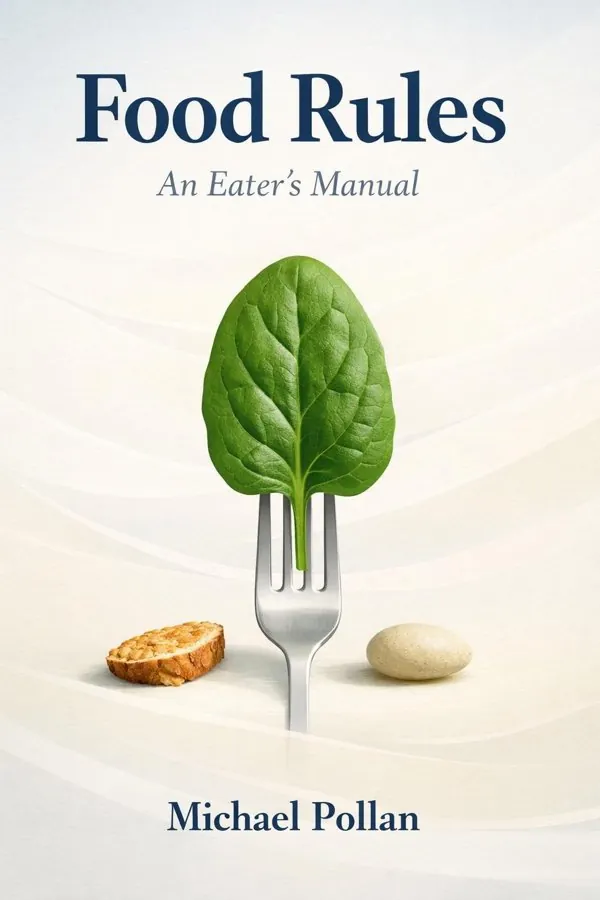
Food Rules: An Eater’s Manual: Summary & Key Insights
 10 min3 chaptersAudio available
What Is Food Rules: An Eater’s Manual About?
Food Rules: An Eater’s Manual by Michael Pollan is a nutrition book spanning 3 pages. Food Rules: An Eater’s Manual is a concise guide by Michael Pollan that distills his philosophy of eating into simple, memorable principles. Drawing from cultural wisdom and nutritional science, Pollan offers practical advice for making healthier food choices, emphasizing whole foods, moderation, and mindful eating. The book’s central message—'Eat food. Not too much. Mostly plants.'—encapsulates his approach to sustainable and balanced nutrition.
This FizzRead summary covers all 3 key chapters of Food Rules: An Eater’s Manual in approximately 10 minutes, distilling the most important ideas, arguments, and takeaways from Michael Pollan's work. Also available as an audio summary and Key Quotes Podcast.
Food Rules: An Eater’s Manual
Food Rules: An Eater’s Manual is a concise guide by Michael Pollan that distills his philosophy of eating into simple, memorable principles. Drawing from cultural wisdom and nutritional science, Pollan offers practical advice for making healthier food choices, emphasizing whole foods, moderation, and mindful eating. The book’s central message—'Eat food. Not too much. Mostly plants.'—encapsulates his approach to sustainable and balanced nutrition.
Who Should Read Food Rules: An Eater’s Manual?
This book is perfect for anyone interested in nutrition and looking to gain actionable insights in a short read. Whether you're a student, professional, or lifelong learner, the key ideas from Food Rules: An Eater’s Manual by Michael Pollan will help you think differently.
- ✓Readers who enjoy nutrition and want practical takeaways
- ✓Professionals looking to apply new ideas to their work and life
- ✓Anyone who wants the core insights of Food Rules: An Eater’s Manual in just 10 minutes
Want the full summary?
Get instant access to this book summary and 100K+ more with Fizz Moment.
Get Free SummaryAvailable on App Store • Free to download
Key Chapters
To start with the simplest question—what should I eat?—we need first to recognize that much of what fills our supermarkets is not food at all. It’s what I call 'edible food-like substances.' These are the highly processed, engineered products that dominate the modern diet—concoctions created by food scientists to be hyper-palatable, shelf-stable, and profitable, but far removed from anything nature creates. They come with long ingredient lists filled with unpronounceable names, make bold health claims, and are more a triumph of chemistry than of cooking.
Real food, on the other hand, doesn’t need to be announced, advertised, or reformulated. It’s recognizable, perishable, and part of a lineage of human eating. If your grandmother wouldn’t recognize it as food, it probably isn’t. The first step toward eating well, then, is to learn how to identify what qualifies as real food. That may sound deceptively simple, but it’s become a genuine challenge in the industrial age.
So here are the guiding principles: avoid products that carry claims about their healthfulness—they’re often designed to distract from what they truly are. Don’t eat things your ancestors wouldn’t recognize. Shun anything your great-grandmother would have to ask you to explain. If the ingredient list includes things you can’t pronounce, or more than five or six total items, leave it on the shelf. And above all, remember that whole foods—vegetables, fruits, grains, beans, fish, meat, dairy—are the gold standard of nourishment.
This first section is about detoxing your perspective. I want you to see food again not through the filter of advertising or dieting advice, but as the elemental stuff of life. Once you can tell food apart from its industrial imitations, you’ve already won half the battle of eating wisely.
When you’ve identified what counts as food, the next question becomes: what kind of food should you eat? The answer, put succinctly, is 'mostly plants.' If the modern diet has erred in any direction, it’s in its excessive reliance on animal products and refined industrial ingredients at the expense of the plant foods that once formed the core of traditional diets worldwide.
Throughout history, across nearly every culture, the base of the diet has been plant-based—vegetables, roots, grains, legumes, nuts, and fruits—supported by modest amounts of meat, fish, or dairy. These foods are nutrient-dense, fiber-rich, and abundant in compounds our bodies have evolved alongside. Eating 'mostly plants' doesn’t mean abstaining from meat altogether; it means recognizing meat as a flavoring, a side, an occasional treat—not as the centerpiece of every plate.
Equally important is the principle of variety and moderation. A colorful plate is not just aesthetically pleasing; it reflects nutritional balance. Each hue in the plant world represents different antioxidants and phytochemicals that work together to sustain health. Diversity of foods—seasonal and varied—keeps meals interesting and nutrient sources broad. Portion size also matters. In many traditional eating cultures, such as Japanese and Mediterranean ones, restraint is woven into the culture of eating itself—stopping before full, eating from smaller plates, appreciating food slowly.
To truly thrive on this principle, shift your mindset from restriction to abundance. Think of plants not as what you must suffer through, but as the most vibrant, life-giving components on your plate. When you embrace this orientation, healthy eating ceases to be an act of discipline and becomes one of celebration. Nature, rather than industrial food design, becomes the chef.
+ 1 more chapters — available in the FizzRead app
All Chapters in Food Rules: An Eater’s Manual
About the Author
Michael Pollan is an American author, journalist, and professor known for his writings on food, agriculture, and the environment. His works, including The Omnivore’s Dilemma and In Defense of Food, explore the cultural and ecological dimensions of eating and have influenced public discourse on food systems and sustainability.
Get This Summary in Your Preferred Format
Read or listen to the Food Rules: An Eater’s Manual summary by Michael Pollan anytime, anywhere. FizzRead offers multiple formats so you can learn on your terms — all free.
Available formats: App · Audio · PDF · EPUB — All included free with FizzRead
Download Food Rules: An Eater’s Manual PDF and EPUB Summary
Key Quotes from Food Rules: An Eater’s Manual
“To start with the simplest question—what should I eat?”
“When you’ve identified what counts as food, the next question becomes: what kind of food should you eat?”
Frequently Asked Questions about Food Rules: An Eater’s Manual
Food Rules: An Eater’s Manual by Michael Pollan is a nutrition book that explores key ideas across 3 chapters. Food Rules: An Eater’s Manual is a concise guide by Michael Pollan that distills his philosophy of eating into simple, memorable principles. Drawing from cultural wisdom and nutritional science, Pollan offers practical advice for making healthier food choices, emphasizing whole foods, moderation, and mindful eating. The book’s central message—'Eat food. Not too much. Mostly plants.'—encapsulates his approach to sustainable and balanced nutrition.
More by Michael Pollan
You Might Also Like
Eating by the Seasons Cookbook: Seasonal Produce-Focused Recipes
Clare Foster
10 min
From Crook to Cook: Platinum Recipes from Tha Boss Dogg's Kitchen
Snoop Dogg with Ryan Ford
10 min
Juicing for Beginners: The Essential Guide to Juicing Recipes and Juicing for Weight Loss
Rockridge Press
10 min
The Food Therapist: Break Bad Habits, Eat with Intention, and Indulge Without Worry
Shira Lenchewski
10 min
The Mediterranean Diet Meal Plan: A 4-Week Meal Plan for Optimal Health and Weight Loss
Various Contributors
10 min
The Well Plated Cookbook: Simple, Wholesome Recipes for Everyday Meals
Erin Clarke
10 minBrowse by Category
Ready to read Food Rules: An Eater’s Manual?
Get the full summary and 100K+ more books with Fizz Moment.