
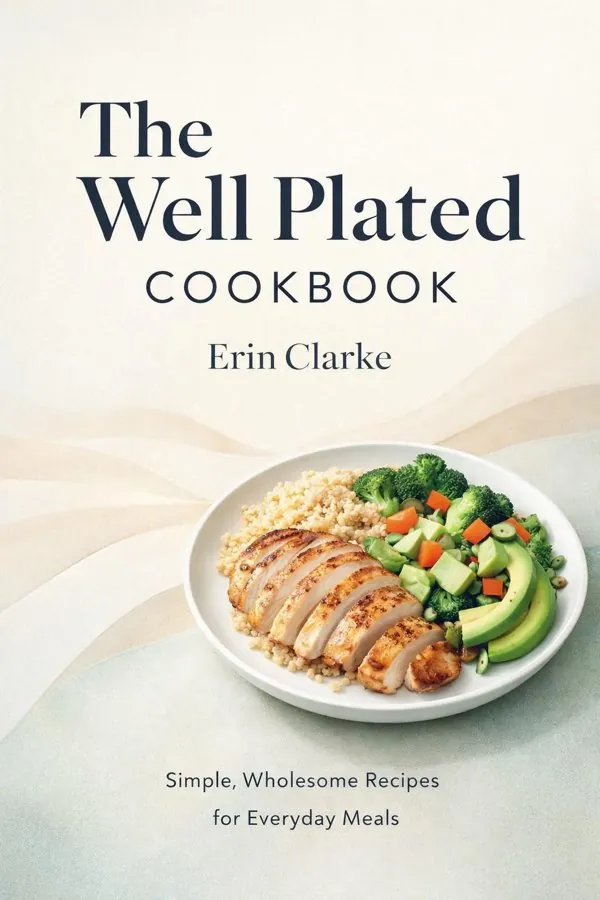
The Well Plated Cookbook: Simple, Wholesome Recipes for Everyday Meals: Summary & Key Insights
by Erin Clarke
 10 min9 chaptersAudio available
Key Takeaways from The Well Plated Cookbook: Simple, Wholesome Recipes for Everyday Meals
A healthy recipe that nobody wants to eat is not really a solution.
Transformation in the kitchen rarely begins with a total overhaul; it begins with substitutions so natural that they barely feel like sacrifices.
The best cookbook for daily life is not the one with the most impressive recipes; it is the one that makes dinner feel possible on an ordinary Tuesday.
Many nutrition struggles begin with an all-or-nothing mindset.
Preparing a wholesome meal is not only a nutritional choice; it is a meaningful act of self-respect.
What Is The Well Plated Cookbook: Simple, Wholesome Recipes for Everyday Meals About?
The Well Plated Cookbook: Simple, Wholesome Recipes for Everyday Meals by Erin Clarke is a nutrition book. The Well Plated Cookbook is a practical guide to eating well without turning daily meals into a stressful project. Erin Clarke shows that healthy cooking does not have to mean bland food, hard-to-find ingredients, or hours in the kitchen. Instead, she offers recipes and strategies built for real life: busy schedules, family dinners, weeknight time limits, and the desire to enjoy food while still nourishing the body. The book combines comfort, flavor, and nutrition in a way that feels approachable rather than restrictive. What makes this cookbook stand out is its philosophy. Clarke does not frame healthy eating as punishment or perfection. She focuses on smart swaps, balanced meals, and recipes that people will actually want to cook again. That matters because the most effective nutrition habits are the ones we can sustain. As the creator of the popular Well Plated platform, Clarke has built a strong reputation for transforming familiar favorites into lighter, wholesome versions without sacrificing taste. Her authority comes not only from recipe development, but from understanding how everyday cooks think, shop, and eat. This book is as much about confidence in the kitchen as it is about recipes.
This FizzRead summary covers all 9 key chapters of The Well Plated Cookbook: Simple, Wholesome Recipes for Everyday Meals in approximately 10 minutes, distilling the most important ideas, arguments, and takeaways from Erin Clarke's work. Also available as an audio summary and Key Quotes Podcast.
The Well Plated Cookbook: Simple, Wholesome Recipes for Everyday Meals
The Well Plated Cookbook is a practical guide to eating well without turning daily meals into a stressful project. Erin Clarke shows that healthy cooking does not have to mean bland food, hard-to-find ingredients, or hours in the kitchen. Instead, she offers recipes and strategies built for real life: busy schedules, family dinners, weeknight time limits, and the desire to enjoy food while still nourishing the body. The book combines comfort, flavor, and nutrition in a way that feels approachable rather than restrictive.
What makes this cookbook stand out is its philosophy. Clarke does not frame healthy eating as punishment or perfection. She focuses on smart swaps, balanced meals, and recipes that people will actually want to cook again. That matters because the most effective nutrition habits are the ones we can sustain. As the creator of the popular Well Plated platform, Clarke has built a strong reputation for transforming familiar favorites into lighter, wholesome versions without sacrificing taste. Her authority comes not only from recipe development, but from understanding how everyday cooks think, shop, and eat. This book is as much about confidence in the kitchen as it is about recipes.
Who Should Read The Well Plated Cookbook: Simple, Wholesome Recipes for Everyday Meals?
This book is perfect for anyone interested in nutrition and looking to gain actionable insights in a short read. Whether you're a student, professional, or lifelong learner, the key ideas from The Well Plated Cookbook: Simple, Wholesome Recipes for Everyday Meals by Erin Clarke will help you think differently.
- ✓Readers who enjoy nutrition and want practical takeaways
- ✓Professionals looking to apply new ideas to their work and life
- ✓Anyone who wants the core insights of The Well Plated Cookbook: Simple, Wholesome Recipes for Everyday Meals in just 10 minutes
Want the full summary?
Get instant access to this book summary and 100K+ more with Fizz Moment.
Get Free SummaryAvailable on App Store • Free to download
Key Chapters
A healthy recipe that nobody wants to eat is not really a solution. One of the central insights of The Well Plated Cookbook is that nutrition only becomes meaningful in everyday life when food remains deeply enjoyable. Erin Clarke rejects the old assumption that wholesome meals need to be sparse, joyless, or disconnected from comfort. Instead, she builds recipes around flavor first, then layers in nutrition through ingredients, preparation methods, and portion-friendly structure.
This matters because many people cycle between extremes: indulgent meals that feel unsustainable and “healthy” meals that feel like punishment. Clarke offers a middle path. She lightens dishes with ingredient swaps, smarter cooking methods, and balanced composition, but she protects the emotional appeal of the meal. A creamy dish may rely more on Greek yogurt than heavy cream. A comforting casserole may use more vegetables, leaner protein, or better portion balance. A familiar baked good may reduce excess sugar while keeping moisture and richness.
The deeper lesson is psychological as much as culinary. If healthy eating feels deprived, it becomes temporary. If it feels satisfying, it can become normal. Clarke understands that home cooks are not only feeding their bodies; they are feeding routines, families, cravings, traditions, and moods. Her recipes work because they meet all of those needs at once.
In practice, this means asking better questions in the kitchen. Instead of “How do I cut everything out?” ask “How can I make this dish more nourishing while keeping what I love about it?” That single shift opens up hundreds of sustainable choices. Actionable takeaway: choose one favorite comfort meal this week and improve it with one or two smart changes rather than replacing it entirely.
Transformation in the kitchen rarely begins with a total overhaul; it begins with substitutions so natural that they barely feel like sacrifices. Erin Clarke’s approach depends heavily on this principle. Rather than demanding rigid meal plans or dramatic restrictions, she shows how small ingredient choices can steadily improve the nutritional quality of everyday eating.
This could mean using whole grains where they fit naturally, leaning on olive oil instead of heavier fats in some recipes, replacing part of the cheese or cream with a protein-rich alternative, or increasing vegetables in dishes people already make often. These are not cosmetic changes. Over time, repeated swaps affect calorie density, fiber intake, satiety, blood sugar stability, and overall meal balance.
The genius of this method is that it reduces resistance. People are far more likely to adopt healthier habits when those habits preserve convenience and pleasure. For example, using mashed sweet potato or applesauce in baked recipes can improve moisture and nutrition. Choosing ground turkey in a strongly seasoned chili can still deliver satisfying flavor. Adding beans to soups, salads, or casseroles boosts protein and fiber while stretching the meal economically.
Clarke’s strategy also teaches confidence. Once readers understand the logic behind a swap, they are better equipped to improvise beyond the page. They begin seeing recipes as flexible frameworks rather than rigid instructions. That mindset makes healthy cooking far more accessible, especially on busy nights when exact ingredients are unavailable.
Importantly, the book does not suggest every dish must be “perfect.” The point is cumulative improvement. A few thoughtful swaps repeated across breakfasts, lunches, dinners, and snacks can reshape eating patterns without emotional burnout. Actionable takeaway: identify three ingredients you use most often—such as white pasta, sour cream, or refined snacks—and test one healthier substitute for each over the next two weeks.
The best cookbook for daily life is not the one with the most impressive recipes; it is the one that makes dinner feel possible on an ordinary Tuesday. Erin Clarke understands that home cooks often struggle less with motivation than with friction. Time is short. Energy is uneven. Grocery lists are imperfect. Kitchens are busy. A wholesome meal has to fit into that reality or it will not become a habit.
That is why The Well Plated Cookbook emphasizes practical simplicity. Simplicity here does not mean boring or under-seasoned. It means manageable steps, accessible ingredients, and recipes designed to work within real household rhythms. Meals should be efficient enough for weeknights and flexible enough for substitutions. A good recipe should reduce decision fatigue, not add to it.
This realism matters because many people abandon healthy cooking when it feels too idealized. If a meal requires multiple specialty ingredients, extensive prep, and a sink full of dishes, it may be admired but rarely repeated. Clarke’s philosophy encourages a more sustainable standard: home cooking should support life, not dominate it.
Practical examples include meals built around pantry staples, one-pan or sheet-pan strategies, make-ahead components, and leftovers that can be repurposed creatively. A roast can become tacos. Extra grains can become lunch bowls. A sauce made once can flavor multiple meals. These efficiencies reduce waste and keep healthy eating from becoming labor intensive.
The larger message is that consistency grows from systems, not willpower alone. When recipes are straightforward and forgiving, people cook more often. And when they cook more often, they gain confidence, save money, and eat with greater awareness. Actionable takeaway: pick two low-effort meal formats—such as sheet-pan dinners or grain bowls—and rotate them weekly until wholesome cooking feels automatic.
Many nutrition struggles begin with an all-or-nothing mindset. People either eat “perfectly” for a while or abandon healthy intentions altogether after one indulgent meal. Erin Clarke offers a more durable philosophy: balance beats restriction. Her recipes and tone reinforce the idea that nourishment and enjoyment can coexist, and that the healthiest way to eat is often the one a person can maintain calmly over time.
This is a crucial idea because restrictive frameworks often create rebound behavior. When foods are treated as forbidden, they become emotionally charged. Meals turn into moral tests instead of ordinary acts of care. Clarke pushes back against that dynamic by treating food as something to be enjoyed intelligently, not feared. A dish can be lighter and still comforting. A dessert can be part of a wholesome life. A meal can be satisfying without being excessive.
In practical terms, balance may look like pairing rich foods with vegetable-heavy sides, choosing recipes that include protein, fiber, and healthy fats for satiety, or adjusting portions without erasing favorite flavors. It also means thinking across the week rather than judging a single meal. One indulgent dinner does not ruin healthy habits, just as one salad does not create them.
The value of this perspective extends beyond nutrition into mental well-being. Balanced cooking lowers guilt and makes room for flexibility, hospitality, and family traditions. It allows people to eat in a way that is both intentional and humane.
Clarke’s message is not permissiveness without structure; it is structure without punishment. That distinction makes her approach especially useful for people who have grown tired of diet culture. Actionable takeaway: stop labeling meals as “good” or “bad,” and instead ask whether your overall week reflects a pattern of satisfying, nourishing balance.
Preparing a wholesome meal is not only a nutritional choice; it is a meaningful act of self-respect. Throughout The Well Plated Cookbook, Erin Clarke frames cooking as something positive and empowering rather than burdensome or performative. This subtle shift is important. When cooking is seen only as another obligation, it becomes easy to resent it. When it is viewed as a way to care for yourself and others, the kitchen becomes a source of stability and creativity.
This perspective is especially relevant in a culture that often pulls people toward convenience foods, rushed eating, and disconnected routines. Home cooking can restore intention. It allows you to decide what goes into your meals, how flavors are built, and how nourishment fits your body and schedule. Even simple dishes become expressions of care when they are made thoughtfully.
Clarke does not romanticize cooking as a flawless ritual. She understands that some nights are chaotic. Self-care in her framework does not mean elaborate meals with candles and music. It can be as simple as making a balanced soup instead of skipping dinner, prepping lunch for tomorrow, or roasting vegetables so that healthy options are easier later in the week.
There is also a relational dimension. Cooking at home can create shared experiences with partners, children, friends, or guests. Food becomes a connector. A reliable recipe can anchor family habits and reduce mealtime stress. Over time, these small moments shape both health and household culture.
The larger lesson is that nourishing yourself consistently is not selfish or excessive. It is foundational. Actionable takeaway: designate one recurring meal each week—such as Sunday lunch or Wednesday dinner—as a non-negotiable home-cooked moment that supports your well-being.
People often assume they must choose between eating well and keeping up with a full schedule. Erin Clarke challenges that assumption by designing recipes and habits that acknowledge the realities of modern life. The issue is not usually that people do not care about nutrition; it is that they need systems that work when work runs late, children are tired, groceries are limited, and energy is low.
The Well Plated Cookbook responds by making wholesome eating compatible with speed and flexibility. This means relying on efficient preparation methods, pantry-friendly ingredients, leftovers with purpose, and meals that can multitask. A breakfast can be portable. A dinner can become tomorrow’s lunch. A sauce can serve several dishes. A slow cooker or oven can do much of the work while attention is elsewhere.
This approach matters because habits are built in the moments when life is inconvenient. Anyone can eat well under ideal circumstances. The real test is whether a system survives pressure. Clarke’s recipes are built to lower that pressure. They reduce the need for constant improvisation while still allowing enough flexibility to adapt.
For example, a grain-and-protein base can become bowls, wraps, salads, or soups over several days. Prepped vegetables can support omelets, pasta, stir-fries, and snacks. Freezer-friendly recipes create insurance against future chaos. These are not glamorous strategies, but they are deeply effective.
The broader point is that healthy eating becomes realistic when it is woven into routines rather than treated as a separate project. You do not need endless motivation if you have practical defaults. Actionable takeaway: build a short list of five dependable meals using ingredients you usually have on hand, and treat them as your weekly backup system.
Many home cooks believe they need more discipline, but often what they really need is more confidence. Erin Clarke’s cookbook helps readers develop that confidence by showing that good cooking is not about perfection. It is about understanding enough of the recipe’s structure to make smart decisions when circumstances change.
This matters because daily cooking is rarely exact. An ingredient is missing. A vegetable needs to be used up. A family member dislikes one element. Time gets cut in half. If a cook sees recipes as rigid formulas, these disruptions create stress. If recipes are understood as adaptable frameworks, the same situations become manageable.
Clarke supports this flexible mindset through recipes grounded in familiar ingredients and clear logic. Readers begin to notice patterns: how acidity brightens flavor, how herbs can change the character of a dish, how grains and proteins can be recombined, how roasting deepens sweetness, how texture affects satisfaction. This knowledge turns cooking from rule-following into skill-building.
Practical application might include swapping broccoli for Brussels sprouts in a roasted dinner, changing the spice profile of a soup to suit what is available, or adjusting a grain bowl based on leftover proteins and vegetables. Confidence also grows when cooks realize that healthy meals do not need restaurant-level precision. They need balance, flavor, and usefulness.
This flexibility can save money, reduce waste, and lower kitchen anxiety. It encourages experimentation and increases the chance that healthy eating will continue, even when plans fall apart. Actionable takeaway: the next time you cook, intentionally substitute one comparable ingredient and observe how the recipe still succeeds.
Lasting dietary improvement usually comes from ordinary repetition, not dramatic resets. Erin Clarke’s cookbook succeeds because it is built for recurrence. The recipes are designed not as one-time healthy experiments, but as meals people can imagine making again and again. That focus on repeatability is one of the book’s most valuable contributions.
Nutrition advice often fails because it ignores habit formation. A recipe can be technically healthy and still be impractical, expensive, or too complicated to survive beyond a single attempt. Clarke works in the opposite direction. She aims for meals that become staples. When a dish is easy enough, tasty enough, and flexible enough to enter regular rotation, its benefits compound.
Think of the difference between cooking one ambitious “wellness” dinner and creating a weekly rhythm of balanced breakfasts, packed lunches, and dependable evening meals. The second approach changes health outcomes far more effectively. Repeated habits influence shopping patterns, pantry organization, cravings, time management, and even family expectations around food.
Examples include batch-cooking grains, keeping freezer-friendly options ready, learning a few versatile sauces, and building a standard list of wholesome snacks or side dishes. These repeated structures make better choices easier by default. Over time, they reduce reliance on takeout, lower impulsive eating, and create a steadier relationship with food.
The larger lesson is encouraging: you do not need culinary reinvention. You need dependable systems that quietly support your goals. Clarke offers recipes as tools for that system. Actionable takeaway: choose three recipes from your regular rotation that are both easy and nourishing, and commit to repeating them consistently for the next month.
Comfort food is often treated as the enemy of healthy eating, yet it plays an important role in emotional satisfaction, family traditions, and meal enjoyment. Erin Clarke’s great insight is that comfort and nourishment do not have to compete. Many beloved dishes can be reworked so they still feel cozy and familiar while offering better nutritional value.
This idea is powerful because people rarely stop craving comfort simply because they have health goals. If a nutrition plan excludes the foods that feel grounding or celebratory, it becomes detached from real life. Clarke bridges that gap by updating classics rather than dismissing them. She respects why people love certain foods and then improves the recipe in thoughtful ways.
A comforting pasta dish might include more vegetables and a lighter sauce. A casserole can rely on better ingredient balance instead of excessive richness. A dessert can be portion-conscious without losing flavor. The aim is not to remove pleasure, but to make pleasure easier to integrate into a wholesome lifestyle.
This approach also supports family cooking. When healthier meals still resemble recognizable favorites, they are more likely to be accepted by children, partners, and guests. That increases the chance that better eating becomes communal rather than isolating.
The deeper message is that health is not built by rejecting comfort, but by redefining it. A nourishing meal can also be warm, abundant, and emotionally satisfying. In fact, the combination is what makes a lifestyle sustainable. Actionable takeaway: choose one family favorite traditionally seen as indulgent and experiment with a lighter, more balanced version that preserves its essential character.
All Chapters in The Well Plated Cookbook: Simple, Wholesome Recipes for Everyday Meals
About the Author
Erin Clarke is a cookbook author, recipe developer, and food blogger best known for Well Plated, a widely followed platform dedicated to healthy comfort food and practical everyday cooking. Her work centers on helping people prepare meals that are nutritious, approachable, and full of flavor, without relying on rigid diet rules or unrealistic kitchen standards. Clarke has earned a loyal audience by adapting familiar favorites into lighter, more balanced recipes that still feel satisfying and family friendly. Her style combines warmth, realism, and culinary creativity, making her especially appealing to busy home cooks. Through The Well Plated Cookbook, she brings her signature philosophy to a broader audience: healthy eating works best when it is simple, delicious, and sustainable enough to become part of ordinary life.
Get This Summary in Your Preferred Format
Read or listen to the The Well Plated Cookbook: Simple, Wholesome Recipes for Everyday Meals summary by Erin Clarke anytime, anywhere. FizzRead offers multiple formats so you can learn on your terms — all free.
Available formats: App · Audio · PDF · EPUB — All included free with FizzRead
Download The Well Plated Cookbook: Simple, Wholesome Recipes for Everyday Meals PDF and EPUB Summary
Key Quotes from The Well Plated Cookbook: Simple, Wholesome Recipes for Everyday Meals
“A healthy recipe that nobody wants to eat is not really a solution.”
“Transformation in the kitchen rarely begins with a total overhaul; it begins with substitutions so natural that they barely feel like sacrifices.”
“The best cookbook for daily life is not the one with the most impressive recipes; it is the one that makes dinner feel possible on an ordinary Tuesday.”
“Many nutrition struggles begin with an all-or-nothing mindset.”
“Preparing a wholesome meal is not only a nutritional choice; it is a meaningful act of self-respect.”
Frequently Asked Questions about The Well Plated Cookbook: Simple, Wholesome Recipes for Everyday Meals
The Well Plated Cookbook: Simple, Wholesome Recipes for Everyday Meals by Erin Clarke is a nutrition book that explores key ideas across 9 chapters. The Well Plated Cookbook is a practical guide to eating well without turning daily meals into a stressful project. Erin Clarke shows that healthy cooking does not have to mean bland food, hard-to-find ingredients, or hours in the kitchen. Instead, she offers recipes and strategies built for real life: busy schedules, family dinners, weeknight time limits, and the desire to enjoy food while still nourishing the body. The book combines comfort, flavor, and nutrition in a way that feels approachable rather than restrictive. What makes this cookbook stand out is its philosophy. Clarke does not frame healthy eating as punishment or perfection. She focuses on smart swaps, balanced meals, and recipes that people will actually want to cook again. That matters because the most effective nutrition habits are the ones we can sustain. As the creator of the popular Well Plated platform, Clarke has built a strong reputation for transforming familiar favorites into lighter, wholesome versions without sacrificing taste. Her authority comes not only from recipe development, but from understanding how everyday cooks think, shop, and eat. This book is as much about confidence in the kitchen as it is about recipes.
You Might Also Like
Eating by the Seasons Cookbook: Seasonal Produce-Focused Recipes
Clare Foster
10 min
From Crook to Cook: Platinum Recipes from Tha Boss Dogg's Kitchen
Snoop Dogg with Ryan Ford
10 min
Juicing for Beginners: The Essential Guide to Juicing Recipes and Juicing for Weight Loss
Rockridge Press
10 min
The Food Therapist: Break Bad Habits, Eat with Intention, and Indulge Without Worry
Shira Lenchewski
10 min
The Mediterranean Diet Meal Plan: A 4-Week Meal Plan for Optimal Health and Weight Loss
Various Contributors
10 min
Why We Get Fat: And What to Do About It
Gary Taubes
10 minBrowse by Category
Ready to read The Well Plated Cookbook: Simple, Wholesome Recipes for Everyday Meals?
Get the full summary and 100K+ more books with Fizz Moment.