
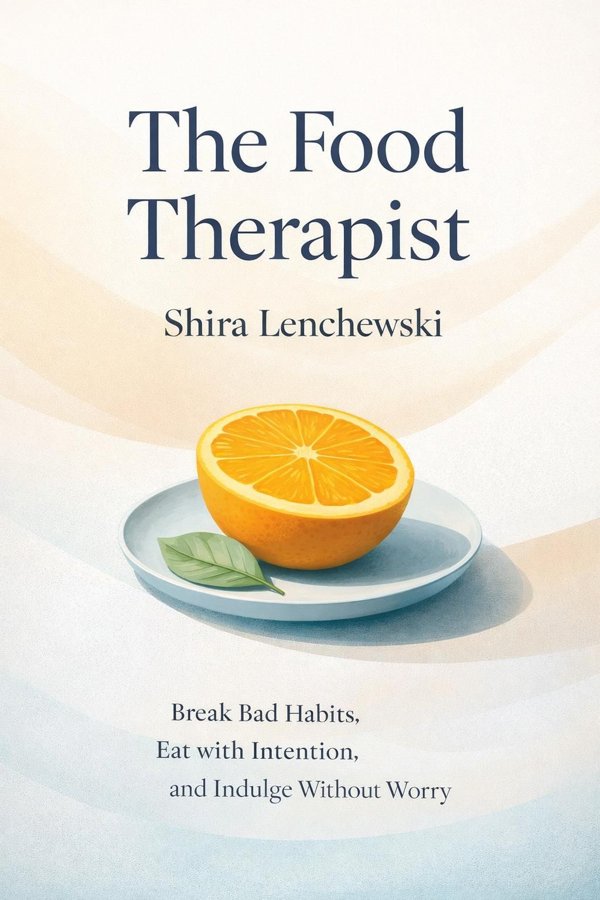
The Food Therapist: Break Bad Habits, Eat with Intention, and Indulge Without Worry: Summary & Key Insights
 10 min9 chaptersAudio available
Key Takeaways from The Food Therapist: Break Bad Habits, Eat with Intention, and Indulge Without Worry
One of the book’s most useful insights is that eating issues are rarely caused by ignorance alone.
The more tightly people try to control food, the more power food often gains over them.
Perfection is one of the biggest obstacles to healthy eating.
Healthy eating often fails not because people lack motivation, but because they are constantly forced to make decisions when they are tired, hungry, rushed, or stressed.
Cravings are not always emotional.
What Is The Food Therapist: Break Bad Habits, Eat with Intention, and Indulge Without Worry About?
The Food Therapist: Break Bad Habits, Eat with Intention, and Indulge Without Worry by Shira Lenchewski is a nutrition book. The Food Therapist is a practical guide to fixing the emotional, mental, and behavioral patterns that shape how we eat. Rather than offering another rigid diet plan, Shira Lenchewski argues that most people do not struggle with food because they lack nutritional information. They struggle because their habits are tangled up with stress, guilt, perfectionism, convenience, and deeply ingrained beliefs about what it means to be “good” or “bad” around food. This book helps readers untangle those knots and build a calmer, more intentional relationship with eating. Lenchewski, a registered dietitian nutritionist known for working with high-performing and health-conscious clients, brings together nutritional science, behavior change, and a therapist-like understanding of food psychology. Her approach is refreshingly realistic: eat well most of the time, stop moralizing food, prepare for real life, and make choices that support both pleasure and health. The book matters because it addresses a modern problem many people face: knowing what to eat in theory but repeatedly falling into habits that do not match their goals. It is a compassionate blueprint for eating with more awareness, consistency, and freedom.
This FizzRead summary covers all 9 key chapters of The Food Therapist: Break Bad Habits, Eat with Intention, and Indulge Without Worry in approximately 10 minutes, distilling the most important ideas, arguments, and takeaways from Shira Lenchewski's work. Also available as an audio summary and Key Quotes Podcast.
The Food Therapist: Break Bad Habits, Eat with Intention, and Indulge Without Worry
The Food Therapist is a practical guide to fixing the emotional, mental, and behavioral patterns that shape how we eat. Rather than offering another rigid diet plan, Shira Lenchewski argues that most people do not struggle with food because they lack nutritional information. They struggle because their habits are tangled up with stress, guilt, perfectionism, convenience, and deeply ingrained beliefs about what it means to be “good” or “bad” around food. This book helps readers untangle those knots and build a calmer, more intentional relationship with eating.
Lenchewski, a registered dietitian nutritionist known for working with high-performing and health-conscious clients, brings together nutritional science, behavior change, and a therapist-like understanding of food psychology. Her approach is refreshingly realistic: eat well most of the time, stop moralizing food, prepare for real life, and make choices that support both pleasure and health. The book matters because it addresses a modern problem many people face: knowing what to eat in theory but repeatedly falling into habits that do not match their goals. It is a compassionate blueprint for eating with more awareness, consistency, and freedom.
Who Should Read The Food Therapist: Break Bad Habits, Eat with Intention, and Indulge Without Worry?
This book is perfect for anyone interested in nutrition and looking to gain actionable insights in a short read. Whether you're a student, professional, or lifelong learner, the key ideas from The Food Therapist: Break Bad Habits, Eat with Intention, and Indulge Without Worry by Shira Lenchewski will help you think differently.
- ✓Readers who enjoy nutrition and want practical takeaways
- ✓Professionals looking to apply new ideas to their work and life
- ✓Anyone who wants the core insights of The Food Therapist: Break Bad Habits, Eat with Intention, and Indulge Without Worry in just 10 minutes
Want the full summary?
Get instant access to this book summary and 100K+ more with Fizz Moment.
Get Free SummaryAvailable on App Store • Free to download
Key Chapters
One of the book’s most useful insights is that eating issues are rarely caused by ignorance alone. Many people know that vegetables, protein, fiber, and balanced meals are good for them. Yet they still skip breakfast, overeat at night, snack mindlessly, or swing between restriction and indulgence. Lenchewski’s core argument is that the real problem usually lies in patterns, triggers, and emotional associations rather than a lack of information.
This shift matters because it changes the solution. If you think your problem is knowledge, you keep searching for a better meal plan. If you understand that your problem is behavior, you start asking better questions: What situations make me lose control? When do I eat for comfort instead of hunger? What routines leave me too depleted to make good choices later? Food becomes less of a math problem and more of a self-awareness practice.
For example, someone who grabs pastries every afternoon may not need another lecture about sugar. They may need to realize they routinely under-eat at lunch, hit an energy crash by 3 p.m., and use sweets to cope with stress. Another person who overeats at dinner may discover they spend the whole day trying to be “good,” then rebound at night when willpower fades.
Lenchewski encourages readers to observe eating patterns without judgment. Instead of calling yourself lazy or undisciplined, examine the structure around the behavior. What happened before the choice? What emotion was present? What practical obstacle got in the way?
Actionable takeaway: For one week, track not only what you eat but also when, where, how hungry you were, and what you were feeling. Look for recurring behavioral patterns before trying to change the food itself.
The more tightly people try to control food, the more power food often gains over them. Lenchewski shows how restriction can create the very overeating it is meant to prevent. When you label foods as forbidden, cut calories too aggressively, or aim for dietary perfection, you increase cravings, mental obsession, and the likelihood of losing control later.
This cycle is familiar to many readers: start the day with strict intentions, eat as little as possible, avoid treats, then eventually break under hunger, stress, or temptation. The result is overeating followed by guilt, which leads to renewed restriction the next day. Over time, this pattern damages trust in your body and turns eating into a moral battle.
Lenchewski’s alternative is not reckless indulgence. It is structured permission. She advocates eating enough throughout the day, incorporating satisfying foods, and removing the emotional drama from occasional treats. When the body is regularly nourished and the mind no longer believes pleasure is scarce, cravings become less urgent and less chaotic.
Consider a person who tries to avoid carbohydrates all week, then ends up devouring bread and dessert on Friday night. The issue is not weak willpower. It may be that their plan is too rigid to sustain. A more effective approach would include balanced meals with carbohydrates, protein, and fat throughout the week, making Friday dinner less emotionally loaded.
This idea helps readers move from all-or-nothing thinking to consistency. You do not need to “earn” food or compensate for enjoyment. You need an eating pattern that your body and mind can actually maintain.
Actionable takeaway: Identify one food you regularly over-control, and reintroduce it in a planned, balanced way rather than treating it as a reward, cheat, or failure.
Perfection is one of the biggest obstacles to healthy eating. Lenchewski emphasizes that a useful nutrition approach must work in real life, not just in ideal conditions. The goal is not flawless adherence to a rigid standard. The goal is intention: making thoughtful, supportive choices more often than not.
Intentional eating means asking what your body needs, what your schedule demands, and what choice is realistic in the moment. It allows room for convenience, celebration, appetite, and human unpredictability. Instead of trying to eat “clean” at all times, you learn to eat in a way that aligns with your broader values: energy, stability, enjoyment, and self-respect.
This mindset is especially liberating for people who abandon healthy habits after one imperfect meal. If lunch is fast food because travel disrupted your day, intentional eating means adapting at dinner rather than declaring the day ruined. If you enjoy birthday cake, intentional eating means savoring it without spiraling into guilt or using it as justification to eat chaotically for the rest of the weekend.
Lenchewski encourages readers to move away from black-and-white categories like on-plan versus off-plan. Those labels make ordinary decisions feel emotionally charged. A more sustainable framework is to ask: Does this meal satisfy me? Will it help me feel good physically and mentally? What small adjustment would make it more balanced?
Intentional eating is also empowering because it restores agency. You are not following a script handed down by diet culture. You are learning to make informed choices in dynamic situations.
Actionable takeaway: Before one meal each day, pause for ten seconds and ask, “What would be the most intentional choice for me right now?” Let that answer guide your portion, pace, and balance.
Healthy eating often fails not because people lack motivation, but because they are constantly forced to make decisions when they are tired, hungry, rushed, or stressed. Lenchewski stresses the importance of preparation as a form of self-respect. Planning ahead reduces the odds that urgency and emotion will take over.
Preparation does not mean elaborate meal prep or a refrigerator full of perfectly portioned containers. In the book’s practical spirit, it means creating enough structure that nourishing choices are easy to access. That might include keeping protein-rich snacks on hand, stocking simple staples, planning a few fallback meals, or eating before events where you know options may be limited.
This concept is powerful because it treats behavior change as an environmental design issue. If your kitchen contains only random ingredients and no easy lunch options, you are far more likely to order whatever is fastest. If your workday has no planned eating breaks, late-day overeating becomes more predictable. Preparation reduces dependence on willpower by giving your future self support.
For example, someone who regularly raids the pantry at night may benefit from a more substantial afternoon snack and a planned dinner menu. Someone who travels for work may need a hotel-room strategy: Greek yogurt, fruit, nuts, instant oatmeal, and a short list of reliable restaurant orders. These are not glamorous solutions, but they are effective because they acknowledge reality.
Lenchewski’s broader message is that consistency comes from systems, not heroic discipline. The more chaotic your environment, the more vulnerable you are to reactive eating.
Actionable takeaway: Build a “food safety net” by choosing three easy breakfasts, three quick lunches, three go-to snacks, and three simple dinners you can rely on during busy weeks.
Cravings are not always emotional. Sometimes they are biochemical messages from a body that has not been adequately fueled. Lenchewski highlights the stabilizing power of balanced meals, especially those built around protein, healthy fats, fiber, and satisfying carbohydrates. When meals are too light, too sugary, or nutritionally incomplete, hunger often returns quickly and drives impulsive eating later.
This idea challenges a common mistake: trying to eat less by making meals smaller and less substantial. A skimpy salad, a plain coffee, or a snack made mostly of refined carbs may look “healthy,” but it may not keep someone full or mentally satisfied. As a result, they spend the day grazing, craving sweets, or overeating at the next opportunity.
Balanced eating works because it supports both physiology and psychology. Protein and fiber help increase satiety. Fat adds staying power and enjoyment. Carbohydrates provide accessible energy. When these elements appear together, meals become more grounding and less likely to trigger rebound hunger.
A practical example is breakfast. Compare a piece of toast alone with a breakfast that includes eggs, toast, avocado, and fruit. The second option is not only more nourishing but often more effective at preventing a midmorning crash. The same logic applies to snacks: an apple alone may not last long, but an apple with nut butter or cheese is more sustaining.
Lenchewski does not frame balance as a rigid formula. It is a flexible principle that helps readers feel physically steadier and less controlled by urges. Instead of fighting cravings with willpower, they learn to reduce them by eating adequately.
Actionable takeaway: At your next meal, include at least three components from this list: protein, fiber-rich produce, satisfying carbs, and healthy fat. Notice how your hunger and energy feel two to three hours later.
Food can comfort, distract, celebrate, and soothe, but it cannot resolve the emotions that drive many eating habits. Lenchewski invites readers to recognize emotional eating with honesty and compassion. The problem is not that people occasionally eat for comfort; that is normal. The problem arises when food becomes the primary or automatic response to stress, loneliness, boredom, anxiety, or overwhelm.
What makes emotional eating hard to interrupt is that it often works briefly. A snack can offer a temporary sense of relief, reward, or numbness. But the original feeling usually remains, and may be joined by physical discomfort or guilt. Over time, this creates a pattern in which emotions repeatedly trigger eating, while real emotional needs remain unaddressed.
Lenchewski’s approach is not to shame comfort eating but to widen the response menu. If the urge to eat appears, pause and ask what you actually need. Is it rest? Stimulation? Reassurance? A break from work? Connection with someone? Structure? Sometimes the answer is still food, especially if you are hungry. But often the deeper need points elsewhere.
For instance, a person who snacks constantly while working from home may not be hungry at all. They may be mentally fatigued and in need of movement or a clearer work boundary. Someone who eats sweets late at night may be searching for decompression after a tense day. The snack is serving a role that another ritual might serve better.
This perspective allows readers to respond more skillfully without pretending they should never use food emotionally. The goal is awareness and choice, not purity.
Actionable takeaway: The next time you crave food outside normal hunger, ask, “What am I feeling, and what else could help?” Try one non-food support first, then decide intentionally whether you still want to eat.
Many people carry the false belief that enjoying food is at odds with being healthy. Lenchewski works hard to dismantle that idea. Sustainable nutrition does not require joyless eating, and in fact, pleasure is an important part of a lasting relationship with food. When meals are satisfying and enjoyable, people are less likely to rebel against their own rules or seek intense reward later.
This is one of the book’s most refreshing contributions. Instead of presenting indulgence as a dangerous lapse, Lenchewski frames it as something that can be integrated into a balanced life. Enjoying dessert, ordering a favorite meal, or sharing celebratory food does not erase healthy habits. Problems usually arise when indulgence is surrounded by guilt, secrecy, or compensation.
When people believe they must be perfect, pleasure becomes loaded with anxiety. They may either avoid favorite foods entirely or eat them in a frantic, “last chance” way. By contrast, when indulgence is permitted and intentional, it loses some of its emotional charge. You can enjoy a cookie because it tastes good, not because you are surrendering after a day of deprivation.
This principle also encourages better quality enjoyment. Instead of mindlessly eating whatever is available, you might choose the foods that truly satisfy you and skip the ones that are merely habitual. A restaurant meal can be relished slowly. A holiday dessert can be appreciated without needing to sample everything on the table.
Health and pleasure support each other when eating becomes both nourishing and human. The objective is not to eliminate indulgence but to remove fear from it.
Actionable takeaway: This week, choose one treat you genuinely love, eat it slowly without multitasking, and practice enjoying it without compensation, guilt, or labeling the day as ruined.
Willpower is overrated when your environment constantly pushes you toward unhelpful choices. Lenchewski highlights how routines, schedules, social settings, and food availability affect eating behavior. This matters because many people blame themselves for habits that are actually reinforced by their surroundings.
If you keep highly tempting snack foods visible on the counter, work through lunch, eat dinner in front of screens, and rely on takeout apps when stressed, your environment is making intentional eating harder. On the other hand, if balanced foods are easy to grab, meal times are somewhat protected, and distractions are reduced, better choices become more automatic.
This idea helps shift the focus from self-criticism to strategy. Rather than asking, “Why can’t I control myself?” ask, “What in my environment is nudging me toward this pattern?” Small changes can make a major difference. Putting washed fruit at eye level, storing less satisfying snack foods out of sight, pre-portioning staples, or setting a regular lunch reminder can all reduce decision fatigue.
Social environments matter too. Some people overeat mainly in settings where everyone treats indulgence as expected. Others undereat all day because their workplace glorifies busyness. Recognizing these influences allows for planning. You can eat before an event, decide in advance what you want, or set a boundary around skipped meals during chaotic days.
Lenchewski’s larger lesson is that good habits are easier to build when your surroundings support them. You do not need to become stronger than every trigger. You need to design your life so fewer triggers demand a battle.
Actionable takeaway: Choose one space you eat from most often—your kitchen, office, or car—and redesign it this week so the easiest available options better match how you want to feel and eat.
Lasting change usually looks boring compared with the promises of diet culture. Lenchewski argues that the healthiest eaters are not necessarily the most strict or the most extreme. They are the most consistent. They eat regular meals, recover quickly from off moments, keep simple habits in place, and do not turn every decision into a crisis.
This message is especially important in a culture that celebrates dramatic overhauls. People often feel inspired by a cleanse, a strict challenge, or a set of rules that promise rapid transformation. But extreme approaches tend to be fragile. The moment life becomes busy, emotional, social, or inconvenient, the system breaks. Then people conclude they have failed, when in reality the plan was never built for real life.
Consistency is quieter and more effective. It means eating breakfast most days, not every day forever. It means having a reasonable plan for weekdays and flexibility for weekends. It means noticing when you drift and gently returning to your habits instead of overcorrecting with punishment or restriction.
A person who eats balanced meals 80 percent of the time and enjoys occasional indulgences without spiraling will likely feel better than someone who cycles between hyper-control and chaos. Lenchewski encourages readers to measure success not by intensity but by repeatability. Can you do this on a stressful Tuesday? During travel? After a poor night of sleep? If yes, you may have found a sustainable pattern.
The book’s therapeutic tone reminds readers that health is built through repetition, not self-attack. You do not need a perfect week to make progress. You need enough stability to keep going.
Actionable takeaway: Pick two eating habits so manageable you can maintain them even on busy days, and commit to those first before adding anything more ambitious.
All Chapters in The Food Therapist: Break Bad Habits, Eat with Intention, and Indulge Without Worry
About the Author
Shira Lenchewski is a registered dietitian nutritionist and wellness expert known for helping people build healthier eating habits without relying on rigid diets or food guilt. Her work emphasizes the connection between nutrition, behavior, and emotional well-being, making her approach especially practical for readers who feel stuck in cycles of restriction, cravings, and inconsistency. Lenchewski has worked with a wide range of clients, including busy professionals and high achievers seeking realistic strategies for long-term health. In The Food Therapist, she brings together professional nutrition guidance and a compassionate, therapist-like understanding of why people eat the way they do. Her philosophy centers on intentional eating, balanced habits, and enjoying food in a way that supports both physical health and peace of mind.
Get This Summary in Your Preferred Format
Read or listen to the The Food Therapist: Break Bad Habits, Eat with Intention, and Indulge Without Worry summary by Shira Lenchewski anytime, anywhere. FizzRead offers multiple formats so you can learn on your terms — all free.
Available formats: App · Audio · PDF · EPUB — All included free with FizzRead
Download The Food Therapist: Break Bad Habits, Eat with Intention, and Indulge Without Worry PDF and EPUB Summary
Key Quotes from The Food Therapist: Break Bad Habits, Eat with Intention, and Indulge Without Worry
“One of the book’s most useful insights is that eating issues are rarely caused by ignorance alone.”
“The more tightly people try to control food, the more power food often gains over them.”
“Perfection is one of the biggest obstacles to healthy eating.”
“Healthy eating often fails not because people lack motivation, but because they are constantly forced to make decisions when they are tired, hungry, rushed, or stressed.”
“Sometimes they are biochemical messages from a body that has not been adequately fueled.”
Frequently Asked Questions about The Food Therapist: Break Bad Habits, Eat with Intention, and Indulge Without Worry
The Food Therapist: Break Bad Habits, Eat with Intention, and Indulge Without Worry by Shira Lenchewski is a nutrition book that explores key ideas across 9 chapters. The Food Therapist is a practical guide to fixing the emotional, mental, and behavioral patterns that shape how we eat. Rather than offering another rigid diet plan, Shira Lenchewski argues that most people do not struggle with food because they lack nutritional information. They struggle because their habits are tangled up with stress, guilt, perfectionism, convenience, and deeply ingrained beliefs about what it means to be “good” or “bad” around food. This book helps readers untangle those knots and build a calmer, more intentional relationship with eating. Lenchewski, a registered dietitian nutritionist known for working with high-performing and health-conscious clients, brings together nutritional science, behavior change, and a therapist-like understanding of food psychology. Her approach is refreshingly realistic: eat well most of the time, stop moralizing food, prepare for real life, and make choices that support both pleasure and health. The book matters because it addresses a modern problem many people face: knowing what to eat in theory but repeatedly falling into habits that do not match their goals. It is a compassionate blueprint for eating with more awareness, consistency, and freedom.
You Might Also Like

Eating by the Seasons Cookbook: Seasonal Produce-Focused Recipes
Clare Foster
10 min
From Crook to Cook: Platinum Recipes from Tha Boss Dogg's Kitchen
Snoop Dogg with Ryan Ford
10 min
Juicing for Beginners: The Essential Guide to Juicing Recipes and Juicing for Weight Loss
Rockridge Press
10 min
The Mediterranean Diet Meal Plan: A 4-Week Meal Plan for Optimal Health and Weight Loss
Various Contributors
10 min
The Well Plated Cookbook: Simple, Wholesome Recipes for Everyday Meals
Erin Clarke
10 min
Why We Get Fat: And What to Do About It
Gary Taubes
10 minBrowse by Category
Ready to read The Food Therapist: Break Bad Habits, Eat with Intention, and Indulge Without Worry?
Get the full summary and 100K+ more books with Fizz Moment.