
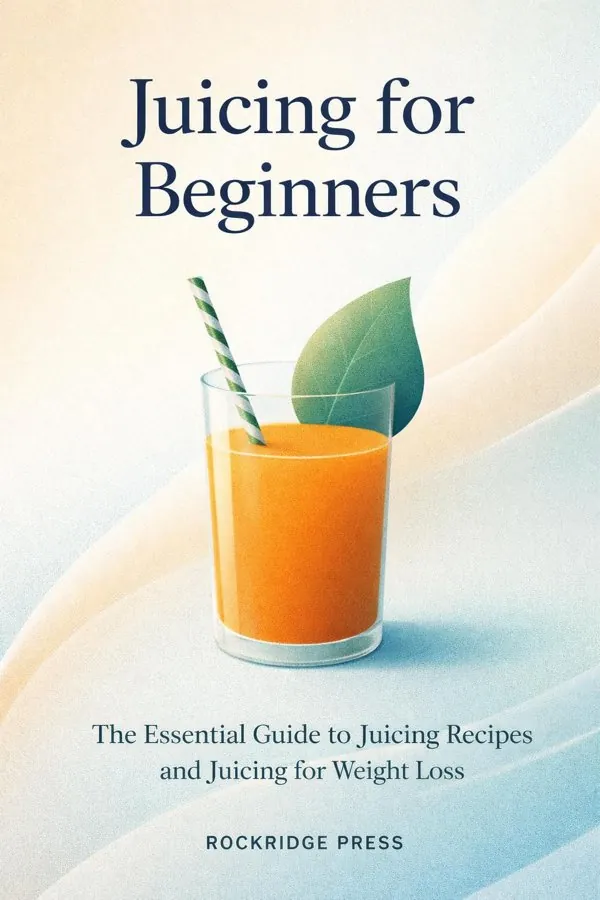
Juicing for Beginners: The Essential Guide to Juicing Recipes and Juicing for Weight Loss: Summary & Key Insights
 10 min9 chaptersAudio available
Key Takeaways from Juicing for Beginners: The Essential Guide to Juicing Recipes and Juicing for Weight Loss
A healthy habit often succeeds not because it is perfect, but because it is easy enough to repeat.
The value of juice depends less on hype and more on what actually goes into the machine.
People often think motivation drives health results, but the tools available at home can matter just as much.
The most realistic nutrition advice is often less dramatic than people hope.
If healthy food tastes punishing, most people will not keep eating it.
What Is Juicing for Beginners: The Essential Guide to Juicing Recipes and Juicing for Weight Loss About?
Juicing for Beginners: The Essential Guide to Juicing Recipes and Juicing for Weight Loss by Rockridge Press is a nutrition book. Juicing for Beginners: The Essential Guide to Juicing Recipes and Juicing for Weight Loss is a practical introduction to one of the most popular nutrition habits of the modern wellness movement. Designed for people who are curious about fresh juice but overwhelmed by conflicting advice, the book explains what juicing is, how it works, what equipment you need, and how to start using juice as part of a healthier lifestyle. Rather than treating juicing as a miracle cure, it presents it as a simple tool for increasing produce intake, improving meal quality, and supporting goals such as weight management and better daily energy. What makes the book useful is its beginner-friendly structure. It breaks down the basics of fruits, vegetables, juicer types, preparation methods, and recipe building into clear steps that feel approachable instead of intimidating. Rockridge Press is known for creating accessible guides that translate health topics into actionable routines, and that strength shows here. The result is a book that helps readers move from curiosity to confidence. For anyone who wants to drink more nutrients, reduce processed foods, and build a sustainable wellness habit, this guide offers a sensible place to begin.
This FizzRead summary covers all 9 key chapters of Juicing for Beginners: The Essential Guide to Juicing Recipes and Juicing for Weight Loss in approximately 10 minutes, distilling the most important ideas, arguments, and takeaways from Rockridge Press's work. Also available as an audio summary and Key Quotes Podcast.
Juicing for Beginners: The Essential Guide to Juicing Recipes and Juicing for Weight Loss
Juicing for Beginners: The Essential Guide to Juicing Recipes and Juicing for Weight Loss is a practical introduction to one of the most popular nutrition habits of the modern wellness movement. Designed for people who are curious about fresh juice but overwhelmed by conflicting advice, the book explains what juicing is, how it works, what equipment you need, and how to start using juice as part of a healthier lifestyle. Rather than treating juicing as a miracle cure, it presents it as a simple tool for increasing produce intake, improving meal quality, and supporting goals such as weight management and better daily energy.
What makes the book useful is its beginner-friendly structure. It breaks down the basics of fruits, vegetables, juicer types, preparation methods, and recipe building into clear steps that feel approachable instead of intimidating. Rockridge Press is known for creating accessible guides that translate health topics into actionable routines, and that strength shows here. The result is a book that helps readers move from curiosity to confidence. For anyone who wants to drink more nutrients, reduce processed foods, and build a sustainable wellness habit, this guide offers a sensible place to begin.
Who Should Read Juicing for Beginners: The Essential Guide to Juicing Recipes and Juicing for Weight Loss?
This book is perfect for anyone interested in nutrition and looking to gain actionable insights in a short read. Whether you're a student, professional, or lifelong learner, the key ideas from Juicing for Beginners: The Essential Guide to Juicing Recipes and Juicing for Weight Loss by Rockridge Press will help you think differently.
- ✓Readers who enjoy nutrition and want practical takeaways
- ✓Professionals looking to apply new ideas to their work and life
- ✓Anyone who wants the core insights of Juicing for Beginners: The Essential Guide to Juicing Recipes and Juicing for Weight Loss in just 10 minutes
Want the full summary?
Get instant access to this book summary and 100K+ more with Fizz Moment.
Get Free SummaryAvailable on App Store • Free to download
Key Chapters
A healthy habit often succeeds not because it is perfect, but because it is easy enough to repeat. One of the central ideas in Juicing for Beginners is that juicing can make nutrition feel more manageable, especially for people who struggle to eat enough fruits and vegetables in whole-food form. Instead of trying to overhaul every meal at once, readers can begin with one glass of fresh juice and use that act as a gateway to broader dietary improvement.
The book frames juicing as a practical shortcut to variety. Many people rarely eat leafy greens, beets, celery, cucumber, parsley, or ginger consistently, yet these ingredients can be combined into a drink in minutes. This does not mean juice replaces balanced meals. Rather, it gives beginners a way to increase nutrient intake while learning to enjoy produce they might otherwise ignore. For someone accustomed to packaged breakfasts or sugar-heavy snacks, a fresh vegetable-based juice can become a meaningful upgrade.
The concept also matters psychologically. When healthy eating feels complicated, people quit. Juicing lowers the barrier by creating a repeatable ritual: shop for produce, prep it, juice it, drink it. Over time, that ritual can reinforce a healthier identity. A person who starts by making morning juice may soon become more mindful of lunch choices, hydration, and portion size as well.
A practical application is to pair juicing with one predictable daily moment, such as breakfast or the afternoon energy slump. Start with simple combinations like apple, spinach, cucumber, and lemon, then gradually experiment.
Actionable takeaway: Choose one consistent time each day for juicing and make it your easiest healthy habit to sustain for the next two weeks.
The value of juice depends less on hype and more on what actually goes into the machine. A major lesson from the book is that ingredient selection matters enormously. Fresh, colorful, whole produce forms the foundation of good juicing, and the better the ingredients, the better the flavor and nutritional profile. Beginners often assume any fruit or vegetable combination will work, but the book encourages more thoughtful choices based on freshness, balance, and purpose.
Vegetables usually provide the strongest nutritional base, particularly greens like kale, spinach, and parsley, along with hydrating produce such as cucumber and celery. Fruits like apple, orange, pineapple, and berries can improve taste, but the book suggests using them strategically rather than letting sweetness dominate every recipe. This is especially relevant for readers interested in weight loss, since overreliance on fruit-heavy juices can increase sugar intake and weaken the intended health benefits.
The book also helps readers think functionally. Some ingredients support hydration, some add brightness, some contribute creaminess or sweetness, and some offer digestive appeal. Ginger, for example, can turn a mild juice into something energizing. Lemon can sharpen flavor and make green juices more refreshing. Beet can add earthiness and vivid color but should be balanced carefully with lighter ingredients.
In daily life, this means shopping with intention. Instead of randomly buying produce, a beginner can create a simple system: one leafy green, one watery vegetable, one sweet fruit, and one flavor booster. This approach reduces waste and makes recipe building easier.
Actionable takeaway: Build your next juice from four roles: a green base, a hydrating vegetable, a modest sweetener, and a flavor accent like lemon or ginger.
People often think motivation drives health results, but the tools available at home can matter just as much. Juicing for Beginners spends time explaining equipment because a juicing habit is more likely to last when the process feels practical. For beginners, choosing a juicer is not about buying the most expensive machine; it is about understanding how different models fit different lifestyles, budgets, and expectations.
The book typically distinguishes between centrifugal juicers and slower masticating models. Centrifugal machines are often faster, cheaper, and convenient for beginners who value speed. Masticating juicers are usually quieter and may extract juice more efficiently from leafy greens and fibrous produce, though they can cost more and take longer to use. This comparison helps readers avoid a common mistake: purchasing equipment that looks impressive but does not match their habits.
Ease of cleaning is another major theme. A juicer that is difficult to wash may quickly become unused, no matter how powerful it is. For someone with limited morning time, a simple machine with fewer parts may be better than a feature-rich model that creates friction. The best juicer is often the one that makes regular use realistic.
Beyond the machine itself, setup matters. Keeping produce washed, knives accessible, and storage jars ready can turn juicing from a project into a routine. The book implicitly teaches that sustainable wellness depends on reducing friction.
A useful example is the busy professional who wants fresh juice before work. That person may be better served by a straightforward, quick-cleaning model and pre-portioned produce in the fridge.
Actionable takeaway: Choose equipment based on the kind of juicing routine you will actually maintain, not the one you imagine on your most disciplined day.
The most realistic nutrition advice is often less dramatic than people hope. One of the book’s important contributions is its practical framing of juicing for weight loss. Juice itself is not a magic fat-burning solution. Instead, it can support weight management when used as part of a broader shift toward healthier eating patterns, better portion awareness, and reduced reliance on processed foods.
This distinction is crucial. Many readers are drawn to juicing because of promises of detoxes, cleanses, or rapid body transformation. The book takes a more grounded approach by showing how fresh juice can replace less nutritious choices. If someone swaps a sugary bottled drink, oversized pastry breakfast, or calorie-dense snack for a vegetable-forward juice, they may reduce excess calories while increasing nutrient intake. That creates conditions that can support weight loss over time.
The book also suggests that juice can increase awareness. When people begin paying attention to what goes into their glass, they often become more conscious of what goes onto their plate. A fresh juice habit may lead to more home cooking, fewer impulse purchases, and stronger appreciation for whole foods. Those shifts, not the juice alone, are what make long-term change possible.
Practical application matters here. A juice can work well as part of breakfast alongside protein, or as an afternoon reset that prevents overeating later. But relying on juice alone for sustained periods may leave some people hungry and lead to rebound eating.
Actionable takeaway: Use juice to replace low-quality foods or drinks, not to avoid balanced meals, and track whether it helps you make better choices across the rest of the day.
If healthy food tastes punishing, most people will not keep eating it. A key lesson in the book is that successful juicing depends on flavor balance, not nutritional ambition alone. Beginners often make the mistake of loading a juicer with only the “healthiest” vegetables and then wondering why the result tastes bitter, grassy, or harsh. The book encourages readers to create juices that are enjoyable enough to become habits.
Flavor balancing is both simple and strategic. Sweet ingredients such as apple, carrot, or pineapple can soften stronger greens. Acidic elements like lemon or lime brighten dull combinations. Ginger adds warmth and intensity in small amounts. Cucumber and celery dilute heaviness and add freshness. By learning these roles, readers stop depending on fixed recipes and begin understanding how to improvise.
This matters for adherence. A person who dislikes kale-heavy drinks may still enjoy kale when it is combined with apple, cucumber, and lemon. Another reader might prefer beet balanced by carrot and orange rather than paired with other earthy vegetables. The point is not to hide vegetables completely, but to create a taste profile that makes drinking them appealing.
The book’s beginner orientation shines here because it gives permission to start with more familiar flavors and gradually evolve. Someone used to sweet smoothies might begin with fruit-forward juices, then reduce sweetness over time as their palate adapts.
An easy application is to evaluate any failed juice by asking what it lacks: sweetness, brightness, dilution, or spice. Small adjustments can transform the experience.
Actionable takeaway: When creating a juice, aim for one strong nutritional ingredient and at least two ingredients that improve drinkability so the recipe becomes repeatable.
Healthy intentions often collapse under the pressure of a rushed schedule. Juicing for Beginners highlights a truth that applies to almost every nutrition habit: preparation determines consistency. Fresh juice may seem time-consuming, but much of the effort can be reduced through simple planning. The book helps readers see that juicing is most sustainable when produce management becomes part of the routine.
Preparation starts with shopping smart. Buying produce for a few core recipes reduces waste and decision fatigue. Washing ingredients soon after bringing them home saves time later. Storing greens properly, trimming celery, and portioning items into ready-to-use bundles can turn a ten-minute task into a three-minute one. The less work required in the moment, the more likely the habit survives busy mornings and low-energy evenings.
The book also emphasizes practical kitchen flow. Having the cutting board, containers, juicer parts, and compost bowl ready creates efficiency. Even something as simple as choosing recipes with overlapping ingredients can make the week easier. For example, cucumber, lemon, apple, spinach, and ginger can be mixed in different ratios for several distinct juices without requiring a large grocery list.
This approach has broader benefits. Better preparation reduces spoiled produce, saves money, and makes healthy choices more visible than convenience foods. It also reframes juicing from an occasional wellness project into a normal domestic rhythm.
A strong example is Sunday prep: wash produce, sort recipe ingredients into bags, and store them by the juicer. That small system can support several days of easy execution.
Actionable takeaway: Prepare at least three ready-to-juice produce packs in advance so your next healthy choice requires almost no decision-making.
No single food habit can carry the full burden of health. One of the book’s most sensible messages is that juicing should fit into an overall diet rather than replace it. Fresh juice can be a valuable source of vitamins, minerals, and plant compounds, but it usually lacks the full fiber and satiety of whole fruits, vegetables, proteins, and balanced meals. The book positions juicing as a complement, not a complete nutritional strategy.
This matters because beginners are often vulnerable to extremes. Some may see juicing as an all-or-nothing cleanse, while others may dismiss it because it is not nutritionally complete. The more realistic view is that juice has strengths and limitations. It can help people consume produce they would not otherwise eat. It can make breakfast feel lighter and more nutritious. It can replace less healthy beverages. But it does not eliminate the need for chewing, protein intake, healthy fats, and fiber-rich meals.
Used wisely, juicing can improve dietary quality. A green juice alongside eggs and whole-grain toast may upgrade breakfast. A vegetable juice paired with lunch can increase produce intake without much extra effort. After exercise, a refreshing juice can support hydration and micronutrient intake when combined with a more substantial snack.
This balanced framing also protects against disappointment. Readers who understand that juice is one tool among many are less likely to expect unrealistic results and quit when those results fail to appear.
Actionable takeaway: Add juice to an already balanced meal pattern and judge its value by whether it helps you eat better overall, not by whether it acts as a stand-alone solution.
Repetition creates habits, but too much repetition can make healthy routines fragile. The book encourages variety in juicing because diversity improves both enjoyment and nutritional exposure. Drinking the same apple-carrot juice every day may be easy, but it can limit the range of vegetables consumed and eventually lead to boredom. Rotating ingredients helps maintain interest while broadening the spectrum of plant nutrients in the diet.
Variety can be structured rather than chaotic. Readers can rotate greens such as spinach, kale, and romaine; alternate sweeteners like apple, pear, and pineapple; and introduce boosters such as ginger, mint, parsley, or citrus. Seasonal produce also keeps the practice fresh and economical. In summer, cucumber and watermelon create hydrating blends. In colder months, citrus, carrot, and beet provide comforting brightness.
The book’s beginner-friendly approach makes experimentation less intimidating. Once readers understand the roles ingredients play, they can adapt recipes based on what is available or what needs to be used up. This reduces waste and builds confidence. A person who knows that cucumber adds volume and freshness, lemon adds acidity, and apple softens bitterness can improvise with ease.
Variety also supports long-term mindset change. Instead of seeing health as restriction, readers begin to experience produce as colorful, flexible, and creative. That shift can carry over into salads, soups, snacks, and home cooking more broadly.
A simple method is to assign each week a focus ingredient, such as beet one week or parsley the next, and build several juices around it.
Actionable takeaway: Rotate at least one major ingredient each week so your juicing habit stays interesting, affordable, and nutritionally broader.
People are often drawn to dramatic resets because they promise fast results, but sustainable health is usually built through ordinary repetition. The book’s deeper message is that juicing works best as a steady daily practice rather than an extreme short-term cleanse. This is especially important in the weight-loss conversation, where readers may feel pressure to pursue aggressive programs instead of realistic routines.
A moderate approach offers several advantages. It is easier to maintain, less likely to trigger burnout, and more compatible with real life. A person who drinks fresh juice several times a week for months may gain far more than someone who completes a punishing three-day cleanse and then returns to old habits. The book’s structure, recipes, and beginner guidance all reinforce this more durable philosophy.
This perspective also encourages self-observation. Rather than chasing instant transformation, readers can pay attention to energy, digestion, cravings, hydration, and food choices over time. They can notice whether green juice improves the quality of their breakfast, whether afternoon juice reduces vending-machine snacking, or whether recipe prep helps them become more organized about food overall.
In practical terms, the sustainable path might look like this: one juice a day, mostly vegetable-based, paired with regular meals and increased awareness of processed food intake. That is less glamorous than a detox promise, but far more likely to become part of life.
Actionable takeaway: Commit to a manageable juicing routine for a month before attempting any restrictive plan, and measure success by consistency, not intensity.
All Chapters in Juicing for Beginners: The Essential Guide to Juicing Recipes and Juicing for Weight Loss
About the Author
Rockridge Press is a practical nonfiction publisher known for creating accessible guides in health, wellness, nutrition, cooking, and lifestyle improvement. Its books are typically designed for everyday readers who want clear explanations, step-by-step advice, and usable strategies rather than overly academic theory. Across its catalog, Rockridge Press emphasizes beginner-friendly learning, helping readers translate broad goals like eating better, exercising more, or simplifying daily routines into achievable actions. In Juicing for Beginners, that editorial approach is especially evident: the material is organized to help newcomers understand equipment, ingredients, recipes, and realistic weight-loss support without feeling overwhelmed. While Rockridge Press is not a single-person author brand, it has built a reputation for practical instructional books that make popular wellness topics easier to understand and apply.
Get This Summary in Your Preferred Format
Read or listen to the Juicing for Beginners: The Essential Guide to Juicing Recipes and Juicing for Weight Loss summary by Rockridge Press anytime, anywhere. FizzRead offers multiple formats so you can learn on your terms — all free.
Available formats: App · Audio · PDF · EPUB — All included free with FizzRead
Download Juicing for Beginners: The Essential Guide to Juicing Recipes and Juicing for Weight Loss PDF and EPUB Summary
Key Quotes from Juicing for Beginners: The Essential Guide to Juicing Recipes and Juicing for Weight Loss
“A healthy habit often succeeds not because it is perfect, but because it is easy enough to repeat.”
“The value of juice depends less on hype and more on what actually goes into the machine.”
“People often think motivation drives health results, but the tools available at home can matter just as much.”
“The most realistic nutrition advice is often less dramatic than people hope.”
“If healthy food tastes punishing, most people will not keep eating it.”
Frequently Asked Questions about Juicing for Beginners: The Essential Guide to Juicing Recipes and Juicing for Weight Loss
Juicing for Beginners: The Essential Guide to Juicing Recipes and Juicing for Weight Loss by Rockridge Press is a nutrition book that explores key ideas across 9 chapters. Juicing for Beginners: The Essential Guide to Juicing Recipes and Juicing for Weight Loss is a practical introduction to one of the most popular nutrition habits of the modern wellness movement. Designed for people who are curious about fresh juice but overwhelmed by conflicting advice, the book explains what juicing is, how it works, what equipment you need, and how to start using juice as part of a healthier lifestyle. Rather than treating juicing as a miracle cure, it presents it as a simple tool for increasing produce intake, improving meal quality, and supporting goals such as weight management and better daily energy. What makes the book useful is its beginner-friendly structure. It breaks down the basics of fruits, vegetables, juicer types, preparation methods, and recipe building into clear steps that feel approachable instead of intimidating. Rockridge Press is known for creating accessible guides that translate health topics into actionable routines, and that strength shows here. The result is a book that helps readers move from curiosity to confidence. For anyone who wants to drink more nutrients, reduce processed foods, and build a sustainable wellness habit, this guide offers a sensible place to begin.
More by Rockridge Press
You Might Also Like
Eating by the Seasons Cookbook: Seasonal Produce-Focused Recipes
Clare Foster
10 min
From Crook to Cook: Platinum Recipes from Tha Boss Dogg's Kitchen
Snoop Dogg with Ryan Ford
10 min
The Food Therapist: Break Bad Habits, Eat with Intention, and Indulge Without Worry
Shira Lenchewski
10 min
The Mediterranean Diet Meal Plan: A 4-Week Meal Plan for Optimal Health and Weight Loss
Various Contributors
10 min
The Well Plated Cookbook: Simple, Wholesome Recipes for Everyday Meals
Erin Clarke
10 min
Why We Get Fat: And What to Do About It
Gary Taubes
10 minBrowse by Category
Ready to read Juicing for Beginners: The Essential Guide to Juicing Recipes and Juicing for Weight Loss?
Get the full summary and 100K+ more books with Fizz Moment.