
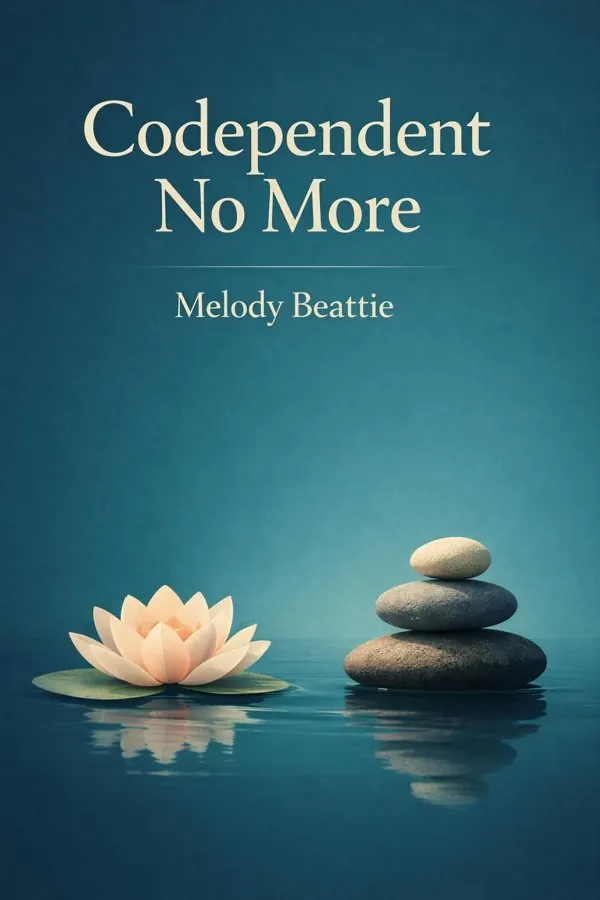
Codependent No More: Summary & Key Insights
 10 min4 chaptersAudio available
What Is Codependent No More About?
Codependent No More by Melody Beattie is a psychology book published in 1986 spanning 4 pages. When I wrote *Codependent No More*, I wasn’t simply trying to put a label on pain. I wanted to give a voice to those of us who had spent our lives believing that our worth came only from fixing, pleasing, or rescuing others. Perhaps you have felt that same exhaustion — always providing, always controlling, always hoping that if you could hold everyone else together, you might finally feel safe yourself. But the truth is that codependency is a slow erosion of the self, and the journey of recovery begins when you recognize that your own healing matters just as much as anyone else’s. The idea of codependency as I present it in this book grew out of my own experience working with people who lived in the long shadows of addiction — family members who had learned to survive by caretaking, controlling, and blaming themselves for things they didn’t cause and couldn’t cure. My own life had been marked by that same compulsion: to monitor, manage, and manipulate the pain of others while quietly abandoning myself. I began to see that codependency wasn’t just about addiction; it was a broader relational pattern, a belief that we must sacrifice ourselves for love or peace. What’s in this book for you is liberation — the kind that comes when you learn to separate your own identity from the chaos around you. Each chapter is an invitation to return home to yourself, to let go of guilt, fear, and control, and to rediscover joy in simply being who you are. We can learn to detach with love, to give without losing ourselves, and to care without controlling. Recovery is possible. And it begins, always, with the radical act of turning inward and saying: my life is my own.
This FizzRead summary covers all 4 key chapters of Codependent No More in approximately 10 minutes, distilling the most important ideas, arguments, and takeaways from Melody Beattie's work. Also available as an audio summary and Key Quotes Podcast.
Codependent No More: How to Stop Controlling Others and Start Caring for Yourself
When I wrote *Codependent No More*, I wasn’t simply trying to put a label on pain. I wanted to give a voice to those of us who had spent our lives believing that our worth came only from fixing, pleasing, or rescuing others. Perhaps you have felt that same exhaustion — always providing, always controlling, always hoping that if you could hold everyone else together, you might finally feel safe yourself. But the truth is that codependency is a slow erosion of the self, and the journey of recovery begins when you recognize that your own healing matters just as much as anyone else’s.
The idea of codependency as I present it in this book grew out of my own experience working with people who lived in the long shadows of addiction — family members who had learned to survive by caretaking, controlling, and blaming themselves for things they didn’t cause and couldn’t cure. My own life had been marked by that same compulsion: to monitor, manage, and manipulate the pain of others while quietly abandoning myself. I began to see that codependency wasn’t just about addiction; it was a broader relational pattern, a belief that we must sacrifice ourselves for love or peace.
What’s in this book for you is liberation — the kind that comes when you learn to separate your own identity from the chaos around you. Each chapter is an invitation to return home to yourself, to let go of guilt, fear, and control, and to rediscover joy in simply being who you are. We can learn to detach with love, to give without losing ourselves, and to care without controlling. Recovery is possible. And it begins, always, with the radical act of turning inward and saying: my life is my own.
Who Should Read Codependent No More?
This book is perfect for anyone interested in psychology and looking to gain actionable insights in a short read. Whether you're a student, professional, or lifelong learner, the key ideas from Codependent No More by Melody Beattie will help you think differently.
- ✓Readers who enjoy psychology and want practical takeaways
- ✓Professionals looking to apply new ideas to their work and life
- ✓Anyone who wants the core insights of Codependent No More in just 10 minutes
Want the full summary?
Get instant access to this book summary and 100K+ more with Fizz Moment.
Get Free SummaryAvailable on App Store • Free to download
Key Chapters
When I first began to use the term codependency, many people resisted it. They thought it applied only to families of alcoholics or addicts. But what I discovered, through both personal experience and years of counseling others, is that codependency is a way of being that thrives anywhere love gets tangled with control. It appears in families scarred by dysfunction, in relationships clouded by secrecy or shame, and even in cultures that teach self-sacrifice as virtue, while quietly punishing self-expression.
Codependency begins in relationships where we learn that our safety depends on another person’s mood or behavior. Maybe we grew up with a parent who drank or was emotionally absent, and we learned early how to read every sigh, every silence, every slammed door. We internalized a lesson: if I can only keep this person calm, everything will be okay. That survival strategy follows us into adulthood. We become the responsible one, the pleaser, the caretaker — and yet, beneath that control, we carry deep fear and loneliness.
The book’s first chapters lay out the terrain: what codependency looks like and where it comes from. It explores how family systems around addiction encourage denial, secrecy, and over-functioning — and how people who love addicts often lose sight of themselves in trying to save others. Once you recognize these origins, you begin to see your patterns not as weaknesses but as learned responses. That’s the beginning of compassion for yourself.
At the heart of codependency lies a storm of emotions — guilt for wanting more, fear of being abandoned, and self-doubt so persistent that we stop trusting our own feelings. I often meet people who tell me they have no idea what they feel anymore. That numbness isn’t weakness; it’s self-protection. When we live in chronic stress, our feelings become dangerous, so we bury them. But recovery asks us to unearth what we’ve buried.
In these middle chapters, I explore how denial works as codependency’s shield. Denial tells us things aren’t so bad, that we can manage, that it’s safer to keep pretending. It keeps us looping in familiar pain. The turning point comes when we begin to see denial for what it is: a barrier to truth. The moment you admit, “I’m not okay,” you have already begun to heal.
I also discuss control — that desperate attempt to manipulate outcomes, emotions, or other people’s choices. Control feels comforting, yet it costs us peace. We enable dysfunction, believing we’re helping. We rescue others to avoid our own discomfort. Learning detachment doesn’t mean indifference; it means surrendering what was never ours to fix. Detachment gives you back your serenity. The book guides readers to that freedom with personal stories, gentle exercises, and moments of reflection — all rooted in lived experience.
+ 2 more chapters — available in the FizzRead app
All Chapters in Codependent No More
About the Author
Melody Beattie is the author of Codependent No More.
Get This Summary in Your Preferred Format
Read or listen to the Codependent No More summary by Melody Beattie anytime, anywhere. FizzRead offers multiple formats so you can learn on your terms — all free.
Available formats: App · Audio · PDF · EPUB — All included free with FizzRead
Download Codependent No More PDF and EPUB Summary
Key Quotes from Codependent No More
“When I first began to use the term codependency, many people resisted it.”
“At the heart of codependency lies a storm of emotions — guilt for wanting more, fear of being abandoned, and self-doubt so persistent that we stop trusting our own feelings.”
Frequently Asked Questions about Codependent No More
Codependent No More by Melody Beattie is a psychology book that explores key ideas across 4 chapters. When I wrote *Codependent No More*, I wasn’t simply trying to put a label on pain. I wanted to give a voice to those of us who had spent our lives believing that our worth came only from fixing, pleasing, or rescuing others. Perhaps you have felt that same exhaustion — always providing, always controlling, always hoping that if you could hold everyone else together, you might finally feel safe yourself. But the truth is that codependency is a slow erosion of the self, and the journey of recovery begins when you recognize that your own healing matters just as much as anyone else’s. The idea of codependency as I present it in this book grew out of my own experience working with people who lived in the long shadows of addiction — family members who had learned to survive by caretaking, controlling, and blaming themselves for things they didn’t cause and couldn’t cure. My own life had been marked by that same compulsion: to monitor, manage, and manipulate the pain of others while quietly abandoning myself. I began to see that codependency wasn’t just about addiction; it was a broader relational pattern, a belief that we must sacrifice ourselves for love or peace. What’s in this book for you is liberation — the kind that comes when you learn to separate your own identity from the chaos around you. Each chapter is an invitation to return home to yourself, to let go of guilt, fear, and control, and to rediscover joy in simply being who you are. We can learn to detach with love, to give without losing ourselves, and to care without controlling. Recovery is possible. And it begins, always, with the radical act of turning inward and saying: my life is my own.
Compare Codependent No More
More by Melody Beattie
You Might Also Like
The Body Keeps the Score
Bessel van der Kolk
10 min
Surrounded by Idiots
Thomas Erikson
10 min
Emotional Intelligence
Daniel Goleman
10 min
Attached
Amir Levine
10 min
Why Does He Do That
Lundy Bancroft
10 min
Women Who Run with the Wolves
Clarissa Pinkola Estés
10 minFeatured In
Browse by Category
Ready to read Codependent No More?
Get the full summary and 100K+ more books with Fizz Moment.