
Can't Hurt Me vs 12 Rules for Life: Which Should You Read?
A detailed comparison of Can't Hurt Me by David Goggins and 12 Rules for Life by Jordan Peterson. Discover the key differences, strengths, and which book is right for you.
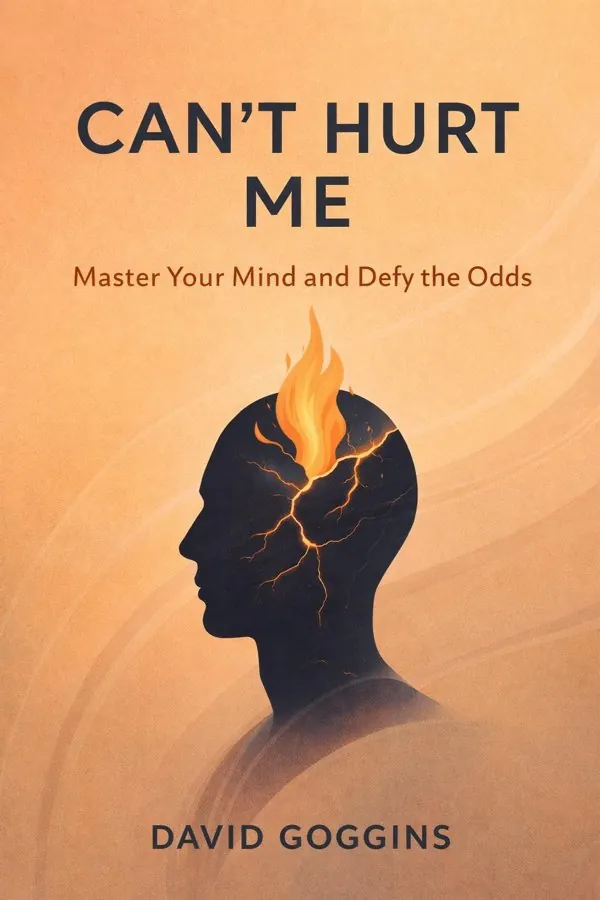
Can't Hurt Me
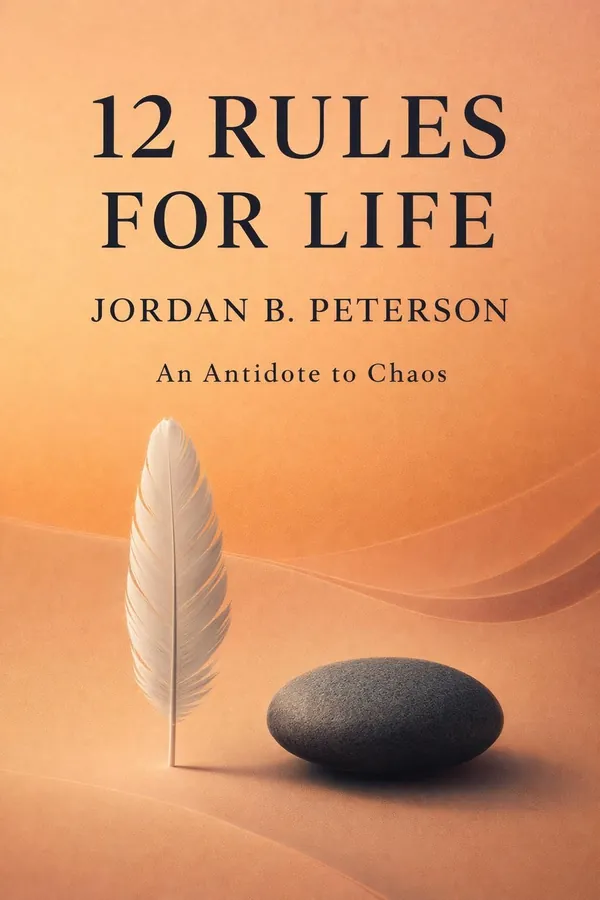
12 Rules for Life
In-Depth Analysis
David Goggins's Can't Hurt Me and Jordan Peterson's 12 Rules for Life occupy the same broad self-help shelf, but they are trying to solve different versions of the human problem. Goggins addresses paralysis through confrontation. Peterson addresses chaos through structure. Both books begin from the premise that suffering is inevitable and that modern people often evade responsibility, but the forms of responsibility they advocate, the tone they use, and the lives they imagine for readers are notably different.
Can't Hurt Me is built around a conversion narrative. Goggins begins with abuse, racism, poverty, fear, and self-loathing, then dramatizes a series of decisive acts in which he refuses to remain defined by those conditions. The key turning point is not merely that he loses weight or enters Navy SEAL training; it is that he stops interpreting his past as a permanent excuse. That is the central insight of the book: trauma may explain you, but it must not imprison you. The methods he proposes reflect that premise. The 'Accountability Mirror' demands ruthless honesty. The 'Cookie Jar' stores memories of previous victories to draw on during future pain. The repeated pursuit of punishing physical goals becomes a laboratory for proving that the mind quits before the body must.
Peterson's 12 Rules for Life is less autobiographical and more framework-driven. Instead of one central transformation story, it offers a mosaic of principles: stand up straight, treat yourself as someone worth helping, choose friends wisely, compare yourself to your past self rather than others, and raise children with loving discipline. These rules are not presented as hacks but as moral habits. Peterson's recurring concern is that without voluntarily chosen order, life dissolves into resentment, anxiety, and meaninglessness. Where Goggins asks, 'How hard are you willing to push?' Peterson asks, 'What kind of person are you becoming through your choices?' The difference matters. Goggins's horizon is self-overcoming; Peterson's is ethical and psychological orientation.
This divergence also shapes each author's understanding of pain. Goggins practically sanctifies suffering when it is voluntarily chosen and attached to growth. BUD/S, pull-up records, ultramarathons, and brutal training blocks are not incidental examples; they are the medium through which his philosophy becomes real. Pain is clarifying because it strips away delusion. In Goggins's world, comfort is often the enemy because it preserves mediocrity. Peterson, by contrast, does not glorify pain itself. He sees suffering as an unavoidable feature of existence and argues that responsibility, truthfulness, and discipline redeem it by placing it within a meaningful structure. His rule about comparing yourself to who you were yesterday, for example, offers a humane antidote to despair; it is strenuous, but not theatrical.
In practical terms, Can't Hurt Me is more catalytic, while 12 Rules for Life is more regulatory. Goggins is the better book for breaking a deadlocked identity. A reader who feels defeated, physically stagnant, ashamed, or addicted to excuses may find in Goggins the jolt necessary to act. His own story of moving from obesity and low expectations to military and endurance achievement gives the book unusual authority as a narrative of reversal. But its strengths are also its limits. Because Goggins is so exceptional, some readers may struggle to translate his methods into ordinary life without drifting toward self-punishment or unsustainable intensity.
Peterson is more useful when the issue is not raw inertia but disorder: poor boundaries, weak routines, corrosive friendships, a fragmented sense of purpose, or the inability to manage everyday obligations. Rule 2, about treating yourself like someone you are responsible for helping, is especially revealing. It reframes self-care not as indulgence but as duty. Rule 3, on befriending people who want the best for you, widens self-help beyond individual willpower to social ecology. And Rule 5, on child discipline, shows Peterson's interest in how private conduct shapes family life and social functioning. These concerns make his book broader than Goggins's, though sometimes less urgent.
Stylistically, the contrast is equally sharp. Goggins is immediate, sparse, aggressive, and memorable. His rhetoric is designed to corner the reader's excuses. Peterson, by contrast, can be sprawling and essayistic, moving from lobsters to the Bible to clinical observations and back again. For some readers, that intellectual range is precisely the appeal. For others, it dilutes the force of the guidance. Goggins rarely risks being obscure; Peterson regularly risks it.
On scientific rigor, neither book is ideal if judged as careful evidence-based self-help. Goggins mostly offers lived proof, not systematic proof. Peterson cites psychology and biology more often, but his arguments are frequently interwoven with mythology and broad cultural claims, so the line between evidence and interpretation is not always clear. The reader is therefore choosing less between 'empirical' and 'non-empirical' than between testimonial authority and theoretical authority.
Ultimately, these books serve different moments in a reader's life. Can't Hurt Me is for the moment when self-respect has collapsed and only a radical standard feels believable. 12 Rules for Life is for the moment when one needs orientation, not merely ignition. Goggins teaches how to wage war against inner weakness. Peterson teaches how to build a life sturdy enough to bear suffering. If read together, they reveal a useful truth: endurance without order can become obsession, while order without courage can become stagnation.
Side-by-Side Comparison
| Aspect | Can't Hurt Me | 12 Rules for Life |
|---|---|---|
| Core Philosophy | Can't Hurt Me argues that radical self-transformation comes through extreme ownership, deliberate suffering, and relentless confrontation with weakness. Goggins treats pain as a tool for forging identity, using his own shift from abused, overweight young man to Navy SEAL and ultramarathon runner as proof. | 12 Rules for Life argues that meaning is built through responsibility, order, truthful speech, and disciplined conduct in everyday life. Peterson frames suffering as unavoidable, but insists that stable habits, moral seriousness, and voluntary responsibility are the proper response. |
| Writing Style | Goggins writes in a blunt, confrontational, autobiographical voice that feels closer to a locker-room challenge than a traditional self-help guide. The book is driven by vivid episodes such as SEAL training, weight loss, and endurance events, with lessons extracted directly from lived experience. | Peterson writes in a discursive, lecture-like style that blends psychology, mythology, religion, clinical anecdotes, and cultural commentary. The prose is more abstract and intellectually layered, often moving from practical advice into symbolic interpretation. |
| Practical Application | The book offers highly memorable tools such as the 'Accountability Mirror,' the 'Cookie Jar,' and setting seemingly impossible physical goals to recondition the mind. Its practicality is strongest for readers motivated by challenge, discipline, and measurable acts of self-overcoming. | Peterson's advice is practical in a quieter, more domestic sense: improve posture, care for yourself, choose better friends, compare yourself to your former self, and establish boundaries. The applications are less extreme and often easier to integrate into work, family, and daily routines. |
| Target Audience | Can't Hurt Me is best suited for readers who respond to intensity, adversity narratives, and high-performance thinking. It especially appeals to people who feel trapped by weakness, passivity, or self-pity and want a forceful push toward discipline. | 12 Rules for Life is aimed at readers seeking structure, meaning, and philosophical orientation amid confusion or drift. It fits those who want a broader life framework rather than a singular emphasis on grit and physical hardship. |
| Scientific Rigor | Goggins relies primarily on autobiographical evidence rather than sustained research or systematic psychological argument. The book is persuasive as testimony, but it does not carefully distinguish what worked for an unusually extreme individual from what is broadly generalizable. | Peterson draws on psychology, evolutionary claims, and references to biology and myth, giving the book a more theory-driven surface. However, its rigor is uneven because scientific discussion is frequently mixed with speculative cultural and symbolic interpretation. |
| Emotional Impact | The emotional force comes from Goggins's harrowing childhood, humiliation, obesity, racism, and repeated acts of self-reinvention. Readers often feel urgency, shock, and adrenaline because the book presents transformation as a life-or-death refusal to remain broken. | Peterson's emotional impact is more reflective than visceral, emerging from his insistence that suffering, chaos, and fragility are universal features of life. The book often resonates with readers who feel existentially disoriented rather than physically defeated. |
| Actionability | Its lessons are direct and memorable: face your excuses, document your weaknesses, do hard things on purpose, and expand your perceived limits through disciplined repetition. The downside is that some readers may find the implied standard so extreme that it feels difficult to sustain. | The rules are inherently actionable because they are framed as behavioral principles rather than heroic feats. Many readers can immediately apply ideas like better self-care, stronger friendships, and incremental self-comparison without overhauling their lives overnight. |
| Depth of Analysis | Goggins is deep on personal psychology under stress, especially shame, callusing the mind, and using adversity as fuel. It is less comprehensive when discussing social, familial, or philosophical dimensions of a well-lived life beyond toughness and achievement. | Peterson offers broader analysis, linking individual habits to myth, morality, child-rearing, social order, and meaning. Whether or not one agrees with him, the book attempts a wider account of why personal discipline matters in both psychological and civilizational terms. |
| Readability | Can't Hurt Me is fast, gripping, and easy to follow because its structure is anchored in dramatic episodes and clear motivational lessons. Even readers who rarely enjoy self-help can be pulled through by the momentum of the memoir. | 12 Rules for Life is readable in sections, but it is denser and more uneven because Peterson often digresses into theory, biblical material, and extended interpretation. Readers looking for straightforward guidance may find parts stimulating and parts laborious. |
| Long-term Value | The book has strong long-term value as a motivational reset, especially when a reader needs to break inertia or rebuild self-respect through difficult action. Its usefulness may diminish once the immediate need for intensity fades or if a reader seeks a more balanced life philosophy. | Peterson's book tends to have stronger reread value for readers interested in principles, not just motivation, because its rules can be revisited at different life stages. Its long-term impact depends on tolerance for its philosophical and ideological framing. |
Key Differences
Transformation Story vs Rule-Based Framework
Can't Hurt Me is organized around one dramatic life story: Goggins turning trauma, obesity, and low self-worth into elite performance. 12 Rules for Life is structured as a set of principles, such as self-care and disciplined parenting, meant to guide many kinds of lives rather than narrate one central reinvention.
Extreme Discipline vs Sustainable Order
Goggins emphasizes radical discomfort, punishing goals, and proving the mind's limits are often artificial. Peterson emphasizes routines, boundaries, incremental progress, and responsibility, offering a model that is generally easier to sustain in ordinary work and family life.
Memoir Authority vs Intellectual Authority
Goggins persuades primarily through testimony: he did these things, survived these conditions, and changed himself under pressure. Peterson persuades through argument, drawing on psychology, mythology, and moral reasoning to justify why his rules matter.
Physical Challenge vs Psychological-Moral Guidance
In Can't Hurt Me, physical tests like SEAL training and ultramarathons are central to building identity and mental toughness. In 12 Rules for Life, the focus is less on athletic suffering and more on conduct, speech, self-respect, friendship, parenting, and meaning.
Confrontational Tone vs Reflective Tone
Goggins speaks with urgency and aggression, often sounding as if he is directly attacking the reader's excuses. Peterson is more professorial and reflective, even when stern, and often develops ideas through explanation rather than command.
Narrower Intensity vs Broader Scope
Can't Hurt Me goes very deep on adversity, pain, and mental toughness, but less far into family systems, social institutions, or moral philosophy. 12 Rules for Life covers a wider terrain, from posture and self-care to child-rearing and existential meaning, though sometimes at the cost of focus.
Immediate Motivation vs Rereadable Principles
Goggins's book is often most powerful when a reader needs urgent activation and a hard reset. Peterson's book is more likely to be revisited over time because its rule-based structure invites periodic reflection as life circumstances change.
Who Should Read Which?
The reader who feels defeated and needs a radical reset
→ Can't Hurt Me
This reader will benefit from Goggins's intensity, especially his refusal to let trauma or weakness become a permanent identity. The book's examples of weight loss, military training, and endurance suffering provide a strong model for rebuilding self-respect through hard action.
The reader who wants structure, meaning, and better life habits
→ 12 Rules for Life
This reader is likely less in need of adrenaline and more in need of a governing framework. Peterson's rules about self-care, friendship, comparison, posture, and discipline provide a broad architecture for stabilizing daily life.
The intellectually curious self-help reader who wants both motivation and ideas
→ 12 Rules for Life
Although this reader may also enjoy Goggins, Peterson offers more conceptual depth and a wider range of topics, including morality, mythology, psychology, and family life. It better serves someone who wants not just encouragement, but an interpretive lens for understanding suffering and responsibility.
Which Should You Read First?
For most readers, the best reading order is to start with Can't Hurt Me and then move to 12 Rules for Life. Goggins gives you momentum first. His story creates urgency, strips away excuses, and makes self-change feel possible through action. If you are hesitant, discouraged, or emotionally flat, his intensity can break through resistance faster than Peterson's more reflective approach. Once that energy is activated, 12 Rules for Life works well as the second book because it helps organize that momentum into a more durable way of living. Peterson expands the conversation from pure toughness into self-care, friendship, parenting, responsibility, and meaning. In that sense, Goggins helps you start the engine, while Peterson helps you steer. The reverse order can work for readers who prefer theory and structure before motivation. But for the average reader, especially someone looking for change rather than debate, Goggins first and Peterson second creates the strongest progression: first confrontation, then consolidation.
Want the full summary?
Get instant access to this book summary and 100K+ more with Fizz Moment.
Get Free SummaryAvailable on App Store • Free to download
Frequently Asked Questions
Is Can't Hurt Me better than 12 Rules for Life for beginners?
For most beginners to self-help, Can't Hurt Me is easier to enter because it is narrative-driven, emotionally immediate, and highly motivational. You can follow Goggins's life story from abuse and obesity to military and endurance achievements without needing much patience for theory. By contrast, 12 Rules for Life is more abstract and often digressive, mixing psychology, mythology, and philosophy. If a beginner wants a powerful push to change habits fast, Goggins is usually the better starting point. If the beginner prefers reflective guidance about responsibility, relationships, and meaning, Peterson may still be the better fit.
Which book is more practical: Can't Hurt Me or 12 Rules for Life?
They are practical in different ways. Can't Hurt Me is practical for readers who need forceful methods like the Accountability Mirror, the Cookie Jar, and deliberately doing hard things to build mental toughness. Its advice is direct, memorable, and action-heavy. 12 Rules for Life is practical in a broader daily-life sense: care for yourself properly, improve your posture, choose supportive friends, stop comparing yourself to others, and set boundaries with children. If you want immediate challenge-based exercises, Goggins feels more practical. If you want sustainable life principles that apply across work, family, and personal development, Peterson is often more practical.
Should I read Can't Hurt Me or 12 Rules for Life if I feel stuck in life?
If feeling stuck means you are trapped in passivity, self-pity, fear, or physical and mental inertia, Can't Hurt Me is likely the stronger choice. Goggins specializes in helping readers break identity-level excuses and reframe pain as a pathway to growth. If feeling stuck means your life lacks order, direction, healthy relationships, or a stable moral framework, 12 Rules for Life may be more useful. Peterson's rules offer scaffolding for rebuilding structure one principle at a time. In simple terms, Goggins is better for ignition; Peterson is better for orientation.
Is 12 Rules for Life more philosophical than Can't Hurt Me?
Yes, significantly more philosophical. Can't Hurt Me is fundamentally a memoir-driven self-discipline manual, grounded in Goggins's own experiences of abuse, military training, and endurance sports. Its philosophy emerges from action. 12 Rules for Life explicitly draws from psychology, religion, mythology, evolutionary ideas, and cultural criticism to explain why responsibility and order matter. Readers who enjoy conceptual frameworks and big-picture reflections on suffering, morality, and meaning will find Peterson more intellectually expansive. Readers who prefer ideas tested through lived hardship rather than argued through theory will likely prefer Goggins.
Which book has more emotional impact: Can't Hurt Me vs 12 Rules for Life?
Can't Hurt Me usually lands harder on an emotional level because Goggins's life story is so raw and cinematic. His childhood abuse, struggles with racism and obesity, and repeated acts of brutal self-reinvention create a visceral reading experience. 12 Rules for Life can be emotionally meaningful, but in a more contemplative way. Its impact comes from recognizing yourself in Peterson's descriptions of chaos, resentment, self-neglect, and the burden of responsibility. If you want to feel challenged and shaken awake, Goggins typically delivers more impact. If you want to feel understood and intellectually steadied, Peterson may resonate more deeply.
Who should read Can't Hurt Me instead of 12 Rules for Life?
Readers who respond to intensity, athletic metaphors, military-style discipline, and extreme personal accountability should read Can't Hurt Me first. It is especially suited to people recovering from defeat, shame, physical decline, or a long period of excuse-making. Someone training for a difficult goal, trying to rebuild confidence, or needing a dramatic mindset reset will likely get more from Goggins than from Peterson. By contrast, readers focused on parenting, relationships, moral structure, or broader existential questions may find 12 Rules for Life more relevant to their needs.
The Verdict
If you want a book that hits like a personal challenge and forces you to confront weakness without comfort, Can't Hurt Me is the stronger recommendation. David Goggins offers one of the most compelling self-transformation narratives in modern self-help, and his methods are unforgettable because they emerge from lived extremity. For readers who feel broken, passive, physically stagnant, or trapped by their past, it can be a genuine catalyst. If, however, you want a broader framework for living well rather than a concentrated dose of grit, 12 Rules for Life is the better choice. Jordan Peterson is less effective as a motivational jolt, but more effective at connecting personal discipline to responsibility, relationships, meaning, and social life. His book gives readers principles to organize daily existence, not just push their limits. In quality terms, the better book depends on your need. Can't Hurt Me is more gripping, more emotionally charged, and more immediately energizing. 12 Rules for Life is more expansive, more conceptual, and more suited to readers who want reflective guidance rather than an extreme performance mindset. If forced to choose one for most readers, 12 Rules for Life has wider applicability, but Can't Hurt Me is more powerful when it matches the reader's moment. The ideal conclusion is simple: read Goggins when you need to break yourself out of inertia; read Peterson when you need to build order that lasts.
Related Comparisons

Want to read both books?
Get AI-powered summaries of both Can't Hurt Me and 12 Rules for Life in just 20 minutes total.