
Can't Hurt Me vs Living with a SEAL: 31 Days Training with the Toughest Man on the Planet: Which Should You Read?
A detailed comparison of Can't Hurt Me by David Goggins and Living with a SEAL: 31 Days Training with the Toughest Man on the Planet by Jesse Itzler. Discover the key differences, strengths, and which book is right for you.
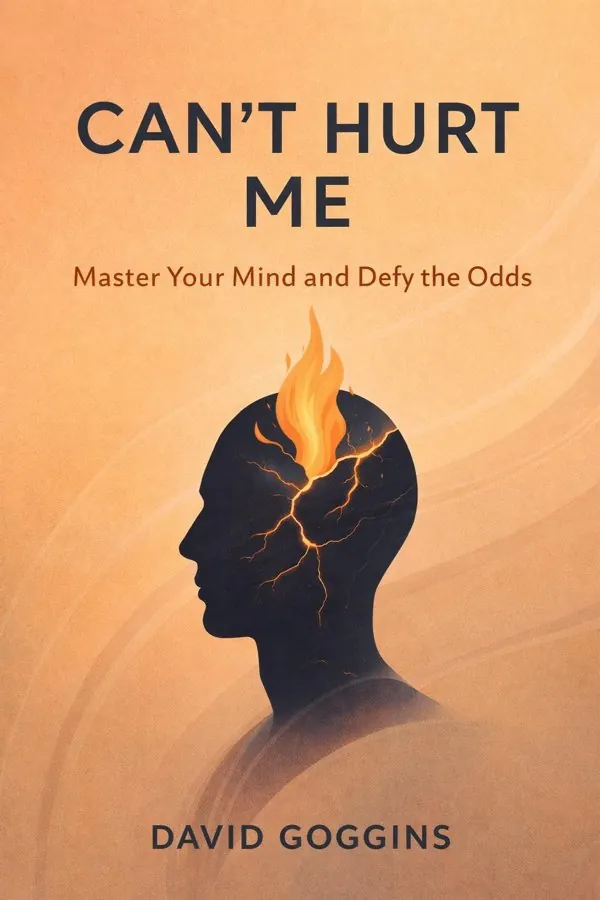
Can't Hurt Me
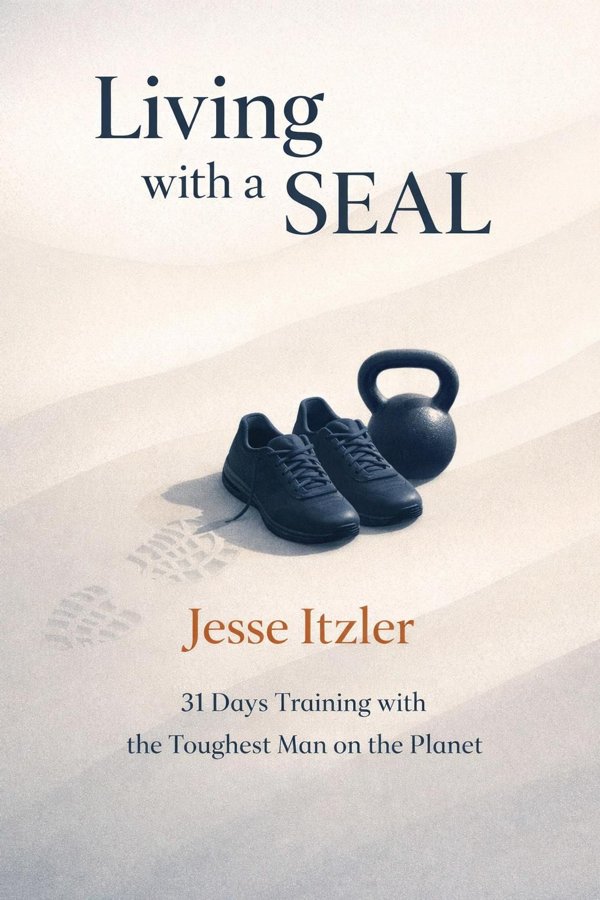
Living with a SEAL: 31 Days Training with the Toughest Man on the Planet
In-Depth Analysis
Both 'Can't Hurt Me' by David Goggins and 'Living with a SEAL' by Jesse Itzler explore the boundaries of human potential, but they do so through strikingly different lenses, tones, and purposes.
Goggins’ memoir is a visceral, harrowing account of his personal evolution from a traumatized, overweight youth into an elite Navy SEAL and ultramarathon runner. The narrative is unflinching: Goggins recounts his abusive childhood, struggles with racism, and years of self-destructive behavior with brutal candor. This rawness is not merely for shock value—it serves as a foundation for his core thesis that mental toughness is forged through suffering and relentless self-honesty. His methods are laid bare: the ‘Accountability Mirror’ (a nightly ritual of confronting his own weaknesses), the ‘Cookie Jar’ (recalling past victories in moments of doubt), and ‘Taking Souls’ (outperforming others as psychological fuel) are presented as actionable strategies. However, these are not mere motivational soundbites; Goggins details the grueling work behind them, such as running on broken legs during SEAL training or completing ultra-endurance events under excruciating pain. His approach is extreme, demanding readers to reject comfort and embrace voluntary hardship if they wish to achieve personal greatness.
In contrast, 'Living with a SEAL' is a diary-style chronicle of thirty-one days during which entrepreneur Jesse Itzler invites an unnamed Navy SEAL (later revealed to be Goggins himself) to live and train with him. The book is intentionally lighter, employing humor and self-deprecation as Itzler—by no means an unfit man, but certainly not a SEAL—struggles through bizarre, punishing workouts at the SEAL’s behest. The narrative unfolds in vignettes: running in freezing weather, performing hundreds of push-ups, or executing surprise challenges at odd hours. Yet, unlike Goggins’ internal odyssey, Itzler's journey is as much about family dynamics (his wife’s bemused reactions are a recurring motif) and the culture clash between civilian comfort and military rigor as it is about physical achievement. The SEAL’s aphorisms—“If it doesn’t suck, we don’t do it”—are distilled by Itzler into lessons on resilience and adaptability, but the tone remains accessible, never veering into the existential gravity that permeates Goggins' own writing.
Methodologically, Goggins’ book is a deep dive into the psychology of self-transformation. He dissects the roots of his pain and explicitly links them to his need for control and self-mastery, offering readers not just stories but a blueprint for radical change. The narrative is interspersed with ‘Challenge’ sections that break the fourth wall, directly urging the reader to attempt his exercises in mental fortitude. There is a sense of universality—Goggins insists that anyone, regardless of their background, can harness his methods if they are willing to suffer for their goals. By contrast, Itzler’s approach is observational. He is less interested in the origins of the SEAL’s toughness and more intent on what happens when that mindset is injected into his own, relatively comfortable life. The book is experiential rather than analytical; the lessons are inferred through Itzler’s reactions and gradual adaptation, rather than through systematic introspection.
Philosophically, the two works diverge in their attitude toward suffering. For Goggins, pain is not only a crucible for growth but a necessary constant—his philosophy verges on asceticism. He frames comfort as an insidious trap, one that must be actively resisted. In 'Living with a SEAL', suffering is a means, not an end. Itzler is motivated by curiosity and a desire for self-improvement, but he is also aware of his limits and the value of balance. The SEAL’s presence is a disruption, not a new normal, and the lessons learned are intended to be incorporated into a sustainable, if more challenging, lifestyle.
Practically, this results in different implications for readers. 'Can't Hurt Me' is likely to resonate with those seeking a profound, possibly life-altering shift—its tools are powerful but require immense commitment. For example, Goggins’ 40% Rule (that most people only tap into 40% of their potential) is inspiring, but acting on it may demand sacrifice many are unprepared for. 'Living with a SEAL' offers a gentler, more humorous entry point: readers can laugh, empathize, and selectively adopt the SEAL’s maxims without overhauling their lives. Itzler’s incremental gains (like improved discipline, surprise at his own progress, and reframed attitudes toward discomfort) are relatable and attainable for a wide audience.
In sum, both books champion the virtues of discipline, resilience, and pushing through self-imposed limits. However, Goggins’ work is a rigorous, sometimes punishing manual for total transformation, while Itzler’s is a spirited, accessible invitation to stretch one’s boundaries. Together, they offer complementary perspectives: one from the inside out, the other from the outside looking in.
Side-by-Side Comparison
| Aspect | Can't Hurt Me | Living with a SEAL: 31 Days Training with the Toughest Man on the Planet |
|---|---|---|
| Core Philosophy | Goggins’ philosophy centers on the concept of ‘callusing the mind’—developing extreme mental resilience through relentless self-discipline and embracing pain as a path to self-mastery. | Itzler’s book emphasizes pushing boundaries through unconventional challenges, but pairs toughness with humor and relatability, focusing on personal growth through shared experience rather than solitary struggle. |
| Writing Style | The narrative is raw, intense, and often unfiltered, with Goggins’ voice alternating between memoir and motivational coach, utilizing candid anecdotes and direct challenges to the reader. | Itzler adopts a conversational, comedic tone, blending diary-like entries with witty observations and accessible language, making the experience feel immediate and approachable. |
| Practical Application | Readers gain specific mental strategies (e.g., the ‘Accountability Mirror,’ ‘Taking Souls’) and actionable steps for self-improvement, though they require significant commitment. | Offers practical lessons through observation—Itzler translates the SEAL’s methods into more digestible, everyday actions, making the advice easier to experiment with for most readers. |
| Target Audience | Ideal for readers seeking radical transformation, especially those drawn to stories of overcoming extreme adversity or those interested in military and endurance culture. | Geared toward general audiences, including entrepreneurs, fitness enthusiasts, and anyone curious about peak performance but hesitant about extreme measures. |
| Emotional Impact | The book is emotionally intense, with unflinching depictions of trauma, self-loathing, and triumph, likely to provoke deep reflection and, at times, discomfort. | Delivers inspiration through humor and relatability, often lightening heavy moments with self-deprecation and warmth, leading to motivation without overwhelming intensity. |
| Actionability | Action steps are explicit but demanding, often requiring readers to confront their deepest limitations—these are not casual suggestions but calls for transformation. | The book’s action items are more adaptable, providing readers with ideas to test their boundaries without necessitating radical lifestyle changes. |
| Depth of Analysis | Provides in-depth introspection into the psychological roots of Goggins’ drive, exploring childhood trauma, racism, and the mechanics of mental fortitude. | Analysis is experiential and surface-level, focusing on daily challenges and observations but rarely delving deeply into psychological or philosophical origins. |
| Readability | The blunt and sometimes graphic storytelling can be polarizing, but it’s highly engaging for readers drawn to intensity and authenticity. | Extremely readable, thanks to Itzler’s humor and brisk pacing; approachable for a wide audience regardless of familiarity with fitness or military culture. |
| Long-term Value | Encourages a complete mindset overhaul with lessons that, if adopted, can fundamentally alter one’s approach to obstacles for years to come. | Provides memorable anecdotes and practical takeaways that are motivating, though perhaps less likely to catalyze profound, lasting change. |
Key Differences
Narrative Perspective
'Can't Hurt Me' is a first-person memoir delving deeply into Goggins’ internal struggles and transformation, offering an insider’s view of mental toughness. 'Living with a SEAL' is an outsider’s diary, chronicling Itzler’s reactions to being thrust into a world of extreme discipline.
Tone and Accessibility
Goggins’ tone is raw, serious, and often confrontational, while Itzler’s is humorous, self-deprecating, and light. Itzler aims for broad appeal, making challenging concepts less intimidating.
Depth of Psychological Analysis
'Can't Hurt Me' explores the psychological roots of trauma, motivation, and self-mastery in detail. 'Living with a SEAL' skims the surface, focusing on immediate experiences and practical takeaways.
Intensity of Action Steps
Goggins demands radical, often uncomfortable action from readers—his challenges are designed to push to the brink. Itzler’s lessons are more adaptable and can be scaled to individual comfort levels.
Target Audience
'Can't Hurt Me' appeals to those seeking profound change, often from a place of adversity. 'Living with a SEAL' welcomes a casual audience, including those curious about high performance but not ready for extreme measures.
Role of Humor
Humor is central to 'Living with a SEAL,' diffusing tension and making difficult lessons memorable. 'Can't Hurt Me' is largely humorless, using intensity and authenticity to engage the reader.
Sustainability of Lessons
The lifestyle Goggins advocates is difficult to sustain for most, while Itzler’s approach encourages sustainable, incremental changes that fit into everyday life.
Who Should Read Which?
The Reluctant Self-Improver
→ Living with a SEAL
This reader is curious about personal growth but deterred by extreme or intimidating approaches. Itzler’s humor, relatability, and incremental lessons make challenging concepts accessible and engaging, providing motivation without overwhelming demands.
The Adversity Survivor
→ Can't Hurt Me
Readers who have faced significant hardship or are seeking a complete mental and emotional overhaul will resonate with Goggins’ authenticity and depth. His strategies and story offer a blueprint for radical transformation and self-mastery.
The Entrepreneurial Achiever
→ Living with a SEAL
Entrepreneurs and professionals looking for practical ways to enhance discipline, resilience, and productivity will appreciate Itzler’s real-world, adaptable lessons, as well as his insights into balancing peak performance with family and business life.
Which Should You Read First?
For most readers, especially those new to extreme self-improvement or military-inspired discipline, beginning with 'Living with a SEAL' is advisable. Itzler’s book serves as an accessible entry point—its humor, relatability, and depiction of incremental growth allow readers to acclimate to the mindset of pushing beyond comfort in a risk-free, entertaining way. This foundation can spark curiosity and provide practical first steps without overwhelming the reader. Afterwards, moving to 'Can't Hurt Me' will allow readers to dive deeper into the mindset and strategies of true mental toughness. Goggins’ book is best appreciated with some context of what SEAL-level discipline entails and is ideal for those ready to confront personal limitations head-on. However, readers already primed for radical change or seeking a profound, transformative experience may opt to start directly with 'Can't Hurt Me.' Ultimately, the optimal order depends on the reader’s background and goals: start with Itzler for motivation and relatability; with Goggins for intensity and total transformation.
Want the full summary?
Get instant access to this book summary and 100K+ more with Fizz Moment.
Get Free SummaryAvailable on App Store • Free to download
Frequently Asked Questions
Is 'Can't Hurt Me' better than 'Living with a SEAL' for beginners to self-improvement?
'Can't Hurt Me' is a powerful and transformative book, but its intensity and demands may be overwhelming for beginners. Goggins pulls no punches in describing the sacrifices and pain required for radical change. 'Living with a SEAL' is more approachable, using humor and relatable scenarios to introduce ideas of discipline and resilience. Beginners might find Itzler's book a more accessible entry point, while Goggins' work is best for those ready to embrace extreme challenge.
What are the main differences between the mental toughness lessons in 'Can't Hurt Me' and 'Living with a SEAL'?
Goggins’ lessons are deeply introspective and built on his personal trauma, focusing on relentless self-discipline and confronting suffering head-on. He provides specific tools like the 'Accountability Mirror' and the 40% Rule, with an emphasis on pushing far past comfort zones. In contrast, 'Living with a SEAL' presents mental toughness as a set of habits and attitudes observed in daily life, filtered through Itzler’s outsider perspective. The lessons are more about adopting a growth mindset in manageable increments rather than wholesale transformation.
Which book provides more actionable strategies for daily life: 'Can't Hurt Me' or 'Living with a SEAL'?
'Can't Hurt Me' offers a suite of explicit, challenging action steps—such as journaling, setting uncomfortable goals, and rigorous self-assessment—that can transform a reader’s approach to adversity. However, these strategies are intense and require significant commitment. 'Living with a SEAL' delivers action in the form of practical, adaptable challenges and mindset shifts that are easier to implement in daily routines, making it a more accessible source for immediate, moderate change.
How do the books differ in emotional tone and impact?
'Can't Hurt Me' is emotionally raw and intense, often delving into Goggins’ traumatic past and the psychological barriers he overcame. Its impact is profound but can be heavy for some readers. 'Living with a SEAL' uses humor and light-hearted storytelling to convey its message, making the emotional experience more uplifting and less daunting. Readers looking for deep catharsis may prefer Goggins, while those seeking inspiration with laughter will enjoy Itzler.
Is there a recommended order for reading 'Can't Hurt Me' and 'Living with a SEAL'?
For most readers, starting with 'Living with a SEAL' provides a gentle introduction to the mindset and challenges of Navy SEAL training, setting the stage for the more intense, self-reflective journey presented in 'Can't Hurt Me.' This order allows readers to build up to Goggins’ demanding philosophy. However, readers already seeking radical change may choose to begin with 'Can't Hurt Me' for a direct immersion in extreme self-mastery.
Are the books suitable for readers not interested in fitness or military culture?
Both books contain elements of fitness and military culture, but their core messages extend beyond these domains. 'Living with a SEAL' is especially accessible, focusing on life lessons, humor, and personal growth that apply to anyone, regardless of athletic background. 'Can't Hurt Me' uses fitness and military challenges as metaphors for overcoming any life adversity, but its intensity may be less appealing to those uninterested in high-stakes change.
The Verdict
Both 'Can't Hurt Me' and 'Living with a SEAL' provide compelling blueprints for personal growth, but their approaches and intended audiences are markedly different. 'Can't Hurt Me' is an unflinching, intense guide to radical transformation, best suited for readers who crave a no-excuses, high-stakes approach to overcoming adversity. Goggins’ methods are powerful but require enormous personal commitment and a willingness to confront past pain and current limitations. If you are seeking a complete overhaul or are fascinated by stories of extreme human endurance, this book will resonate deeply and challenge you to redefine what is possible. 'Living with a SEAL' offers a more approachable, often humorous entry point into the world of peak performance. Itzler’s self-deprecating tone and outsider perspective make it easy to relate to his struggles, and the lessons are practical for incremental improvement without the need for radical lifestyle changes. This book is ideal for readers who want inspiration, motivation, and actionable habits presented in an entertaining, digestible format. For those new to self-improvement or wary of intense self-confrontation, start with 'Living with a SEAL.' If you’re ready for a profound mental shift and sustained challenge, 'Can't Hurt Me' will provide the tools and mindset necessary for transformation. Both can be valuable—choose based on your readiness for change and appetite for intensity.
Related Comparisons

Want to read both books?
Get AI-powered summaries of both Can't Hurt Me and Living with a SEAL: 31 Days Training with the Toughest Man on the Planet in just 20 minutes total.