
Best Books for Women — Empowering Reads
These books amplify women's voices, challenge the status quo, and provide practical wisdom for navigating career, relationships, and self-discovery.

 10 min read
The Four Agreements
by Don Miguel Ruiz
What if much of your stress, shame, conflict, and self-doubt came not from reality itself, but from invisible rules you learned long ago and never questioned? That is the life-changing premise at the heart of *The Four Agreements*. In this modern self-help classic, Don Miguel Ruiz draws on Toltec wisdom to show how people become trapped by limiting beliefs, harsh self-judgment, and fear-based habits—and how they can break free through four simple but demanding practices. The power of the book lies in its clarity: Ruiz does not offer a complicated philosophy or a rigid system, but a practical code for speaking, relating, thinking, and acting with greater awareness. His four agreements—be impeccable with your word, don’t take anything personally, don’t make assumptions, and always do your best—sound simple on the surface, yet they challenge the patterns that drive everyday suffering. Ruiz is best known as a Mexican author and spiritual teacher whose work centers on personal transformation through Toltec-inspired insight. For readers seeking emotional freedom, healthier relationships, and a calmer inner life, *The Four Agreements* remains one of the most accessible and transformative books in the personal growth space.
Key Takeaways
- 1The Domestication of Humans and the Book of Law Within — Ruiz begins by explaining that human beings are “domesticated” in much the same way animals are trained: through reward,…
- 2The First Agreement: Be Impeccable with Your Word — Ruiz describes the word as a creative force. Language shapes identity, influences relationships, and directs attention. …
- 3The Second Agreement: Don’t Take Anything Personally — This agreement is Ruiz’s antidote to one of the most common sources of emotional pain: the belief that other people’s wo…
 10 min read
When Breath Becomes Air
by Paul Kalanithi
What do you do when the future you spent years building suddenly disappears? In *When Breath Becomes Air*, Paul Kalanithi confronts that question with unusual honesty, intelligence, and grace. This memoir is far more than a cancer narrative. It is a profound meditation on mortality, identity, purpose, and the fragile line between doctor and patient. As a neurosurgeon, Kalanithi devoted his life to operating on the organ that creates thought, memory, personality, and selfhood. As a writer and lifelong reader, he also understood that science alone cannot answer the deepest human questions. That rare combination gives this book its power. Kalanithi brings together medicine, philosophy, literature, and lived experience to ask what makes life meaningful when time is limited. His reflections resonate with anyone facing uncertainty, loss, ambition, or the search for a life worth living. Because he writes from both sides of the hospital bed, his insights feel especially hard-won. *When Breath Becomes Air* matters because it reminds us that death is not only a medical event. It is also a mirror, showing us how we choose to live.
Key Takeaways
- 1From the Arizona Desert to a Quest for Literature and Science — Kalanithi’s early life in the Arizona desert becomes the first lens through which he learns to think about vastness, sol…
- 2Cambridge Reflections: Consciousness and the Philosophy of Death — At Cambridge, Kalanithi deepens the intellectual search that had already shaped his life. He turns to the philosophy of …
- 3The Physician’s Calling: Contemplating Life and Death in the Operating Room — In medicine, and especially in neurosurgery, Kalanithi finds the place where his intellectual and moral questions become…
 10 min read
Can't Hurt Me
by David Goggins
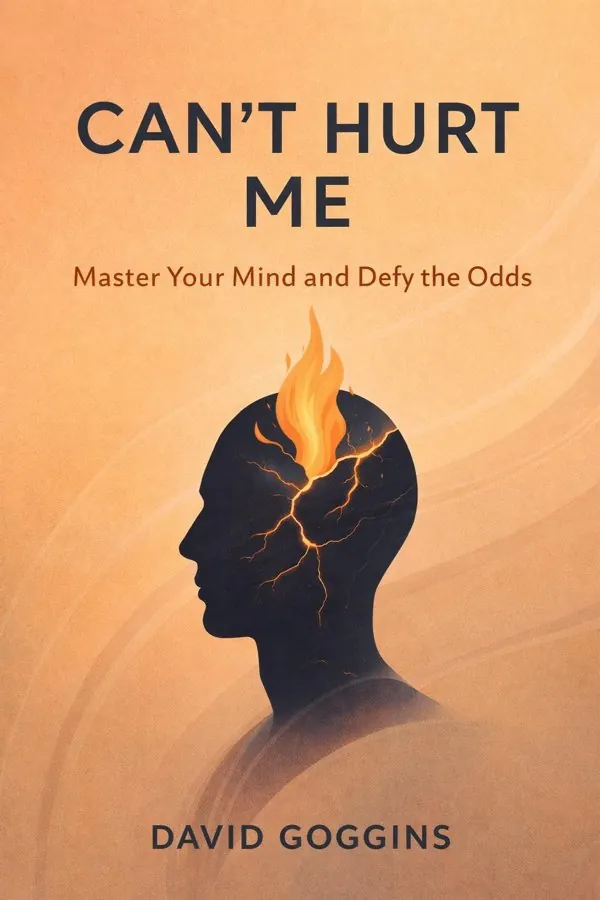
What if the life you’ve been given—your trauma, your failures, your fear, your self-doubt—could become the raw material for an extraordinary transformation? That’s the question at the heart of Can't Hurt Me, David Goggins’s intensely personal memoir and mindset manual. More than a story about military achievement or athletic endurance, this book is a challenge to anyone who has ever felt stuck, broken, or limited by their past. Goggins takes readers through a life marked by abuse, racism, poverty, obesity, and hopelessness, then shows how he rebuilt himself through radical accountability, discipline, and a willingness to embrace discomfort. What makes this book matter is its refusal to offer easy inspiration. Goggins doesn’t sell positive thinking or quick fixes. Instead, he argues that growth begins when we stop negotiating with ourselves and start confronting the truths we’d rather avoid. As a retired U.S. Navy SEAL, ultramarathon runner, triathlete, and motivational speaker, he writes from lived experience, not theory. Can't Hurt Me resonates because it turns resilience into a practice. It’s a wake-up call for readers who want more than motivation—they want proof that the mind, when trained, can push far beyond what most people believe is possible.
Key Takeaways
- 1Early Life and Childhood Shaped by Adversity — Goggins’s early life is the emotional bedrock of Can't Hurt Me. He grew up in an abusive home where violence, fear, and …
- 2Struggles with Obesity and Hopelessness — After escaping his father’s house, Goggins did not immediately step into freedom or confidence. Instead, he entered a di…
- 3Turning Point: The Decision to Change — The real turning point in Can't Hurt Me is not a medal, a race, or military success—it is the moment Goggins decides he …
 10 min read
The 5 Love Languages
by Gary Chapman
Why do so many couples sincerely care about each other and still feel chronically misunderstood? That question sits at the heart of *The 5 Love Languages*, one of the most widely discussed relationship books of the modern era. In this practical guide, Gary Chapman argues that love is not only something we feel—it is also something we communicate. And like any form of communication, it can break down when two people are using different “languages.” One partner may show devotion through helpful actions, while the other is waiting for affectionate words or undivided attention. The result is frustration, loneliness, and the painful belief that love has faded when, in reality, it may simply be getting lost in translation. Chapman, an author, counselor, and pastor with a Ph.D. in adult education, draws on years of relationship work to offer a simple but powerful framework: words of affirmation, quality time, receiving gifts, acts of service, and physical touch. His core message is both hopeful and demanding: lasting love is possible, but it requires intention, empathy, and the willingness to love your partner in the way they most deeply receive it.
Key Takeaways
- 1The Need for Love — Chapman begins with a foundational claim: every person has an “emotional love tank” that needs to be filled. When that t…
- 2Falling in Love — The book draws a crucial distinction between the thrill of falling in love and the discipline of sustaining love. Early …
- 3Love Language 1 – Words of Affirmation — For some people, spoken and written words carry enormous emotional weight. Compliments, encouragement, appreciation, and…
 10 min read
Educated
by Tara Westover
What does it mean to educate yourself when everything around you teaches you to stay small, silent, and obedient? In Educated, Tara Westover answers that question through one of the most striking memoirs of recent years. Her story begins in rural Idaho, in a survivalist Mormon household cut off from mainstream institutions, where hospitals, schools, and the government were treated as threats rather than supports. From that unlikely starting point, Westover eventually makes her way to Brigham Young University and later earns a doctorate in history from the University of Cambridge. What makes this memoir so powerful is that it is not simply a success story about academic achievement. It is a deeply human account of how knowledge changes a person from the inside out. Westover shows that education is not just the accumulation of facts; it is the painful, liberating process of learning to question the stories that shaped you. Her memoir matters because it speaks to anyone who has ever struggled to separate love from control, loyalty from self-betrayal, or family truth from personal truth. With honesty, emotional precision, and hard-won insight, Westover turns her life into a profound meditation on identity, memory, and the cost of becoming yourself.
Key Takeaways
- 1From the Mountain: Childhood and Isolation — Westover’s childhood at the foot of Buck’s Peak is the foundation of everything that follows. The mountain is more than …
- 2Work, Fear, and the Awakening of a Mind — In the junkyard, work becomes Westover’s first education in risk, hierarchy, and survival. She learns by doing, but what…
- 3Learning the World Beyond: From the Mountain to BYU — Westover’s move from her isolated upbringing to Brigham Young University marks one of the memoir’s most dramatic shifts.…
 10 min read
Man's Search for Meaning
by Viktor Frankl
What keeps a person going when everything familiar has been taken away—comfort, identity, loved ones, freedom, and even the expectation of tomorrow? That is the unbearable and essential question at the heart of *Man's Search for Meaning*. Viktor E. Frankl’s landmark book is far more than a Holocaust memoir. It is a profound study of human endurance, an examination of suffering, and a practical philosophy for anyone trying to live with purpose in hard times. Drawing on his experiences in Nazi concentration camps, Frankl explores how people respond when life is reduced to its barest terms and why some still manage to preserve dignity, hope, and inner freedom. What makes this book endure is that Frankl does not offer empty inspiration. He writes as an Austrian neurologist, psychiatrist, and Holocaust survivor who later developed logotherapy, a school of psychotherapy centered on meaning as the primary human motivation. His insight is simple but life-changing: even when we cannot change our circumstances, we can still choose our response. That idea has made this book one of the most influential works in psychology and self-help, especially for readers facing grief, burnout, uncertainty, or the quiet fear that life has lost direction.
Key Takeaways
- 1The Shock of Arrival and the Dehumanization of Camp Life — When Frankl first arrived at Auschwitz, the destruction of the self began immediately. The process was systematic: priso…
- 2Emotional Detachment and the Apathy that Defines Survival — After the first shock came a second psychological stage: apathy. Frankl shows that this numbness was not indifference in…
- 3Moral Choice and Inner Freedom in the Midst of Suffering — One of the book’s most powerful claims is that even under extreme oppression, a human being retains a final freedom: the…
 10 min read
The Mountain Is You
by Brianna Wiest
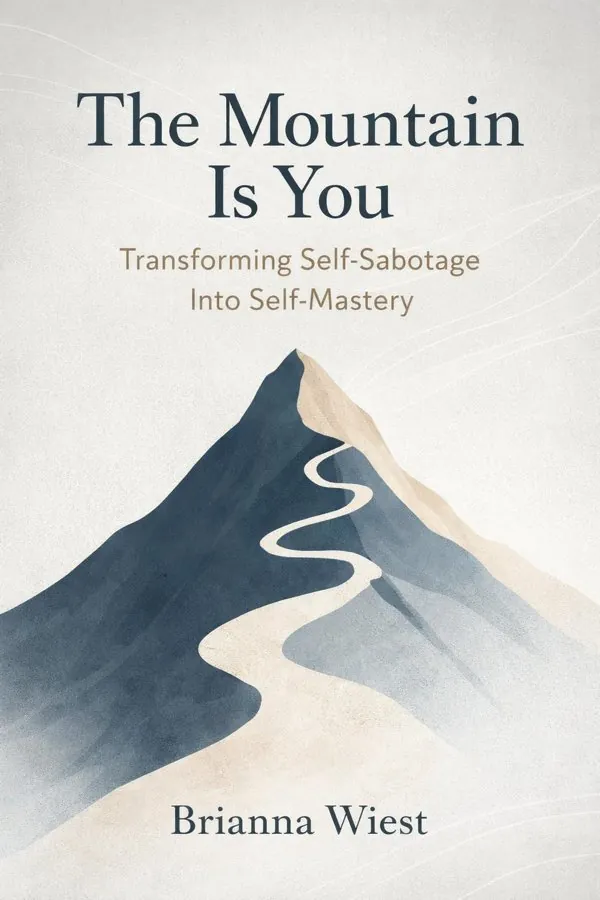
Why do people so often become the very thing standing in their own way? That is the central question at the heart of The Mountain Is You, a self-help book about self-sabotage, emotional healing, and personal transformation. Brianna Wiest explores the uncomfortable truth that many of our biggest obstacles are not external circumstances, but the internal patterns we repeat without realizing it. Fear, avoidance, perfectionism, emotional reactivity, and limiting beliefs can quietly shape our decisions until we feel stuck in a life we say we want to change. Wiest argues that these patterns are not signs that we are broken. They are signals that unresolved needs, pain, and internal conflict are asking to be understood. This perspective makes the book especially powerful: instead of shaming readers for procrastinating, overthinking, or holding themselves back, it helps them decode why those behaviors exist in the first place. Known for writing about emotional intelligence, mindfulness, and self-development, Wiest offers an accessible guide to turning inner resistance into self-mastery. The result is a compassionate roadmap for anyone ready to stop fighting themselves and start growing with intention.
Key Takeaways
- 1Part One: Recognizing Self-Sabotage — One of the most important ideas in The Mountain Is You is that self-sabotage is rarely random. It is usually a protectiv…
- 2Part Two: Understanding Inner Conflict — Wiest explains that many people live with an internal split: one part wants growth, love, success, or peace, while anoth…
- 3Part Three: Facing Pain and Fear — A major turning point in personal growth comes when we stop organizing our lives around avoiding pain. Wiest suggests th…
 10 min read
Becoming
by Michelle Obama
What does it really mean to build a life—especially when the world keeps trying to define you before you can define yourself? In Becoming, Michelle Obama answers that question not with polished slogans or political talking points, but with honesty, vulnerability, humor, and hard-earned wisdom. This memoir matters because it is far more than the story of a former First Lady. It is the story of a daughter, student, professional, wife, mother, and public figure learning, at every stage, how to stay rooted in her values while adapting to change. Michelle Obama traces her path from a close-knit family on Chicago’s South Side to Princeton and Harvard, from corporate law to public service, and from private citizen to one of the most recognized women in the world. Along the way, she reflects on ambition, race, marriage, motherhood, leadership, and resilience. As an attorney, bestselling author, and former First Lady of the United States, Obama brings unusual insight to the pressures of modern life and public expectation. Yet what makes Becoming so powerful is how relatable it feels: it reminds readers that identity is not fixed. It is shaped, tested, and continually made.
Key Takeaways
- 1Childhood on the South Side of Chicago — Michelle Obama’s early life on Chicago’s South Side forms the emotional and moral foundation of Becoming. Growing up in …
- 2School Years and Academic Drive — Michelle Obama’s school years reveal how achievement can be both empowering and exhausting. At Whitney Young High School…
- 3Harvard Law School and Early Professional Life — At Harvard Law School and in her early career, Michelle Obama continued to do what she had always done well: excel. But …
 10 min read
Mindset
by Carol Dweck
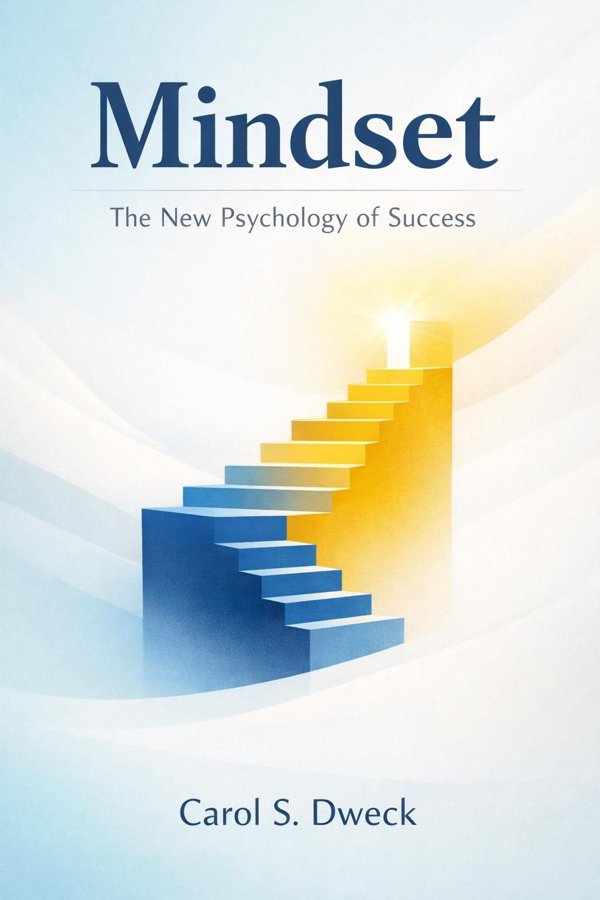
Why do some people bounce back from failure, while others shut down after one setback? Why do certain students, athletes, and professionals keep improving long after their early talent stops carrying them? In Mindset, psychologist Carol S. Dweck offers a powerful answer: the stories we tell ourselves about ability shape nearly everything we do. At the center of the book is a simple but life-changing distinction between a fixed mindset—the belief that intelligence, talent, and character are largely set—and a growth mindset, the belief that these qualities can be developed through effort, strategy, and feedback. That idea sounds straightforward, but its implications are profound. It affects how we handle criticism, how we parent, how we teach, how we lead, and even how we love. Drawing on decades of research in motivation and personality, Dweck shows that success is not just about natural gifts. It is also about how people interpret challenge, effort, and failure. This book matters because it replaces the myth of effortless genius with a more hopeful, practical truth: people can change, improve, and become more capable over time.
Key Takeaways
- 1The Nature of Mindset: Fixed versus Growth — From childhood onward, people absorb beliefs about what ability means. A child who hears “You’re so smart” may start to …
- 2Inside the Fixed Mindset: The Need to Prove — The fixed mindset often hides behind ambition. On the surface, it can look like confidence, high standards, or competiti…
- 3Discovering the Growth Mindset: The Power to Develop — The growth mindset is not blind optimism or the idea that anyone can become anything overnight. It is a practical belief…
 10 min read
Men Are from Mars, Women Are from Venus
by John Gray
Why do loving couples so often end up feeling misunderstood? That question sits at the heart of Men Are from Mars, Women Are from Venus, one of the most widely recognized relationship books of the modern era. John Gray argues that many recurring conflicts in romance are not caused by bad intentions or lack of love, but by deep differences in how men and women often process stress, communicate needs, and interpret emotional signals. His famous metaphor—men as if from Mars and women as if from Venus—gives readers a simple way to understand why two caring people can experience the same moment so differently. What makes the book matter is its practicality. Rather than offering abstract theories, Gray focuses on everyday relationship pain points: one partner shuts down, the other wants to talk; one offers advice, the other feels unheard; one craves appreciation, the other needs reassurance. By naming these patterns, he helps couples replace blame with understanding. Gray, a relationship counselor, lecturer, and bestselling author of the Mars and Venus series, wrote this book as a guide for better communication and emotional connection. Whether you are dating, married, or trying to make sense of recurring tension, this book offers a vocabulary for turning frustration into empathy.
Key Takeaways
- 1Men Go to Their Caves, Women Seek Connection — One of the book’s most memorable ideas is that men and women often respond to stress in opposite ways. Gray says men ten…
- 2Speaking Different Languages: Empathy versus Solutions — Gray’s central communication insight is simple but powerful: many men show love by trying to solve problems, while many …
- 3Emotional Needs: Feeling Needed and Feeling Cherished — A major theme in the book is that love is not only about intention; it is about whether each partner feels emotionally n…
 10 min read
She Comes First
by Ian Kerner
If you came here looking for a summary of Ian Kerner’s *She Comes First*, the current material is actually about a very different book: *She: A History of Adventure* by Sir Henry Rider Haggard. That distinction matters, because this is not a modern relationships guide but a foundational adventure novel about obsession, fate, beauty, power, and the terrifying appeal of immortality. First published in 1887, *She* became one of the defining works of the “lost world” genre and helped shape later fantasy and adventure fiction. What makes the novel endure is not just its exotic setting or dramatic plot, but the psychological tension at its core. Through the scholarly Horace Holly and the charismatic Leo Vincey, Haggard leads readers from Victorian rationalism into a realm where myth feels more persuasive than logic. At the center stands Ayesha—“She-who-must-be-obeyed”—one of literature’s most unforgettable figures: alluring, intelligent, dangerous, and tragic. The novel asks timeless questions: What happens when love becomes possession? When knowledge becomes power? When the desire to defeat death costs us our humanity? For readers interested in classic literature, fantasy origins, and morally complex storytelling, *She* remains surprisingly compelling.
Key Takeaways
- 1The Promise of the Iron Box — The story begins with a classic narrative device: a sealed inheritance that binds the present to an ancient past. Horace…
- 2Through Peril into Kôr — Once Holly, Leo, and Job leave England, the novel shifts from intellectual puzzle to ordeal. The journey into Africa is …
- 3Ayesha’s Story and the Flame of Life — At the heart of the novel lies Ayesha’s own account of who she is and how she came to endure across centuries. Her story…
 10 min read
12 Rules for Life
by Jordan Peterson
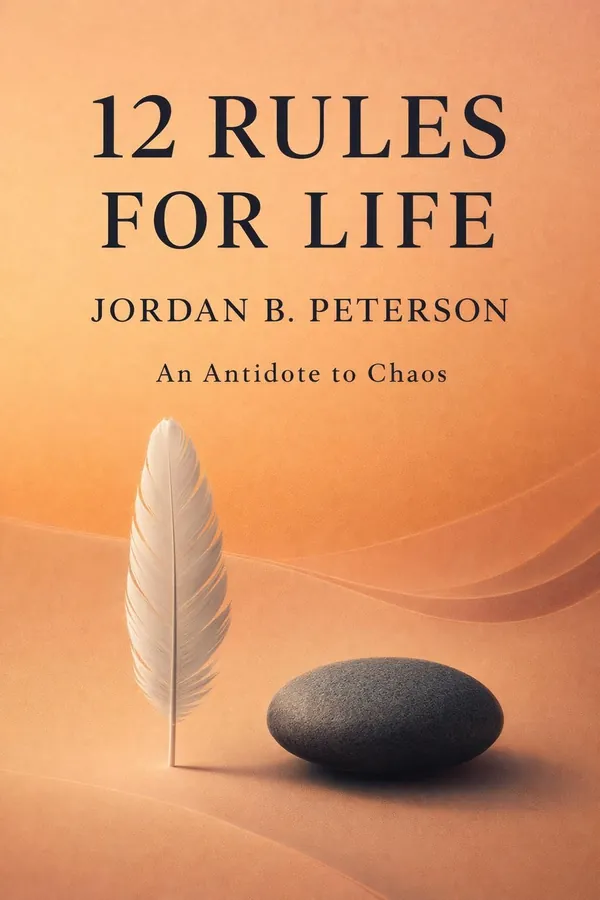
Why did 12 Rules for Life become such a widely discussed self-help book? Because it speaks to a problem many people feel but struggle to name: modern life often feels unstable, fragmented, and full of noise. In response, Jordan B. Peterson offers a framework built around responsibility, honesty, discipline, and meaning. Rather than promising easy happiness or quick fixes, the book argues that a good life is created by how we meet suffering, uncertainty, and everyday choices. Peterson, a Canadian clinical psychologist, draws from psychology, mythology, religion, and personal observation to present twelve rules that are both practical and philosophical. Some sound simple on the surface—stand up straight, tell the truth, be precise in your speech—but each points to a deeper principle about character and how order is built in the middle of chaos. That blend of everyday advice and big-picture thinking is what gives the book its lasting appeal. For readers looking for a summary of 12 Rules for Life, the central message is clear: meaning grows when you take yourself seriously, act responsibly, and choose what is right over what is merely convenient.
Key Takeaways
- 1Rule 1 – Stand up straight with your shoulders back — This rule is about far more than posture. Peterson uses the image of lobsters and dominance hierarchies to argue that co…
- 2Rule 2 – Treat yourself like someone you are responsible for helping — Many people are kinder, more organized, and more reliable when caring for others than when caring for themselves. They r…
- 3Rule 3 – Make friends with people who want the best for you — The people around you shape your standards, moods, habits, and sense of possibility. Peterson’s warning here is simple: …
 10 min read
Extreme Ownership
by Jocko Willink
What if the biggest obstacle to better leadership wasn’t your team, your market, or your circumstances—but your willingness to take responsibility? That is the central challenge of *Extreme Ownership*, a leadership classic by former U.S. Navy SEAL officers Jocko Willink and Leif Babin. Drawing on hard-won lessons from their deployment in Ramadi, Iraq, the authors argue that leadership is the decisive factor in whether teams succeed or fail. Their message is direct: leaders must own everything in their world, from communication breakdowns and unclear priorities to poor execution and weak morale. What makes this book so powerful is that it doesn’t stay on the battlefield. Willink and Babin show how the same principles apply in companies, startups, sports teams, and everyday life. The stakes may be different, but the patterns are the same: confusion spreads when leaders are unclear, trust collapses when ego takes over, and performance improves when accountability starts at the top. As ex-Navy SEAL officers who later co-founded the leadership consulting firm Echelon Front, the authors bring both combat experience and real-world business application. *Extreme Ownership* matters because it turns leadership from a vague ideal into a practical discipline anyone can apply.
Key Takeaways
- 1Combat Leadership Context — The leadership principles in *Extreme Ownership* were not developed in a classroom or corporate workshop. They were forg…
- 2Extreme Ownership Principle — Extreme Ownership is the book’s core idea: leaders must take full responsibility for everything within their sphere of i…
- 3No Bad Teams, Only Bad Leaders — One of the book’s most memorable and uncomfortable ideas is that team performance reflects leadership quality. “No bad t…
 10 min read
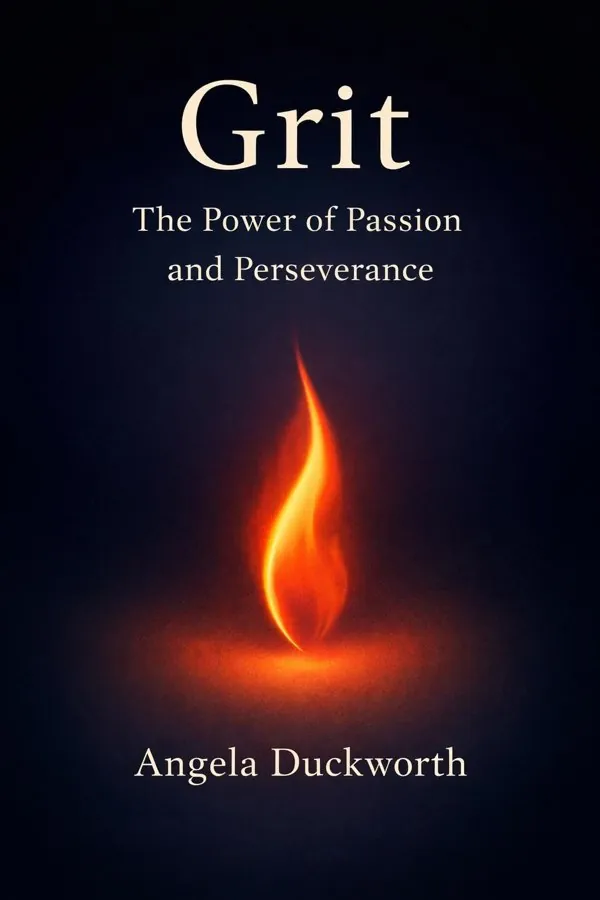
Grit
by Angela Duckworth
Why do some people keep going when progress is slow, failure is embarrassing, and success may take years, while others with equal or greater talent lose momentum? In Grit, psychologist Angela Duckworth offers a powerful answer: what matters most is not raw ability alone, but a rare combination of sustained passion and persistent effort. She calls this quality grit, and her central claim is both challenging and hopeful. Challenging, because it means success usually demands more patience and discipline than we like to admit. Hopeful, because grit is not reserved for a gifted few. Duckworth brings unusual credibility to the topic. A professor at the University of Pennsylvania, founder of Character Lab, and MacArthur Fellow, she has spent years studying why some people thrive in demanding environments. Drawing from research on students, athletes, cadets, teachers, and professionals, she shows that long-term achievement often comes from sticking with meaningful goals long after the initial excitement fades. For anyone pursuing mastery, raising resilient kids, leading a team, or simply trying not to quit too soon, Grit matters because it reframes success. It shifts the conversation from “How talented are you?” to “How committed are you to becoming better over time?”
Key Takeaways
- 1Chapter One: Defining Grit — The Twin Engines of Passion and Perseverance — Duckworth defines grit as the combination of passion and perseverance directed toward long-term goals. That distinction …
- 2Chapter Two: The Science Behind It — Why Grit Predicts Success — One of Duckworth’s most compelling contributions is showing that grit can predict long-term success better than many tra…
- 3Chapter Three: The Talent Trap — Why Effort Beats Natural Advantage — Duckworth challenges one of the most popular myths about achievement: that the naturally talented are destined to win. T…
 10 min read
Born a Crime
by Trevor Noah
Born a Crime is Trevor Noah’s sharply observed, deeply moving memoir about growing up in South Africa during and after apartheid as the son of a Black Xhosa mother and a white Swiss father. Because interracial relationships were illegal at the time of his birth, Noah’s very existence violated the law. That premise gives the book its title, but the memoir is about far more than legal absurdity. It is a vivid portrait of a boy learning how race, language, class, religion, violence, and love shape a life—and how humor can become a survival tool in the face of chaos. What makes the book so powerful is Noah’s ability to balance painful truth with wit. He writes not as a distant observer, but as someone who lived inside the contradictions of apartheid and its aftermath. His stories are personal, but they also illuminate larger social systems with unusual clarity. At the center of the memoir is his mother, Patricia Nombuyiselo Noah, whose intelligence, faith, defiance, and fierce devotion made his survival possible. Born a Crime matters because it turns history into lived experience and shows how resilience is built, one choice at a time.
Key Takeaways
- 1A Hidden Childhood Under Apartheid — Sometimes the most powerful way to understand a political system is to see how it reaches into the smallest details of f…
- 2A Mother’s Defiance Shapes a Life — A child’s destiny is often altered by the courage of one person willing to refuse the script. Trevor Noah’s mother, Patr…
- 3Faith as Discipline, Not Escape — Belief becomes transformative when it moves from passive comfort to active discipline. In Born a Crime, Trevor Noah desc…
Want the full summary?
Get instant access to this book summary and 100K+ more with Fizz Moment.
Get Free SummaryAvailable on App Store • Free to download
About This List
These books amplify women's voices, challenge the status quo, and provide practical wisdom for navigating career, relationships, and self-discovery.
This list features 15 carefully selected books. With FizzRead, you can read AI-powered summaries of each book in just 15 minutes. Get the key takeaways and start applying the insights immediately.
Ready to start reading?
Get instant access to all 15 book summaries and 100K+ more with FizzRead.