
Short Books You Can Read in a Day — Quick Powerful Reads
Big ideas do not require big books. These short but powerful reads will give you profound insights in just a few hours.
 10 min read
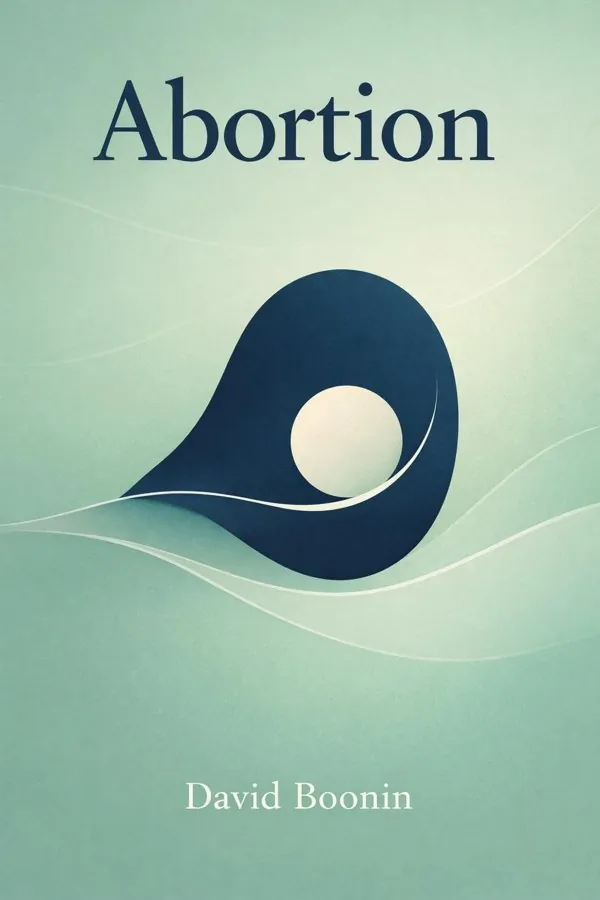
Abortion
by David Boonin
This book offers a comprehensive philosophical analysis of the moral and ethical issues surrounding abortion. Boonin examines arguments for and against abortion rights, exploring questions of personhood, moral status, and the implications of bodily autonomy. The work is recognized for its rigorous reasoning and balanced approach to one of the most controversial topics in applied ethics.
Key Takeaways
- 1Clarification of Key Terms: Distinction Between Moral and Legal Questions, and Between Personhood, Human Life, and Moral Status — Before venturing into the moral terrain, I had to clear away ambiguities that tend to cloud the debate. The word ‘aborti…
- 2Survey of Anti-Abortion Arguments: Examination of Traditional Pro-Life Claims that the Fetus Is a Person from Conception and Thus Has a Right to Life — The next step is to examine the reasoning that grounds opposition to abortion. Most pro-life arguments hinge on the clai…
- 3Critique of Personhood-Based Arguments: Analysis of the Logical and Metaphysical Assumptions Underlying Claims About Fetal Personhood
 10 min read
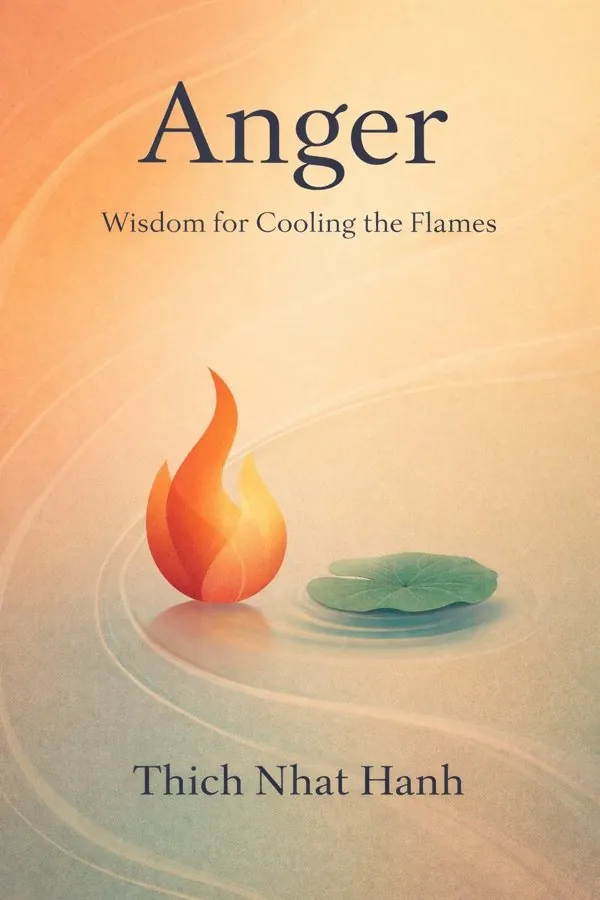
Anger: Wisdom for Cooling the Flames
by Thich Nhat Hanh
Anger can feel immediate, justified, and impossible to control—but Thich Nhat Hanh argues that it is neither an enemy nor a permanent truth. In Anger: Wisdom for Cooling the Flames, the Vietnamese Zen master offers a gentle, practical path for understanding anger at its roots and transforming it through mindfulness, compassion, and insight. Rather than suppressing rage or acting it out, he teaches readers to recognize anger as suffering asking to be cared for. From mindful breathing and walking to deep listening and loving speech, the book presents concrete practices for cooling emotional intensity before it harms relationships, families, and communities. What makes this book so powerful is its combination of spiritual depth and everyday usefulness. Nhat Hanh does not treat anger as a moral failure; he treats it as human energy that can be understood and redirected. His teachings draw on Buddhist psychology, but they are accessible to readers of any background. As one of the world’s most respected mindfulness teachers and peace activists, he writes with unusual authority, tenderness, and clarity. This is a book for anyone who wants less reactivity, more peace, and wiser ways to respond when emotions run hot.
Key Takeaways
- 1Anger Begins in Inner Suffering — Anger often looks like a reaction to other people, but its deepest roots are usually inside us. Thich Nhat Hanh invites …
- 2Mindfulness Is the Energy of Transformation — What changes anger is not force, shame, or suppression, but awareness. Nhat Hanh presents mindfulness as the central too…
- 3Embrace Anger Instead of Fighting It — The more violently we struggle against anger, the more fragmented we often become. Nhat Hanh teaches that anger should n…
 10 min read
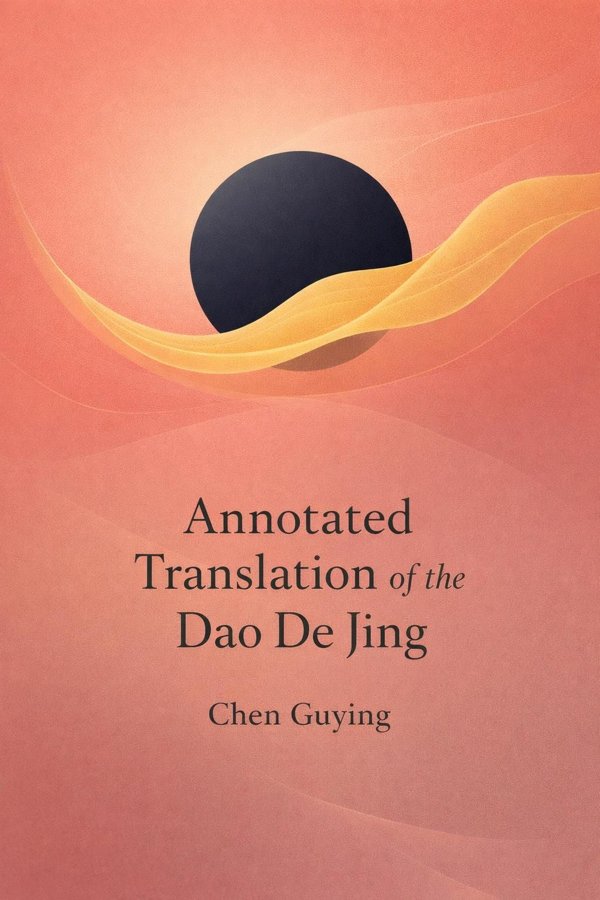
Annotated Translation of the Dao De Jing
by Chen Guying
Annotated Translation of the Dao De Jing is a modern annotated edition of Laozi’s Dao De Jing by the renowned philosopher Chen Guying. Based on the original text, the book integrates research from philosophy, history, and linguistics to provide an in-depth interpretation of the Dao De Jing’s conceptual system, linguistic structure, and its place in the history of Chinese philosophy. Chen’s rigorous scholarship and accessible language help readers better understand Laozi’s core ideas of Dao, De, Wu Wei, and Ziran.
Key Takeaways
- 1Historical Context — Understanding the Dao De Jing requires first knowing its elusive history. The text’s transmission across centuries was f…
- 2Philosophical Framework: Dao as the Foundation of Existence — When I speak of the Dao, I do not refer to a concept that can be captured by definition. Laozi’s genius lies in presenti…
- 3Concept of De: Virtue as the Manifestation of Dao
 10 min read
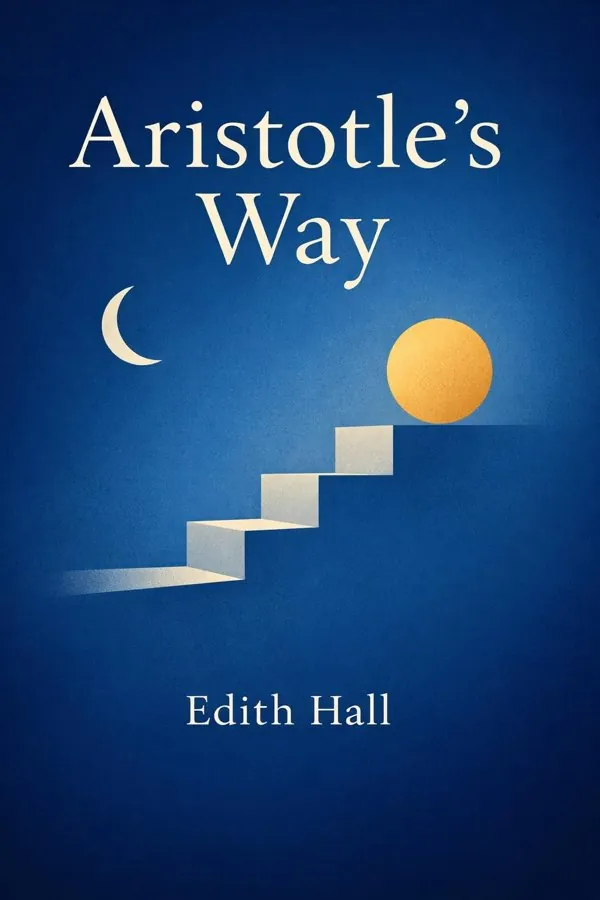
Aristotle's Way: How Ancient Wisdom Can Change Your Life
by Edith Hall
In this engaging and accessible work, classicist Edith Hall explores how Aristotle’s philosophy can guide us toward a happier and more meaningful life. Drawing on Aristotle’s teachings about ethics, friendship, purpose, and virtue, Hall translates ancient wisdom into practical advice for modern readers seeking fulfillment and balance.
Key Takeaways
- 1Understanding Eudaimonia — Eudaimonia is the foundation of all Aristotelian ethics and the guiding star of this book’s journey. Aristotle begins hi…
- 2Purpose and Potential — Aristotle’s second major gift to our self-understanding is his concept of telos, meaning an inherent purpose or end. Eve…
- 3Reason and Virtue
 10 min read
Autobiography of a Yogi
by Paramahansa Yogananda
Autobiography of a Yogi es la obra espiritual clásica de Paramahansa Yogananda, publicada por primera vez en 1946. En ella, el autor narra su vida desde la infancia en la India hasta su llegada a Occidente, relatando sus experiencias con maestros espirituales, yoguis y santos. El libro introduce al lector a la filosofía del Kriya Yoga y a las enseñanzas universales de la autorrealización, combinando relatos místicos con reflexiones sobre la ciencia, la religión y la conciencia.
Key Takeaways
- 1Early Life and Encounters with Saints — My earthly journey began as Mukunda Lal Ghosh in the gentle town of Gorakhpur. Even as a child, I often felt the call of…
- 2Meeting Sri Yukteswar and the Hermitage Years — When I first met Swami Sri Yukteswar, I knew my long quest for a true guru had ended. His gaze penetrated my being like …
- 3Miraculous Events and the Power of Divine Consciousness
 10 min read
Awakening Your Ikigai: How the Japanese Wake Up to Joy and Purpose Every Day
by Ken Mogi
In this insightful book, neuroscientist Ken Mogi explores the Japanese concept of ikigai — the reason for being — and how it can help individuals find joy, purpose, and fulfillment in everyday life. Drawing on cultural traditions, scientific research, and personal stories, Mogi introduces five pillars of ikigai that guide readers toward a more meaningful existence.
Key Takeaways
- 1Starting Small: The Power of Kodawari — In Japan, the idea of kodawari refers to an obsessive dedication to detail—devoting yourself to something with unrelenti…
- 2Releasing Yourself: Freedom Through Self-Acceptance — The second pillar of ikigai invites you to let go of the masks you wear for others. In Japan, we call this jiko jitsugen…
- 3Harmony and Sustainability: Living in Balance
 10 min read
Awareness: Conversations with the Masters
by Anthony de Mello
Awareness: Conversations with the Masters is a bold, unsettling, and deeply liberating book about waking up from the mental and emotional habits that govern most human life. In a series of sharp, conversational reflections, Anthony de Mello argues that people are rarely in direct contact with reality. Instead, they live through conditioning, social approval, fear, attachment, and a false sense of self. His invitation is not to become more religious, more moral, or more successful, but more awake. That awakening begins with simple, honest awareness. What makes this book matter is its refusal to comfort the reader with easy inspiration. De Mello challenges cherished assumptions about love, ambition, suffering, spirituality, and personal identity. He does so with clarity, humor, and a rare ability to expose self-deception without becoming abstract. As an Indian Jesuit priest, psychotherapist, and spiritual teacher influenced by both Christian and Eastern traditions, de Mello speaks with unusual authority across spiritual worlds. His message is timeless: freedom does not come from changing the world first, but from seeing clearly how your mind creates bondage. For readers seeking inner freedom rather than self-improvement slogans, this book remains strikingly relevant.
Key Takeaways
- 1The Illusion of the Self — One of the book’s most startling claims is that much of your suffering comes from protecting an identity that is largely…
- 2Awareness Is Pure Seeing — Most people think awareness is something they must force, but de Mello says real awareness is effortless seeing. It is n…
- 3Conditioning Shapes How You See — A central theme of the book is that most people do not see reality as it is; they see it through conditioning. Your mind…
 10 min read
Be Here Now
by Ram Dass
Be Here Now es un libro seminal de espiritualidad y filosofía publicado originalmente en 1971. Es una guía ilustrada que explora la transformación espiritual del autor, desde su vida como psicólogo académico hasta su despertar como maestro espiritual. El texto combina enseñanzas de meditación, conciencia y presencia, inspiradas en tradiciones orientales y experiencias personales del autor.
Key Takeaways
- 1Journey of Transformation — My story begins as Richard Alpert, an academic immersed in a world where knowledge was the currency of worth. At Harvard…
- 2Crisis and Search — After the glitter of success and the thrill of experimentation faded, I found myself in crisis. My world — based on inte…
- 3Encounter with Eastern Wisdom
 10 min read
Become What You Are
by Alan Watts
A collection of essays by Alan Watts exploring the nature of self, identity, and the process of becoming. Written in Watts’s distinctive philosophical style, the book delves into Eastern and Western perspectives on consciousness, freedom, and authenticity.
Key Takeaways
- 1The Illusion of the Separate Self — We begin with the notion most fundamental to human confusion: the idea that you are a lonely ego, an entity enclosed in …
- 2The Nature of Reality — Reality, when undistorted by our conceptual frames, reveals itself as a seamless process. It is not composed of isolated…
- 3Freedom and Spontaneity
 10 min read
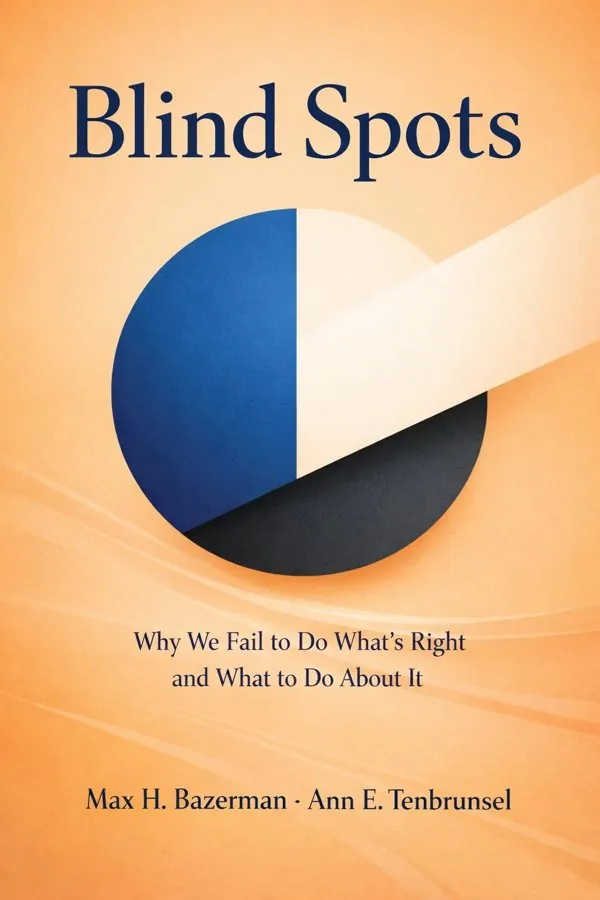
Blind Spots: Why We Fail to Do What's Right and What to Do About It
by Max H. Bazerman, Ann E. Tenbrunsel
This book explores the psychological and organizational factors that cause people and institutions to act unethically without realizing it. Drawing on behavioral research, the authors explain how cognitive biases and self-deception create 'blind spots' that prevent ethical awareness, and they offer strategies to recognize and correct these biases in decision-making.
Key Takeaways
- 1Bounded Ethicality: The Limits of Moral Awareness — One of the most striking insights from our research is that our ethics—like our rationality—are bounded. Just as cogniti…
- 2The Battle Between the 'Should' Self and the 'Want' Self — Each of us contains two selves that shape ethical behavior: the *should self*, which plans and aspires to ethical conduc…
- 3Motivated Blindness and Ethical Fading: When Morality Disappears from View
 10 min read
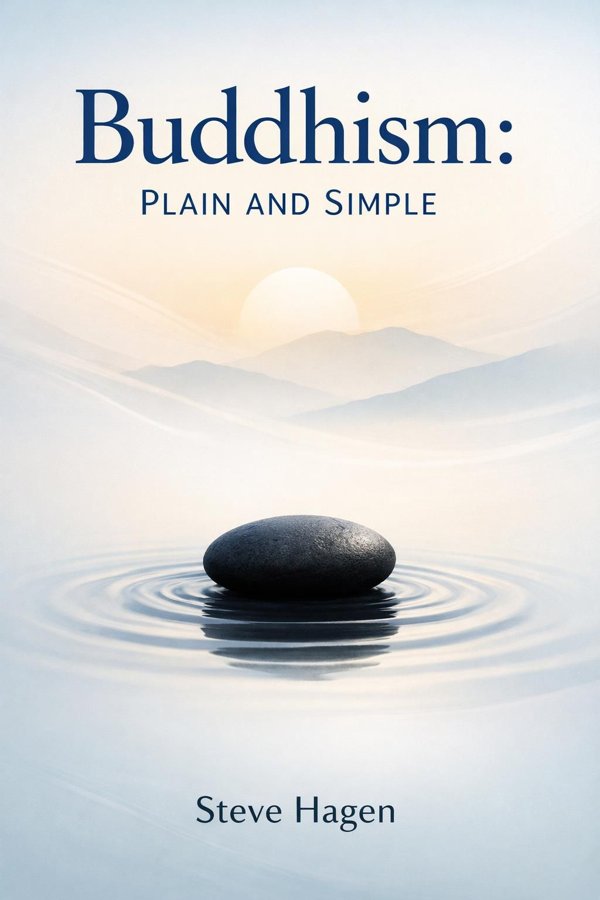
Buddhism: Plain and Simple
by Steve Hagen
Steve Hagen’s Buddhism: Plain and Simple is an invitation to look directly at experience rather than rely on beliefs, doctrines, or secondhand spiritual ideas. Instead of presenting Buddhism as an exotic religion or a system of abstract philosophy, Hagen strips it down to its essential insight: suffering arises when we fail to see reality clearly, and freedom becomes possible when we wake up to things as they are. The book guides readers through core Buddhist ideas such as attention, impermanence, self, desire, and awareness in language that is strikingly direct and accessible. What makes this book matter is its refusal to let Buddhism remain merely intellectual. Hagen insists that truth is not something to admire from a distance; it must be discovered in immediate experience, here and now. That approach makes the book especially valuable for modern readers who want practical wisdom rather than metaphysical complexity. As a Zen priest and meditation teacher, Hagen writes with both authority and simplicity, translating profound teachings into everyday understanding. The result is a concise but powerful introduction for anyone seeking clarity, inner freedom, and a more honest way of meeting life.
Key Takeaways
- 1Reality Must Be Seen Directly — One of the book’s most challenging insights is that truth cannot be borrowed. Steve Hagen argues that the central task o…
- 2Suffering Begins With Misperception — We often assume suffering is caused mainly by difficult events, but Hagen points out that suffering deepens when we misu…
- 3Impermanence Is Not A Problem — A great deal of human fear comes from treating change as an enemy. Hagen reminds readers that impermanence is not a trag…
 10 min read
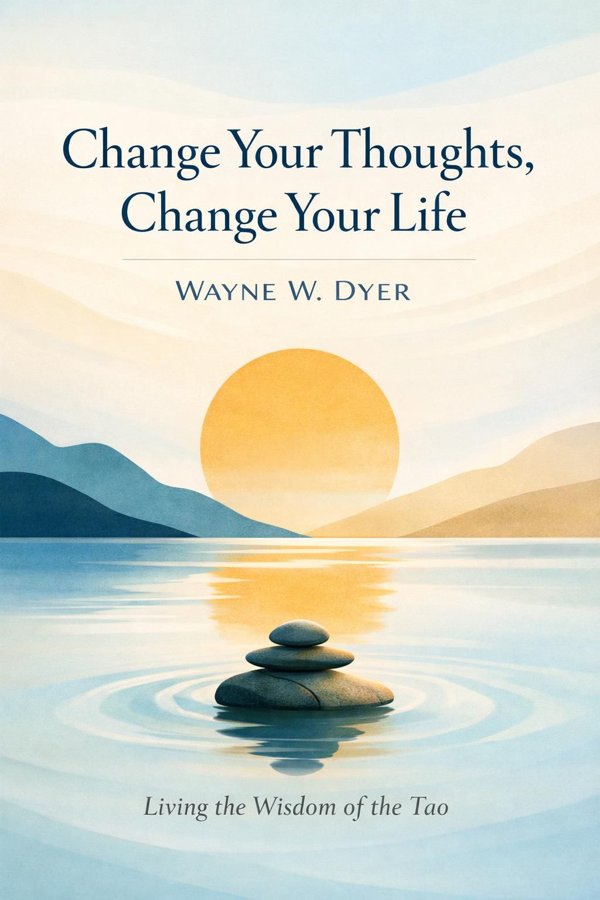
Change Your Thoughts, Change Your Life: Living the Wisdom of the Tao
by Wayne W. Dyer
This book presents Wayne Dyer’s interpretation of the Tao Te Ching, offering 81 essays that explore how to apply Lao Tzu’s ancient wisdom to modern life. Each chapter reflects on a verse from the Tao, encouraging readers to live with balance, peace, and harmony by changing their thought patterns and perspectives.
Key Takeaways
- 1Verses 1–5: The Mystery of the Tao — The opening verses of the Tao remind us that the ultimate truth cannot be defined or captured in words. The Tao is the s…
- 2Verses 6–10: Living in Flow and Receptivity — These chapters illuminate the feminine principle—the receptive, nurturing aspect of creation. Lao Tzu describes the Tao …
- 3Verses 11–20: Emptiness and Usefulness
 10 min read
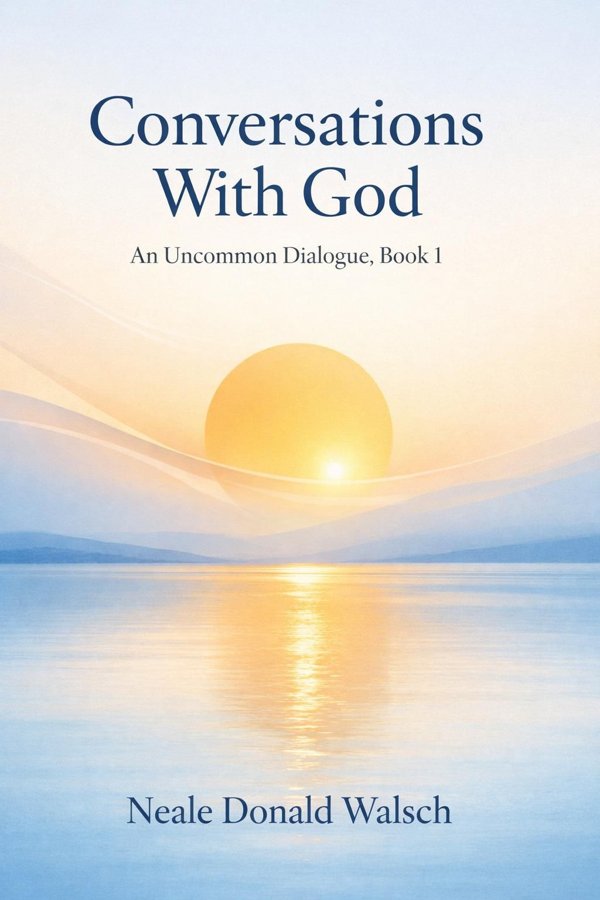
Conversations With God: An Uncommon Dialogue, Book 1
by Neale Donald Walsch
This book presents a series of dialogues between the author and what he perceives as God, exploring profound questions about life, purpose, and spirituality. It challenges conventional religious beliefs and encourages readers to find their own understanding of divinity and existence.
Key Takeaways
- 1The Nature of God and the Origin of the Dialogue — The conversation began during a period of deep personal struggle—when questions about purpose, suffering, and faith felt…
- 2Creation, Free Will, and the Power of Thought — God’s next revelation concerned the nature of creation—and specifically, how humans participate in it. We are not passiv…
- 3The Purpose of Life: Self-Realization and Expression of Divinity
 10 min read
Creative Quest
by Questlove
Creative Quest is Questlove’s lively, generous exploration of what creativity really looks like in practice. Rather than treating inspiration as a rare lightning strike, he presents it as a way of paying attention, building habits, and staying open to influence. Drawing on decades of experience as the drummer and co-founder of The Roots, as well as his work as a producer, DJ, writer, filmmaker, and cultural curator, Questlove shows that creativity is both deeply personal and intensely social. It grows through discipline, collaboration, curiosity, and the willingness to keep learning. What makes this book matter is its refusal to romanticize the artistic life. Questlove writes with the perspective of someone who has spent years making, performing, studying, and refining his craft in public. He understands that great work is shaped not only by talent, but by routine, failure, community, timing, and integrity. Creative Quest is not just for musicians or professional artists. It is for anyone who wants to generate better ideas, develop a meaningful practice, and live with greater originality. At its core, the book argues that creativity is less a gift than a lifelong pursuit.
Key Takeaways
- 1Inspiration Begins With Deep Attention — Inspiration is not something you wait for; it is something you train yourself to notice. One of Questlove’s central insi…
- 2Your Origins Shape Your Creative Voice — Creativity often begins long before you know you are being formed by it. Questlove reflects on his upbringing in a music…
- 3Habits Turn Talent Into Real Work — Creativity becomes meaningful when it moves from desire to practice. Questlove emphasizes that ideas alone are not enoug…
 10 min read
Creative Superpowers: Equip Yourself for the Age of Creativity
by Mark Earls, Laura Jordan Bambach, Dave Birss, Daniele Fiandaca
Creative Superpowers: Equip Yourself for the Age of Creativity is a collaborative book that explores how individuals can rediscover and enhance their creativity in a world increasingly shaped by technology and automation. The authors, experts in innovation and creative thinking, provide practical strategies to develop creative skills, foster curiosity, and apply lateral thinking in both professional and personal contexts.
Key Takeaways
- 1Reclaiming Curiosity — Curiosity is where creativity comes alive. It’s the spark that turns ordinary experiences into extraordinary insights. B…
- 2Collaboration and Collective Creativity — The myth of the lone genius still haunts many creative narratives. But creativity has always been social—it thrives at i…
- 3Improvisation and Adaptability
Want the full summary?
Get instant access to this book summary and 100K+ more with Fizz Moment.
Get Free SummaryAvailable on App Store • Free to download
About This List
Big ideas do not require big books. These short but powerful reads will give you profound insights in just a few hours.
This list features 15 carefully selected books. With FizzRead, you can read AI-powered summaries of each book in just 15 minutes. Get the key takeaways and start applying the insights immediately.
Ready to start reading?
Get instant access to all 15 book summaries and 100K+ more with FizzRead.