
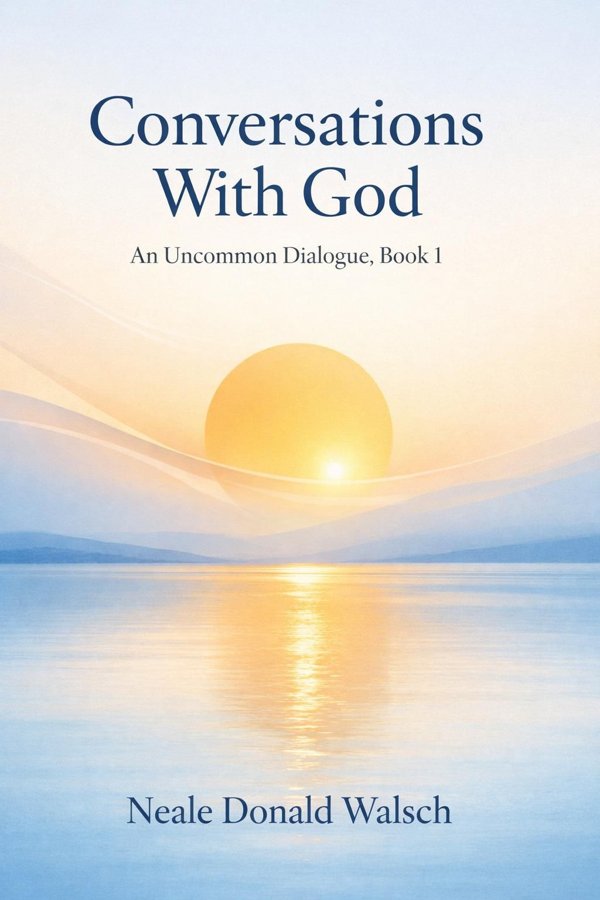
Conversations With God: An Uncommon Dialogue, Book 1: Summary & Key Insights
 10 min6 chaptersAudio available
What Is Conversations With God: An Uncommon Dialogue, Book 1 About?
Conversations With God: An Uncommon Dialogue, Book 1 by Neale Donald Walsch is a eastern_wisdom book spanning 6 pages. This book presents a series of dialogues between the author and what he perceives as God, exploring profound questions about life, purpose, and spirituality. It challenges conventional religious beliefs and encourages readers to find their own understanding of divinity and existence.
This FizzRead summary covers all 6 key chapters of Conversations With God: An Uncommon Dialogue, Book 1 in approximately 10 minutes, distilling the most important ideas, arguments, and takeaways from Neale Donald Walsch's work. Also available as an audio summary and Key Quotes Podcast.
Conversations With God: An Uncommon Dialogue, Book 1
This book presents a series of dialogues between the author and what he perceives as God, exploring profound questions about life, purpose, and spirituality. It challenges conventional religious beliefs and encourages readers to find their own understanding of divinity and existence.
Who Should Read Conversations With God: An Uncommon Dialogue, Book 1?
This book is perfect for anyone interested in eastern_wisdom and looking to gain actionable insights in a short read. Whether you're a student, professional, or lifelong learner, the key ideas from Conversations With God: An Uncommon Dialogue, Book 1 by Neale Donald Walsch will help you think differently.
- ✓Readers who enjoy eastern_wisdom and want practical takeaways
- ✓Professionals looking to apply new ideas to their work and life
- ✓Anyone who wants the core insights of Conversations With God: An Uncommon Dialogue, Book 1 in just 10 minutes
Want the full summary?
Get instant access to this book summary and 100K+ more with Fizz Moment.
Get Free SummaryAvailable on App Store • Free to download
Key Chapters
The conversation began during a period of deep personal struggle—when questions about purpose, suffering, and faith felt unanswerable. As I reached out in anger and despair, the response I received transformed those emotions into understanding. The book opens with one simple revelation: God is not an entity separate from us but an intrinsic presence within all creation. In the dialogue, God describes the divine as omnipresent consciousness, existing not as a ruler or judge but as the totality of being itself. This God does not demand worship; rather, it invites recognition. Every individual, every particle of existence, is a manifestation of this divine essence.
Through this exchange, I came to see that the distance humanity imagines between itself and God is an illusion created by language and fear. When we ask who God is, the true question might be: who are we? God’s opening words reminded me that divinity is not something to seek—it is something to remember. The dialogue dismantles centuries of religious conditioning, revealing that separation from God is not a condition to overcome but a myth to dissolve. The divine voice speaks with gentleness, insisting that we are already one, already whole, already divine in expression, though most have forgotten.
This shift changes everything. If God is not separate, life itself becomes holy. Every moment, every encounter, is a chance to experience the divine through human experience. I came to realize that the image of God as distant, judgmental, or conditional is a projection of human misunderstanding. In truth, God is love expressing itself as existence. This understanding sets the foundation for all that follows—the recognition that conversations with God are not miraculous events; they are available to everyone, always, through intuition, stillness, and the sincerity of inquiry.
God’s next revelation concerned the nature of creation—and specifically, how humans participate in it. We are not passive observers placed into a completed world; we are ongoing co-creators of reality itself. Everything we perceive arises from the interaction between divine energy and conscious intention. Thoughts are creative forces—they do not merely describe reality; they shape it. The conversation illuminated a profound mechanism: thought becomes word, word becomes action, and action becomes experience. Through this simple but infinitely potent process, we create our personal and collective realities.
In understanding this, I saw how the concept of free will extends far beyond moral choice. It is a creative principle grounded in divine freedom. God explained that free will was not a test imposed on humanity but an expression of love—a way for consciousness to expand through infinite variation. Every decision, even those judged as mistakes, contributes to creation’s unfolding, for all experience leads to self-awareness.
The implications are staggering. If every thought contributes to reality, then mastery of life begins not with external control but with the awareness of inner dialogue. The book challenged me—and now challenges every reader—to observe the stories we tell ourselves, the assumptions we hold, and the emotions we nurture, because these scripts orchestrate the world around us.
God did not present this as metaphysical abstraction but as a practical truth. When we hold fear, we create fearful experiences. When we hold love, we generate loving outcomes. The universe is not a random stage; it is a living mirror of consciousness. Once this idea settles into the mind, ordinary living transforms. We stop asking life to change and begin changing the consciousness that creates life.
+ 4 more chapters — available in the FizzRead app
All Chapters in Conversations With God: An Uncommon Dialogue, Book 1
About the Author
Neale Donald Walsch is an American author known for his spiritual writings, particularly the 'Conversations with God' series. His works focus on personal growth, spirituality, and the exploration of human connection with the divine.
Get This Summary in Your Preferred Format
Read or listen to the Conversations With God: An Uncommon Dialogue, Book 1 summary by Neale Donald Walsch anytime, anywhere. FizzRead offers multiple formats so you can learn on your terms — all free.
Available formats: App · Audio · PDF · EPUB — All included free with FizzRead
Download Conversations With God: An Uncommon Dialogue, Book 1 PDF and EPUB Summary
Key Quotes from Conversations With God: An Uncommon Dialogue, Book 1
“The conversation began during a period of deep personal struggle—when questions about purpose, suffering, and faith felt unanswerable.”
“God’s next revelation concerned the nature of creation—and specifically, how humans participate in it.”
Frequently Asked Questions about Conversations With God: An Uncommon Dialogue, Book 1
Conversations With God: An Uncommon Dialogue, Book 1 by Neale Donald Walsch is a eastern_wisdom book that explores key ideas across 6 chapters. This book presents a series of dialogues between the author and what he perceives as God, exploring profound questions about life, purpose, and spirituality. It challenges conventional religious beliefs and encourages readers to find their own understanding of divinity and existence.
You Might Also Like
A New Earth
Eckhart Tolle
10 min
The Daily Stoic
Ryan Holiday, Stephen Hanselman
10 min
Buddhism: Plain and Simple
Steve Hagen
10 min
Enchiridion
Epictetus
10 min
The Book of Tea
Kakuzō Okakura
10 min
The Light We Give: How Sikh Wisdom Can Transform Your Life
Simran Jeet Singh
10 minFeatured In
Browse by Category
Ready to read Conversations With God: An Uncommon Dialogue, Book 1?
Get the full summary and 100K+ more books with Fizz Moment.