
Best Technology & AI Books — Understand the Digital Future
Technology is reshaping every aspect of our lives. These books help you understand what is happening, what is coming next, and how to thrive in a digital world.
 10 min read
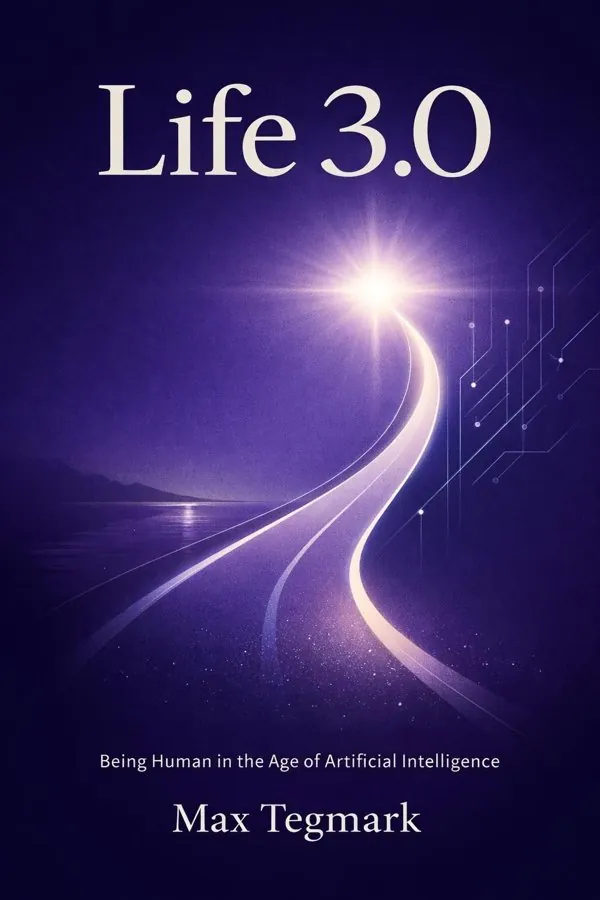
Life 3.0
by Max Tegmark
What happens when intelligence is no longer tied to biology? In Life 3.0, Max Tegmark asks readers to think beyond today’s chatbots and algorithms and confront a much larger question: what kind of future do we want to build if machines become smarter than humans? The book explores artificial intelligence not as a narrow technical topic, but as a civilization-shaping force that could transform work, politics, warfare, ethics, identity, and even humanity’s role in the universe. Tegmark begins with vivid scenarios that make abstract risks and opportunities feel immediate, then expands into a wide-ranging inquiry into intelligence, consciousness, and long-term destiny. What makes the book especially valuable is Tegmark’s perspective. As an MIT physicist, cosmologist, and co-founder of the Future of Life Institute, he combines scientific rigor with a talent for big-picture thinking. He neither glorifies AI nor reduces it to doom. Instead, he argues that the future of advanced intelligence is still open—and that deliberate choices made now will matter enormously. Life 3.0 is both a warning and an invitation: if we take AI seriously, we may still steer it toward outcomes that benefit humanity.
Key Takeaways
- 1The Omega Team Makes AI Concrete — The future becomes easier to understand when it is turned into a story. Tegmark opens with the fictional Omega Team, a s…
- 2Intelligence Does Not Guarantee Wisdom — A system can be brilliant and still dangerously misguided. Tegmark defines intelligence broadly as the ability to accomp…
- 3AI Will Reshape Work Before Everything — The first major AI shock may not be a robot uprising, but a reorganization of everyday economic life. Tegmark argues tha…
 10 min read
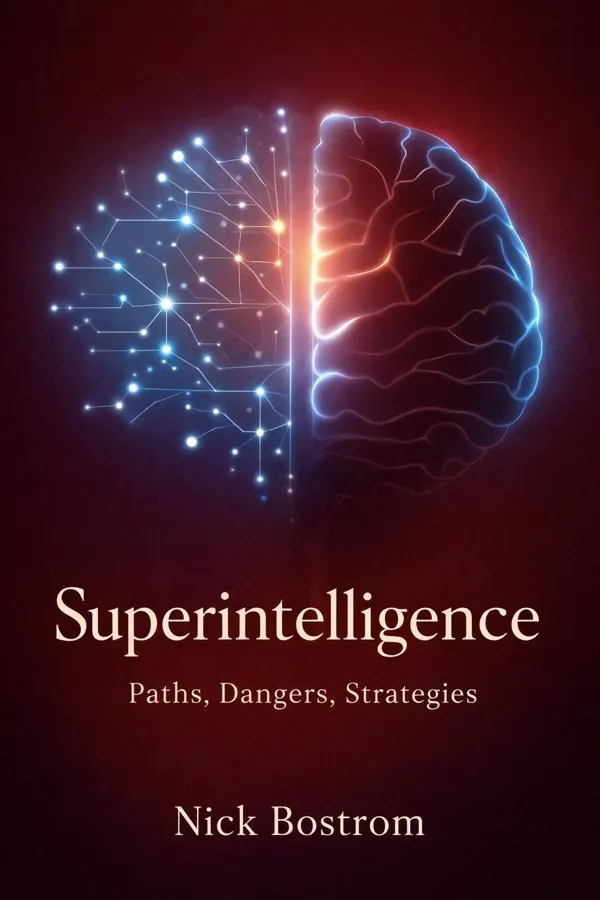
Superintelligence
by Nick Bostrom
What happens if humanity creates minds that outperform the best human brains in nearly every domain? In Superintelligence, philosopher Nick Bostrom tackles that question with unusual seriousness, arguing that the rise of machine intelligence could become the most important turning point in human history. This is not a book of science-fiction speculation or simple techno-optimism. It is a rigorous exploration of how advanced AI might emerge, why it could become extraordinarily powerful, and why even a system with seemingly harmless goals could pose catastrophic risks if its capabilities vastly exceed our own. Bostrom examines multiple paths to superintelligence, from machine learning and brain emulation to biological enhancement and collective systems, while also confronting the central challenge of AI control: how do we ensure that a more intelligent-than-human system remains aligned with human values? The book matters because its core argument has only grown more relevant as AI capabilities accelerate. Bostrom writes with the authority of a leading philosopher of existential risk and long-term futures, offering one of the foundational frameworks for thinking clearly about advanced AI before it arrives.
Key Takeaways
- 1Intelligence Is Power Toward Goals — A crucial misunderstanding sits at the center of most public debates about AI: people often imagine intelligence as wisd…
- 2Many Roads Lead To Superintelligence — The future may not arrive through the path we expect. One of Bostrom’s most important contributions is showing that supe…
- 3Small Advantages Can Compound Rapidly — The most unsettling possibility in the book is not simply that machine intelligence might exceed ours, but that once it …
 10 min read
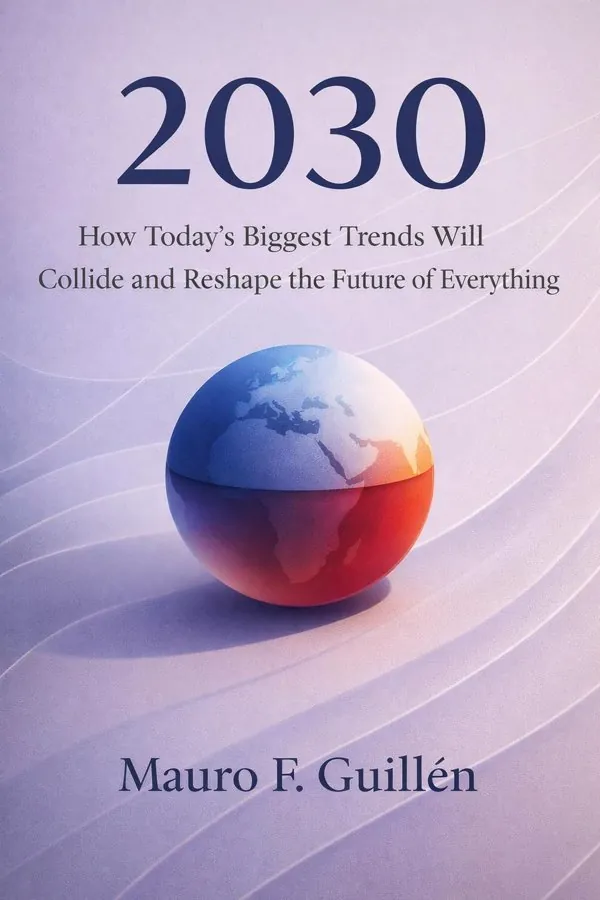
2030: How Today's Biggest Trends Will Collide and Reshape the Future of Everything
by Mauro F. Guillén
En este libro, Mauro F. Guillén analiza cómo las tendencias demográficas, económicas y tecnológicas más importantes del mundo convergerán para transformar radicalmente la sociedad global hacia el año 2030. A través de un enfoque interdisciplinario, el autor explora cómo el envejecimiento de la población, el auge de las economías emergentes, la innovación tecnológica y los cambios en los valores culturales remodelarán la economía, los negocios y la vida cotidiana.
Key Takeaways
- 1Demographic Shifts — By 2030, the composition of humanity will look remarkably different. In developed nations such as Japan, Germany, and It…
- 2Rise of Emerging Markets — The center of gravity of global consumption is moving swiftly toward emerging markets. By 2030, China, India, Indonesia,…
- 3Women’s Economic Power
 10 min read
A History of Fake Things on the Internet: When Misinformation Became Entertainment
by Walter J. Scheirer
A History of Fake Things on the Internet explores the evolution of online deception, from early hoaxes and memes to the sophisticated misinformation ecosystems of the present day. Walter J. Scheirer traces how digital culture transformed fakery into a form of entertainment and influence, examining the social, psychological, and technological forces that sustain it.
Key Takeaways
- 1Early Internet Hoaxes: Exploration of Pre-Social Media Pranks and Misinformation in Early Digital Communities — When the Internet was young, fakery was playful. The earliest online hoaxes appeared as clever pranks — digital versions…
- 2The Rise of Viral Content: How Humor, Parody, and Shock Value Shaped the Spread of Fake Material Online — With the emergence of Web 2.0, fakery changed in scale and purpose. Platforms like YouTube and early social networks int…
- 3Memes and Participatory Culture: How Users Collectively Create and Circulate Deceptive or Satirical Content
 10 min read
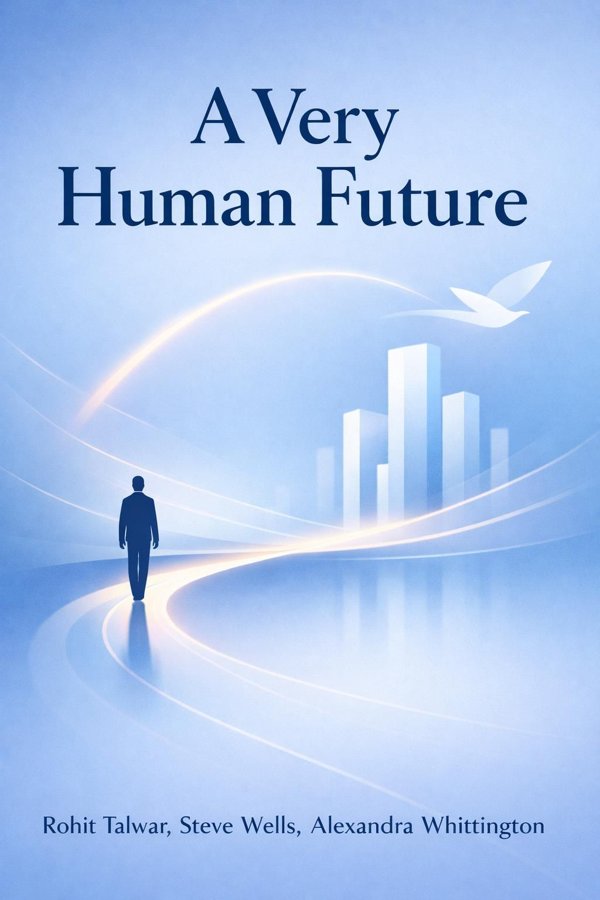
A Very Human Future: Enriching Humanity in a Digitized World
by Rohit Talwar, Steve Wells, Alexandra Whittington
A Very Human Future explores how humanity can thrive in an era of rapid technological change. The authors examine the social, ethical, and economic implications of artificial intelligence, automation, and digital transformation, arguing for a future that prioritizes human well-being, creativity, and purpose. The book offers strategies for individuals, organizations, and governments to shape a more inclusive and compassionate digital age.
Key Takeaways
- 1Exploration of Technological Acceleration: Examining AI, Automation, and Data-Driven Systems Reshaping Economies and Societies — The digital revolution has entered a phase of exponential acceleration. Artificial intelligence no longer belongs solely…
- 2Analysis of the Impact of Digital Transformation on Employment, Education, and Social Structures — I often encounter the fear that digital transformation will leave millions jobless. It’s a legitimate concern, yet also …
- 3Discussion of Ethical and Moral Considerations in Technology Adoption and Governance
 10 min read
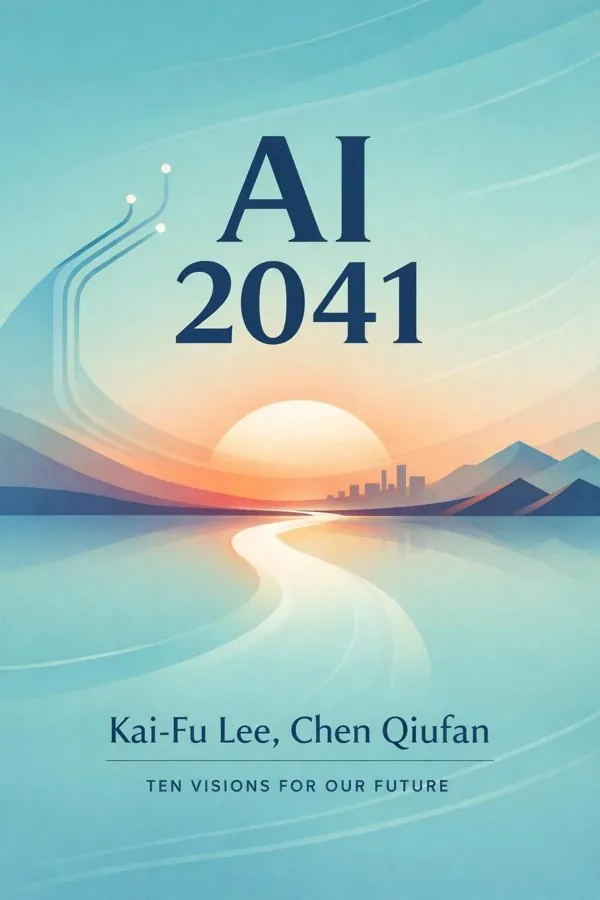
AI 2041: Ten Visions for Our Future
by Kai-Fu Lee, Chen Qiufan
What will artificial intelligence actually feel like in everyday life—not in abstract theory, but in schools, hospitals, workplaces, relationships, and cities? In AI 2041: Ten Visions for Our Future, Kai-Fu Lee and Chen Qiufan answer that question through a powerful blend of analysis and fiction. Each chapter begins with a story set in 2041, then unpacks the real technologies behind it, showing how today’s advances in machine learning, automation, biotechnology, robotics, and data systems could reshape human life within two decades. What makes this book especially valuable is the pairing of two rare perspectives. Kai-Fu Lee brings deep technical and business authority as one of the world’s best-known AI investors and researchers, while Chen Qiufan contributes the emotional and imaginative force of speculative fiction. Together, they make complex ideas accessible without oversimplifying their risks. The result is neither utopian fantasy nor dystopian warning, but a grounded exploration of possibility. For anyone trying to understand where AI is heading—and how society can shape that future—AI 2041 offers an intelligent, vivid, and urgently relevant guide.
Key Takeaways
- 1Personalized Education Can Unlock Human Potential — The most transformative teacher of the future may not stand at the front of a classroom. In “The Golden Elephant,” the b…
- 2Automation Demands Reskilling, Not Denial — The future of work will not be decided by whether automation arrives, but by how humans respond when it does. In “Twin S…
- 3AI Can Expand Financial Inclusion — For billions of people, the biggest economic barrier is not lack of talent but lack of access. In “Job Savior,” set in N…
 10 min read
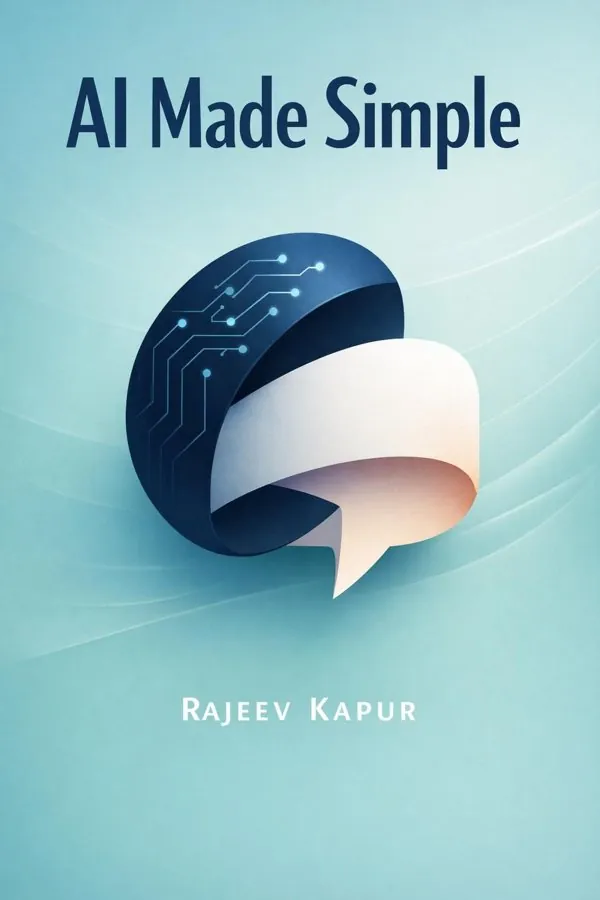
AI Made Simple: A Beginner’s Guide to Generative AI, ChatGPT, and the Future of Work
by Rajeev Kapur
AI Made Simple is a practical guide that demystifies artificial intelligence for business leaders and professionals. Rajeev Kapur explains how generative AI tools like ChatGPT can transform productivity, creativity, and decision-making. The book provides accessible insights into AI fundamentals, ethical considerations, and strategies for integrating AI into everyday work and leadership.
Key Takeaways
- 1Understanding Artificial Intelligence: From Concept to Reality — When I first began studying AI, the most common misconception was that it’s a single, monolithic force—something mystica…
- 2ChatGPT and the Rise of Generative Intelligence — Few technologies have captured the public imagination like ChatGPT. In *AI Made Simple*, I describe how it represents a …
- 3AI and the New Productivity Paradigm
 10 min read
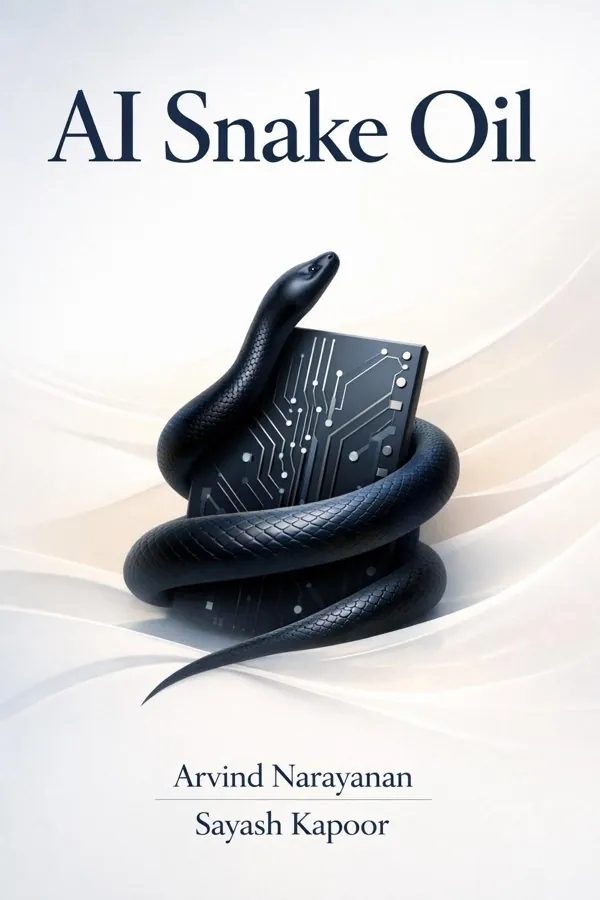
AI Snake Oil
by Arvind Narayanan, Sayash Kapoor
AI Snake Oil is a critical examination of the exaggerated claims surrounding artificial intelligence, particularly in areas such as predictive analytics, hiring, and criminal justice. The authors, computer scientists Arvind Narayanan and Sayash Kapoor, dissect the gap between genuine machine learning capabilities and the hype often used to market AI systems. The book encourages readers to distinguish between legitimate AI applications and misleading or unethical uses.
Key Takeaways
- 1Historical Context — To understand how AI arrived at this moment of hype and confusion, we must look back at its history—a story defined by r…
- 2Understanding Prediction — At the core of modern AI lies prediction. When we strip away the marketing gloss, most machine learning models do a sing…
- 3Predictive Limits
 10 min read
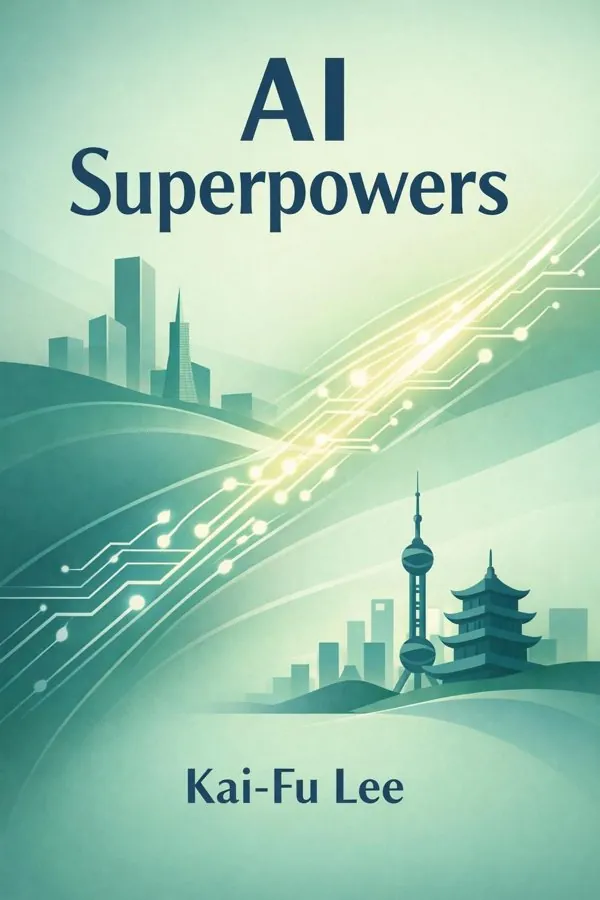
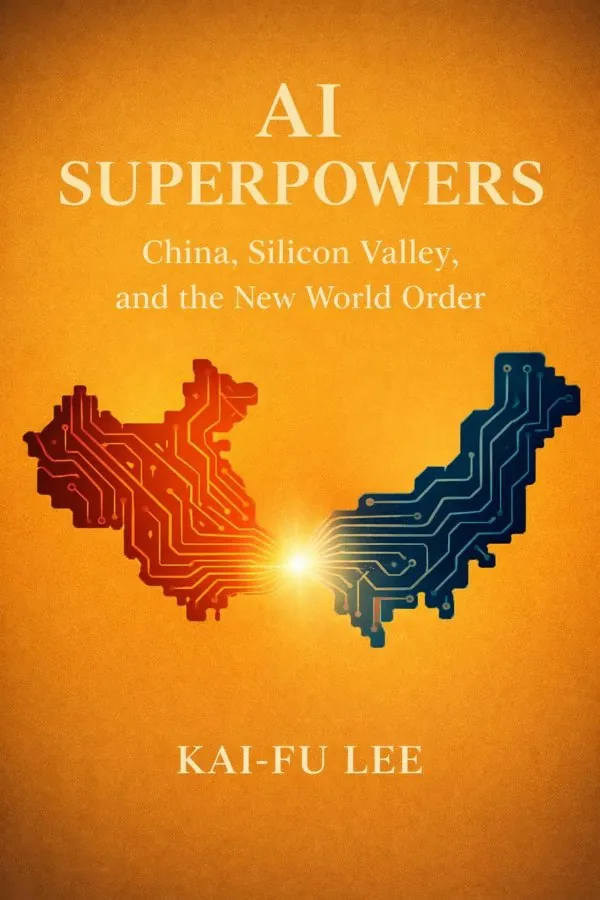
AI Superpowers
by Kai-Fu Lee
In this influential book, Kai-Fu Lee, a leading expert on artificial intelligence and venture capital, explores the rapid rise of AI in China and the United States. He examines how these two global powers are shaping the future of technology, innovation, and employment, and argues that the coming AI revolution will transform economies and societies worldwide. Drawing on his deep experience in both Silicon Valley and China, Lee offers insights into the competitive dynamics between the two nations and the profound implications for humanity.
Key Takeaways
- 1The AI Revolution — When we talk about AI revolution, we must recognize that artificial intelligence is not unfolding as a single monolithic…
- 2The Rise of China’s AI Ecosystem — China’s AI journey did not emerge overnight. It accelerated through a rare confluence of factors—an enormous population …
- 3Silicon Valley’s AI Leadership
 10 min read
AI Superpowers: China, Silicon Valley, and the New World Order
by Kai-Fu Lee
In this influential work, Kai-Fu Lee, a leading expert in artificial intelligence and venture capital, explores the rapid rise of AI in both China and the United States. He examines how these two global powers are shaping the future of technology, economy, and society, and argues that AI will transform every aspect of human life. Drawing on his deep experience in both Silicon Valley and China, Lee provides insights into the competitive dynamics, cultural differences, and ethical challenges that define the AI race.
Key Takeaways
- 1The AI Revolution — To comprehend where we stand today, we must first understand the four waves of AI—the evolutionary currents that now see…
- 2The U.S. Advantage — For decades, Silicon Valley was the undisputed champion of AI innovation. Stanford, Carnegie Mellon, and MIT nurtured th…
- 3China’s Rise
 10 min read
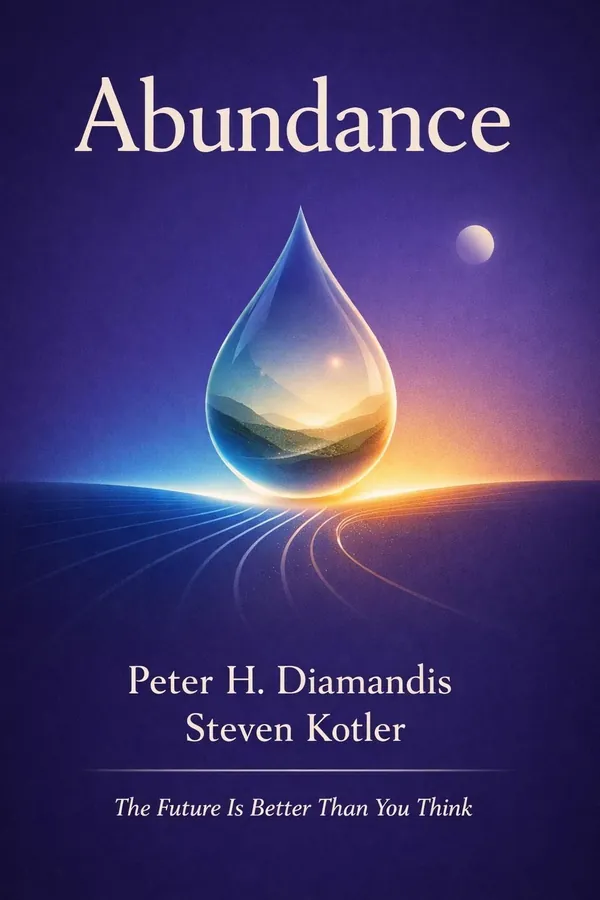
Abundance: The Future Is Better Than You Think
by Peter H. Diamandis, Steven Kotler
Abundance ofrece una visión optimista del futuro argumentando que la humanidad está avanzando hacia una era en la que la escasez será superada. Los autores muestran cómo los avances tecnológicos, desde la inteligencia artificial hasta la biotecnología y la robótica, pueden resolver los grandes desafíos globales de agua, comida, energía y educación. Presentan ejemplos concretos de innovadores y emprendedores que están mejorando la vida de millones de personas.
Key Takeaways
- 1Historical Context — Human progress can feel invisible because it often moves at a slow crawl compared to the speed of our fears. To apprecia…
- 2Exponential Technologies — At the heart of abundance lies exponential growth—the phenomenon that explains how computing, robotics, biotechnology, a…
- 3The Force of DIY Innovators
 10 min read
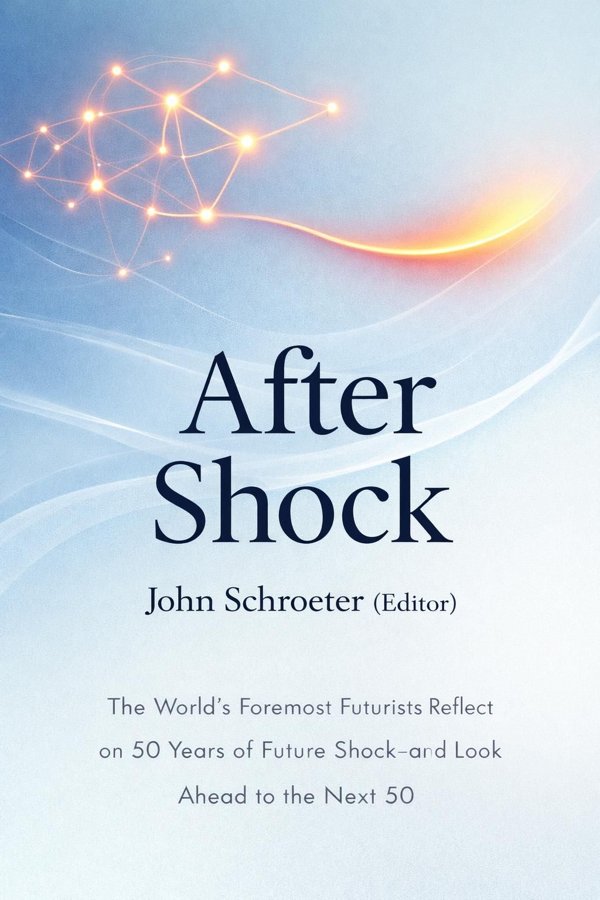
After Shock: The World's Foremost Futurists Reflect on 50 Years of Future Shock—and Look Ahead to the Next 50
by John Schroeter (Editor)
After Shock is a commemorative anthology marking the 50th anniversary of Alvin and Heidi Toffler’s seminal work, Future Shock. Edited by John Schroeter, the book gathers essays from leading futurists, technologists, and thought leaders who reflect on the Tofflers’ predictions and explore the accelerating pace of change shaping the next half-century. Contributors discuss topics such as artificial intelligence, climate change, social transformation, and the future of human identity in a rapidly evolving world.
Key Takeaways
- 1Revisiting 'Future Shock' — Half a century after Alvin and Heidi Toffler revealed the world’s growing unease with technological acceleration, their …
- 2The Acceleration of Change — In the decades since *Future Shock*, technological growth has ceased to feel linear—it has become exponential. The contr…
- 3Artificial Intelligence and Automation
 10 min read
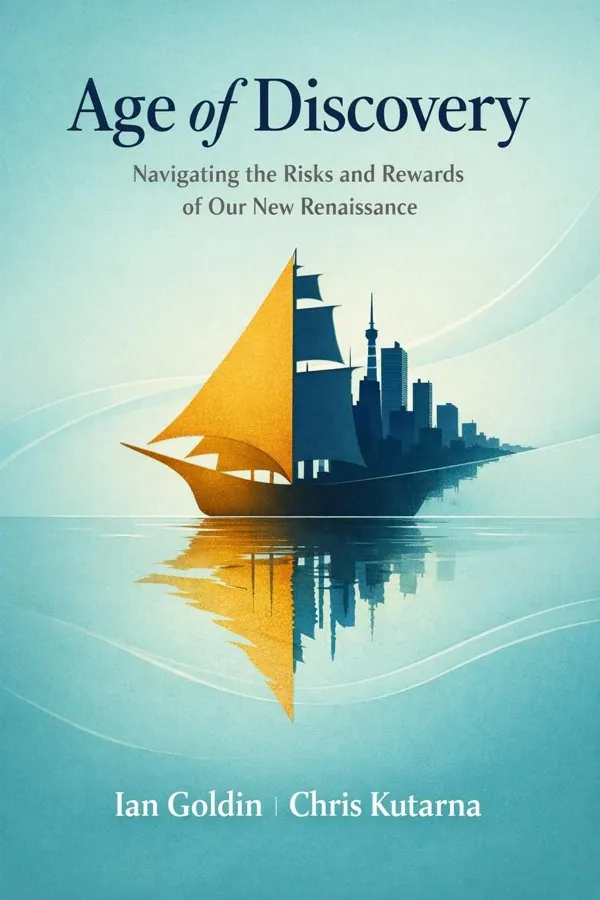
Age of Discovery: Navigating the Risks and Rewards of Our New Renaissance
by Ian Goldin, Chris Kutarna
In 'Age of Discovery', Ian Goldin and Chris Kutarna argue that the world today is experiencing a new Renaissance—a period of extraordinary innovation, globalization, and transformation comparable to the 15th and 16th centuries. The authors explore how technological advances, demographic shifts, and interconnected economies are reshaping societies, while also warning of the risks of inequality, political instability, and environmental stress. They call for renewed leadership and creativity to ensure that this new age of discovery benefits all humanity.
Key Takeaways
- 1Historical Comparison — To understand our own time, we first need to revisit the original Renaissance—Europe’s extraordinary awakening from medi…
- 2Technological Revolution — If Gutenberg’s press was the spark of the first Renaissance, then the digital revolution is the engine of our own. Techn…
- 3Globalization and Interconnection
 10 min read
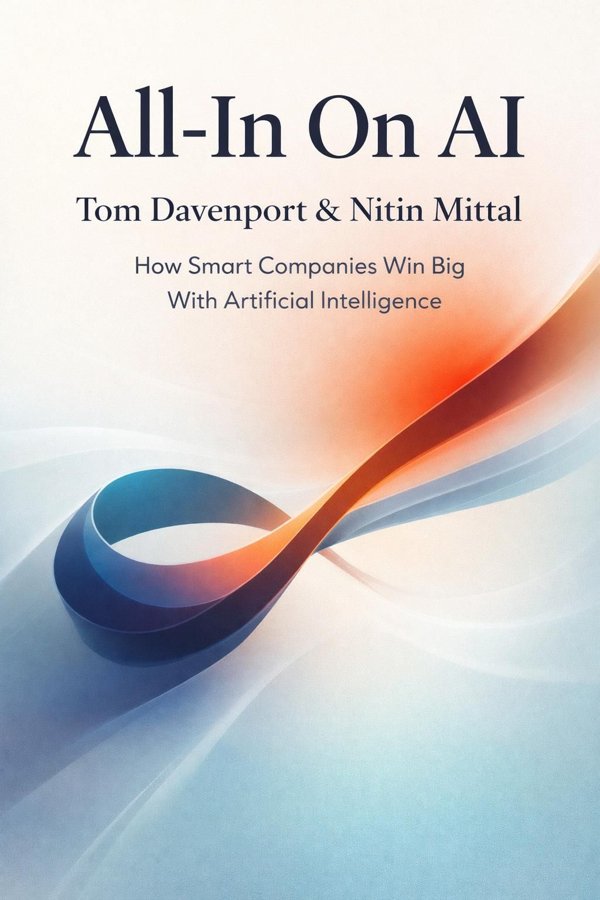
All-In On AI: How Smart Companies Win Big With Artificial Intelligence
by Tom Davenport & Nitin Mittal
This book explores how leading organizations are transforming their operations and strategies by fully embracing artificial intelligence. Through case studies and practical insights, the authors demonstrate how companies can move beyond experimentation to achieve large-scale business impact with AI.
Key Takeaways
- 1The AI Imperative — Artificial intelligence has shifted from optional experimentation to an unavoidable strategic necessity. Across every in…
- 2Leadership Commitment — AI transformation begins not in labs, but in boardrooms. Companies that succeed have executives who champion AI as a str…
- 3Strategic Integration
 10 min read
Alone Together: Why We Expect More from Technology and Less from Each Other
by Sherry Turkle
In 'Alone Together', Sherry Turkle explores how technology—especially social media, smartphones, and robots—has changed the way we communicate and relate to one another. Drawing on years of research and interviews, she argues that while digital connectivity promises closeness, it often leads to isolation and superficial relationships. The book examines the paradox of being constantly connected yet emotionally distant, urging readers to reconsider how technology shapes human intimacy and identity.
Key Takeaways
- 1Part I: The Robotic Moment — We stand at a robotic moment: a time when we are ready to accept machines not only as helpers but as companions. My earl…
- 2Part II: Networked — As robots offered emotional simulation, the network offered connection without boundaries. In the always-on world of dig…
Want the full summary?
Get instant access to this book summary and 100K+ more with Fizz Moment.
Get Free SummaryAvailable on App Store • Free to download
About This List
Technology is reshaping every aspect of our lives. These books help you understand what is happening, what is coming next, and how to thrive in a digital world.
This list features 15 carefully selected books. With FizzRead, you can read AI-powered summaries of each book in just 15 minutes. Get the key takeaways and start applying the insights immediately.
Ready to start reading?
Get instant access to all 15 book summaries and 100K+ more with FizzRead.