
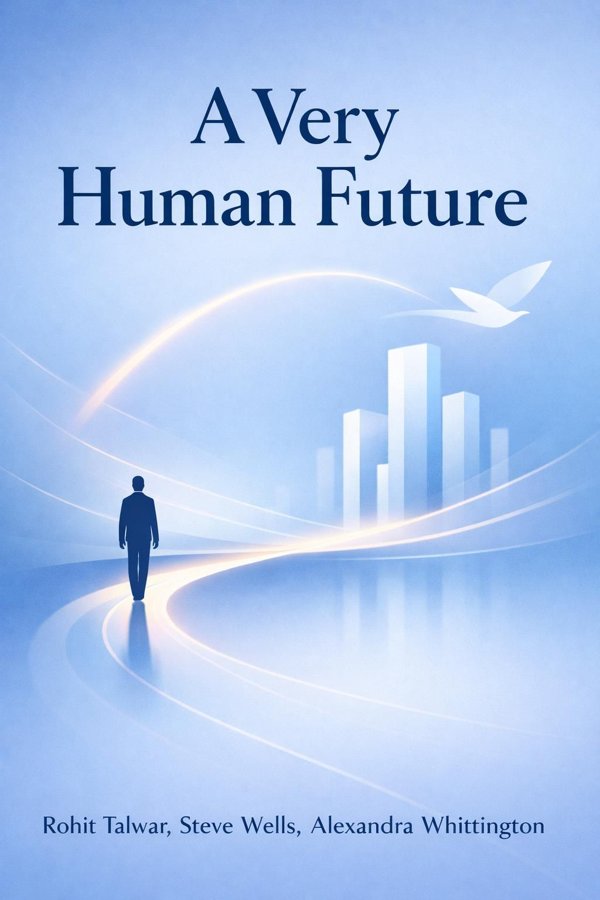
A Very Human Future: Enriching Humanity in a Digitized World: Summary & Key Insights
by Rohit Talwar, Steve Wells, Alexandra Whittington
 10 min10 chaptersAudio available
What Is A Very Human Future: Enriching Humanity in a Digitized World About?
A Very Human Future: Enriching Humanity in a Digitized World by Rohit Talwar, Steve Wells, Alexandra Whittington is a future_trends book spanning 10 pages. A Very Human Future explores how humanity can thrive in an era of rapid technological change. The authors examine the social, ethical, and economic implications of artificial intelligence, automation, and digital transformation, arguing for a future that prioritizes human well-being, creativity, and purpose. The book offers strategies for individuals, organizations, and governments to shape a more inclusive and compassionate digital age.
This FizzRead summary covers all 10 key chapters of A Very Human Future: Enriching Humanity in a Digitized World in approximately 10 minutes, distilling the most important ideas, arguments, and takeaways from Rohit Talwar, Steve Wells, Alexandra Whittington's work. Also available as an audio summary and Key Quotes Podcast.
A Very Human Future: Enriching Humanity in a Digitized World
A Very Human Future explores how humanity can thrive in an era of rapid technological change. The authors examine the social, ethical, and economic implications of artificial intelligence, automation, and digital transformation, arguing for a future that prioritizes human well-being, creativity, and purpose. The book offers strategies for individuals, organizations, and governments to shape a more inclusive and compassionate digital age.
Who Should Read A Very Human Future: Enriching Humanity in a Digitized World?
This book is perfect for anyone interested in future_trends and looking to gain actionable insights in a short read. Whether you're a student, professional, or lifelong learner, the key ideas from A Very Human Future: Enriching Humanity in a Digitized World by Rohit Talwar, Steve Wells, Alexandra Whittington will help you think differently.
- ✓Readers who enjoy future_trends and want practical takeaways
- ✓Professionals looking to apply new ideas to their work and life
- ✓Anyone who wants the core insights of A Very Human Future: Enriching Humanity in a Digitized World in just 10 minutes
Want the full summary?
Get instant access to this book summary and 100K+ more with Fizz Moment.
Get Free SummaryAvailable on App Store • Free to download
Key Chapters
The digital revolution has entered a phase of exponential acceleration. Artificial intelligence no longer belongs solely to research labs—it underpins finance, healthcare, marketing, education, and governance. Automation redefines work, from autonomous vehicles to predictive factory systems that require minimal human intervention. And data—collected from billions of devices and sensors—has become the raw material of an entirely new social order.
From my perspective, this acceleration is both a marvel and a mirror. On one hand, the efficiencies are staggering: productivity surges, material waste declines, decision-making grows more agile. On the other, we see growing inequality of opportunity, as those equipped to harness digital tools surge ahead while others fall behind. The algorithms that facilitate convenience also amplify bias, and the data that empowers analysis exposes vulnerabilities we never imagined sharing.
But acceleration per se is not the enemy. The challenge is in ensuring its direction serves human purpose, not merely profit or control. AI should not merely substitute workers; it should free minds to pursue learning, art, and empathy. Automation should not strip identities tied to work, but help societies reimagine contribution and meaning beyond traditional employment.
The core message here is simple: technological momentum is unstoppable, but its trajectory is malleable. We have the power to steer it towards outcomes that enhance human well-being. This requires rethinking incentives, embedding ethical design principles into every algorithmic decision, and broadening the conversation beyond technologists to include sociologists, ethicists, and everyday citizens. The time to ask what kind of future we are accelerating toward is now.
+ 8 more chapters — available in the FizzRead app
All Chapters in A Very Human Future: Enriching Humanity in a Digitized World
About the Authors
Rohit Talwar is a global futurist, author, and CEO of Fast Future, specializing in helping organizations understand and prepare for emerging trends. Steve Wells and Alexandra Whittington are futurists and co-authors who collaborate with Talwar on exploring the human and societal impacts of technological change.
Get This Summary in Your Preferred Format
Read or listen to the A Very Human Future: Enriching Humanity in a Digitized World summary by Rohit Talwar, Steve Wells, Alexandra Whittington anytime, anywhere. FizzRead offers multiple formats so you can learn on your terms — all free.
Available formats: App · Audio · PDF · EPUB — All included free with FizzRead
Download A Very Human Future: Enriching Humanity in a Digitized World PDF and EPUB Summary
Key Quotes from A Very Human Future: Enriching Humanity in a Digitized World
“The digital revolution has entered a phase of exponential acceleration.”
“I often encounter the fear that digital transformation will leave millions jobless.”
Frequently Asked Questions about A Very Human Future: Enriching Humanity in a Digitized World
A Very Human Future: Enriching Humanity in a Digitized World by Rohit Talwar, Steve Wells, Alexandra Whittington is a future_trends book that explores key ideas across 10 chapters. A Very Human Future explores how humanity can thrive in an era of rapid technological change. The authors examine the social, ethical, and economic implications of artificial intelligence, automation, and digital transformation, arguing for a future that prioritizes human well-being, creativity, and purpose. The book offers strategies for individuals, organizations, and governments to shape a more inclusive and compassionate digital age.
More by Rohit Talwar, Steve Wells, Alexandra Whittington
You Might Also Like
Futureproof: 9 Rules for Humans in the Age of Automation
Kevin Roose
10 min
The Third Wave
Alvin Toffler
10 min
2030: How Today's Biggest Trends Will Collide and Reshape the Future of Everything
Mauro F. Guillén
10 min
AI 2041: Ten Visions for Our Future
Kai-Fu Lee, Chen Qiufan
10 min
Abundance: The Future Is Better Than You Think
Peter H. Diamandis, Steven Kotler
10 min
After Shock: The World's Foremost Futurists Reflect on 50 Years of Future Shock—and Look Ahead to the Next 50
John Schroeter (Editor)
10 minFeatured In
Browse by Category
Ready to read A Very Human Future: Enriching Humanity in a Digitized World?
Get the full summary and 100K+ more books with Fizz Moment.