
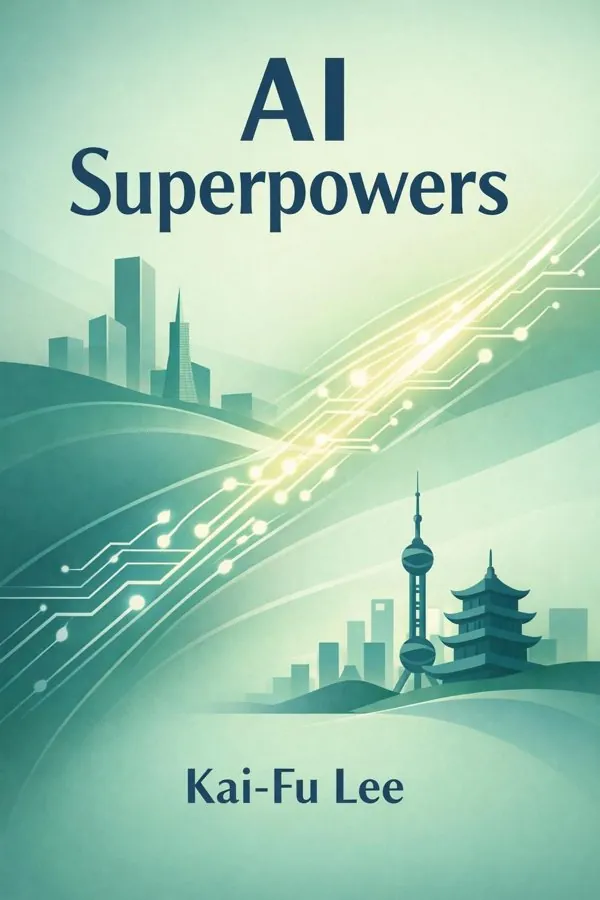
AI Superpowers: Summary & Key Insights
by Kai-Fu Lee
 10 min8 chaptersAudio available
What Is AI Superpowers About?
AI Superpowers by Kai-Fu Lee is a technology book published in 2018 spanning 8 pages. In this influential book, Kai-Fu Lee, a leading expert on artificial intelligence and venture capital, explores the rapid rise of AI in China and the United States. He examines how these two global powers are shaping the future of technology, innovation, and employment, and argues that the coming AI revolution will transform economies and societies worldwide. Drawing on his deep experience in both Silicon Valley and China, Lee offers insights into the competitive dynamics between the two nations and the profound implications for humanity.
This FizzRead summary covers all 8 key chapters of AI Superpowers in approximately 10 minutes, distilling the most important ideas, arguments, and takeaways from Kai-Fu Lee's work. Also available as an audio summary and Key Quotes Podcast.
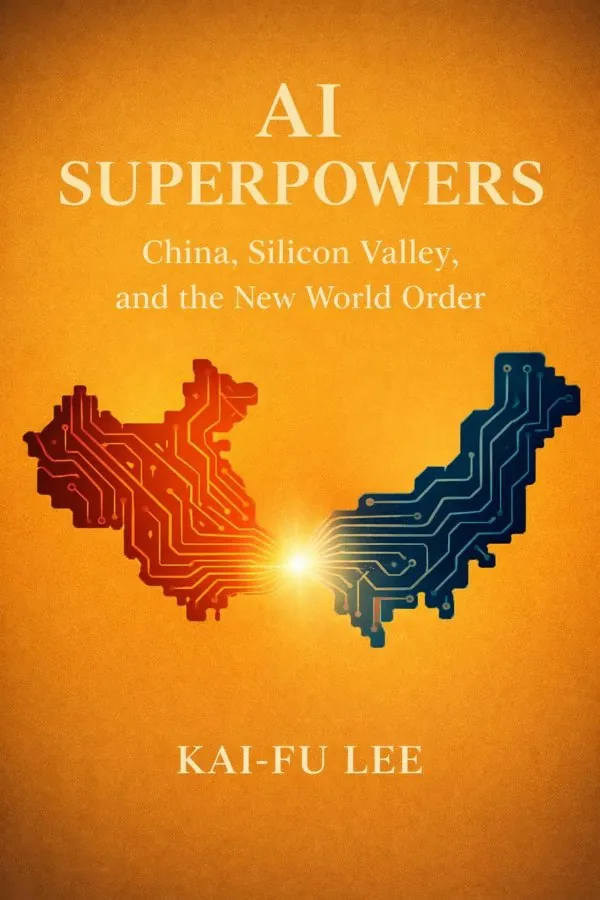
AI Superpowers: China, Silicon Valley, and the New World Order
In this influential book, Kai-Fu Lee, a leading expert on artificial intelligence and venture capital, explores the rapid rise of AI in China and the United States. He examines how these two global powers are shaping the future of technology, innovation, and employment, and argues that the coming AI revolution will transform economies and societies worldwide. Drawing on his deep experience in both Silicon Valley and China, Lee offers insights into the competitive dynamics between the two nations and the profound implications for humanity.
Who Should Read AI Superpowers?
This book is perfect for anyone interested in technology and looking to gain actionable insights in a short read. Whether you're a student, professional, or lifelong learner, the key ideas from AI Superpowers by Kai-Fu Lee will help you think differently.
- ✓Readers who enjoy technology and want practical takeaways
- ✓Professionals looking to apply new ideas to their work and life
- ✓Anyone who wants the core insights of AI Superpowers in just 10 minutes
Want the full summary?
Get instant access to this book summary and 100K+ more with Fizz Moment.
Get Free SummaryAvailable on App Store • Free to download
Key Chapters
When we talk about AI revolution, we must recognize that artificial intelligence is not unfolding as a single monolithic event. It is moving through distinct, overlapping waves. The first wave, Internet AI, is already around us—it powers recommendation engines, social media feeds, and advertising algorithms. It learns from billions of clicks, likes, and online behaviors, sculpting personalized experiences for each user. The second wave, Business AI, operates in the world of structured data—bank transactions, insurance records, and logistics patterns—transforming enterprise decisions by identifying trends invisible to human eyes. The third wave, Perception AI, expands machine awareness into the physical world, teaching systems to see, hear, and interpret sensory data. And finally, the fourth wave, Autonomous AI, pushes into realms where machines can act independently—self-driving cars, drones, and robotics transforming entire industries.
Each wave builds upon the previous one, broadening AI’s reach. In Internet AI, the United States had an early advantage through pioneering companies like Google and Facebook, who leveraged data from global users to train algorithms. Yet China soon followed, with firms like Baidu, Alibaba, and Tencent adapting AI for domestic platforms and local preferences. Through Business AI, corporate giants on both sides of the Pacific began integrating machine learning into financial risk assessment and supply chain optimization. Perception AI took China further ahead because of massive deployment of facial recognition and urban automation. And in Autonomous AI, the contest intensified around mobility and logistics.
This unfolding revolution reveals a simple truth: AI’s influence widens not by replacing people immediately, but by reshaping the very processes through which we make decisions. It becomes our co-pilot in the digital realm, amplifying productivity but also pressing us to rethink what uniquely human value we continue to offer.
China’s AI journey did not emerge overnight. It accelerated through a rare confluence of factors—an enormous population generating unmatched volumes of data, a dense network of ambitious entrepreneurs, and a government vision unafraid of transformative disruption. When I looked closely at China’s startup landscape through the lens of Sinovation Ventures, what struck me most was not just the energy, but the speed at which ideas took flight. Entrepreneurs were not waiting for perfect research papers or theoretical guarantees. They were testing, iterating, and deploying. In many ways, China became an ideal proving ground for applied AI: what begins as a prototype elsewhere could become an operational business within months in China.
Government policy further catalyzed this ecosystem. Strategic initiatives recognized AI as central to national competitiveness, providing incentives for companies, universities, and venture capitalists to align around shared goals. The cultural factor mattered too. China’s internet users were remarkably open to adopting new technologies—mobile payments, online services, and social platforms became near-universal in everyday life, producing unparalleled data ready for machine learning systems.
This pragmatic, action-driven ethos distinguished China’s AI environment. Implementation became the keyword. Rather than waiting for breakthroughs, companies asked: what can we build today that scales tomorrow? The result was a flourishing of AI-enabled applications in finance, retail, healthcare, and urban management. In this sense, China’s rise is not about copying Silicon Valley but innovating differently—leveraging data, velocity, and societal scalability to redefine technological progress.
+ 6 more chapters — available in the FizzRead app
All Chapters in AI Superpowers
About the Author
Kai-Fu Lee is a Taiwanese-born computer scientist, entrepreneur, and venture capitalist. He has held executive positions at Apple, Microsoft, and Google, and is the founder of Sinovation Ventures, a leading venture capital firm investing in Chinese technology startups. Lee is widely recognized for his expertise in artificial intelligence and his efforts to bridge innovation between China and the West.
Get This Summary in Your Preferred Format
Read or listen to the AI Superpowers summary by Kai-Fu Lee anytime, anywhere. FizzRead offers multiple formats so you can learn on your terms — all free.
Available formats: App · Audio · PDF · EPUB — All included free with FizzRead
Download AI Superpowers PDF and EPUB Summary
Key Quotes from AI Superpowers
“When we talk about AI revolution, we must recognize that artificial intelligence is not unfolding as a single monolithic event.”
“China’s AI journey did not emerge overnight.”
Frequently Asked Questions about AI Superpowers
AI Superpowers by Kai-Fu Lee is a technology book that explores key ideas across 8 chapters. In this influential book, Kai-Fu Lee, a leading expert on artificial intelligence and venture capital, explores the rapid rise of AI in China and the United States. He examines how these two global powers are shaping the future of technology, innovation, and employment, and argues that the coming AI revolution will transform economies and societies worldwide. Drawing on his deep experience in both Silicon Valley and China, Lee offers insights into the competitive dynamics between the two nations and the profound implications for humanity.
Compare AI Superpowers
More by Kai-Fu Lee
You Might Also Like



Featured In
Browse by Category
Ready to read AI Superpowers?
Get the full summary and 100K+ more books with Fizz Moment.