
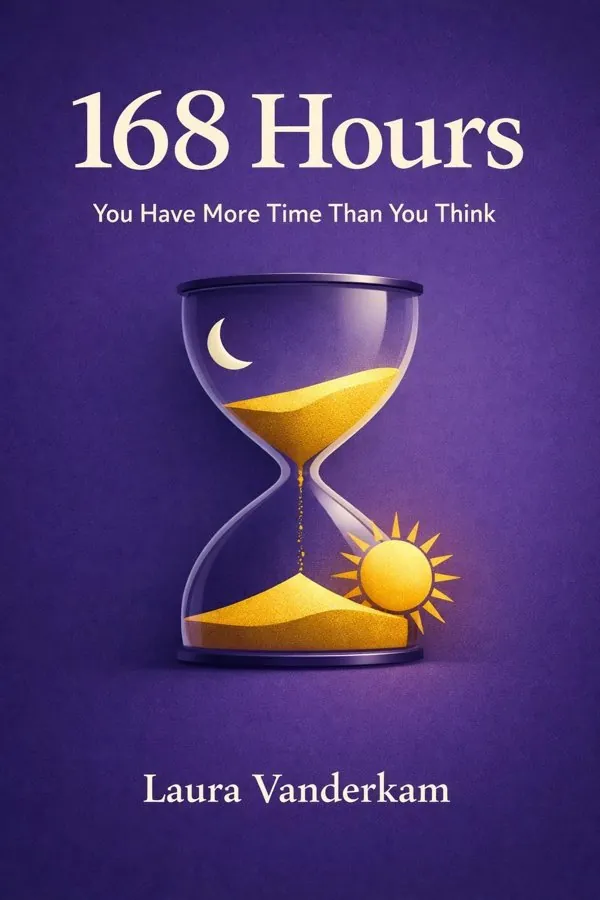
168 Hours: You Have More Time Than You Think: Summary & Key Insights
 10 min11 chaptersAudio available
What Is 168 Hours: You Have More Time Than You Think About?
168 Hours: You Have More Time Than You Think by Laura Vanderkam is a productivity book spanning 11 pages. In this practical and inspiring guide, Laura Vanderkam shows readers how to make the most of their 168 hours each week. Through real-life examples and research, she demonstrates that by prioritizing what truly matters, anyone can find time for work, family, and personal fulfillment. The book challenges common assumptions about busyness and offers strategies for time management and productivity.
This FizzRead summary covers all 11 key chapters of 168 Hours: You Have More Time Than You Think in approximately 10 minutes, distilling the most important ideas, arguments, and takeaways from Laura Vanderkam's work. Also available as an audio summary and Key Quotes Podcast.
168 Hours: You Have More Time Than You Think
In this practical and inspiring guide, Laura Vanderkam shows readers how to make the most of their 168 hours each week. Through real-life examples and research, she demonstrates that by prioritizing what truly matters, anyone can find time for work, family, and personal fulfillment. The book challenges common assumptions about busyness and offers strategies for time management and productivity.
Who Should Read 168 Hours: You Have More Time Than You Think?
This book is perfect for anyone interested in productivity and looking to gain actionable insights in a short read. Whether you're a student, professional, or lifelong learner, the key ideas from 168 Hours: You Have More Time Than You Think by Laura Vanderkam will help you think differently.
- ✓Readers who enjoy productivity and want practical takeaways
- ✓Professionals looking to apply new ideas to their work and life
- ✓Anyone who wants the core insights of 168 Hours: You Have More Time Than You Think in just 10 minutes
Want the full summary?
Get instant access to this book summary and 100K+ more with Fizz Moment.
Get Free SummaryAvailable on App Store • Free to download
Key Chapters
It all begins with changing the way we think about time. We often talk about 'spending' time, as though it were a scarce currency slipping through our fingers. But time is steady. There will always be 168 hours in a week; you cannot lose or gain more. The real question is: how do you choose to fill those hours? When I began asking people to track their time—every fifteen minutes for a week—the results were startling. Many who believed they worked 80-hour weeks actually worked closer to 50 or 55. Those who thought they slept too little discovered they were getting seven or eight hours a night. The reality nearly always differed from the perception.
This exercise in awareness is foundational. By tracking your time, you transform vague guilt (“I waste too much time”) into concrete knowledge (“I spent three hours watching TV on Wednesday night”). Once you see your week laid out in front of you, you can no longer cling to the comforting narrative that you have no control over your schedule. You have immense control—you just need to claim it.
Reframing time means seeing every hour as a choice. Even obligations like work or childcare are, at some level, choices reflecting priorities and values. When you step back to see your hours as building blocks, you begin to understand that creating your desired life isn’t about more hours—it’s about better decisions within the hours you already have.
When people tell me they feel too busy, what they often mean is that their schedules are filled with activities that don’t align with what they truly care about. In '168 Hours,' I emphasize identifying your core competencies—the handful of things you do best, that matter most, both professionally and personally.
This step requires brutal honesty. What work tasks actually move you forward? What personal activities nourish you? I encourage readers to write down their personal mission statements—not lofty declarations for a distant future, but practical visions for how they want their daily lives to look. When you know your priorities, time management stops being an exercise in efficiency and becomes an expression of your values.
For example, one busy executive thought she had no time for her children. After tracking her schedule, she realized that many hours were lost to low-value meetings and television after work. She began eliminating those, reclaiming evenings to read with her children and still deliver results at her job. The shift wasn’t only logistical—it was emotional. She felt more present, more fulfilled. That’s what happens when your time aligns with your priorities.
+ 9 more chapters — available in the FizzRead app
All Chapters in 168 Hours: You Have More Time Than You Think
About the Author
Laura Vanderkam is an American author and journalist specializing in time management and productivity. She has written several books on how people can better use their time to achieve balance and success, and her work has been featured in major publications such as The Wall Street Journal and Fortune.
Get This Summary in Your Preferred Format
Read or listen to the 168 Hours: You Have More Time Than You Think summary by Laura Vanderkam anytime, anywhere. FizzRead offers multiple formats so you can learn on your terms — all free.
Available formats: App · Audio · PDF · EPUB — All included free with FizzRead
Download 168 Hours: You Have More Time Than You Think PDF and EPUB Summary
Key Quotes from 168 Hours: You Have More Time Than You Think
“It all begins with changing the way we think about time.”
“When people tell me they feel too busy, what they often mean is that their schedules are filled with activities that don’t align with what they truly care about.”
Frequently Asked Questions about 168 Hours: You Have More Time Than You Think
168 Hours: You Have More Time Than You Think by Laura Vanderkam is a productivity book that explores key ideas across 11 chapters. In this practical and inspiring guide, Laura Vanderkam shows readers how to make the most of their 168 hours each week. Through real-life examples and research, she demonstrates that by prioritizing what truly matters, anyone can find time for work, family, and personal fulfillment. The book challenges common assumptions about busyness and offers strategies for time management and productivity.
More by Laura Vanderkam

Tranquility by Tuesday: 9 Ways to Calm the Chaos and Make Time for What Matters
Laura Vanderkam
10 min
Off the Clock: Feel Less Busy While Getting More Done
Laura Vanderkam
10 minI Know How She Does It: How Successful Women Make the Most of Their Time
Laura Vanderkam
10 min
What the Most Successful People Do Before Breakfast: And Two Other Short Guides to Achieving More at Work and at Home
Laura Vanderkam
10 minYou Might Also Like

Featured In
Browse by Category
Ready to read 168 Hours: You Have More Time Than You Think?
Get the full summary and 100K+ more books with Fizz Moment.