
Best Audiobooks of All Time — Listen to the Greatest Books
Some books are even better when you hear them. These audiobooks combine great content with incredible narration for an unforgettable listening experience.

 10 min read
The Power of Your Subconscious Mind
by Joseph Murphy
What if the thoughts you repeat every day are quietly shaping your health, confidence, relationships, and results? That is the bold promise at the heart of *The Power of Your Subconscious Mind*, one of the most enduring books in the self-help and psychology space. Joseph Murphy argues that beneath your everyday awareness lies a powerful mental force constantly responding to your beliefs, emotions, and inner images. Learn to direct it wisely, he says, and you can begin to transform your outer life from the inside out. What makes this book matter decades after publication is its practical simplicity. Murphy does not just tell readers to “think positive.” He explains how habits of thought are formed, why fear becomes self-fulfilling, and how practices like affirmation, prayer, visualization, and mental rehearsal can help create new patterns. His approach blends spiritual language with accessible psychological principles, making the book appealing to readers interested in both personal growth and practical mindset change. Murphy, an Irish-born American author and New Thought minister who served at the Church of Divine Science in Los Angeles, became widely known for his teachings on the subconscious mind. In this classic, he offers a hopeful message: change your inner assumptions, and your life can begin to change with them.
Key Takeaways
- 1The Dual Nature of the Mind — Murphy’s foundation is the idea that the mind operates in two distinct but connected modes: the conscious and the subcon…
- 2Impressing Belief upon the Subconscious — According to Murphy, the subconscious is shaped not by casual wishes but by thoughts charged with feeling. A statement r…
- 3Healing, Faith, and the Role of Prayer — In Murphy’s view, prayer is not merely reciting religious words; it is a focused mental act that communicates a desired …
 10 min read
Shoe Dog
by Phil Knight
Shoe Dog es una memoria escrita por Phil Knight, fundador de Nike, que narra la historia de cómo transformó un pequeño préstamo de $50 en una de las marcas más reconocidas del mundo. El libro describe los desafíos, fracasos y triunfos que enfrentó mientras construía la empresa desde sus humildes comienzos como Blue Ribbon Sports hasta convertirse en un gigante global. Con humor, humanidad y franqueza, Knight ofrece una mirada íntima al espíritu emprendedor y la perseverancia detrás del éxito de Nike.
Key Takeaways
- 1The Crazy Idea: From Post-College Doubt to Bold Vision — After finishing my MBA at Stanford, I found myself drifting, restless. The world seemed vast and full of possibilities, …
- 2Building Blue Ribbon Sports: Hustle, Partnership, and Persistence — When I returned to Oregon, my grand dream shrunk to the size of a car trunk. I began selling Onitsuka Tiger shoes at tra…
- 3Breaking Away: Conflict with Onitsuka and the Birth of Nike
 10 min read
Maybe You Should Talk to Someone
by Lori Gottlieb
What if the people who seem most in control are often the ones hiding the deepest pain? In Maybe You Should Talk to Someone, psychotherapist Lori Gottlieb opens the door to her consulting room and to her own private unraveling, revealing that the distance between therapist and patient is far smaller than we imagine. After a devastating breakup leaves her emotionally adrift, Gottlieb finds herself doing the very thing she recommends to others: seeking therapy. Through this dual perspective, she shows how suffering can look different on the surface yet arise from familiar human longings for love, safety, identity, and meaning. The book blends memoir, case stories, psychology, and humor, making profound emotional truths feel intimate and accessible. It matters because it demystifies therapy at a time when many people need help but hesitate to ask for it. As a practicing therapist, writer, and advice columnist, Gottlieb brings both clinical authority and literary skill, offering a compassionate, sharply observed portrait of how people change. This is not just a book about therapy; it is a book about what it means to be human.
Key Takeaways
- 1Everyone Is More Alike Than They Seem — A therapy room quickly reveals a surprising truth: beneath different biographies, people struggle with many of the same …
- 2Crisis Can Become a Doorway — The moments that break us often become the moments that expose us to ourselves. Gottlieb’s own emotional collapse begins…
- 3A Good Therapist Changes Your Lens — People often imagine therapy as a place where someone gives advice, but Gottlieb shows that its real power lies in chang…
 10 min read
Boundaries
by Henry Cloud
What if many of your daily frustrations come from taking responsibility for things that were never yours to carry? In Boundaries, Henry Cloud and John Townsend argue that emotional exhaustion, resentment, people-pleasing, and broken relationships often grow from one central problem: we do not clearly understand where our responsibility ends and another person’s begins. Rather than treating boundaries as cold walls, the authors present them as healthy, life-giving limits that protect love, freedom, honesty, and self-respect. They show how boundaries affect every area of life, from family and friendships to marriage, work, faith, and personal growth. First published in 1992, the book remains influential because its central challenge is timeless. Many people still struggle to say no without guilt, to confront harmful behavior, or to stop rescuing others at their own expense. Cloud and Townsend bring authority to these questions through their work as clinical psychologists and counselors, blending psychological insight, relational wisdom, and spiritual reflection. The result is a practical guide for anyone who wants healthier relationships, clearer communication, and a stronger sense of personal responsibility without losing compassion.
Key Takeaways
- 1Understanding Where You End Begins — A healthier life begins the moment you realize that love does not require limitless access. The central insight of Bound…
- 2Why Boundary Problems Develop Early — Most adults do not suddenly become boundaryless; they grow into it through repeated emotional training. Cloud and Townse…
- 3Boundaries Shape Every Relationship You Have — Relationship quality often depends less on affection than on limits. One of the strongest contributions of Boundaries is…
 10 min read
The Gifts of Imperfection
by Brene Brown
In The Gifts of Imperfection, Brené Brown argues that a meaningful life does not come from flawless performance, constant self-improvement, or earning approval. It comes from what she calls “Wholehearted living”: showing up as we are, embracing vulnerability, and choosing courage over control. Drawing on years of research into shame, authenticity, belonging, and human connection, Brown reveals why so many people feel trapped by perfectionism, comparison, and the pressure to be enough—and how they can break free. Rather than offering empty encouragement, she presents ten practical guideposts for cultivating a more grounded, joyful, and authentic life. These guideposts include self-compassion, resilience, gratitude, intuition, creativity, rest, and meaningful connection. The book matters because it speaks directly to a modern struggle: the exhaustion of trying to be impressive instead of real. Brown’s authority comes from her work as a research professor who has spent years studying the emotional patterns that shape our lives. Her gift is translating rigorous research into deeply human guidance that readers can apply every day.
Key Takeaways
- 1Perfectionism Is a Heavy Emotional Armor — One of the book’s most liberating insights is that perfectionism is not the same as healthy striving. Many people believ…
- 2Wholehearted Living Begins With Vulnerable Courage — A powerful life is not built by avoiding uncertainty; it is built by entering it with courage. Brown defines Wholehearte…
- 3Authenticity Requires Releasing the Need to Please — Authenticity sounds simple, but in practice it can feel radical. Brown describes authenticity as the daily choice to let…
 10 min read
Influence
by Robert Cialdini
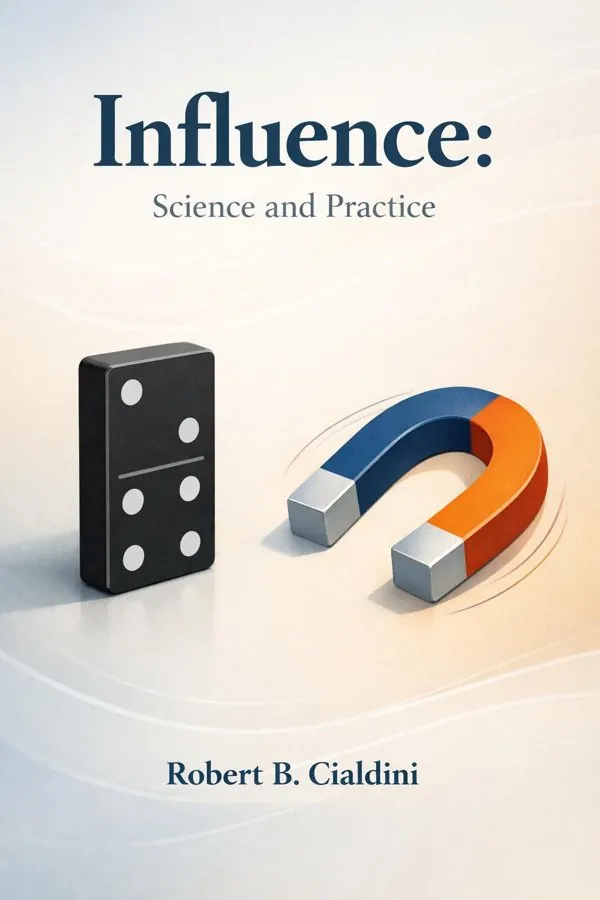
Why do people say yes when they would prefer to say no? Why do intelligent, careful individuals still fall for pressure, urgency, and persuasive framing? In Influence, Robert B. Cialdini answers these questions by uncovering the hidden psychological patterns that shape everyday decisions. Drawing on decades of research in social psychology, as well as undercover fieldwork in sales, fundraising, advertising, and compliance professions, Cialdini explains how persuasion often works not through logic alone, but through reliable mental shortcuts. He identifies six core principles of influence—reciprocity, commitment and consistency, social proof, liking, authority, and scarcity—and shows how they operate in business, relationships, politics, and consumer behavior. What makes the book so enduring is its balance of scientific rigor and practical usefulness. It helps readers become both more persuasive and more resistant to manipulation. Whether you work in marketing, negotiation, leadership, or simply want to make better decisions in a world full of influence attempts, this book offers a framework that remains remarkably relevant. Influence is not just about persuasion; it is about understanding human behavior under pressure.
Key Takeaways
- 1Weapons of Influence and Automaticity — Much of persuasion succeeds not because people are foolish, but because people are busy. Cialdini begins with a crucial …
- 2Reciprocity Creates Powerful Obligation — A small favor can create a surprisingly large sense of debt. That is the essence of reciprocity, one of the oldest and m…
- 3Commitment Shapes Future Behavior — People do not just want to make decisions; they want to appear consistent with them. Cialdini explains that once individ…
 10 min read
Zero to One
by Peter Thiel
Zero to One by Peter Thiel, based on notes by Blake Masters, is one of the most provocative books ever written about startups, innovation, and building companies that matter. Rather than offering generic business advice, Thiel asks a deeper question: how do you create something truly new? His answer is the idea of going from “zero to one” — producing a breakthrough that did not exist before — instead of going from “one to many,” which simply means copying or scaling what is already known. That distinction sits at the heart of the book. Drawing on his experience as a co-founder of PayPal, an early investor in Facebook, and a leading Silicon Valley thinker, Thiel challenges many popular assumptions about competition, risk, technology, and success. He argues that the best businesses are not those that fight hardest in crowded markets, but those that build unique products so valuable they effectively become monopolies. Along the way, he explores founding teams, sales, culture, long-term planning, and the role of secrets in entrepreneurship. For founders, investors, students, and ambitious professionals, Zero to One is a sharp, contrarian guide to creating the future instead of merely reacting to it.
Key Takeaways
- 1The Future Depends on New Creation — Most people talk about the future as if it will simply arrive on schedule. Thiel’s central insight is that the future is…
- 2Learn from Bubbles Without Becoming Cynical — A failed boom can teach more than a smooth success. Thiel uses the dot-com bubble of the late 1990s to show how mass ent…
- 3Happy Companies Escape Destructive Competition — Thiel’s famous claim that competition is for losers sounds extreme, but it highlights an important truth: the best busin…
 10 min read
The Ruthless Elimination of Hurry
by John Mark Comer
The Ruthless Elimination of Hurry is John Mark Comer’s response to one of the defining problems of modern life: the constant feeling of being rushed, distracted, overcommitted, and emotionally exhausted. In this deeply practical and spiritually grounded book, Comer argues that hurry is more than a time-management issue. It is a way of life that damages our peace, relationships, attention, and capacity to experience God. Drawing from his own burnout, the wisdom of philosopher Dallas Willard, and the lifestyle of Jesus, Comer makes the case that slowing down is not optional for a healthy soul. He shows that the life of Jesus was marked by margin, stillness, prayer, and presence, even in the middle of enormous demands. The book blends spiritual insight with practical habits, inviting readers to resist the pressures of speed and reclaim a more rooted way of living. For anyone overwhelmed by nonstop work, technology, and noise, this book offers both diagnosis and hope: a path toward a calmer, more meaningful, and more loving life.
Key Takeaways
- 1Hurry Is a Soul-Level Disease — One of the book’s most unsettling insights is that hurry often feels normal precisely because it is so destructive. Many…
- 2Jesus Modeled an Unhurried Life — A surprising feature of the Gospels is not just what Jesus taught, but how he lived. He was rarely frantic. He walked fr…
- 3Apprenticeship Requires More Than Belief — Many people separate faith from daily habit, but Comer insists that transformation happens through apprenticeship. An ap…
 10 min read
The Hard Thing About Hard Things
by Ben Horowitz
Building a company is often romanticized as a thrilling journey powered by vision, talent, and hustle. Ben Horowitz shatters that illusion. In The Hard Thing About Hard Things, he focuses on the brutal realities of leadership: running out of cash, firing friends, laying off loyal employees, managing executives who disappoint, and making high-stakes decisions when no option feels right. This is not a book of tidy frameworks or motivational slogans. It is a survival guide for leaders facing ambiguity, pressure, and fear. Horowitz writes from hard-earned experience. As cofounder and CEO of Loudcloud, later transformed into Opsware, he led a company through the dot-com crash, near-collapse, painful restructuring, and ultimately a successful sale to Hewlett-Packard. He later became a cofounder of Andreessen Horowitz, one of Silicon Valley’s most influential venture capital firms, giving him a front-row seat to the struggles of countless founders. What makes this book matter is its honesty. Horowitz argues that the toughest moments in business rarely come with clear answers. Leadership is not about avoiding pain; it is about carrying responsibility through it. For founders, executives, and anyone managing under pressure, this book offers unusually practical wisdom for doing the job when it is hardest.
Key Takeaways
- 1Entrepreneurship Means Entering Organized Chaos — The biggest shock of entrepreneurship is not the workload; it is the absence of certainty. People often imagine startups…
- 2Crisis Leadership Requires Choosing Under Pressure — A crisis does not test your intelligence nearly as much as it tests your nerve. Horowitz shows that when companies appro…
- 3The CEO Job Is Inherently Lonely — The hardest part of being a CEO is not the title, the schedule, or even the responsibility. It is the isolation. Horowit…
 10 min read
48 Laws of Power
by Robert Greene
The 48 Laws of Power is a provocative guide to understanding how influence really works beneath the surface of everyday life. Rather than offering idealistic advice about fairness or good intentions, Robert Greene studies how power has been gained, protected, lost, and manipulated across centuries of history. Drawing on examples from rulers, generals, courtiers, artists, and strategists such as Machiavelli, Sun Tzu, Louis XIV, and Napoleon, he distills recurring patterns into 48 memorable laws. What makes this book endure is not just its boldness, but its honesty. Greene argues that power dynamics exist in offices, friendships, leadership roles, negotiations, politics, and creative fields whether we acknowledge them or not. To ignore them is to remain vulnerable; to understand them is to move more carefully and effectively. Greene writes with the eye of a historian and the precision of a strategist. His gift lies in turning complex human behavior into practical principles readers can observe immediately in the real world. Whether you see the book as a manual, a warning, or both, it offers a sharp framework for navigating ambition, status, reputation, and influence.
Key Takeaways
- 1Foundations of Power: Perception and Restraint — Power often begins long before action; it begins in perception. One of Greene’s central insights is that people do not r…
- 2Capturing Attention and Building Reputation — Obscurity is rarely neutral; in competitive environments, it is often a form of powerlessness. Greene argues that reputa…
- 3Relationships, Independence, and Strategic Absence — Dependence is one of the hidden currencies of power. Greene repeatedly shows that those who become indispensable gain le…
 10 min read
The Energy Bus
by Jon Gordon
The Energy Bus by Jon Gordon is a short business fable with a simple but powerful premise: the quality of your life, leadership, and work is shaped by the energy you bring to it every day. The story follows George, a stressed-out manager whose career, marriage, and mindset are all sliding in the wrong direction. When his car breaks down, he is forced to ride the bus and meets Joy, an unusually optimistic driver who teaches him ten rules for transforming negativity into purpose, teamwork, and momentum. What begins as an inconvenient commute becomes a blueprint for changing how he leads and lives. The book matters because it translates abstract ideas like attitude, culture, and leadership into memorable, practical lessons. Gordon argues that positive energy is not naïve cheerfulness; it is a disciplined choice that affects performance, relationships, and resilience. That message has resonated widely in companies, schools, and sports teams. As a bestselling author and speaker on leadership and team culture, Gordon writes with the authority of someone who has spent years helping organizations build stronger, more energized environments.
Key Takeaways
- 1You Are the Driver of Your Bus — A hard truth sits at the center of meaningful change: most people cannot improve a life they keep blaming on everyone el…
- 2Vision Gives Direction to Energy — Energy without direction is just motion, not progress. After George accepts responsibility, Joy pushes him to answer a h…
- 3Positive Energy Must Be Fueled Daily — Negativity is rarely a single dramatic collapse; more often, it is the slow result of running on empty. Gordon’s third r…
 10 min read
Never Eat Alone
by Keith Ferrazzi
Never Eat Alone is a practical and persuasive guide to one of the most underrated drivers of success: relationships. In this business classic, Keith Ferrazzi argues that achievement is rarely a solo act. Careers accelerate, ideas spread, and opportunities appear when people build authentic connections rooted in generosity, trust, and mutual support. Rather than treating networking as manipulation or self-promotion, Ferrazzi reframes it as a lifelong practice of helping others, sharing knowledge, and staying meaningfully connected. What makes the book especially powerful is its blend of mindset and method. Ferrazzi does not simply say that relationships matter; he explains how to build them deliberately, from identifying your purpose and reaching out with confidence to maintaining contact and creating value over time. His advice applies whether you are an entrepreneur, executive, job seeker, student, or anyone trying to grow in a competitive world. Ferrazzi writes with unusual authority. A Harvard and Yale graduate, former CMO, entrepreneur, and trusted advisor to major companies, he built his own career through strategic generosity and human connection. The result is a business book that feels both ambitious and deeply humane.
Key Takeaways
- 1Networking Means Relationships, Not Transactions — Many people resist networking because they associate it with shallow small talk, opportunism, and using people. Ferrazzi…
- 2Build Relationships Around A Clear Mission — Connection without direction can become noise. Ferrazzi emphasizes that meaningful relationship-building starts with kno…
- 3Create Visibility Before You Need It — Opportunity rarely goes to the most talented unknown person. Ferrazzi argues that if people do not know who you are, wha…
 10 min read
Why Has Nobody Told Me This Before
by Julie Smith
Why Has Nobody Told Me This Before is a practical, compassionate guide to mental health from clinical psychologist Dr. Julie Smith. Rather than treating emotional struggles as mysterious personal failures, Smith explains them as understandable human experiences that can be worked with skillfully. The book covers anxiety, low mood, motivation, stress, self-doubt, grief, and relationships, offering readers clear tools they can use in everyday life. Its power lies in its tone: warm, nonjudgmental, and grounded in real therapeutic practice. What makes this book especially valuable is its accessibility. Smith translates core psychological principles into language that feels simple without being simplistic. She does not promise quick fixes or constant happiness. Instead, she helps readers build emotional resilience, recognize patterns in thoughts and behavior, and respond to difficult moments with more wisdom and self-compassion. The result is a mental health handbook that feels immediately useful. Smith writes with the authority of a practicing clinician and the clarity of a gifted educator. Drawing on years of therapy work and her widely shared educational content, she offers the kind of emotional knowledge many people wish they had learned much earlier in life.
Key Takeaways
- 1Understanding Thoughts, Feelings, and Behaviors — One of the most liberating truths in psychology is that emotions rarely appear out of nowhere. They are shaped by an ong…
- 2Low Mood Needs Care, Not Shame — Feeling low becomes more dangerous when we judge ourselves for it. Smith argues that low mood and depression often worse…
- 3Anxiety Is Protection Gone Into Overdrive — Anxiety often feels like evidence that something is terribly wrong, but Smith reframes it as a survival system working t…
 10 min read
The Boy Who Was Raised as a Dog
by Bruce Perry
The Boy Who Was Raised as a Dog is a powerful exploration of what trauma does to children and what healing actually requires. Drawing on years of clinical work, child psychiatrist and neuroscientist Bruce D. Perry recounts unforgettable cases of abused, neglected, terrorized, and emotionally abandoned children whose behaviors often baffled adults around them. Rather than treating these children as “bad,” “broken,” or inexplicable, Perry shows how their minds and bodies adapted to unbearable conditions. In his view, many troubling behaviors are not random symptoms but survival responses shaped by the developing brain. What makes this book so important is its blend of scientific insight and emotional immediacy. Perry explains complex ideas about neurodevelopment, stress, attachment, and resilience through vivid stories that make the science feel human. He also offers hope: even deeply traumatized children can recover when care is attuned, predictable, and rooted in relationships. Co-written with journalist Maia Szalavitz, the book is both accessible and profound. For parents, educators, therapists, and anyone trying to understand the long shadow of childhood adversity, it remains one of the clearest and most compassionate guides available.
Key Takeaways
- 1Trauma reshapes the developing brain — A child’s behavior often makes sense once you understand the experiences that shaped the brain behind it. This is one of…
- 2Tina and the cost of neglect — Neglect can be as damaging as overt abuse because the absence of care is itself a developmental injury. In Tina’s case, …
- 3Justin and the need for stimulation — The brain develops through use, and what is not used may fail to organize properly. Justin’s story illustrates the devas…
 10 min read
Atomic Habits
by James Clear
What if the quality of your life depends less on dramatic breakthroughs and more on the tiny actions you repeat every day? In Atomic Habits, James Clear argues that lasting transformation does not come from radical reinvention, but from small, consistent improvements that compound over time. The book explains how habits shape identity, influence performance, and quietly determine whether we move toward the future we want or drift away from it. Rather than relying on motivation alone, Clear shows how to design systems that make good behaviors easier and bad behaviors harder. The book matters because most people fail to change not because they lack ambition, but because they use strategies that fight human nature. Clear combines insights from psychology, neuroscience, behavioral economics, and real-world examples from sports, business, and personal development to create a practical framework anyone can apply. As a writer and speaker known for his work on habit formation and continuous improvement, he has helped millions of readers rethink productivity and self-discipline. Atomic Habits stands out because it turns behavior change into something concrete, manageable, and deeply empowering.
Key Takeaways
- 1Tiny changes create remarkable results — We tend to overestimate the importance of one big moment and underestimate the power of small daily improvements. One wo…
- 2Focus on systems, not goals — Goals set direction, but systems determine progress. That distinction changes everything. Most people think achievement …
- 3Identity drives lasting behavior change — The most durable habits are not built by forcing yourself to act differently for a few days. They are built by becoming …
 10 min read
Think Again
by Adam Grant
In this book, organizational psychologist Adam Grant explores the importance of rethinking and unlearning in a rapidly changing world. He argues that intelligence is not just about thinking and learning but also about the ability to question one’s own beliefs and update them when presented with new evidence. Through engaging research and stories, Grant shows how individuals and organizations can benefit from cultivating mental flexibility and intellectual humility.
Key Takeaways
- 1Part I – Individual Rethinking — At the heart of individual rethinking lies an uncomfortable truth: we love our own ideas more than we love truth itself.…
- 2The Joy of Being Wrong — If individual rethinking begins with humility, it flourishes through the joy of being wrong. The phrase may sound parado…
 10 min read
The 7 Habits of Highly Effective People
by Stephen R. Covey
What if lasting success has less to do with techniques and more to do with character? In The 7 Habits of Highly Effective People, Stephen R. Covey argues that real effectiveness begins inside out. Instead of offering quick fixes, motivational slogans, or productivity hacks, Covey presents a principle-centered approach to personal and professional growth. He explains that many people chase external success while neglecting the deeper habits of responsibility, integrity, discipline, empathy, and renewal that make success sustainable. First published in 1989, the book became one of the most influential self-help and leadership titles ever written because it speaks to a universal challenge: how to live with purpose while working well with others. Covey, a respected educator, leadership expert, and organizational consultant, draws on psychology, philosophy, and practical experience to show how enduring effectiveness comes from aligning behavior with timeless principles. His seven habits move from personal mastery to interpersonal effectiveness and finally to continuous self-renewal. The result is a framework that helps readers lead themselves better, improve relationships, make wiser decisions, and build a life guided by values rather than circumstance.
Key Takeaways
- 1Effectiveness Begins With Character — Many people spend years searching for better results while ignoring the beliefs and habits that produce those results in…
- 2Be Proactive and Own Your Response — The space between what happens to you and how you respond is where your freedom lives. That is the foundation of Habit 1…
- 3Begin With the End in Mind — It is easy to climb the ladder of success only to discover it was leaning against the wrong wall. Habit 2 asks readers t…
 10 min read
The Lean Startup
by Eric Ries
Most new ventures do not fail because their founders lack ambition, intelligence, or effort. They fail because they spend too long building products, features, and business plans based on assumptions instead of evidence. In The Lean Startup, Eric Ries offers a different path: treat entrepreneurship as a disciplined process of experimentation, learning, and adaptation. Rather than betting everything on a grand launch, Ries argues that successful innovators test ideas early, gather real customer feedback, and improve continuously. The book introduces a practical framework built around validated learning, minimum viable products, and the build-measure-learn loop, helping teams reduce waste and discover what customers actually value. Its relevance extends far beyond Silicon Valley. Whether you are launching a startup, leading innovation inside a large company, or developing a new service in a nonprofit, the principles apply wherever uncertainty is high. Ries writes with unusual authority because his ideas grew from hard experience as a founder and advisor. He combines startup scars, management thinking, and systems discipline into a methodology that has reshaped how modern businesses approach innovation.
Key Takeaways
- 1Entrepreneurs Exist Everywhere — The most dangerous myth about entrepreneurship is that it belongs only to hoodie-wearing founders in garages. Eric Ries …
- 2Lean Thinking Reduces Startup Waste — Waste in a startup is rarely obvious at first because it often looks like progress. Teams spend months refining business…
- 3Build, Measure, Learn Faster — Speed alone does not create successful startups; learning speed does. The core engine of The Lean Startup is the build-m…
 10 min read
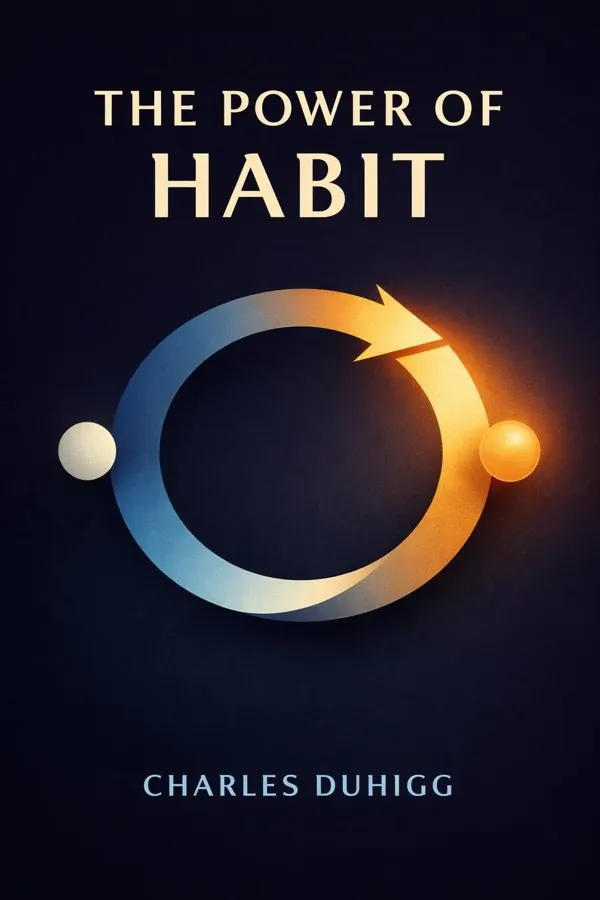
The Power of Habit
by Charles Duhigg
Why do some people effortlessly stick to exercise, save money, and build productive routines while others stay trapped in cycles they desperately want to change? In The Power of Habit, Charles Duhigg argues that the answer lies not mainly in willpower or motivation, but in the hidden patterns that shape behavior every day. Drawing on neuroscience, psychology, behavioral economics, and investigative journalism, he shows that habits govern much of individual life, organizational performance, and even social movements. Duhigg’s central insight is both simple and profound: habits operate through a loop of cue, routine, and reward. Once this loop is understood, behavior becomes less mysterious and more manageable. The book moves far beyond theory, using vivid stories about patients with memory loss, Olympic swimmers, corporate turnarounds, consumer marketing, and civil rights activism to show how habits are formed, reinforced, and changed. What makes this book matter is its practicality. It does not promise instant transformation, but it does offer a framework for lasting change. As a Pulitzer Prize-winning journalist, Duhigg brings credibility, clarity, and storytelling skill to a subject that affects health, work, leadership, relationships, and personal growth.
Key Takeaways
- 1The Habit Loop Shapes Daily Life — Much of what feels like conscious choice is actually automatic behavior running on a hidden script. Duhigg calls this sc…
- 2Change Happens Through Replacement, Not Erasure — People often fail to change because they try to destroy habits outright, when the more effective strategy is to replace …
- 3Cravings Are the Engine of Habits — A habit becomes powerful not when a reward arrives, but when the brain starts expecting it. Duhigg shows that craving si…
 10 min read
The Comfort Crisis
by Michael Easter
Modern life is engineered to make us safe, entertained, fed, and comfortable at nearly every moment. Yet Michael Easter argues that this endless convenience has created an unexpected problem: many of us feel anxious, restless, physically weak, mentally scattered, and strangely unfulfilled. In The Comfort Crisis, Easter investigates why abundance and ease do not automatically lead to happiness—and why deliberate discomfort may be one of the missing ingredients in a meaningful life. Blending evolutionary science, psychology, anthropology, and immersive reporting, he explores how human beings evolved in conditions that demanded effort, uncertainty, and resilience, then shows what happens when those challenges disappear. A professor, journalist, and longtime researcher of performance and well-being, Easter grounds his argument in both evidence and experience. The book is anchored by his demanding hunting trip in the Alaskan wilderness, where exposure, hunger, fatigue, and solitude become a living laboratory for understanding the modern self. The Comfort Crisis matters because it offers more than a diagnosis of contemporary malaise. It provides a practical philosophy: if we want to think better, feel stronger, and live more fully, we may need to stop avoiding hardship and start using it wisely.
Key Takeaways
- 1Comfort Can Quietly Become a Trap — One of the book’s central insights is unsettling: the very comforts we work so hard to create can slowly undermine our h…
- 2Deliberate Discomfort Builds Real Resilience — Resilience is not something we can download from a podcast or absorb from motivational quotes; it is built by repeated e…
- 3Modern Abundance Can Create Hidden Hunger — A striking paradox in The Comfort Crisis is that abundance often leaves us feeling unsatisfied. We have more choices in …
Want the full summary?
Get instant access to this book summary and 100K+ more with Fizz Moment.
Get Free SummaryAvailable on App Store • Free to download
About This List
Some books are even better when you hear them. These audiobooks combine great content with incredible narration for an unforgettable listening experience.
This list features 20 carefully selected books. With FizzRead, you can read AI-powered summaries of each book in just 15 minutes. Get the key takeaways and start applying the insights immediately.
Ready to start reading?
Get instant access to all 20 book summaries and 100K+ more with FizzRead.