
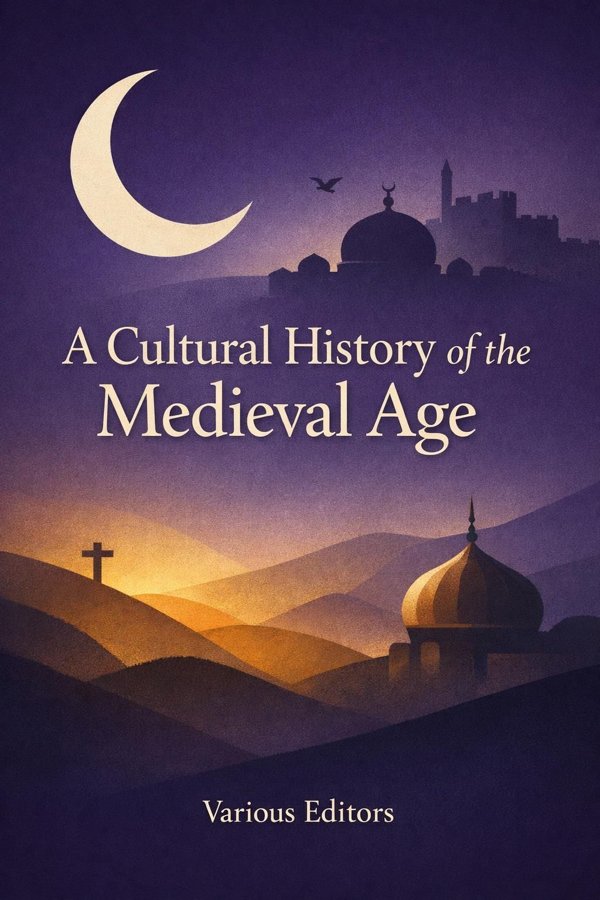
A Cultural History of the Medieval Age: Summary & Key Insights
 10 min9 chaptersAudio available
What Is A Cultural History of the Medieval Age About?
A Cultural History of the Medieval Age by Various Editors is a civilization book spanning 9 pages. This volume explores the cultural, intellectual, and social developments of the medieval world, spanning roughly from the 5th to the 15th century. It examines themes such as religion, art, politics, and daily life across Europe, the Middle East, and Asia, offering a comparative perspective on how medieval societies understood and expressed their worldviews.
This FizzRead summary covers all 9 key chapters of A Cultural History of the Medieval Age in approximately 10 minutes, distilling the most important ideas, arguments, and takeaways from Various Editors's work. Also available as an audio summary and Key Quotes Podcast.
A Cultural History of the Medieval Age
This volume explores the cultural, intellectual, and social developments of the medieval world, spanning roughly from the 5th to the 15th century. It examines themes such as religion, art, politics, and daily life across Europe, the Middle East, and Asia, offering a comparative perspective on how medieval societies understood and expressed their worldviews.
Who Should Read A Cultural History of the Medieval Age?
This book is perfect for anyone interested in civilization and looking to gain actionable insights in a short read. Whether you're a student, professional, or lifelong learner, the key ideas from A Cultural History of the Medieval Age by Various Editors will help you think differently.
- ✓Readers who enjoy civilization and want practical takeaways
- ✓Professionals looking to apply new ideas to their work and life
- ✓Anyone who wants the core insights of A Cultural History of the Medieval Age in just 10 minutes
Want the full summary?
Get instant access to this book summary and 100K+ more with Fizz Moment.
Get Free SummaryAvailable on App Store • Free to download
Key Chapters
In the medieval world, power was not an abstract concept—it was the living skeleton upon which societies organized their political, spiritual, and economic existence. Authority flowed from divine sanction and material control, shaping every layer of human interaction.
The feudal system was Europe’s prevailing model, born of necessity after the fragmentation of imperial order. Lords and vassals entered into bonds of mutual protection and obligation: land—the fief—was exchanged for loyalty and service. This web of relationships created social cohesion but also entrenched hierarchy. The king’s legitimacy derived not from constitutional fiat, but from divine anointment; the clergy and nobility coexisted in intertwined dependence, where political and spiritual authority complemented and contested each other.
East of Europe, in the Byzantine Empire and Islamic caliphates, structures of authority took more centralized forms. Byzantine emperors ruled as God’s vicegerents, weaving theology into imperial administration. Islamic societies, particularly under the Abbasid Caliphate, fused religious authority with bureaucratic sophistication, developing administrative systems that retrospectively outshone many Western contemporaries in organization and intellectual dynamism.
Everywhere, legitimate rule demanded ritual. Coronations, investitures, papal bulls, and oaths of fealty—all expressed power as sacred performance. To understand medieval governance, one must see it as theater: authority was enacted, witnessed, and symbolically reaffirmed. This understanding of power still shapes our notions of sovereignty and representation, where public ritual remains essential in affirming legitimacy.
Faith was the soul of the medieval world. Christianity in Europe, Islam in the Middle East, Buddhism and other traditions across Asia—all defined human destiny and moral purpose. The medieval mind perceived the divine not as distant, but as intimately woven into the daily fabric of life.
Christianity dominated Western consciousness. The Church, from its monastic communities to the papacy, became both custodian of spiritual truth and arbiter of worldly authority. Cathedrals rose as sermons in stone, embodying theology through choreography of light, proportion, and pilgrimage. The monastic ideal reflected a yearning for purity and discipline, yet monasteries also became dynamic centers of learning, preserving texts and cultivating scholarship.
In Islamic civilization, religion fostered unity across continents. The Qur’an and the Hadith not only provided spiritual guidance but informed law, art, and governance. Islam’s intellectual openness led to the creation of magnificent institutions—Baghdad’s House of Wisdom among them—where philosophy, medicine, and astronomy thrived, integrally balancing faith with reason.
For all medieval cultures, religion was identity. Pilgrimages, relics, and rituals connected communities across vast distances. Yet belief also engendered conflict: crusades, jihads, and sectarian divisions remind us that the sacred could be used to justify conquest as readily as compassion. Still, in its totality, medieval religiosity embodied humanity’s profound quest for meaning—a quest as vital today as ever.
+ 7 more chapters — available in the FizzRead app
All Chapters in A Cultural History of the Medieval Age
About the Author
The volume is edited by a team of historians and cultural scholars specializing in medieval studies, contributing essays that reflect the latest research in the field.
Get This Summary in Your Preferred Format
Read or listen to the A Cultural History of the Medieval Age summary by Various Editors anytime, anywhere. FizzRead offers multiple formats so you can learn on your terms — all free.
Available formats: App · Audio · PDF · EPUB — All included free with FizzRead
Download A Cultural History of the Medieval Age PDF and EPUB Summary
Key Quotes from A Cultural History of the Medieval Age
“In the medieval world, power was not an abstract concept—it was the living skeleton upon which societies organized their political, spiritual, and economic existence.”
“Faith was the soul of the medieval world.”
Frequently Asked Questions about A Cultural History of the Medieval Age
A Cultural History of the Medieval Age by Various Editors is a civilization book that explores key ideas across 9 chapters. This volume explores the cultural, intellectual, and social developments of the medieval world, spanning roughly from the 5th to the 15th century. It examines themes such as religion, art, politics, and daily life across Europe, the Middle East, and Asia, offering a comparative perspective on how medieval societies understood and expressed their worldviews.
More by Various Editors



You Might Also Like

The Structure of Scientific Revolutions
Thomas S. Kuhn
10 min
Genius
Harold Bloom
10 min
A History of God: The 4,000-Year Quest of Judaism, Christianity and Islam
Karen Armstrong
10 min
A History of the World in 10½ Chapters
Julian Barnes
10 min
A Short History of Progress
Ronald Wright
10 min
A Study of History
Arnold J. Toynbee
10 minFeatured In
Browse by Category
Ready to read A Cultural History of the Medieval Age?
Get the full summary and 100K+ more books with Fizz Moment.