
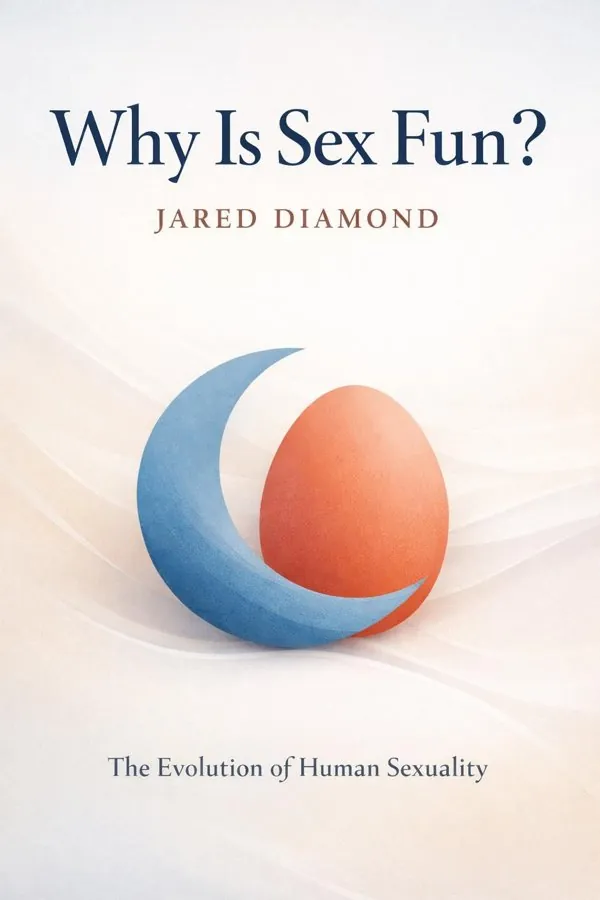
Why Is Sex Fun?: The Evolution of Human Sexuality: Summary & Key Insights
 10 min9 chaptersAudio available
Key Takeaways from Why Is Sex Fun?: The Evolution of Human Sexuality
One of the book’s most provocative insights is that human sexuality looks strange once we stop comparing ourselves only to other humans.
Few features of human reproduction are as quietly revolutionary as the fact that women usually do not advertise ovulation openly.
Human beings are unusual in being sexually receptive far beyond the narrow moments when conception is possible.
Human babies are born remarkably helpless, and that vulnerability is one of the keys to understanding human sexual evolution.
In much of the animal kingdom, fathers contribute little beyond their genes.
What Is Why Is Sex Fun?: The Evolution of Human Sexuality About?
Why Is Sex Fun?: The Evolution of Human Sexuality by Jared Diamond is a life_science book spanning 9 pages. Why do humans have sex throughout the month instead of only during fertile periods? Why do women outlive their reproductive years by decades? And why do human relationships so often involve love, jealousy, commitment, secrecy, and social rules far more complex than those of other animals? In Why Is Sex Fun?: The Evolution of Human Sexuality, Jared Diamond tackles these questions by comparing human sexual behavior with that of our closest primate relatives and the wider animal world. His central claim is that many features we take for granted in human sex are, from an evolutionary perspective, surprisingly unusual. Diamond brings unusual authority to the subject. Trained in physiology and evolutionary biology and celebrated for his interdisciplinary writing, he combines scientific evidence with clear storytelling and provocative questions. Rather than treating sex as merely personal or cultural, he shows how biology, reproduction, parenting, and social organization intersect. The result is a compact but idea-rich exploration of why human sexuality evolved in such distinctive ways—and why understanding it can illuminate family life, gender roles, cooperation, aging, and the origins of human society itself.
This FizzRead summary covers all 9 key chapters of Why Is Sex Fun?: The Evolution of Human Sexuality in approximately 10 minutes, distilling the most important ideas, arguments, and takeaways from Jared Diamond's work. Also available as an audio summary and Key Quotes Podcast.
Why Is Sex Fun?: The Evolution of Human Sexuality
Why do humans have sex throughout the month instead of only during fertile periods? Why do women outlive their reproductive years by decades? And why do human relationships so often involve love, jealousy, commitment, secrecy, and social rules far more complex than those of other animals? In Why Is Sex Fun?: The Evolution of Human Sexuality, Jared Diamond tackles these questions by comparing human sexual behavior with that of our closest primate relatives and the wider animal world. His central claim is that many features we take for granted in human sex are, from an evolutionary perspective, surprisingly unusual.
Diamond brings unusual authority to the subject. Trained in physiology and evolutionary biology and celebrated for his interdisciplinary writing, he combines scientific evidence with clear storytelling and provocative questions. Rather than treating sex as merely personal or cultural, he shows how biology, reproduction, parenting, and social organization intersect. The result is a compact but idea-rich exploration of why human sexuality evolved in such distinctive ways—and why understanding it can illuminate family life, gender roles, cooperation, aging, and the origins of human society itself.
Who Should Read Why Is Sex Fun?: The Evolution of Human Sexuality?
This book is perfect for anyone interested in life_science and looking to gain actionable insights in a short read. Whether you're a student, professional, or lifelong learner, the key ideas from Why Is Sex Fun?: The Evolution of Human Sexuality by Jared Diamond will help you think differently.
- ✓Readers who enjoy life_science and want practical takeaways
- ✓Professionals looking to apply new ideas to their work and life
- ✓Anyone who wants the core insights of Why Is Sex Fun?: The Evolution of Human Sexuality in just 10 minutes
Want the full summary?
Get instant access to this book summary and 100K+ more with Fizz Moment.
Get Free SummaryAvailable on App Store • Free to download
Key Chapters
One of the book’s most provocative insights is that human sexuality looks strange once we stop comparing ourselves only to other humans. In most mammals, sex is tightly linked to reproduction: females enter heat, males respond, mating occurs, and sexual activity largely fades outside fertile windows. Humans break this pattern in several ways. We have sex at any time of the month, in private rather than as a public display, often within long-term pair bonds, and for reasons that include pleasure, reassurance, emotional connection, and social stability as much as conception.
Diamond’s method is comparative. By looking at primates, birds, and mammals more broadly, he highlights how unusual our species is. Our closest ape relatives do not mirror our exact patterns of concealed fertility, prolonged pair bonding, extensive paternal care, and post-reproductive female lifespan. That does not mean humans are outside nature; it means our evolutionary path selected for a different reproductive strategy.
This perspective matters because it reframes familiar debates. Questions about marriage, jealousy, sexual desire, or parental roles are not just cultural arguments; they are also shaped by ancient biological pressures. For example, if offspring require long-term care, a species may benefit from stronger social bonds between parents. If sex can help maintain those bonds, then sexual behavior may evolve functions beyond immediate fertilization.
A practical application is to become more cautious about simplistic claims such as “humans are naturally promiscuous” or “humans are naturally monogamous.” Diamond shows that our sexuality includes multiple, sometimes competing evolutionary tendencies. The actionable takeaway: when thinking about modern relationships, start from the fact that human sexuality is complex by design, not a deviation from some simpler natural norm.
Few features of human reproduction are as quietly revolutionary as the fact that women usually do not advertise ovulation openly. In many mammals, fertility is signaled by visible changes in behavior, scent, or appearance, allowing males to know when conception is most likely. Human females, by contrast, generally conceal the exact timing of ovulation. Diamond argues that this trait may have transformed the dynamics of mating, courtship, and family life.
If a male cannot identify the precise fertile period, then staying close to a partner over time becomes more advantageous than appearing only during a brief reproductive window. Concealed ovulation may therefore encourage continuous sexual association, strengthen pair bonds, and increase the likelihood of male investment in offspring. It also shifts sex away from being a purely seasonal or opportunistic act and toward being a recurring feature of social life.
This idea connects biology to everyday human behavior. Romantic attachment, repeated intimacy, and the expectation of ongoing partnership may have roots not only in culture but also in the evolutionary problem of uncertain fertility. Concealed ovulation can also intensify paternity uncertainty, which in turn may help explain human tendencies toward jealousy, mate guarding, and social rules around fidelity.
In modern life, this insight can deepen our understanding of why sexual relationships often carry emotional and relational weight beyond reproduction. Sex is not merely a reproductive event; it can function as a mechanism for reassurance, alliance, and continuity. The actionable takeaway: view intimacy as part of a broader relationship system shaped by trust, investment, and long-term cooperation, not just as a moment linked to conception.
Human babies are born remarkably helpless, and that vulnerability is one of the keys to understanding human sexual evolution. Diamond argues that because our offspring require prolonged feeding, protection, teaching, and supervision, natural selection favored arrangements that increased the chances of sustained care. One such arrangement is pair bonding: a relatively stable relationship in which male and female cooperate over time.
Unlike many species whose young mature quickly, humans must invest years in each child before that child can survive independently. This creates a powerful incentive for adults to remain linked beyond the act of conception. Pair bonding may have improved offspring survival by keeping a father nearby to provide food, defense, and social support while the mother handled pregnancy, nursing, and much of early care. The result is not perfect monogamy in every case, but an evolutionary push toward longer-term cooperation than we see in many mammals.
Diamond does not romanticize this process. Pair bonding can coexist with conflict, infidelity, competition, and changing social systems. But the broader pattern helps explain why human relationships tend to carry expectations of commitment and shared responsibility. Marriage and family structures vary across cultures, yet many are built around the practical challenge of raising expensive offspring.
In everyday life, this idea reminds us that relationships are not only private emotional arrangements; they are also cooperative systems. Parenting, finances, protection, planning, and emotional labor all matter. The actionable takeaway: if you want to understand the pressures on human partnerships, look at the demands of child-rearing and shared survival, not just ideals of romance.
In much of the animal kingdom, fathers contribute little beyond their genes. Human males are different. Although the degree of involvement varies across individuals and cultures, men often provide food, protection, teaching, social status, and direct care to children. Diamond treats this not as a trivial detail but as one of the defining features of human reproductive strategy.
Why would male investment evolve? The answer lies in the extraordinary cost of raising human children. Large brains, long childhoods, and dependence on learning make each offspring an extended project. If paternal help increases a child’s survival chances, then natural selection can favor male behaviors that support mates and offspring. This helps explain why human males often compete not only for mating opportunities but also for social standing, resource acquisition, and traits associated with being a reliable partner.
This perspective also clarifies why paternity certainty matters in many societies. If males are to invest heavily, they need some confidence that the children they support are their own. From this logic can emerge jealousy, mate guarding, and social norms around sexual exclusivity. These behaviors may be uncomfortable to discuss, but Diamond includes them because they reveal the strategic pressures built into human family life.
A practical lesson follows: parental roles are not simply cultural scripts imposed on blank biological material. Biology creates incentives, while culture organizes them in different ways. The actionable takeaway: when evaluating family systems or relationship expectations, ask how they encourage or weaken long-term parental investment, because that investment has been central to human success.
At first glance, menopause seems biologically puzzling. If evolution rewards reproduction, why would women stop reproducing long before the end of life? Diamond explores this apparent paradox and argues that menopause may be adaptive rather than accidental. Instead of trying to maximize the number of births at all ages, natural selection may favor strategies that maximize the survival of existing children and grandchildren.
Human childbirth is risky, and the costs rise with age. At the same time, older women possess experience, social knowledge, and the ability to contribute resources and care. If continuing reproduction late in life endangers both mother and dependent children, then stopping reproduction can be beneficial. Post-reproductive women can redirect effort toward helping descendants already alive. This idea aligns with the broader “grandmother” logic: survival and success may depend not only on giving birth but also on supporting kin.
The importance of this argument extends beyond biology. It challenges the narrow assumption that a life’s evolutionary value ends with direct fertility. In humans, caregiving, teaching, food sharing, conflict mediation, and social memory are all powerful contributions. Menopause thus becomes a clue to the cooperative, multigenerational nature of human society.
In modern terms, the concept invites greater appreciation for older adults’ roles in families and communities. Their value is not secondary to reproduction; it may be one reason our species flourished. The actionable takeaway: recognize that human success has always depended on intergenerational support, and treat post-reproductive life as a vital stage of contribution rather than decline.
If sex were only about conception, human physiology would be unnecessarily elaborate. Diamond argues that sexual pleasure itself likely has an evolutionary function. By making sex rewarding, evolution encourages repeated intimacy, and repeated intimacy can help maintain social bonds that support cooperative parenting and stable partnerships.
Pleasure changes behavior. A rewarding activity is repeated even when reproduction is not immediately possible, which is exactly what we observe in humans. This helps explain why sex occurs during infertile periods, during pregnancy, or long after reproductive goals have been met. The emotional side of sexuality—desire, attachment, tenderness, excitement—may therefore be part of the mechanism that keeps partners connected over time.
This does not mean every sexual experience is harmonious or that pleasure alone guarantees stable relationships. But it does mean sexuality cannot be understood through reproduction alone. Human intimacy is linked to brain chemistry, trust, vulnerability, and emotional signaling. A couple may use sex to reconnect after conflict, express affection during stress, or maintain a sense of exclusivity and closeness. These outcomes matter in a species where cooperation between adults affects children’s survival and social stability.
For readers today, this idea offers a useful correction to overly mechanical views of relationships. Emotional and physical intimacy are often intertwined, and neglecting one can affect the other. The actionable takeaway: understand pleasure not as a trivial add-on to reproduction, but as part of the evolved glue that can strengthen commitment, communication, and mutual care.
A powerful theme running through Diamond’s book is that human sexuality is never purely biological and never purely cultural. Biology sets the stage by creating reproductive incentives, differences in parental costs, and tendencies toward bonding or competition. Culture then shapes how those tendencies are expressed through marriage customs, moral rules, inheritance systems, gender expectations, and sexual norms.
This interaction helps explain why human societies differ so much while still sharing recurring patterns. Some cultures emphasize strict monogamy, others permit polygyny, and still others tolerate a range of informal arrangements. Yet across this variation, common pressures reappear: paternity certainty, division of childcare, control of resources, status competition, and regulation of sexual access. Culture does not erase evolutionary pressures; it organizes responses to them.
This insight is practical because many modern debates become unproductive when framed as biology versus freedom, or instinct versus morality. Diamond suggests a more nuanced approach. For example, jealousy may have evolutionary roots, but societies decide whether that feeling is moderated through norms of communication, legal rules, or coercive control. Likewise, parental investment may be natural, but institutions such as childcare systems, workplaces, and family law affect how it is distributed.
A helpful application is to analyze social norms with two questions: what biological problem might this norm address, and what human cost might it impose? This prevents both naive naturalism and unrealistic social engineering. The actionable takeaway: when thinking about sex and gender, look for the ongoing dialogue between evolved tendencies and cultural design.
Many arguments about human sexuality become clearer when we compare ourselves with other species. Diamond repeatedly uses the animal world not to reduce humans to instinct, but to illuminate the evolutionary trade-offs behind our behavior. By asking why birds, monkeys, apes, and mammals differ in mating systems, parental care, and fertility signaling, he reveals the deeper logic of human contradictions.
For example, species with high parental cooperation often show more stable bonding. Species with obvious estrus have less need for continuous sexual interaction. Species whose offspring require little care can afford brief mating encounters and minimal paternal involvement. Humans occupy a distinctive position: our young are expensive, our fertility is concealed, our sexuality is extended, and our social life is unusually complex. These combined traits produce a system that includes both attachment and temptation, cooperation and conflict, intimacy and competition.
This comparative lens also keeps us humble. Traits that feel morally obvious or culturally inevitable may turn out to be contingent evolutionary solutions. It reminds us that human behavior is neither random nor perfectly fixed. We inherited a toolkit adapted to ancestral conditions, then built cultures on top of it.
In practical terms, animal comparison can sharpen critical thinking. Instead of assuming that current social arrangements are self-evident, ask what ecological or reproductive problem they may once have solved. The actionable takeaway: use comparison to think more clearly about human nature—our sexual behavior makes more sense when viewed as one evolutionary strategy among many, not as the default model of life.
All Chapters in Why Is Sex Fun?: The Evolution of Human Sexuality
About the Author
Jared Diamond is an American geographer, evolutionary thinker, and bestselling author known for explaining big questions about human life through an interdisciplinary lens. Trained in physiology and evolutionary biology, he has taught at the University of California, Los Angeles, and has written influential books that connect science, history, environment, and culture. His best-known works include Guns, Germs, and Steel, Collapse, and The Third Chimpanzee. Diamond’s writing is marked by clear explanation, broad comparative thinking, and a talent for making complex scientific ideas accessible to general readers. In Why Is Sex Fun?: The Evolution of Human Sexuality, he brings those strengths to the subject of human reproduction, showing how biology, behavior, and social organization evolved together to produce the distinctive sexual patterns of our species.
Get This Summary in Your Preferred Format
Read or listen to the Why Is Sex Fun?: The Evolution of Human Sexuality summary by Jared Diamond anytime, anywhere. FizzRead offers multiple formats so you can learn on your terms — all free.
Available formats: App · Audio · PDF · EPUB — All included free with FizzRead
Download Why Is Sex Fun?: The Evolution of Human Sexuality PDF and EPUB Summary
Key Quotes from Why Is Sex Fun?: The Evolution of Human Sexuality
“One of the book’s most provocative insights is that human sexuality looks strange once we stop comparing ourselves only to other humans.”
“Few features of human reproduction are as quietly revolutionary as the fact that women usually do not advertise ovulation openly.”
“Human beings are unusual in being sexually receptive far beyond the narrow moments when conception is possible.”
“Human babies are born remarkably helpless, and that vulnerability is one of the keys to understanding human sexual evolution.”
“In much of the animal kingdom, fathers contribute little beyond their genes.”
Frequently Asked Questions about Why Is Sex Fun?: The Evolution of Human Sexuality
Why Is Sex Fun?: The Evolution of Human Sexuality by Jared Diamond is a life_science book that explores key ideas across 9 chapters. Why do humans have sex throughout the month instead of only during fertile periods? Why do women outlive their reproductive years by decades? And why do human relationships so often involve love, jealousy, commitment, secrecy, and social rules far more complex than those of other animals? In Why Is Sex Fun?: The Evolution of Human Sexuality, Jared Diamond tackles these questions by comparing human sexual behavior with that of our closest primate relatives and the wider animal world. His central claim is that many features we take for granted in human sex are, from an evolutionary perspective, surprisingly unusual. Diamond brings unusual authority to the subject. Trained in physiology and evolutionary biology and celebrated for his interdisciplinary writing, he combines scientific evidence with clear storytelling and provocative questions. Rather than treating sex as merely personal or cultural, he shows how biology, reproduction, parenting, and social organization intersect. The result is a compact but idea-rich exploration of why human sexuality evolved in such distinctive ways—and why understanding it can illuminate family life, gender roles, cooperation, aging, and the origins of human society itself.
More by Jared Diamond
Guns Germs and Steel
Jared Diamond
10 min
Collapse: How Societies Choose to Fail or Succeed
Jared Diamond
10 min
The Third Chimpanzee: The Evolution and Future of the Human Animal
Jared Diamond
10 min
Guns, Germs, and Steel: The Fates of Human Societies
Jared Diamond
10 minYou Might Also Like
The Selfish Gene
Richard Dawkins
10 min
Awakenings
Oliver Sacks
10 min
Parasite Rex: Inside the Bizarre World of Nature's Most Dangerous Creatures
Carl Zimmer
10 min
The Atlas of Life on Earth
Various
10 min
The Book of Humans: The Story of How We Became Us
Adam Rutherford
10 min
The Horse
Wendy Williams
10 minBrowse by Category
Ready to read Why Is Sex Fun?: The Evolution of Human Sexuality?
Get the full summary and 100K+ more books with Fizz Moment.