

Jared Diamond Books
Jared Diamond is an American geographer, historian, and author known for his interdisciplinary research on human societies and the environment. He is a professor of geography at the University of California, Los Angeles (UCLA) and has received numerous awards, including the Pulitzer Prize for this book.
Known for: Guns Germs and Steel, Collapse: How Societies Choose to Fail or Succeed, Guns, Germs, and Steel: The Fates of Human Societies, The Third Chimpanzee: The Evolution and Future of the Human Animal, Upheaval: Turning Points for Nations in Crisis, Why Is Sex Fun?: The Evolution of Human Sexuality
Books by Jared Diamond
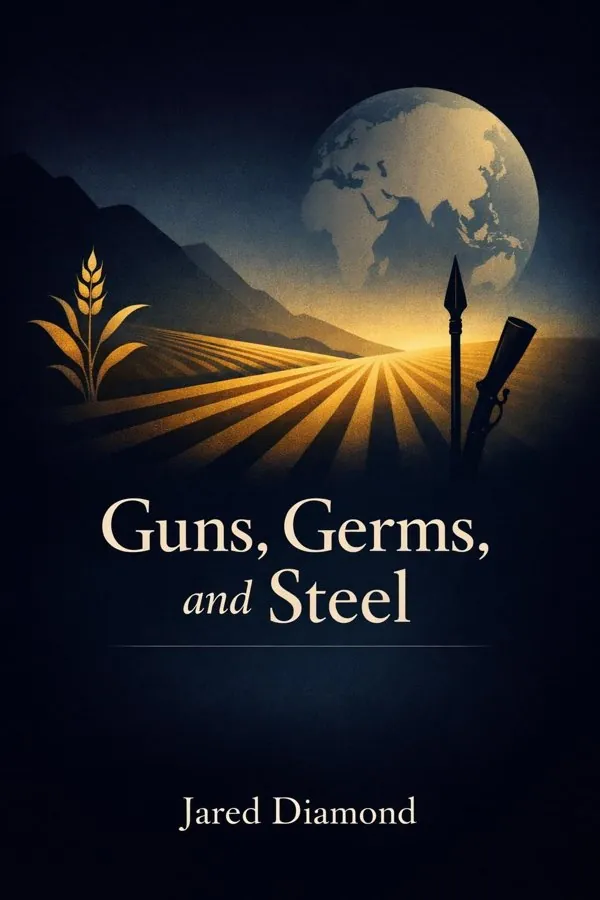
Guns Germs and Steel
Why did some societies develop writing, steel weapons, large empires, and ocean-crossing ships, while others did not? That deceptively simple question sits at the center of Guns, Germs, and Steel, one...
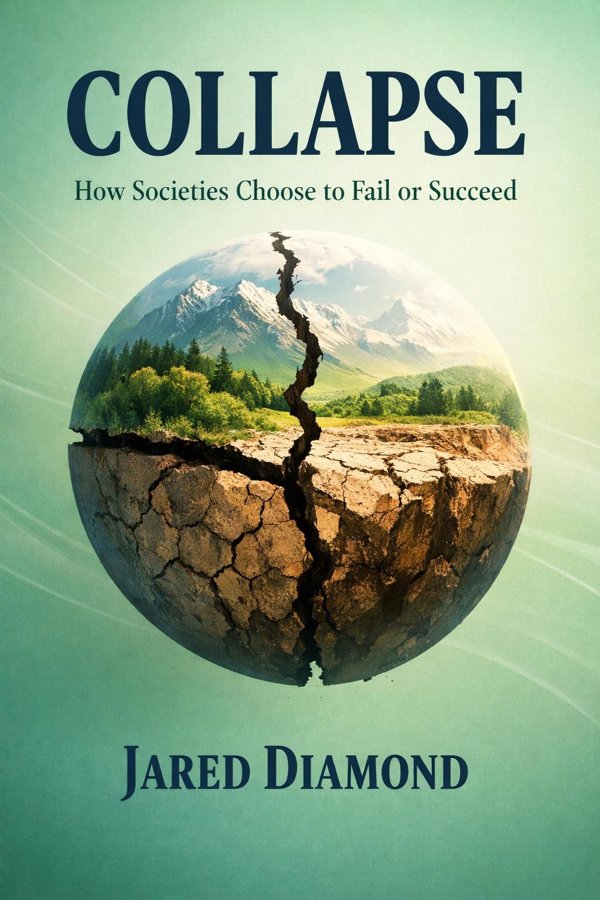
Collapse: How Societies Choose to Fail or Succeed
Collapse: How Societies Choose to Fail or Succeed is a comprehensive exploration of how past civilizations have collapsed due to environmental degradation, climate change, and poor political decisions...
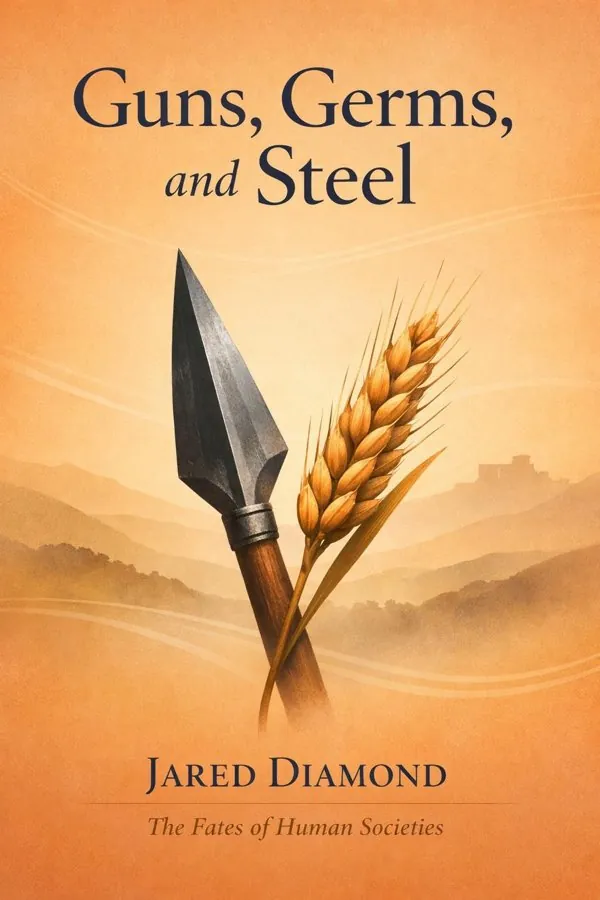
Guns, Germs, and Steel: The Fates of Human Societies
This book explores the factors that have shaped the development of human societies across the globe. Jared Diamond argues that environmental and geographical differences, rather than biological distin...

The Third Chimpanzee: The Evolution and Future of the Human Animal
What makes humans so extraordinary—and so dangerous? In The Third Chimpanzee, Jared Diamond tackles that question by starting with a humbling fact: genetically, we are astonishingly close to chimpanze...

Upheaval: Turning Points for Nations in Crisis
In 'Upheaval', Jared Diamond examines how nations and societies respond to crises, drawing parallels between personal psychological coping mechanisms and national strategies for survival and renewal. ...

Why Is Sex Fun?: The Evolution of Human Sexuality
Why do humans have sex throughout the month instead of only during fertile periods? Why do women outlive their reproductive years by decades? And why do human relationships so often involve love, jeal...
Key Insights from Jared Diamond
Yali’s Question
The book begins with a question that is both personal and world-historical. In New Guinea, a local leader named Yali asked Jared Diamond why white people had produced so much “cargo”—technology, manufactured goods, ships, tools, and systems of power—while New Guineans had produced comparatively litt...
From Guns Germs and Steel
Natural Experiments of History
To test his theory, Diamond looks for what he calls “natural experiments of history”—cases where related peoples ended up with very different societies because they lived in different environments. The Polynesian islands are one of his clearest examples. Settled by people with shared ancestry, langu...
From Guns Germs and Steel
The Evolution of Human Societies
Diamond places human history on a very long timeline. For most of our species’ existence, humans lived as hunter-gatherers, relying on mobility, local ecological knowledge, and flexible social organization. That way of life was not primitive in any simplistic sense; it was often adaptive, efficient,...
From Guns Germs and Steel
The Origins of Food Production
Why did agriculture appear early in some regions and late or not at all in others? Diamond argues that the answer lies less in human ingenuity than in what nature made available. Not all wild plants are suitable for domestication. The best early crops had traits such as large edible seeds, high nutr...
From Guns Germs and Steel
Geographic Determinants
Geography, in Diamond’s framework, is not just background scenery. It is an active force that channels the movement of crops, animals, technologies, and people. One of his most famous arguments concerns continental axes. Eurasia stretches largely east to west, which means many regions share similar ...
From Guns Germs and Steel
Food and Population
Food production transformed demographic reality. Hunter-gatherer societies often maintained lower population densities because mobility limited how much food could be stored and how many children could be supported at once. Farming changed that equation. Settled communities could produce more calori...
From Guns Germs and Steel
About Jared Diamond
Jared Diamond is an American geographer, historian, and author known for his interdisciplinary research on human societies and the environment. He is a professor of geography at the University of California, Los Angeles (UCLA) and has received numerous awards, including the Pulitzer Prize for this b...
Read more
Jared Diamond is an American geographer, historian, and author known for his interdisciplinary research on human societies and the environment. He is a professor of geography at the University of California, Los Angeles (UCLA) and has received numerous awards, including the Pulitzer Prize for this b...
Jared Diamond is an American geographer, historian, and author known for his interdisciplinary research on human societies and the environment. He is a professor of geography at the University of California, Los Angeles (UCLA) and has received numerous awards, including the Pulitzer Prize for this book.


Frequently Asked Questions
Jared Diamond is an American geographer, historian, and author known for his interdisciplinary research on human societies and the environment. He is a professor of geography at the University of California, Los Angeles (UCLA) and has received numerous awards, including the Pulitzer Prize for this book.
Read Jared Diamond's books in 15 minutes
Get AI-powered summaries with key insights from 6 books by Jared Diamond.