
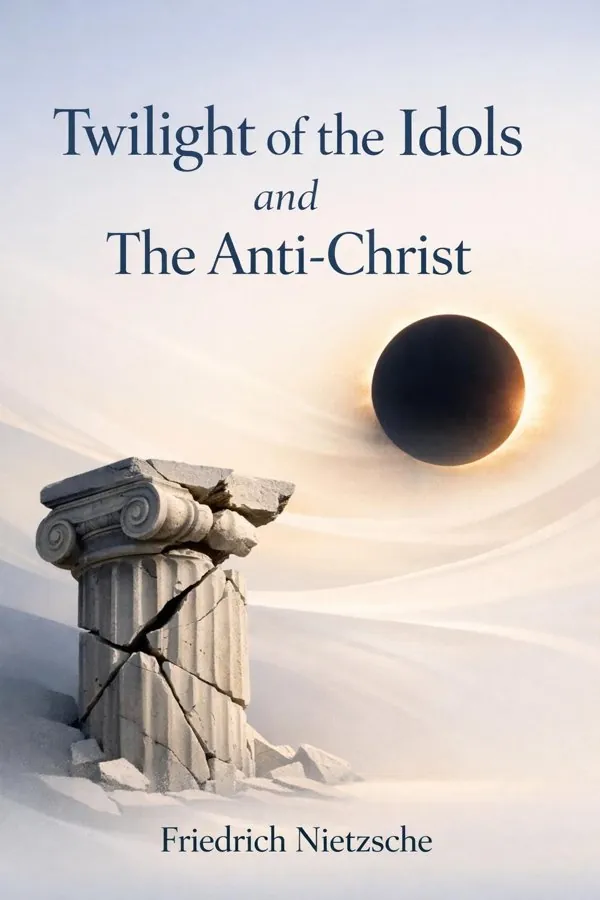
Twilight of the Idols and The Anti-Christ: Summary & Key Insights
 10 min3 chaptersAudio available
What Is Twilight of the Idols and The Anti-Christ About?
Twilight of the Idols and The Anti-Christ by Friedrich Nietzsche is a western_phil book spanning 3 pages. This volume brings together two of Friedrich Nietzsche’s most provocative late works. In 'Twilight of the Idols' (1888), Nietzsche offers a concise and incisive summary of his philosophy, attacking traditional morality, religion, and philosophy with wit and precision. 'The Anti-Christ' (also written in 1888) presents a radical critique of Christianity, which Nietzsche saw as a denial of life and strength. Together, these works mark the culmination of his mature thought and foreshadow his final creative period before his mental collapse.
This FizzRead summary covers all 3 key chapters of Twilight of the Idols and The Anti-Christ in approximately 10 minutes, distilling the most important ideas, arguments, and takeaways from Friedrich Nietzsche's work. Also available as an audio summary and Key Quotes Podcast.
Twilight of the Idols and The Anti-Christ
This volume brings together two of Friedrich Nietzsche’s most provocative late works. In 'Twilight of the Idols' (1888), Nietzsche offers a concise and incisive summary of his philosophy, attacking traditional morality, religion, and philosophy with wit and precision. 'The Anti-Christ' (also written in 1888) presents a radical critique of Christianity, which Nietzsche saw as a denial of life and strength. Together, these works mark the culmination of his mature thought and foreshadow his final creative period before his mental collapse.
Who Should Read Twilight of the Idols and The Anti-Christ?
This book is perfect for anyone interested in western_phil and looking to gain actionable insights in a short read. Whether you're a student, professional, or lifelong learner, the key ideas from Twilight of the Idols and The Anti-Christ by Friedrich Nietzsche will help you think differently.
- ✓Readers who enjoy western_phil and want practical takeaways
- ✓Professionals looking to apply new ideas to their work and life
- ✓Anyone who wants the core insights of Twilight of the Idols and The Anti-Christ in just 10 minutes
Want the full summary?
Get instant access to this book summary and 100K+ more with Fizz Moment.
Get Free SummaryAvailable on App Store • Free to download
Key Chapters
When Nietzsche first asked where the notions of “good” and “evil” come from, he discovered something unsettling: people take these concepts for granted, as if their meanings were eternal. Yet if we look back into the distant past, “good” once meant something entirely different. For the ancient nobility, “good” spoke of vitality—strength, courage, health, and abundance—while “bad” did not mean “evil,” but rather lowly, common, or weak.
In aristocratic societies, noble morality arose from an affirmation of life, a celebration of one’s own being. The noble said “yes” to themselves and, by contrast, “no” to the weak. Their values were born not of hatred or pity but from the overflowing energy of life itself. Then came a turning point: the rise of the priestly class, who, lacking physical power, turned to cleverness and resentment. Unable to triumph through strength, they created an entirely new moral system out of *ressentiment*—a deep, festering revenge of the powerless.
From this inversion came slave morality. Strength became evil, weakness became good. The poor and suffering, incapable of acting outwardly, turned their powerlessness inward, weaving a moral world that glorified their own condition. Their revenge was intellectual: a revaluation of values that reversed the very meaning of “good” and “evil,” making the strong fundamentally guilty.
Through psychological insight, the priests accomplished a radical transformation—condemning proud warriors as sinful and sanctifying the meek for their passivity. Christianity inherited this moral inversion in full: it declared blessed the poor in spirit, saw pain as redemptive, and demanded that strength apologize for itself. Thus began a history of moral illness—a drama in which life turned against itself.
To see this clearly is to recognize that morality is not a universal truth but the outcome of conflict. Every value we hold today descends from ancient passions: the will to dominate, to survive, to impose meaning upon suffering. Aristocratic morality is life’s direct affirmation; slave morality is life turned inward, preserving itself through denial. Both forces still contend within us. Only by tracing their genealogy can we know, when we call something “good,” whose voice we are echoing.
+ 1 more chapters — available in the FizzRead app
All Chapters in Twilight of the Idols and The Anti-Christ
About the Author
Friedrich Nietzsche (1844–1900) was a German philosopher, philologist, and writer whose ideas profoundly influenced modern thought. His works, including 'Thus Spoke Zarathustra,' 'Beyond Good and Evil,' and 'On the Genealogy of Morality,' reshaped philosophy, literature, and psychology.
Get This Summary in Your Preferred Format
Read or listen to the Twilight of the Idols and The Anti-Christ summary by Friedrich Nietzsche anytime, anywhere. FizzRead offers multiple formats so you can learn on your terms — all free.
Available formats: App · Audio · PDF · EPUB — All included free with FizzRead
Download Twilight of the Idols and The Anti-Christ PDF and EPUB Summary
Key Quotes from Twilight of the Idols and The Anti-Christ
“When Nietzsche first asked where the notions of “good” and “evil” come from, he discovered something unsettling: people take these concepts for granted, as if their meanings were eternal.”
“When the priests overturned the aristocratic order of values, humanity began to internalize its aggression.”
Frequently Asked Questions about Twilight of the Idols and The Anti-Christ
Twilight of the Idols and The Anti-Christ by Friedrich Nietzsche is a western_phil book that explores key ideas across 3 chapters. This volume brings together two of Friedrich Nietzsche’s most provocative late works. In 'Twilight of the Idols' (1888), Nietzsche offers a concise and incisive summary of his philosophy, attacking traditional morality, religion, and philosophy with wit and precision. 'The Anti-Christ' (also written in 1888) presents a radical critique of Christianity, which Nietzsche saw as a denial of life and strength. Together, these works mark the culmination of his mature thought and foreshadow his final creative period before his mental collapse.
More by Friedrich Nietzsche

You Might Also Like
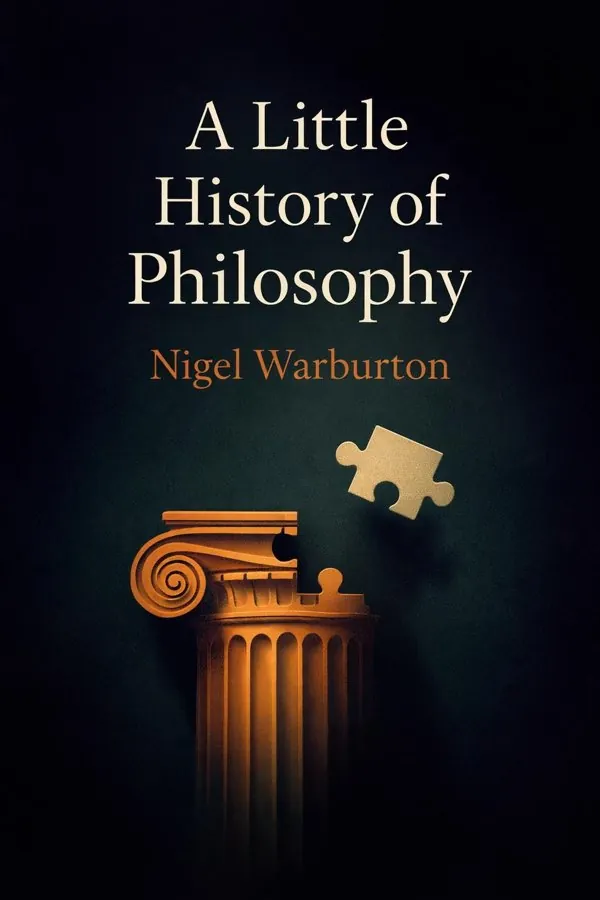
A Little History of Philosophy
Nigel Warburton
10 min
Areopagitica
John Milton
10 min
How To Think Like A Philosopher: Essential Principles For Clear Thinking
Peter Cave
10 min
Language, Truth and Logic
A. J. Ayer
10 min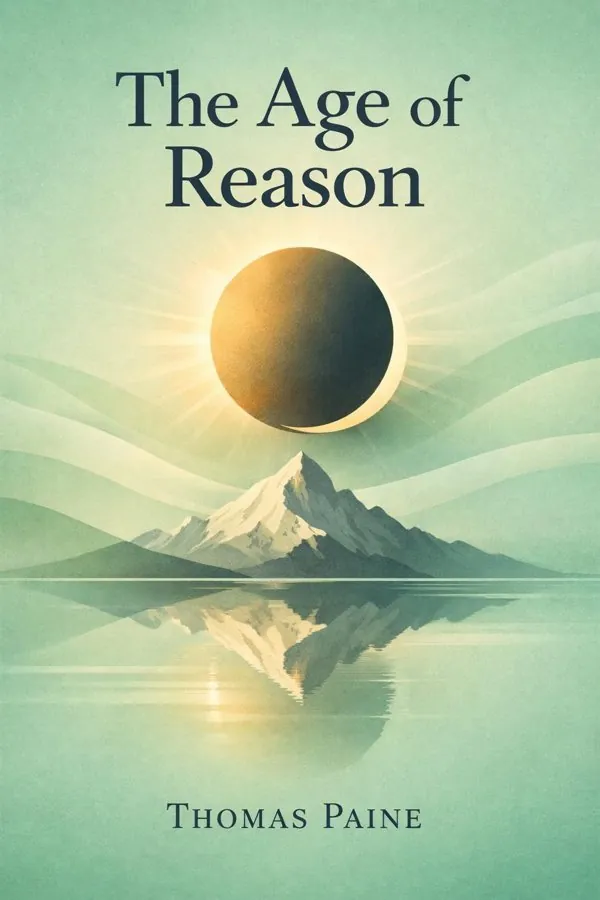
The Age of Reason
Thomas Paine
10 min
The Essays
Michel De Montaigne
10 minBrowse by Category
Ready to read Twilight of the Idols and The Anti-Christ?
Get the full summary and 100K+ more books with Fizz Moment.