
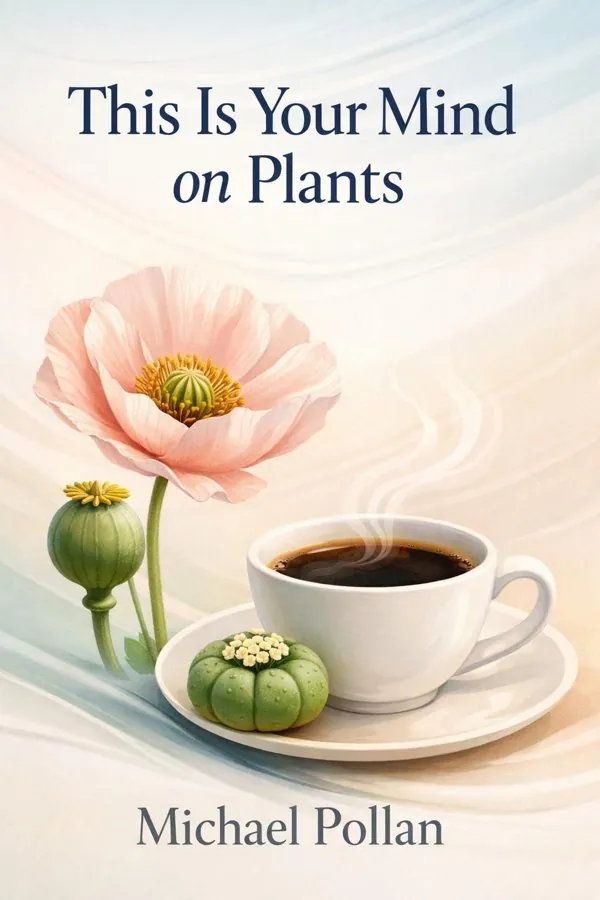
This Is Your Mind on Plants: Summary & Key Insights
 10 min4 chaptersAudio available
What Is This Is Your Mind on Plants About?
This Is Your Mind on Plants by Michael Pollan is a popular_sci book spanning 4 pages. In this book, Michael Pollan explores the complex relationship between humans and psychoactive plants—opium, caffeine, and mescaline. Through historical, scientific, and personal perspectives, he examines how these substances have shaped culture, consciousness, and the boundaries of legality and morality.
This FizzRead summary covers all 4 key chapters of This Is Your Mind on Plants in approximately 10 minutes, distilling the most important ideas, arguments, and takeaways from Michael Pollan's work. Also available as an audio summary and Key Quotes Podcast.
This Is Your Mind on Plants
In this book, Michael Pollan explores the complex relationship between humans and psychoactive plants—opium, caffeine, and mescaline. Through historical, scientific, and personal perspectives, he examines how these substances have shaped culture, consciousness, and the boundaries of legality and morality.
Who Should Read This Is Your Mind on Plants?
This book is perfect for anyone interested in popular_sci and looking to gain actionable insights in a short read. Whether you're a student, professional, or lifelong learner, the key ideas from This Is Your Mind on Plants by Michael Pollan will help you think differently.
- ✓Readers who enjoy popular_sci and want practical takeaways
- ✓Professionals looking to apply new ideas to their work and life
- ✓Anyone who wants the core insights of This Is Your Mind on Plants in just 10 minutes
Want the full summary?
Get instant access to this book summary and 100K+ more with Fizz Moment.
Get Free SummaryAvailable on App Store • Free to download
Key Chapters
In the first section, I recount a personal experiment that began in my own garden. I planted a few Papaver somniferum poppies, naively at first, curious about their beauty and their ancient association with pain relief. Soon, however, I discovered that this seemingly innocent act teetered on the edge of illegality. Simply growing and even researching these plants could be construed as criminal. The more I learned about opium—its chemistry, its role as the source of powerful analgesics like morphine and heroin—the more tangled the web became.
My gardening story becomes a lens through which I examine the broader historical and moral paradoxes around opium. For millennia, the poppy has been a medicine and a muse—its latex sap both a balm for unbearable pain and a pathway to addiction. Ancient Sumerians called it the “plant of joy,” while generations of poets and physicians have alternately praised and condemned it. In the nineteenth century, opium was sold openly in pharmacies, fueling both medical relief and dependency. Only with the dawn of modern prohibitionism did the line between legitimate medicine and criminal substance harden.
As I navigated this terrain—debating whether to process the poppies, documenting their growth, and ultimately fearing legal reprisal—I felt in my own body the psychological effects of prohibition. It wasn’t the drug that changed my consciousness, but the knowledge of what might happen if I simply learned too much. Here lies opium’s paradox: it forces us to confront how societies construct moral hierarchies around pain, pleasure, and the right to alter our mental states. In the end, I chose not to cross the line from gardening to chemistry, but the lessons lingered. The poppy had revealed not only the fragility of our bodies, but also the fragility of our freedom to explore the boundaries of human experience.
Of all psychoactive substances, caffeine may be the most invisible precisely because it is so ubiquitous. We hardly consider the morning coffee or the afternoon tea a drug ritual, yet caffeine’s influence on our collective consciousness is profound. In this section, I embark on an exploration of how caffeine became the defining stimulant of modernity—one that shaped not only our daily rhythms but our economies, our empires, and even our concept of productivity.
The story of caffeine begins in the highlands of Ethiopia and the forests of China, where humans first encountered coffee and tea plants. Over centuries, these infusions traveled along trade routes, transforming from local curiosities into global institutions. By the time coffeehouses flourished in London and Paris, caffeine was fueling not sleep but reason, conversation, commerce, and the dawn of the Enlightenment. It displaced alcohol as the social drink of choice; instead of dulling minds, it sharpened them, aligning perfectly with the needs of an industrializing world that prized efficiency and alertness.
To understand this relationship in my own body, I decided to quit caffeine for several months. The result was shocking. My mornings became foggy, my concentration frayed, and my writing grew sluggish. When I finally reintroduced coffee, the elation and clarity felt almost psychedelic. This experiment revealed how completely our daily performance is scaffolded by this legal stimulant—and how little we notice. Caffeine does not so much distort consciousness as fine-tune it to society’s expectations of productivity.
Culturally, caffeine represents our uneasy alliance with nature’s pharmacology. We accept it because it serves our economic machine; indeed, our civilization might be unimaginable without it. Yet in accepting caffeine unquestioningly, we may have lost awareness of how dependent we are upon it. In exploring caffeine’s chemistry and commerce, I wanted to show how this humble molecule became a cornerstone of capitalism itself—and to remind readers that the most normalized drug is sometimes the most powerful precisely because no one calls it one.
+ 2 more chapters — available in the FizzRead app
All Chapters in This Is Your Mind on Plants
About the Author
Michael Pollan is an American author, journalist, and professor known for his works on food, nature, and culture. His books, including 'The Omnivore’s Dilemma' and 'How to Change Your Mind', have influenced public understanding of the connections between humans and the natural world.
Get This Summary in Your Preferred Format
Read or listen to the This Is Your Mind on Plants summary by Michael Pollan anytime, anywhere. FizzRead offers multiple formats so you can learn on your terms — all free.
Available formats: App · Audio · PDF · EPUB — All included free with FizzRead
Download This Is Your Mind on Plants PDF and EPUB Summary
Key Quotes from This Is Your Mind on Plants
“In the first section, I recount a personal experiment that began in my own garden.”
“Of all psychoactive substances, caffeine may be the most invisible precisely because it is so ubiquitous.”
Frequently Asked Questions about This Is Your Mind on Plants
This Is Your Mind on Plants by Michael Pollan is a popular_sci book that explores key ideas across 4 chapters. In this book, Michael Pollan explores the complex relationship between humans and psychoactive plants—opium, caffeine, and mescaline. Through historical, scientific, and personal perspectives, he examines how these substances have shaped culture, consciousness, and the boundaries of legality and morality.
More by Michael Pollan
You Might Also Like
Structures: Or Why Things Don"t Fall Down
J.E. Gordon
10 min
The Road to Wigan Pier
George Orwell
10 min
Bonk: The Curious Coupling of Science and Sex
Mary Roach
10 min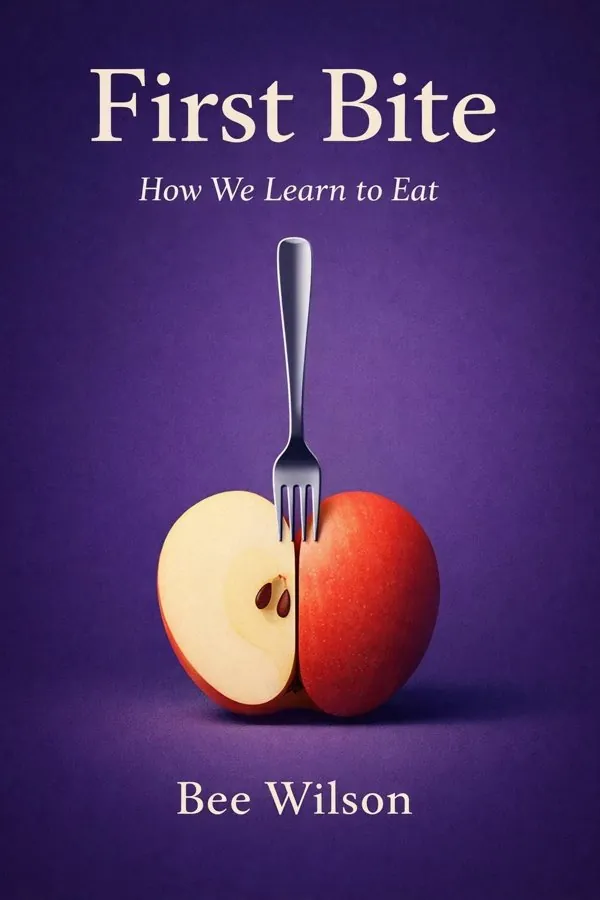
First Bite: How We Learn to Eat
Bee Wilson
10 min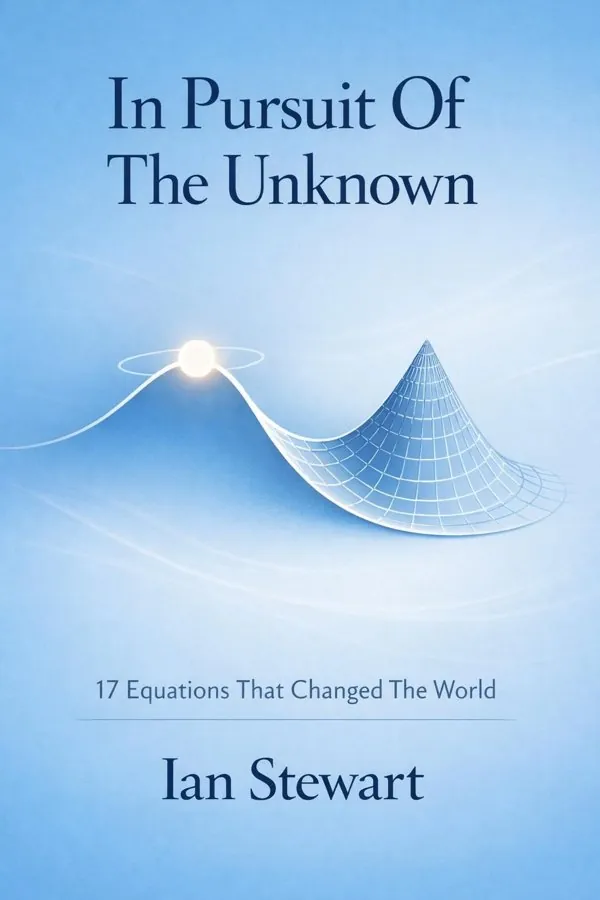
In Pursuit Of The Unknown: 17 Equations That Changed The World
Ian Stewart
10 min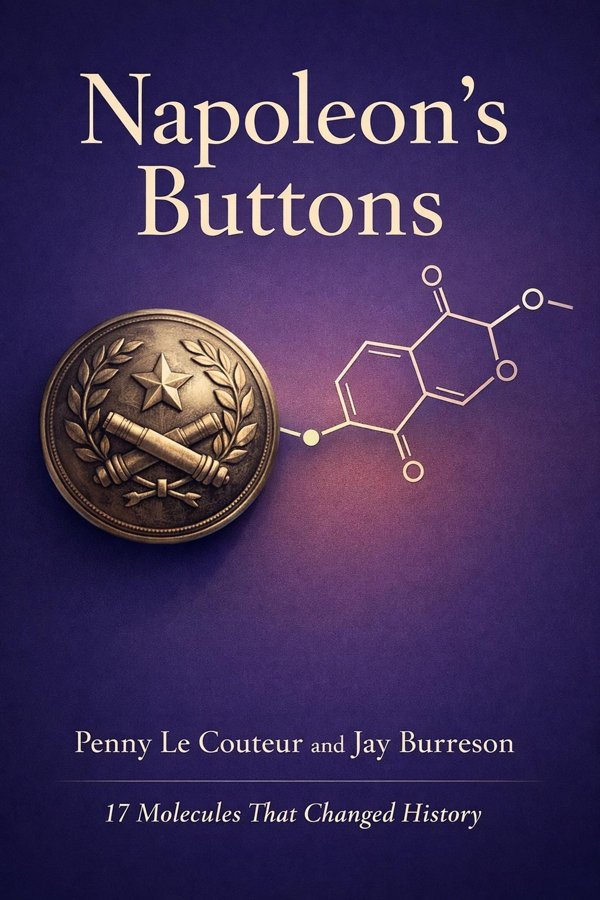
Napoleon's Buttons: 17 Molecules That Changed History
Penny Le Couteur and Jay Burreson
10 minBrowse by Category
Ready to read This Is Your Mind on Plants?
Get the full summary and 100K+ more books with Fizz Moment.