
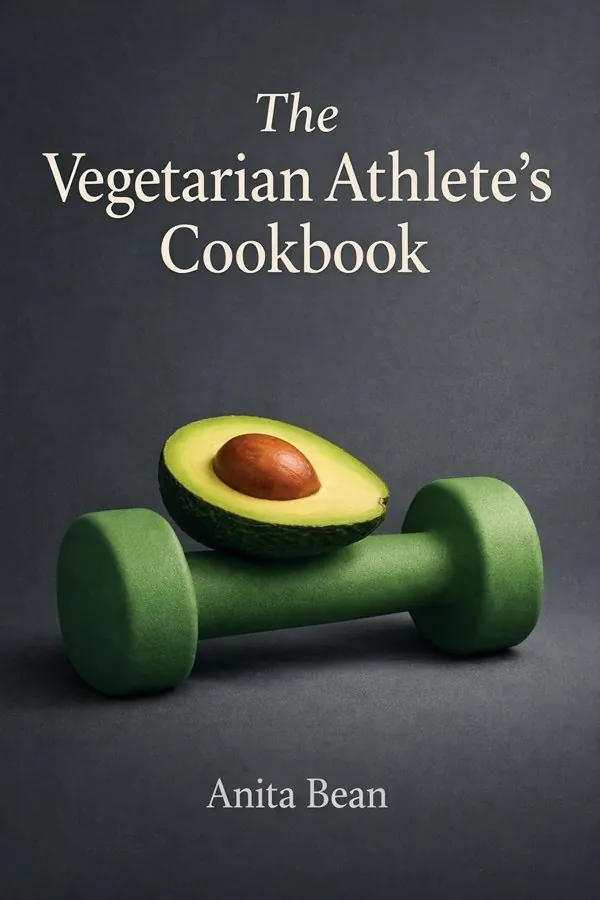
The Vegetarian Athlete’s Cookbook: More Than 100 Delicious Recipes for Active Living: Summary & Key Insights
by Anita Bean
 10 min9 chaptersAudio available
Key Takeaways from The Vegetarian Athlete’s Cookbook: More Than 100 Delicious Recipes for Active Living
Athletic success begins not with supplements or trendy superfoods, but with a simple question: are you giving your body enough fuel to do the work you demand of it?
Few topics generate more anxiety among vegetarian athletes than protein, yet Bean argues that this fear is often exaggerated.
The challenge is not whether carbs fit a healthy diet, but whether athletes use them strategically enough to support performance.
A diet can be plant-based, colorful, and seemingly wholesome yet still leave subtle nutritional gaps that undermine performance over time.
What you eat matters, but when you eat can be the difference between dragging through a workout and performing with purpose.
What Is The Vegetarian Athlete’s Cookbook: More Than 100 Delicious Recipes for Active Living About?
The Vegetarian Athlete’s Cookbook: More Than 100 Delicious Recipes for Active Living by Anita Bean is a nutrition book spanning 8 pages. What if peak athletic performance depended less on eating animal products and more on understanding how to fuel the body intelligently? In The Vegetarian Athlete’s Cookbook, sports nutritionist Anita Bean tackles one of the most persistent myths in fitness culture: that vegetarian eating is somehow incompatible with strength, endurance, recovery, or competitive success. This book is both a practical nutrition guide and a recipe collection, showing active people exactly how to build a plant-centered diet that supports training demands without sacrificing taste, convenience, or nutritional completeness. Bean combines evidence-based sports nutrition principles with accessible meal planning, shopping guidance, and more than 100 recipes designed for energy, muscle repair, hydration, and long-term health. Her authority comes not only from academic expertise as a nutritionist, but also from personal experience as an athlete and former bodybuilder, giving her advice unusual credibility and realism. The result is a book that speaks to runners, cyclists, gym-goers, team-sport athletes, and anyone curious about eating vegetarian while staying active. It matters because it replaces confusion with clarity and turns plant-based performance from a theory into a workable daily routine.
This FizzRead summary covers all 9 key chapters of The Vegetarian Athlete’s Cookbook: More Than 100 Delicious Recipes for Active Living in approximately 10 minutes, distilling the most important ideas, arguments, and takeaways from Anita Bean's work. Also available as an audio summary and Key Quotes Podcast.
The Vegetarian Athlete’s Cookbook: More Than 100 Delicious Recipes for Active Living
What if peak athletic performance depended less on eating animal products and more on understanding how to fuel the body intelligently? In The Vegetarian Athlete’s Cookbook, sports nutritionist Anita Bean tackles one of the most persistent myths in fitness culture: that vegetarian eating is somehow incompatible with strength, endurance, recovery, or competitive success. This book is both a practical nutrition guide and a recipe collection, showing active people exactly how to build a plant-centered diet that supports training demands without sacrificing taste, convenience, or nutritional completeness. Bean combines evidence-based sports nutrition principles with accessible meal planning, shopping guidance, and more than 100 recipes designed for energy, muscle repair, hydration, and long-term health. Her authority comes not only from academic expertise as a nutritionist, but also from personal experience as an athlete and former bodybuilder, giving her advice unusual credibility and realism. The result is a book that speaks to runners, cyclists, gym-goers, team-sport athletes, and anyone curious about eating vegetarian while staying active. It matters because it replaces confusion with clarity and turns plant-based performance from a theory into a workable daily routine.
Who Should Read The Vegetarian Athlete’s Cookbook: More Than 100 Delicious Recipes for Active Living?
This book is perfect for anyone interested in nutrition and looking to gain actionable insights in a short read. Whether you're a student, professional, or lifelong learner, the key ideas from The Vegetarian Athlete’s Cookbook: More Than 100 Delicious Recipes for Active Living by Anita Bean will help you think differently.
- ✓Readers who enjoy nutrition and want practical takeaways
- ✓Professionals looking to apply new ideas to their work and life
- ✓Anyone who wants the core insights of The Vegetarian Athlete’s Cookbook: More Than 100 Delicious Recipes for Active Living in just 10 minutes
Want the full summary?
Get instant access to this book summary and 100K+ more with Fizz Moment.
Get Free SummaryAvailable on App Store • Free to download
Key Chapters
Athletic success begins not with supplements or trendy superfoods, but with a simple question: are you giving your body enough fuel to do the work you demand of it? Bean makes it clear that vegetarian athletes share the same physiological realities as all athletes. Muscles need glycogen to perform, protein to repair, fats to support hormones and endurance, and sufficient total calories to prevent fatigue and under-recovery. A vegetarian diet does not change these fundamentals; it only changes the menu through which they are delivered.
One of the book’s biggest strengths is its insistence on practicality. Rather than framing nutrition as a rigid doctrine, Bean explains how energy needs shift according to training volume, intensity, age, body size, and goals. A distance runner in marathon preparation needs a different intake pattern from a recreational yogi or a strength athlete seeking muscle gain. The challenge for many vegetarian athletes is not eating too little meat, but accidentally eating too little overall. High-fiber foods are filling, and athletes who rely heavily on salads, fruit, and low-calorie meals can end up chronically underfueled.
Bean emphasizes that good sports nutrition should align with training. Hard sessions require strategic fueling before and after exercise. Rest days may call for slightly different portions, but still demand quality nutrition. She also shows how everyday staples like oats, pasta, rice, beans, yogurt, nuts, seeds, and fruit can form the backbone of an effective athletic diet.
The core lesson is simple: performance suffers when energy intake falls behind energy output, no matter how “healthy” the diet looks. Actionable takeaway: calculate your fueling needs based on your training load, then structure each day around consistent meals and snacks that supply enough calories, carbohydrates, protein, and fluids.
Few topics generate more anxiety among vegetarian athletes than protein, yet Bean argues that this fear is often exaggerated. The real issue is not whether plant-based eaters can get enough protein, but whether they plan their intake deliberately enough to meet the demands of training. Vegetarian diets can supply all necessary protein, provided athletes understand both quantity and variety.
Bean explains that protein supports muscle repair, recovery, adaptation, and immune resilience. Athletes who train frequently, lift weights, or perform endurance work all have higher protein needs than sedentary people. The encouraging message is that these needs can be met through common vegetarian foods: dairy products, eggs, soy foods such as tofu and tempeh, lentils, beans, chickpeas, quinoa, nuts, seeds, and whole grains. She also addresses protein quality, noting that while some plant foods contain lower proportions of certain amino acids, eating a varied diet across the day effectively solves the problem.
This chapter is especially useful because it moves beyond theory into meal construction. Instead of vaguely advising readers to “eat more protein,” Bean shows what that looks like in real life: beans on toast with eggs, yogurt with nuts and fruit, lentil stew with rice, tofu stir-fries, smoothies enriched with milk or soy yogurt, and post-workout meals built around legumes and grains. Timing matters too. Spreading protein across breakfast, lunch, dinner, and snacks may support recovery more effectively than consuming it all at one meal.
Her message dismantles the myth that vegetarian athletes must rely on expensive powders or highly processed products. Actionable takeaway: include a meaningful protein source at every meal and snack, and aim for variety across the day so your recovery happens automatically through normal eating.
In a culture obsessed with low-carb eating, Bean reminds athletes of an inconvenient truth: carbohydrates remain the body’s preferred fuel for most moderate to high-intensity exercise. For vegetarian athletes, this is actually an advantage, because many plant-based diets naturally include carbohydrate-rich staples such as grains, fruit, potatoes, beans, and vegetables. The challenge is not whether carbs fit a healthy diet, but whether athletes use them strategically enough to support performance.
Bean explains that carbohydrates replenish muscle glycogen, the stored energy that powers long runs, hard bike rides, intervals, and intense gym sessions. When glycogen is low, training quality drops, perceived effort rises, and recovery slows. Athletes often blame weak performance on lack of motivation or poor fitness when the issue is simply inadequate carbohydrate intake. This is especially relevant for vegetarians who may eat “clean” but not enough dense fuel before demanding sessions.
The book also rehabilitates dietary fat, presenting it as an essential part of long-term health and athletic function rather than an enemy. Fats support hormone production, absorb fat-soluble vitamins, and provide concentrated energy, especially useful for athletes with high calorie demands. Sources such as nuts, seeds, avocado, olive oil, and dairy can complement carb-rich meals without displacing them.
Bean offers a practical framework: emphasize carbohydrates before and after strenuous training, use fats to build satisfying and nutrient-rich meals, and avoid the mistake of overloading on fiber immediately before exercise. For example, a runner may benefit from porridge and banana before a morning session, pasta and vegetables after, and nuts or yogurt later for sustained satiety.
Actionable takeaway: match carbohydrate intake to training intensity, and use healthy fats to round out meals rather than replace the fuel your muscles need most.
A diet can be plant-based, colorful, and seemingly wholesome yet still leave subtle nutritional gaps that undermine performance over time. Bean’s discussion of micronutrients is one of the most valuable parts of the book because it addresses the quiet deficiencies that can limit energy, recovery, immunity, and concentration. Vegetarian athletes, especially women and those with heavy training loads, need to pay close attention to nutrients such as iron, zinc, calcium, vitamin B12, and sometimes vitamin D.
Iron is a central concern because it supports oxygen transport and energy metabolism. Low iron stores can contribute to unusual fatigue, poor endurance, and slower recovery. Bean explains that plant foods like lentils, beans, fortified cereals, leafy greens, dried fruit, and seeds can help, especially when paired with vitamin C-rich foods such as citrus, peppers, or berries to improve absorption. Calcium matters for bone health and muscle contraction, while zinc supports immunity and repair. Vitamin B12 deserves special attention for vegans because it is not reliably obtained from unfortified plant foods.
The book avoids alarmism. Bean does not suggest that vegetarian diets are inherently deficient, only that awareness matters. She encourages athletes to build meals intelligently rather than eating on autopilot. Practical examples include using fortified plant milks, incorporating dairy or eggs when appropriate, combining beans with vegetables rich in vitamin C, and seeking blood tests if persistent fatigue raises concerns.
Her broader point is that performance nutrition is not only about macros. Small nutrient shortfalls can gradually erode training quality, even when calorie intake looks adequate. Actionable takeaway: audit your intake of iron, B12, calcium, zinc, and vitamin D, then use fortified foods, smart food combinations, or supplements when needed to close any gaps.
What you eat matters, but when you eat can be the difference between dragging through a workout and performing with purpose. Bean treats meal planning not as a burdensome chore but as a competitive advantage. Athletes often know which foods are healthy, yet still struggle because their eating patterns are out of sync with their training. A perfectly balanced dinner does little good if you begin a long ride underfueled or miss the recovery window after hard intervals.
This section highlights the rhythm of athletic eating: pre-exercise fueling, during-exercise support for longer sessions, and post-exercise recovery. Before training, the goal is usually digestible carbohydrate with a little protein and minimal excess fat or fiber, particularly when exercise begins soon after eating. After exercise, replenishing glycogen and providing protein can support muscle repair and readiness for the next session. Bean’s practical style shines here, offering examples such as toast with nut butter, a banana and yogurt, a rice dish after training, or a smoothie when appetite is low.
She also addresses race-day and competition concerns. Familiar foods beat experimental ones. Athletes should practice pre-event meals during training rather than relying on guesswork under pressure. Batch cooking, portable snacks, and simple staples become especially important for those balancing work, family, and sport.
For vegetarian athletes, planning prevents common mistakes such as relying on bulky high-fiber meals before events or going too long without eating after training. The point is not rigid scheduling but reducing friction so good choices become easy.
Actionable takeaway: build your week around your training calendar, and decide in advance what you’ll eat before and after key sessions so fueling becomes automatic instead of reactive.
Nutrition advice becomes truly valuable only when it survives real life, and this is where the cookbook format earns its place. Bean understands that athletes do not need abstract lectures on lentils; they need breakfasts they can make before work, lunches they can pack, dinners that support recovery, and snacks that actually taste good. The recipe chapters turn sports nutrition principles into repeatable habits.
The dishes are organized around purpose as much as flavor. Some recipes are designed to provide sustained energy, others prioritize recovery, and many strike a balance between convenience and nutrient density. This functional approach is especially helpful for active readers who are not interested in gourmet complexity for its own sake. A smoothie can become a post-workout recovery tool. A bean chili can serve as a batch-cooked lunch that provides carbohydrates, protein, iron, and fiber. A pasta dish can become a pre-race staple when adjusted for portion size and timing.
Bean’s recipes also solve one of the most underestimated barriers to healthy eating: decision fatigue. When athletes are tired, hungry, or rushed, they tend to default to whatever is easiest. By offering a large repertoire of meals, snacks, soups, salads, and main dishes, the book reduces reliance on ultra-processed convenience foods or nutritionally unbalanced improvisation.
Equally important, the recipes help readers see vegetarian eating as abundant rather than restrictive. Instead of centering deprivation, the book centers variety, flavor, and performance support. That psychological shift can make long-term adherence far easier.
Actionable takeaway: choose five to seven recipes from the book that match your routine, batch-cook them regularly, and create a personal rotation of go-to meals for training days, busy days, and recovery days.
Lasting dietary change rarely happens through willpower alone; it happens when a new way of eating becomes convenient, satisfying, and compatible with daily life. Bean offers practical advice for athletes who are curious about vegetarian eating but feel overwhelmed by the leap. Rather than insisting on an all-or-nothing conversion, she supports a gradual transition that respects habit, culture, budget, and individual training demands.
This matters because many athletes fail not from lack of motivation but from unrealistic expectations. They cut out animal products overnight, rely on a narrow range of foods, feel hungrier or less energized, and conclude that vegetarian eating does not work for them. Bean reframes the process. Start by replacing a few meals each week, identifying protein-rich plant staples you enjoy, and learning a small number of reliable recipes. Build confidence before seeking perfection.
She also acknowledges social realities: eating with family, navigating restaurants, traveling for events, and managing skeptical coaches or training partners. The book helps readers prepare for these situations with practical flexibility rather than dogma. If you know how to order a bean-based meal, pack portable snacks, or build a balanced breakfast anywhere, the lifestyle becomes much easier to sustain.
Another useful insight is that personal experimentation matters. Some athletes thrive on lacto-ovo vegetarian diets, while others prefer fully vegan patterns. The best approach is the one that supports health, performance, and consistency over time.
Bean’s tone is encouraging rather than ideological. She is less interested in labels than in helping readers eat well and train well. Actionable takeaway: transition in stages, master a few protein-rich plant meals first, and evaluate your energy, recovery, and enjoyment as you build a sustainable routine.
There is no single ideal vegetarian diet for all athletes because there is no single athlete. Bean’s sample meal plans underline an essential truth: nutrition should serve the goal in front of you. Someone training for a marathon, aiming to gain muscle, trying to lose body fat without sacrificing performance, or maintaining general fitness will need different calorie levels, meal timing, and macronutrient emphasis.
This individualized approach is one of the book’s most practical contributions. Too many nutrition books present rules as universal, leaving readers to wonder why advice that works for one person fails for another. Bean instead shows how to adapt the same food principles to different contexts. An endurance athlete may need larger carbohydrate portions and more frequent snacks. A strength athlete may prioritize protein distribution and total energy intake. An athlete in a fat-loss phase may need nutrient-dense meals that preserve satiety while still supporting recovery.
The sample plans also teach portion awareness without turning eating into a math exercise. By showing what a full day of meals might look like, Bean helps readers move from abstract nutrient targets to real plates of food. Breakfasts, lunches, dinners, and snacks become templates that can be customized according to schedule and appetite.
Importantly, the plans reinforce that success comes from consistency, not occasional perfection. A sound weekly pattern matters more than isolated “cheat” or “clean” meals. For busy athletes, even small planning habits such as prepping overnight oats, cooking grains in bulk, or carrying trail mix can stabilize energy and reduce poor choices.
Actionable takeaway: identify your current goal, then build a repeatable daily meal pattern that supports it instead of copying a generic diet designed for someone with different training demands.
The strongest message running through the book is that athletic eating should not merely improve the next workout; it should support the whole person over months and years. Bean presents vegetarian sports nutrition as a way to enhance performance while also promoting cardiovascular health, digestive well-being, body composition, and long-term disease prevention. This broader perspective distinguishes the book from narrow performance manuals that focus only on short-term outputs.
A well-planned vegetarian diet is naturally rich in fiber, antioxidants, phytochemicals, and unsaturated fats. These qualities may support recovery from oxidative stress, improve overall nutrient intake, and encourage better long-term health markers. For athletes, that matters because consistent training depends on more than muscle adaptation. It also depends on resilient immunity, healthy digestion, stable energy, and reduced injury risk.
Bean avoids simplistic claims that vegetarian diets are automatically superior. Instead, she argues for thoughtful planning and food quality. A vegetarian athlete can still eat poorly by depending on refined snacks, sugary foods, and nutrient-light convenience products. The real aim is a pattern based on whole grains, legumes, dairy or fortified alternatives, fruits, vegetables, nuts, seeds, and strategic treats. In that sense, the book is about disciplined nourishment rather than dietary identity.
This chapter-level insight also appeals to non-elite readers. Many people want to exercise regularly, feel better, and age well, not just shave seconds off a race time. Bean’s framework accommodates both ambitions.
Actionable takeaway: evaluate your diet by two standards at once, asking not only “Will this help my training today?” but also “Will this support my health and consistency over the long term?”
All Chapters in The Vegetarian Athlete’s Cookbook: More Than 100 Delicious Recipes for Active Living
About the Author
Anita Bean is a British nutritionist, health writer, and former champion bodybuilder with a long-standing focus on sports nutrition and healthy eating. She is known for translating complex nutritional science into practical advice that athletes and everyday readers can actually use. Over the course of her career, she has written multiple books on performance, fitness, and balanced diet planning, earning a reputation for evidence-based guidance rather than fad-driven claims. Her background in both professional nutrition and competitive sport gives her work unusual credibility, particularly when discussing how food affects training, recovery, and body composition. In The Vegetarian Athlete’s Cookbook, Bean brings that expertise to vegetarian sports nutrition, offering readers a clear, realistic framework for fueling active lives with plant-centered meals.
Get This Summary in Your Preferred Format
Read or listen to the The Vegetarian Athlete’s Cookbook: More Than 100 Delicious Recipes for Active Living summary by Anita Bean anytime, anywhere. FizzRead offers multiple formats so you can learn on your terms — all free.
Available formats: App · Audio · PDF · EPUB — All included free with FizzRead
Download The Vegetarian Athlete’s Cookbook: More Than 100 Delicious Recipes for Active Living PDF and EPUB Summary
Key Quotes from The Vegetarian Athlete’s Cookbook: More Than 100 Delicious Recipes for Active Living
“Athletic success begins not with supplements or trendy superfoods, but with a simple question: are you giving your body enough fuel to do the work you demand of it?”
“Few topics generate more anxiety among vegetarian athletes than protein, yet Bean argues that this fear is often exaggerated.”
“In a culture obsessed with low-carb eating, Bean reminds athletes of an inconvenient truth: carbohydrates remain the body’s preferred fuel for most moderate to high-intensity exercise.”
“A diet can be plant-based, colorful, and seemingly wholesome yet still leave subtle nutritional gaps that undermine performance over time.”
“What you eat matters, but when you eat can be the difference between dragging through a workout and performing with purpose.”
Frequently Asked Questions about The Vegetarian Athlete’s Cookbook: More Than 100 Delicious Recipes for Active Living
The Vegetarian Athlete’s Cookbook: More Than 100 Delicious Recipes for Active Living by Anita Bean is a nutrition book that explores key ideas across 9 chapters. What if peak athletic performance depended less on eating animal products and more on understanding how to fuel the body intelligently? In The Vegetarian Athlete’s Cookbook, sports nutritionist Anita Bean tackles one of the most persistent myths in fitness culture: that vegetarian eating is somehow incompatible with strength, endurance, recovery, or competitive success. This book is both a practical nutrition guide and a recipe collection, showing active people exactly how to build a plant-centered diet that supports training demands without sacrificing taste, convenience, or nutritional completeness. Bean combines evidence-based sports nutrition principles with accessible meal planning, shopping guidance, and more than 100 recipes designed for energy, muscle repair, hydration, and long-term health. Her authority comes not only from academic expertise as a nutritionist, but also from personal experience as an athlete and former bodybuilder, giving her advice unusual credibility and realism. The result is a book that speaks to runners, cyclists, gym-goers, team-sport athletes, and anyone curious about eating vegetarian while staying active. It matters because it replaces confusion with clarity and turns plant-based performance from a theory into a workable daily routine.
More by Anita Bean
You Might Also Like
Eating by the Seasons Cookbook: Seasonal Produce-Focused Recipes
Clare Foster
10 min
From Crook to Cook: Platinum Recipes from Tha Boss Dogg's Kitchen
Snoop Dogg with Ryan Ford
10 min
Juicing for Beginners: The Essential Guide to Juicing Recipes and Juicing for Weight Loss
Rockridge Press
10 min
The Food Therapist: Break Bad Habits, Eat with Intention, and Indulge Without Worry
Shira Lenchewski
10 min
The Mediterranean Diet Meal Plan: A 4-Week Meal Plan for Optimal Health and Weight Loss
Various Contributors
10 min
The Well Plated Cookbook: Simple, Wholesome Recipes for Everyday Meals
Erin Clarke
10 minBrowse by Category
Ready to read The Vegetarian Athlete’s Cookbook: More Than 100 Delicious Recipes for Active Living?
Get the full summary and 100K+ more books with Fizz Moment.