
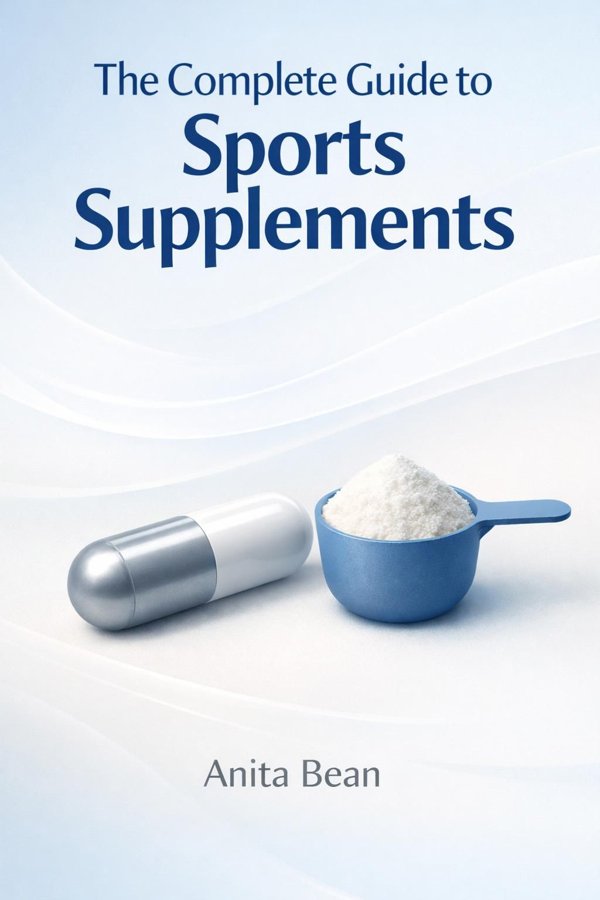
The Complete Guide to Sports Supplements: An Evidence-Based Review: Summary & Key Insights
by Anita Bean
 10 min9 chaptersAudio available
Key Takeaways from The Complete Guide to Sports Supplements: An Evidence-Based Review
The most expensive supplement stack in the world cannot compensate for a poor diet, inconsistent training, and inadequate recovery.
A glossy label can make weak science look convincing, and that is precisely why evidence-based decision making is the book’s backbone.
Protein powder has become almost synonymous with fitness, yet Bean makes an important distinction: protein supplements are useful, but not magical.
If most supplements live in a gray area, creatine is one of the clearest exceptions.
A substance many people consume casually every day can, when used intentionally, become a powerful performance aid.
What Is The Complete Guide to Sports Supplements: An Evidence-Based Review About?
The Complete Guide to Sports Supplements: An Evidence-Based Review by Anita Bean is a health_med book. In a fitness world flooded with miracle powders, performance pills, and bold marketing claims, The Complete Guide to Sports Supplements: An Evidence-Based Review offers something far more valuable: clarity. Anita Bean cuts through hype and confusion to examine what sports supplements actually do, who may benefit from them, and where the science draws the line between promise and exaggeration. Rather than treating supplements as shortcuts, the book places them in their proper context alongside training, nutrition, recovery, and health. What makes this guide especially useful is its practical and evidence-led approach. Bean evaluates popular products used for endurance, strength, muscle gain, weight loss, recovery, and overall performance, explaining both the potential advantages and the risks. She helps readers understand labels, assess research quality, and avoid wasting money on ineffective or unsafe products. Anita Bean brings real authority to the topic. As an experienced sports nutritionist, author, and educator, she is known for translating complex science into advice athletes can use in real life. This book matters because it empowers readers to make informed choices in a marketplace designed to exploit uncertainty.
This FizzRead summary covers all 9 key chapters of The Complete Guide to Sports Supplements: An Evidence-Based Review in approximately 10 minutes, distilling the most important ideas, arguments, and takeaways from Anita Bean's work. Also available as an audio summary and Key Quotes Podcast.
The Complete Guide to Sports Supplements: An Evidence-Based Review
In a fitness world flooded with miracle powders, performance pills, and bold marketing claims, The Complete Guide to Sports Supplements: An Evidence-Based Review offers something far more valuable: clarity. Anita Bean cuts through hype and confusion to examine what sports supplements actually do, who may benefit from them, and where the science draws the line between promise and exaggeration. Rather than treating supplements as shortcuts, the book places them in their proper context alongside training, nutrition, recovery, and health.
What makes this guide especially useful is its practical and evidence-led approach. Bean evaluates popular products used for endurance, strength, muscle gain, weight loss, recovery, and overall performance, explaining both the potential advantages and the risks. She helps readers understand labels, assess research quality, and avoid wasting money on ineffective or unsafe products.
Anita Bean brings real authority to the topic. As an experienced sports nutritionist, author, and educator, she is known for translating complex science into advice athletes can use in real life. This book matters because it empowers readers to make informed choices in a marketplace designed to exploit uncertainty.
Who Should Read The Complete Guide to Sports Supplements: An Evidence-Based Review?
This book is perfect for anyone interested in health_med and looking to gain actionable insights in a short read. Whether you're a student, professional, or lifelong learner, the key ideas from The Complete Guide to Sports Supplements: An Evidence-Based Review by Anita Bean will help you think differently.
- ✓Readers who enjoy health_med and want practical takeaways
- ✓Professionals looking to apply new ideas to their work and life
- ✓Anyone who wants the core insights of The Complete Guide to Sports Supplements: An Evidence-Based Review in just 10 minutes
Want the full summary?
Get instant access to this book summary and 100K+ more with Fizz Moment.
Get Free SummaryAvailable on App Store • Free to download
Key Chapters
The most expensive supplement stack in the world cannot compensate for a poor diet, inconsistent training, and inadequate recovery. One of the book’s central insights is that supplements should be viewed as additions, not foundations. Anita Bean repeatedly places food first, reminding readers that real performance is built on energy balance, macronutrient intake, hydration, sleep, and intelligent programming. Supplements may offer marginal gains, but only after basics are consistently in place.
This idea matters because many athletes and recreational exercisers are tempted to search for a shortcut. Someone might buy protein powder before calculating whether they are eating enough total protein, or rely on pre-workout stimulants while routinely sleeping five hours a night. Bean argues that this approach reverses priorities. The body responds best when fueled by an adequate intake of carbohydrate for training energy, protein for repair and adaptation, healthy fats for hormonal function, and fluids and electrolytes for hydration.
Practical examples make this easy to understand. A runner training for a half marathon may benefit more from improving carbohydrate timing and hydration than from buying exotic recovery formulas. A gym-goer trying to build muscle may see better results from increasing daily protein from whole foods and planning meals around workouts than from taking multiple branded anabolic blends. Even protein shakes, one of the most useful supplements, are valuable mainly because they offer convenience, not because they outperform good food.
The broader lesson is that supplements work best when they solve a specific problem: convenience, a diagnosed deficiency, difficulty meeting needs during heavy training, or support for a well-defined performance goal. They are not a substitute for nutritional literacy. Actionable takeaway: audit your diet, training, sleep, and hydration before adding any supplement, and only use products that address a real need rather than a marketing promise.
A glossy label can make weak science look convincing, and that is precisely why evidence-based decision making is the book’s backbone. Bean encourages readers to ask a simple but powerful question: what does the research actually show? In sports nutrition, countless products are sold on testimonials, before-and-after photos, celebrity endorsements, and selective references. Yet these forms of persuasion are not the same as credible evidence.
The book helps readers distinguish between strong and weak claims. A supplement supported by repeated studies in humans, using realistic doses and relevant athletic populations, deserves more confidence than one backed by animal studies, manufacturer-funded anecdotes, or vague references to “clinically proven ingredients.” Bean also highlights the importance of context. A supplement that shows a small effect in elite athletes under controlled conditions may not produce noticeable benefits in casual exercisers. Likewise, results may depend on timing, dosage, training status, and the type of sport.
This framework can be applied every time a new supplement trend appears. Consider branched-chain amino acids, “test boosters,” or proprietary fat burners. Many such products are marketed aggressively, but their evidence often falls short of their claims. In contrast, certain supplements such as creatine, caffeine, and sports drinks have a stronger research base when used appropriately. Bean’s method is not anti-supplement; it is anti-uncritical thinking.
A practical application is reading labels and advertisements with skepticism. If a company does not disclose exact ingredient quantities, cites only one small study, or promises dramatic transformations, caution is warranted. Consumers should also consider whether the claimed outcome is measurable and meaningful. A tiny change in a lab marker is not the same as better race times, faster recovery, or greater training quality.
Actionable takeaway: before buying a supplement, look for independent evidence in human studies, realistic dosing information, and a clear explanation of who benefits, then compare that evidence against the product’s actual claims.
Protein powder has become almost synonymous with fitness, yet Bean makes an important distinction: protein supplements are useful, but not magical. Their main value lies in helping people meet daily protein needs conveniently, especially around training or during busy schedules. They do not build muscle on their own; they support muscle repair and growth when total protein intake, training stimulus, and overall energy intake are appropriate.
The book explains how athletes, strength trainers, and active people may benefit from distributing protein intake across the day rather than consuming most of it at one meal. A shake after training can be an easy way to deliver high-quality protein quickly, especially when whole food is inconvenient. Whey protein is often highlighted for its digestibility and amino acid profile, while other sources may suit different dietary preferences or tolerances. However, Bean emphasizes that food sources such as dairy, eggs, fish, meat, soy, beans, and lentils remain excellent options.
Practical scenarios illustrate the point. A student lifting weights in the morning before class may find a protein shake helpful because it is fast and portable. An endurance athlete with high calorie needs might use a recovery drink that combines protein and carbohydrate after long sessions. By contrast, someone already consuming adequate protein through regular meals may gain little from adding extra shakes. More is not always better, and excess supplementation can simply become expensive calories.
Bean also implicitly challenges the myth that every workout demands a supplement ritual. If a person eats a balanced meal containing protein within a reasonable period after exercise, the benefits may be similar. The key is consistency, not obsession.
Actionable takeaway: use protein supplements strategically for convenience or recovery support, but first estimate your daily protein intake and make sure the supplement fills a real gap rather than duplicating what your meals already provide.
If most supplements live in a gray area, creatine is one of the clearest exceptions. Bean presents it as one of the best-supported sports supplements available, particularly for activities requiring repeated high-intensity efforts, strength, and power output. Its reputation has sometimes been clouded by misunderstanding, but the evidence base is stronger than that of many trend-driven products.
Creatine works by increasing phosphocreatine stores in muscle, which helps regenerate ATP, the immediate energy source for short, explosive movements. In practical terms, this can improve performance in sprinting, jumping, lifting, and repeated intervals. Over time, these training improvements may contribute to greater strength and muscle gains. That is why creatine is especially relevant for strength athletes, team-sport players, and anyone engaged in repeated high-intensity work.
Bean’s evidence-based approach also helps normalize creatine use. Rather than treating it as an extreme or risky aid, she frames it as a legitimate tool when used correctly. Common concerns such as bloating, water retention, or safety need to be understood in context. Some users may experience a modest increase in body mass due to water held in muscle, which may be advantageous in some sports and less desirable in others. This illustrates one of the book’s recurring themes: the same supplement may be helpful in one context and unhelpful in another.
For example, a rugby player seeking greater power and lean mass may benefit from creatine, while an athlete in a weight-sensitive endurance event may be more cautious. The key is matching the supplement to the sport and goal. Bean’s treatment of creatine models how supplements should be judged: by mechanism, evidence, practical outcomes, and individual fit.
Actionable takeaway: if your sport relies on strength, power, or repeated high-intensity effort, consider creatine as one of the few well-supported options, but assess whether any increase in body mass aligns with your performance goals.
A substance many people consume casually every day can, when used intentionally, become a powerful performance aid. Bean examines caffeine as one of the most researched ergogenic aids, showing how it may enhance endurance, alertness, concentration, perceived effort, and in some cases power output. But just because caffeine works does not mean more is better, or that everyone responds the same way.
The book places caffeine within a strategic framework. Timing, dose, tolerance, and sensitivity all matter. A moderate dose before training or competition may help an athlete feel sharper and sustain effort longer, particularly in endurance events or mentally demanding situations. However, too much caffeine can increase jitteriness, anxiety, gastrointestinal discomfort, and sleep disruption, all of which may undermine performance and recovery. This dual nature makes caffeine a perfect example of why supplement use should be individualized.
Practical use depends heavily on context. A cyclist preparing for a long race may use caffeine to reduce perceived exertion and maintain focus. A team-sport player could benefit from improved reaction time and alertness before competition. On the other hand, an athlete training late in the evening may find that caffeine harms sleep quality, compromising adaptation and next-day readiness. A person already consuming large amounts of coffee may also notice diminished effects because tolerance blunts the response.
Bean’s larger point is that legal and effective supplements still require discipline. Caffeine should not become a crutch for chronic under-recovery, poor sleep habits, or excessive training load. It can support performance, but it cannot sustainably rescue an imbalanced routine.
Actionable takeaway: test caffeine in training before using it in competition, keep the dose moderate and goal-specific, and weigh any performance benefit against side effects such as digestive issues, anxiety, or disrupted sleep.
Not every supplement comes in a flashy tub, and some of the most useful products are those that support basic physiology during hard exercise. Bean gives proper attention to sports drinks, electrolyte products, and hydration strategies, showing that in the right setting they can improve endurance, maintain performance, and aid recovery. Their value is strongest not in everyday casual workouts, but during prolonged, intense, or hot-condition exercise where fluid and carbohydrate losses become significant.
This distinction is important because many consumers either overuse or underestimate hydration products. Someone doing a light 30-minute gym session may not need a specialized sports drink at all; water is often sufficient. But an athlete training for two hours in summer heat, a marathon runner, or a football player in repeated sessions may need fluid, sodium, and carbohydrate support to prevent drops in performance and excessive dehydration. Bean helps readers understand that these products are tools for specific demands, not lifestyle accessories.
Real-world applications are straightforward. Endurance athletes may use carbohydrate-electrolyte drinks during long sessions to preserve energy availability and support fluid absorption. Players in tournaments with multiple events in a day may use rehydration strategies between matches. Individuals who sweat heavily or train in humid environments may need greater sodium replacement than the average person. The goal is not to drink more indiscriminately, but to replace what is lost in a way that matches duration, intensity, and conditions.
Bean also reinforces a broader lesson: sports nutrition works best when it is situational. The right strategy for a long ride differs from the right strategy for a short lift. Blanket advice often fails because athletic demands vary so widely.
Actionable takeaway: match hydration products to workout duration, sweat loss, and environmental stress, using plain water for shorter, easier sessions and carbohydrate-electrolyte drinks when exercise is long, intense, or performed in the heat.
The desire for a leaner body creates one of the most profitable and misleading corners of the supplement industry. Bean approaches weight loss supplements with healthy skepticism, and for good reason. Many products marketed for fat burning, appetite suppression, or metabolic acceleration promise far more than the evidence supports. Some may produce negligible effects, while others carry meaningful side effects or questionable ingredients.
The book’s evidence-based lens is especially valuable here because weight loss marketing often relies on urgency and insecurity. Labels may suggest rapid transformation, effortless fat burning, or “scientific breakthrough” ingredients, but sustainable body composition change still depends primarily on energy balance, dietary quality, training, sleep, and behavior over time. Bean reminds readers that no pill can replace these fundamentals.
This does not mean every ingredient is entirely useless. Some compounds may have modest effects on appetite or energy expenditure. However, the practical significance is often overstated, especially compared with the impact of a structured eating plan, resistance training to preserve muscle, and consistent movement. Even when there is a measurable effect, it may be too small to justify the cost or risk. For athletes, aggressive fat-loss supplements can also interfere with hydration, sleep, heart rate, and recovery.
A practical example is an individual tempted by a thermogenic product before a holiday or competition. Bean’s framework would ask: is the product evidence-based, safe, and likely to produce a meaningful result beyond what diet and training already achieve? Often, the answer is no. In some cases, the pursuit of rapid loss can even lead to poorer performance and rebound eating.
Actionable takeaway: treat weight loss supplements with caution, prioritize sustainable nutrition and training habits, and avoid any product that promises dramatic body-fat reduction without corresponding lifestyle change.
One of the most overlooked truths about supplements is that buying them is not the same as buying certainty. Bean emphasizes that safety, quality control, contamination, and regulation are major issues in the supplement world. Consumers often assume that if a product is sold openly, it has been rigorously tested for purity, effectiveness, and safety. In reality, standards may vary widely depending on country, manufacturer, and category.
This matters for everyone, but especially for competitive athletes subject to anti-doping rules. A supplement may contain undeclared substances, be contaminated during production, or include ingredients listed under unfamiliar names. Even if the user had no intention of cheating, the consequences can be severe. Bean’s evidence-based caution helps readers understand that risk management is part of responsible supplement use.
Safety concerns extend beyond elite sport. Some products may combine stimulants, herbal extracts, or excessive doses of vitamins and minerals in ways that increase the chance of side effects or harmful interactions. Others may contain ingredients that lack sufficient long-term safety data. A supplement can be “natural” and still be problematic. This is another place where Bean’s practical tone stands out: she does not encourage fear, but she does encourage informed caution.
In everyday terms, this means choosing reputable brands, checking for third-party testing where available, avoiding proprietary blends that hide exact amounts, and being careful with multi-ingredient formulas. It also means discussing supplements with a qualified healthcare professional if there are medical conditions, medications, pregnancy, or high-performance sport considerations involved.
Actionable takeaway: do not judge a supplement by marketing alone; use products from reputable companies, prefer transparent labels and independent testing, and be especially cautious if you compete under anti-doping regulations or have health conditions.
Perhaps the most practical message in the book is that no supplement is universally effective simply because no athlete is universal. Bean repeatedly shows that supplement decisions should depend on the individual’s sport, training load, diet quality, body composition goals, age, health status, and performance priorities. A product that makes sense for a bodybuilder in a calorie surplus may be irrelevant for a recreational swimmer or counterproductive for a marathon runner.
This personalized approach protects readers from one-size-fits-all thinking. For example, iron may be important for someone with a documented deficiency, particularly in endurance populations, but unnecessary or even harmful for someone with adequate levels. Carbohydrate gels may be useful in long-distance events but irrelevant in short workouts. Protein supplements can help busy athletes meet targets, yet they add little for people whose meals already cover their needs comfortably.
Bean’s framework also encourages self-assessment over imitation. Many people adopt supplements because training partners, influencers, or professionals use them. But elite routines are not always appropriate for ordinary goals, and visible use does not prove actual necessity. An athlete should ask: what problem am I trying to solve? Is it recovery, convenience, deficiency, energy during long sessions, or legal performance enhancement with strong evidence? If no clear need exists, a supplement may simply add cost and complexity.
This idea has broad relevance. It supports smarter budgeting, better health decisions, and more realistic expectations. It also reinforces autonomy: readers do not need to follow trends if those trends do not serve their own context.
Actionable takeaway: evaluate supplements against your specific training demands, diet, health profile, and goals, and only use those that solve a clearly defined problem in a measurable way.
All Chapters in The Complete Guide to Sports Supplements: An Evidence-Based Review
About the Author
Anita Bean is a British sports nutritionist, author, and health writer widely known for making evidence-based nutrition accessible to athletes and everyday exercisers. Over the course of her career, she has written numerous books and articles on sports performance, fitness nutrition, and healthy eating, building a reputation for practical advice grounded in scientific research. Her work often bridges the gap between academic knowledge and real-world application, helping readers understand how to fuel training, recover effectively, and make smarter diet choices. Bean is particularly respected for her clear communication style and balanced approach, avoiding both fad-driven enthusiasm and unnecessary complexity. In The Complete Guide to Sports Supplements, she brings this expertise to one of the most commercially confusing areas of sports nutrition: separating useful products from hype, risk, and misinformation.
Get This Summary in Your Preferred Format
Read or listen to the The Complete Guide to Sports Supplements: An Evidence-Based Review summary by Anita Bean anytime, anywhere. FizzRead offers multiple formats so you can learn on your terms — all free.
Available formats: App · Audio · PDF · EPUB — All included free with FizzRead
Download The Complete Guide to Sports Supplements: An Evidence-Based Review PDF and EPUB Summary
Key Quotes from The Complete Guide to Sports Supplements: An Evidence-Based Review
“The most expensive supplement stack in the world cannot compensate for a poor diet, inconsistent training, and inadequate recovery.”
“A glossy label can make weak science look convincing, and that is precisely why evidence-based decision making is the book’s backbone.”
“Protein powder has become almost synonymous with fitness, yet Bean makes an important distinction: protein supplements are useful, but not magical.”
“If most supplements live in a gray area, creatine is one of the clearest exceptions.”
“A substance many people consume casually every day can, when used intentionally, become a powerful performance aid.”
Frequently Asked Questions about The Complete Guide to Sports Supplements: An Evidence-Based Review
The Complete Guide to Sports Supplements: An Evidence-Based Review by Anita Bean is a health_med book that explores key ideas across 9 chapters. In a fitness world flooded with miracle powders, performance pills, and bold marketing claims, The Complete Guide to Sports Supplements: An Evidence-Based Review offers something far more valuable: clarity. Anita Bean cuts through hype and confusion to examine what sports supplements actually do, who may benefit from them, and where the science draws the line between promise and exaggeration. Rather than treating supplements as shortcuts, the book places them in their proper context alongside training, nutrition, recovery, and health. What makes this guide especially useful is its practical and evidence-led approach. Bean evaluates popular products used for endurance, strength, muscle gain, weight loss, recovery, and overall performance, explaining both the potential advantages and the risks. She helps readers understand labels, assess research quality, and avoid wasting money on ineffective or unsafe products. Anita Bean brings real authority to the topic. As an experienced sports nutritionist, author, and educator, she is known for translating complex science into advice athletes can use in real life. This book matters because it empowers readers to make informed choices in a marketplace designed to exploit uncertainty.
More by Anita Bean
You Might Also Like

On Immunity
Eula Biss
10 min
The Three-Body Problem
Liu Cixin
10 min
Community Health Volunteer Toolkit: Training and Practical Activities
World Health Organization
10 min
Healing Back Pain: The Mind-Body Connection
John E. Sarno
10 min
Health Literacy for All: Practical Guides to Communicate Health Information (Compilations)
World Health Organization
10 min
The McDougall Program For Maximum Weight Loss
John A. McDougall
10 minBrowse by Category
Ready to read The Complete Guide to Sports Supplements: An Evidence-Based Review?
Get the full summary and 100K+ more books with Fizz Moment.