
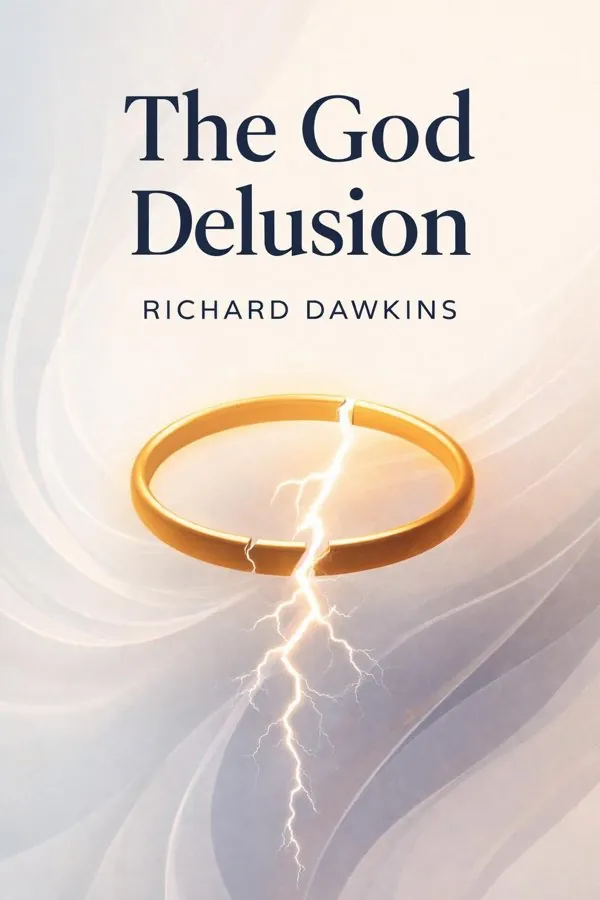
The God Delusion: Summary & Key Insights
 10 min10 chaptersAudio available
What Is The God Delusion About?
The God Delusion by Richard Dawkins is a popular_sci book spanning 10 pages. The God Delusion is a 2006 book by British evolutionary biologist Richard Dawkins, in which he argues that belief in a supernatural creator is an illusion. Dawkins examines the psychological and cultural roots of religion, critiques traditional arguments for the existence of God, and advocates for a scientific and rational worldview. The book aims to promote critical thinking and skepticism toward religious beliefs.
This FizzRead summary covers all 10 key chapters of The God Delusion in approximately 10 minutes, distilling the most important ideas, arguments, and takeaways from Richard Dawkins's work. Also available as an audio summary and Key Quotes Podcast.
The God Delusion
The God Delusion is a 2006 book by British evolutionary biologist Richard Dawkins, in which he argues that belief in a supernatural creator is an illusion. Dawkins examines the psychological and cultural roots of religion, critiques traditional arguments for the existence of God, and advocates for a scientific and rational worldview. The book aims to promote critical thinking and skepticism toward religious beliefs.
Who Should Read The God Delusion?
This book is perfect for anyone interested in popular_sci and looking to gain actionable insights in a short read. Whether you're a student, professional, or lifelong learner, the key ideas from The God Delusion by Richard Dawkins will help you think differently.
- ✓Readers who enjoy popular_sci and want practical takeaways
- ✓Professionals looking to apply new ideas to their work and life
- ✓Anyone who wants the core insights of The God Delusion in just 10 minutes
Want the full summary?
Get instant access to this book summary and 100K+ more with Fizz Moment.
Get Free SummaryAvailable on App Store • Free to download
Key Chapters
At the heart of my argument lies the assertion that the idea of a personal, interventionist God — one who listens to prayers, performs miracles, and designs the universe with intentionality — is not beyond science. It is, in fact, a hypothesis, and hypotheses are open to verification or falsification. The traditional notion that faith operates in a realm immune to scientific scrutiny has long shielded religion from rational investigation. But if God interacts with the physical world, then such interventions are by definition observable and measurable.
To examine the God Hypothesis, I ask whether the presence of order, beauty, or moral law in the universe points to divine craftsmanship. Science explains complexity not by invoking supernatural intention but through cumulative processes — natural selection being the most profound of these. The wonder of biological adaptation and the elegance of physical laws are not evidence of design but of emergent simplicity arising through natural mechanisms.
By framing God as a testable proposition, I open the conversation to reason. If evidence cannot substantiate divine action, and if natural explanations suffice, then we must have the intellectual honesty to let go of comforting narratives. Faith that claims immunity from evidence succumbs to what I call an epistemological surrender: it abandons curiosity in exchange for security. The scientific method, by contrast, embraces uncertainty as the price of truth.
Over centuries, philosophical minds have proposed arguments to validate belief in God. Yet none withstand careful logical or empirical scrutiny. The ontological argument, which asserts that a perfect being must exist because existence is inherent in perfection, collapses under the weight of circular reasoning — it defines God into existence. The cosmological argument, deriving from Aristotle and Aquinas, claims that all effects must have a first cause, which must be God. My objection is straightforward: if everything requires a cause, then who caused God? If God is exempt, why not exempt the universe itself?
The teleological or design argument, once bolstered by the complexity of living systems, was profoundly undermined by Darwin’s insight. Natural selection explains apparent design without invoking a designer. Complexity can evolve incrementally from simplicity, step by step, through selection’s elegant logic. As for moral arguments — that the existence of moral law implies a moral lawgiver — I demonstrate that moral sentiments are products of evolutionary and cultural development, not divine inscription. We act ethically because we evolved as social animals, capable of empathy and cooperation.
Taken together, these classical arguments illustrate faith’s desperate attempts to rationalize itself. But the failure of each does not leave us in despair; rather, it liberates our understanding. The human mind need not conjure a cosmic engineer to appreciate existence. We can find wonder in the realization that complexity and morality both arise naturally, without celestial decree.
+ 8 more chapters — available in the FizzRead app
All Chapters in The God Delusion
About the Author
Richard Dawkins is a British evolutionary biologist known for his work in science communication and his advocacy of rational thought and atheism. He was a professor at the University of Oxford and is the author of influential works such as 'The Selfish Gene' and 'The Blind Watchmaker'.
Get This Summary in Your Preferred Format
Read or listen to the The God Delusion summary by Richard Dawkins anytime, anywhere. FizzRead offers multiple formats so you can learn on your terms — all free.
Available formats: App · Audio · PDF · EPUB — All included free with FizzRead
Download The God Delusion PDF and EPUB Summary
Key Quotes from The God Delusion
“It is, in fact, a hypothesis, and hypotheses are open to verification or falsification.”
“Over centuries, philosophical minds have proposed arguments to validate belief in God.”
Frequently Asked Questions about The God Delusion
The God Delusion by Richard Dawkins is a popular_sci book that explores key ideas across 10 chapters. The God Delusion is a 2006 book by British evolutionary biologist Richard Dawkins, in which he argues that belief in a supernatural creator is an illusion. Dawkins examines the psychological and cultural roots of religion, critiques traditional arguments for the existence of God, and advocates for a scientific and rational worldview. The book aims to promote critical thinking and skepticism toward religious beliefs.
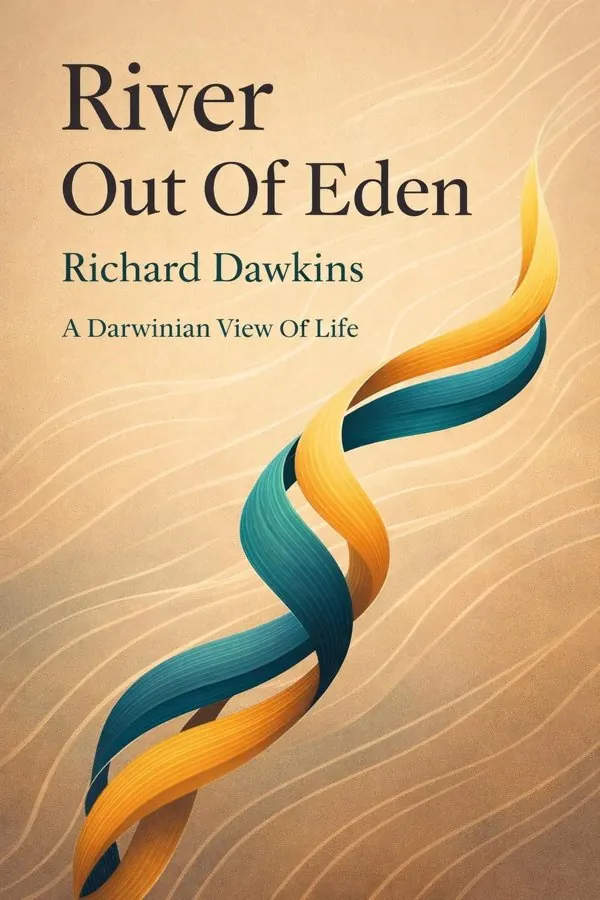
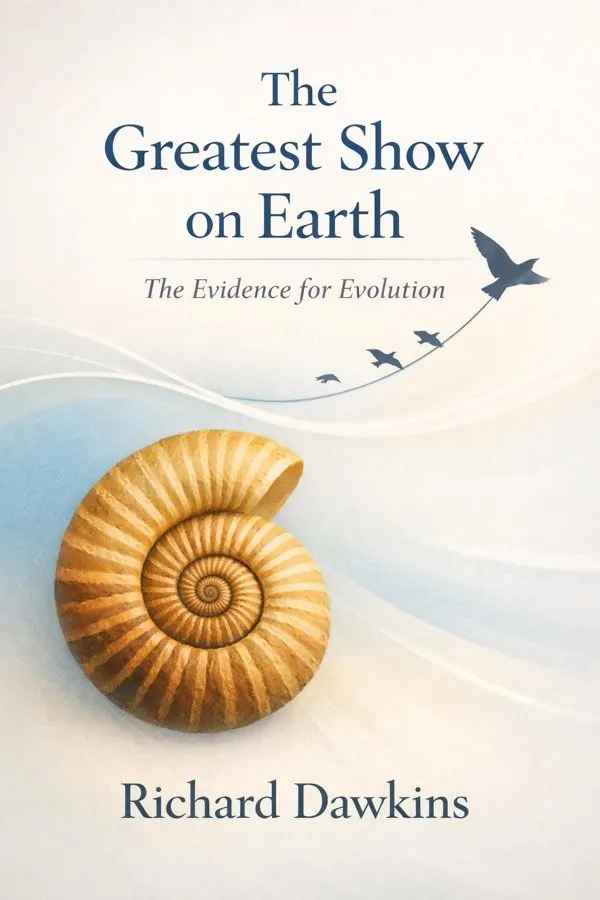
More by Richard Dawkins


You Might Also Like

Structures: Or Why Things Don"t Fall Down
J.E. Gordon
10 min
The Road to Wigan Pier
George Orwell
10 min
Bonk: The Curious Coupling of Science and Sex
Mary Roach
10 min
First Bite: How We Learn to Eat
Bee Wilson
10 min
In Pursuit Of The Unknown: 17 Equations That Changed The World
Ian Stewart
10 min
Napoleon's Buttons: 17 Molecules That Changed History
Penny Le Couteur and Jay Burreson
10 minBrowse by Category
Ready to read The God Delusion?
Get the full summary and 100K+ more books with Fizz Moment.