
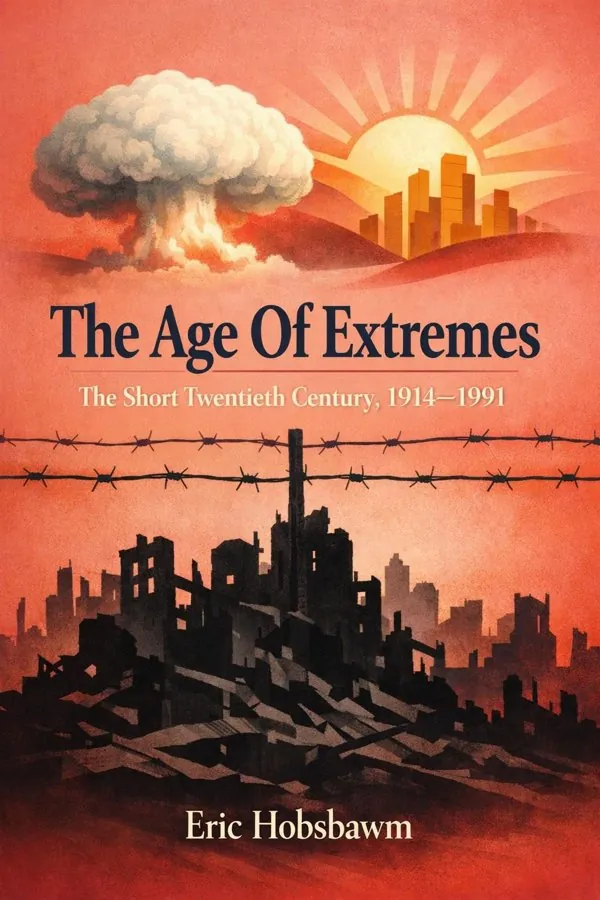
The Age Of Extremes: The Short Twentieth Century, 1914–1991: Summary & Key Insights
 10 min10 chaptersAudio available
What Is The Age Of Extremes: The Short Twentieth Century, 1914–1991 About?
The Age Of Extremes: The Short Twentieth Century, 1914–1991 by Eric Hobsbawm is a world_history book spanning 10 pages. The Age of Extremes: The Short Twentieth Century, 1914–1991 is a historical analysis of the twentieth century by British historian Eric Hobsbawm. The book divides the century into three distinct periods: the Age of Catastrophe (1914–1950), the Golden Age (1950–1973), and the Landslide (1973–1991). Hobsbawm explores the political, economic, and social transformations that shaped the modern world, including two world wars, the rise and fall of communism, and the technological revolutions that defined the era.
This FizzRead summary covers all 10 key chapters of The Age Of Extremes: The Short Twentieth Century, 1914–1991 in approximately 10 minutes, distilling the most important ideas, arguments, and takeaways from Eric Hobsbawm's work. Also available as an audio summary and Key Quotes Podcast.
The Age Of Extremes: The Short Twentieth Century, 1914–1991
The Age of Extremes: The Short Twentieth Century, 1914–1991 is a historical analysis of the twentieth century by British historian Eric Hobsbawm. The book divides the century into three distinct periods: the Age of Catastrophe (1914–1950), the Golden Age (1950–1973), and the Landslide (1973–1991). Hobsbawm explores the political, economic, and social transformations that shaped the modern world, including two world wars, the rise and fall of communism, and the technological revolutions that defined the era.
Who Should Read The Age Of Extremes: The Short Twentieth Century, 1914–1991?
This book is perfect for anyone interested in world_history and looking to gain actionable insights in a short read. Whether you're a student, professional, or lifelong learner, the key ideas from The Age Of Extremes: The Short Twentieth Century, 1914–1991 by Eric Hobsbawm will help you think differently.
- ✓Readers who enjoy world_history and want practical takeaways
- ✓Professionals looking to apply new ideas to their work and life
- ✓Anyone who wants the core insights of The Age Of Extremes: The Short Twentieth Century, 1914–1991 in just 10 minutes
Want the full summary?
Get instant access to this book summary and 100K+ more with Fizz Moment.
Get Free SummaryAvailable on App Store • Free to download
Key Chapters
The first third of the short twentieth century was dominated by catastrophe. The First World War shattered the certainties of the nineteenth century—the belief in reason, progress, and civilization. Europe, which had stood as the center of the world economy and culture, tore itself apart in mechanized warfare. This was not merely a conflict of armies; it was an assault on the very legitimacy of imperial order. The war destroyed empires—the Austro-Hungarian, the Ottoman, the Russian—and gave rise to social revolutions driven by hunger and rage. For me, this period marks the death of the nineteenth-century bourgeois world.
Industrialization had enabled mass destruction. The machine gun, the tank, and poison gas represented not only technological innovation but also the triumph of production over humanity. Economic systems faltered under the burden of war, leading to inflation and disillusionment. When peace came, it was fragile, hostage to unresolved grievances. The 1920s offered a brief illusion of return to normalcy, but the underlying social tensions and economic instability culminated in the Great Depression. Capitalism experienced a near-fatal seizure, unemployment reached unprecedented levels, and faith in liberal democracy collapsed.
Ideologically, this was an age of despair and experimentation. Out of the ruins of the old world rose challenges that sought to replace it altogether. The Russian Revolution of 1917 proclaimed a new socialist order founded on the working class, while fascist movements in Italy and Germany promised national rebirth through domination and exclusion. As the democracies hesitated, extremists gained momentum.
The Second World War closed this epoch with unimaginable violence. Fascism metastasized into genocide and world conquest; total war mobilized entire populations and economies. Yet out of this destruction emerged the seeds of renewal—the defeat of fascism, the establishment of the United Nations, and the recognition that humanity could no longer endure cycles of chaos without global cooperation. Thus the Age of Catastrophe ended not in restoration, but in transformation. The postwar world would be built from these ruins, with two superpowers claiming the future.
The war’s aftermath saw the definitive end of European dominance. The old imperial order, sustained for centuries through colonial expansion and economic supremacy, could not recover from the trauma of two global conflicts. Europe’s physical destruction was immense, its economic power eclipsed by the United States and the Soviet Union. I have often described this as the moment when history’s main stage shifted from Europe to the world. Decolonization was not merely the dismantling of empires—it was the redistribution of historical agency.
The First World War had already loosened imperial bonds, and the Second sealed their fate. Britain and France emerged exhausted, their colonial subjects newly aware of their own strength and rights. Nationalist movements surged across Asia, Africa, and the Middle East, demanding independence and dignity. The old moral justification for empire—civilization, progress, and order—was in tatters, exposed as hypocrisy by the horrors of fascism and racial doctrine.
Economically, the collapse meant the end of the global network controlled by European capital. The United States inherited the mantle of industrial primacy, while the Soviet Union constructed an alternative model rooted in planned economies and social equality. Politically, Europe began to imagine unity not through imperial expansion, but through integration. Yet even this reconstruction could not erase the profound historical break: the world was now truly multipolar, and the center of gravity had shifted permanently across the Atlantic and into the broader global South.
+ 8 more chapters — available in the FizzRead app
All Chapters in The Age Of Extremes: The Short Twentieth Century, 1914–1991
About the Author
Eric Hobsbawm (1917–2012) was a British historian known for his influential works on modern history, including The Age of Revolution, The Age of Capital, and The Age of Empire. He was a professor at Birkbeck, University of London, and a Fellow of the British Academy. His scholarship is recognized for its breadth and insight into the social and economic forces that shaped the modern world.
Get This Summary in Your Preferred Format
Read or listen to the The Age Of Extremes: The Short Twentieth Century, 1914–1991 summary by Eric Hobsbawm anytime, anywhere. FizzRead offers multiple formats so you can learn on your terms — all free.
Available formats: App · Audio · PDF · EPUB — All included free with FizzRead
Download The Age Of Extremes: The Short Twentieth Century, 1914–1991 PDF and EPUB Summary
Key Quotes from The Age Of Extremes: The Short Twentieth Century, 1914–1991
“The first third of the short twentieth century was dominated by catastrophe.”
“The war’s aftermath saw the definitive end of European dominance.”
Frequently Asked Questions about The Age Of Extremes: The Short Twentieth Century, 1914–1991
The Age Of Extremes: The Short Twentieth Century, 1914–1991 by Eric Hobsbawm is a world_history book that explores key ideas across 10 chapters. The Age of Extremes: The Short Twentieth Century, 1914–1991 is a historical analysis of the twentieth century by British historian Eric Hobsbawm. The book divides the century into three distinct periods: the Age of Catastrophe (1914–1950), the Golden Age (1950–1973), and the Landslide (1973–1991). Hobsbawm explores the political, economic, and social transformations that shaped the modern world, including two world wars, the rise and fall of communism, and the technological revolutions that defined the era.
More by Eric Hobsbawm
You Might Also Like
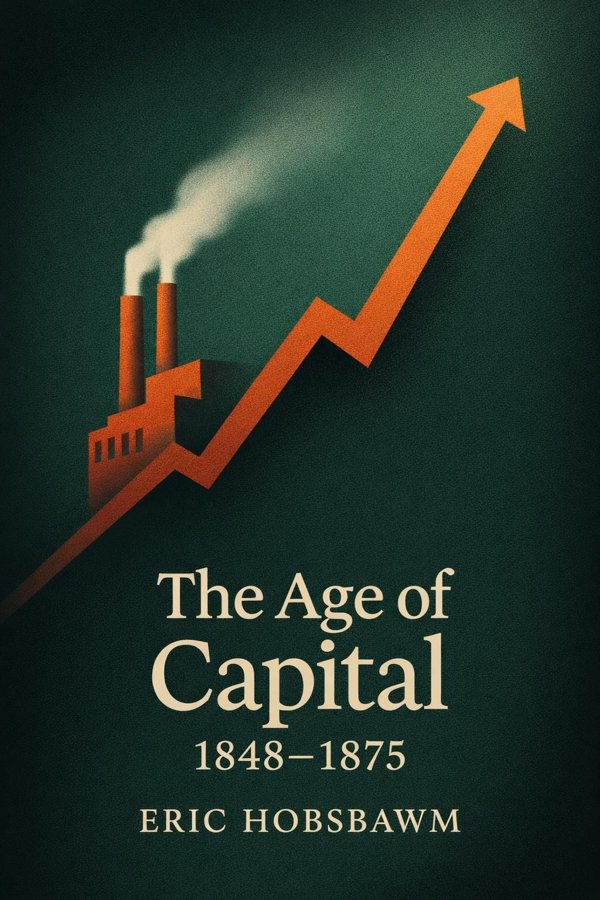
The Age of Capital
Eric Hobsbawm
10 min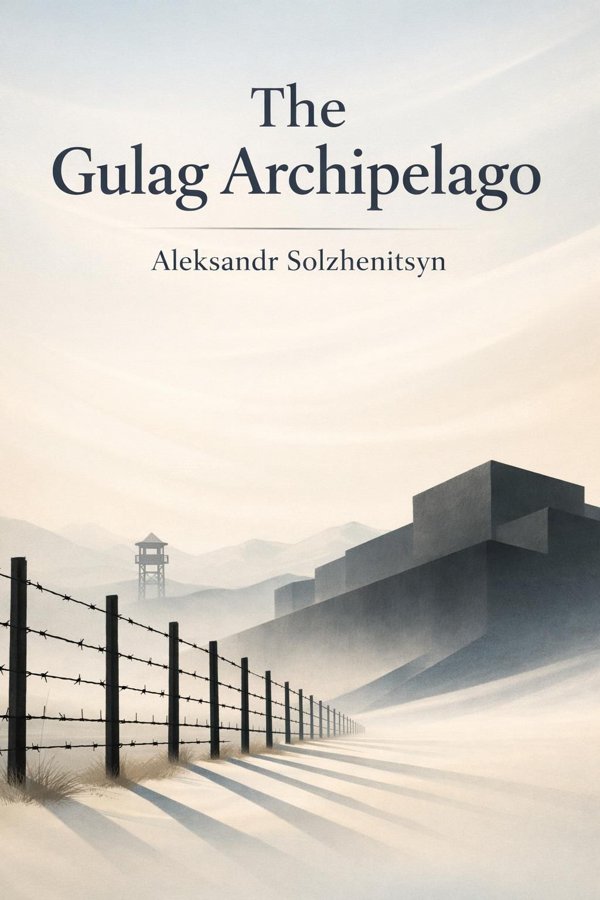
The Gulag Archipelago
Aleksandr Solzhenitsyn
10 min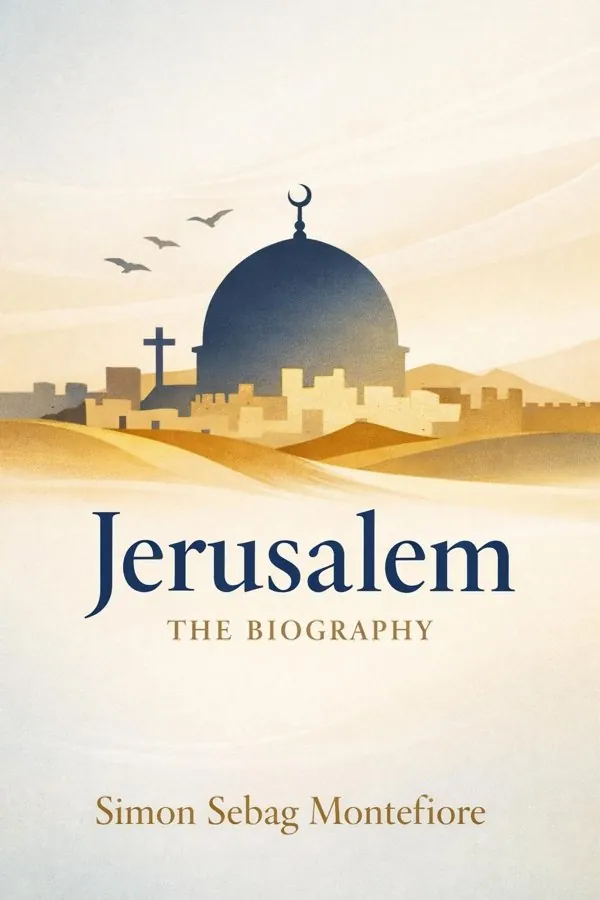
Jerusalem: The Biography
Simon Sebag Montefiore
10 min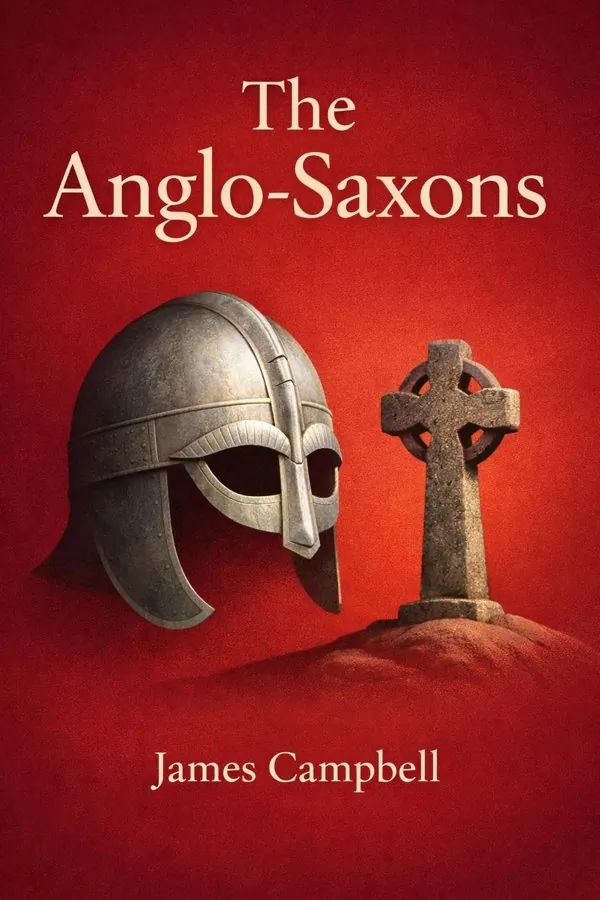
The Anglo-Saxons
James Campbell
10 min
The Boer War
Thomas Pakenham
10 min
The Industrial Revolutionaries: The Making of the Modern World 1776–1914
Gavin Weightman
10 minBrowse by Category
Ready to read The Age Of Extremes: The Short Twentieth Century, 1914–1991?
Get the full summary and 100K+ more books with Fizz Moment.